 Listen to this article
•
15:34 min
Listen to this article
•
15:34 min
In a languid May afternoon, a sudden flurry of rustling and chirping drew my attention to the tree outside our new Bengaluru home, a secluded haven nestled amidst lush greenery. Expecting a bird, I peered out only to be greeted by a playful troupe of squirrels. They raced up and down the branches, engaged in what seemed like a spirited game of tag.
This was my first close encounter with these creatures, and I watched in awe as they frolicked through the branches. In a fleeting moment, one squirrel seemed to pause and glance up at me before vanishing with lightning speed. I soon got used to their company, and their raucous antics. They reminded me of my favourite childhood cartoon character, chipmunks Chip n Dale, who get into skirmishes with Mickey Mouse, Donald Duck and Pluto the dog. These battles that usually occurred while the chipmunks hunted or stored food, often ended with Chip and Dale outwitting Mickey and Donald with their mischief and humour.
Their antics have even caught the attention of social media and TV channels, when one pet squirrel in the USA staged a dramatic death scene. The clever creature , after tripping over a pole, pulled it up to its chest, and splayed its arms on the floor, adding a touch of theatrical flair to its performance. Squirrels seem to have mastered the art of human psychology. They seem to know exactly when to be cute and when to be a nuisance. I suspect that the squirrels outside my home steal tomatoes from my garden, for a mid-day snack in between their playful antics. Like stealthy thieves, they seem to know when exactly to conduct their raids without being caught.
Squirrels’ tryst with humans have occurred since time immemorial, or at least since the story of Lord Rama has been around. According to the Ramayana, as the monkey army led by Sugreeva and Hanuman were constructing the bridge from India to Sri Lanka to assist Rama to rescue Sita from the clutches of Ravana, a small squirrel came along with its own contribution of small pebbles. It is said that some monkeys made fun of the squirrel as the pebbles were too tiny to be of any value. But Rama stroked the squirrel in recognition of its effort, with three fingers, resulting in the three stripes seen today on the Indian palm squirrel. The small act of a squirrel helping to build a bridge continues to be celebrated in India. As a tribute, a 15-foot metallic sculpture was installed at the inauguration of a new railway station in Ayodhya, the birthplace of Lord Rama. Sculptor Kalyan S Rathore explained that he was inspired by the popular Kannada phrase "alilu seve" (squirrel's service) while creating this artwork.
Apart from the Ramayana, the story of how the squirrel got its stripes is found in other cultures too. In an American Indian tribe, the Iroquois, the story goes that a chipmunk asked a bear if it could stop the sun from rising. When the bear failed, the chipmunk mocked the bear, and barely escaped as the irate bear’s claws raked its back leaving the three stripes. In a Seneca myth, a grandmother chipmunk and her granddaughter shared what they thought was a bearskin blanket, which came alive, and chased them leaving the three stripes on their backs.
The squirrel holds a significant place in various cultures and mythologies worldwide. In Irish mythology, the goddess Medb is depicted as having a bird perched on one shoulder and a squirrel on the other. These creatures serve as her messengers, connecting her to the celestial realm and the earthly world, respectively. During the Middle Ages in Europe, bestiaries often portrayed squirrels as symbols of greed and avarice due to their habit of storing nuts. The Ainu people of Japan have a fascinating myth about squirrels. They believe that squirrels are actually discarded sandals belonging to the ancestral deity Aioina. This belief may stem from the way squirrels move in short bursts, resembling footsteps.
In Norse mythology, the squirrel Ratatoskr plays a pivotal role in the cosmic tapestry. It inhabits the World Tree, Yggdrasil, whose roots and branches connect the Nine Worlds. Ratatoskr scurries up and down the tree, relaying messages between the wise eagle perched atop it and the evil serpent Nidhogg beneath its roots. While its role might seem mundane, Ratatoskr's mischievous nature adds an intriguing dimension. Just like the divine mischief monger, Sage Narada, the son of Lord Brahma, Ratatoskr delights in sowing discord. The squirrel often embellishes or twists the messages it carries, exacerbating the animosity between the eagle and Nidhogg. This cunning manipulation, however, serves a broader purpose. By maintaining tension between the two creatures, Ratatoskr inadvertently contributes to the cosmic balance. Its tale serves as a reminder that even the smallest players can have a profound impact on the grand mythological narrative. Perhaps due to this myth there was a practice of burning squirrels during easter in medieval times and RR Tolkien incorporated squirrels as evil characters in his epic book The Hobbit, which describes the squirrels of Mirkwood as black and bad tasting.
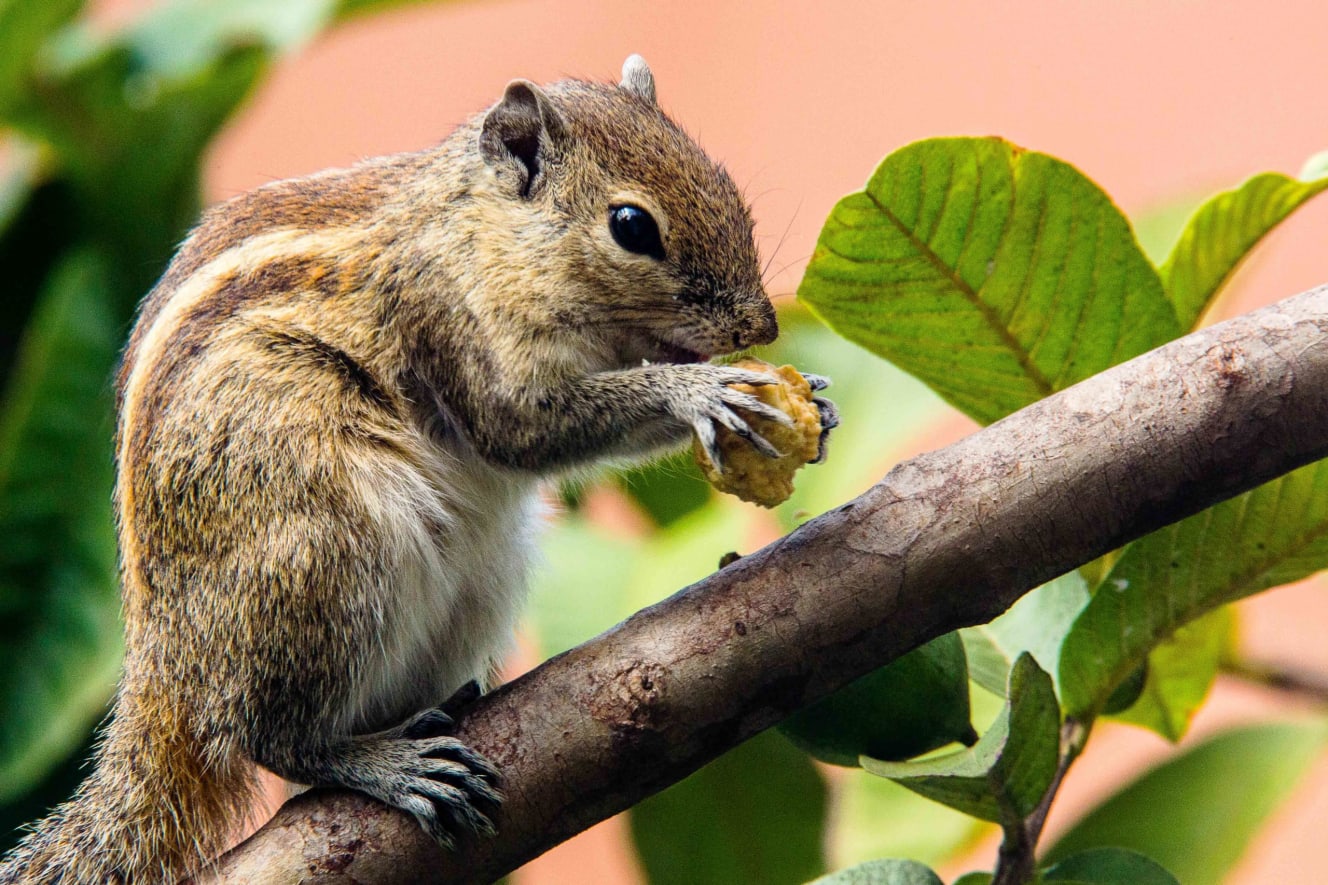
Humans and squirrels may seem worlds apart, but they share a common trait: the urge to hoard. While hoarding in humans can sometimes be a problem, it's a vital survival skill for squirrels. A single squirrel can bury up to 3,000 nuts in a season in a process known as caching. As winter approaches, these animals go into overdrive, searching and collecting food to survive the cold season. Unlike other small mammals whose brains shrink as winter approaches, squirrels brains actually expand during this time! It's a fascinating adaptation that helps them navigate the challenges of winter, and remember where they hid all their nuts.
Squirrels take their food storage very seriously. They don't just bury nuts randomly; they have a well-thought-out plan. They have two ways to store their food. In larder hoarding, they stash all their food in one place, making it easier to remember. However, this can be risky, as other animals might find it. Some squirrel species opt for a more scattered hoarding approach. They bury nuts in many different locations. This is safer, but they need to remember where they put everything. These squirrels seem to have developed a system to help them recall the exact spots where they've hidden their treasures. They have an impressive geographic understanding of their area, and can use visual cues to find their food.
Gray squirrels, in particular have great memory of their surroundings. They can remember up to 24 locations where they stored food, for as long as two months. They are able to recover a remarkable 95% of the nuts they bury. They can also locate buried nuts by their odour. This ability is important for their survival, as it allows them to efficiently retrieve their stored food. Studies have shown that lab-reared squirrels can use landmarks, like bushes and trees, to navigate to their hidden stores of food. Squirrels can also memorise specific tree routes, typically the fastest route to and from their favourite feeding place. The BBC documentary, ‘Daylight Robbery’ showed wild squirrels mastering a complicated obstacle course to reach food.
Some squirrels though seem to forget about half of their stashes. This seemingly forgetful behaviour actually has a positive impact on the environment. Forgotten nuts and acorns often grow into new trees, helping to replenish forests and expand their range. It's still a mystery whether squirrels genuinely forget about some of their food stores or simply abandon them in favour of easier-to-find food. Regardless, their absentmindedness plays a crucial role in the ecosystem.
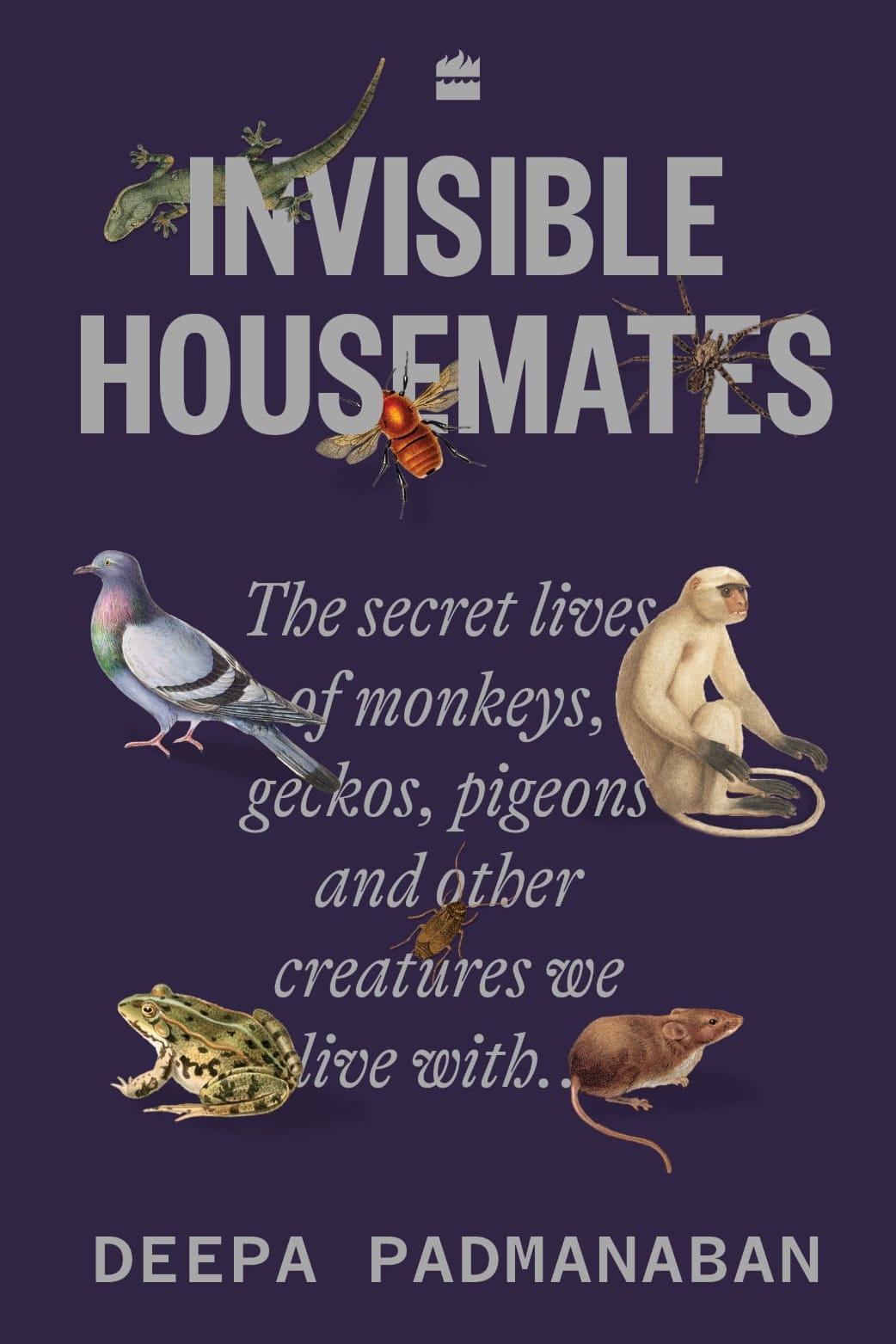
Excerpted from Invisible Housemates published by Harper Collins with permission from author. You can buy the book here.
About the Author