 Listen to this article
•
15:34 min
Listen to this article
•
15:34 min
For many years, the pavazhamalli stood in a far corner of the backyard of our old home in Mylapore, Chennai. In the mornings, I would watch the small tree through the window of my parents’ bedroom, Purple-rumped Sunbirds flitting among the leaves as a chatty flock of Yellow-billed Babblers rummaged among the fallen leaves and flowers strewn below. Sometimes, if I was in the backyard in the morning, I would shake the tree and a smattering of remnant flowers from the twigs would rain down, casting a heady jasmine fragrance into the morning air. They bloomed by night and were gone by morning. The flowers, each a little soft, white fan mounted on a bright orange tube, added the only touch of colour to our otherwise utilitarian backyard. The backyard was for the much-loved jack tree, yielding tasty jackfruit copiously in summer, a couple of ever yielding coconut trees, planted vegetables, and a sacred bael or vilvam, whose leaves would be used during religious ceremonies. All the pretty flowers—the hibiscus and rose and zinnia and oleander and ixora—fronted the house, or lined its sides, unlike the pavazhamalli which was relegated to a backyard corner. Why would anyone grow in their frontyard a tree whose secrets and sad beauty were only for the nights?
Looking back now, I suspect that the tree was never planted, but just happened to be a survivor of whatever remnants of natural vegetation remained in this part of the city when the area was being developed and the house was built in 1972, the same year I was born. Not particularly large in my childhood, the tree nevertheless stood about 4 metres tall, like a stripling tree or large shrub. The tree survived the construction work and the digging of a well a few feet away from the roots, years of trampling and occasional pruning, years of drought and north-east monsoon deluges, years of comings and goings in the large joint-family house, the branches continuing to shower their nocturnal gifts for us. We would collect the still-fresh fallen flowers (leaving the ones already browning and fading) for my grandparents and parents to offer in the puja room during their worship, unfailingly performed every morning. Sometimes, we would string a garland, threaded through the corolla tubes, packing the flowers in a white-orange-white-orange series, as a votive or ritualistic offering with prayers.

The pavazhamalli’s scientific name in Latin, Nyctanthes arbor-tristis, translates as ‘night-flowering sorrowful-tree’. In English, the name ‘night jasmine’ is often given after their aromatic flowers, or ‘coral jasmine’, possibly taking after the Tamil and Malayalam pavazhamalli (pavazham, coral; malli, jasmine), because of their coral orange corolla tubes. The species is not a true jasmine (genus Jasminum), but rather a cousin in the same family, Oleaceae, so named for the olive tree. Botanists have debated pavazhamalli’s position in the Oleaceae, occasionally lumping it with the teak family, Verbenaceae, or arguing for a family of its own, Nyctanthaceae. At present, the only other species recognized in the Nyctanthes genus is a solitary climber found in Thailand. The tree takes other names in other parts of India: famously known as shiuli or shefali in parts of Bengal and eastern India, paarijat, harshingar, siharu, saherwa, or kuri in the north, kharasli in Marathi, and krishti in Telugu. The tree is found in dry and moist deciduous forests across India: from the lower reaches of the Himalaya, below about 1,200 metres, south to Tamil Nadu and Kerala, and from Gujarat in the west to Assam and Tripura in the east.
The pavazhamalli seldom attains a height of more than 5 metres, branching from their warty trunks into branches holding twigs that are four-cornered in cross-section. The leaves are arranged in opposite pairs and are somewhat stiff, almost sandpapery above and hairy below. Branch tips hold clusters of flowers, each about half an inch long and about an inch wide carrying a whorl of between four and nine white petals cleft at the tips. The plants bloom almost throughout the year, but tend to produce more flowers during the wetter months and just a few over the cold winter. The fruits are round, flat, and capsule-like, a little over a centimetre wide, green at first, turning brown as they mature, each holding two seeds.
The flowers may take a week or so to go from bud to bloom, but they unfurl and fall within a twenty-four-hour period. The buds open at dusk and drop by dawn. Muslims sometimes plant this tree near tombs of relatives or saints so that they are blessed by the flowers each morning. In Hindu mythology the tree is believed to have appeared during the great churning of the ocean to produce amrit, the nectar of immortality, and was taken by Indra to his divine garden. The pavazhamalli’s peculiar flowering, though, has inspired tales like the one in which Paarijataka, a princess, falls in love with the sun, who deserts her, and hence she turns into a tree that blooms at night and will not face the sun again.

Although the mythological explanation for night-blooming may invoke princesses and unrequited love or betrayal, the ecological explanation is a lot more mundane. Biologists have recorded thrips—minute insects a couple of millimetres long—finding their way to these flowers for food, drawn by the sweet fragrance and whiteness of the petals by night. The thrips carry away pollen on their bodies and probably cross-pollinate the flowers as they move among them, although this remains unknown.
Today, it is not just the pollination of pavazhamalli that is uncertain; many aspects of pavazhamalli’s ecology are likewise a mystery. The paucity of studies on the species’ natural history, ecology, and life cycles is ironic, considering this is one of the most widely distributed, widely loved, widely named, and widely gardened species among Indian plants. Instead, most research has probed and pinched and peered at the pavazhamalli with sadly instrumental and utilitarian objectives: how to extract dyes from their flowers, how to fine-polish wood with their sandpapery leaves, how to isolate medicinal compounds from pavazhamalli’s tissues, and even how to predict the weather from their flowering schedules. Reduced to short-lived offerings before deities or to whatever use humans fancy, the pavazhamalli continues to thrive across India in a state of benign neglect. One understands anew why the pavazhamalli remains the sorrowful tree.
As for the tree in our ancestral home at Chennai, it seemed all through my childhood as if none of it—the garden with its trees, the house with its daily rituals and routines, the joint family life in a strictly traditional south Indian household with a grandfatherly patriarch—would ever change. But fifty years later, no trace remains of the tree. The tree had died years ago.
With the house now demolished and rebuilt and family members returning to occupy individual apartments, it all seems as evanescent and ephemeral as the pavazhamalli’s flowers. The tree that emerged from the churning of the ocean to produce the nectar of immortality would anyhow not have survived the churning of land to erect a building of brick and concrete.
And yet, now, in a corner of the front yard, there are two small seedlings inching upward, procured from a nursery and planted near the compound wall. And maybe, years hence, the pavazhamallis will again display their nocturnal beauty and shower their blessings on those who continue to make this place their home.
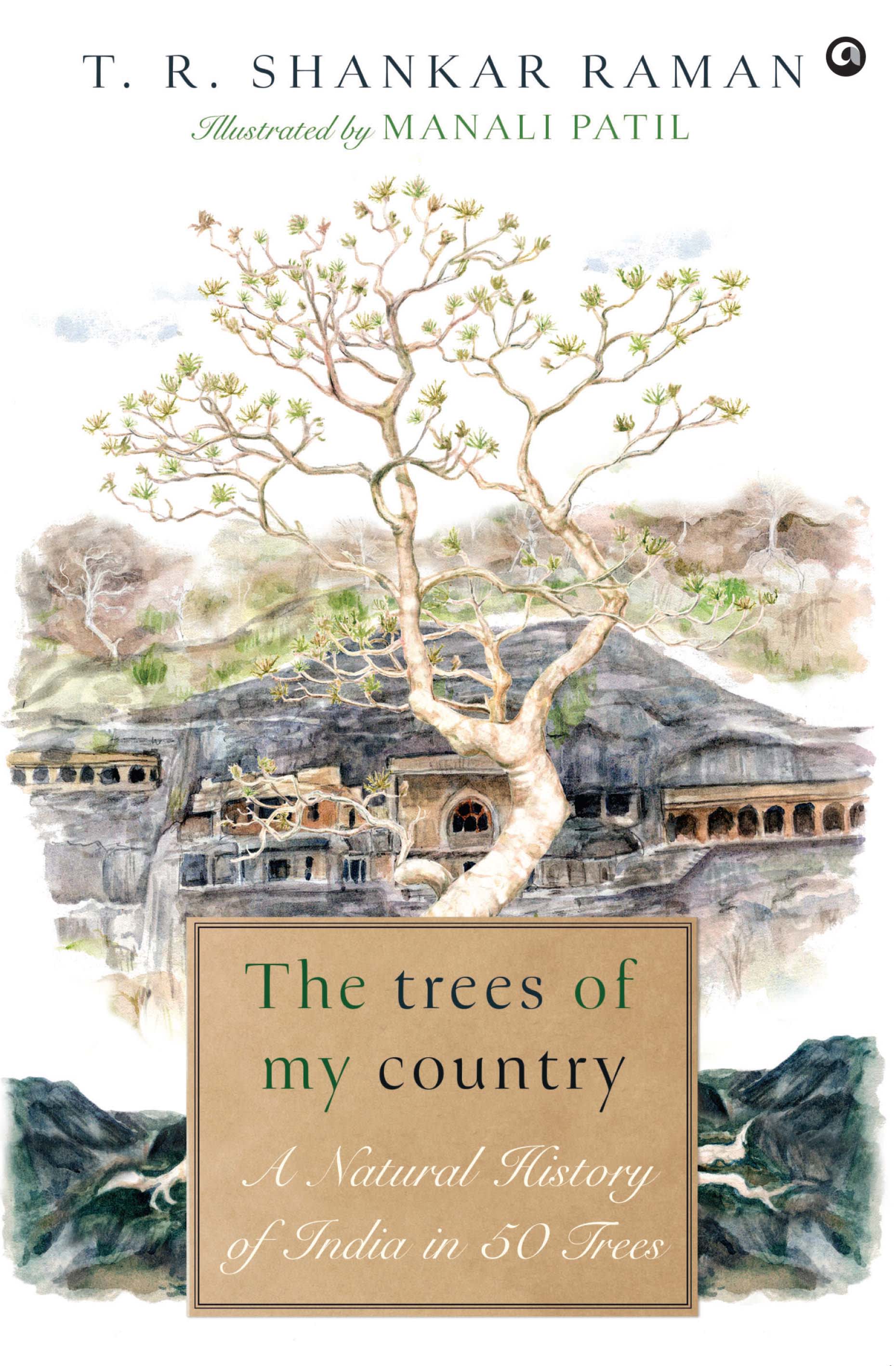
Excerpted with permission from The trees of my country: A Natural History of India in 50 Trees written by T.R. Shankar Raman and illustrated by Manali Patil. Published by Aleph Book Company, an independent publishing firm promoted by Rupa Publications India (2026, Rs 1499).