 Listen to this article
•
15:34 min
Listen to this article
•
15:34 min
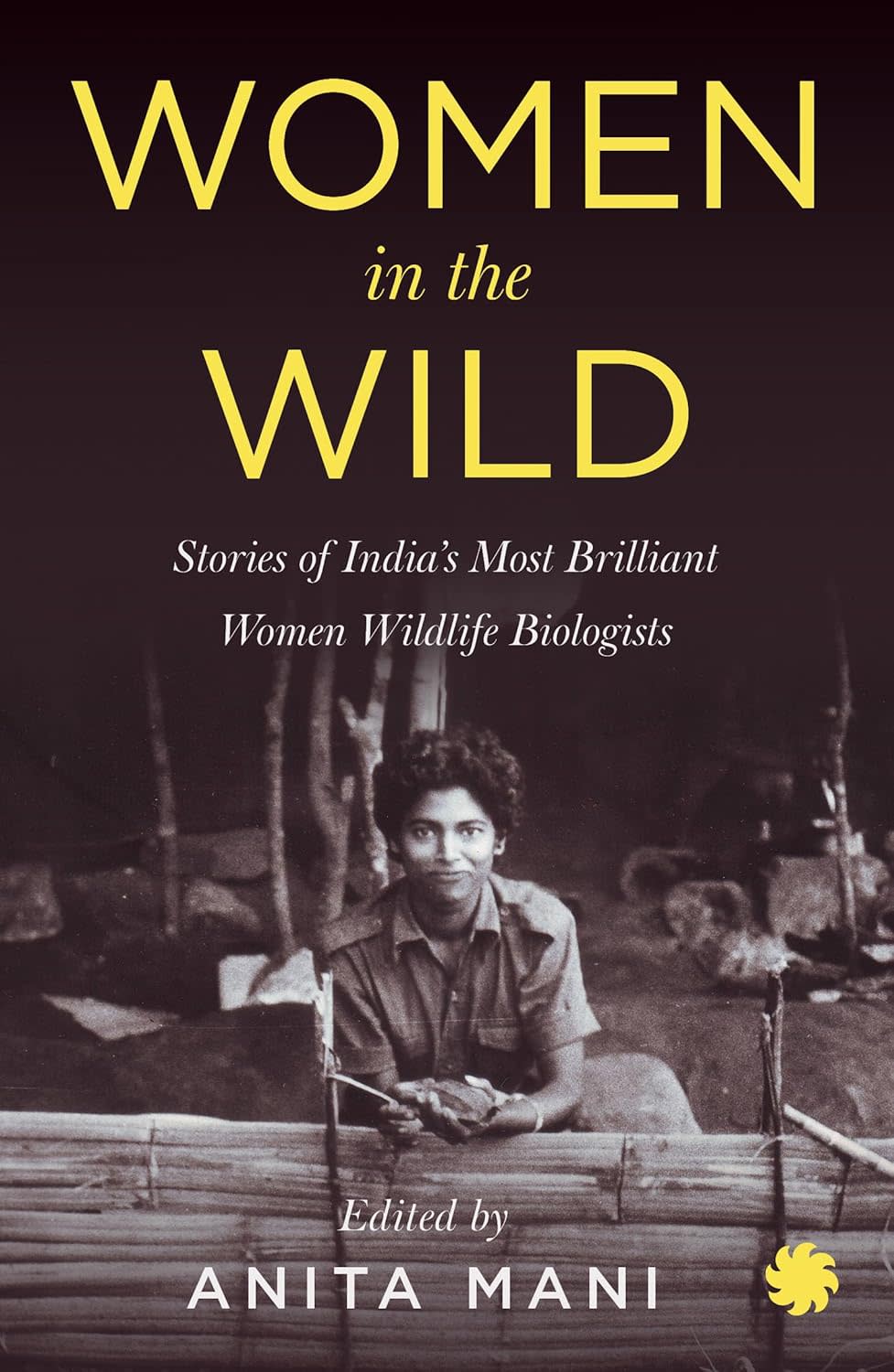
She was a beauty, with bright, active eyes, lovely skin, and a slim, energetic body. Her curly hair sat in a bold, boyish crop, after her favourite Famous Five character Georgina, (aka George). And like George, she preferred scrambling over rocks and tree branches to girly stuff, and she once negotiated a water pipe and narrow terrace ledges to visit a bonnet macaque relaxing in a tree in the garden. There was nothing usual about J. Vijaya (1959–87) – not even her pets such as Massey the monkey. Other pets along the way included the turtles Melvin and Emma and Millicent the giant spider, who produced hundreds of hairy babies in her bedroom. In those days, pets tended to have Anglo-Saxon names, thanks to Gerald Durrell and other writer-naturalists of that ilk.
The connection with individual animals was an important aspect of Vijaya’s conservation work, and it’s no wonder that when she outgrew Enid Blyton’s George, Jane Goodall and Dian Fossey became her role models. Her family was given early lessons in conservation, such as on how to handle a gecko’s eggs while cleaning the house so that they could hatch successfully. There were also environmental lessons for her sisters Prabha and Vidya; she once took Prabha on an expedition to discover the mouth of the Cooum river in Chennai, or Madras as the city was then named. Prabha recalls, ‘I didn’t know how to swim and both of us nearly drowned in the sea when we got there. Several parts of the river had walls of private residences on both sides, and we had to hang on to the wall for a long time, under the threat of falling into the stinking river. Both of us would have drowned if it were not for the fishermen who rescued us. We couldn’t even eat the samosas we’d carried with us for lunch because our backpacks fell in the dirty river-turned-drain. As I went underwater (Viji knew some basic swimming, but I did not) on reaching the sea, I remember thinking that tomorrow’s papers would run news with the headline “Two stupid girls who did not know how to swim went on an adventure and drowned in the sea”. Thankfully, that did not happen. But when we got into the bus to get back home at night, we took care to sit in the back seat, stinking like hell itself. Of course, we did not tell our dad about our adventure but rushed off to have a bath.’
The empathy extended to people as well, and her sisters talk about how Viji, the eldest of the three siblings, trained them to be sensitive. Some of these instances were truly memorable. ‘When Viji was only about eight, she taught us social justice by making us experience the life of the underprivileged. She made us cook rice in earthenware pots in the open and eat it with salt and chilli powder like our domestic help did in her own home. She taught me why not to use the word “negro” after listening to a story from a grand-uncle in the army,’ recollects Prabha. Indeed, the army was a big part of the Jagannathan family’s life. A grandfather who created bridge cards in Braille was an army doctor, and various uncles were colonels, which may well explain some elements of Viji’s personality: the discipline, strong values, strict routines, and physical and moral courage. Vidya remembers that their school had a humiliating system of lining up students according to their marks and rank, the lowest having to stand at the end. While others in this ignominious space tried to shuffle forward or hide behind someone, Viji boldly stood her ground. Interestingly, their other grandfather was a judge, and another ancestor, G. Subramania Iyer, the founder of The Hindu newspaper. He broke tradition and got his young widowed daughter remarried, indicating early on that this family was defined by modern, democratic ideas.
It was 1975. In her pre-university year at Ethiraj College in Chennai, Viji was looking for avenues to work with animals. Opportunities were limited at that time, but the Madras Snake Park had a volunteer programme and one day she arrived there and asked Rom Whitaker, its founder-director, if she could sign up. Viji was elated when she was accepted and took to the work like a fish to water. Holidays, and any other days on which she could bunk college, were spent at the Snake Park. Rom could not have found a more committed volunteer, nor she a better mentor. After college was done, she joined the Snake Park as a research associate and began the surveys and studies that have become famous landmarks in India’s herpetological history.
Her mode of transport between the Snake Park and home was the local bus network with its attendant challenge of men acting ‘fresh’. South Indian male culture hadn’t caught up with girls in pants and short hair, and if you ‘dressed like a boy’, you had to be prepared for whistles and worse. The taunt, ‘Aamblaya, pumblay?’ (Are you a boy or girl?) was commonplace, and girls in skirts were seen as having loose morals and ‘asking for it’! Viji had no patience for this kind of behaviour. One rowdy Romeo was roundly slapped, another received scratches on his face and a dire warning.

Madras Snake Park in Guindy, started by herpetologist Romulus Whitaker, is India's first reptile park. Photo: AjayTvm/Shutterstock
Having joined the Madras Snake Park a year before Viji and being only five years older, I had the privilege of getting to know her as a colleague and friend. Apart from many overlaps in our work, we had other common ground, from the Famous Five and Bobbsey Twins to Don McLean’s ‘Vincent’, which we sang together a couple of times. Now, all these years later and after the tragic end to her promising young life, it’s hard to listen to the song, especially the lines:
Now I think I know what you tried to say to me,
How you suffered for your sanity,
How you tried to set them free,
They would not listen, they’re not listening still,
Perhaps they never will.
Viji had a motley range of tasks at the Snake Park, from cleaning out cages and enclosures to maintaining feed, temperature and behaviour records, cyclostyling our newsletter Hamadryad, and dashing off on short field trips – at short notice, and on very short budgets! One such dash took her to the rock hills of Vellore, because Rom wanted to gauge the prevalence of the peninsular rock agama; there was also some taxonomic confusion to be cleared up for which he needed specimens. These agamas are a common species of lizard in the rocky landscapes of southern India; the males turn bright red or yellow during the breeding season, and are easy to spot. This was the kind of brief that Rom would offer, as four or five of us sat on the bright green bench outside the office, which was circled by large old trees dropping fruit and seeds on the tin roof like pop-gun shots. Viji would lap up every word and was up for whatever was on offer. Rom soon realized that she had the makings of a good field biologist: observant, meticulous and focused on the task at hand.
Viji kept detailed notes, an important aspect in the early days of herpetology in India when information and references were mostly limited to the notes, papers and books of the British Raj herpetologist Malcolm Smith, the founder of the British Herpetological Society. There was a long gap between Smith’s work and the founding of the Snake Park, during which time research focus was mainly on birds and mammals. This is very different from today when there are reptile fans, snake rescuers and herpetologists by the thousands.
Rom remembers that ‘the stinkiest job Viji did was collecting croc scat at the Amaravati and Sathanur reservoirs, and you can just imagine the faces of her fellow bus passengers when she climbed aboard with her sack of shit! The idea was to find out what the crocs were eating (we found a lot of rat hair, some spotted deer and snake remains – even a Russell’s viper – and fish scales). We were also trying to figure out if you could tell the size of a croc by looking at the diameter of a turd.’
Excerpted with permission from Women in the Wild published by Indian Pitta, Juggernaut. You can buy the book here.