Listen to this article
•
15:34 min
Listen to this article
•
15:34 min
It was just after dawn on 19 April 2026. Patil Pradhan walked into the forest near her village Aunli, in Odisha’s Deogarh district. While collecting mahua flowers, she encountered a wild elephant. Her death is not a rare case in areas of Odisha where indigenous communities sustain their livelihood from minor forest produce (MFP). Most attacks occur while people gather forest produce or tend their fields near the forest; their paths intersect with wild elephants. In February 2026, for instance, while collecting firewood, three women from Lochapali village in Dhenkanal district were trampled by elephants near Kapilash Wildlife Sanctuary.
Odisha recorded 171 human deaths linked to elephant encounters in 2024–25, the highest in the country. Over the past decade, more than 1,000 people have lost their lives in such encounters. The state is home to 2,103 wild elephants, according to the 2024 census, with dense populations in Dhenkanal, Keonjhar, Deogarh, and Angul.
“Most of these incidents are not deliberate actions by elephants,” says Khageswar Sethi, a forester based in Mayurbhanj. “They happen during sudden encounters. In low visibility, especially early morning, late evening, or in fog, when both humans and elephants get startled. At close range, there is very little time to react.”


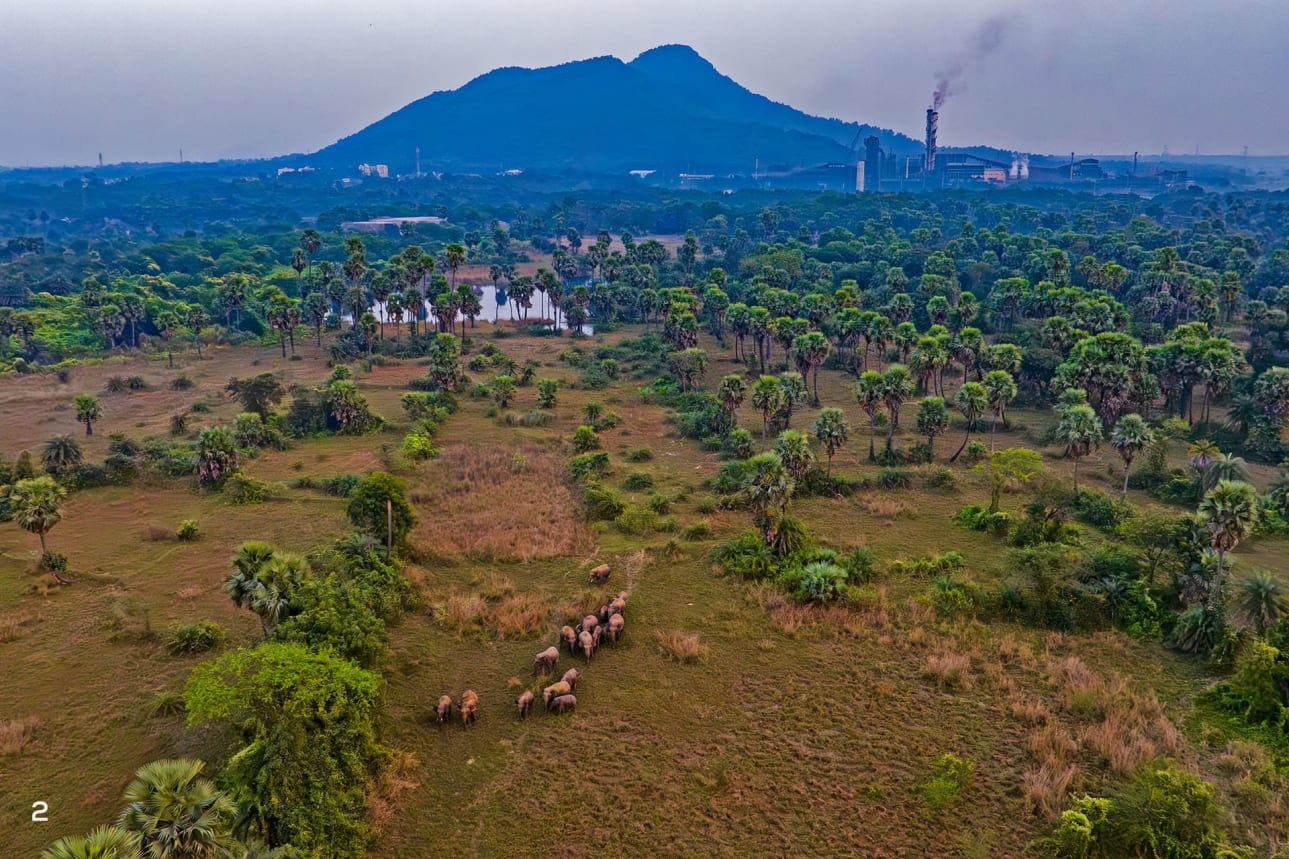
Cover Photo: Odisha is home to one of India’s largest populations of Asian elephants, and their traditional routes often pass through farms and villages. Photo: Dhritiman Mukherjee
When Survival Paths Overlap
Over generations, elephants remember routes to water, fruiting trees, and seasonal migratory corridors. But these routes are rapidly changing in Odisha.
According to Global Forest Watch, Odisha lost around 1,600 sq km between 2001 and 2025. Conservationists say that the Odisha government has yet to formally notify 14 proposed elephant corridors spanning 870.61 sq km, despite identifying them during 2010-2012. Only about 14.6 per cent of Odisha’s geographical area now remains suitable elephant habitat.
Coal and bauxite mining, stone quarrying, new highways, and irrigation canals are all cutting across traditional elephant movement paths. The Rengali canal network, spread across Angul and Dhenkanal, disrupts long-established migration routes. As a result, elephant herds are now confined to smaller forest patches. In September 2025, a baby elephant fell into the canal near Haladibahal. It struggled for several hours before managing to climb out.
“When corridors shrink, elephants adapt,” according to Jayanta Kumar Dhal, Forester, Pithabata Wildlife Range, Mayurbhanj. “And that adaptation often brings them into villages and farms.”
Fodder shortages in the forest are a major reason elephants venture into human habitation. Prolonged summers often dry up water streams in the forest. As part of their daily routine, elephants need water to drink, cool down, and swim. During the lean seasons, when food and water in the forest are scarce, elephants often move toward cultivated land.
An Elephant Graveyard
Between 2014 and 2026, 888 elephants died in Odisha. From 2022 to early 2026 alone, 344 deaths were recorded. Electrocution at illegal or poorly designed fences around farms, meant to keep elephants out, is a major cause of these deaths.


Railway lines cutting through forested areas have also proven deadly for elephants, with around 29 killed in train collisions between 2016 and 2026. Poaching, though less reported, persists. In 2024, forest officials seized over 30 kg of ivory in the Similipal forest in Mayurbhanj and arrested 10 people. Subsequently, seizures in Boudh and Keonjhar districts in 2025 point to ongoing illegal trade networks.
“Each elephant death affects the herd’s social structure and behaviour,” says Biswajit Mohanty, conservationist and Secretary of the Wildlife Society of Orissa. “It can make herds more stressed and unpredictable.”
Farms on the Frontline
Cropping patterns have shifted in recent years, with commercial crops such as maize, banana, groundnut, and paddy cultivation expanding closer to forest edges. These high-calorie crops are particularly attractive to elephants, and conflict is most visible at forest edges.
“Elephants don’t see boundaries between forests and farms,” says Srinibas Das, Project Coordinator, Odisha Livelihood Mission, Mayurbhanj. “They see food. And when crops are ready for harvest, the attraction is very strong.”
Elephant herds from neighbouring Jharkhand and West Bengal also raid fields in Mayurbhanj and Keonjhar districts, mostly during the kharif harvest period.


Kalpana Biswal, a farmer from Kulanga village in Keonjhar, has seen this pattern repeat year after year. “We spend months growing paddy, guarding our fields at night with torches and drums,” she says. “But when elephants come, it’s over in hours. By morning, there’s nothing left, just flattened crops and deep elephant footprints. You feel helpless.”
Beyond fields, elephants often break into granaries and consume stored grain, increasing farmers’ losses.
Fractured Lives
Living with the constant possibility of an encounter has reshaped daily life in many villages. “We plan our day around elephant movement now,” remarked Tapaswani Nayak from Namakani, a forest-fringe village in Keonjhar. “While foraging wild edibles, if we hear branches snapping in the forest, we turn back in panic. We don’t send children to school during peak conflict months. The fear is always there.”
Attempts to drive elephants away can escalate tensions. “People throw stones or use fire to chase them off. But that can injure elephants, making them more aggressive,” says Sailendra Kumar Das, Assistant Conservator of Forest, Talaband Wildlife Range, Mayurbhanj. “Stress also leads to erratic movement and panic-driven crop raiding.”
“Constant hostility from humans and repeated stressful encounters can make elephants more aggressive and wary of people,” according to Aditya Panda, wildlife conservationist and Honorary Wildlife Warden, Angul.


Although the state government provides compensation for crop and property damaged by elephants in rural areas, many farmers say it is inadequate or difficult to access. “The application process takes time, and the amount rarely matches the loss,” laments Prasana Nayak, a sarpanch from Bimala panchayat in Keonjhar. “Compensation covers what is visible in the field only. But farmers guard their crops day and night. They spend many sleepless nights. They must repeat the sowing process after crop damage, increasing their expenses.” Repeated crop losses have pushed some farmers into debt and others to give up agriculture altogether.
A Changing Rural Landscape
The impact of elephant-human conflict extends beyond economics. It is generational. “Young people are leaving farming,” says Rajesh Kumar Pradhan, Additional District Programme Coordinator, Watershed Support Services and Activities Network, an NGO working in Keonjhar on reviving millets. “They migrate for work, and with them goes the traditional knowledge of coexistence.” In many villages, it is mostly older farmers who work in the fields. The absence of traditional collective farming practices, which often buffered risk, has made farmers more vulnerable.
In Odisha, human-elephant conflict reflects shared landscapes under pressure from ever-expanding human needs. As forests shrink and climate patterns shift, both humans and elephants are forced into uncertain situations of greater contact and risk.
About the Author