 Listen to this article
•
15:34 min
Listen to this article
•
15:34 min
The Elephant Watcher
At 7 am, Prakash scans the mist-covered hills of Valparai for elephants. If he spots a herd of elephants, he watches them quietly for a while, looking closely for features that will help him identify the individual or herd. Once he confirms the identification of the herd, he takes out his phone and opens the Epicollect app to log details, whether it’s a tusker or a herd, the number of males and females, the count of adults, and more. He then shares the GPS location and photographs of the herd on the NCF WhatsApp group. Meanwhile, at the NCF office in Valparai, Chitra Arumugham stays alert for any elephant sighting updates. When an alert comes in, she drafts and broadcasts a message to the community. Elsewhere, Ganesh Raghunathan is fielding calls, coordinating with the Forest Department, and persuading estate managers to make space for elephant movement. Together, the three form an information network that helps elephants and the residents of Valparai share the same landscape with reduced conflict.
Prakash has been working on the frontlines of the Nature Conservation Foundation’s Elephant Programme in Valparai for the past decade. He is from the Kadar community, and elephants have been a familiar presence since childhood. He carries the indigenous knowledge passed down by his elders as he tracks elephants. He recollects, “In my childhood, there were fewer elephants, and when we ventured into the forest, we rarely saw them. We only went into the forests close to our settlement, and we knew people from that area alone. But now in this job, I have travelled across Valparai, all the estates and all the forest areas. I speak to many people, and everybody speaks to me. Everybody talks to me about elephants. That excites me.”


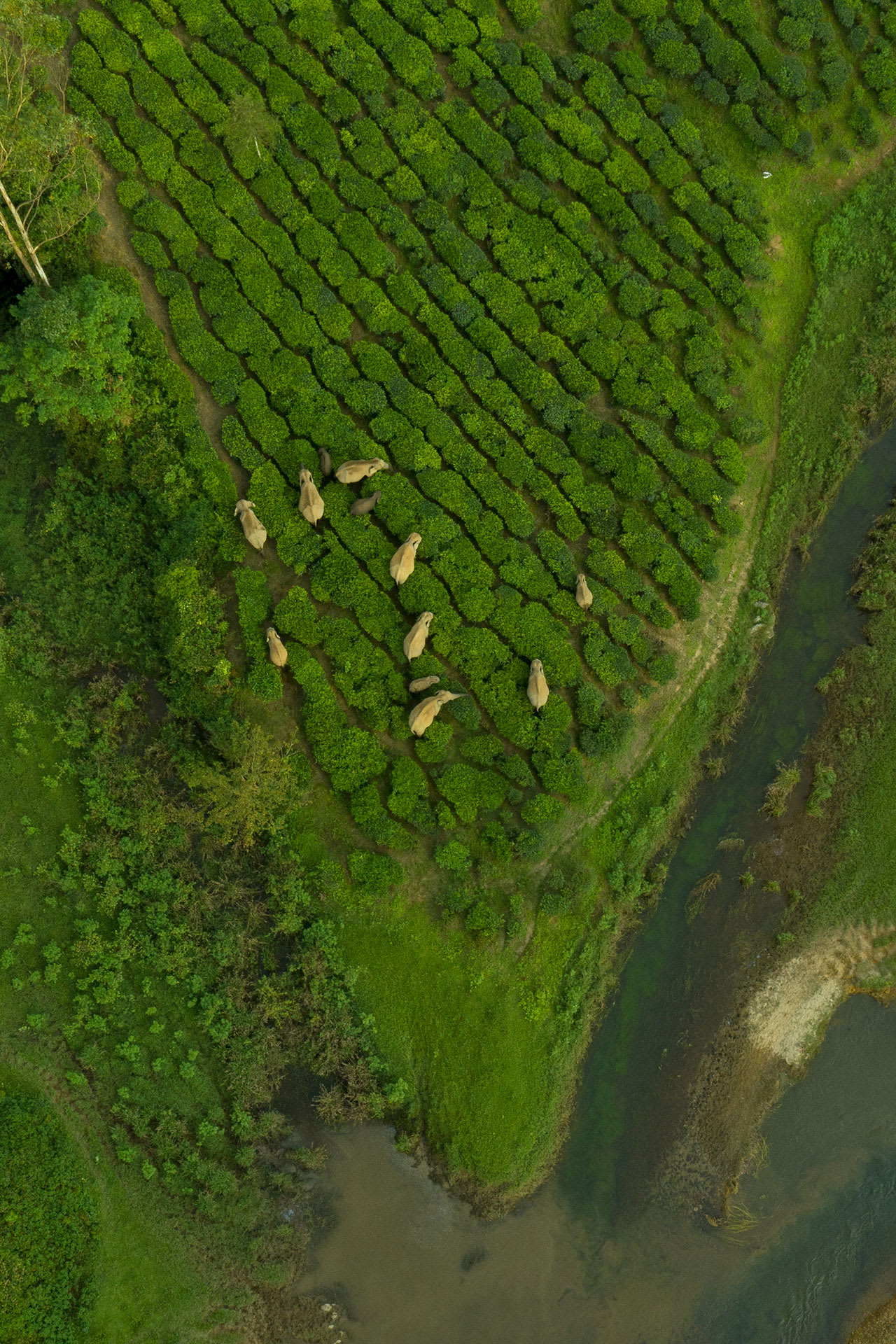
Cover photo: A herd of elephants in Valparai. Photo: Ganesh Raghunathan
Rain or shine, every morning he is on the road on his bike, stopping occasionally to make calls, usually to members of the Anti-Depredation Squad (ADS) of the Tamil Nadu Forest Department, to confirm elephant movement. Atop a vantage point, he cups his hand on his ear to listen for elephant sounds, keeping his phone close. Once he identifies a tusker or a herd, he passes on the information and shares the GPS location and photographs of the herd on the NCF WhatsApp group.
Prakash’s work has evolved over the years. He began when elephant locations were handwritten on paper and handed to the local cable operator to appear as scrolling alerts on TV. Bulk SMS messaging came next. Now NCF is developing a mobile application to send these alerts as push notifications. “Many things are changing with technology,” he says. “It feels like my job is changing along with it.”
After sending an update, Prakash gets back on his bike and heads to the next location. Sometimes the search is difficult, and he must rely on indirect signs such as footprints, fresh dung, and other signs to determine the route elephants have taken. At other times, it becomes a team effort with an ADS member or a fellow NCF field worker joining the search. Along the way, he checks with tea estate security guards, workers, supervisors, and local people about any signs of elephants.
Prakash takes his responsibility of keeping people safe very seriously. He says, “In the last five years, so many elephants have changed their paths, and it is hard to predict what will happen in the future. There is always something more to learn about elephants. That’s why we need to go and see them daily.”
A herd spotted on a distant slope is only useful if the information reaches the people who need it. That is where Chitra steps in.


Turning Sightings Into Alerts
Working with NCF since 2015, Chitra manages the bulk SMS alert system in Valparai. She converts the elephant locations sent in by Prakash into easily readable alerts. Her work takes place indoors, but its impact reaches more than 6,000 people, including estate workers, families, and people on the move who rely on such timely information to stay safe. Whenever an elephant-sighting update comes in, Chitra locates it on the map and identifies the estates and areas within a 2-kilometre radius of the sighting. She then selects the phone numbers of people who have subscribed from those areas in the database, adds them to the bulk SMS software, and drafts a message in Tamil with the location details.
Each message also includes the NCF phone number, allowing people to call if they spot an elephant or face a distress situation. A special category of subscribers, such as ambulance drivers and police personnel, receive elephant location alerts from all areas.
Along with the text message, Chitra records a voice message in Tamil, which is sent as an automated call. This ensures that even those who miss reading the SMS still receive the information.


Whenever an update appears in the group, regardless of the time or place, she sends out the alert. “I have never switched off my phone,” she says. “No matter what, I send the messages. So far, I haven’t caused any delay or forgotten to send a message. I haven’t missed a single day. Even if I’m asleep, I wake up as soon as a message comes in because I know I have to send the alert.”
Whenever it is Chitra’s responsibility to attend to the NCF phone line, she remains on call around the clock, as elephant updates can arrive at any hour. She answers calls from people across Valparai and keeps a detailed record of them. Most calls share information or confirm elephant locations. In case of distress calls, Chitra informs the Forest Department. In those tense situations, she says, “people often can’t explain much. They want help quickly and are very scared. Our role is to understand their situation, be gentle, inform the department, and let them know when help will come.”
Chitra forms a crucial link between elephant movement on the ground and the people living alongside wild elephants. She helps ensure that information reaches those who need it, when they need it most.
However, technology alone cannot make human-elephant coexistence work. Alerts can tell people where elephants are, but they cannot negotiate with estate managers, calm frightened residents, or build long-term relationships. That is where Ganesh’s role begins.


Making Space for Coexistence
Ganesh has been working in Valparai since 2011 and is currently a Senior Programme Manager at NCF. While field workers track herds through estates and forest patches, Ganesh’s work involves lots of phone calls, meetings, writing grants, speaking with funders, and maintaining relationships with people across the landscape. Ganesh fills in for Prakash and Chitra when they are on leave or when the workload is heavy (during the elephant migratory season). If he spots an elephant, he quickly shares its location on the NCF WhatsApp group and records the details on Epicollect. He also attends to distress calls when elephants are close to humans, calming the caller and contacting the relevant Range Officers in the forest department. Therefore, Ganesh forms a key link in the flow of information from Prakash to Chitra and from Chitra to the residents of Valparai.
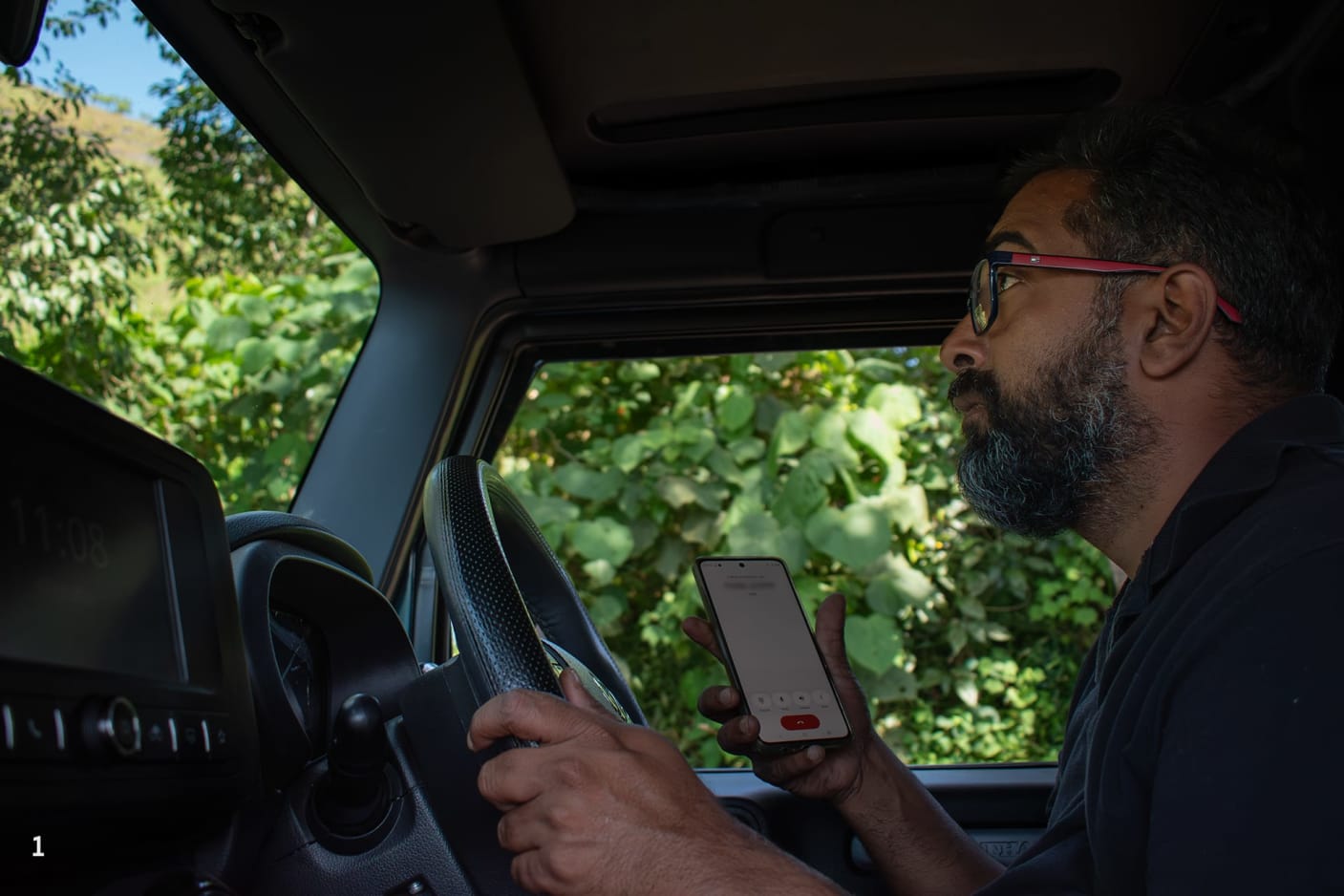

Years of closely monitoring elephants have shaped Ganesh’s understanding of Valparai. “We know which herd operates in which way,” he says. “We have gained deep knowledge by watching elephants continuously for more than 20 years.” From 2002 to 2025, the team built a detailed database, naming and identifying individual elephants and herds. “What every elephant does in this landscape is based a lot on human behaviour,” Ganesh explains. “Elephant data itself has human behaviour in it.”
For him, the larger goal is conserving elephants without compromising human safety. Valparai has nearly 220 sq km of plantations that provide livelihoods to thousands. “People and elephants don’t have a choice but to share space,” he says. “We cannot make Valparai only for humans or only for elephants. That wouldn’t be fair.” Much of Ganesh’s work lies in this in-between space. Sometimes, it comes down to small but crucial changes. “I once convinced the management to move a fence five metres so that elephants could have a walking path,” he says. “That is my job, to convince them. Field workers cannot do this.”
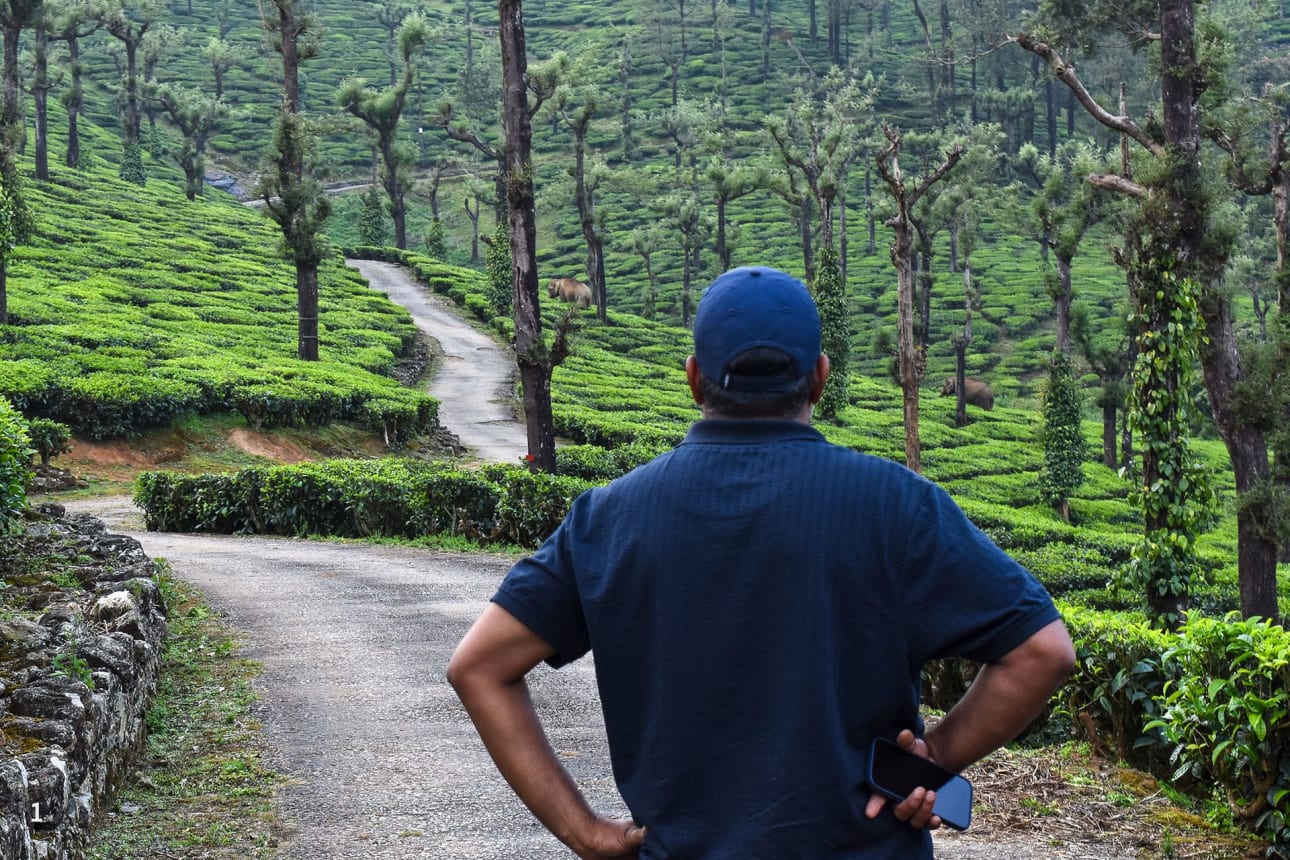

For Ganesh, conflict mitigation is largely about people management. “Elephants are not going to listen to what we say. So, my work is with people”, he adds. His earlier experience working in a call centre taught him how to build customer relationships, and later, spending long days moving through rugged landscapes as a wildlife photographer prepared him for this role. “Conflict mitigation needs a lot of patience,” he says. “A listener is needed more than a talker.” He believes technology can help, but it cannot replace human understanding on the ground. Early warning systems are effective because they communicate directly with people, telling them, “An elephant is here; do not go there”. Ganesh holds together the larger picture by negotiating and creating space in a region humans and elephants share.
Every sighting on a misty Valparai hillside becomes a phone alert, a conversation, and a safer journey home. Through this flow of information, Prakash, Chitra, and Ganesh help people coexist with elephants and navigate one of India’s most densely shared landscapes.
--With inputs from Vignesh Soundararaj
About the Author