


 Listen to this article
•
15:34 min
Bat scientist Rohit Chakravarty points a device at the clouds looming over Sunder Nursery, a 16th-century heritage park, as if trying to catch a signal only known to him. “If we’re lucky, we’ll hear a bat,” he says, squinting skyward.
On a rainy evening, a half-drenched crew of scientists, photographers, citizens, and historians have gathered in one of Delhi’s busiest spots — a Mughal garden that doubles as the city’s most popular picnic spot. Families unpack snacks, couples play badminton, others make reels. Amid the bustle, we wait by a shallow waterbody, listening for bats. Chakravarty’s research is unearthing a relationship between the city, its monuments, and bats. As an add-on, his team, through walks, is urging residents to look at their heritage through a different lens.
“Did you see that?” Chakravarty exclaims, suddenly pointing his bat detector at a swooping shadow. Bats, while hunting at night, let out high-frequency, ultrasonic clicks that are inaudible to us. A bat detector converts those clicks into a frequency range humans can hear. Chakravarty plays a bat’s clicks filtered through bat tech — it sounds like an excited clacking of drumsticks.
Nakul Shokeen, a team member on the project, pulls out a photo to match the clacks — an upside-down frown with little pointy teeth, two moist beads for a nose, and sparkling eyes stare back at us. The Indian pygmy bat is one of the smallest bats in India, says Shokeen. It weighs less than a Rs 5 coin.
There are over 1,500 species of bats in the world; 135 are found in India, and about 15 species live in Delhi. Many, according to Chakravarty’s research, are there because of how Delhi was built. Delhi, since its inception, has been a seat of power, a city of seven capitals — Lal Kot, Siri, Tughlaqabad, Jahanpanah, Firozabad, Shergarh/Dinpanah, Shahjahanabad — all built along the Yamuna River between the first and 18th centuries. But this is what sets it apart. “Many old cities were built in layers, erasing older buildings to build on their foundations, preserving just some of those older structures within the newer city. In Delhi however, successive cities were built beside old ones, on separate sites, abandoning rather than destroying the older sites. This process has given us a city full of old uninhabited monuments,” says Delhi-based historian Swapna Liddle. As a result, the city has at least 1200-odd monuments scattered across its territory, hosting one of the largest populations of insectivorous bats of any Indian city.
Shokeen builds a bat itinerary for us.
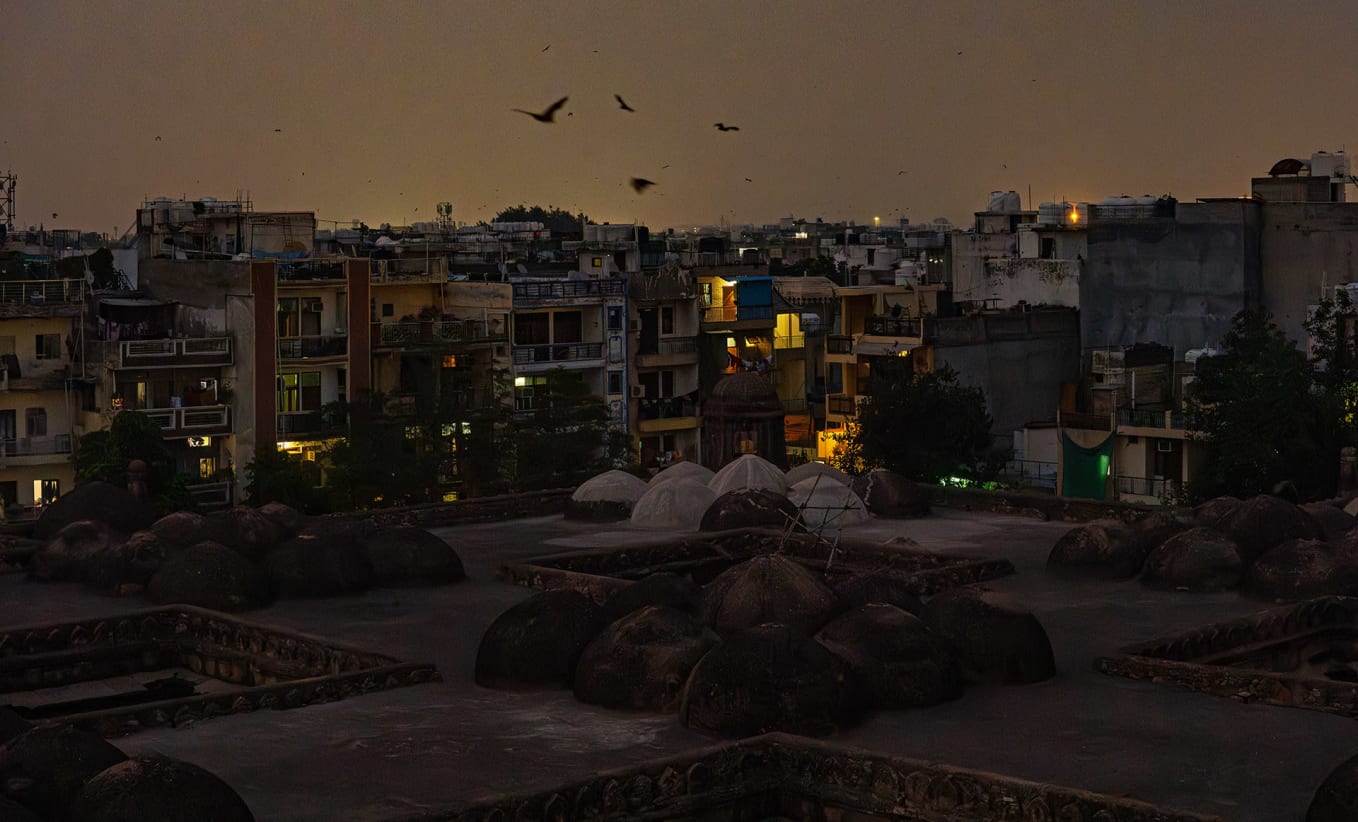
Bats live in most of Delhi’s monuments, but the largest numbers aren’t in the popular, brightly lit sites. Instead, they colonise the spaces and monuments that are ignored and less frequented.

Most insectivorous bats (feed on insects) inhabit caves — cold, humid, and dark habitats — during the day and fly out to forage at night. Over the last century, as forests and natural caves across Delhi disappeared, bats moved into monuments in search of suitable conditions: thick walls, dark chambers, cooler temperatures, and deep crevices. Monuments that largely remained unchanged, with fewer aesthetic interventions or no artificial light, mimic cave habitats and are ideal bat roosts.
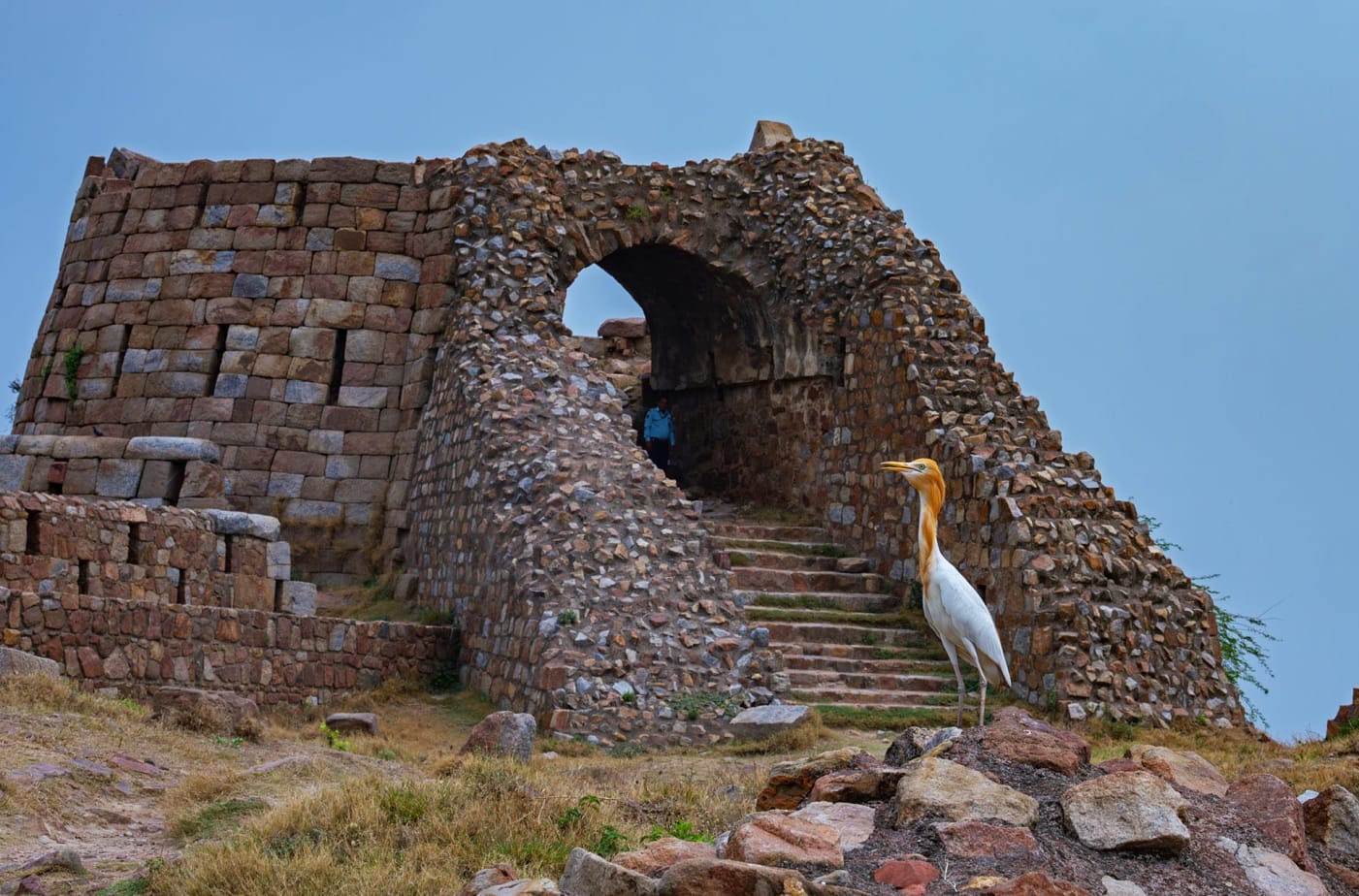
Tughlaqabad: The Cursed Fort
The looming Tughlaqabad Fort, on the city’s eastern edge, is among the first on our list. Built as Delhi’s third capital by Ghiyasuddin Tughlaq, the Tughlaq Dynasty’s first Sultan, it was left unfinished when the Sultan died in 1325, after a pavilion built in his honour collapsed on him. It was occupied for a short period from 1320 to 1329, or by some estimates, until 1334. Ever since then, it has been inhabited by pastoralists, travellers, and likely, bats. But Shokeen, who leads us, has no patience for its crumbling grandeur. He darts towards a short stairway that leads to a series of underground chambers that smell like an unwashed public urinal.

The teh-khanas lie under ruins that likely may have been the Sultan’s palace or living quarters. And while the quarters upstairs may have been ornate, the chambers beneath are small, dark rooms that are significantly cooler. Mughal precincts often had teh-khanas or dark chambers built to escape the scorching summer heat of Delhi. They are often windowless, built with thick walls, and sit beneath larger vaults of the palace.

Similar teh-khanas exist under the Taj Mahal in Agra and under Humayun’s Tomb in Delhi. Like caves, they have a stable micro-climate — they retain moisture, remain dark, and cool through seasons. Perhaps, few structures mimic a cave better than a teh-khana.

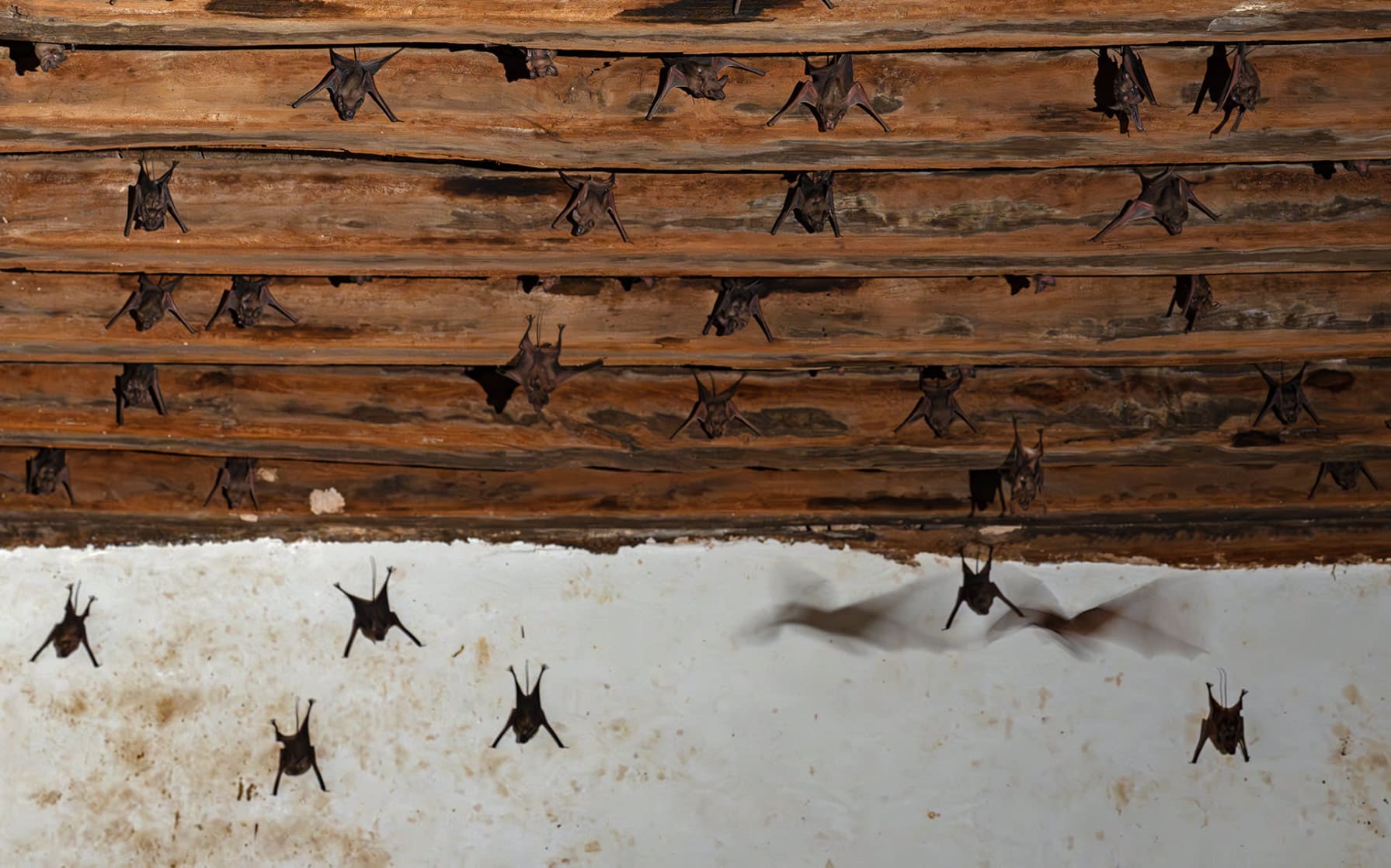
Shokeen masks up and ducks into a chamber echoing with squeaks. I follow. Hundreds of greater and lesser mouse-tailed bats hang upside down, tails pointed to the ceiling, pig-like snouts to the floor. At first, I see only black silhouettes, and then Shokeen points out something extraordinary. This isn’t just a colony of lesser mouse-tailed (Rhinopoma hardwickii) and greater mouse-tailed bats (Rhinopoma microphyllum). We are looking at a colony of lactating bat mothers, who have clustered away from the males, with their pups clinging to them as they nurse.
Bats give birth by late summer, timed to the monsoon’s insect surge that fuels the female’s lactation. For months, mothers carry their pups in flight while foraging, teaching them a sense of direction.
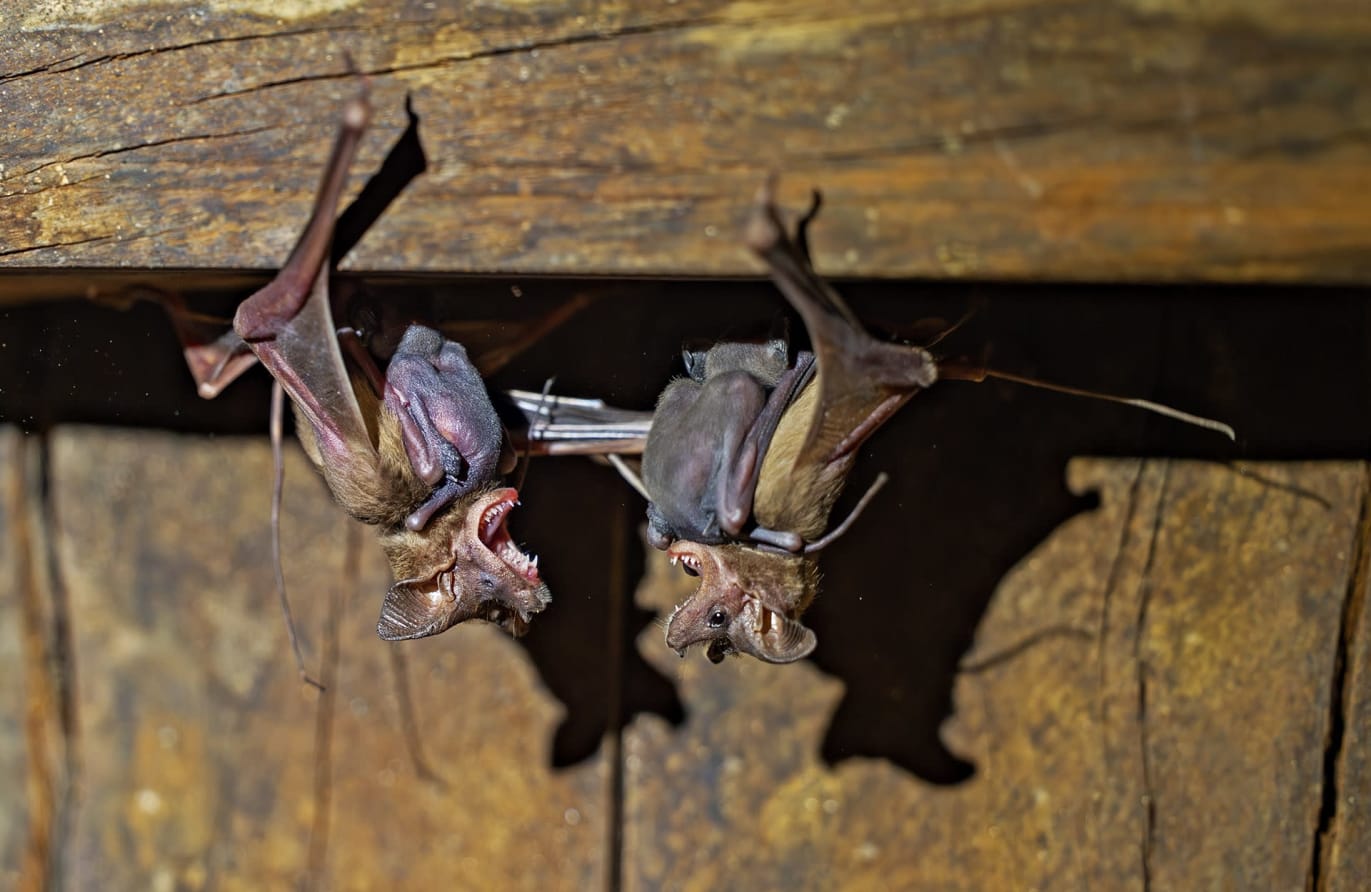
Lesser and greater mouse-tailed bat mothers have two sets of nipples. The pups bite and grasp onto the mother’s pubic nipples or false nipples located on her lower flanks. They exist purely for the pup to cling to when the mother is in flight. “Like a built-in baby seat belt,” says Chakravarty.
While I am trying to grasp all of it, two mothers break into a territorial battle, baring their teeth at each other, while their pups cling on — heads digging into the mother’s belly, long hind limbs wrapped tightly around her neck, hanging on for dear life.
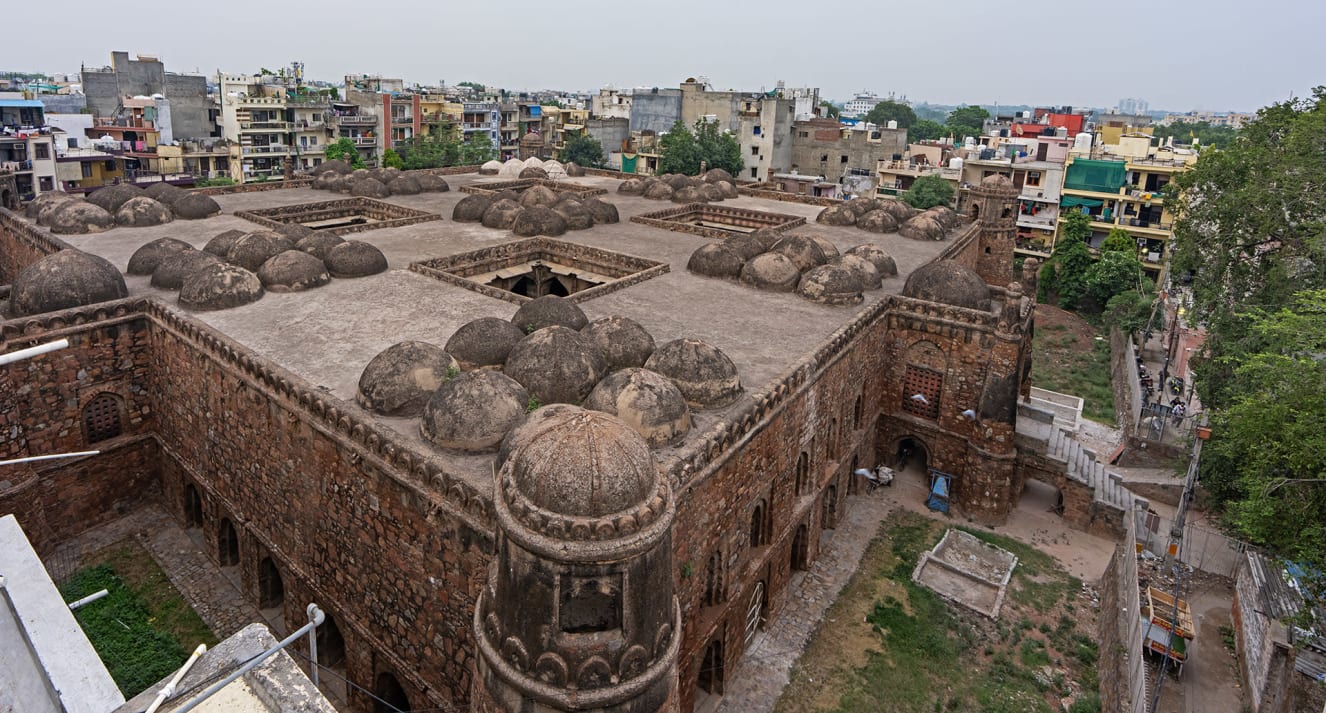
Khirki Masjid: A Mosque of Many Domes
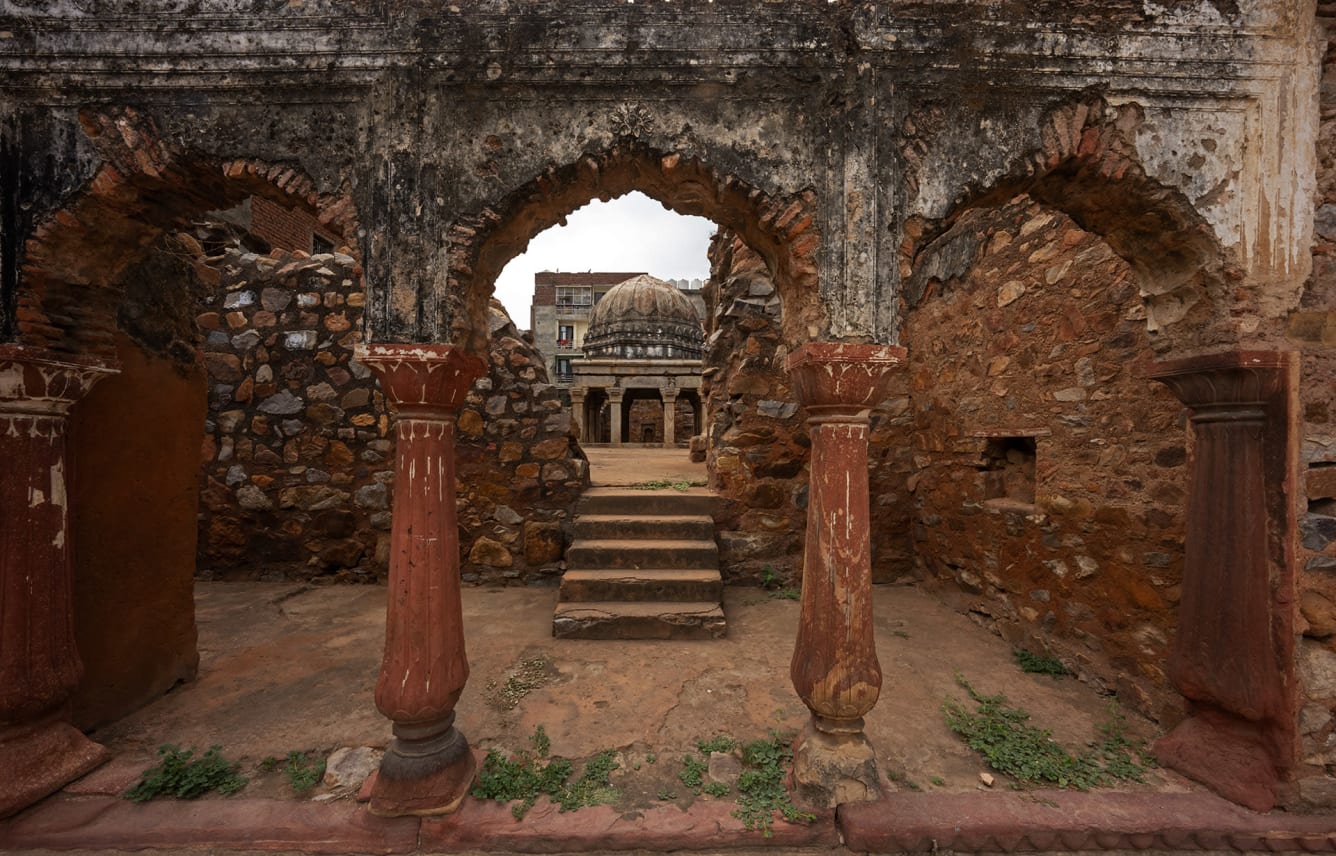
Despite its grand size, the Khirki Masjid is hard to find unless you know it exists. The 700-year-old mosque lies in a lane opposite one of Delhi’s swankiest malls in Saket, surrounded by multi-coloured buildings. Built in 1387 AD during the Tughlaq dynasty, the Khirki Masjid is known for its nine groups of nine domes—one group in the middle and eight groups lining the edges. In all, Khirki Masjid has an impressive set of 81 domes.
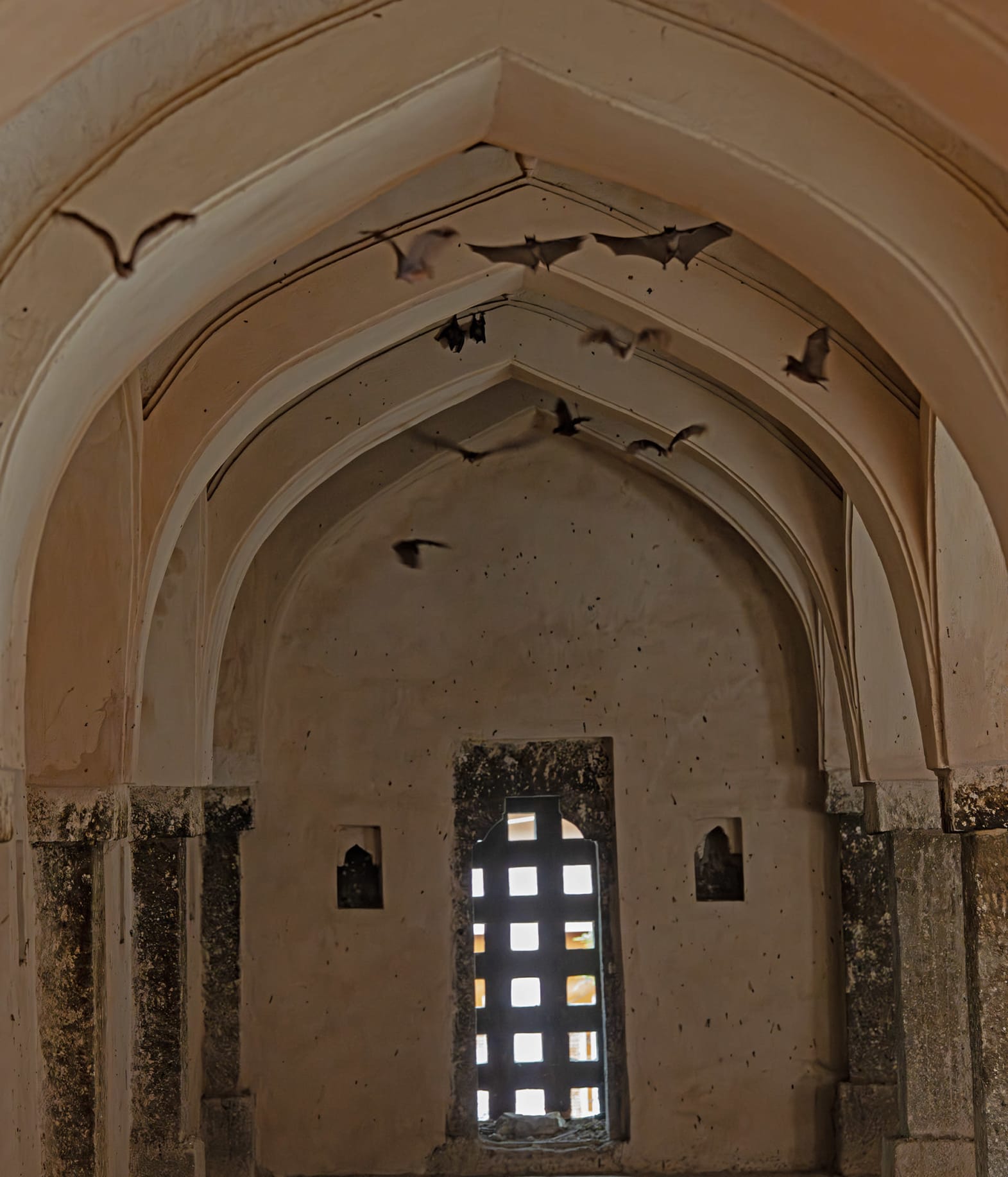
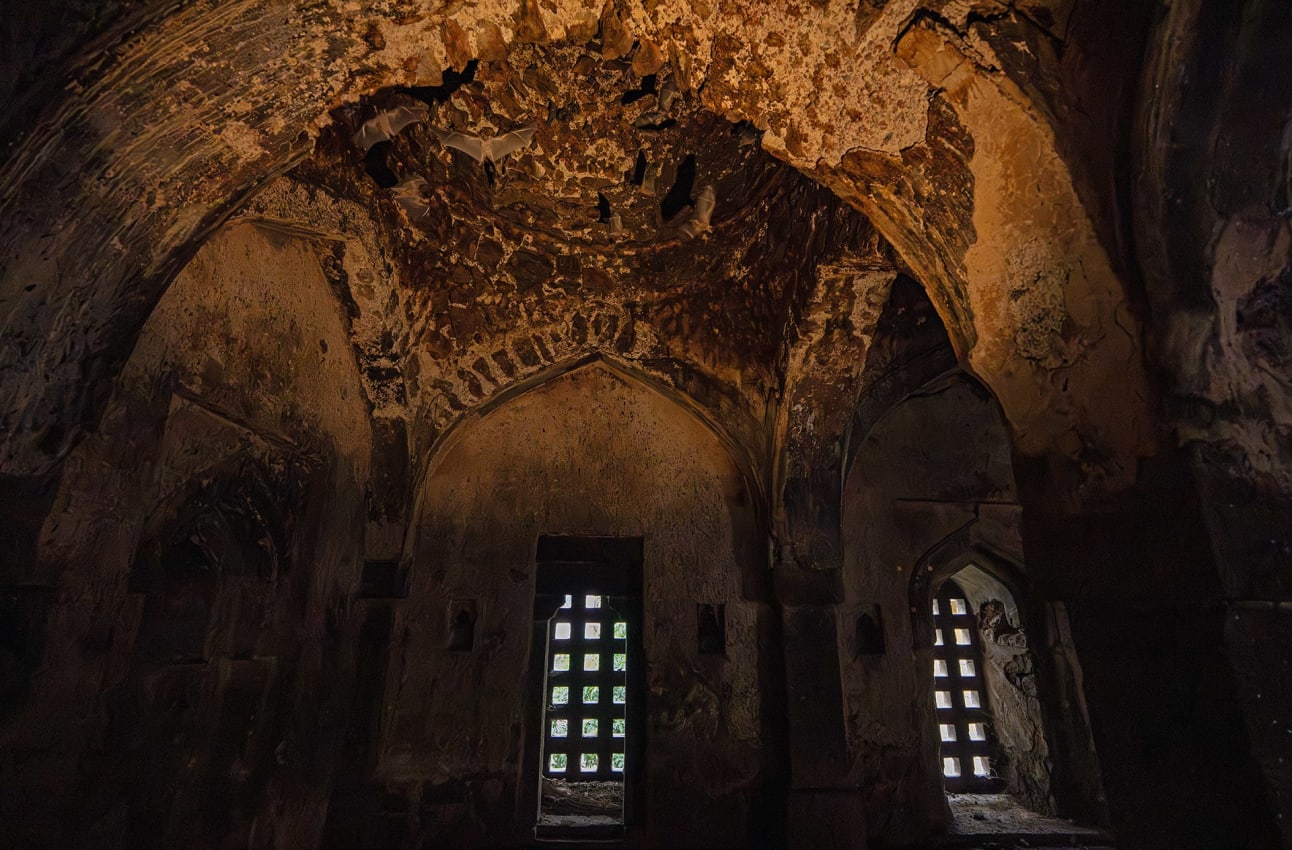
In the bare domes that retain exposed bricks and crevices, bats roost in the hundreds. We see at least four species here — fulvous fruit bats, lesser and greater mouse-tailed bats, and naked-rumped tomb bats. “Fulvous fruit bats especially seem to love the domes,” says Chakravarty. “They are very gregarious bats and tend to congregate over each other, filling the entire dome from the inside.”
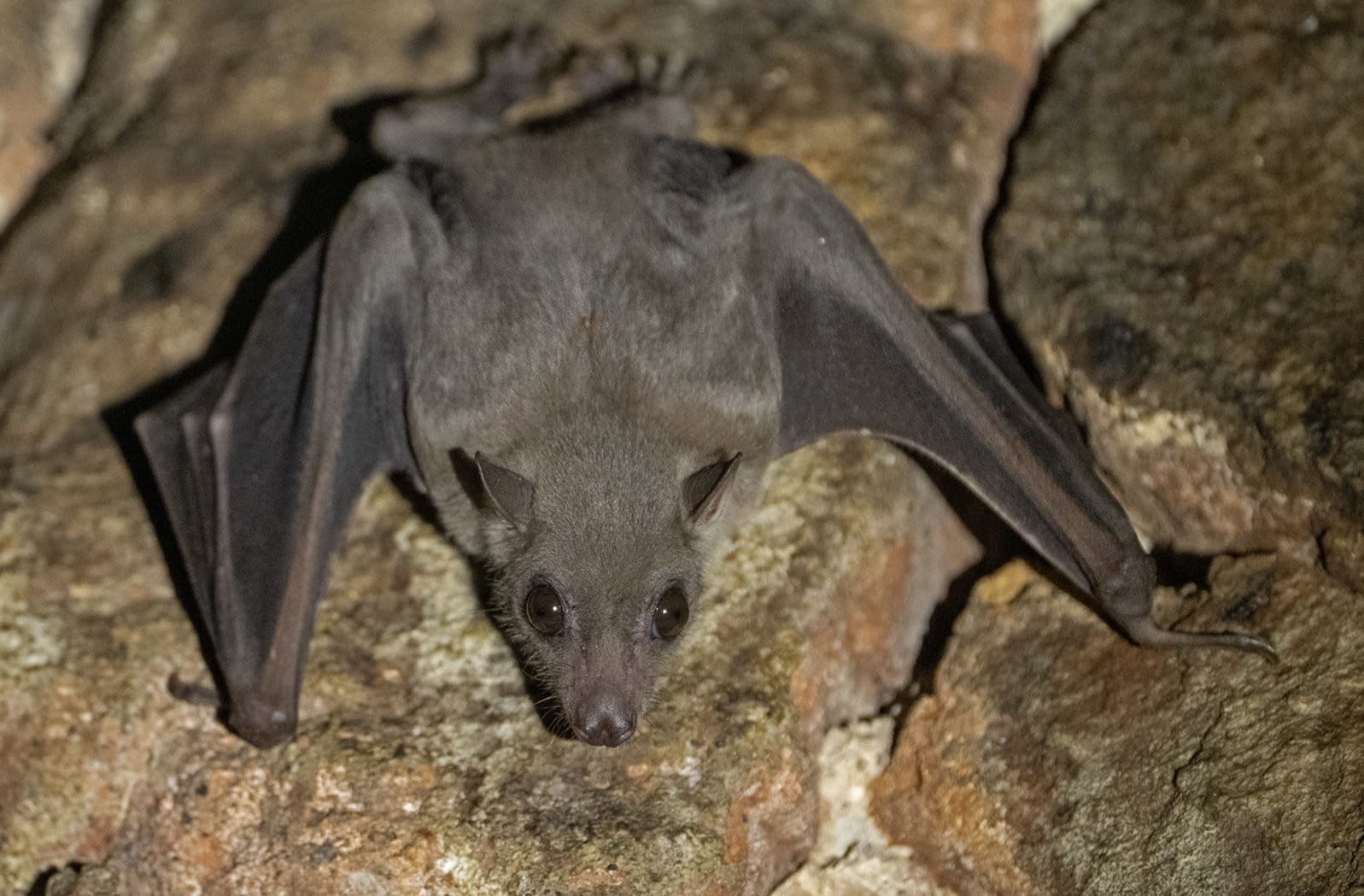
Indian fulvous fruit bats (Rousettus leschenaultii) are among the most effective nocturnal pollinators of small to mid-sized fruits and flowers in Delhi. They can fly over 20 km in a night, pollinating large numbers of plants along the way.
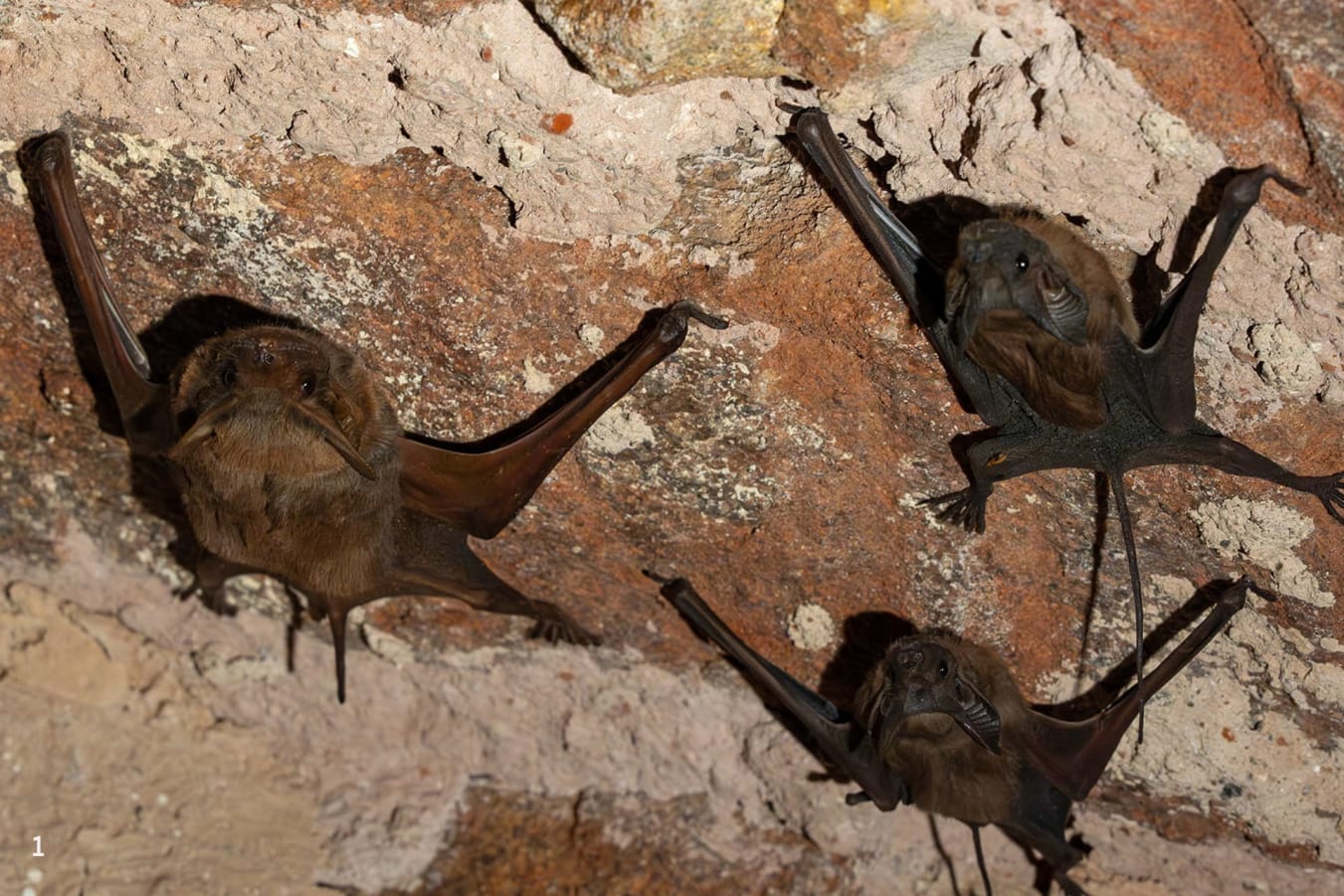
Naked-rumped tomb bats (Taphozous nudiventris) — furry, flat-faced, shy — do not hang upside down unlike most bats; they spread their limbs and press themselves against grainy walls. They are the least gregarious bats living in Delhi’s monuments. They usually form small colonies of under 10-15, often squeezed in between mouse-tailed bats.
Beneath the drama we see, there’s more we can’t. Under the crumbling grandeur, the mosque hides teh-khanas — at least 100 vaulted cells — that remain some of the safest abodes for bats in the city.
Zafar Mahal: The Last Mughal palace
On another muggy day, we follow Shokeen through the crisscrossing lanes of Mehrauli. The Mehrauli complex has seen at least 1,000 years of continuous human occupation, with its 100+ monuments in various stages of restoration or neglect. Within its hustle-bustle lies an ignored structure: Zafar Mahal, built in the 14th century by Bahadur Shah Zafar. The last Mughal king’s Mahal is the final architectural structure of the Mughal Empire before the British captured Delhi in 1857.
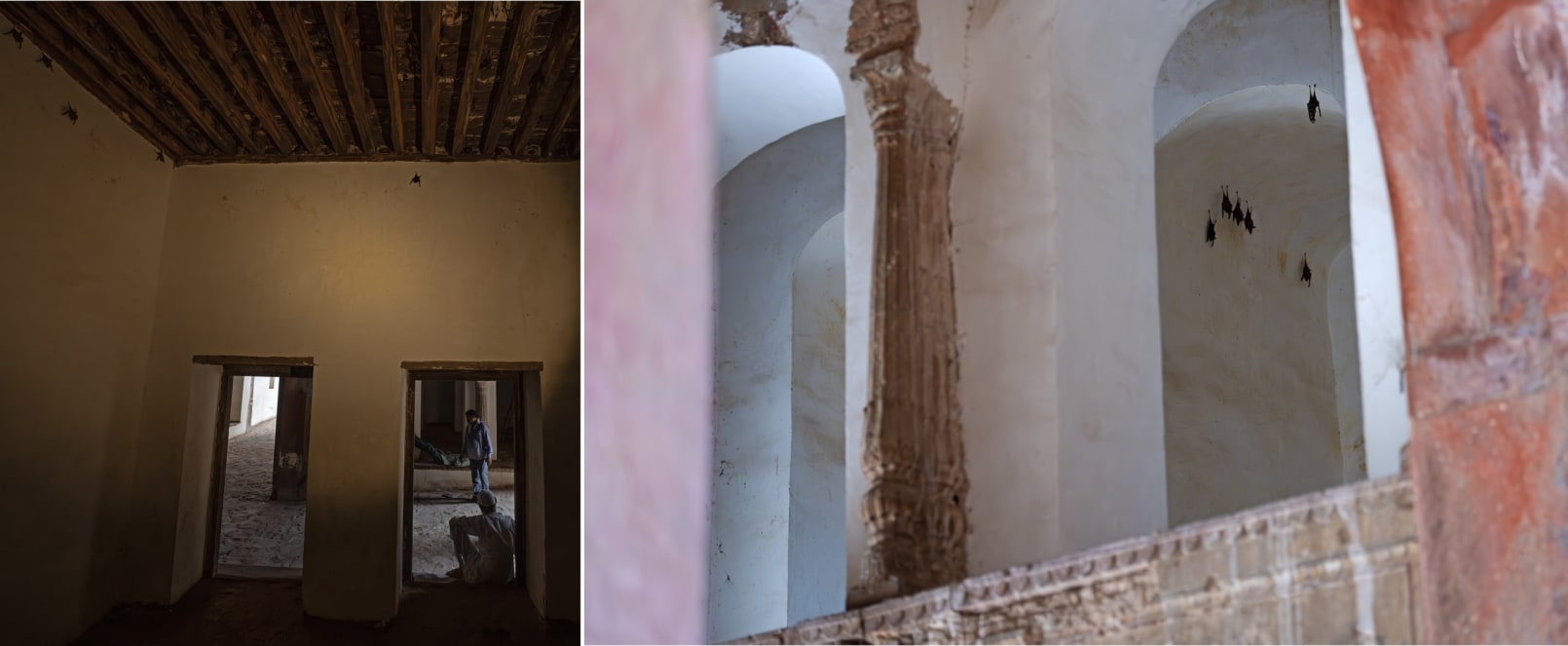
It’s the neglect that has allowed bats to thrive here. Once you enter Zafar Mahal’s large gate and enter chambers on either side, you’ll find lesser mouse-tailed bats (Rhinopoma hardwickii) hang upside down from wooden ramparts, wiggling their upright tails. Others stick to walls as if glued to plaster. Bats can crawl backwards and forwards on walls, using their tails as a tactile sensor, almost like a walking cane.
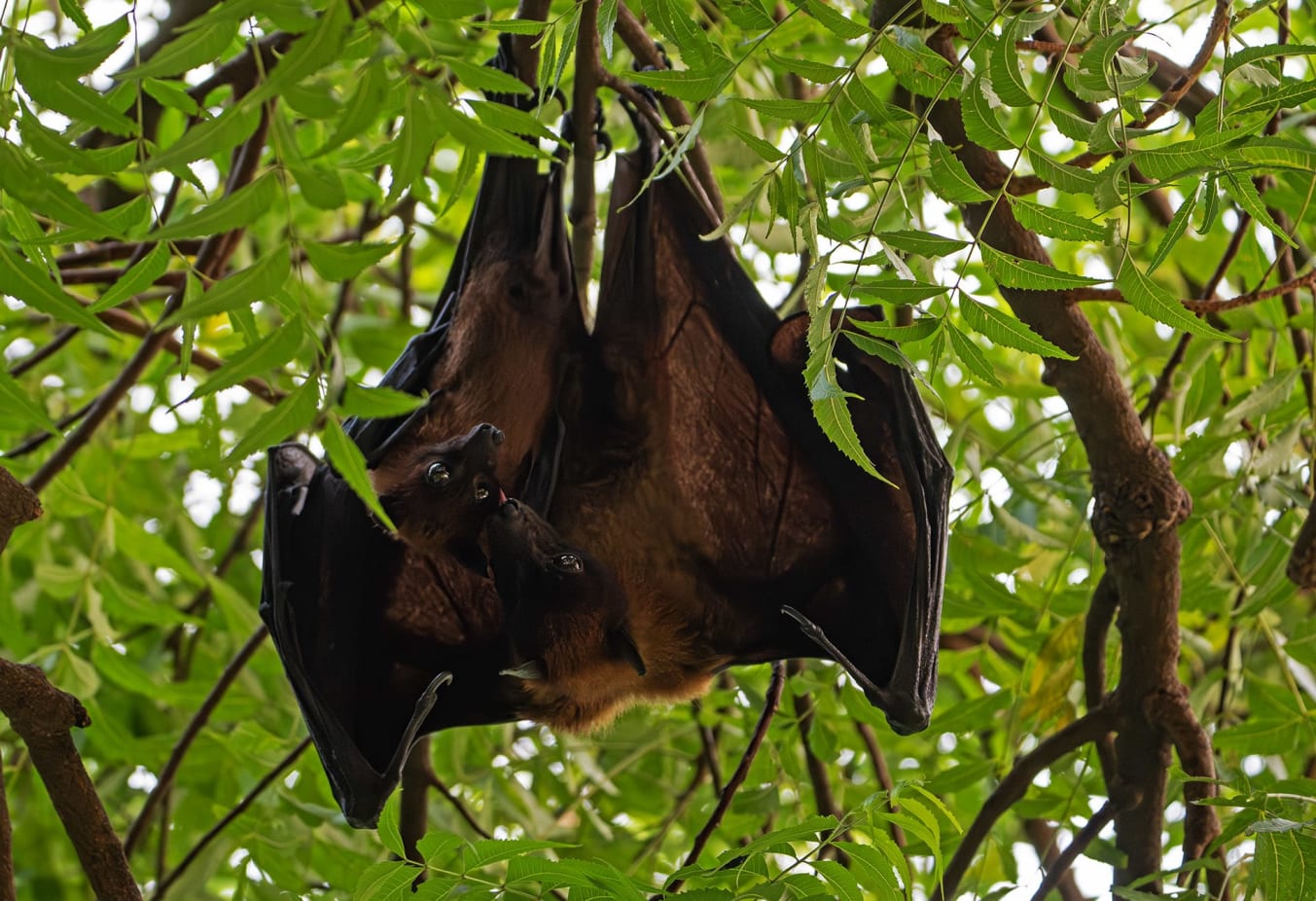
Behind Hauz Khas Village, large colonies of Indian flying foxes (Pteropus medius) hang from trees that face the surrounding water tank. Built in 1284 by Sultan Alauddin Khalji, this lake ensured a continuous water supply to the nearby Siri Fort. Fox-faced megabats hang upside down from the trees with pups suckling their mothers.
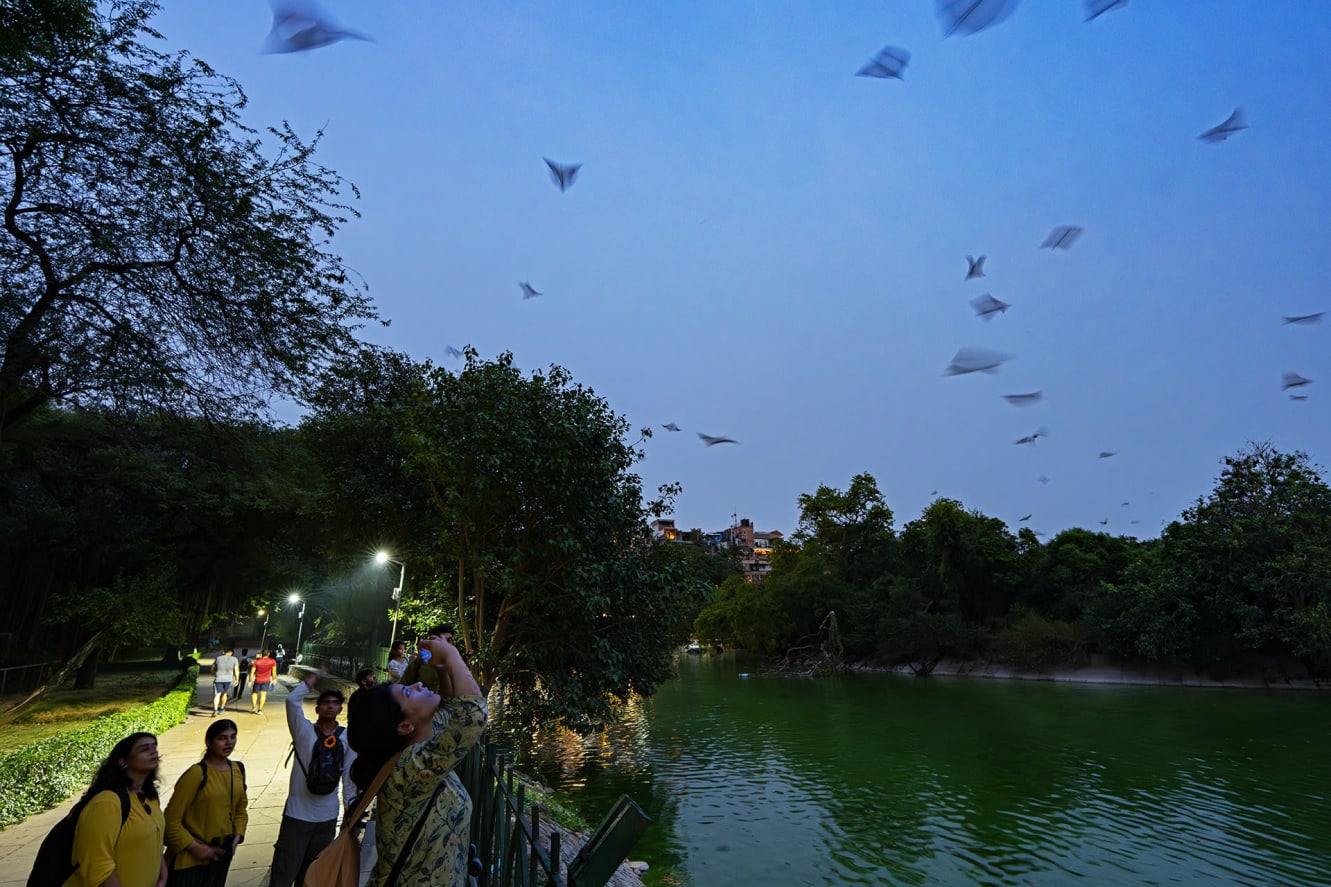
As the sun sets, they leave their roosts to circle the lake, dancing in the air. We gasp in delight. It is a spectacle few notice.
Bats are vilified across cultures. More recently, they have been demonised for carrying pathogens, including viruses like Lyssaviruses (rabies), Ebola, Marburg, and coronaviruses, that bats themselves have evolved to tolerate. However, bat scientists argue that most transmissions or “spillovers” happen when humans and bats are forced into close contact, especially because of disruptions to their ecosystems.
On the other hand, bats are key pollinators and seed dispersers, responsible for at least 500 flower species. They are natural pest controllers. Chakravarty and team have found preliminary evidence that Delhi’s mouse-tailed bats, which travel up to 20 km a night, feed on pests plaguing rice, sugarcane, and millet on the city’s edges. They’re also among the few nocturnal predators of mosquitoes.

“We need to think about what heritage truly means to us,” says Chakravarty. “Over generations, bats have made these monuments their home. Meanwhile, their natural cave habitats have disappeared from Delhi’s vicinity. If we drive them out, they’ll have nowhere to go.”
No conservation plan in Delhi currently accounts for bats as heritage-site residents. As the city restores its monuments, the question of what happens to the species living inside them remains unanswered.
About the Authors



