 Listen to this article
•
15:34 min
Listen to this article
•
15:34 min
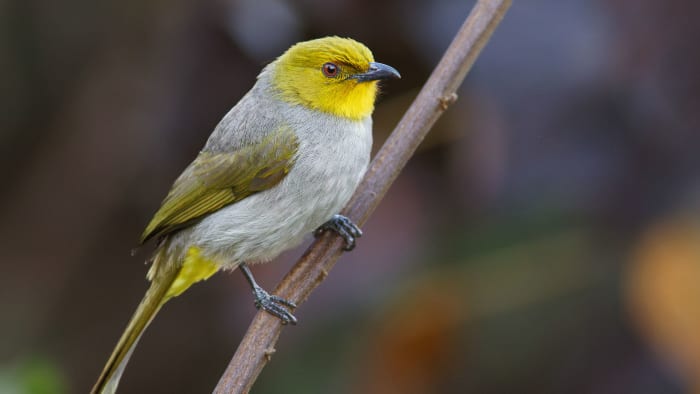
At dawn, Hampi’s granite hills and dry scrub vegetation come alive with quiet movement. Between boulders, native shrubs fruit in the early light, drawing insects, lizards, and one of India’s rarest birds, the yellow-throated bulbul (Pycnonotus xantholaemus).
Endemic to the Deccan Plateau, this species, classified as “Near Threatened” on the IUCN Red List, depends on rocky hill systems dotted with thorny vegetation and seasonal pools. Hampi’s terrain, with its scattered outcrops and patches of dry scrub, offers ideal conditions for the bulbul to feed and breed. Yet even here, its presence is fragile. Fewer than 5,000 mature individuals remain across its limited range in Karnataka, Andhra Pradesh, Tamil Nadu, and Telangana. Its survival reflects the delicate balance between ecological resilience and human pressure in one of India’s richest cultural landscapes.
A Stone and Scrub Specialist
Unlike its louder, more adaptable cousins, the yellow-throated bulbul is discreet and typically found in pairs or small family groups rather than alone
Olive-grey above, with a bright yellow throat that catches the light, it blends perfectly with the granite terrain — an adaptation that shields it from predators and human attention.
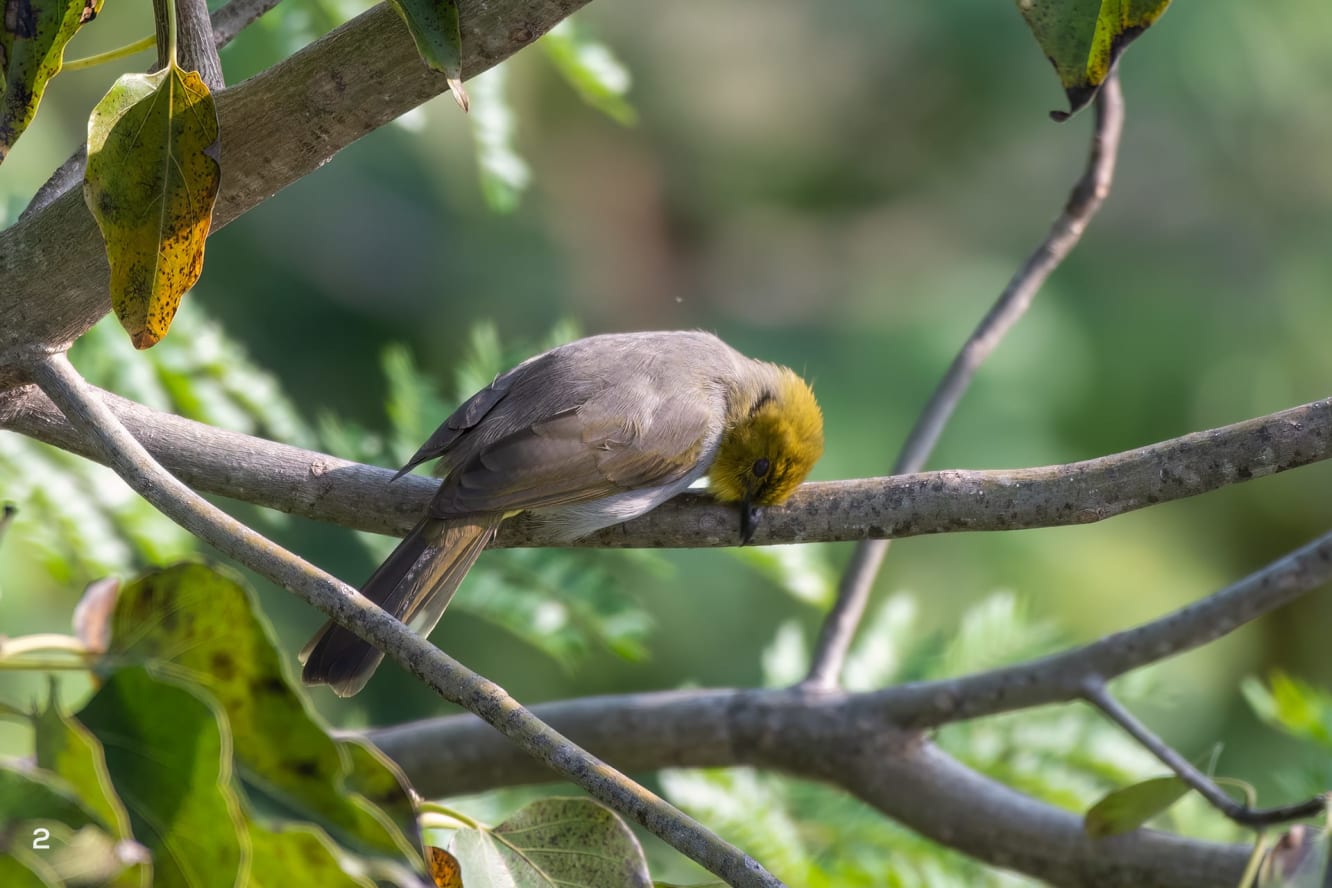
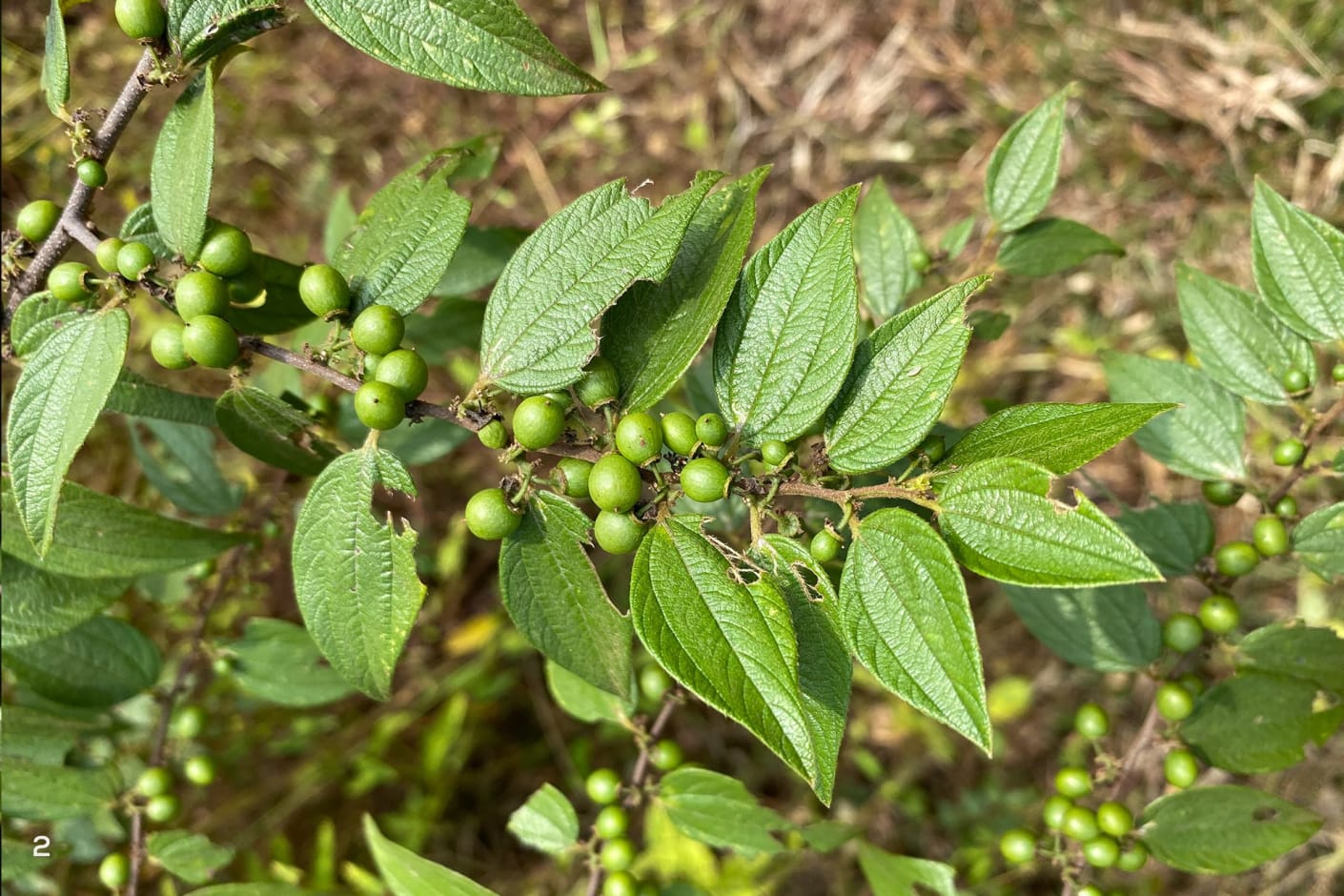
The bird favours dry rocky slopes with native shrubs and small pools that form microhabitats throughout the year. These pockets of moisture are lifelines during summer, sustaining insects and fruiting plants that the bulbul depends on. Its diet includes insects, figs, and berries from shrubs such as Carissa spinarum and Ziziphus oenoplia, and it likely facilitates seed dispersal, also helps disperse Lantana, enabling its spread
Low nests hidden in scrub are easily disturbed by grazing, fire, or human movement. Adapted to scarcity, the species survives on a delicate balance; even a single season of poor fruiting or vegetation loss can lead to breeding failure, showing how tightly its life cycle is tied to microhabitat stability.

Scattered across the Deccan
The yellow-throated bulbul’s distribution is genuinely fragmented, with small, isolated populations confined to rocky hill systems at sites such as Hampi, Gingee, Nandi Hills, and parts of Anantapur and Tirupati. Its full range may be underestimated due to uneven survey coverage. Authoritative assessments by the IUCN Red List and BirdLife International suggest that additional populations may occur in similar but unsurveyed habitats.
Studies by the Centre for Cellular and Molecular Biology (CCMB) and the Salim Ali Centre for Ornithology and Natural History (SACON) show that this patchy range leaves the species vulnerable to local extinctions. Once a hill is quarried or cleared, recolonisation is rare because birds seldom move long distances between suitable patches. Limited dispersal makes each population ecologically significant.
In the last two decades, several habitats in Andhra Pradesh and northern Tamil Nadu have been lost entirely to quarrying and land conversion. Even surviving landscapes face increased human activity and invasive vegetation, fragmenting what were once continuous stretches of scrub. As a result, already localised populations have become further isolated into smaller, disconnected pockets, each facing distinct pressures.

Hampi: Where Rocks Shelter Life
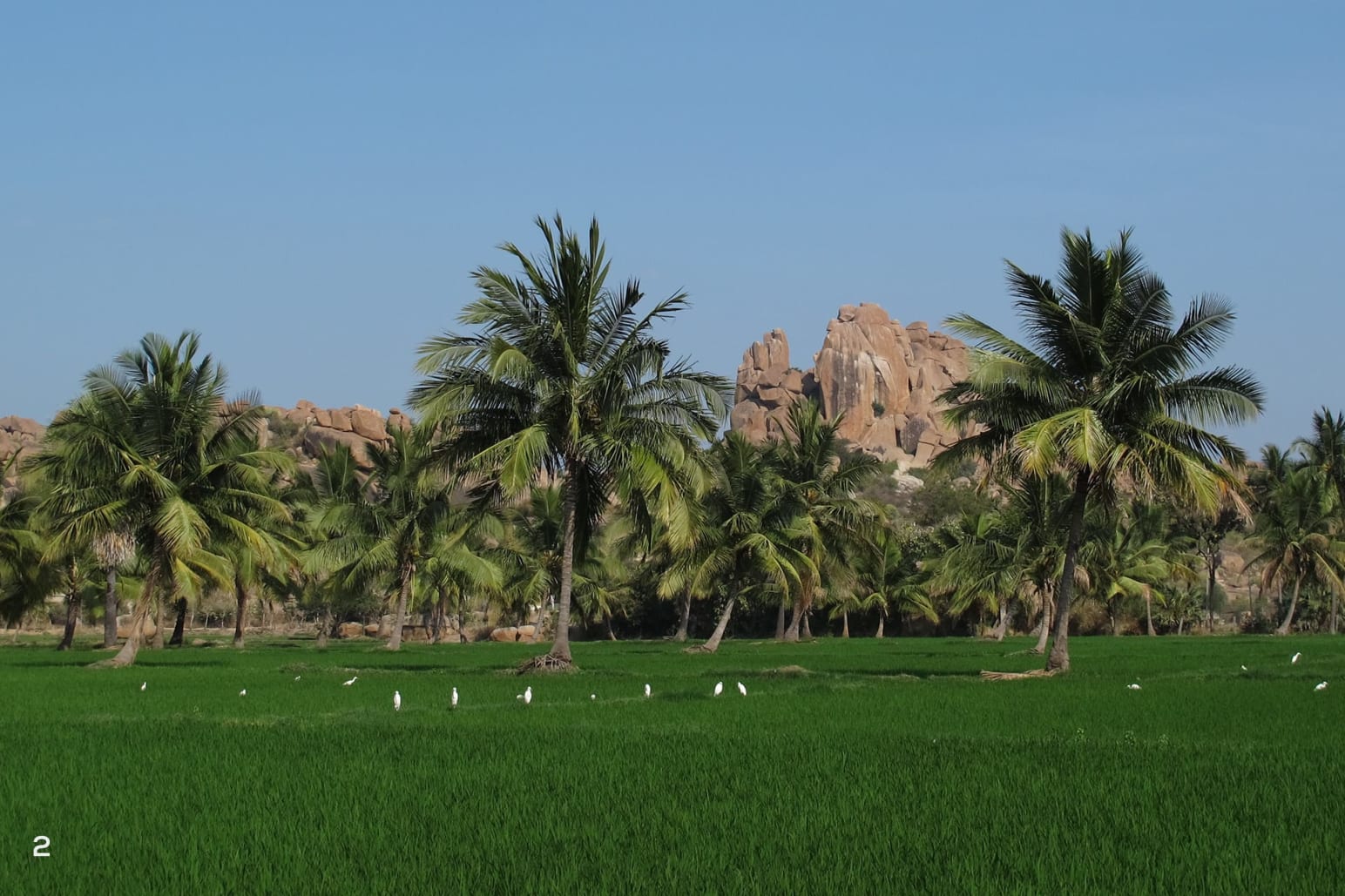
Hampi’s rocky ridges, dotted with shrubs and seasonal pools, form one of the most secure habitats for the species. Its mix of boulders, dry forest, and open scrublands creates a microclimate of shade, water retention, and food sources. Birdwatchers record small groups near temple complexes, along the Tungabhadra’s rocky banks, and across the drier ridges beyond the heritage zone.
But accessibility also invites pressure. Tourist trails, construction, and fires (lit for clearing or recreation) have degraded gullies where bulbuls once nested. Increased vehicular activity and clearing of vegetation alter the fragile ground cover essential for insects and shrubs.
Despite such disturbances, Hampi still harbours one of the largest remaining populations, making it crucial for the species’ survival. Protecting it here offers an opportunity to integrate ecological conservation within a living heritage site, an approach that could guide the management of similar rocky landscapes across India.

Quarrying and Fragmentation
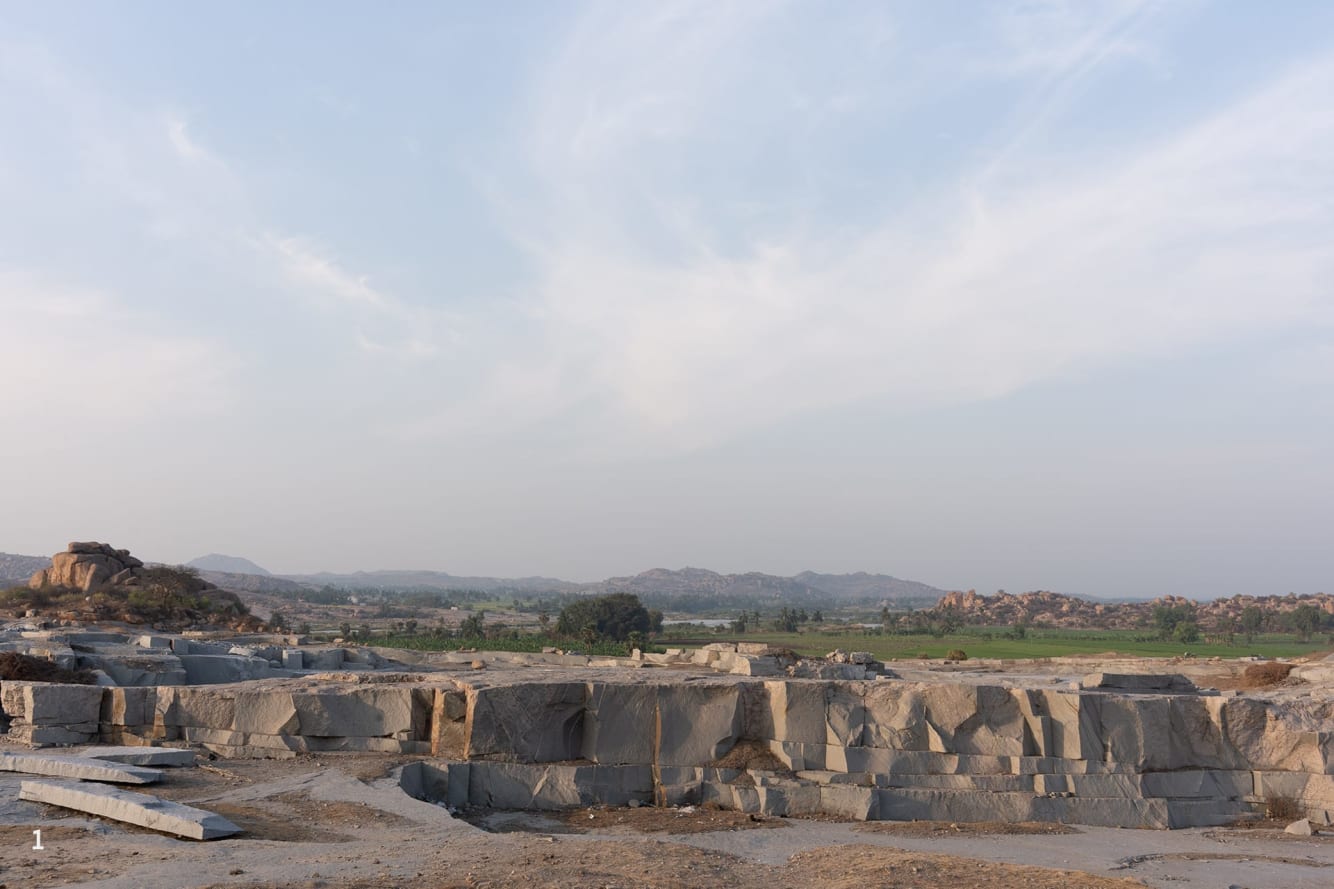
Across the Deccan Plateau, granite quarrying remains the greatest threat. The same stone that provides the bulbul shelter is quarried for construction, destroying microhabitats that retain moisture and support fruiting shrubs. Because most sites fall outside protected areas, they are under local or private ownership and are subject to minimal ecological safeguards.
Once quarried, the terrain loses its structure: pools dry up, shrubs vanish, and with them, the birds. Field reports note steep declines in areas where quarrying intensified. Hillocks around Anantapur (Andhra Pradesh) and Dharmapuri (TN) that hosted breeding pairs as recently as 2010 are now silent. Fragmentation isolates remaining populations, increasing the risk of extinction in the absence of genetic exchange.

Threats: Climate, Fire and Invasives
Beyond quarrying, subtler forces are reshaping the bulbul’s world. Irregular rainfall and rising temperatures affect the flowering and fruiting cycles of native plants. Southern India has seen long dry seasons, reducing the availability of berries and insects.
Fires, accidental or intentional, strip slopes of vegetation needed for nesting and foraging, exposing nests to heat and predators.
Invasive species such as Lantana camara are spreading, replacing native berry-bearing shrubs. As food sources decline, bulbuls must move or perish. However, yellow-throated bulbuls also feed on lantana berries, thereby contributing to its dispersal. Dense lantana thickets suppress native regrowth and alter soil and microclimates. Such changes often go unnoticed but can be as damaging as quarrying, slowly turning viable breeding grounds into ecological deserts.
Conservation and Community Action
Despite mounting threats, conservation efforts are increasing.
Research and Mapping: Surveys by CCMB, SACON, and regional birders have identified new populations and clarified habitat needs. Remote sensing and GIS mapping now highlight critical habitats needing protection.
Policy and Advocacy: Conservation groups are urging state agencies to recognise rocky outcrops as critical habitats and regulate quarrying near known sites. Incorporating these landscapes into regional biodiversity action plans is an emerging priority.
Citizen Science: Platforms like eBird host detailed observations that help track distribution and seasonality. Citizen data has been vital in documenting populations outside traditional survey zones.
Community Stewardship: Local NGOs and guides in Hampi promote awareness and habitat restoration by planting native shrubs and preventing fires. Some heritage tour operators now include ecological interpretation, helping visitors understand how cultural and natural heritage intertwine.


Indicator of Rocky Hill Ecosystems
The yellow-throated bulbul is more than a rarity. It represents the Deccan’s rocky hill ecosystems, which support unique plants, reptiles, and small mammals adapted to heat and scarcity. Protecting the bulbul preserves these ecosystems and the processes that sustain them.
It also symbolises the bond between culture and nature. The same stones that hold centuries of history support life today. Safeguarding the bulbul’s habitat is part of preserving Hampi’s broader legacy, in which ancient landscapes endure through their living inhabitants.
The Way Forward
Conservation must rest on three actions:
Scientific Monitoring: Continued surveys and population tracking across the Deccan Plateau.
Habitat Protection: Safeguards against quarrying, encroachment, and unregulated development.
Community Engagement: Involving residents, birders, and tourists in awareness and habitat restoration.
As the sun rises over Hampi, the granite warms up, and a soft call drifts from the scrub. The yellow-throated bulbul remains a fragile yet enduring presence in this ancient landscape.
About the Author