Listen to this article
•
15:34 min
Listen to this article
•
15:34 min
Over the salt flats and scrublands of the Little Rann of Kutch, a falcon moves with taut precision. Deceptively small yet driven by speed and intent, the merlin (Falco columbarius) is easy to miss and difficult to forget. It does not announce itself with spectacle. It arrives quietly and hunts with decisiveness. Like the landscapes it crosses, its presence is brief, defined by movement, restraint, and distance. It links continents through flight, touching places only briefly before moving on.
I did not go to the Little Rann looking for a merlin or any particular species. I went to learn how to watch and listen, to attune myself to the land and its rhythms, and to experience birding in its entirety. In 2019, fresh out of a short-term course in ornithology, I was still uncertain of my own attention. Field guides felt heavier than they should, and calls slipped past before I could place them. I was not chasing targets or compiling lists, but learning how to observe in a landscape that offered little guidance. The Little Rann teaches restraint quickly. Wide, bright, and exposed, its salt flats harden into cracked plates while sparse scrub struggles to survive. At first, the landscape felt austere, almost severe. Gradually, it began to open. The appearance of the merlin was pure luck, a fleeting encounter that revealed as much about the discipline of observation and the subtlety of the habitat as it did about the bird itself.

Cover Photo: As one of the smallest falcon species, the merlin symbolises the delicate balance of a healthy ecosystem, acting as both predator and indicator of biodiversity within open natural landscapes.
The Little Rann of Kutch occupies an uneasy place in the imagination. Neither desert nor wetland in any conventional sense, it resists easy classification. During the monsoon, water spreads across vast tracts, transforming the flats into a shallow inland sea. By winter, moisture retreats into the ground, leaving behind a gleaming crust of salt that reflects the sun with relentless intensity.
Ecology of Extremes
To stand here is to stand in a place often misread as empty. Across India, open habitats such as grasslands, scrublands, and saline flats have long been dismissed as wastelands. Their lack of trees or visual lushness has made them vulnerable to diversion for industry, infrastructure, and agriculture. Yet these landscapes are among the most specialised ecosystems in the subcontinent. Life here is adapted to extremes of heat, light, salinity, and scarcity. What appears barren is, in fact, finely balanced. For migratory birds that arrive at the Little Rann in winter, it is not an endpoint but a pause in a much longer journey. For predators, it is an opportunity in the open landscape.



As a beginner, I struggled to reconcile the apparent barrenness with the steady movement around me. Birds emerged from the scrub and dissolved back into it. Asian houbara, also known as the MacQueen’s bustard, moved across the flats with quiet dignity. Short-eared owls rose suddenly from the scrub, flying low and buoyant over the flats, harriers quartered the open ground with methodical focus, and peregrine falcons cut through the sky with effortless authority. For someone new to birding, the abundance was overwhelming. The landscape demanded patience rather than quick identification. I stopped cataloguing and watched instead, listening and letting the Little Rann set the pace. That, perhaps, was the first lesson it offered.
The Cut in the Air
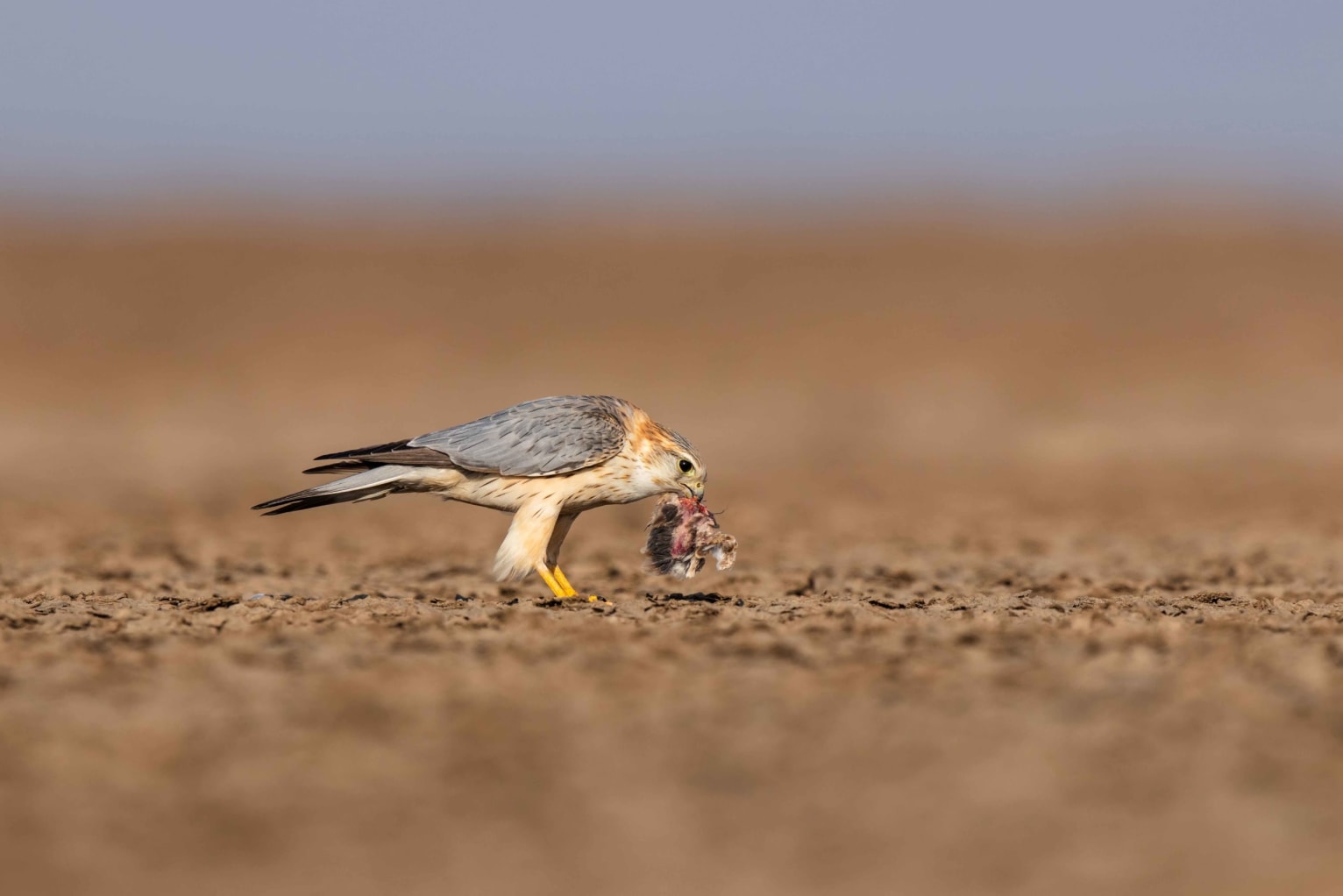
Then something sliced across the stillness. Low over the ground, fast and deliberate, a small falcon cut through the air like a thought completed mid-sentence. It flashed past before my eyes could fully register it, then settled briefly on a low rise, upright and alert. In a place too open to hide anything, the merlin stayed elusive. It hunted, paused, and moved on. The encounter lingered longer than many others.
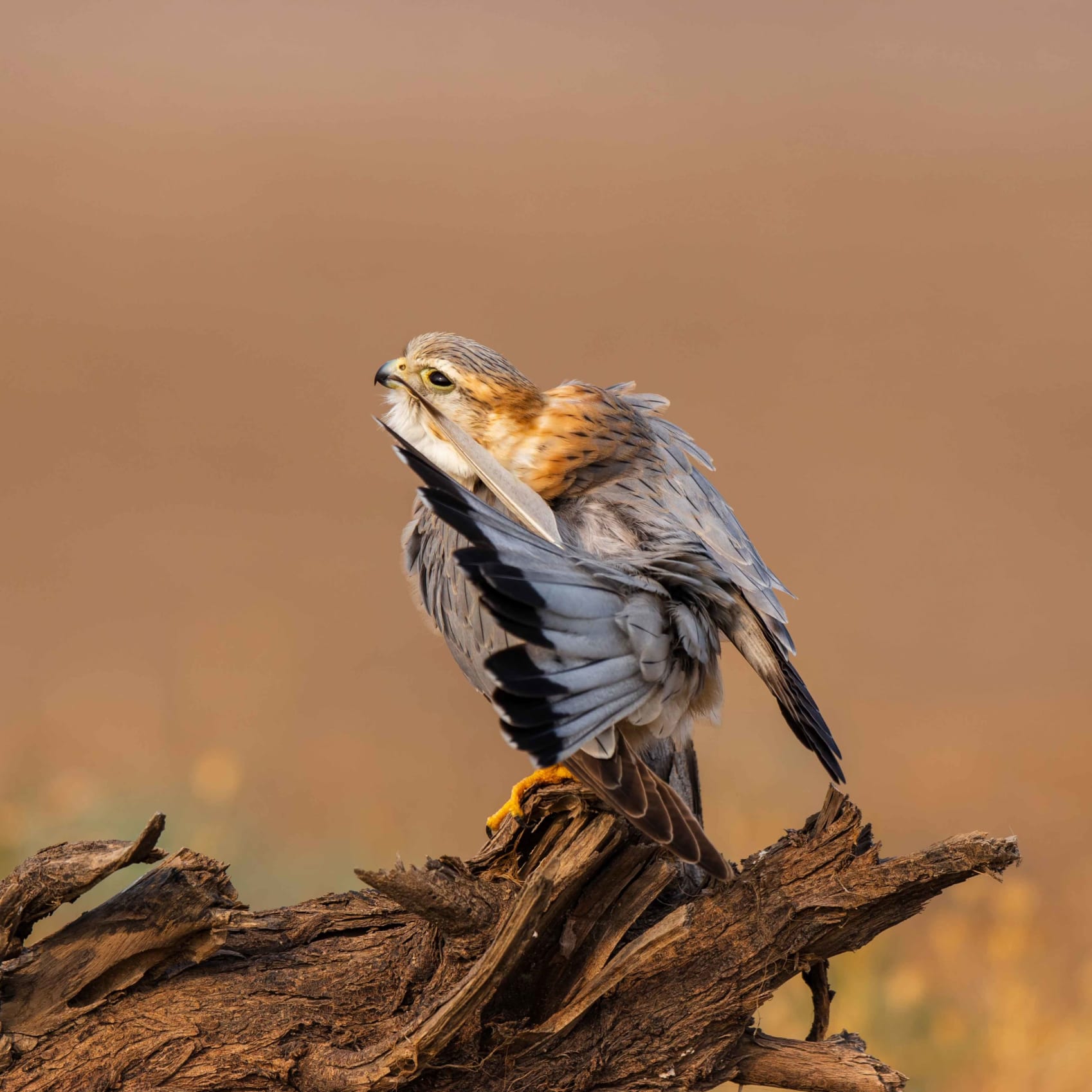
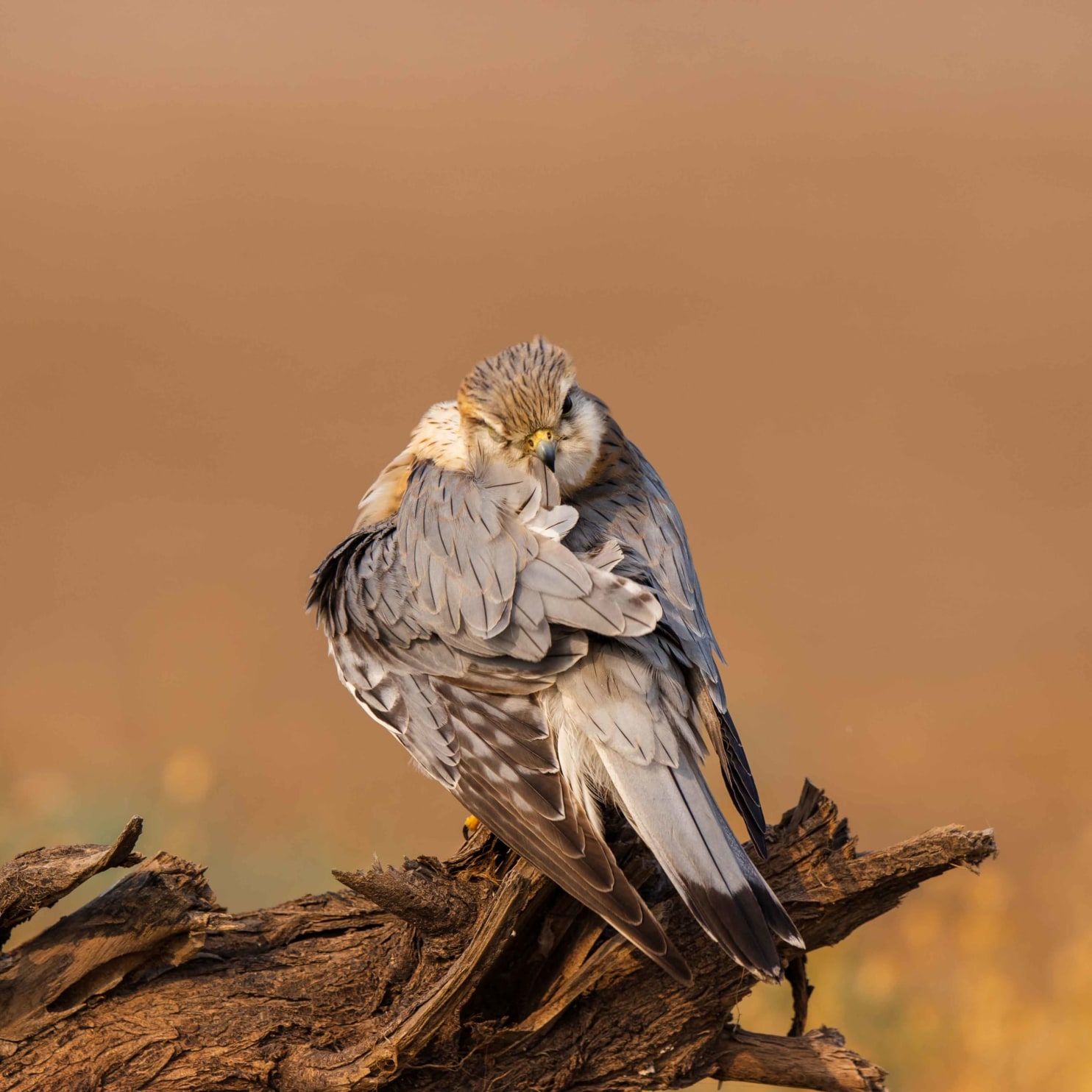


The merlin is among the smallest falcons in the world, measuring roughly 26 to 31 centimetres in length with a wingspan of 53 to 58 centimetres. Compact and muscular, it is built for speed rather than spectacle. Its wings beat rapidly, designed for short bursts rather than long glides. Unlike peregrine falcons, which rely on dramatic stoops from height, merlins hunt low, fast, and directly.
Plumage varies with age and sex. Adult males tend towards slate-blue upperparts with finely streaked underparts, while females and juveniles wear warmer browns with heavier markings. In the field, these distinctions often fade. What remains unmistakable is intent, the sense that the bird is already committed to its next decision.
The merlin I saw in the Little Rann was a winter visitor.
A Bird of Many Horizons
Merlins are a Holarctic species, breeding across vast stretches of the northern hemisphere, from Alaska and Canada through Europe and into northern Asia. They favour open forests, woodland edges, grasslands, moorlands, and tundra margins. Their breeding season is brief and compressed by the short northern summer. Rather than building elaborate nests, they often reuse abandoned structures built by crows or magpies, or lay eggs in simple ground scrapes.
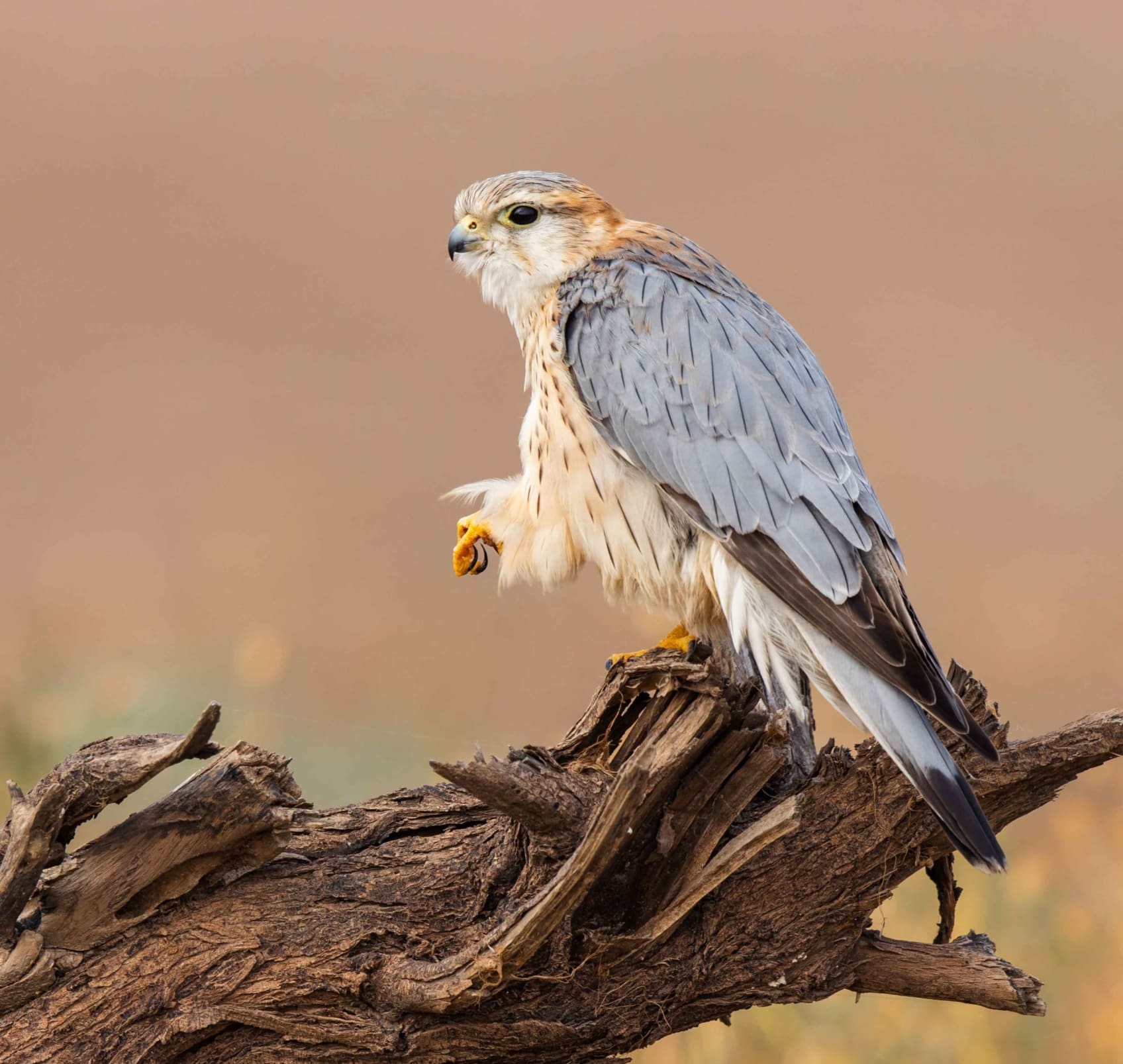
When winter closes in, merlins disperse widely. Some move south through Europe into Africa, others across the Americas. A smaller number reaches the Indian subcontinent, appearing quietly in grasslands, scrublands, wetlands, and saline deserts such as the Little Rann of Kutch. Migration is solitary and understated, shaped by prey availability and weather rather than fixed routes. This transcontinental existence makes the merlin both resilient and vulnerable. Its survival depends not on a single place but on a chain of intact habitats spanning thousands of kilometres. In recent years, wintering records show greater unpredictability in merlin’s presence, with variable arrival times and irregular site use. For a species dependent on multiple landscapes across continents, migration is less a route than a chain.
Merlins hunt small birds such as larks and pipits. In the Little Rann, their winter presence follows rainfall, insect abundance, and open feeding grounds. They hunt from low perches or the ground, flying fast and close to the surface. Though birds form the bulk of their diet, merlins are opportunistic. Insects, small mammals, and occasionally reptiles or amphibians supplement their meals. This flexibility allows them to persist across environments ranging from Arctic edges to saline deserts. In the Little Rann, open sightlines and winter prey make the landscape well-suited to their hunting style.
Grasslands on the Margins
For birdwatchers, the merlin’s call is distinctive and sharp, the rapid notes carrying across open land, particularly during the breeding season. These vocalisations are important cues for researchers studying distribution and behaviour.
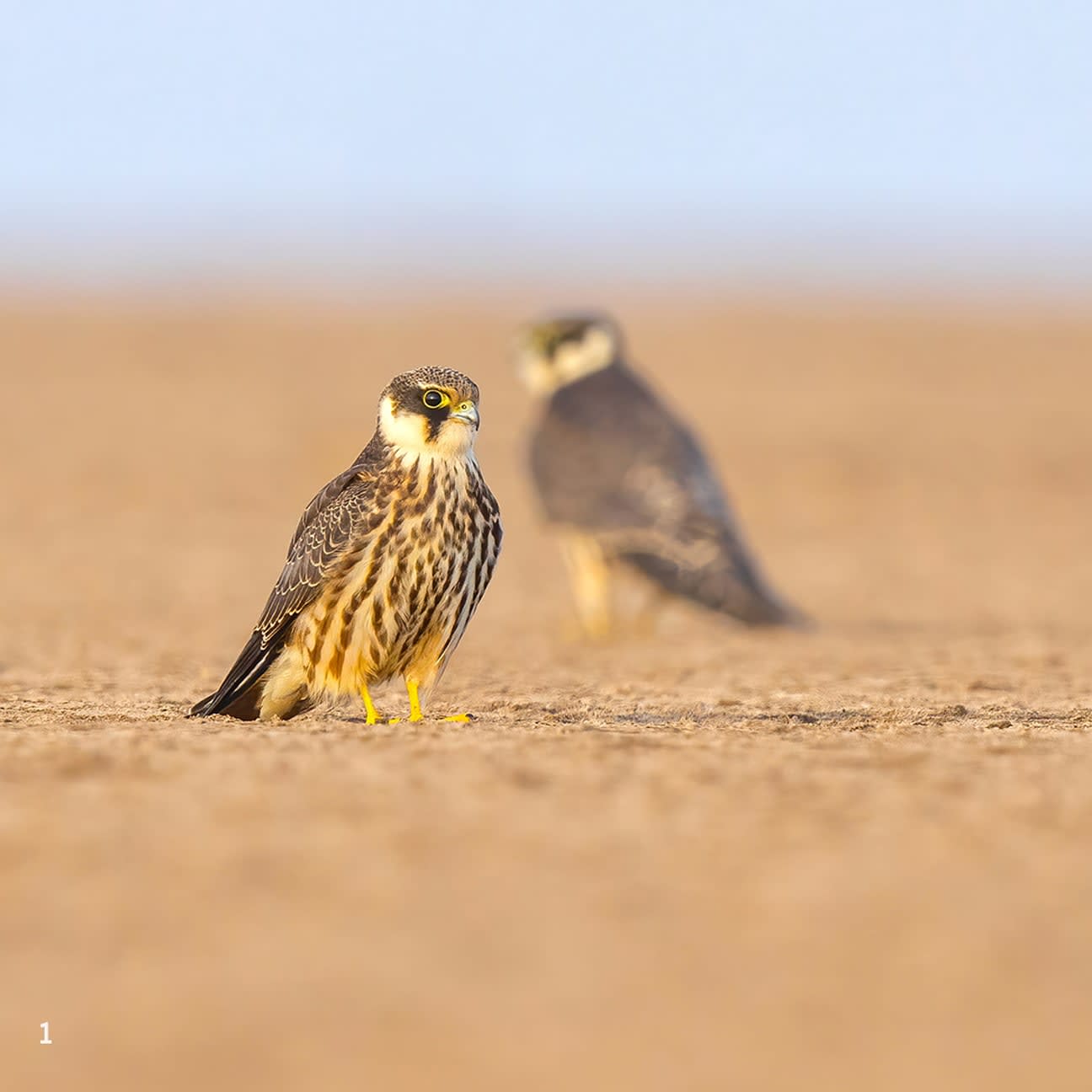
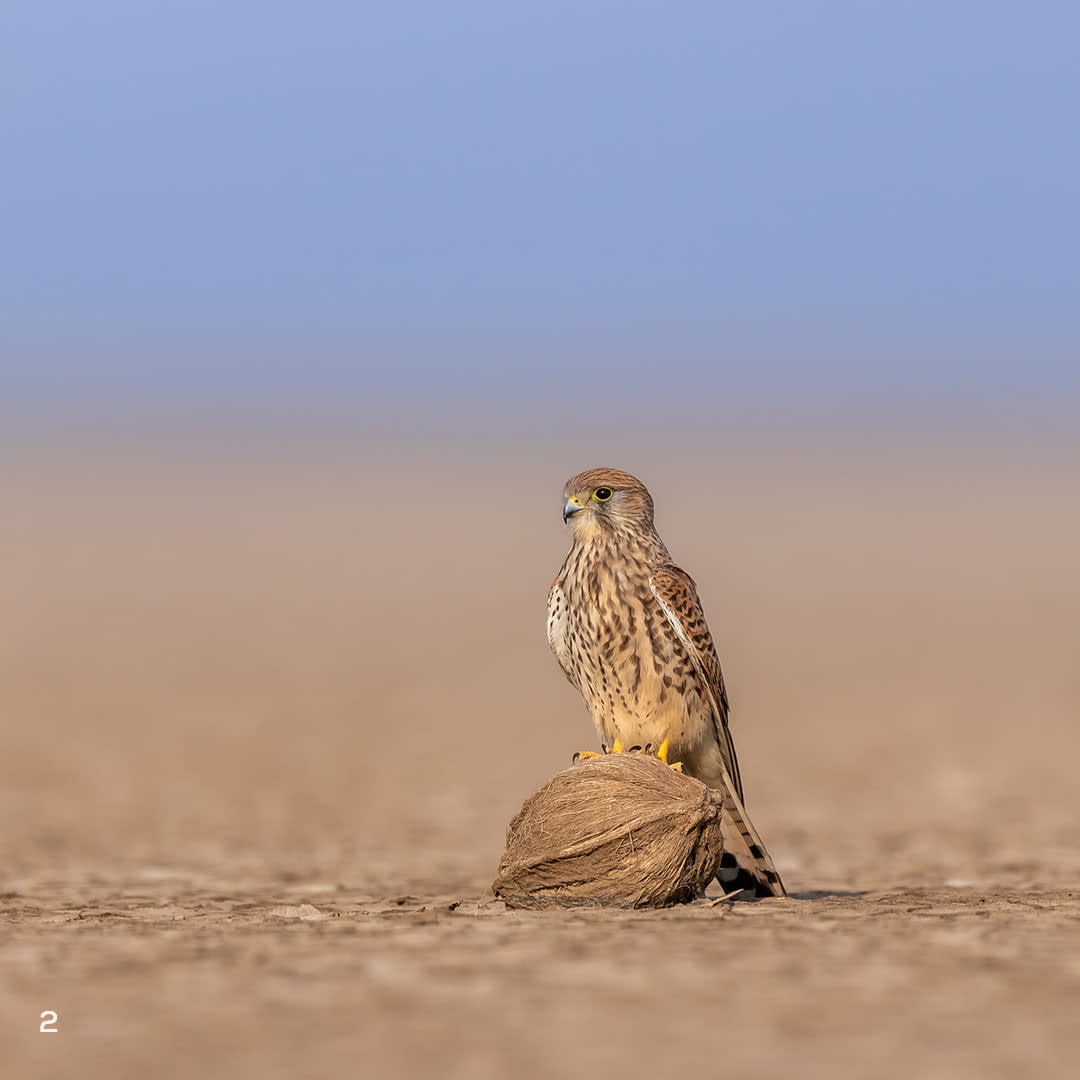


Merlins can be fiercely territorial while breeding, engaging in aerial chases and confrontations. Outside this period, their behaviour shifts. They become more fluid, sometimes roosting communally or travelling loosely during migration, a rare social dimension for such solitary hunters. Wintering merlins do not hold fixed territories. Instead, they remain mobile, responding to prey availability and disturbance. This mobility makes the species difficult to study and easy to overlook.
Like many raptors, merlins have suffered population declines during the mid-twentieth century due to pesticide use, particularly DDT. These chemicals accumulated through food chains, weaken eggshells and reduces reproductive success. Bans on harmful pesticides and stronger protections allowed populations to recover. Today, the species is classified as Least Concern by the IUCN. However, global status can obscure local realities. For a winter visitor, the loss of open habitats means fewer safe places to hunt, rest, and refuel. The impact is gradual, cumulative, and often invisible.
Conservation and Continuity in Open Lands
The merlin’s winter presence reflects the ecological connectivity of open landscapes across continents. Habitat fragmentation driven by land-use change, along with climate-related shifts in rainfall and seasonal timing, threatens prey availability and migratory continuity. Conserving grasslands, scrublands, and saline flats is therefore essential to sustaining these ecological processes.
About the Authors

Preeti Swaminathan