


 Listen to this article
•
15:34 min
One morning, I noticed that a plug point in my veranda had 2 of its 3 holes neatly filled with a white lime-like finish. What could it be? Was it a wasp’s nest? I had seen wasps making pot-like nests; I had seen really small ones making mini hives; and in my childhood, I had the privilege of suffering a sharp wasp bite that had taught me to respect them.
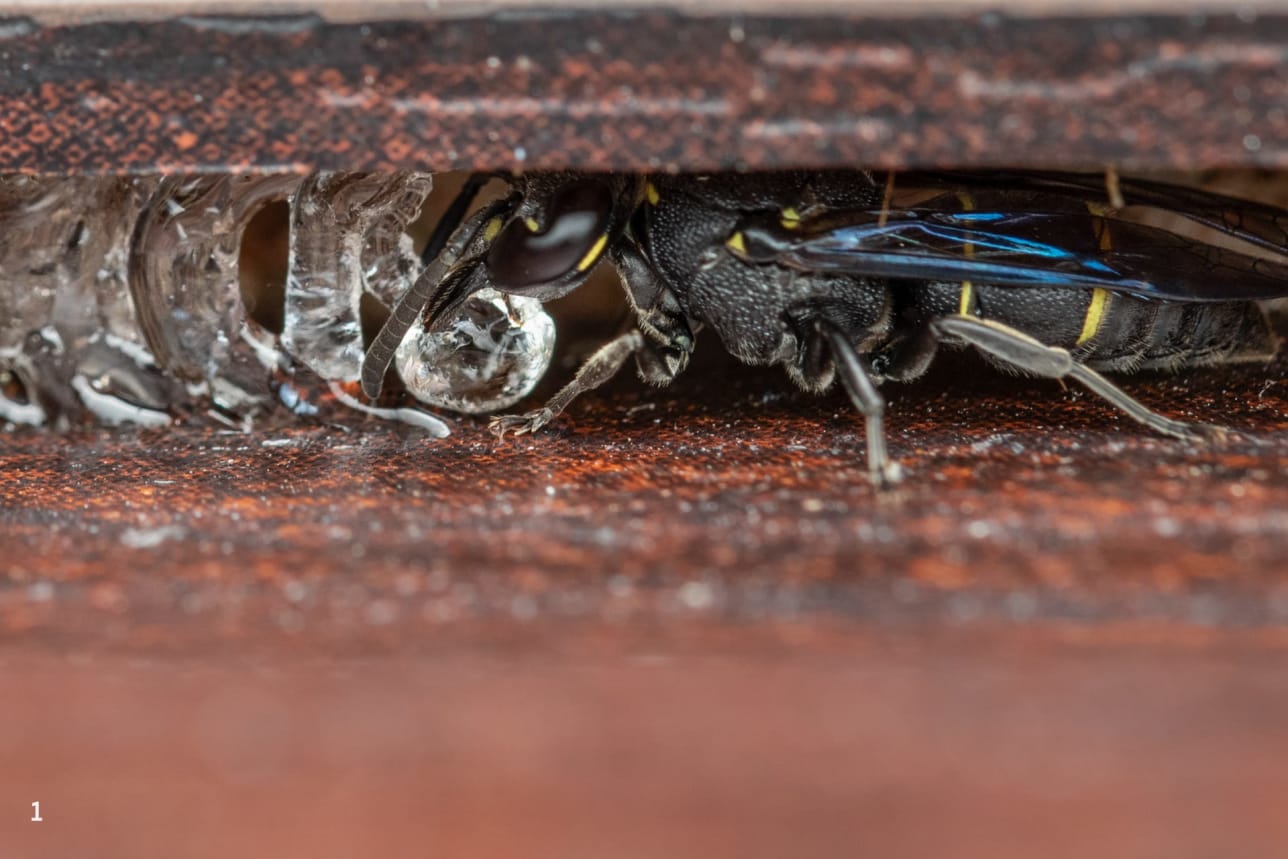
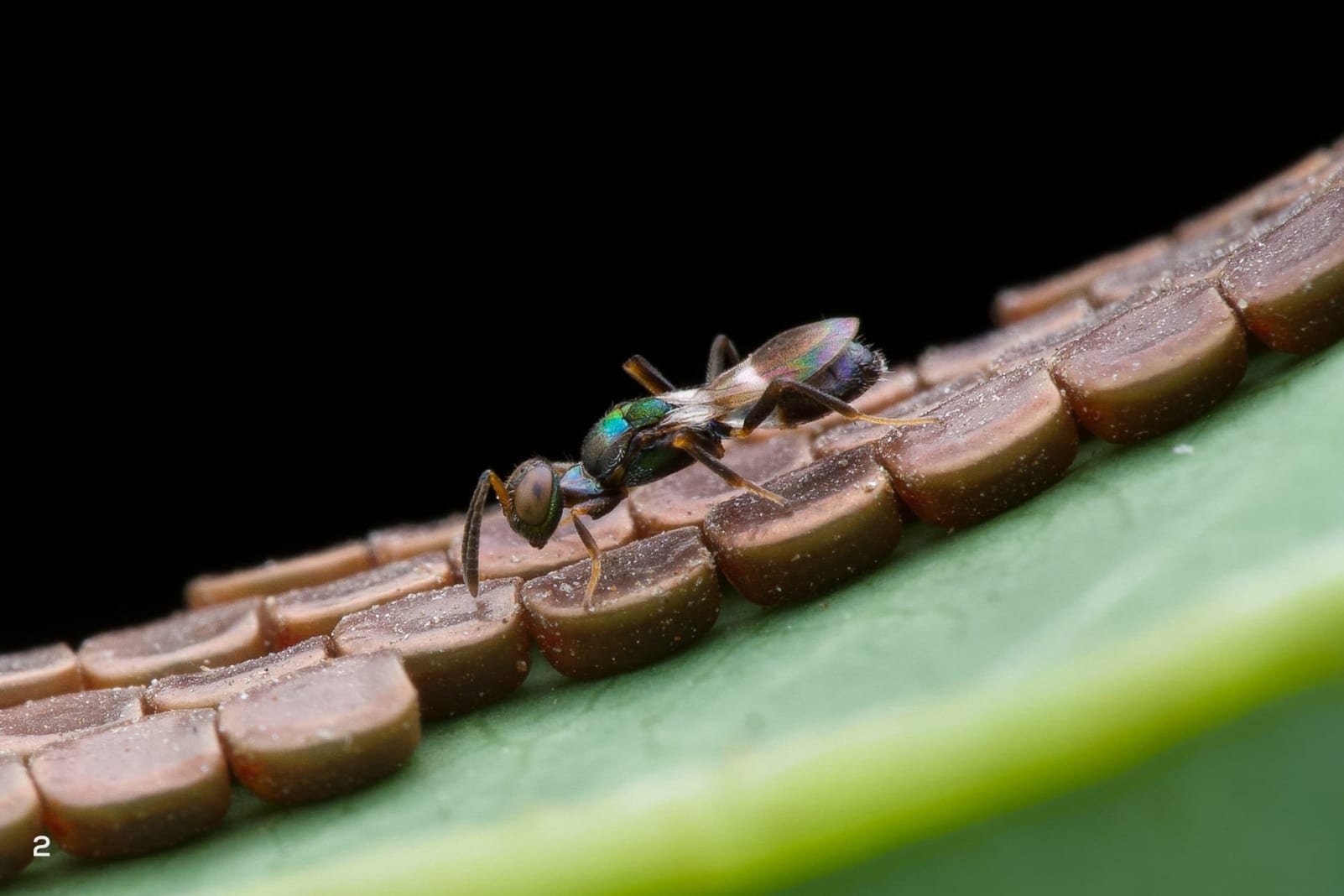
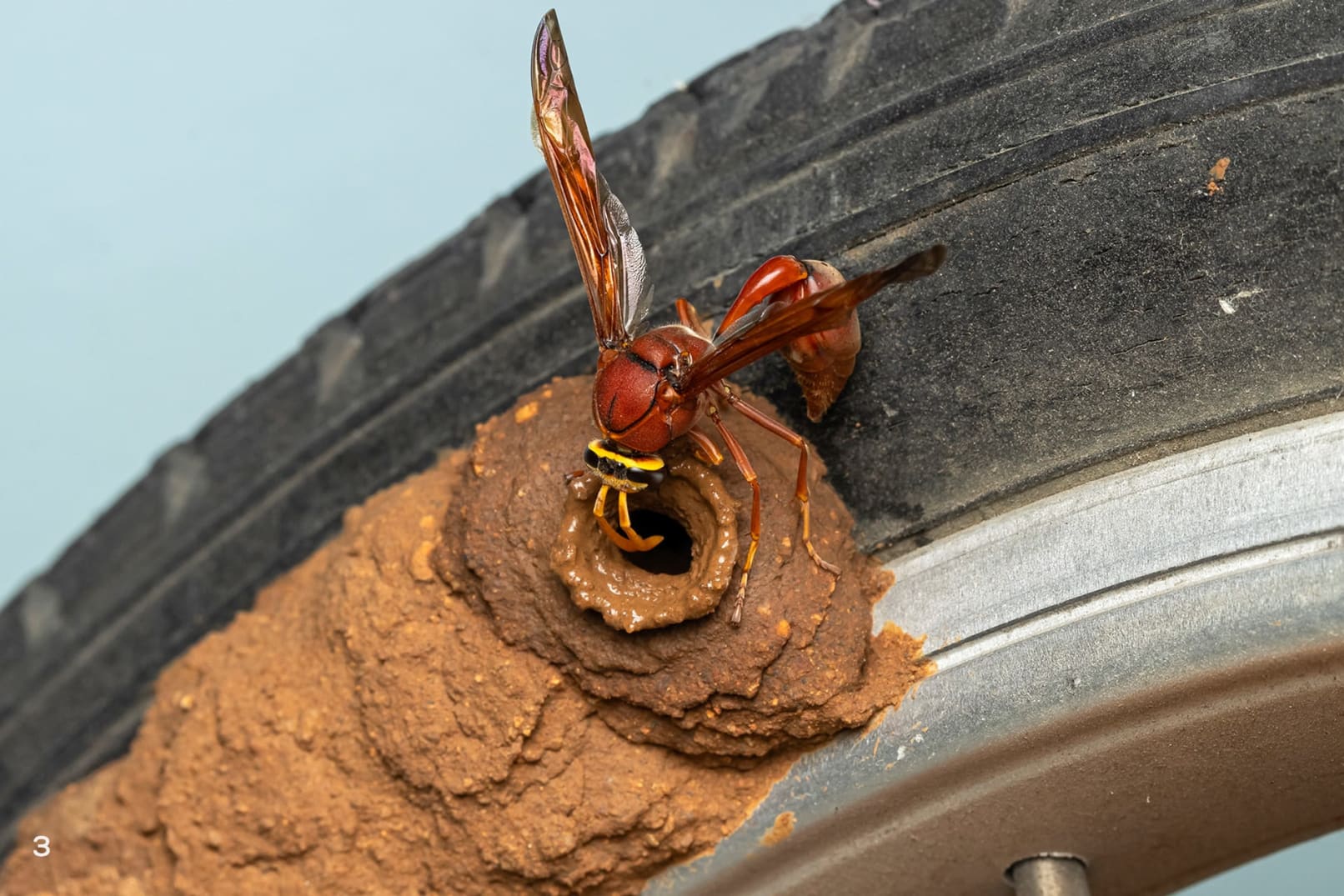
I started searching the Internet and posted pictures on a Facebook page called “Wasps of India”, a super serious group of folks working on wasps. We mostly know wasps from the sharp bite we may have received, but here there is a lot of interesting diversity. Of the over 100,000 wasp species described scientifically, the vast majority are “solitary wasps”. Only a small 1-2% of wasps are “social wasps” that live in hives or nests they build (a bit like bees).
Based on their nesting habits, potter wasps (subfamily Eumeninae), are broadly classified into three types: excavators, builders, and renters. Only females build nests. Female excavators nest underground, digging tunnels in the soil, where they lay their eggs. Builders are the potters, or masons, building mud nests shaped like a vase, tube, jug, or pot, which may be found attached to twigs, other objects, or walls.
The renters are the most common wasps; they are considered “primitive” as they use pre-existing cavities in decaying wood, hollow plant twigs, rocks, walls, old mud nests, deserted ground burrows of other wasps, or artificial cavities in man-made structures — such as holes in a plug point that I had seen. Though researchers who made this classification probably have good reason, I find they are not “primitive” at all; rather, they are very intelligent. Renters also readily adopt artificial burrows drilled into wood blocks or bundles of cut, hollow reeds or plastic tubes (useful for facilitating scientific study of their biology).
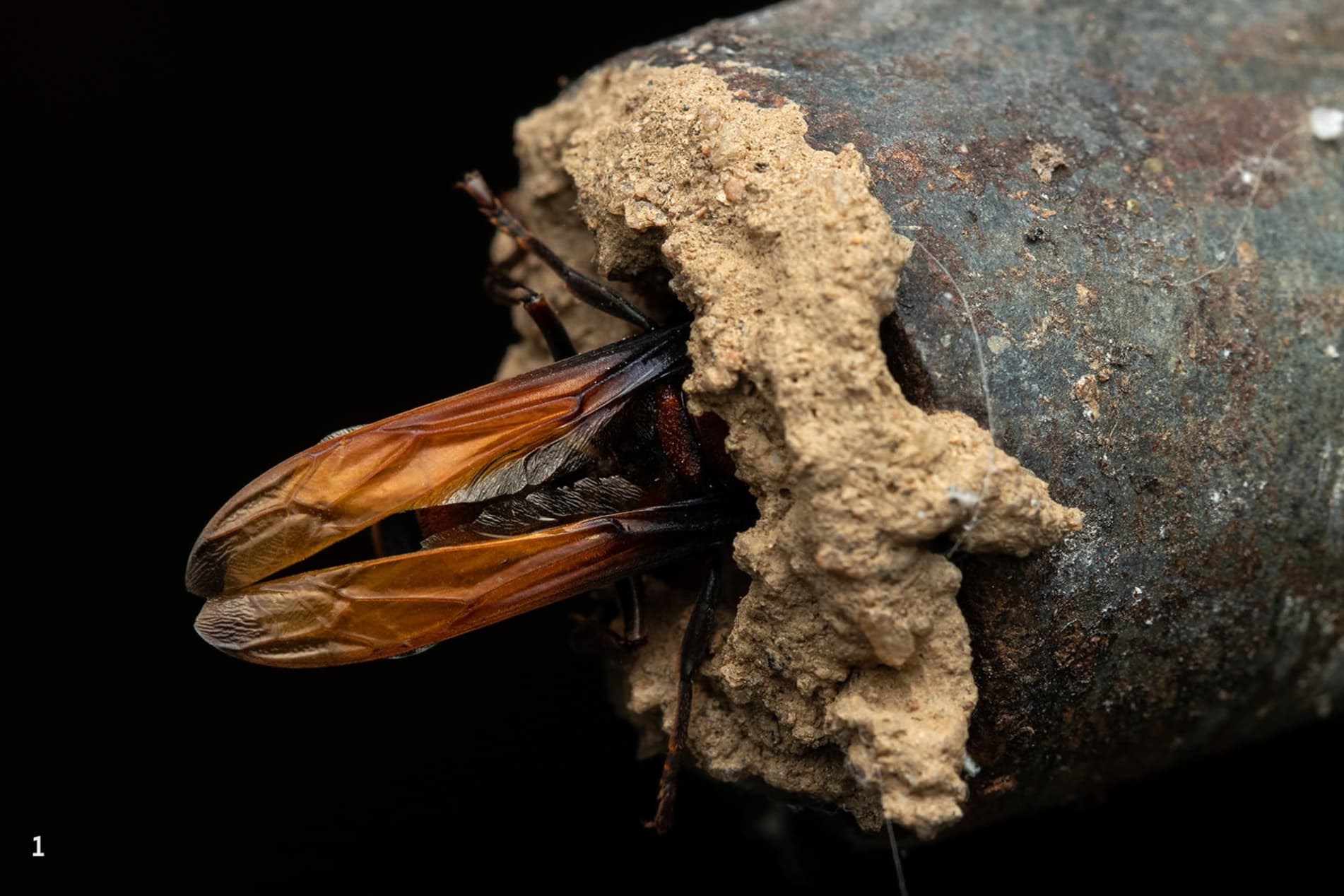
What a female wasp does with these cavities is even more interesting. These cavity nests are brood chambers for raising her young. She goes about the serious job of finding prey, stinging and injecting her venom, and carrying them to her cavity nest, where she stocks prey. Many wasp species prey on spiders, some species prey on a variety of insects ranging from caterpillars to cockroaches. The female lays an egg in each cell of the nest. When the egg hatches, a larva emerges, and feeds on the stocked prey. The wasp’s venom preserves the prey for several days, allowing the larvae to feed over numerous days as it develops. Upon completion of its development, the new wasp will chew a hole in the cell wall and emerge.
It is important to clarify numerous misunderstandings about wasps. Renters are not aggressive and rarely sting humans, unless threatened or inadvertently touched. The venom is primarily for paralysing and preserving prey, and yes, it is painful but not harmful to humans. Wasps are not really pests but are beneficial in several ways. They are predatory and keep insect populations (spiders, caterpillars and cockroaches) under control. Wasps are also flower visitors that go to flowers for nectar to fuel their activities and end up doing a fair bit of pollinating, and their flower preferences vary by season. Wasps are also bioindicators of environmental changes; if you stop seeing wasps, you can be sure that things are not going well for you either!
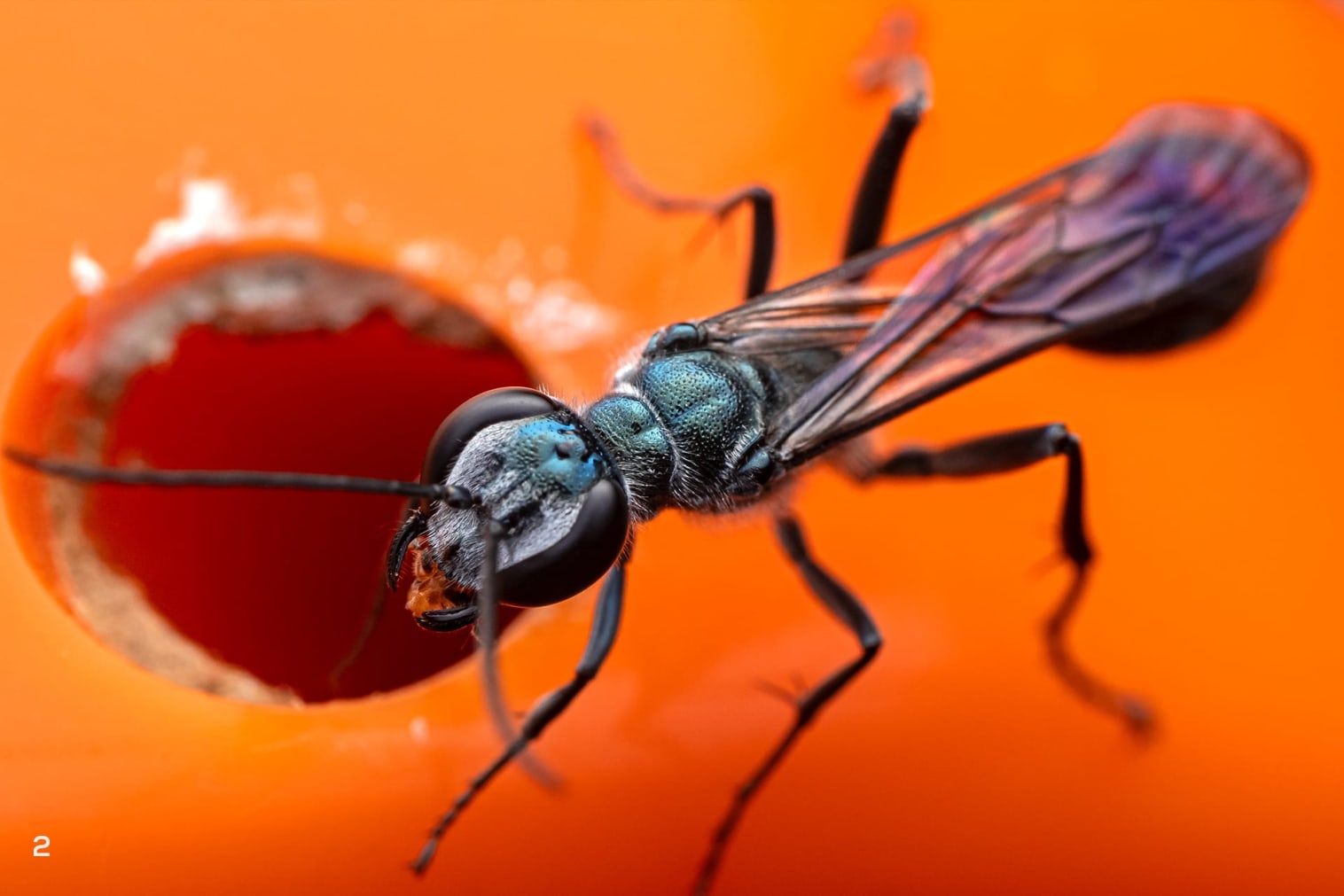
Though I was reading up on “renters”, I had still not seen who had occupied that hole in my wall plug. Then one day, I saw that one of the plugs had been breached. There was a good chance that the second wasp would emerge anytime soon. I had no way of knowing when, but I started keeping watch. Luckily, one day I witnessed a small hole with small antennae and a head emerging. It appeared to be assessing its new world. When out, it seemed unsure and tentative, exploring its immediate surroundings, its cavity, straightening its antennae, flexing its wings. The light wasn’t great, but I managed to get a few pictures. The new wasp had a bright, metallic colour and a lean, long body. Just as I was mulling whether I should run and get my camera, it took off.

Using the photo I had taken, I consulted wasp expert Sadanand Gawas, who identified it as a mud dauber with the likely scientific name Chalybion bengalense, part of Sphecidae, a family of “thread-waisted wasps”. The lifespan of these beautiful wasps is limited. Males live to a maximum 45 days, and females a wee bit longer (50 days). Within this short period, the female identifies her nest, finds a mate and mates. She creates a nest cell and provisions it with paralysed spider prey (8-60 spiders depending upon the nest type). She lays an egg in each cell, usually on top of the second or the third prey item in that cell. She closes the nest cells with mud and then builds another cell, continuing the same process. She finally adds an extra layer of mud on top to cap the nest. I wonder how she manages all this in such a short lifespan! The total time from egg to emergence of the adult wasp is about 30 days, during which the wasp larvae gorge on all the spiders stored in their cells. How they manage such slim, shiny athletic bodies after gorging on so many spiders is a mystery to me.
Every time I pass the wall plug, my eyes subconsciously look for that small black shiny star, even though I don’t know when a new nest plugging will happen. Next time I hope to see a wasp while she is provisioning her nest with stung prey, thank her for the excellent insect control she undertakes and politely ask, “Mama Wasp, please request your Gen Z offspring to come back to nest here!”



