Listen to this article
•
15:34 min
Listen to this article
•
15:34 min
My earliest clear memory of birding in Bhopal is of seeing a green bee-eater in Van Vihar National Park. I was 13, holding my first point-and-shoot camera with more excitement than skill. I had no idea what species it was. A forest officer, Mr Sudesh Waghmare, helped me identify it and suggested I get a field guide if I wanted to learn more.
Soon, every weekend was about bird walks in Van Vihar, and slowly, beyond. The Upper and Lower Lakes, Shahpura Lake, the green forests of Kerwa, Kaliasot Dam, Halali Dam, Bishenkhedi village, Ekant Park, Swarna Jayanti Park, and even the empty grounds around the city, I started looking everywhere. Bhopal became my classroom. My father was close to nature, and I think he passed that curiosity on to me. Now aged 25, I realise I have grown up with the city, just as it has grown around me.


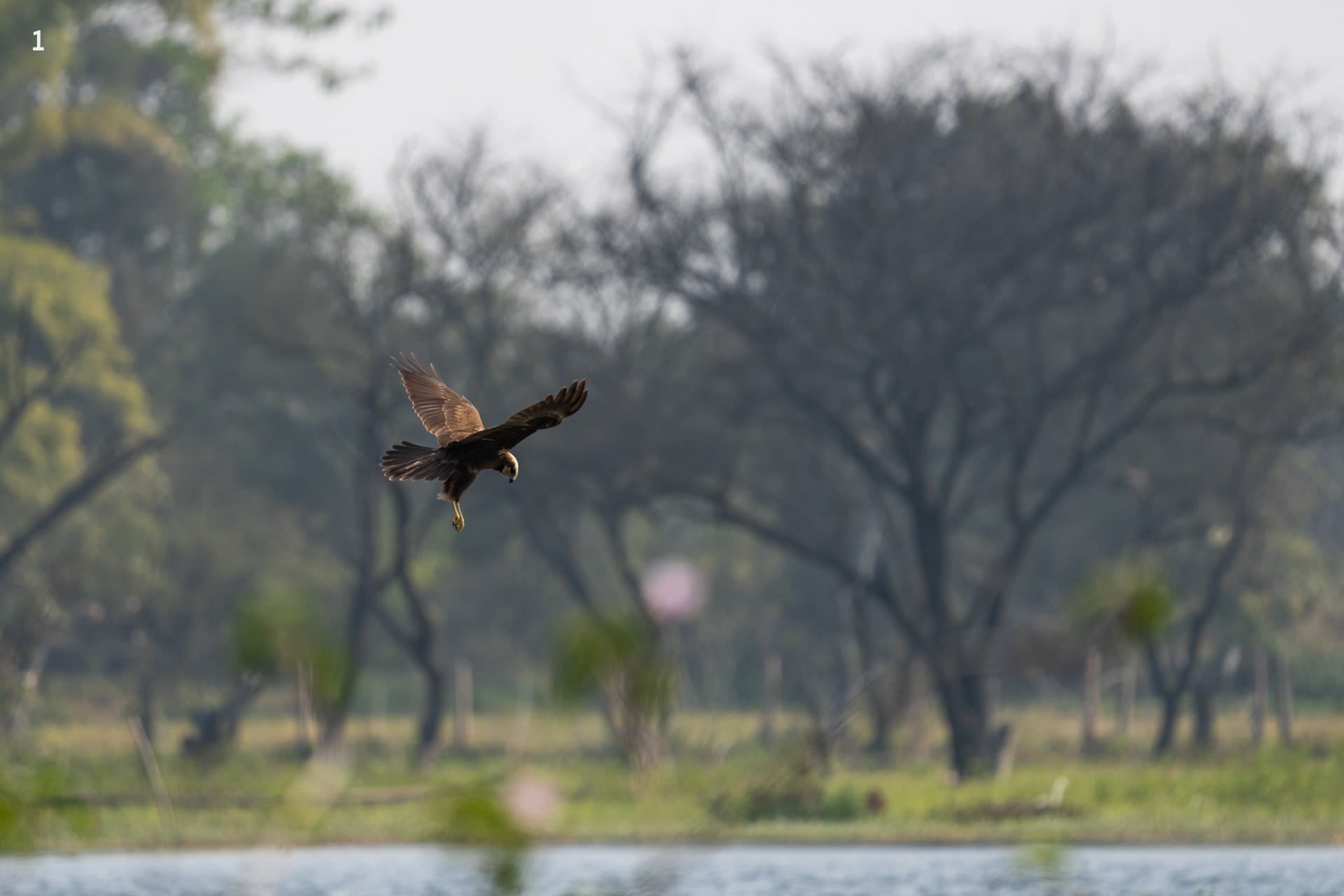
Bhopal is called the City of Lakes. The Upper and Lower Lakes together form the Bhoj wetland, a Ramsar site that draws birds from near and far. It supports more than 200 species, including ducks such as the ruddy shelduck, spot-billed duck, and lesser whistling duck, as well as large waterbirds like darters, grey and purple herons, raptors like the marsh harrier, and tall sarus cranes. This wetland is a refuge for species such as the red-crested pochard, a duck that arrives in winter from distant lands and is seen in the thousands every year.
Van Vihar National Park
Van Vihar National Park sits right inside the city, on the banks of the Upper Lake. It is special because both in-situ and ex-situ conservation happen here. You can watch blackbucks, hard ground barasingha, sambar, chital, nilgai, wild boar, and langurs roaming freely, while rescued and injured animals like big cats and sloth bears find safety in care enclosures. It is not just a place for birdwatchers and researchers, but also a living classroom where schoolchildren learn about nature through bird walks, art competitions, and small discoveries that stay with them for life. Around 210 bird species have been recorded here.


Green rims
Beyond these city spaces, Bhopal’s green rims: Kerwa Dam, Kaliasot Dam, Kolar am, Kathotia forest, Bishenkhedi village, Laharpur, and the forests extending toward Ratapani, offer deeper forests that support wildlife. These areas are full of resident birds such as jungle owlets, spotted owlets, and crested serpent eagles, as well as migratory visitors such as comb ducks, which arrive in winter.
Wildlife often surprises me here in Bhopal’s everyday spaces. In one city park that morning walkers frequent, I came across a perfectly camouflaged Russell’s viper in the grass, the first glimpse I’d ever had of this incredible species, despite roaming forests across India for years.
Surprises at home
On another day, my brother came into my room, shouting, “Didi, mongoose, mongoose!” I ignored him at first, thinking it was a prank, but when I went out, I found a family of three at a water outlet outside our home. As they hid inside the pipe, a house cat peered into it curiously.


Kaliasot
Powerlines now dominate some wetland habitats in Bhopal. At Kaliasot, I have photographed raptors gliding through a web of cables above the water. It felt unsettling to see the grace of a bird framed against such harsh geometry.
At the same spot, I saw a very still grey heron. On a closer approach, I realised its wing was broken. Later, when I saw the zoomed-in photo on my camera, I noticed blood on its beak. Further along, I found a Chinese manja (kite string) tangled in the grass and wondered if that was what had injured the bird. Within 100 m, I collected a bunch of it; how much more must lie across the grasslands! A local told me this patch, where I once watched birds in peace, had turned into a kite-flying spot every Sunday.

Big Cats
People outside Bhopal may find it hard to believe that tigers are part of this picture too. India’s largest cats move close to human settlements here. They use green corridors connecting the forests near Kerwa and the Ratapani Wildlife Sanctuary toward the city’s outskirts. Local newspapers regularly talk of tiger sightings.
Arera Hills
I’ve watched Bhopal change. For instance, as a teen, I loved photographing spiders. My friend Amolika lived near a green patch in Arera Hills, and I spent days with her there, discovering and documenting spiders and other macro life. We also found Egyptian vultures and kites nesting nearby. Recently, she sent me a picture of the same place with the forest gone, replaced by metro construction. It felt like a huge personal loss.


Summer wild
Summer evenings in Bhopal used to have their own charm. From the terrace of my dance class, I would watch hundreds of fruit bats stream across the orange sky, heading toward the lakes. Their silhouettes filled the air. That sight, once so familiar, has become rarer as old trees disappear.
In Van Vihar, paradise flycatchers, spotted owlets, and baya weavers that once nested reliably in June have become harder to find. Construction around the catchment areas of the Bhoj Wetland changes water flows, shifting habitats for ducks and wading birds.
Citizens that care
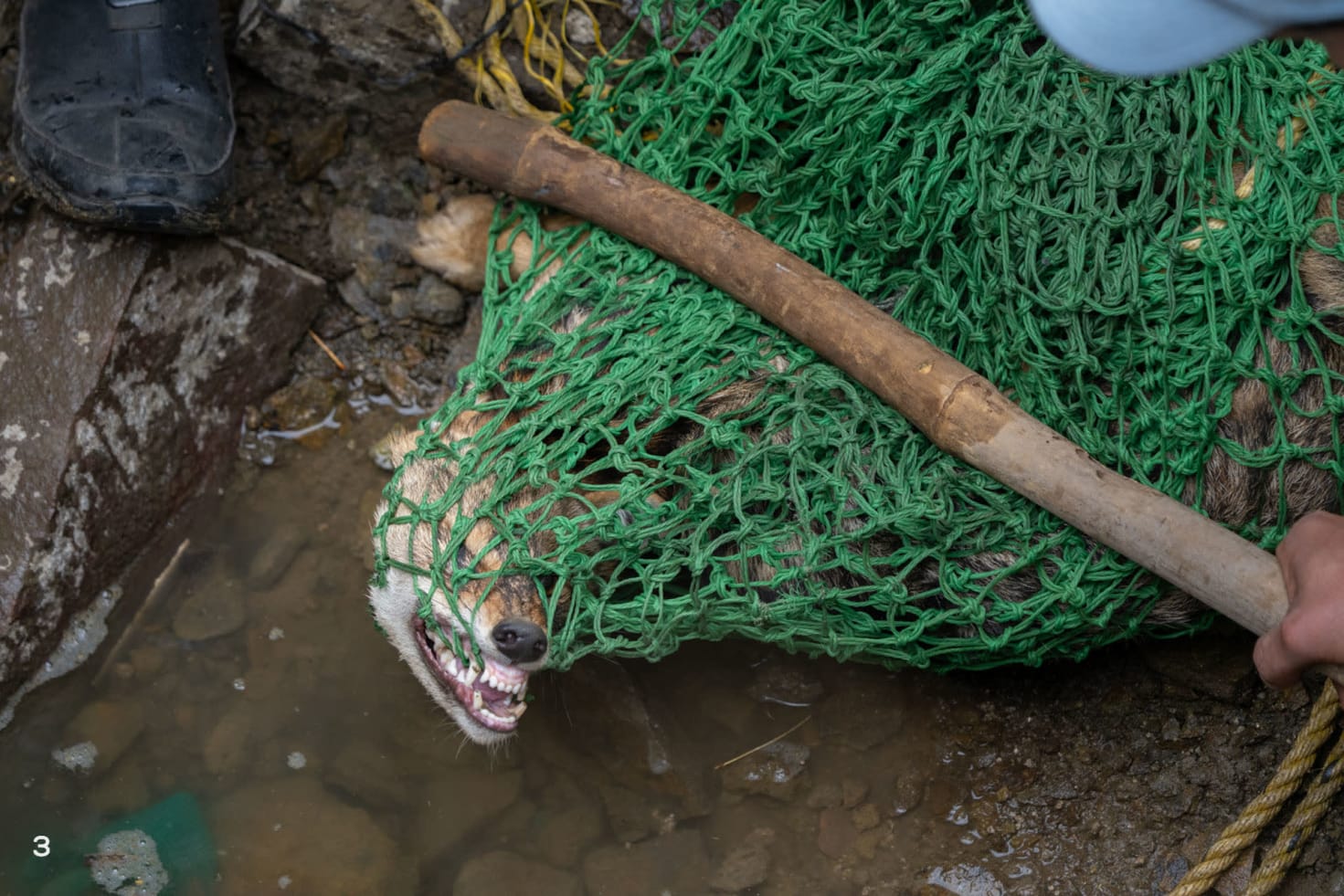
Yet even as habitats shrink, encounters with wildlife continue in unexpected ways. Recently, a local informed me of a jackal that had fallen into a deep well near the city. It had been there for three days already. I alerted the forest department, who came the next day and rescued it. They said calls for wildlife rescue come in almost daily now, showing how urban boundaries are creeping into natural habitats.


Over the years, I’ve also seen that many people here care deeply about their wild neighbours. The forest department and local birding groups respond to rescue calls. Volunteers clean lakes, and schools regularly bring children to Van Vihar to learn about the animals that live among us. I often meet familiar faces during bird walks, people who started as casual observers and now carry notebooks and binoculars, contributing to citizen science. That shared curiosity still keeps Bhopal’s wild spaces alive.
Even with all these changes, Bhopal remains wild. The number of Sarus cranes, tall and beautiful, has increased thanks to community support and NGO conservation efforts (such as from the Sarus Mitra initiative).



Vultures continue to circle above dumping grounds around places like Halali Dam, playing a vital role in keeping the ecosystem clean. Migratory ducks still make their annual pilgrimage to Bhoj Wetland, even though their numbers are smaller.
Living in Bhopal taught me one thing clearly: we do not live outside nature. We live within it. And as a wildlife photographer, my work is part personal memory and part documentation. I want people who have never seen these birds and animals to understand that nature is not distant. It shares the air we breathe and the same water bodies we pass.
Bhopal shaped who I am. I grew up with birds in my backyard, and forests that felt wild even when they were just a short drive from home. I sometimes think of that 13-year-old girl holding her camera for the first time, watching a green bee-eater. If she could see me now, she would smile, knowing that her city still finds a way to stay wild.
About the Author