Listen to this article
•
15:34 min
Listen to this article
•
15:34 min
Until 1947, the fastest land animal in India was unquestionably the Asiatic cheetah (Acinonyx jubatus venaticus), which was when the last “made in India” cheetah was brutally stopped in its tracks by a bullet. The medal for first place then went to the proud and handsome blackbuck (Antilope cervicapra) until its position (this was, as we shall see, really an “umpire’s call” because others are vying for the same spot!) was usurped by the recently imported (2022) South African cheetah, (Acinonyx jubatus jubatus) that is now racing about the Kuno grasslands at up to 120 kmph, no doubt chasing and bringing down blackbuck, gazelle, and chital.
Cheetah
There’s always been conjecture and debate over the actual top speed of the cheetah. Some estimates say it tops out at 120 kmph; others are more conservative, citing speeds of between 109 and 120 kmph. At any rate, this sleek, sinuous cat can accelerate from 0-103 kmph in just 3 seconds — faster than most Ferraris. It is designed for speed: small head, large nostrils and lungs, short snout, black tear marks along its face, lightweight (65 kg), powerful hind muscles, and a spring-loaded spine that enables it to unleash enormous strides. Its tail acts as a rudder and not as a counterbalance (at just 2 per cent of the cheetah’s weight, it is too light for that job). A daytime hunter, the cheetah must get to between 30 and 200 m of its prey before launching off the blocks. It runs out of gas within 300 metres at top speed, as the lactic acid builds up and it must now rest — even before it can properly begin to feed. Many a cheetah has lost its kill to scavengers like hyenas and leopards, due to this, having neither the energy to defend their kill nor drag it to safety.

Cover photo: The Indian hare’s speed is driven by its elongated, powerfully muscled hind limbs, which enable long, energy-efficient leaps and rapid acceleration. Photo: Dhritiman Mukherjee
Blackbuck
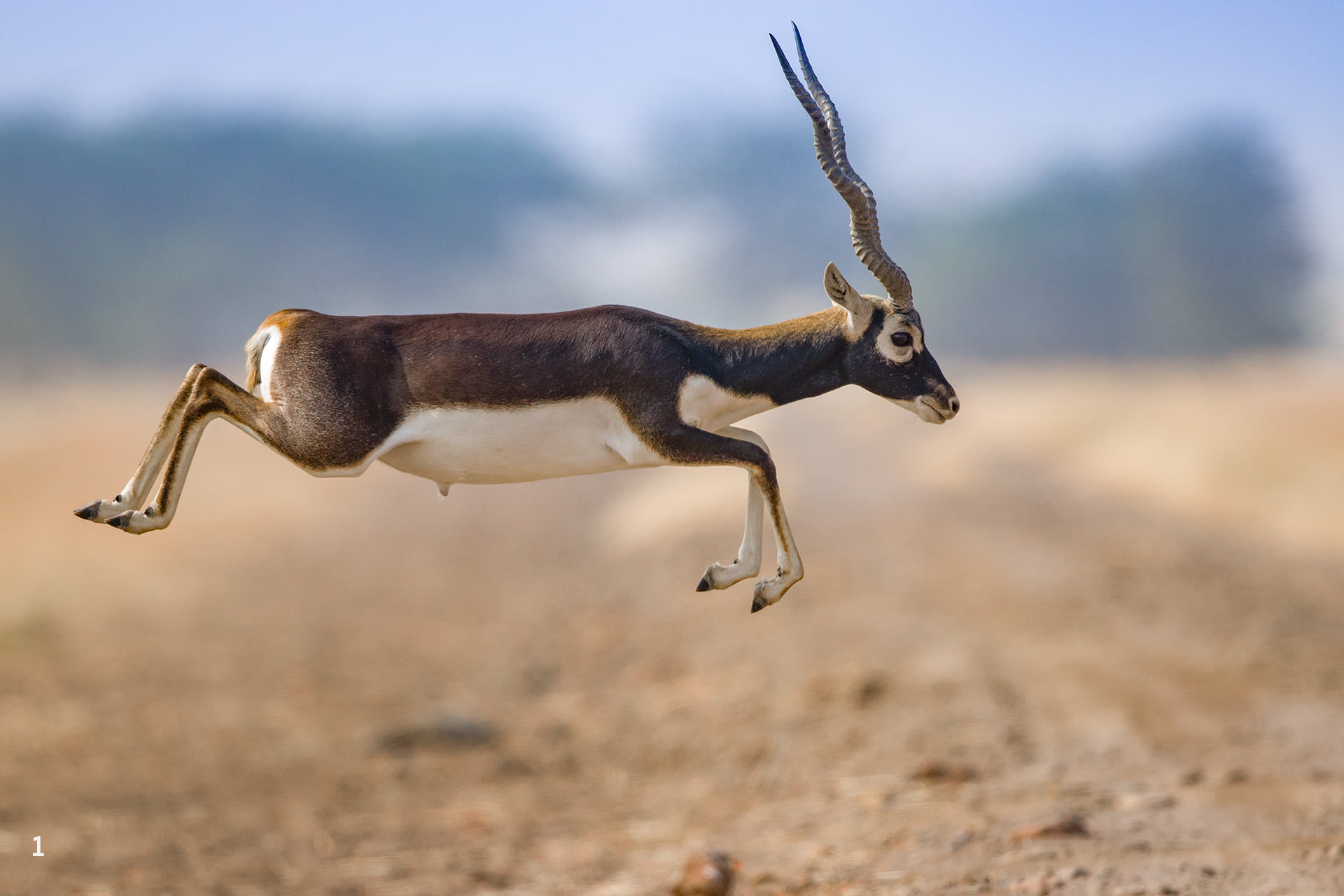
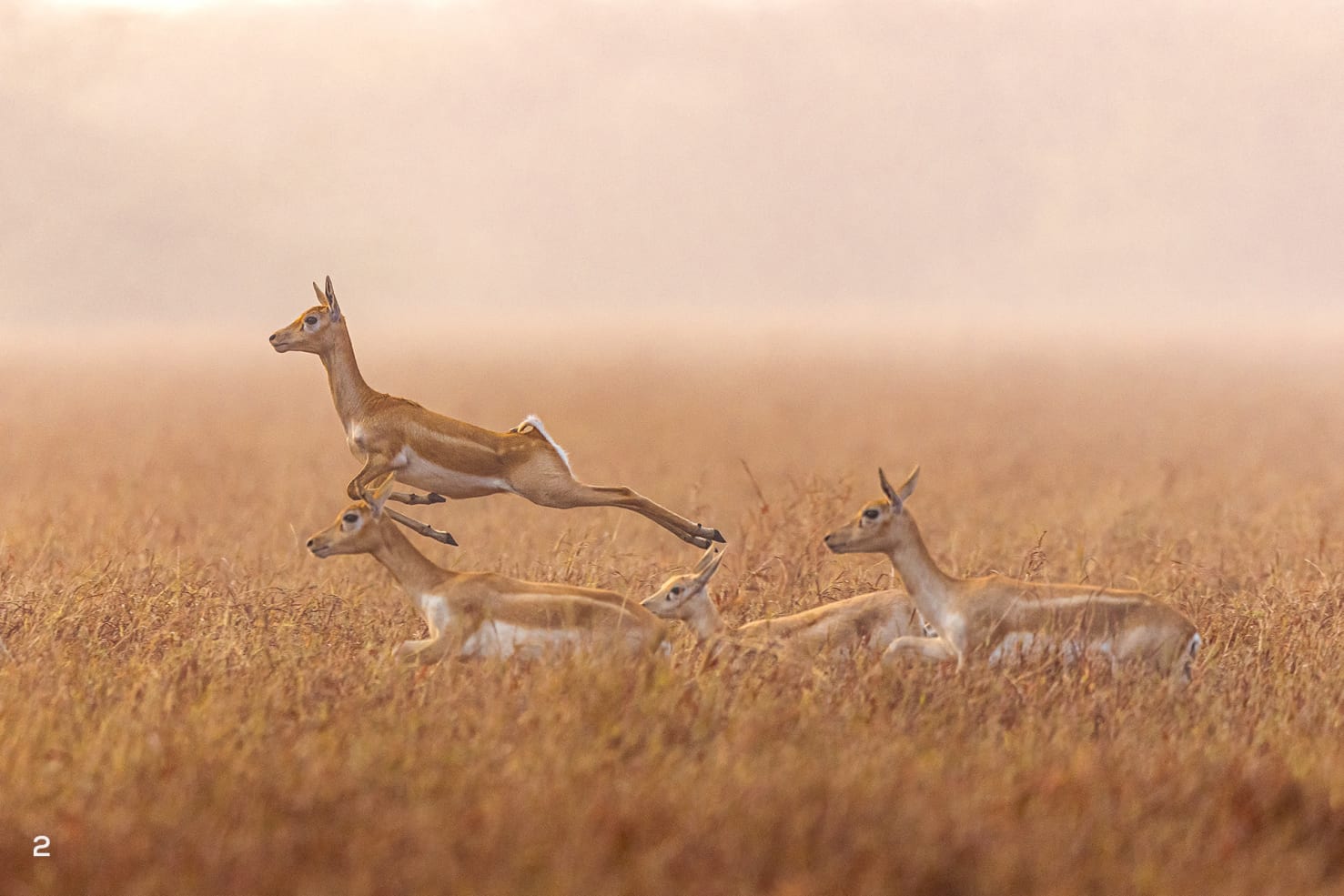
First in line is the proud, snooty blackbuck (which some sources suggest can touch a “burst speed” of 100 kmph). Trim and slim, this handsome antelope struts around the grasslands and deserts of India — and had been hunted nearly to extinction before being accorded top-level security by the Wildlife Protection Act (1972). In Rajasthan, it is protected by the Bishnois, who even got a famous Bollywood hero arrested for poaching them. The males, in dark chocolate brown, with white rings around their soulful eyes, and white underbelly, sport deadly long spiralling corkscrew horns, which they use to defend their harems. They (especially fawns, the young, and the weak) are often hunted by packs of free-ranging dogs, leopards, and now their old nemesis, the cheetah. And no, they have not lost any of their top-speed capabilities due to the cheetah’s 75-year absence. Hindus venerate the blackbuck, though the Mughals used trained cheetahs to hunt them.
Chinkara
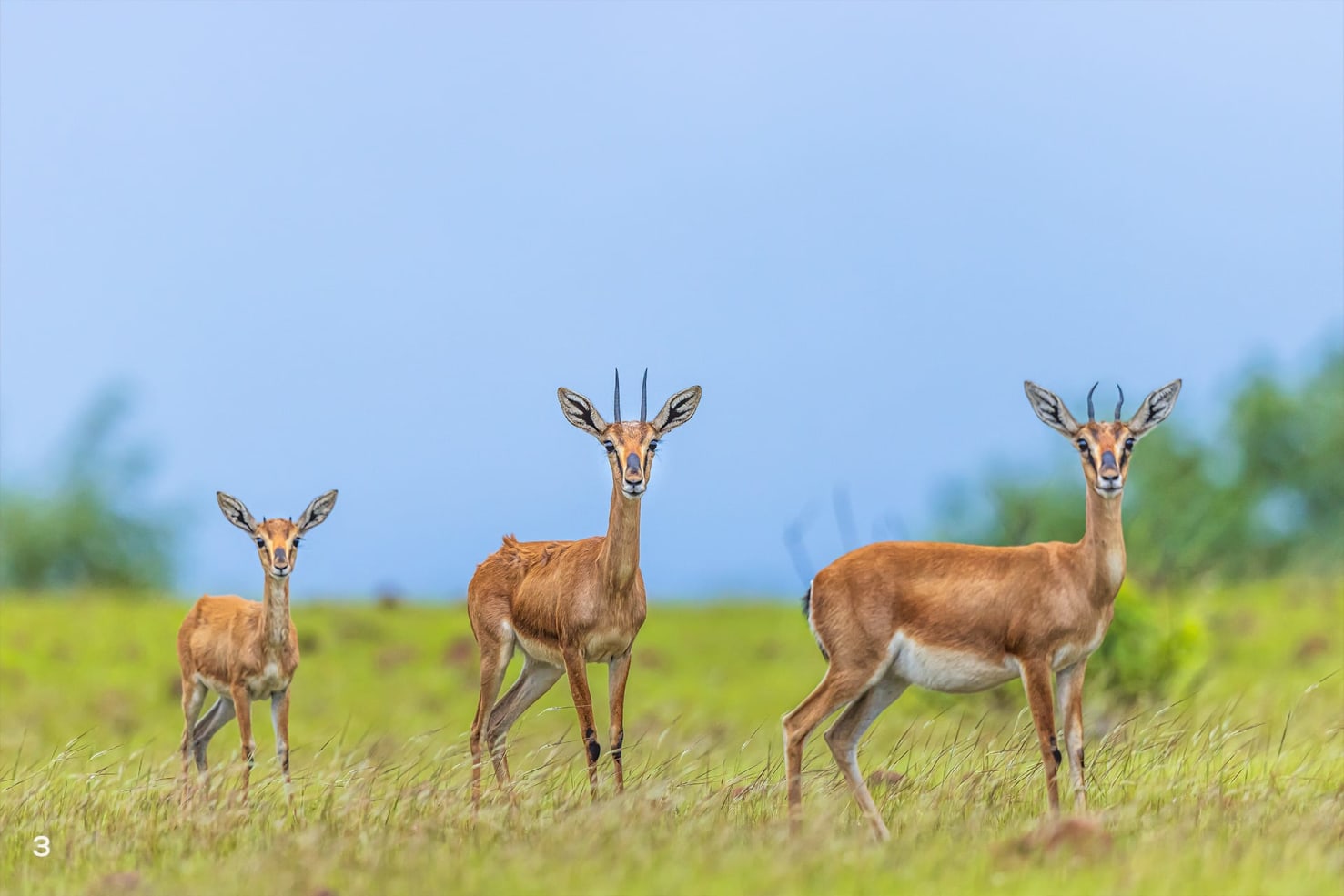
The delicate chinkara, or Indian gazelle (Gazella bennethi), in its pale fawn livery, also tops out at 80 kmph and is capable of maintaining this speed over long distances, dodging and zigzagging its way out of danger from chasing wolves and dogs. From time to time, it will leap high vertically into the air (a move called stotting), either because it is startled or to check out the position of its predator.
Indian hare
The Indian hare or black-naped hare (Lepus nigricollis) comes next: reaching speeds of between 70 and 80 kmph almost instantly to evade foxes, leopards, dogs, wolves, wild cats, and raptors. I spotted one a long time ago on the Delhi Ridge, ever alert, nose twitching, sitting up, probably watching out for shikras that can dive out of cover in a flash. Its top speed is maintained over short, sharp bursts, accompanied by much zigzagging to cross-eye its predators. This black-and-rufous medium-sized hare is equipped with powerful hind legs to help it launch in a trice. The ladies are larger than the gentlemen, and they are crepuscular and nocturnal.
Indian wild ass
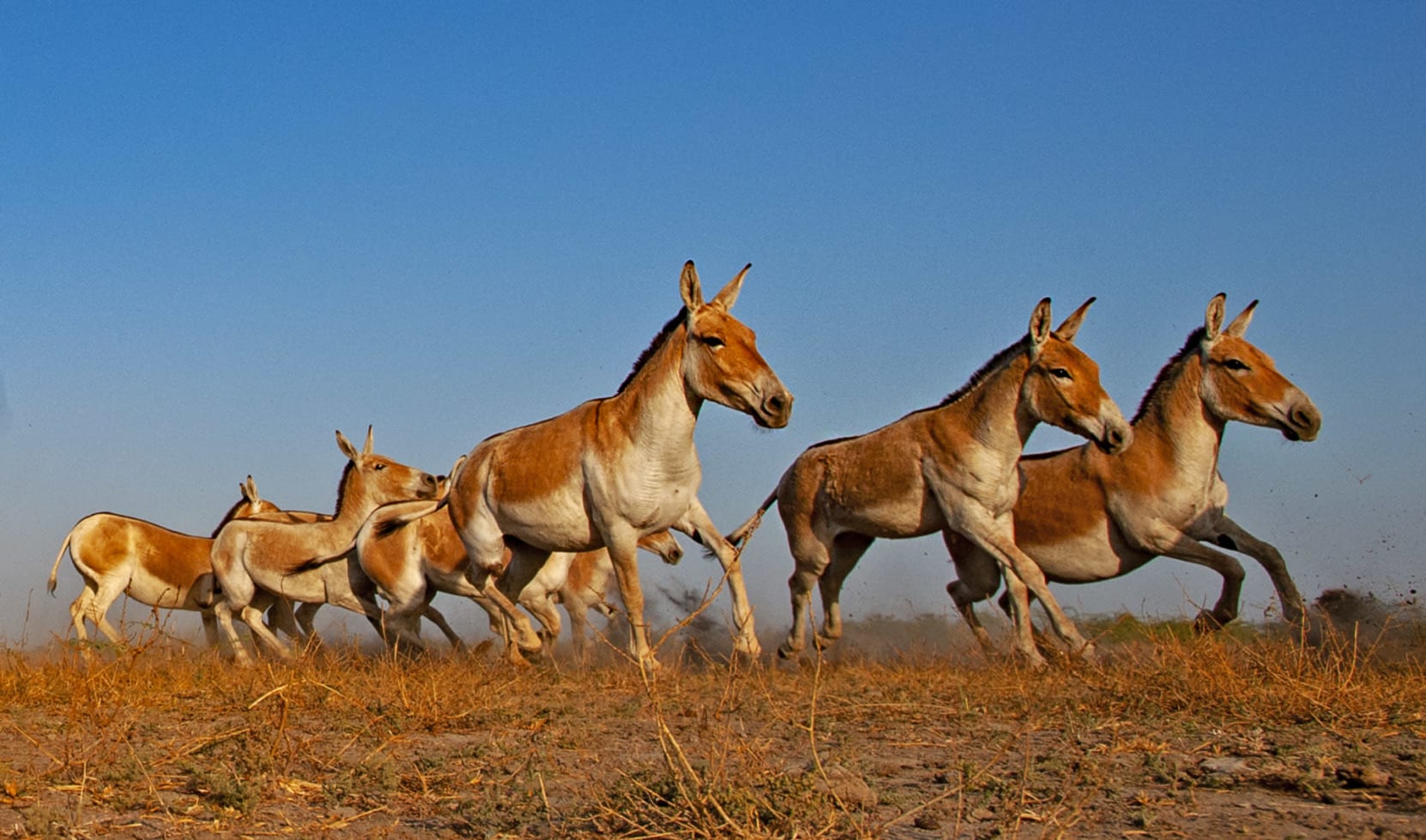
Our final entry is the handsome, tan-coloured, sturdy Indian wild ass (Equus hemionus kher), aka Indian wild donkey or Indian onager, which lives in small herds. It is known for its speed and stamina as it kicks up dust and gallops away on the sands of the little Rann of Kutch (or Kachchh), again touching 80 kmph and capable of maintaining speeds of between 70 and 80 kmph over distances. They can easily keep pace with jeeps chasing them down and were hunted by the Mughals, though not by the Indian princes or British. Their current state in the wild is “Vulnerable”. When pursued, they will run in straight lines.
About the Author