Listen to this article
•
15:34 min
Listen to this article
•
15:34 min
Seeds can be small and unassuming, yet hold an entire latent world within, perfectly gift-wrapped and waiting in anticipation. Each encounter with their kind is an invitation, a portal to awaken our own dormant senses. Our senses may have emerged as practical tools for survival in the wild, but over time, they have evolved to let us feel a deeper emotional attachment to the natural world. This kinship with nature springs from sensory immersion in what we see, hear, smell, taste, and touch.

Sight
I once volunteered for a king cobra (Ophiophagus kaalinga) conservation project in the dense, mysterious rainforests of Karnataka, India. Each day became a ritual of walking, listening, tracking, and occasionally catching sight of the majestic cobra. On one such day, drenched in sweat and wonder, I reached the outskirts of a quiet forest village. A medium-sized tree stood near a clearing, its leaves lush and broad, its bark rugged and weathered. But what caught my eye were the red, spiky pods hanging low from its branches. I was irresistibly drawn to pick those pods and gently cracked one open. A bright red pigment stained my fingers instantly, as if marked by the encounter. The bold, fiery red glistened in the fading sunlight, almost ready to soak through my skin and mingle with blood. That was my first close brush with the Achiote tree, colloquially called the lipstick tree (Bixa orellana). The distinct red colour obtained from the waxy arils that cover its seeds has been used for generations as natural dye in rituals, food, and art, I later learnt. At that moment, just an intimate image of our ancestors revelling in the discovery of such a vibrant hue flashed through my eyes, as I let the colour seep through my fingers.
Smell
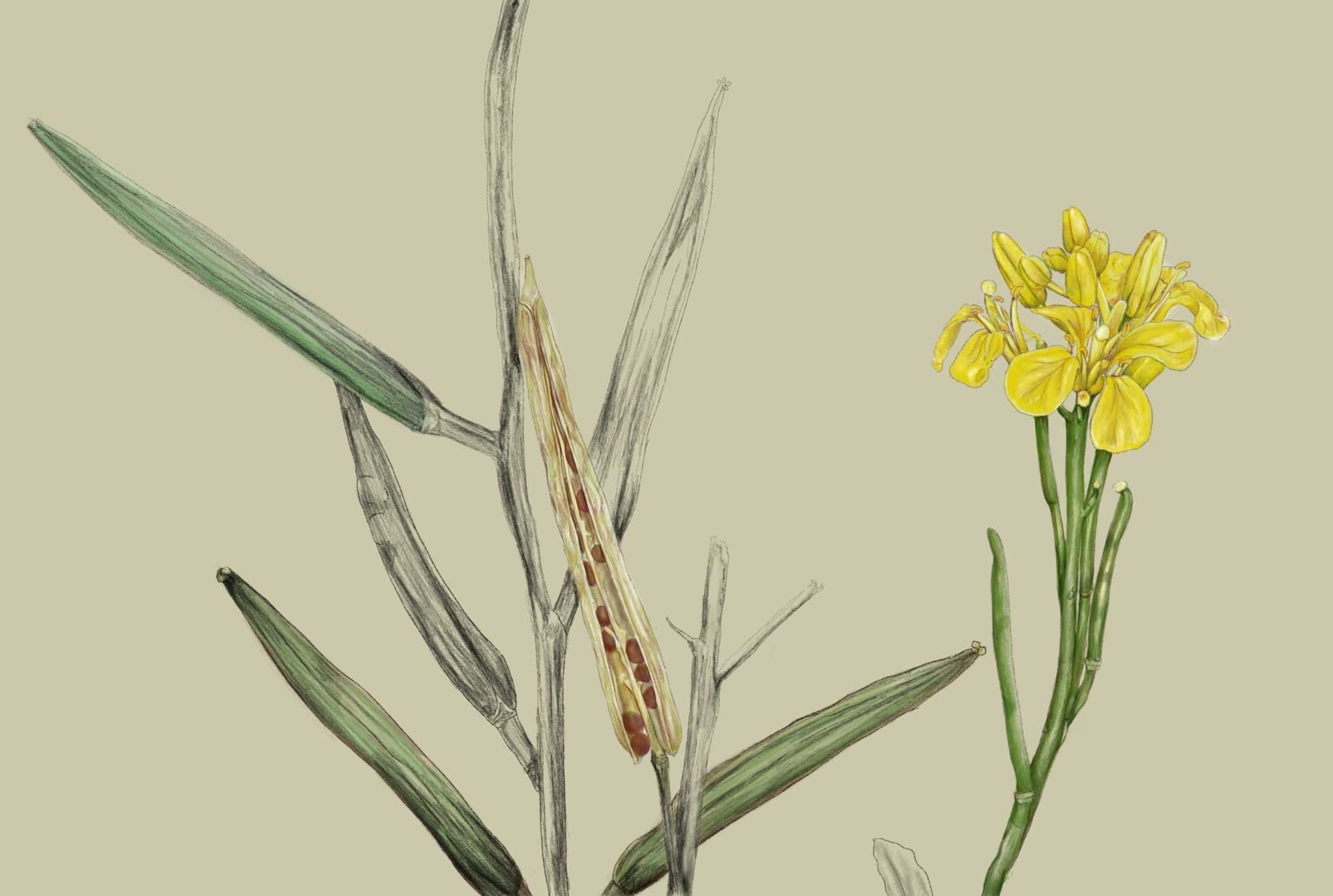
Far from that rainforest, back in homes in our concrete jungles, lies a familiar seed. Mustard is a ubiquitous ingredient across India (and other parts of the world), though its culinary applications differ greatly by region. In West Bengal state, the assertive pungency of mustard oil is indispensable, imparting a sharp, distinctive depth to many local dishes. Hailing from South India, I am more familiar with the use of mustard seeds (Brassica nigra) tempered in hot oil, in a practice we call “thalippu” in Tamil or “tadka” in Hindi. As the tiny black seeds sputter and crackle, they release a subtle aroma. Mustard and other ingredients of the “thalippu” such as asafoetida, chillies, garlic, and curry leaves form the aromatic foundation or garnish for many Indian dishes. This delicate smell stands in stark contrast to the bold, nose-prickling intensity of mustard oil, whose pungency can command a dish. In Indian kitchens, seeds like mustard, cumin, fenugreek, and sesame hold a unique place, each releasing their own essence of bitterness, warmth, nuttiness, or sharpness, transforming the ordinary into the memorable. There is something quietly awe-inspiring about how these diminutive seeds possess such potency. They infuse our cuisine with character, tether us to ancestral traditions, and without them, our culinary heritage would be impoverished. They remind us how the smallest elements can shape not only a dish but memory itself.
Sound
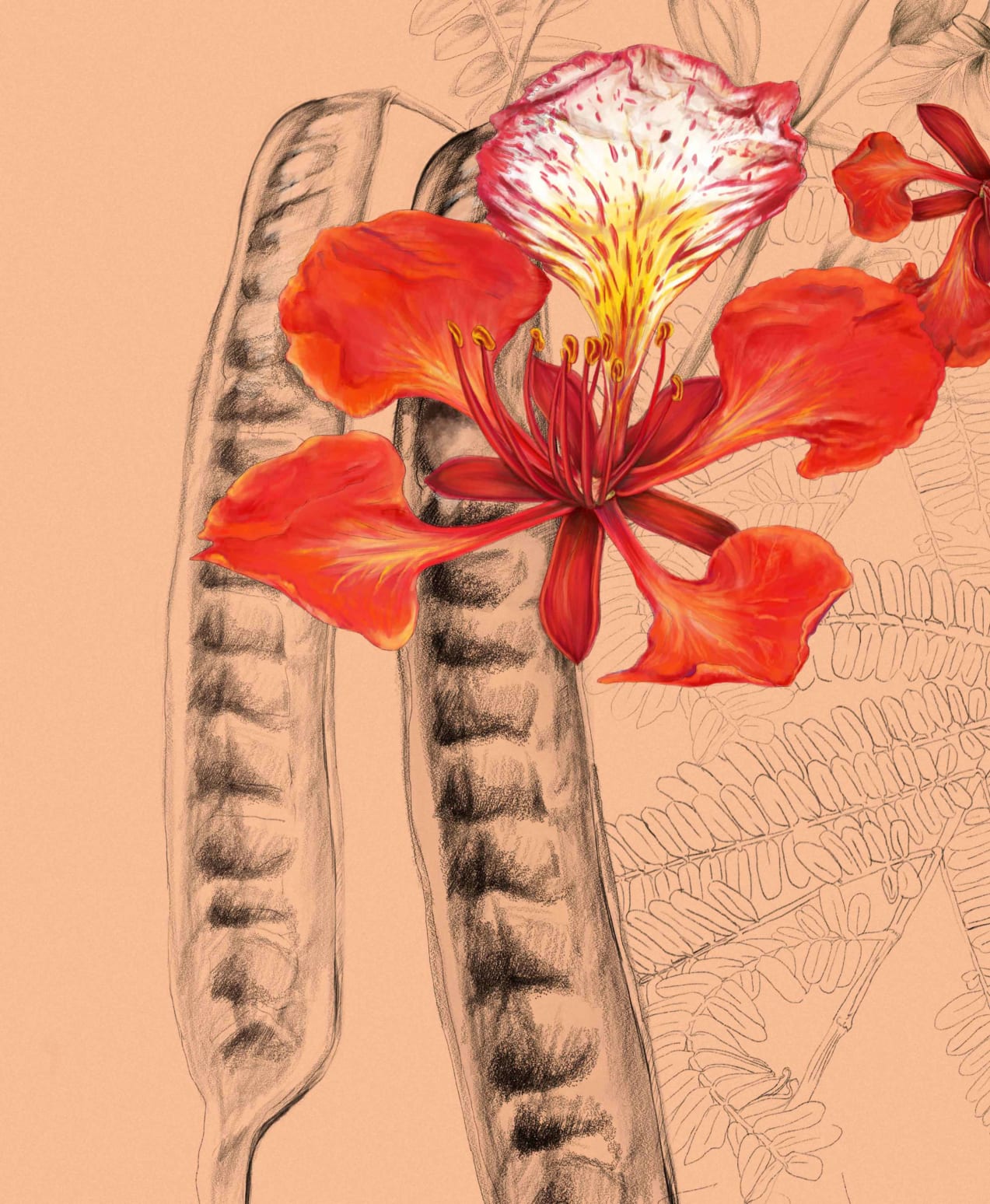
And then there is the gulmohar (Delonix regia). The quintessential city tree, beloved and common, its flamboyant red flowers light up Mumbai’s summer. It isn’t native to India, but it feels like ours. As children, we didn’t love the gulmohar for its flowers, but for its seed pods. Long, flat, and hard, they were perfect toys. We would pick them off the ground and shake them like instruments. The sound reminded us of the jhunjhuna (rattles) that many Indian folk tunes have. Who would think a seed could make music? But it did, and it transformed us into percussionists. It was music we created ourselves, with no training or instruments, just curiosity at play.
Taste
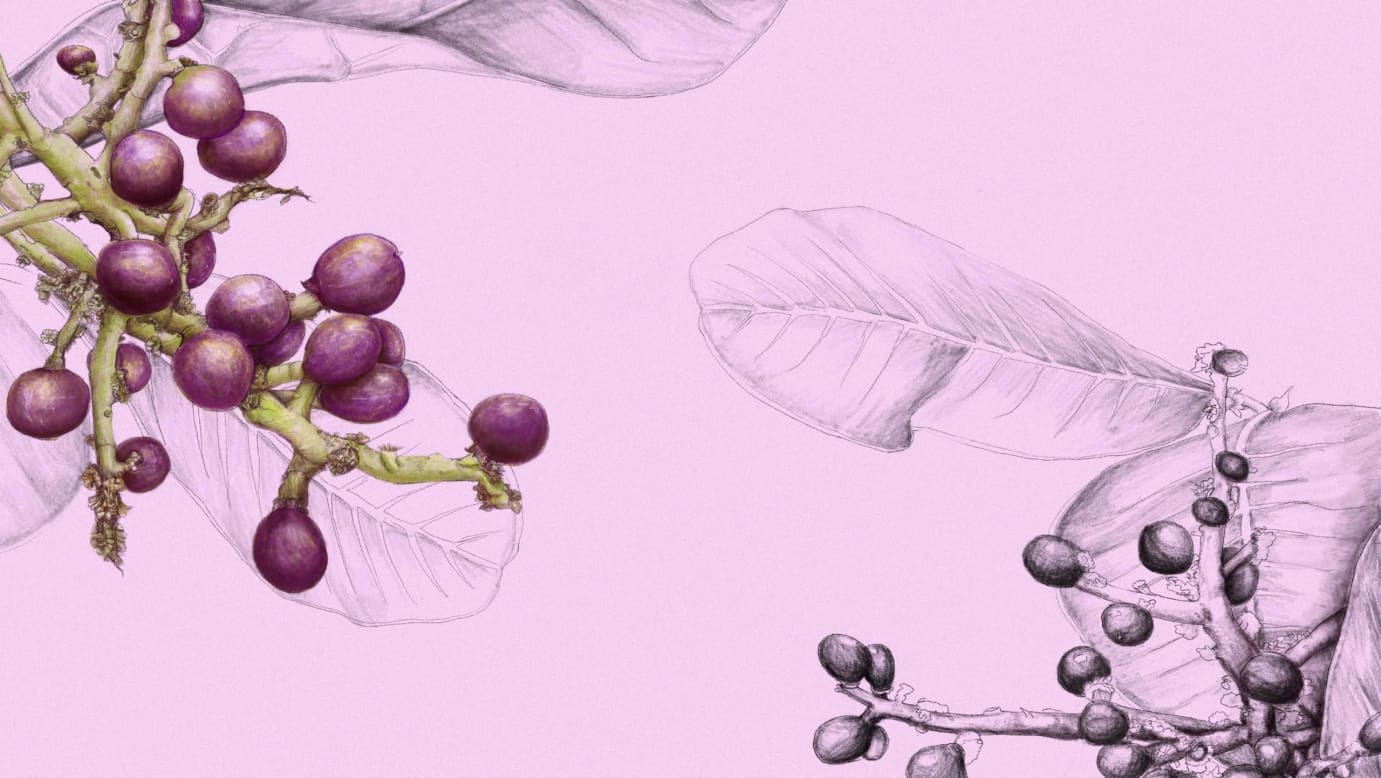
My travels once took me east of Mumbai, deep into the heart of Central India. Here lie some of the most pristine deciduous forest habitats of Madhya Pradesh where tiger country unfolds in rust and green. We (my partner and I) were joined by a forest guard on a long walk through the sal forests in the Satpura mountain range. Luckily, he shared our passion for trees. That day, he was excited about the summer blooming. As we walked, he pointed to a low tree and handed us a succulent fruit.
“Chironji”, he said with a smile.
We tasted the fleshy meat of the charoli nut (Buchanania lanzan) and found a hard nut inside, which we cracked open to find a tiny, creamy seed. We tasted that as well. It was rich, nutty, but subtle. That taste sent us tumbling back to our childhoods, to the front of our neighbourhood sweetshop in Mumbai. I distinctly remember picking out the seeds from the sweets and eating them. That a childhood memory found its roots in a dry, deciduous forest never ceases to amaze me.
Touch
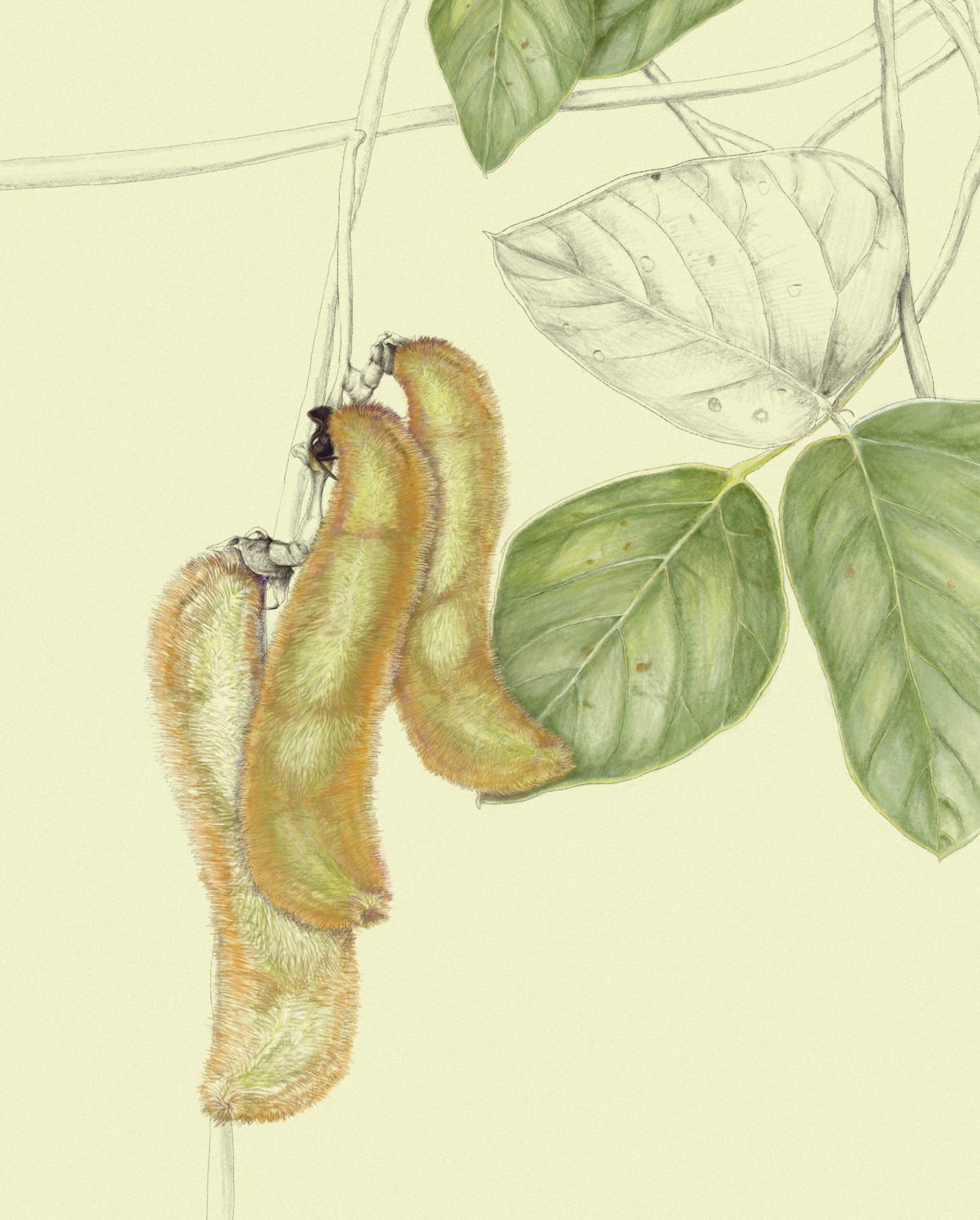
Not every seed story is sweet or musical. Some carry warnings. In the hills of the Sahyadris (northern Western Ghats), where we often trek, there is a climbing plant we feared deeply. Called khajkujli (Mucuna pruriens), its seed pods drop in harmless-looking velvety bunches. That velvety texture is quite inviting, and usually the only obviously visible part of the plant as it climbs other plants. But touch them carelessly, and you will be itching for hours. As a child, I once unknowingly brushed against some bushes, and within minutes a rash spread like fire across my skin. The adults in the group were surprised, and their investigation left them to conclude that it was the khajkujli. Since then, I’ve been wary. Even now, when I see the drooping bunches from a distance, my feet know better and steer me away. A seed can bring discomfort, even fear. Yet in that fear is a kind of respect, for the plant, for its survival strategy, and for the discreet intelligence of the wild.

Sensory Sonnets of Seeds
These moments, collected across landscapes and years, have changed the way I see seeds. They are no longer just the beginnings of plants. They are aeons of experiences wrapped in miniature. A touch that stains. A scent that sustains inheritance. A taste that resurrects a forgotten childhood memory. A sound that mimics joy. A sting that teaches caution. Seeds know how to make us feel.
And maybe that’s why they stay with us. Not as facts or botany lessons, but as sensations and stories. What strikes me most are these moments of transformation embedded in seemingly ordinary encounters. I have come to greatly appreciate these quiet wonders that move from the edges of my vision into the centre of my attention whenever I slow down and attune my senses to my surroundings. Perhaps these small encounters also teach us something larger.
Experiences like these, shaped by the stories and histories we share with seeds, show us that survival is more than just adapting to the environment. It’s about living together, helping each other, and depending on one another. It is also a reminder for humans not to perceive nature as merely something for us to “use”.
Today, we are more disconnected from our surroundings than ever. Our feet are on concrete, our eyes on screens, and we almost always overlook trees and seeds! But take a moment, and perhaps ponder if seeds offer us a way to restore that connection and allow us to move away from seeing species in isolation, and instead see ourselves as part of a larger family, connected by kinship and care. Perhaps seeds urge us to remember what it means to see closely, feel deeply, and love slowly.
The next time you bite into a fruit, walk under a flowering tree, or sweep dry leaves from the veranda, you could pause for a moment. Look for seeds. Pick one up. Hold it between your fingers. Smell it. Shake it. Split it open if you can. See what it hides. Because within those mysterious contours is not just a future plant. It is a memory waiting to be made.
For in every seed lies a story.
About the Authors

Adithi Muralidhar

Alisha Dutt Islam
is a botanical illustrator and artistic researcher, who works between Kolkata and Zürich.