
 Listen to this article
•
15:34 min
Listen to this article
•
15:34 min
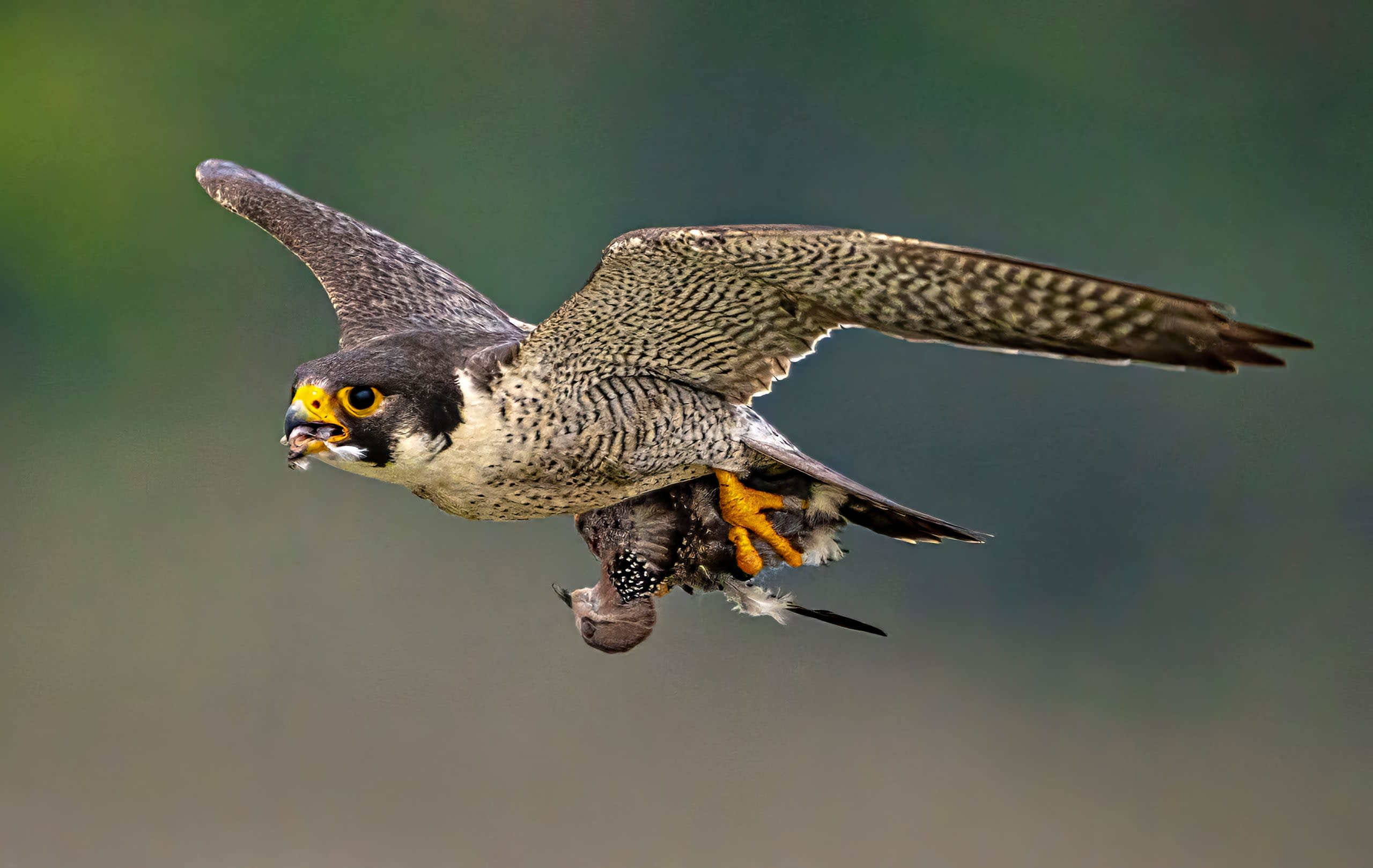
A Formula 1 hotshot driver would be terribly embarrassed by the peregrine falcon (Falco peregrinus). The bird can leave him and his screaming machine (which tops out at 375 kph) far behind as it hits nearly 390 kmph during its spearing dive (called a stoop) after its prey. It is about crow-sized and handsome, with a slatey grey back and head, and attractive barring running across its white chest. While different sources have their own list of avian speed fiends, they’re unanimous that this fierce missile-shaped raptor tops the list of avian speedsters, and we have, in fact, studied and copied its aerodynamic design for some of our fighter jets (such as the B2 Spirit stealth bomber).

Cover photo: The peregrine falcon, with a spotted dove firmly grasped between its talons, mostly captures prey midair. Photo: Arpan Saha
How the falcon achieves insane speeds
So, how does the falcon achieve such insane speeds without blowing apart midair? By changing the profile of its body during various stages of its dive (called active wing morphing). As it whistles down, it progressively tucks its wings closer and closer to its body, achieving first a “teardrop” shape and then jamming them tight against its body as it reaches terminal velocity. It has a coefficient of drag (how streamlined it is) between 0.07 and 0.09 (our slipperiest car, the solar-powered Lightyear 0, achieves 0.175). Stability, control, directional change, and air braking is provided by tiny tufts of feathers on the wings’ upper surface which fluff up and enable it to pull up at the end of the dive, experiencing G forces of between 3 and 10 G. Small bony protuberances called tubercles slow the airflow through its nostrils (to prevent the lungs from exploding), while a third eyelid called the nictitating membrane, like a windscreen wiper-washer, sweeps horizontally across the eye keeping it dust-free and moist while maintaining vision. In level flight, the peregrine achieves a more sedate 150 kph.
In second, third and fourth place
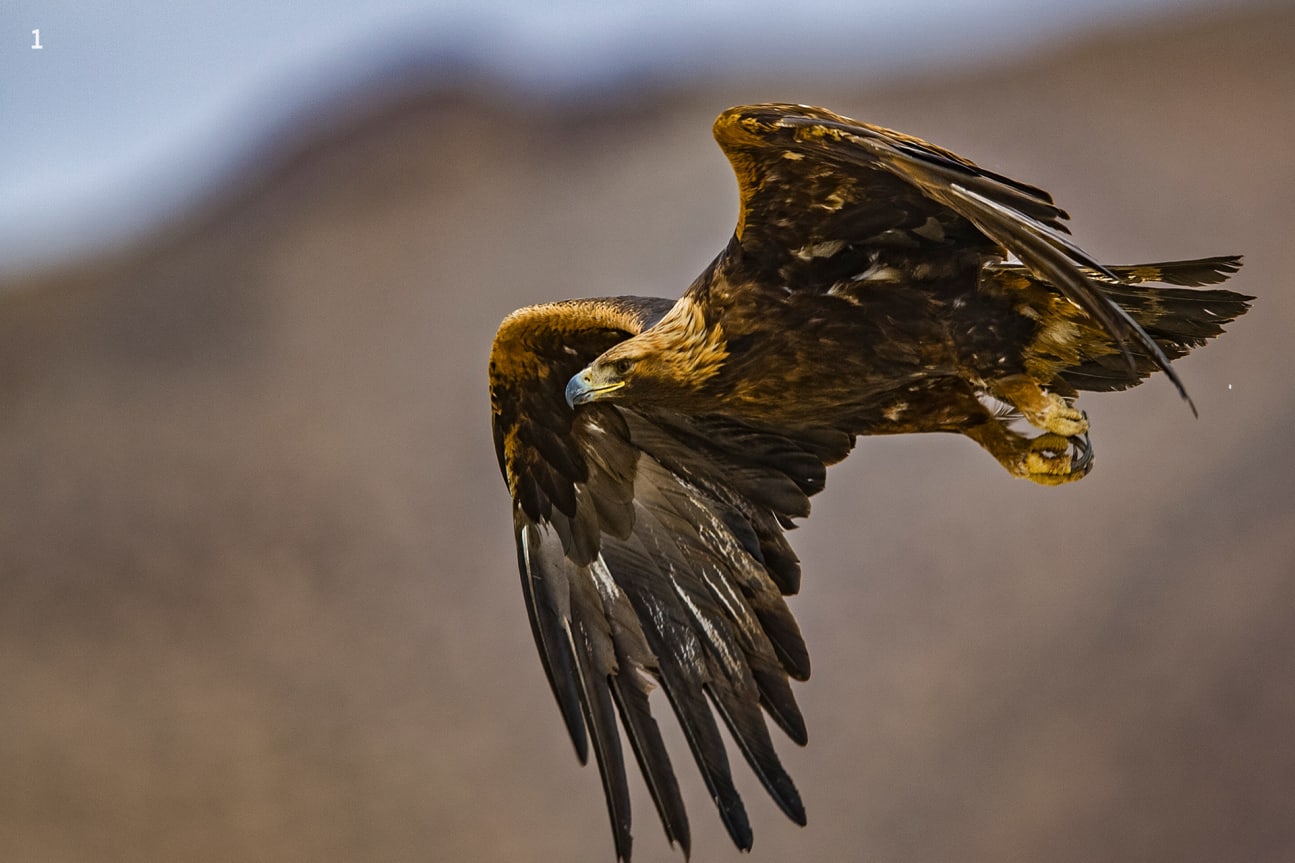
The massive golden eagle (Aquila chrysaetos), dark chocolate and gold, with a whopping 2.34-metre wingspan, comes a close second, hitting 320 kmph during its pursuit of prey. It is neither sleek nor slim — imagine a jumbo jet, nose down, on afterburners, but in complete control!
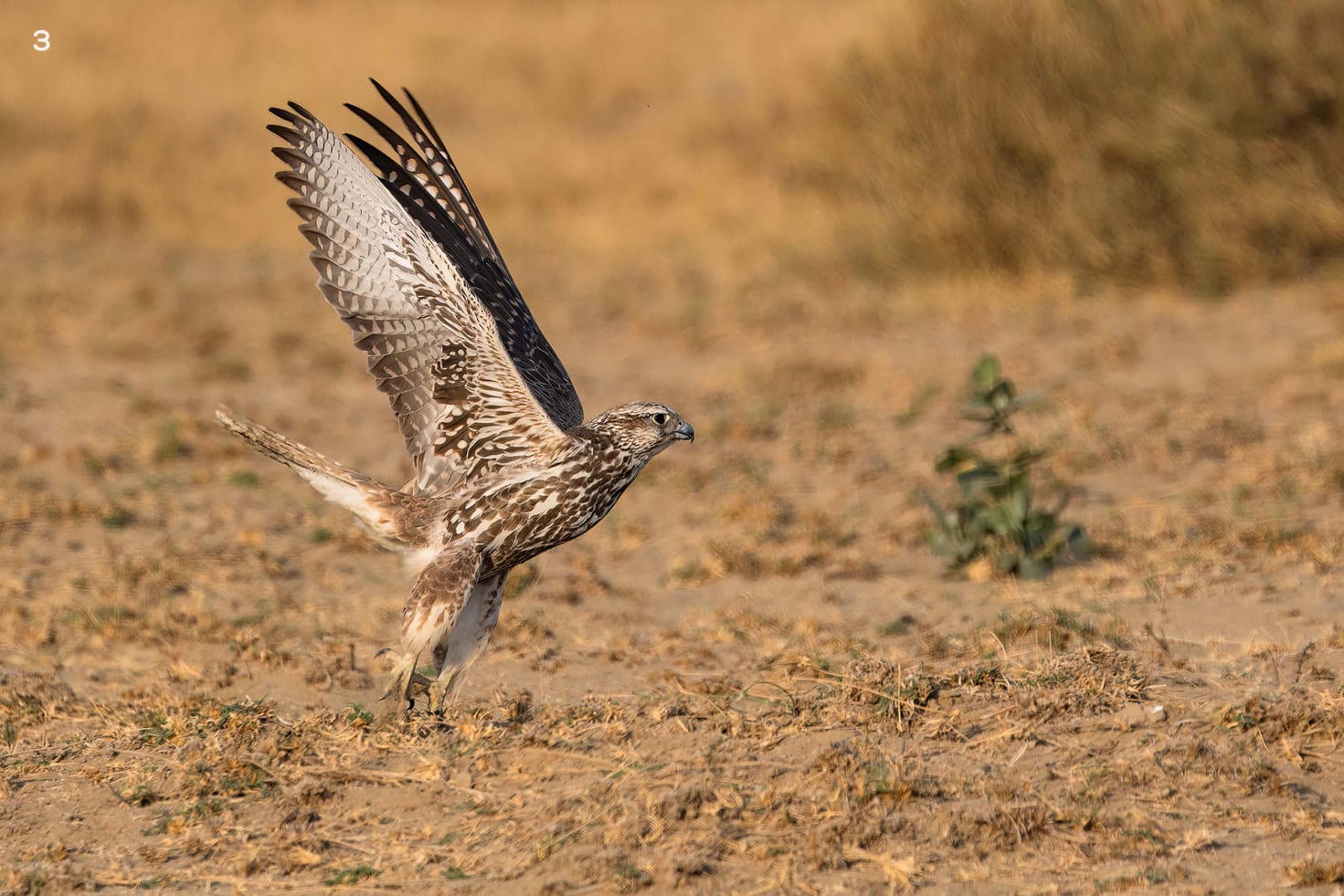
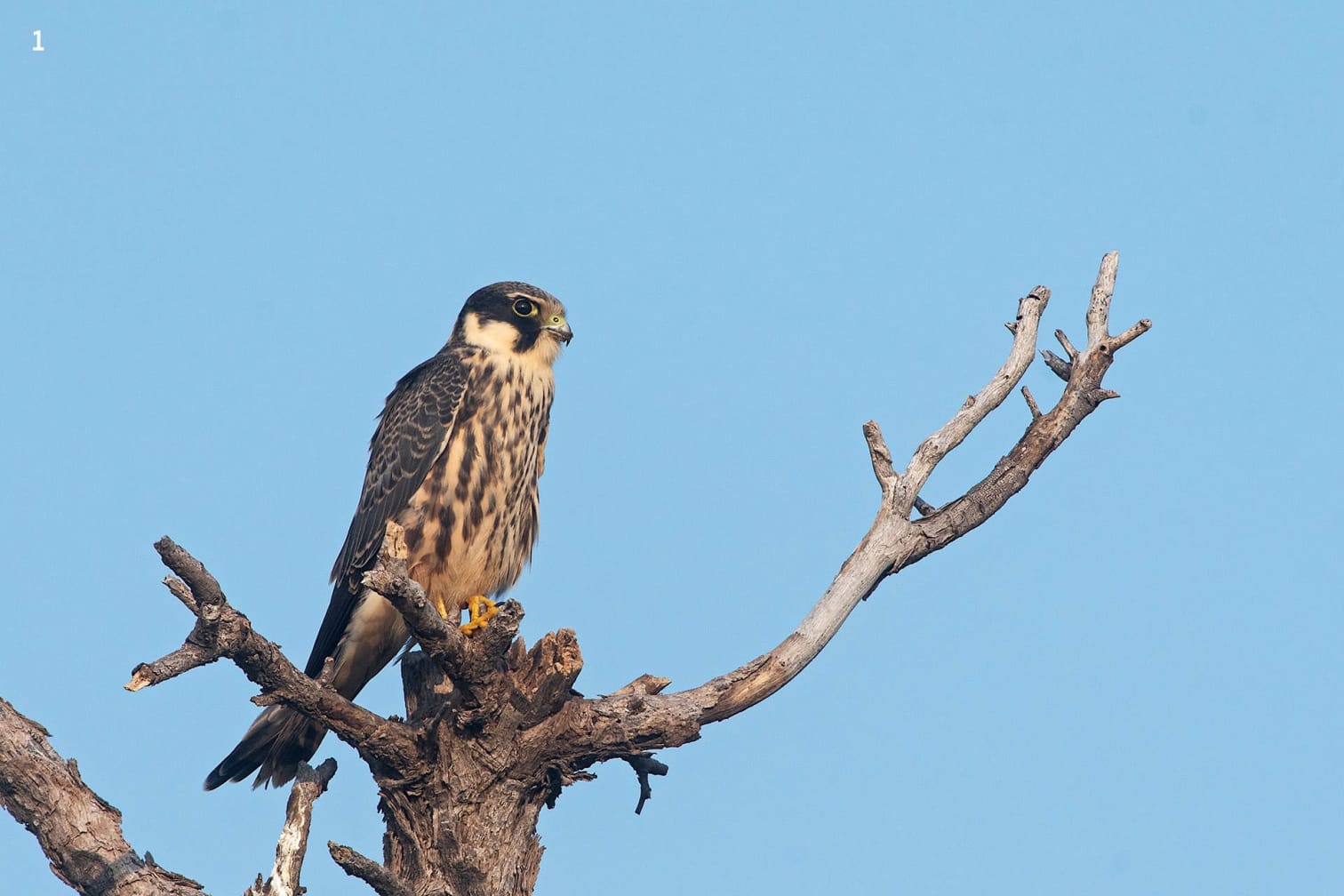
Third and fourth places belong to the falcon family again: the saker falcon (Falco cherrug), in its grey-and-white livery, also hits around 320 kmph while diving, is popular with falconers, and has a top cruising speed of around 150 kmph. It’s followed by the hobby (Falco subbuteo), both a winter visitor and resident. It’s a dove-sized falcon, grey on top and rusty below, with black chevrons across a white chest and can touch 160 kmph in its pursuit of insects, small bats, and birds.

Vagrant visitors
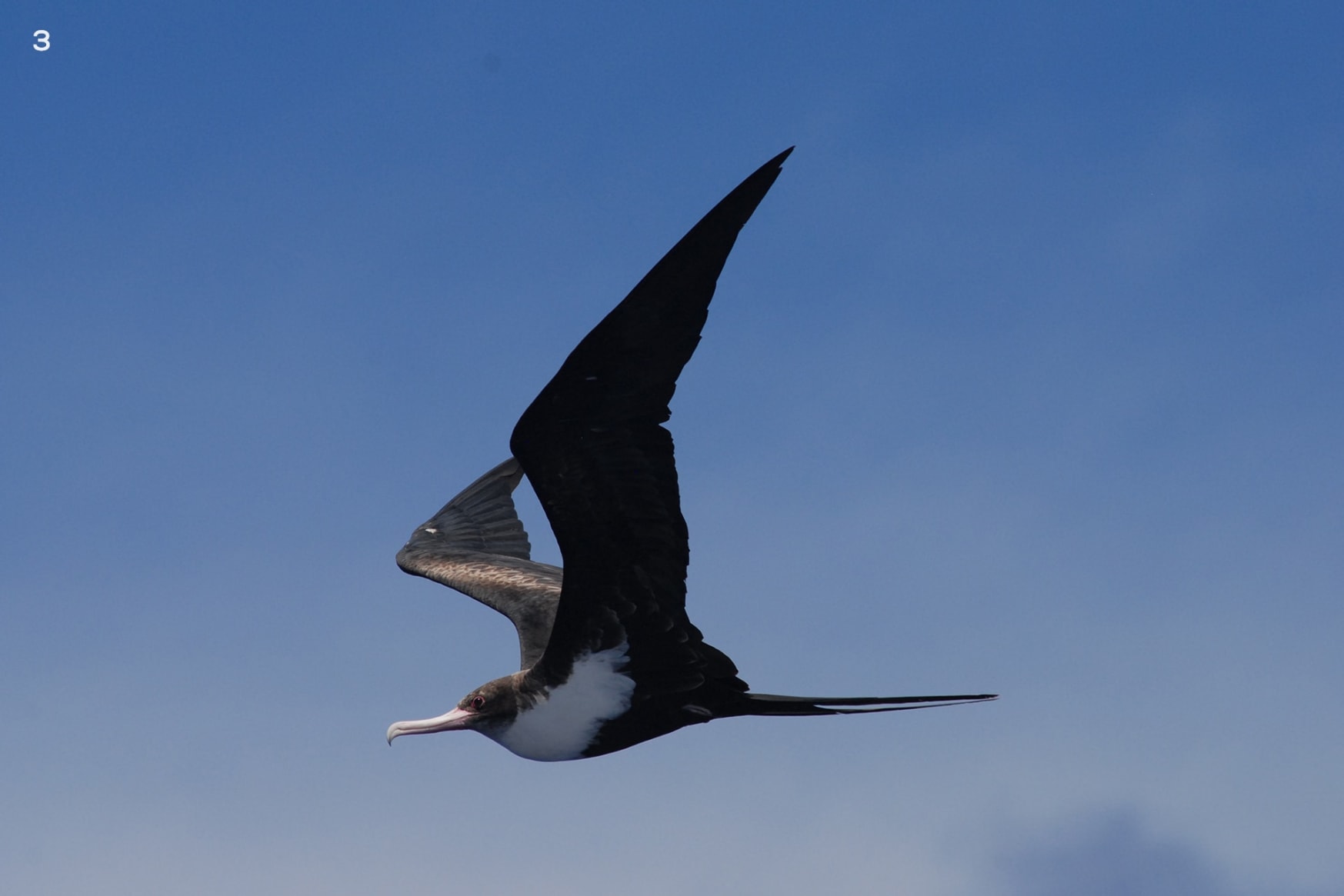
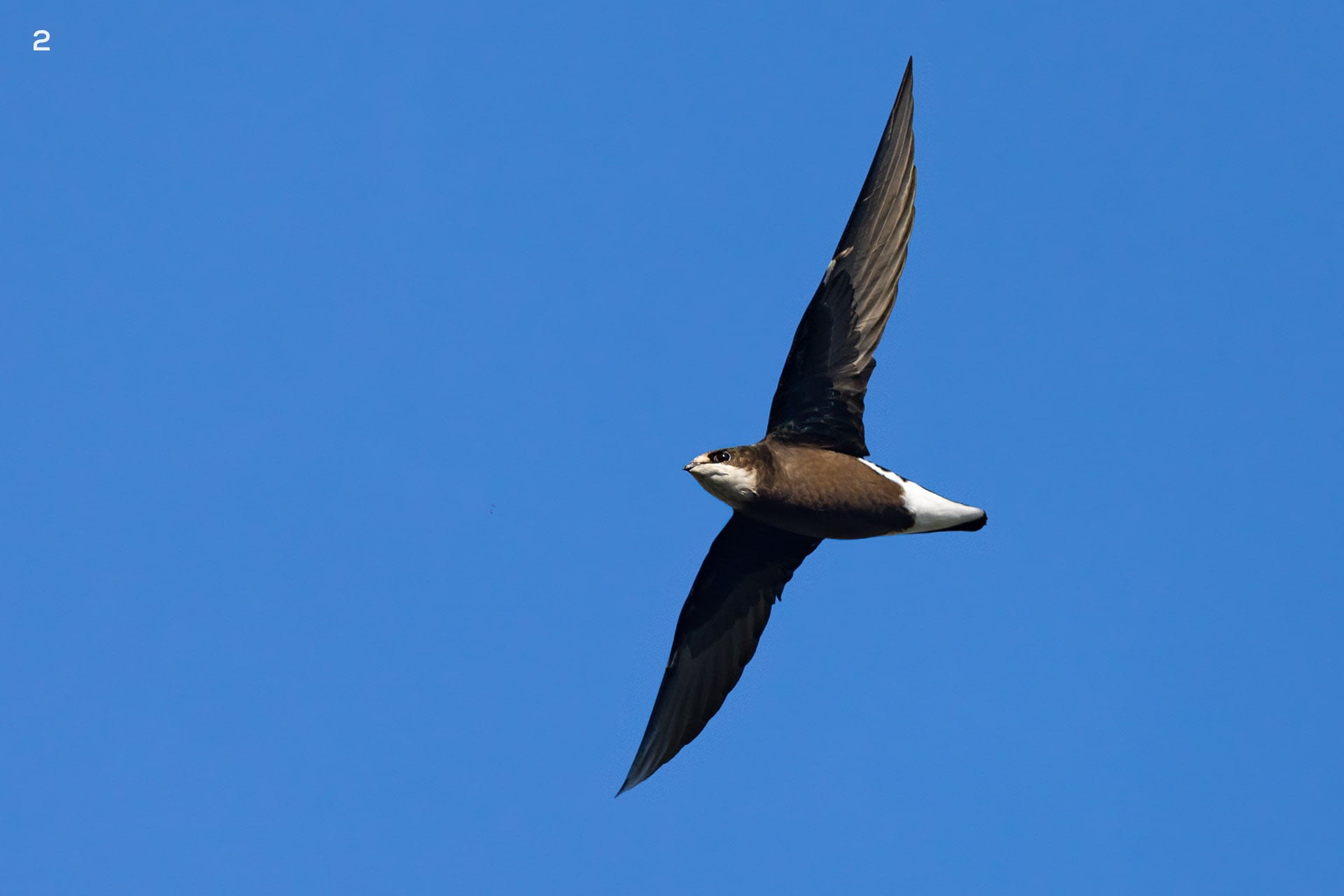
The ocean-loving, robber band frigate birds, the lesser and the great (Frigata ariel and Frigata minor, respectively), are mainly black. They have watermelon breasts (while courting), deeply forked tails, and a wingspan of up to 2.3 metres. They technically take the fifth spot at 153 kmph and have been included in the India list thanks to vagrants that have blown in on the west and east coasts by monsoon winds. Perhaps more deserving of this spot would be the alpine swift (Apus melba), dark brown above, white below, with a broad white band across its chest. In level flight, it can clock 250 kmph.
Summer guest
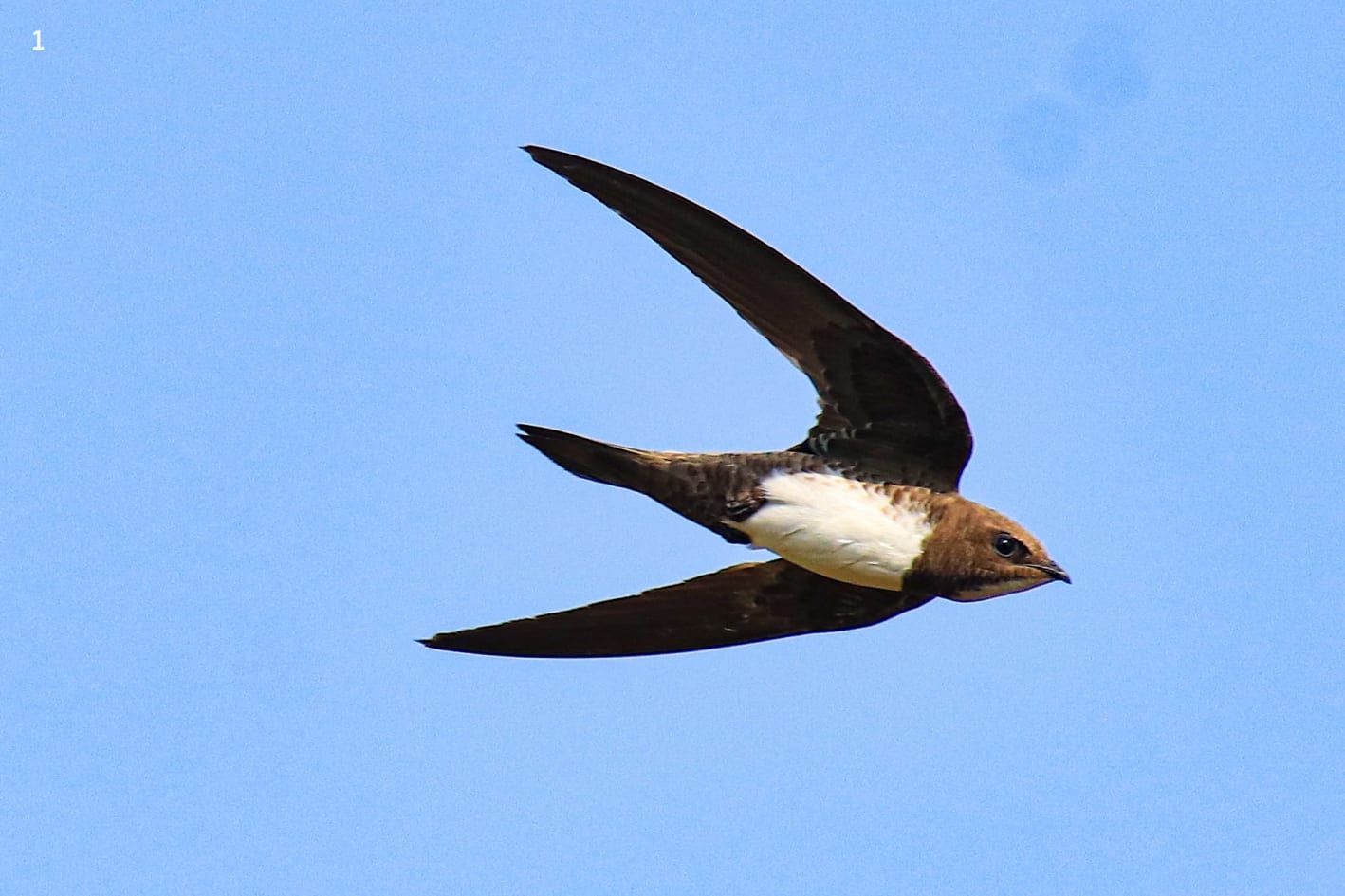
White-throated needletails (Hirundapus caudacutus) are large, swift, greyish-brown birds with a white throat and a patch spreading from rump to flank. They are summer visitors that whiz in at around 169 kmph tops, and cruise at the same speed. With their narrow, tapering wings, they can maintain these speeds nearly all day long, feeding and refuelling midair. Unlike falcons and eagles, which reach their highest speeds while diving with the help of gravity, needletails achieve their speed through sustained, powered flight. Which makes their achievement all the more remarkable and difficult to follow with binoculars as they twist and turn deftly in their pursuit of insects and small bats.
Measuring bird speed
Researchers use various techniques to measure the speed of birds, including high-speed videography and GPS tracking. For the falcon, they used high-speed videography, training a bird to dive down after prey against the bare background of a 60-metre-high dam wall.
Airspeed, which is the key indicator of bird speed, is the speed of the bird relative to the air it is flying through. Groundspeed is the speed of the bird relative to a fixed point on the ground and is arrived at by adding or subtracting windspeed. Facing headwinds, a bird’s groundspeed is reduced, and if being pushed by tailwinds, it is increased; when there is no wind, airspeed equals groundspeed.
While the falcons are the fastest, they (like cheetahs) cannot maintain those crazy speeds for long, unlike the slim-winged swifts and swallows, which can wheel around the skies all day at dizzying speeds, hunting, sleeping, and even mating midair. True champions.
Photo sources: great frigatebird, alpine swift, white-throated needletail.
About the Author