 Listen to this article
•
15:34 min
Listen to this article
•
15:34 min
We spent numerous days trailing elephants in Corbett at a young age as our father yearned to observe their daily routines. Approaching these majestic creatures on foot was inherently dangerous. Our forest guard’s local knowledge and experience proved invaluable in identifying ill-tempered tuskers and family groups, ensuring that we maintained a safe distance.
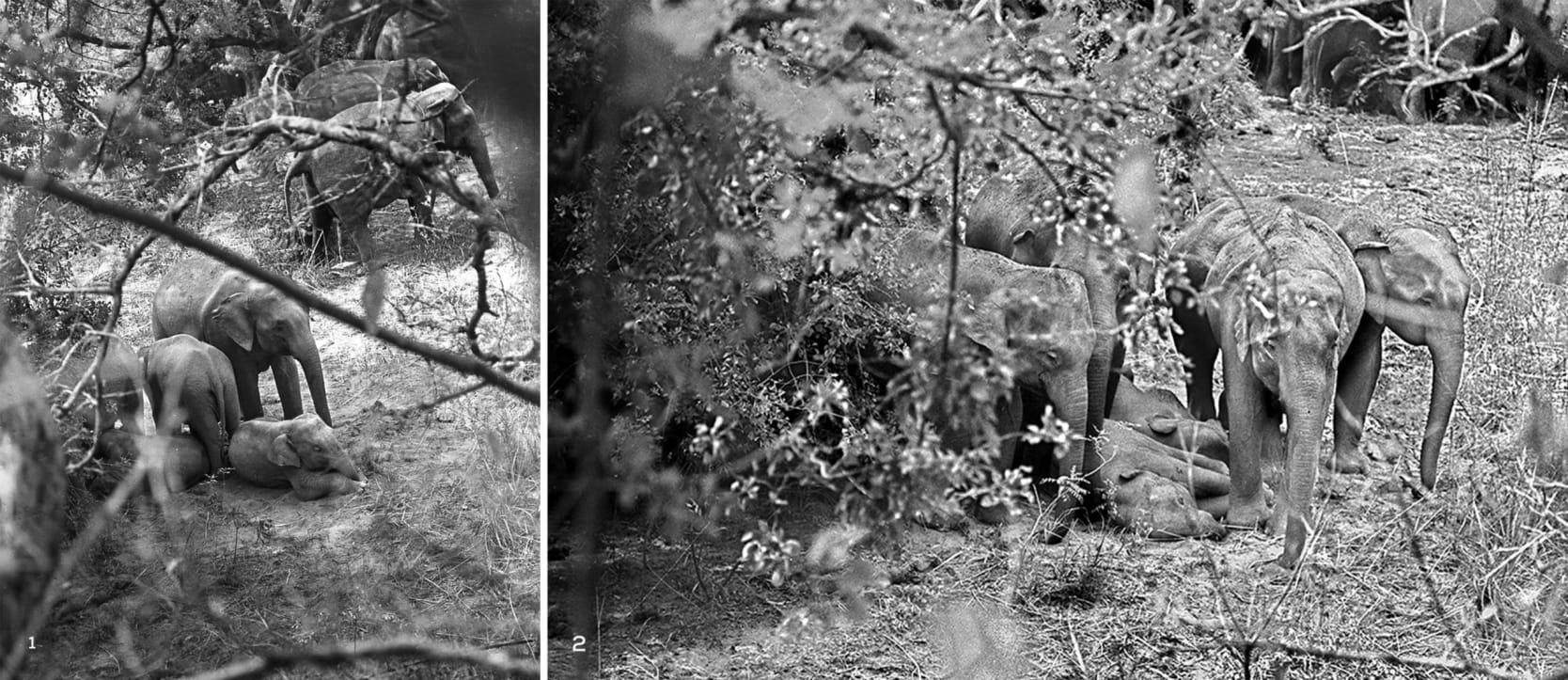
We have always been curious and wanted to discover and photograph the enigma of elephant sleep. The elephants feed the whole night in Corbett’s grasslands, and at dawn, when the sky begins to lighten, and birds start to chirp, the matriarch leads them to a secure resting spot in the forest canopy. One by one, the weary young calves slump to the ground while the older elephants remain vigilant, intermittently indulging in short bursts of sleep with their trunks resting on the earth. Even the adult elephants and formidable tuskers recline if the herd feels undisturbed and safe. Scientific studies indicate that wild elephants typically sleep about two hours per night, making them the mammalian species with the shortest snooze duration.
At times, we encountered elephants dozing during the scorching daytime hours, but capturing clear photographs proved challenging due to the dense foliage. Tracking a herd through thick jungles to their resting place presented us with risks and difficulties. Over the years, we followed various herds to resting places. It involved long treks on foot; occasionally, we crawled through bushes. We had to remain vigilant for snakes and scorpions on the forest floor. To prevent the elephants from detecting our scent, we always worked against the wind and remained prepared to retreat quickly to safety with our tripods and cameras.
Locating elephants in an open clearing while securing an elevated vantage point for photography posed another set of challenges. On a few fortunate occasions, we managed to find the perfect scenario. Regrettably, the elephants got alerted at the last moment, perhaps due to our scent carried by swirling winds or the metallic click of a camera. However, we had to hastily move away to avoid their realization of our presence and potential charge.
One sweltering day in May 1967, we embarked early in the morning from the Dhikala rest house in search of a herd of 30 elephants sighted the previous day at Gojada, about 15 km across the Ramganga River. We scoured the vicinity for fresh elephant footprints near the springs and discovered partially chewed grass strewn from their mouths. Kicking open their still-warm faecal droppings confirmed the elephants were moving towards Paterpani.
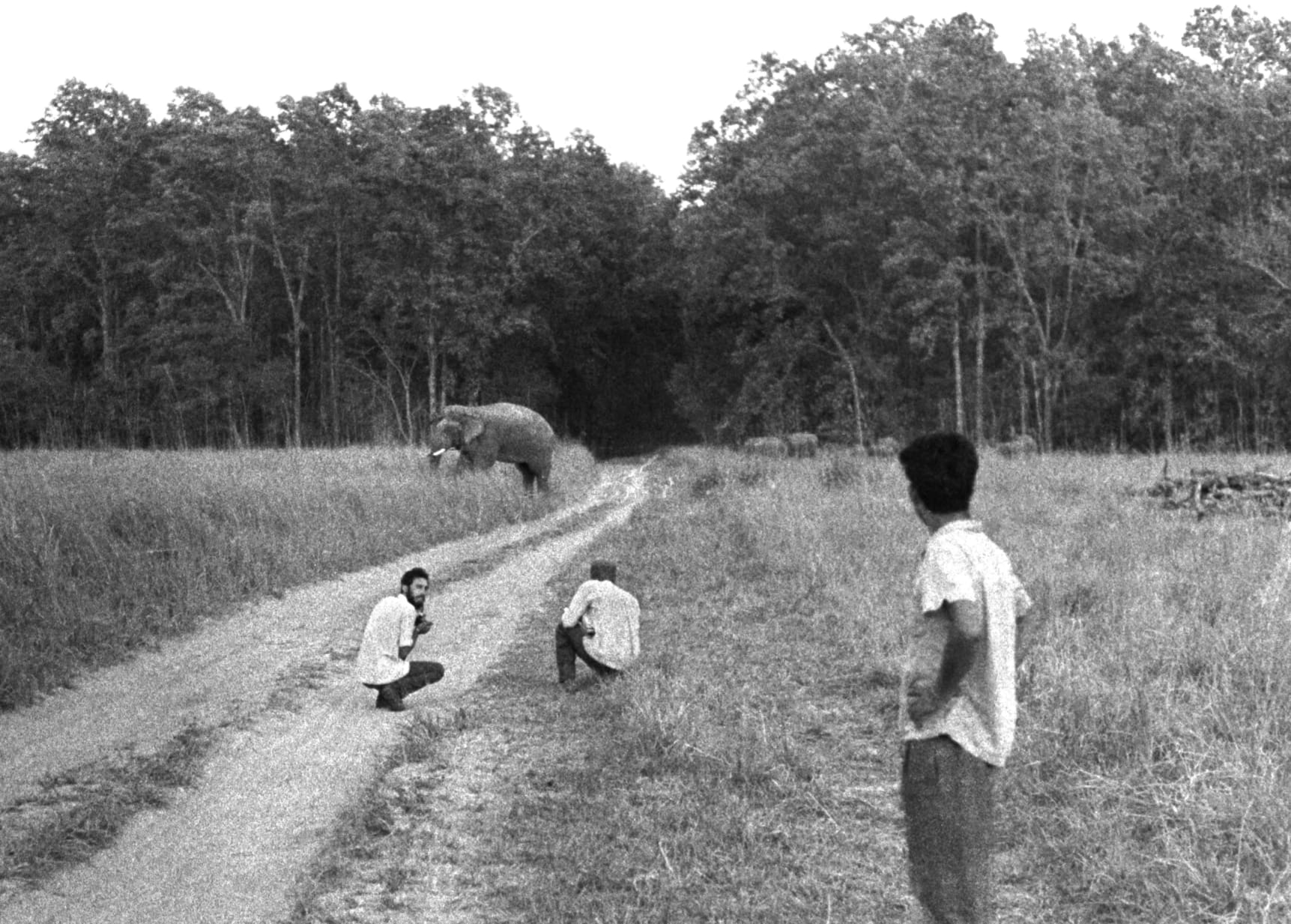
During one excursion, we witnessed something extraordinary: the mating ritual of elephants, captured in this remarkable photograph taken with a 100mm lens on a Canon Rage Finder camera. In an era when myths surrounded the secretive nature of elephant mating, this image stood out as a rare gem, earning widespread admiration from wildlife enthusiasts.
Staying downwind of the elephants, we followed their signs, leading us to a hillock overlooking a shaded jamun grove (Java plum), where the herd sought refuge. The herd had fragmented into smaller groups. Five nursing mothers were present in the family group closest to us. Two colossal cow elephants stood guard on either side of the sleeping young calves. The slumbering calves sprawled between their legs while some adults faced east and others west, ever-ready to detect approaching threats.
Under the scorching summer sun, the air shimmered with heat, and a tranquil stillness permeated the valley. Even the rustling of foliage had ceased. Echoing through the silent atmosphere, we could hear the repetitive calls of a brain fever bird (papeeha) in the distance. The elephants stood with their feet firmly planted on the ground, their trunks hanging straight down, resembling caryatids in an ancient temple.
Bothered by the audacious Daans or blood-sucking flies, the elephants flapped their ears, dug up the ground with their feet, and flung the dust over their bodies. Soundly asleep, some of the elephants even emitted snores, giving us an opportune moment to capture photographs of the slumbering pachyderms.
Despite the intense heat causing profuse sweating, we refrained from swatting away the audacious flies that feasted on our salty perspiration, mimicking the elephants’ ear flapping. We dared not disrupt the tranquil moment by waving our hands. Like statues, we remained rooted to the ground, entranced by this rare spectacle. What a privilege it was to document this family scene!
However, our desire for a better position on a slope, offering an unobstructed view without bushes or branches encumbering our frames, made us overly ambitious. We whispered our intentions to Sohan, our guide who meticulously monitored the group, advising us when to move and remain motionless. Our caution peaked as we maintained a low profile, carefully avoiding any stumbling that might trigger a cascade of rolling stones, alerting the group to our presence. Ultimately, we managed to assume a prone position and photograph them in their utterly relaxed state. Unfortunately, we could only capture a few frames due to limited film rolls.
“As the youngest, I refrained from taking pictures during this time, instead immersing myself in the jungle and learning to observe the elephants while prioritizing our safety. It was an intoxicating blend of excitement, anticipation, and the omnipresent danger of the forest”. Our guide, armed with a mere bamboo stick, remained ever vigilant. Lingering in the back of our minds was the nagging worry that one or more elephants might manoeuvre around and approach us from behind, escaping the challenge.
Suddenly, we detected a faint easterly breeze. It refreshed our sweat-drenched faces but also carried our scent toward the elephants. The nursing females immediately grew alarmed, milling about and trumpeting. Though they couldn’t see us, they sensed our presence.
The matriarch charged toward us as the calves and other elephants scurried into the narrow western valley. Amidst the chaos and looming danger, we had no choice but to retreat fast. We had been advised to scatter and zigzag while discarding our belongings to divert a charging elephant’s attention. However, the dense, tall grass inhibited our ability to run. Fortunately, a peahen abruptly fled her nest, flapping wings and loudly calling, “KOK! KOK! KOK!” this startled the elephant, granting us the opportunity to escape.
“Terrified by this unexpected wrath of the elephant, I quickly distanced myself onto a ridge. After the mock charge, the elephants gradually moved away, and the dust settled. My father waved for me to return, and I reluctantly joined them.” These encounters left a profound impact on young Rajesh.
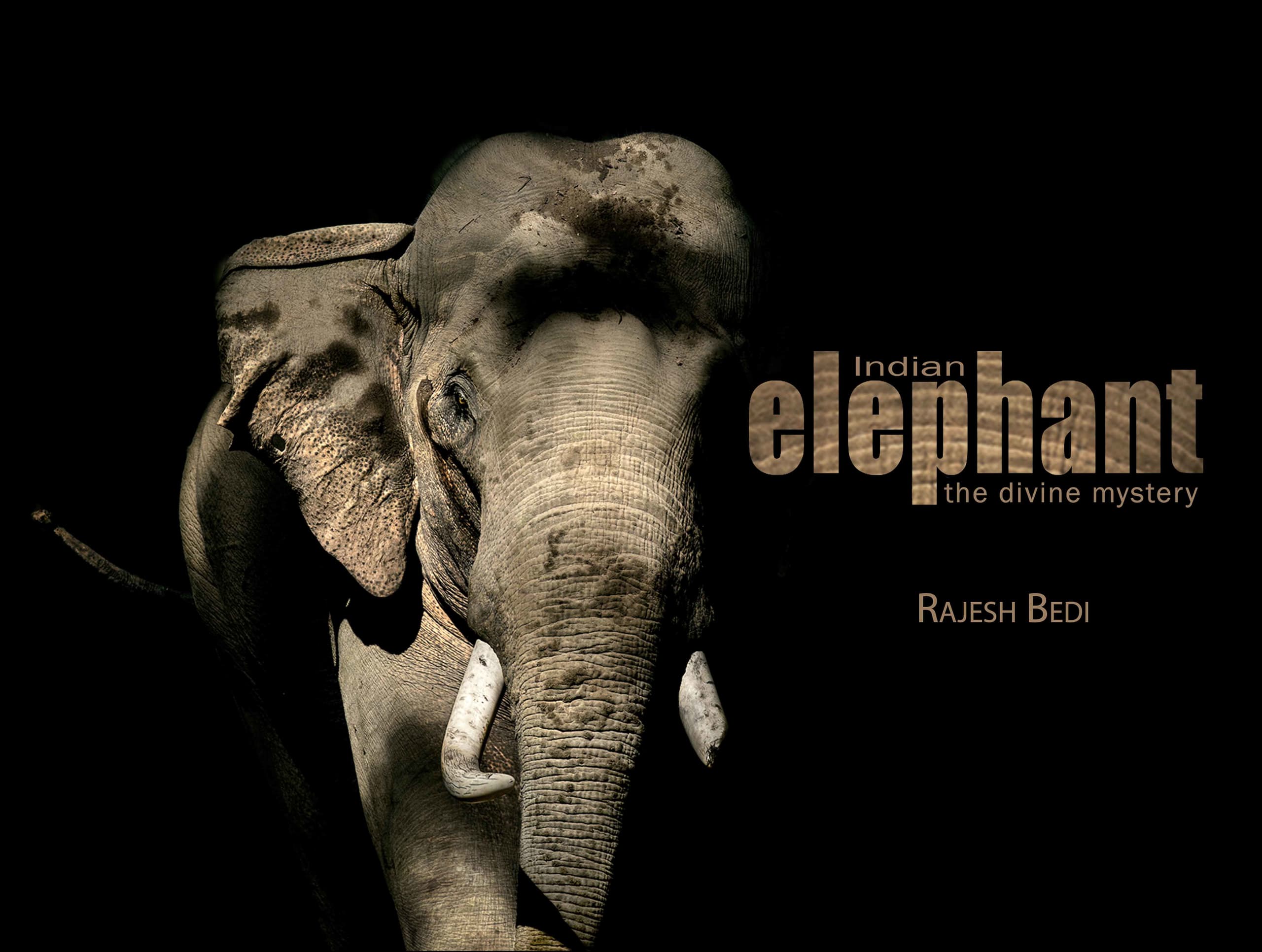
Excerpted with permission from Elephant – The Divine Mystery by Rajesh Bedi. Published by Wild Collection, First Edition (24 September 2025). English. Hardcover, 273 pages.