Listen to this article
•
15:34 min
Listen to this article
•
15:34 min
The history of conservation is filled with stories of loss, resilience and rare victories. Among those stories is that of Père David’s deer (Elaphurus davidianus), once extinct in the wild, now thriving through excellent, scientifically managed conservation breeding. It is one of the most remarkable and successful deer conservation stories. Today, as the Kashmir stag (hangul) (Cervus hanglu hanglu) struggles to survive, with fragmented populations primarily confined to Dachigam, the journey of Père David’s deer offers hope, ideas, and perspectives for bringing it back from the brink of extinction.
A tale of two deer
The Kashmir stag is the state animal of Jammu and Kashmir and is categorised as “Critically Endangered” by the IUCN. It is the last surviving subspecies of red deer in the Indian subcontinent. Once widespread across the Himalayas of Jammu and Kashmir and Himachal Pradesh, and in parts of Pakistan, it is now confined to Kashmir’s Dachigam National Park, with a few fragmented populations elsewhere in Kashmir. Its numbers have plummeted due to poaching, habitat loss and fragmentation, and overgrazing by livestock. Despite decades of protection, the population remains precariously low and isolated.
While one species was saved from extinction, the other stands at the threshold, still alive in the wild but critically endangered. The connection between the two is not just biological, but strategic and inspirational.
Père David’s Deer Escape: An Ex-Situ Triumph
Père David’s deer, endemic and native to China, once faced an even harsher fate than today’s Kashmir stag. Its population in China was wiped out by 1900. The last herd, in the imperial hunting park in Beijing, fell victim to a flood and the Boxer Rebellion, with soldiers and starving people consuming the remaining population. It was then officially declared extinct in the wild.
The only surviving individuals were a small, scattered number of captive animals in European zoos and private parks during the late 19th century. Through disciplined and excellent conservation breeding programmes, habitat establishment, and, eventually, reintroductions, the species now survives in both captivity and the wild in China.
The 11th Duke of Bedford, Herbrand Russell, had acquired the last remaining 18 individuals and established a breeding herd at Woburn Abbey in England. This is where the phenomenal work started. For the ex-situ conservation effort (i.e., to protect the species outside its natural range), this was the only lifeline.


Decades later, a healthy, genetically viable population was relocated to China, first kept in reserves such as Beijing Milu Park and Dafeng Nature Reserve, and then successfully reintroduced to the wild. The Père David’s deer is now a symbol of hope, demonstrating that a species can be pulled back from the brink of extinction through determined captive breeding. The species has recovered to over 9,000 individuals worldwide, the vast majority in China, with nearly 3,000 in free-ranging or semi-wild areas in large, protected reserves such as Dafeng and Shishou, while the remainder are maintained in managed captive populations that serve as genetic reservoirs. This is one of conservation’s quiet triumphs, demonstrating what sustained state commitment, science-led breeding, and habitat restoration can achieve. The species success provides the critical justification and model for the hangul’s currently struggling conservation breeding programme.
Saved in Exile: The Remarkable Return of Bukhara Deer
Equally important is the recovery of the Bukhara deer (Cervus hanglu bactrianus), a close relative of the Kashmir stag. Once widespread across the riparian tugai forests of Central Asia, the Bukhara deer suffered catastrophic decline during the 20th century due to uncontrolled hunting, conversion of floodplain forests, and large-scale river regulation projects. By the 1960s, fewer than a few hundred individuals survived in scattered pockets, their future hanging by a thread. Recovery did not come from a single intervention, but from a carefully layered strategy, strict legal protection, restoration of degraded riverine forests, and a conservation breeding programme designed not to confine animals, but to reinforce wild populations. Captive-bred individuals were gradually reintroduced into restored habitats, while corridors were secured to reconnect isolated herds. Crucially, the programme was sustained over decades, surviving political change and economic uncertainty. Today, the Bukhara deer has expanded its range and increased in numbers across parts of Uzbekistan, Kazakhstan, and Tajikistan. It’s another useful lesson for hangul conservation.
These examples show us that even fragmented deer populations can rebound when conservation is grounded in a long-term and scientific vision.

Securing the future of the Kashmir stag within its natural habitat
The conservation efforts for the Kashmir stag are not limited to conservation breeding. There are Kashmir stag populations still living in the wild. In-situ conservation (i.e., allowing species to thrive in their natural environment) plays an important role in securing the Kashmir stag’s future. It will ensure genetic diversity and help them adapt to the changing Himalayan environment, including the challenges posed by climate change. The Kashmir stag is a flagship species, so protecting them in their natural habitat will ultimately benefit other coexisting species.
To protect the species first, poaching must be completely stopped in Dachigam, and laws must be strictly enforced. Poaching was the root cause of the decline in the Kashmir stag population, and we need to ensure that not a single animal is poached.
Another threat that Kashmir stags face within their habitat is grazing pressure from the livestock of nomadic pastoralists, such as the Bakerwals. As an altitudinal migratory species, the Kashmir stag uses the lower elevations of Dachigam in winter and the higher elevations in summer. This is the same routine the Bakerwals use to graze their livestock, and it has led to intense competition for resources between the Kashmir stag and domestic animals. Upper Dachigam is the Kashmir stag’s summer habitat, and it should have access to it. Additionally, livestock can pass serious diseases to Kashmir stags. The Kashmir stag’s habitat needs to remain free and available to it in all seasons, so it can be safe and thrive in its natural space.
Between Hope and Loss, why it matters?
I did not grow up reading about extinction in textbooks. I grew up seeing it unfold quietly in the forests I loved. As a student and later as a field biologist working in and around Dachigam, the Kashmir stag was never just a species to me; it was a presence that shaped my understanding of Kashmir’s wilderness. Each sighting felt rare, each track in the snow like a fragile signature of survival. Over time, I realised that rarity itself had become normal, and that was the most alarming truth of all.
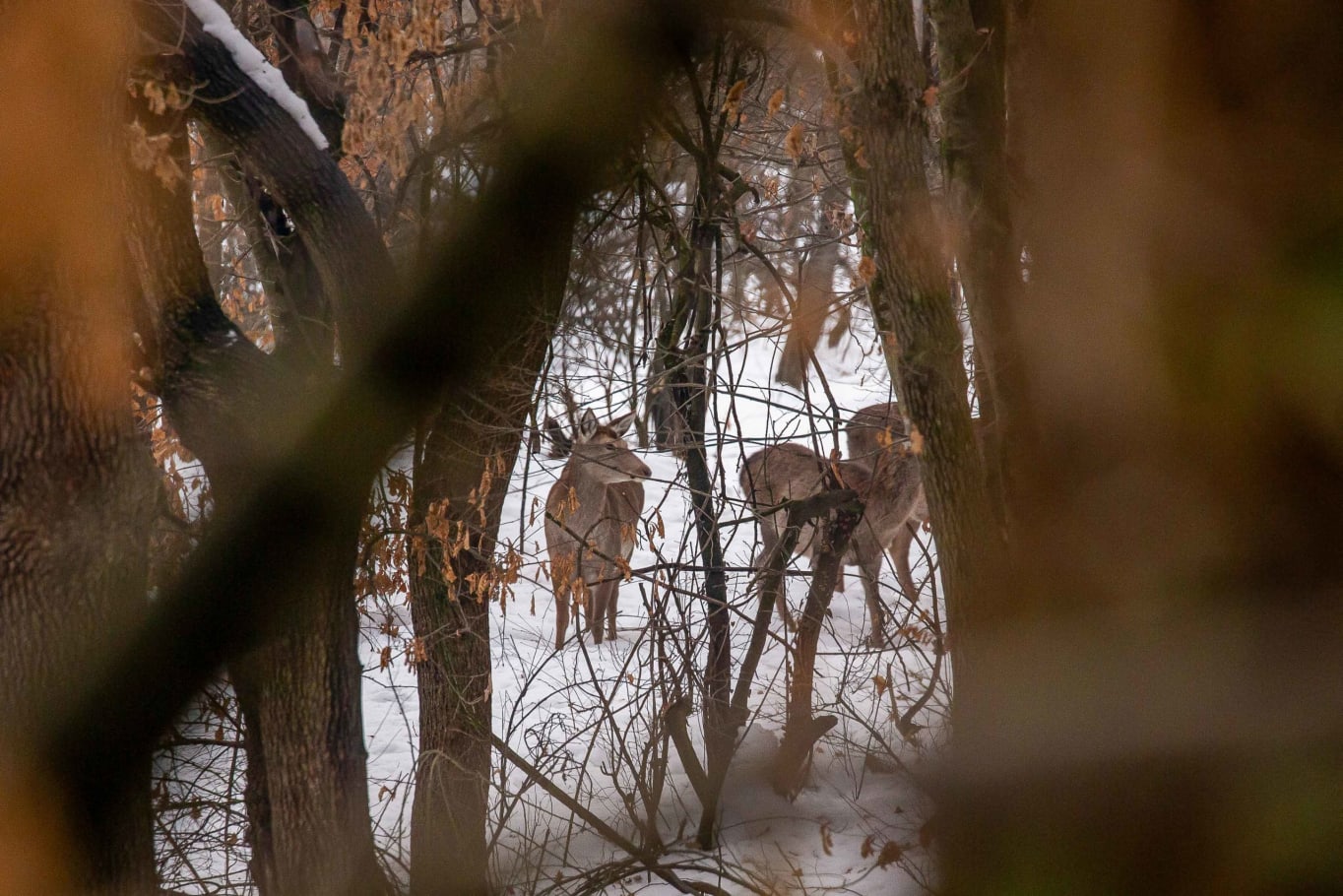
The first time I stood in a silent meadow where Kashmir stag once gathered in larger numbers, I understood that conservation is not only about protecting what remains; it is about grieving what has already been lost. That moment changed the way I looked at my work. I stopped asking only how many were left and began asking what future we were preparing for them. Were we simply documenting decline, or building a path toward recovery?
As I studied global conservation stories, the recovery of Père David’s deer and the Bukhara deer felt deeply personal, even though they unfolded far from Kashmir. These success stories were reminders that extinction is not always final, and that science, patience, and political will can bring species back from the edge. Each time I read about those recoveries, I thought of the Kashmir stag and wondered at our hesitation when time is what we don’t have.
Writing about conservation breeding is therefore not an academic exercise for me; it is a moral one. The Kashmir stag still walks in our forests. That’s an advantage the Père David’s deer didn’t have and had to reclaim through exile and decades of effort. We owe the Kashmir stag more than admiration and symbolism. We must plan boldly, invest seriously, and act before urgency turns into regret.
As a researcher and as someone who has watched a species fade into the margins of its own homeland, I hope to draw attention to the plight of the Kashmir stag. I refuse to accept that this decline is its destiny.
The Question
A century ago, Père David’s deer disappeared from the wild, but returned because people refused to accept the loss. Today, the Kashmir stag is at that very threshold.
The question is no longer whether we can save it but whether we will choose to do so. India has one of the strongest wildlife laws in the world, and the question before us is whether we will protect this species from extinction. If Père David’s deer teaches us anything, it is this: extinction is a choice, not a destiny.
About the Author