Listen to this article
•
15:34 min
Listen to this article
•
15:34 min
During 2024-2025, in Mawar village in Handwara, Jammu and Kashmir, a male leopard was giving the community sleepless nights. Repeated leopard sightings near homes and orchards had instilled widespread fear. Responding to local complaints, the wildlife department placed cages at strategic points, and soon the animal was captured. The community was relieved. However, a week later, a new leopard appeared in the same habitat, traversing the same paths. People expressed some distrust about whether the department had properly relocated the leopard or had just released it back into the same area. Villagers demanded answers; they blocked roads and questioned the department’s actions.

The local warden, Mr Intesar Suhail, requested Dr Khursheed of the Division of Wildlife Sciences at Sher-e-Kashmir University of Agricultural Sciences and Technology of Kashmir in Srinagar (where I work) to investigate the matter. I (Mohsin Javid) installed camera traps in the area. The images confirmed (from the rosettes on the leopard) that it was a different individual from the one that had been caught and relocated. Quite simply, another male leopard had stepped into the empty niche and occupied the vacant territory. The village was very close to the forest, and the areas around it had previously been considered forest buffer zones, but the continued expansion of agriculture had left only a narrow corridor for leopard movement. Interestingly, the conflict cycle continued, and about six leopards were captured and relocated from the same area within two months (November and December 2025), which included four adults and two cubs.
In July 2021 in Zazuna, Ganderbal, a child went missing from an orchard and was suspected to have been taken by a leopard. Later, a grainy CCTV video from a local home surfaced and circulated; it showed a cat with something small and shadowy beside it in the dark. This created panic. We installed camera traps (photo and video), and when we checked the evidence, we found it was a jungle cat with a kitten, not a leopard. The shadows in the video had misled everybody, but public pressure continued, and the wildlife department installed a small cage. By morning, the kitten was trapped inside. From midnight until sunrise, the mother scratched, tugged, and desperately paced around the cage, trying to free her kitten. With daylight approaching, she retreated alone. Camera traps later confirmed that the trauma of separation had left an imprint, and she always avoided cage sites.
In May 2021, in the orchards near Mansbal in Ganderbal, our camera traps recorded an incident which gave us a deeper understanding of the power of cognitive behaviour and learning in wild animals. We saw one male and one female leopard, likely a breeding pair, together. Their movement was synchronised, calm, and natural. Then suddenly, the male entered a cage set up by the wildlife department, and the sound of the metal door closing ended the pairing. The scene after that was very emotional. Through the night, the female circled the cage, pacing, pawing, sitting nearby, and waiting, not wanting to leave. At dawn when azaan echoed through the village, she disappeared. Some weeks later, we saw her near another cage, but she never came close to it. She had become wise to the trap. We often talk only in terms of capture, relocation, and management, but we sometimes miss how wild animals may be stressed and scarred by our actions, their emotional responses (for instance, the capture of a mate), and the lessons they learn from those situations.


In another incident, we filmed a leopard caught in a cage set up in a conflict-prone village. Ten days later, our camera trap showed another leopard sniffing the same cage, circling it, but never entering. Perhaps the leopard was trapped earlier and was familiar with cages. Wild animals observe, remember, and adapt. A trap may capture one individual; it can also send signals that other animals can learn from.
Around September-October 2021, in the orchards of Mansbal, a black bear was captured in a leopard cage. It was autumn, the crucial period when bears increase their feeding to build reserves to sustain themselves through the winter. The next morning, when we arrived, the cage was empty. Checking the camera trap footage, we saw that the bear had entered the cage around midnight, fiddled with the shuttle, and managed to open it and escape within an hour of capture.
During a conversation with a wildlife rescue team member Mohd. Altaf, we learnt that a particular adult bear had been captured at the same location multiple times, even after being translocated more than 100 kilometres away. This bear was identifiable from an eye defect acquired in an earlier conflict. For animals, such distances do not necessarily create separation; they can return, or worse, become disoriented in a new place. This and other incidents showed us that some animals learn and adapt quickly. We began to realise that translocation and capture were not proper long-term solutions for wildlife.
Capturing and translocating subadult bears and cubs to unknown areas is even more problematic as they often fail to find adequate food, water, shelter, or winter dens for hibernation. Many attribute a bear’s unusual winter movement or failure to hibernate solely to climate change, but in some cases, it may also be because we have placed the animal in unfamiliar terrain where it cannot prepare properly for hibernation. There are reports of a seemingly confused bear foraging near a garbage site. Bears, like many wild animals, depend on familiar terrain and seasonal rhythms. A night in a cage followed by translocation can disrupt seasonal rhythm, land them in conflict situations, and possibly affect them fatally. Bears and leopards use memory and scent to move around and survive. Relocation drops them into a new, unfamiliar space where they may struggle to survive or compete with other territorial residents. Invariably, some will be killed by humans, in traffic accidents, or could die from starvation.
There is a common thread in all these stories: memory matters. Whether we look at the female leopard’s vigil beside the cage, the jungle cat’s attempts to free her cub, or a leopard’s reluctance to enter a known danger zone, we witness emotional behavioural responses, learning, fear, remembering, and perhaps even grief.


Despite this, the default response to wildlife conflict in Kashmir is still the same: trap and translocate. Wildlife departments, under pressure from frightened and angry communities and political and administrative entities, rely on cages as immediate solutions. But camera trap stories from Ganderbal, Sopore, and Handwara reveal the limitations of this method. These are not isolated cases, but symptoms of a deep mismatch between action and understanding. Trapping does not address why animals enter human spaces. It only removes one visible animal temporarily and opens the door for another, or the same one, to return.
When leopards are removed from a territory, others may fill the empty niche. Territorial animals may rapidly occupy neighbouring territories when they appear vacant or are no longer actively defended. Territorial turnover restarts the conflict cycle, often with a younger, bolder, less experienced animal. The knowledge the previous animal may have acquired, such as routes to avoid or safe spaces to stay in, is lost. The new individual will start a risky learning process, and sometimes this increases the danger to humans rather than lessening it.
Relocation is not always a rescue; often, it only shifts the problem. The animal will try to find familiar ground, may have a homing instinct to return to the area it knows best, and may continue to visit settlements and villages. And what of the psychological cost? Families are separated, an individual disappears, and some learn to avoid traps and/or may change their movements and behaviour. Trauma, fear, memory, and association with traps are not just stories. These are the realities. In some cases, such fear may affect future conservation work, such as collaring, rescue, treatment, or health interventions. A traumatised animal will not trust metal, bait, or human presence again.
The human side of this story is equally complex. In Kashmir’s emotionally charged and politically fragile landscape, fear spreads rapidly. Newspaper headlines such as “Wildlife Dept Issues Shoot-At-Sight Orders For ‘Man-Eater’ Leopard In Uri” and “Leopard that killed a 4-year-old girl in Jammu and Kashmir’s Budgam, caught” create panic. CCTV shadows become threats. Rumours replace evidence. Mistrust between villagers and animals and between communities and wildlife departments increases. When traps fail to stop new animals, people begin to doubt the system. Those who lose livestock to wild animals may engage in ruthless retaliatory killings, poisonings, or set illegal traps to capture animals. Without long-term engagement, education, and visibility, the cage becomes a symbol of ineffective bureaucracy.

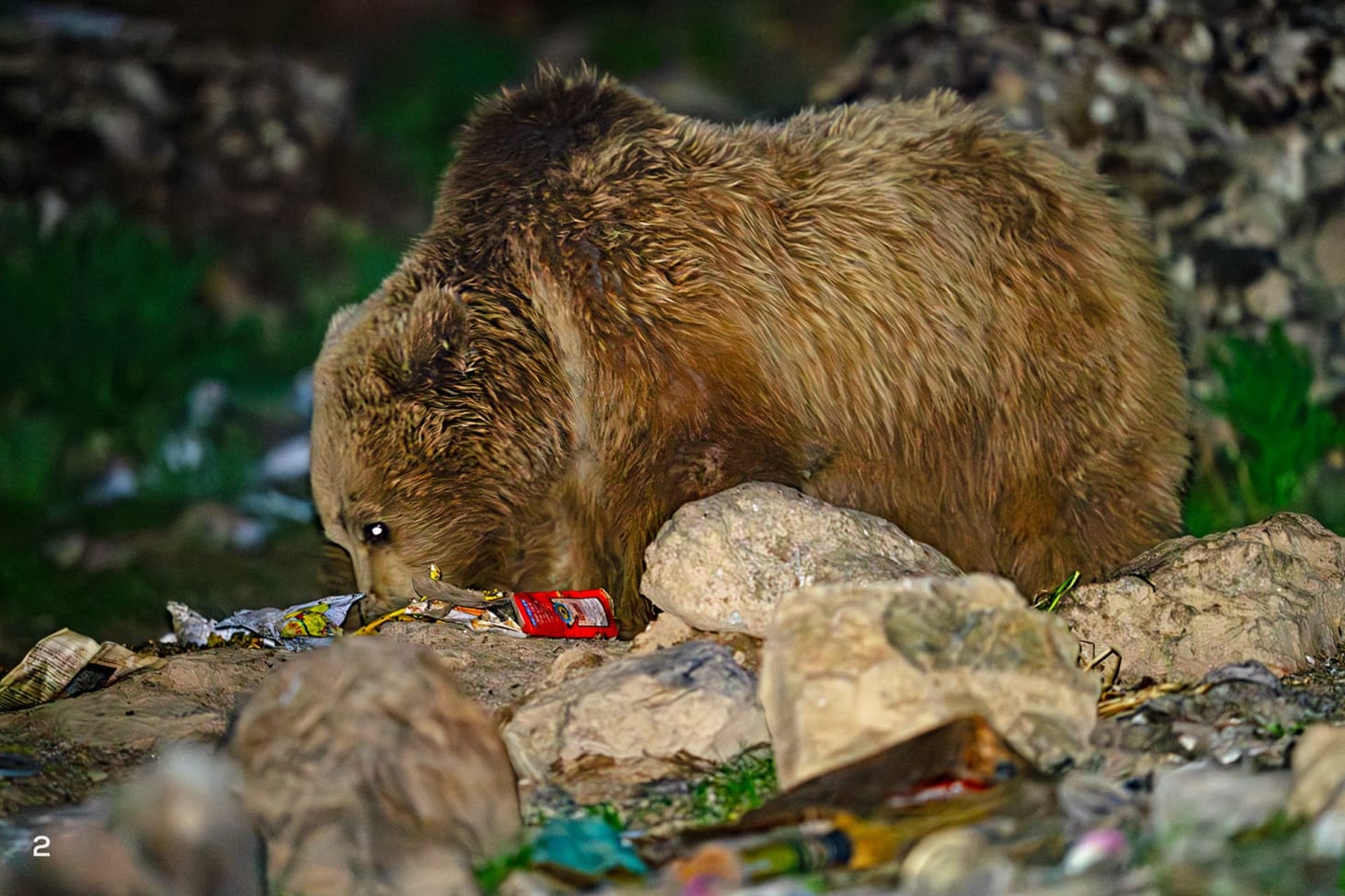
Removing a carnivore from a landscape causes ecological and social ruptures. Leopards help manage populations of monkeys, stray dogs, and wild pigs. Jungle cats control rodents. Bears disperse seeds and enrich the soil. When we remove them, we remove their ecological functions in that landscape, which could contribute to more rodents and wild pigs in crops, more imbalance where once there was quiet control.
Our approach needs to change. Kashmir does not need more cages; it needs more understanding, patience, and conversation. We need a coexistence-based conflict response. Measures such as trained livestock dogs, predator-deterrent lights, seasonal timing of interventions, ecological education, and community-based wildlife monitors must become central, not optional. Traps should be the last option, not the first.
People handling such conflict situations may not always have sufficient understanding of wildlife behaviour or field interpretation skills. At the same time, trained wildlife science people are often underused. If we want better responses, then we must bring field evidence, science, and behavioural understanding into the decision-making process.
In the end, what matters is not how many leopards we trap or bears we relocate, but whether we truly understand their place in our shared landscape. The human dimension of ecology remains a major research gap in conservation. Non-governmental stakeholders working for wildlife conservation in Kashmir should focus not only on research, but also on providing timely support to affected families. They should ensure that the government pays the family compensation immediately after a conflict. Conservation should therefore move beyond a one-sided approach. We must work towards coexistence, where both wildlife and local communities are protected, respected, and supported.
As human settlements push deeper into wild spaces, animals are watching and adapting. It feels like they are asking us what we are going to do next. Will our response be more cages? Or will we change how we address conflict situations in the wild?
About the Authors
Mohsin Javid
Dr Khursheed Ahmad