 Listen to this article
•
15:34 min
Listen to this article
•
15:34 min
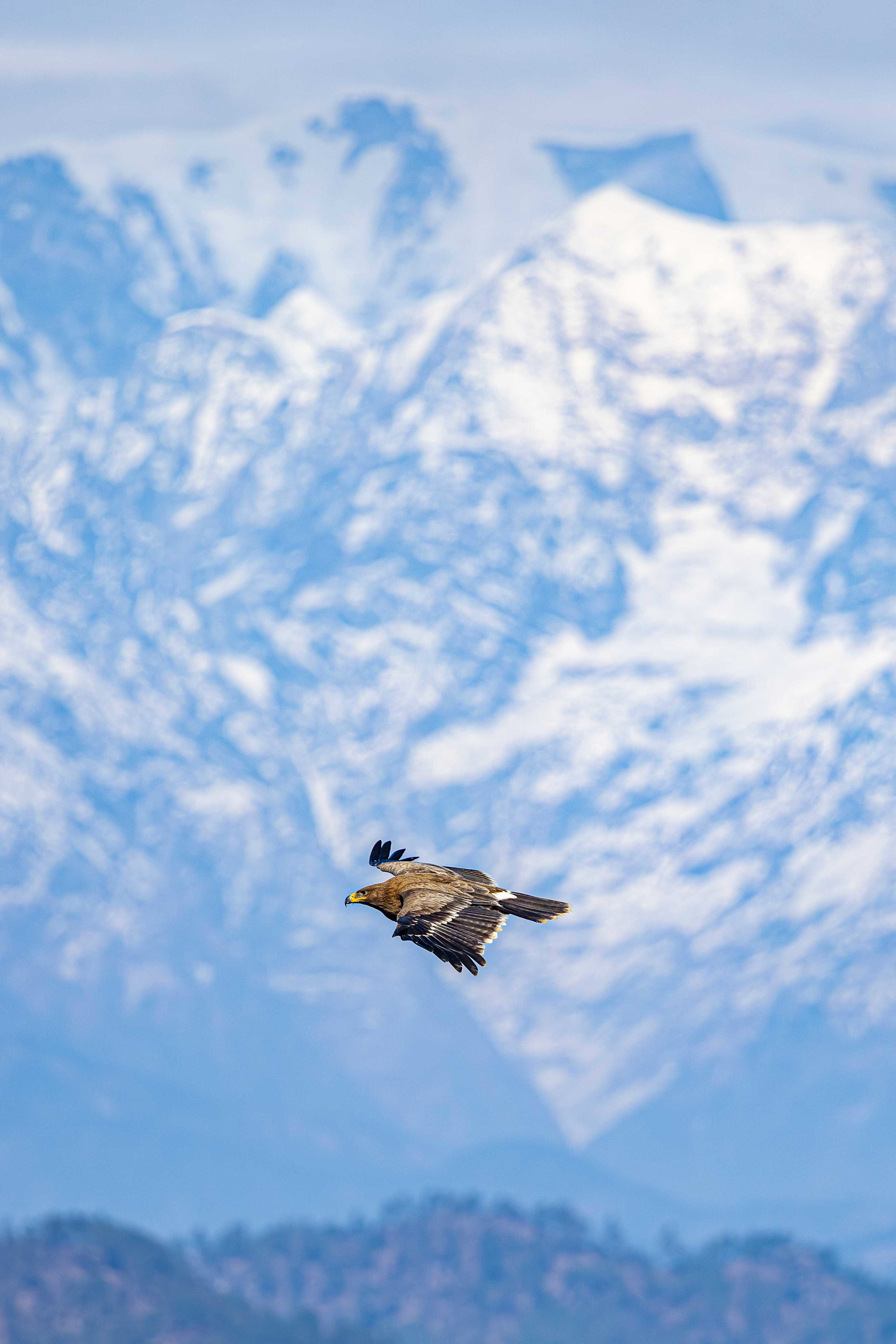
One morning on my way to Almora, caught in a traffic jam on the winding mountain road, I glimpsed birds soaring in the sky. I noticed that they were raptors, circling steadily against the backdrop of the distant snow-capped peaks. While tourists visit these mountains for their scenery and picturesque vistas, birds such as eagles arrive to escape the severe cold of their northern breeding grounds. Himalayan griffons, mountain hawk eagles, and crested serpent eagles are commonly spotted in the region, but it was a steppe eagle that caught my attention.
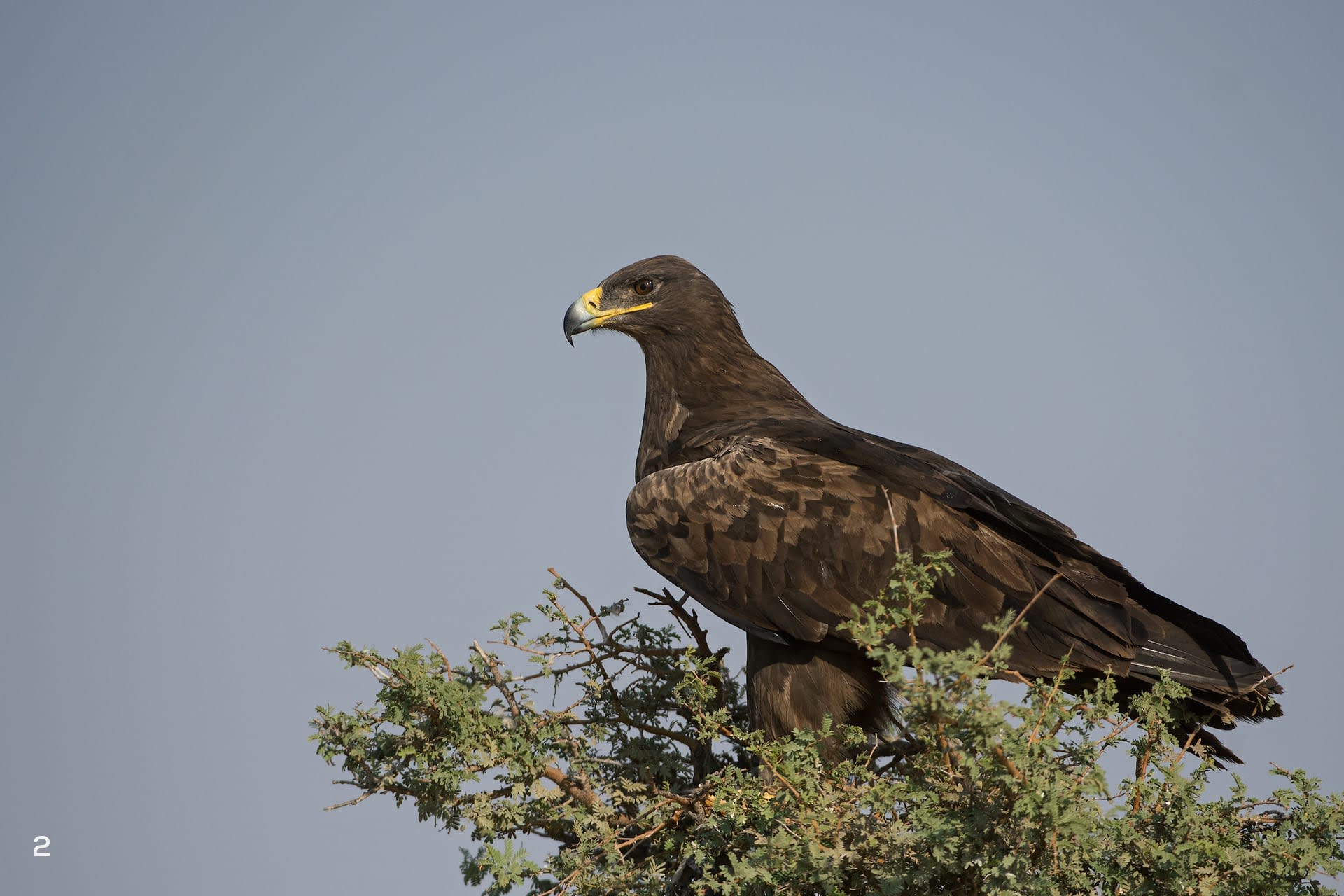
The steppe eagle (Aquila nipalensis) is a medium-sized raptor. Adults are ~60–85 cm in length, have a wingspan of 165-215 cm, and weigh between 2-4.9 kg. Their broad wings are an adaptation to soaring over vast open landscapes and long-range migration. They are known to breed and nest on the open steppe and in the semi-desert habitats of Mongolia, Kazakhstan, and parts of Russia, and migrate in response to the hibernation of their main prey — ground squirrels. Steppe eagles have two subspecies, nipalensis and orientalis. The western (orientalis) population migrates towards the Middle East and Africa through the western flyway, while the eastern (nipalensis) subspecies breeds in Mongolia and northern China and migrates south through the central Asian flyway across the Tibetan Plateau to winter in the Indian subcontinent. During their southward migration, individuals from the eastern population use stopover sites such as the Tsangpo Valley in southern Tibet, where they remain for up to 27 days before attempting the Himalayan crossing. These sites provide critical refuelling opportunities before the high-altitude transit. One individual tagged in Mongolia in 2015 took 65 days to complete the journey to Uttarakhand, India, at times flying at an altitude of 7,000 m above sea level. Sites like Pokhara in Nepal, Almora in Uttarakhand, and Dharamshala in Himachal have emerged as important wintering locations in the Himalayan region. Jorbeer in Rajasthan is also known to host huge congregations of steppe eagles.
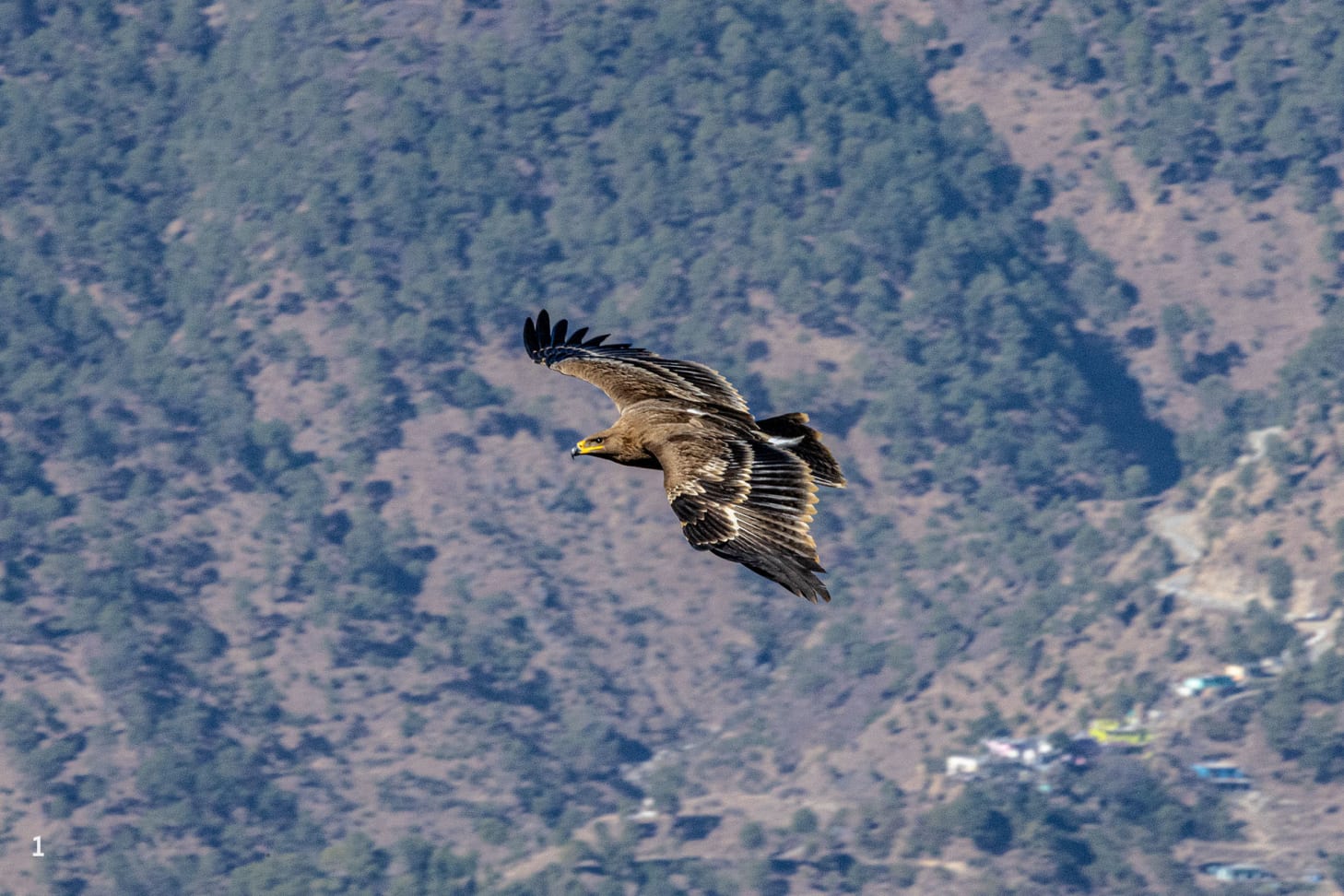

Cover Photo: Steppe eagles undertake high-altitude crossings at over 7,000 m above sea level as they migrate from breeding areas in the Russian steppes to wintering sites in the Himalayas. Photo: Kushagra Meshram
Being facultative (opportunistic) scavengers, they rely upon consuming available animal carcasses during their stopover in the Himalayas. Steppe eagles are traditionally thought to forage in guilds with vultures and kites, feeding on livestock carcasses left behind by herders after the grazing season. However, studies and field observations indicate a growing reliance on anthropogenic (human-generated) food sources, especially at garbage dumps and carcass disposal sites on the outskirts of towns. Many of these sites are unregulated and have expanded rapidly alongside increasing tourism. They often contain a mix of poultry waste, livestock carcasses, and unsegregated food waste. The lack of waste segregation, combined with the presence of toxic materials, further heightens the risks to scavenging birds.
Ingestion of plastics and other synthetic materials has been documented among scavenging birds across India and Nepal, particularly at urban waste sites where they forage. Exposure to veterinary drugs such as diclofenac — long confirmed lethal to Gyps vultures — has also been shown to be toxic to steppe eagles. While the year-round availability of food at unmanaged dumping yards may encourage some steppe eagles to overwinter near towns, the ingestion of contaminated carcasses and other harmful substances is increasing mortality in the migrating population. Other anthropogenic threats near these sites include attacks by stray dogs and collisions with vehicles. Electrocution on inadequately insulated power lines in key migration areas is another major cause of mortality of steppe eagles on the subcontinent and beyond. For example, a study found that at known congregation sites in Saudi Arabia, mortality rates from electrocution are high enough to potentially kill 0.3 per cent of the global population annually.
These combined pressures contribute to the species’ endangered status and underscore the need for safer waste management and infrastructure planning across its migratory range.
The congregation of visitors — avian and human — presents a unique challenge for the Himalayan landscape. At several dumpsites, particularly in the afternoons, hundreds of eagles can be observed circling or perched atop pine trees. Meanwhile, the increased traffic from unplanned tourism in the region often sees travellers throwing waste from the windows of their vehicles, all along the roads. Increased tourism in the hills, resulting in an exponential increase in unregulated dumpsites, could be a major factor causing mortality and modifying the migration pattern and ecology of these magnificent raptors that have dominated the Himalayan skies for centuries.
Steppe eagles are our winged guests from north of the Himalayas. India, as a signatory to the Convention on Migratory Species (CMS), has committed to the conservation of raptors moving along the Central Asian Flyway, joining more than thirty range countries, including Kazakhstan, Mongolia, Uzbekistan, and Saudi Arabia. In 2020, India hosted the 13th CMS Conference of Parties (COP13) in Gandhinagar, where the steppe eagle was officially listed in Appendix I, affording it the highest level of international protection. The bird is now categorised as Endangered on the IUCN Red List due to extremely rapid population decline, primarily from habitat loss, poisoning (especially from diclofenac in India/Pakistan), persecution, and electrocution on power lines. In order to develop conservation strategies, there is an urgent need to understand the migration ecology of steppe eagles in the Himalayas, as existing studies are sparse and often limited to visual counts or incidental observations. Their movement patterns, roosting preferences, dependence on garbage sites for food, and exposure to anthropogenic threats are crucial to understanding their wintering behaviour in the subcontinent.

About the Author