
 Listen to this article
•
15:34 min
Listen to this article
•
15:34 min
I was at the IISER Thiruvananthapuram campus, in the lap of the Western Ghats, for a workshop when I told someone I was studying at the National Institute of Science Education and Research (NISER) in Bhubaneswar. They replied, “Oh man, that looks like a desert. I saw pictures of it. It’s so dry, no?”

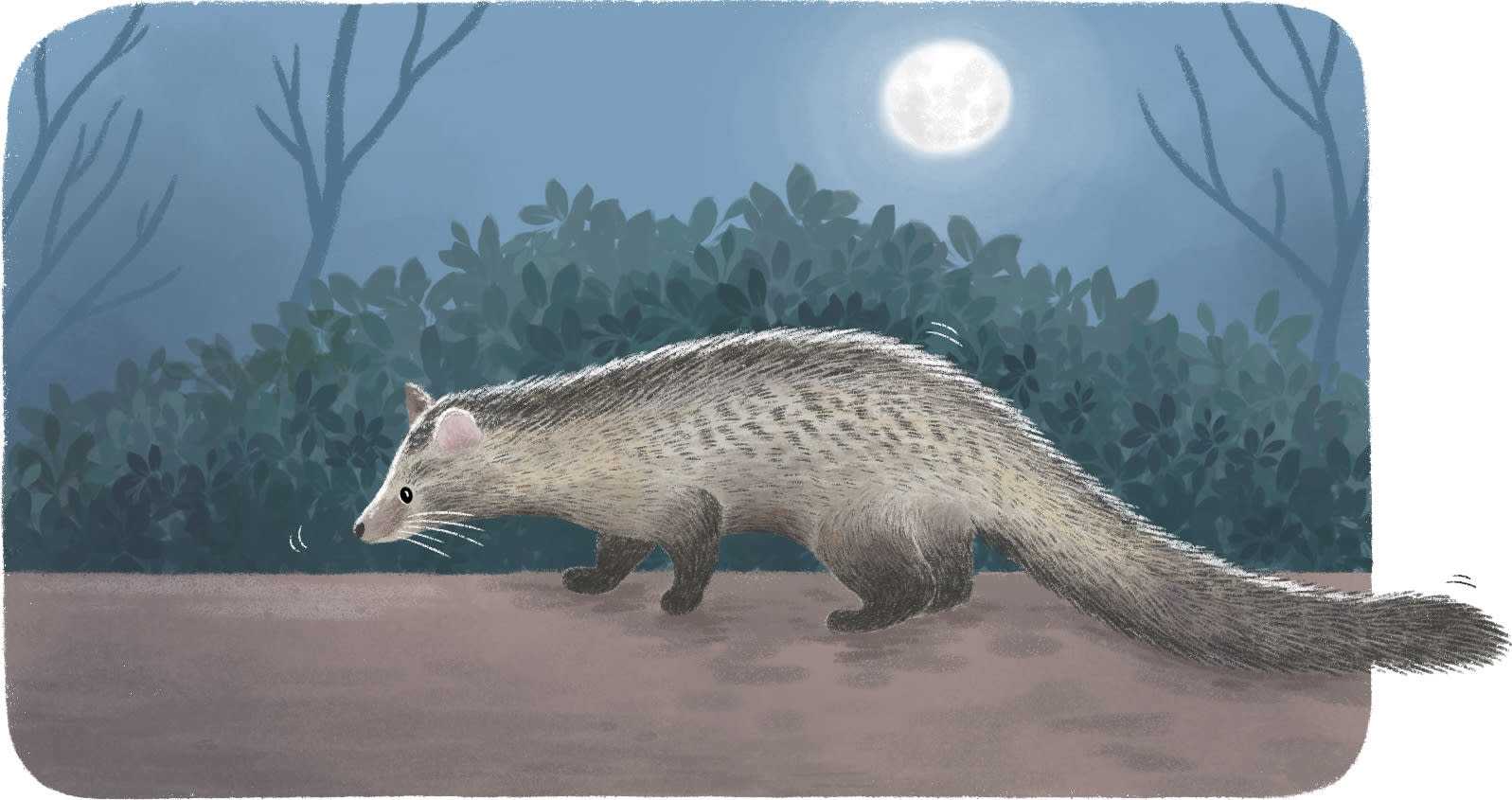
Cover photo: The common palm civet (Paradoxurus hermaphroditus) is a nocturnal mammal that lives alongside people, thriving in orchards, villages, and even city edges.
It was very dry. It probably seemed drier to someone staying on a campus with lush green forests contiguous with the Agasthyamalai Biosphere Reserve (part of the southern Western Ghats). We have all romanticised the Western Ghats — mist curling around mountains and heavy monsoon rain, a hotspot of biodiversity, where the bulk of ecologists in India have worked and continue to do so. A desert, though? They’re apparently lands of death, as their names directly translate to in many Indian languages. Wastelands. Something that needs to be turned green to be “productive”, regardless of the endemic species it may hold within.
For a newcomer to NISER in the dry season, it definitely looks barren — the places around the campus are mostly scrubland, with a few forested patches (canopied patches). As the seasons change, so does the landscape. In the monsoon, it is green with plants in every corner and the occasional mushroom. In the dry season, grasses grow taller than humans, and in the springtime, the pavements are strewn with Pongamia flowers.

For those who look closely, however, know it is teeming with wildlife. The roads of the campus are lined with gulmohar, copperpod, Indian almond, bakul, and Pongamia. The paths leading away from the hostels into the wilderness are mostly scrubland, with remnants of cashew plantations. Black-naped hares often shoot across the road at night, and civets have been spotted on the way up a hill, which was apparently used for shooting practice before NISER became NISER. Camouflaged bird nests dot the football fields, and the building corridors are peppered with Melanitis leda, the common evening brown butterfly.
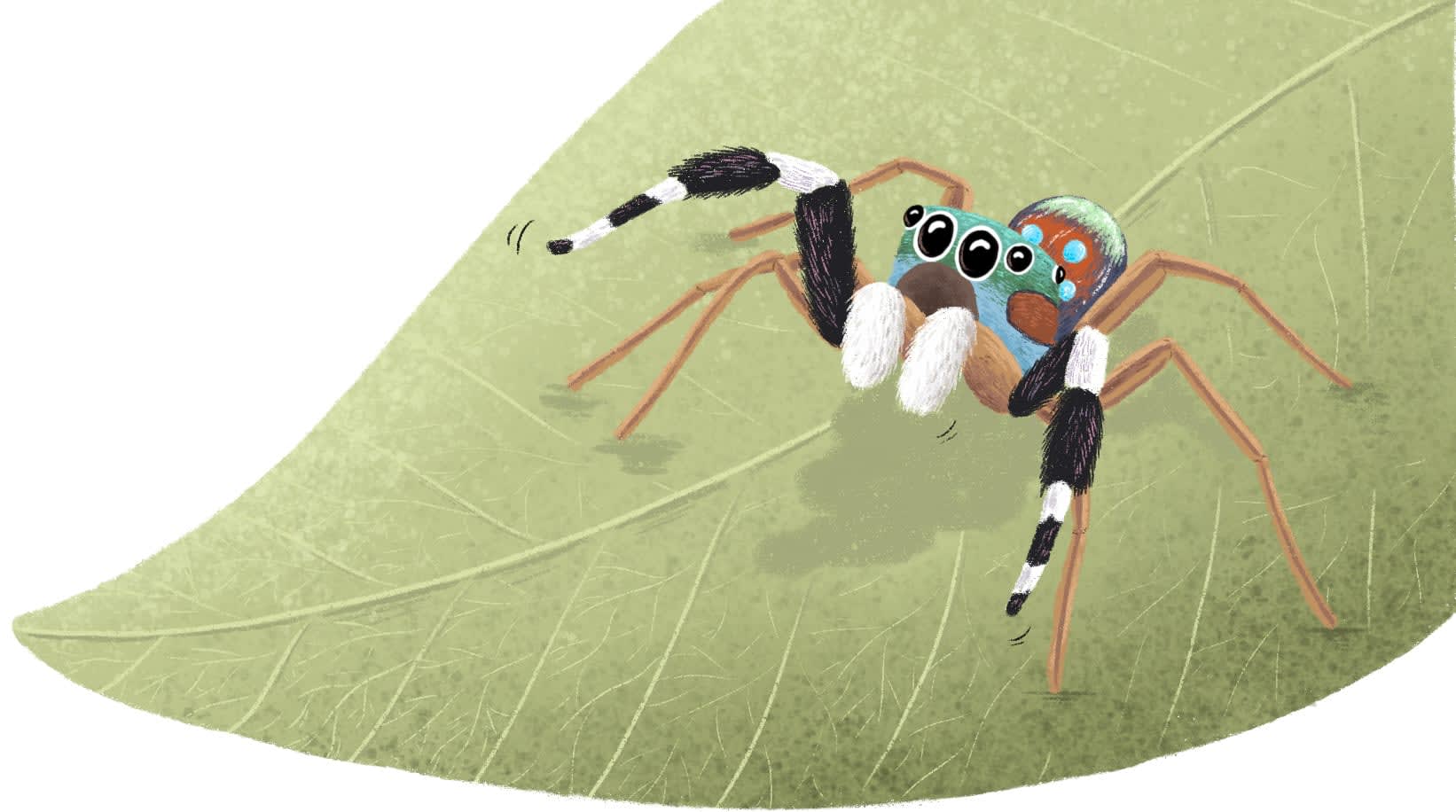
I like to believe that most students’ introduction to campus biodiversity comes through attending a nature walk led by Oorna, NISER’s nature club. Mine certainly was, and we saw plenty of birds that day, even though my clearest memory is that of observing a garden lizard closely. Nature enthusiasts often go birding or nature-walking together, sometimes leading to unexpected finds. Once, a short walk from the cricket ground led my friend Joel and me to spot an Indian golden jackal in the middle of a dirt path. Another time, when a couple of students went birding, they saw a quail, later confirmed to be a blue-breasted or king quail, a bird last spotted in Odisha only in the 1970s. One of the senior students, Ayush, regularly went out on campus looking for critters. One specimen he found was identified as a new species of jumping spider, and later named Siler niser.
Non-human campus residents have also been spotted in interesting encounters. Ayush once spotted a black-naped hare at night. It remained still instead of darting across the road, allowing close observation from a metre away. Another friend, Avrajjal, on a nocturnal field visit, spotted a hare, and then a civet, both of which stood quietly for a few seconds before turning away and walking off. Maybe this peaceful coexistence was routine — but we have not found out, not yet.
Oorna takes the students nature-walking a few times every semester, with resource people to talk about the plants, birds, and insects they spot along the campus’s dirt paths. They also regularly participate in the Campus Bird Count, an event part of the Great Backyard Bird Count (GBBC), aimed at documenting birds on campuses across India. As a part of this event, students team up in groups of 5-10 with a bird resource person. Groups document birds in different parts of the campus. The sustained efforts of dedicated birders have led to a whopping 120 birds observed at NISER!

Apart from bird counts, Oorna is also part of the Campus Phenology Network, an initiative by SeasonWatch to document how the fruiting and flowering of common Indian trees changes over the seasons. Oorna members have documented some of the bakul, Pongamia, and Indian almond trees on the campus, contributing to a growing database dedicated to understanding how climate change affects tree phenology. They also conduct events such as nature-themed treasure hunts, insect races, and nature-themed art competitions. They encouraged people to get outside their hostels and campus buildings — to observe insects, collect dry leaves or flowers and create art or find creative natural alternatives to paintbrushes.
Species documentation by nature enthusiasts has also been put to good use, resulting in field guides to the species found on the NISER campus. So far, we’ve rolled out guides for birds, plants, spiders, reptiles, and amphibians. Moreover, for biology majors interested in ecology, these species have served as models for their Master’s dissertations. These projects range from understanding the baffling behaviour of crickets, visual camouflage in birds, how mimicry works in jumping spiders, and how urbanisation impacts an endemic lizard (Sitana sushili), Sushil’s fan-throated lizard. Far from being a perceived wasteland, these scrublands are home to creatures that have wormed their way into students’ lives, from their evening walks to their theses.
About the Authors
Nitha Fathima