 Listen to this article
•
15:34 min
Living along the Kuklung range of Manas National Park, the women of Kaljarpara navigate a delicate reality. Encounters with the wild are not just memories of conflict, but are being transformed into craft, income, and lived coexistence.
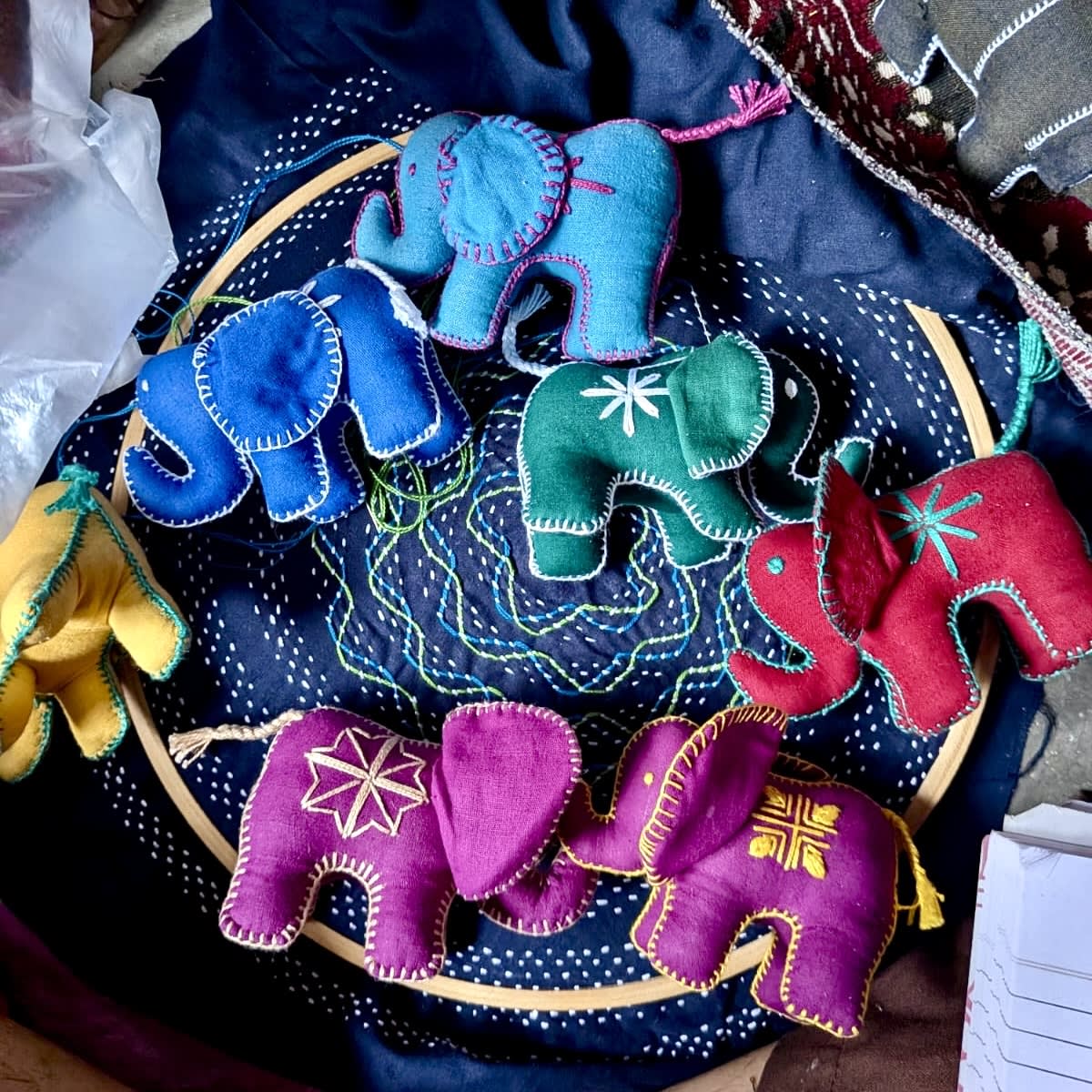
“Achanak se ek zor ka awaaz aaya. Phir ek aur.” (Suddenly, there was a loud thud. And then, another) Haseena says, recalling the night her wall began to shake. Her needle keeps moving steadily through the grey fabric, stitching the curve of an elephant’s trunk. A palm-sized soft toy rests in her lap; she and four other women have been stitching toys that afternoon. This is their first order for the Manas National Park souvenir store, run by the Assam Forest Department. They speak of it with quiet excitement.
Haseena’s life is rooted in Kaljarpara, in Assam’s Chirang district, where around 70 homes sit close to the land they depend on. At 34, her days move between household chores, childcare, tending cattle, and farming alongside her husband. As a child, she’d watched her mother stack old clothes together, binding them with small, repeated stitches into something durable. Three years ago, she took the local practice, a recycled fabric craft called khetha, beyond the home, joining other village women to stitch and embroider together.
A few steps from her doorway, the ground opens into fields. Mud-plastered bamboo walls stand beside newer brick structures, all held under tin roofs, a pattern that repeats across the village. The boundary between living space and farmland is ambiguous.
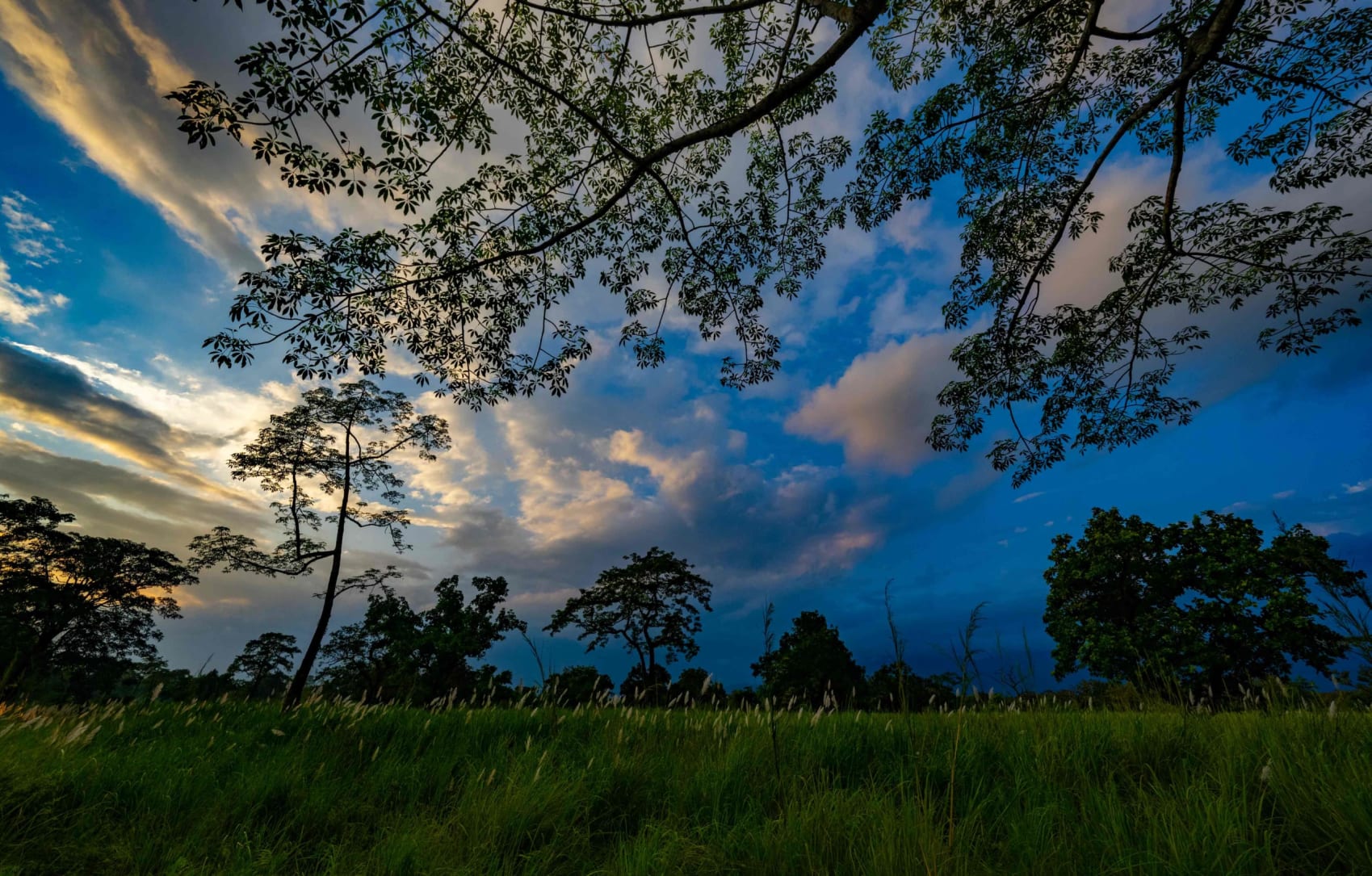
Rice is stored inside the house. Outside, banana, papaya, jujube, and mango trees are spread around the courtyard. Narrow paths lead outward towards the Kuklung range of Manas National Park, just 10 kilometres away. It’s the same paths elephants follow.
Four years ago, during the harvest season, Haseena was at home with her two daughters, 8-year-old Akhtara and four-year-old Rashida, while her husband and elder son were away. That night, she felt a sudden weight pressing hard against her wall, making it tremble. For a moment, she did not move. Then, realising what it could be, she switched on every light in the room. She and her daughters began calling out to neighbours, their voices cutting through the dark.
Their response came immediately. “Tumi okole nai, ami tomar logote asu. Xahox rakhiba, eko nohoy.” (You are not alone; we are here with you. Be brave, nothing will happen.) The reassuring voices were close, but in the tense standoff, neither the neighbours nor the creature came any closer.
Haseena pauses the story here. Then, almost as an afterthought, she adds that she folded her hands in quiet prayer, speaking to the presence on the other side of the wall. She told Baba that she was afraid. That they had done nothing to harm him and asked him to leave peacefully. She was certain he would understand.
Outside, the elephant remained still for a few moments longer. Then, slowly, it turned and made its way back to the forest.
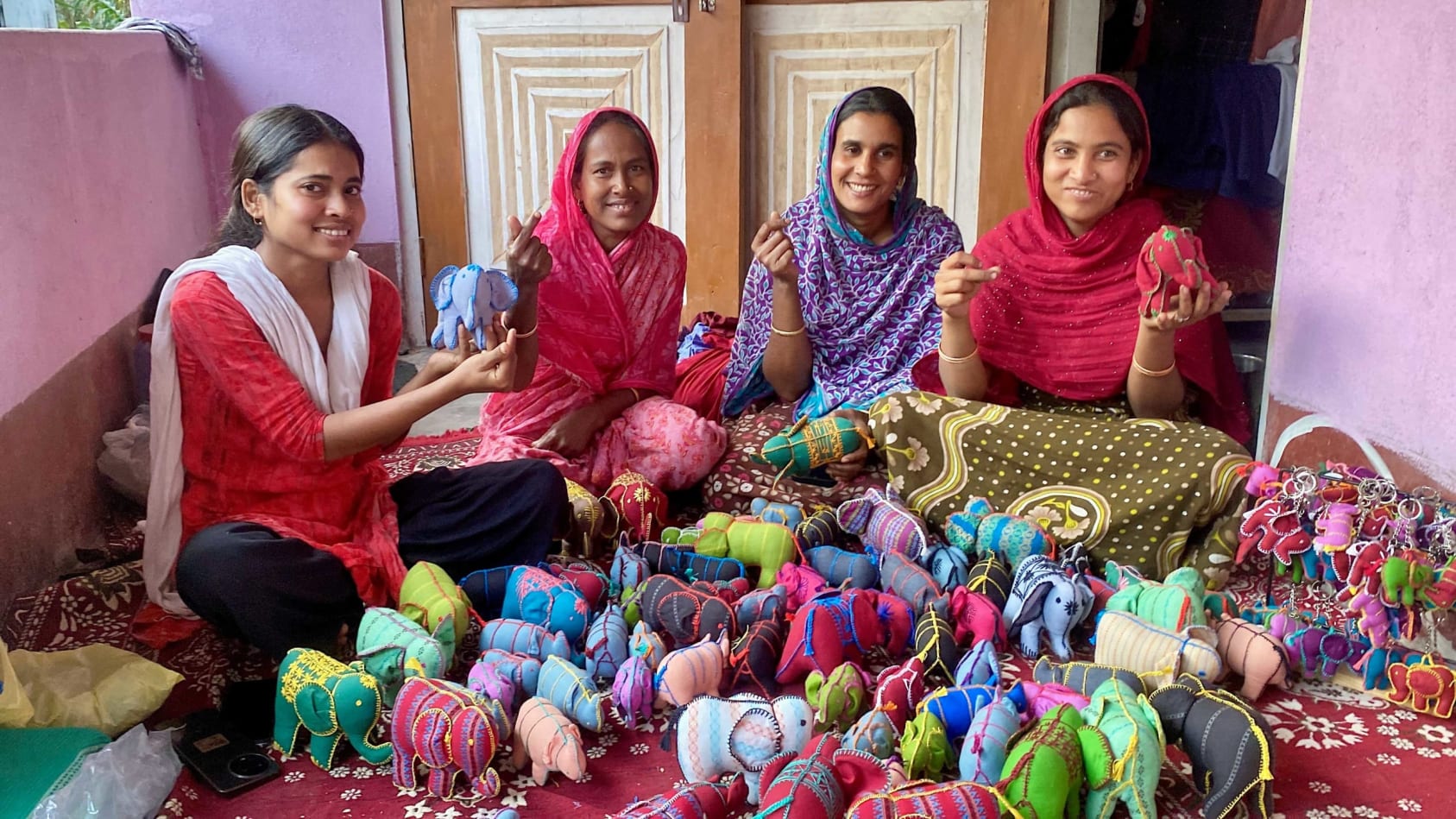
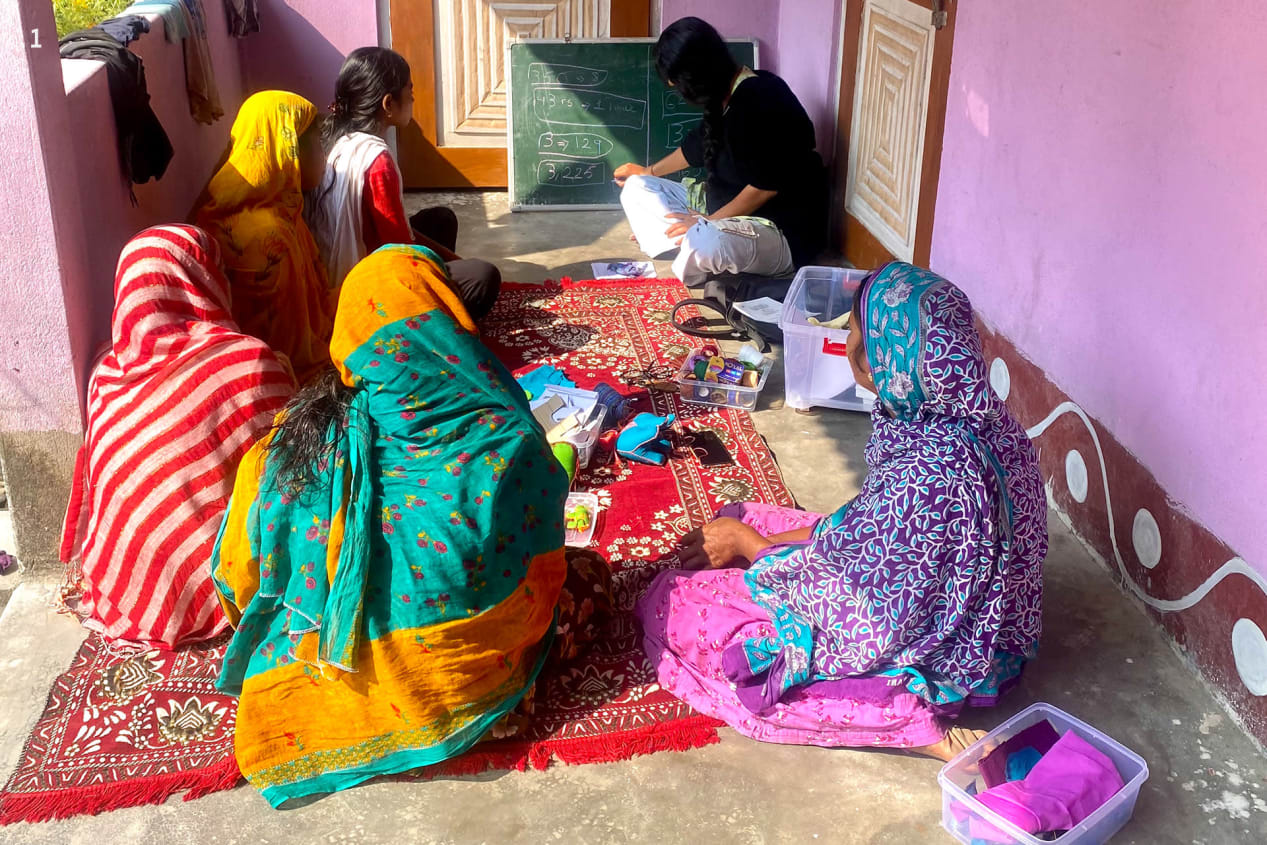
Today, in that same house, the walls that once kept an elephant at bay now embrace its shape in fabric and thread. On the verandah, five women sit cross-legged on a carpet. Fabric swatches lie scattered between them, elephants in the making, stitched from leftover handwoven cotton, often brought in from Aagor Daagra Afad, a women weavers’ collective nearby. One woman stuffs cotton into a form, another embroiders an elephant ear.
The women gather here most days after a busy morning of cooking, cleaning, tending to cattle, and sending children to school. The group began to take shape in 2023. The SBI Youth for India Fellowship provided materials, training, and basic equipment, while The Action Northeast Trust supported the groundwork.
What they didn’t have was space. Haseena offered her home. Over time, it became known as Khetha Kori, bringing together women from the village, some bound by blood, others by years of shared history.
Work and conversation flow. Some days they drift into songs, stories, and laughter. When I suggest a five-day work week, the women laugh. One day of rest, they said, was more than enough. Beside Haseena, a bright peacock takes shape. Her 21-year-old niece, Tasmeena, holds the needle.
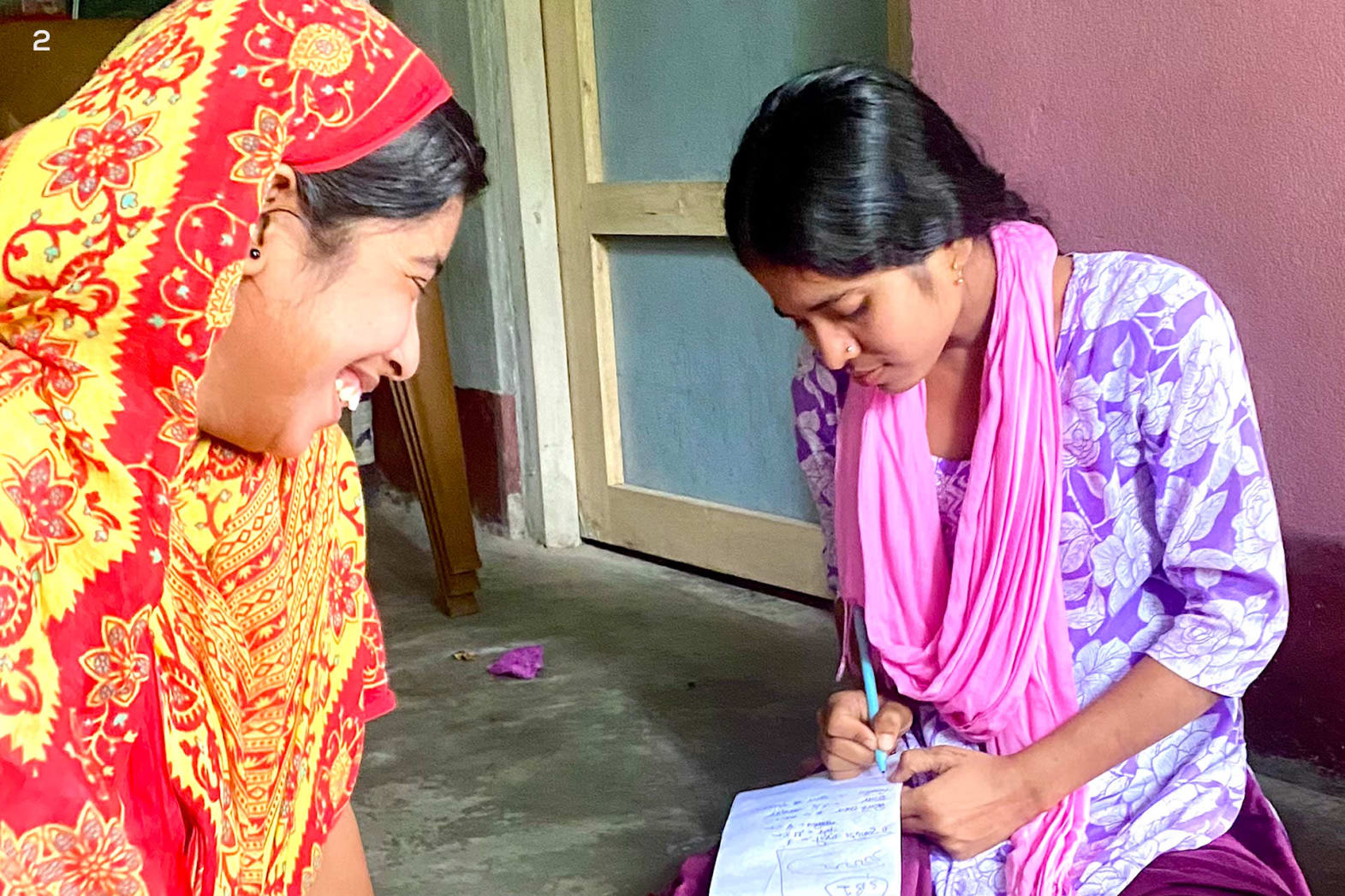
When the conversation turns to the forest, Tasmeena leans in. When she was younger, “Baba” meant fear. They grew up on stories of crops flattened overnight, homes left broken, and voices rising across the village. There were other memories as well. Of afternoons spent with friends at the riverbed, chasing the movement of a herd from a distance. Never too close; just far enough to watch the herd with the calves always in the middle. “The older ones moved around them as they walked”, she said.
She recalls her grandfather and his bicycle. The slight tilt as he pushed it out, a small bundle tied at the back with rice and a little salt. He would ride towards the forest. Sometimes she watched him go. He would leave the offering at the edge of the forest for the elephant and return quietly, as if it was a normal part of his day.
Then, in the harvest season, paddy ripened in the fields (varieties like Sali, Ranit, Bangobandhu), and banana plants (Athiya kola, Champa kola, Malbhog) grew near their homes. It is the kanjal, the sweet, watery core of the banana plant that draws the elephants in, she said. At night, the elephants sometimes smelled the stored grain and salt through the mud-plastered walls and helped themselves.
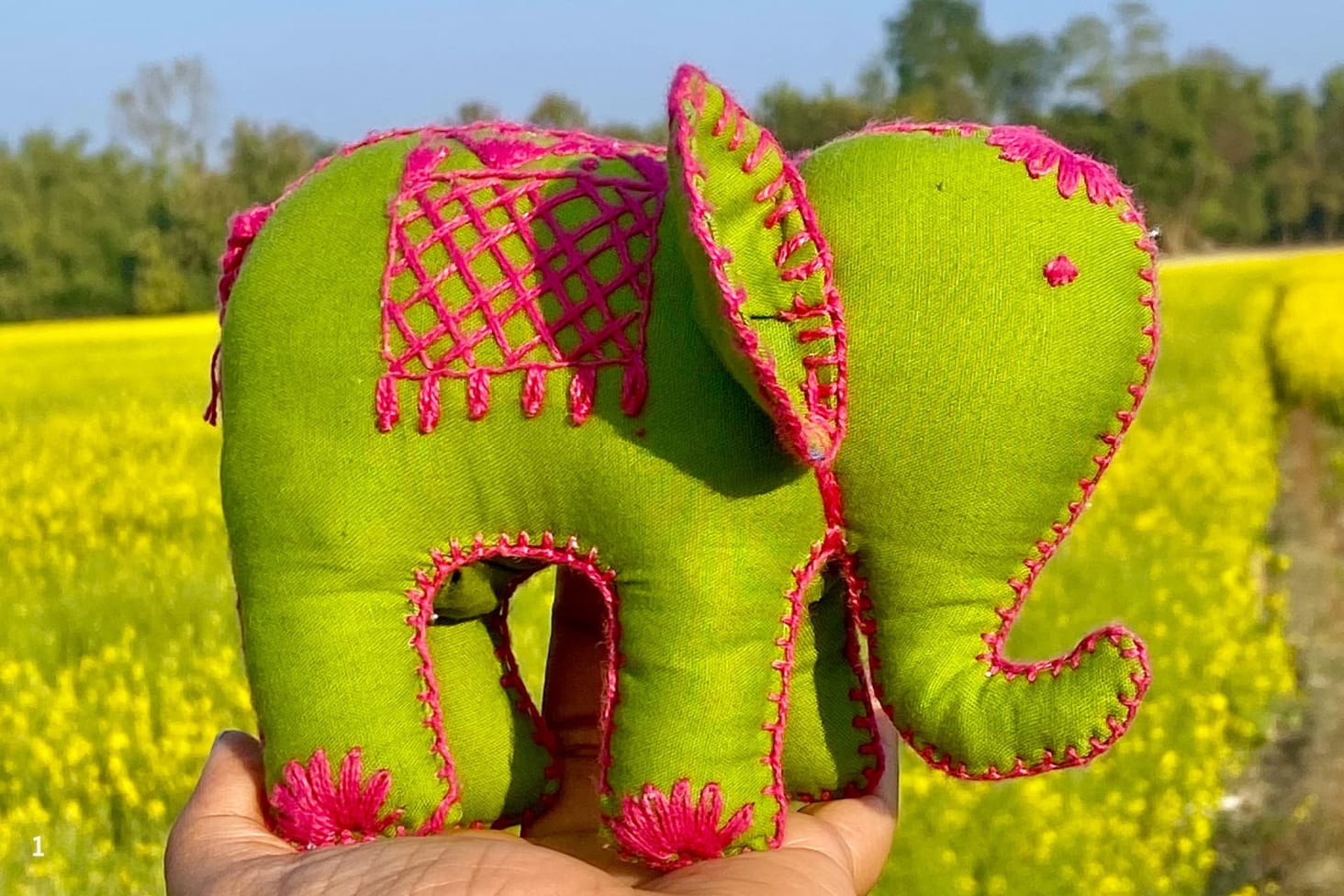
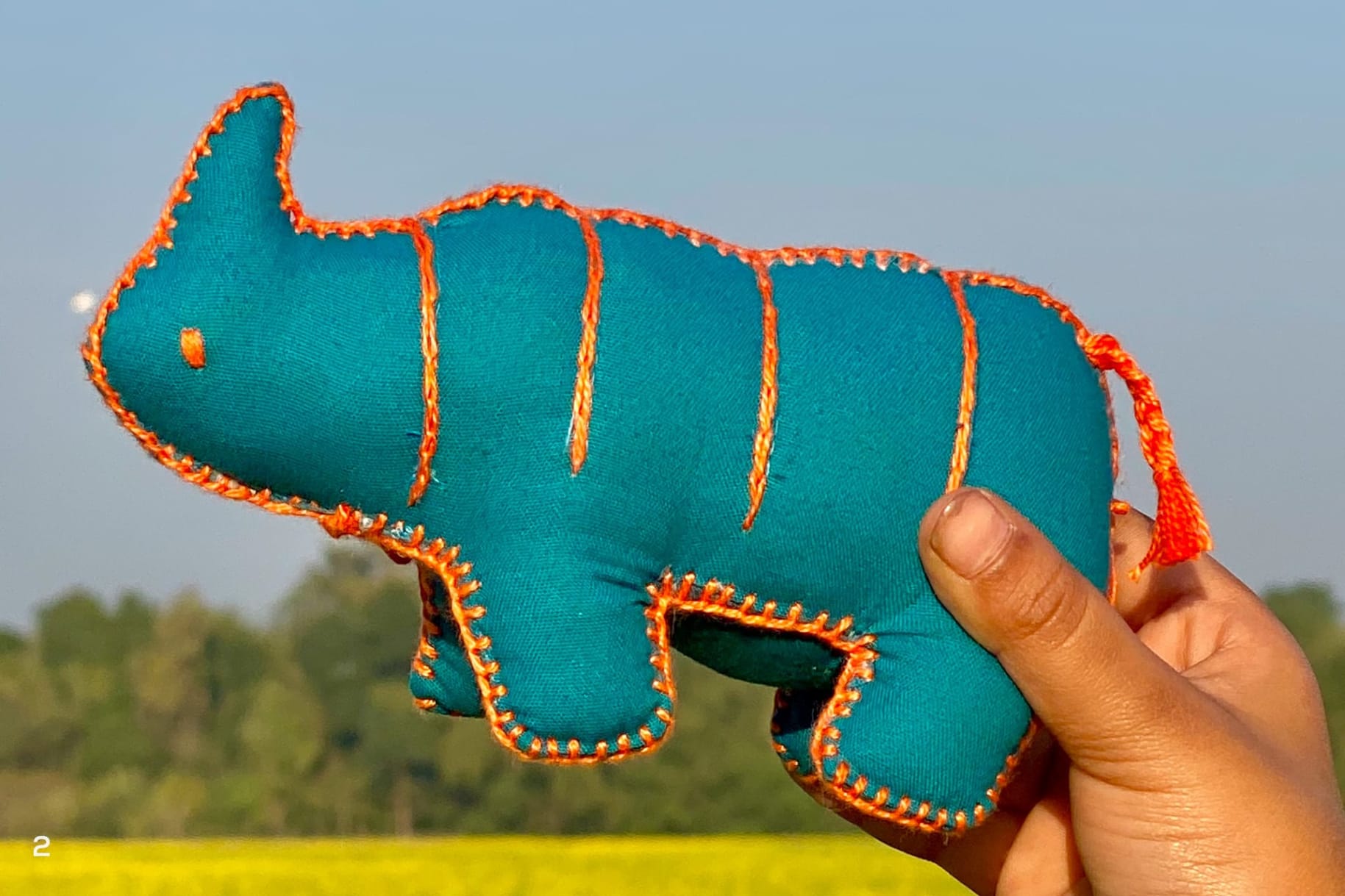
By morning, the village returns to its normal rhythm and the work at Khetha Kori continues. The group started with 13 women; only five remained. Without steady income, the others left. They hope more orders will fill the verandah with more women again. The women stitch what surrounds them — elephants and rhinos on tote bags, wall hangings, and clothing. They shape and stitch scraps of handwoven cotton, each piece representing the forest. The embroidery builds through small, repeated stitches, laid down in steady lines and patterns. No two pieces are exactly alike. The work takes time. The smallest keychains take about an hour to make, while larger, palm-sized elephant soft toys take up to four hours.
When asked about Baba breaking homes or damaging crops, Tasmeena shrugs. They come looking for food, she says — either because the forest no longer holds enough, “or because they prefer the taste of the village,” she laughs.
“Aur jhagda toh sab ke beech hota he—kabhi kabhi hamare beech bhi ho jata he.” (Conflict happens with everyone. Sometimes even among us.)

The elephants’ midnight visits have reduced. Along the forest’s edge runs a line of solar-powered fencing installed by the Wildlife Trust of India; it delivers a sharp, non-lethal pulse.
From the other side of the room, Haseena’s carpenter husband calls out: “Muje kya lagta he pata he? Tum log itna sara hathi ghar par banate ho; isilye wo ab nahi aata hai.” (You know what I think? You make so many elephants inside the house that the real ones have stopped coming.) The women laugh. And then, without pause, continue stitching. Elephants remain what they always have been: animals that can arrive unannounced. And life in the village continues, somewhere between loss from occasional human-elephant conflict, coexistence, earning livelihoods, and memories.
This piece was developed as part of the writing module of Canopy Collective's Future Full of Forests Fellowship (2026), supported by the Coexistence Champions Program. The writing module was designed and mentored by Roundglass Sustain.
About the Author