 Listen to this article
•
15:34 min
Listen to this article
•
15:34 min
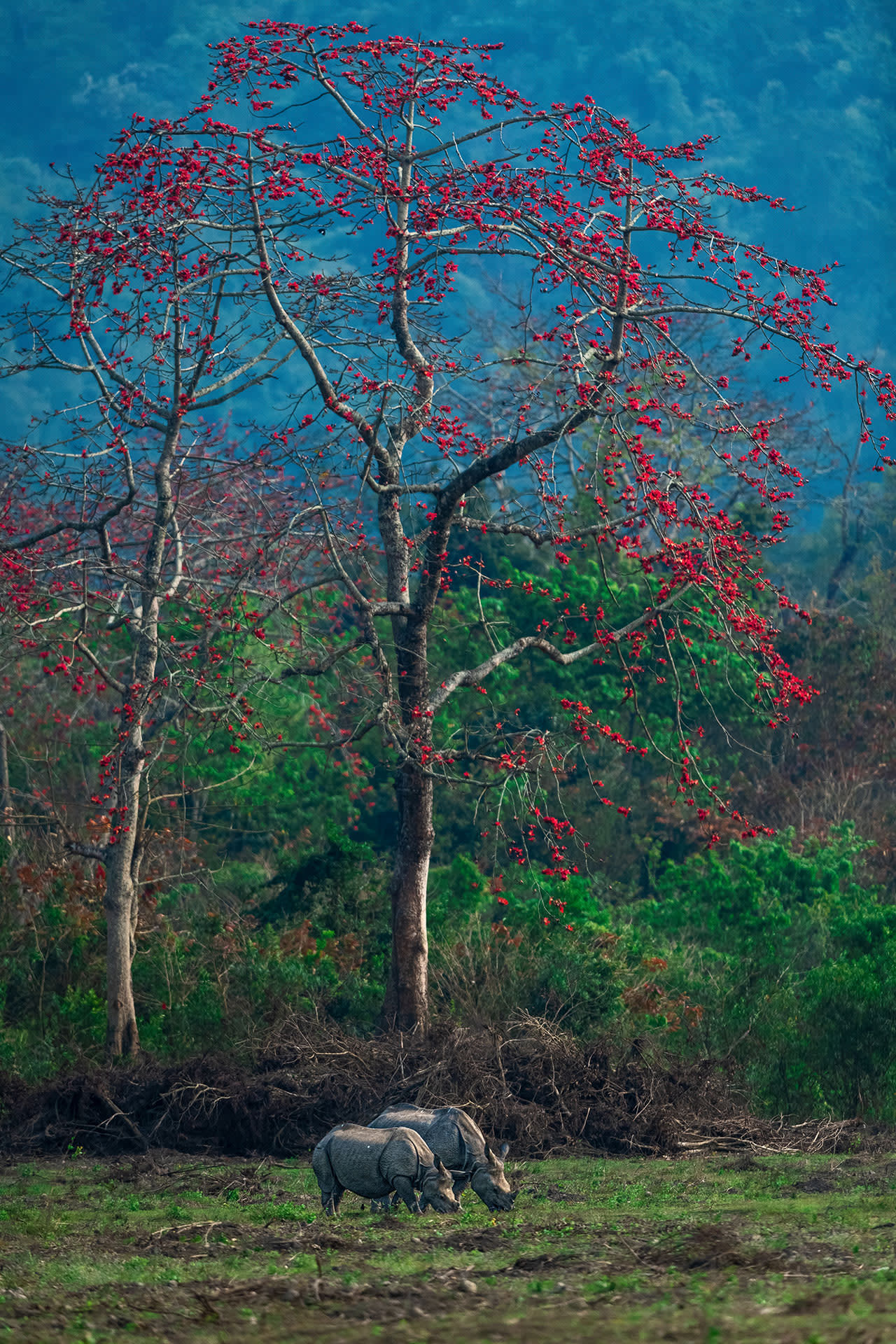
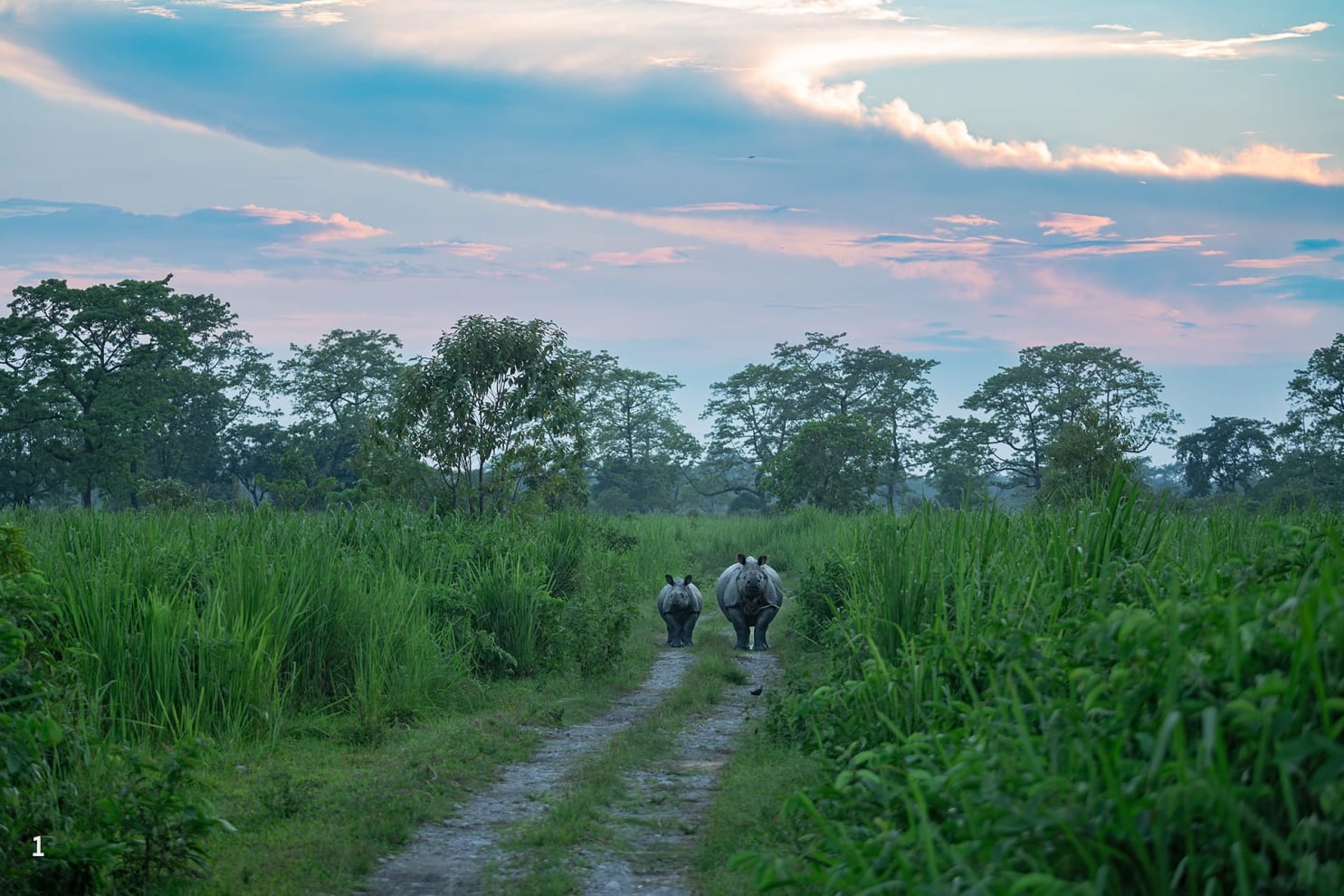
The tall, dense and shifting grasslands of the Brahmaputra floodplain are fascinating. If you take a safari through these lush grasslands, interspersed with forests, you will spot the iconic one-horned rhinoceros, graceful herds of swamp deer, vigilant groups of Asiatic water buffaloes, and perhaps a family of nonchalant elephants. Since my childhood, I have frequently visited Assam’s celebrated national parks to watch charismatic animals, and these encounters sparked my interest in wildlife biology. Two years ago, during a reconnaissance survey in Manas National Park, it wasn’t the wildlife that caught my attention. Instead, it was big trees with horizontal branches and bright red flowers that held my gaze. They appeared in all sizes and jutted out from the grasslands like an advancing infantry unit. This was the Bombax ceiba, commonly known as semal, ximolu, or the silk-cotton tree. It is abundant, native to Asian forests, and a seeming encroacher of these mesmerising grasslands.
Woody encroachment is a global concern
It is now well established that grasslands and savannas across the world are experiencing rapid proliferation of native trees and shrubs — a phenomenon known as woody encroachment. Grasses and trees often compete for water and nutrients, but climatic factors and natural and human disturbances allow them to coexist. For example, in the Terai-Duar savannas of South Asia, high rainfall may encourage trees to take over grasses, but disturbances from fires, grazing animals, and floods kill young saplings and prevent tree growth. A reduction in these disturbance patterns can permanently turn a grassland into a woodland.


Cover photo: Bombax ceiba, a deciduous tree common in forests, is now abundant in the grasslands of Manas National Park, Assam.
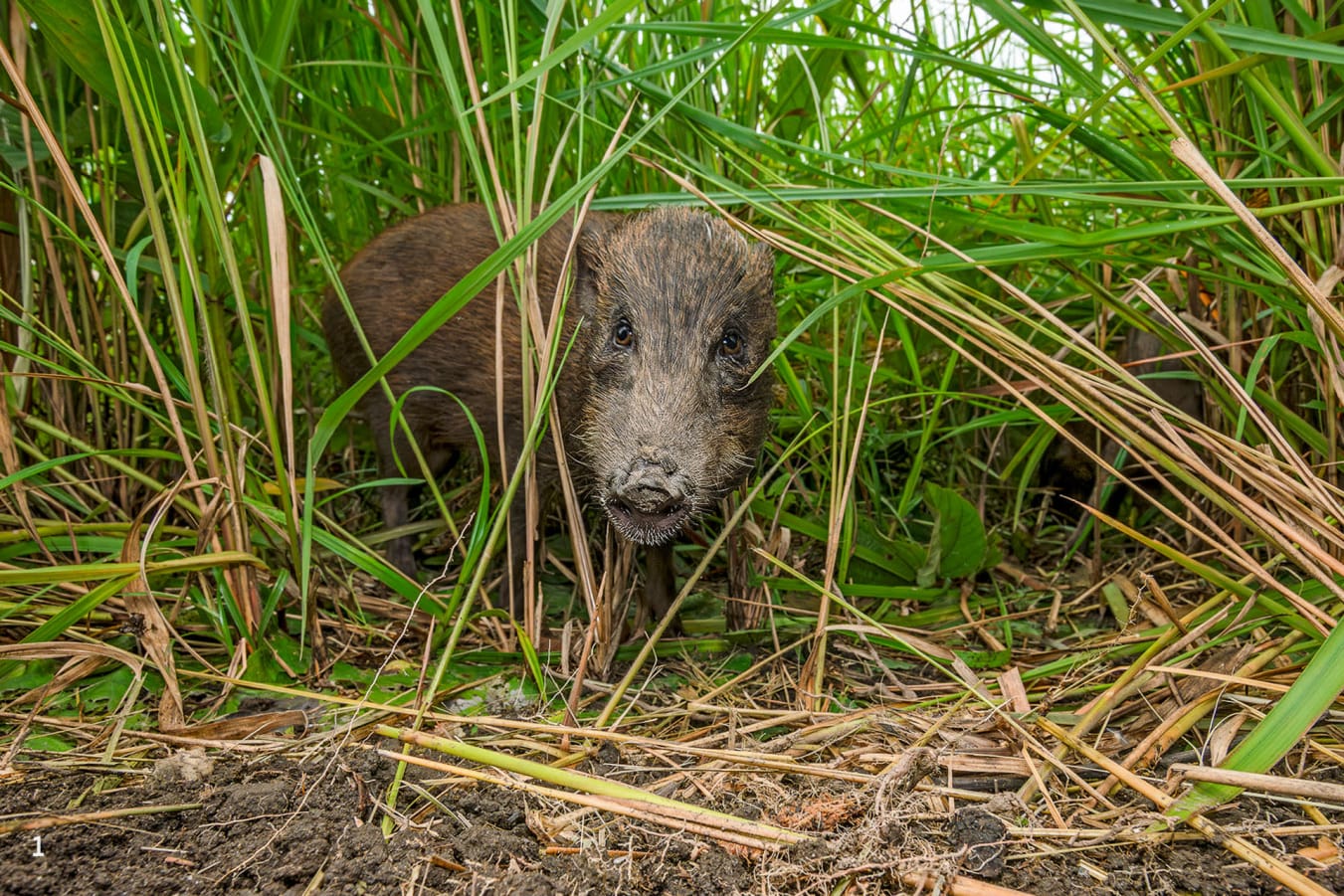
Woody encroachment has several ecological implications. It imperils grassland specialist wildlife by disrupting their nesting and foraging behaviour. For instance, critically endangered pygmy hogs (Porcula salvania) build dome-shaped nests hidden in dense grass clumps, but woody growth alters the habitat, making it harder for them to find safe nesting sites. Reduction of open habitats also affects the courtship displays of the endangered Bengal florican (Houbaropsis bengalensis), pushing them to inhabit rice fields. Another inconspicuous impact of increased woody growth is reduced streamflow and decreased groundwater recharge, which is particularly alarming for the alluvial grasslands of the Terai-Duar.
The unique case of Manas
Manas National Park, situated at the foothills of the Eastern Himalayas, is one of the largest protected areas in the Terai-Duar savanna ecoregion. Rivers and fires form two distinct types of grasslands. The Beki River and its smaller tributaries, which flow through the landscape, create disturbances through erosion and sedimentation. If these cycles are frequent, fast-growing grasses are able to persist better than trees, thus creating riverine grasslands. In areas away from rivers, disturbance from fires maintains savanna grasses by preventing the establishment and growth of trees. Additionally, herbivores such as rhinos, buffalo, elephants, gaurs, swamp deer, and hog deer play a very crucial role in shaping grasslands. They consume small saplings, break trees, and create disturbances through their movement.

Despite disturbances (fire, floods, grazing), a 2022 study by Banerjee et al. showed that 40 per cent of Manas’s grasslands have transformed into woodlands over the last 30 years. Other savannas in this Terai-Duar ecoregion exhibit a similar pattern; however, woody encroachment in Manas is by far the most extensive.
Woody encroachers are closely associated with fire
To understand the patterns of encroachment, my colleagues and I sampled grasses across the park. Walking through treacherous blades of grass that sometimes towered over 10 feet, with the constant thrill of being close to wild animals, we noticed that the grasslands appeared as a mosaic of distinct patches. Some patches were open, with small saplings hidden among tall, dense grass, while others were very wooded, with large deciduous trees and sparse grass cover. These differences reflected varying fire frequencies, yet one characteristic remained constant — the presence of Bombax ceiba trees. This was the dominant woody encroacher, and its life history is closely linked to fire.

Every year, between January and March, forest authorities burn grasslands to manage wildlife. At this time, the dried cellulose and waxy coating on grasses make it highly flammable, razing large patches within minutes. However, Bombax ceiba trees can withstand such intense fires through remarkable adaptations. As wind disperses seeds from the surrounding woodlands, seedlings establish themselves in grasslands and start building massive root systems that function as energy reserves. This ensures survival even when fires damage their above-ground parts (leaves and shoots). When fires are frequent, saplings endure by remaining short and using the stored resources to resprout during the monsoon. In years of no fire, they invest heavily in growing tall instead of branching out. Once they become taller than the surrounding grass clumps, they remain unaffected by subsequent fires. As this woody growth thickens, grass becomes sparse, and fires fail to spread effectively, creating a positive feedback loop for further encroachment.
Bombax ceiba also appears unbothered by herbivory (animals eating plants). Through camera trapping and plant tagging, we observed that most animals did not consume Bombax saplings, suggesting that even grazing herbivores do not curb its spread. However, a forest personnel member pointed out, “Elephants break and debark adult Bombax trees. During the Bodo andolan (late 1980s to early 2000s), all the elephants from the park moved northward towards Bhutan. Now the population has bounced back, but there are too many trees for them to damage”. This raises an important question: Why has the Bombax ceiba population suddenly exploded, despite its long-standing presence in these grasslands? Has the ecological balance of grasslands changed?


The battle is not against trees
The story of Manas is unique yet resonates with other grasslands around the world. Bombax ceiba and other woody species are native, resilient survivors that respond to changes in climate and human influences. Shifts in fire patterns, herbivore populations, river flows, and rising carbon dioxide levels have subtly but powerfully favoured the growth of trees in open grassy ecosystems. Since grassland habitats and the wildlife of the Terai-Duar are mostly confined within the boundaries of “Protected Areas”, active management is crucial to prevent further encroachment.
One way to tackle this challenge is by understanding historical fire regimes. In the absence of systematic fire records, engaging in dialogues with local communities about traditional fire practices could offer valuable insights into how the landscape was managed earlier and what changed after prescribed annual fires became the dominant management practice in the grasslands. It is also imperative to study the impact of flooding in these unique water-driven grasslands, as the current scientific literature on grassland management stems from regions with very different hydrology than the Terai-Duar.
My journey in Manas began with my fascination for studying animals, but the subtle shifts in grassland habitats reshaped my interests. These grasslands survive on a delicate balance of fire, floods, and herbivores; protecting them now means managing change while cherishing their unique wildlife.
About the Authors

Aksha Chowdhary
is an ecologist from Assam, currently pursuing her PhD at the University of Edinburgh, UK. Beyond research, she enjoys watching wildlife, teaching, swimming, and learning different dance forms.