 Listen to this article
•
15:34 min
Listen to this article
•
15:34 min
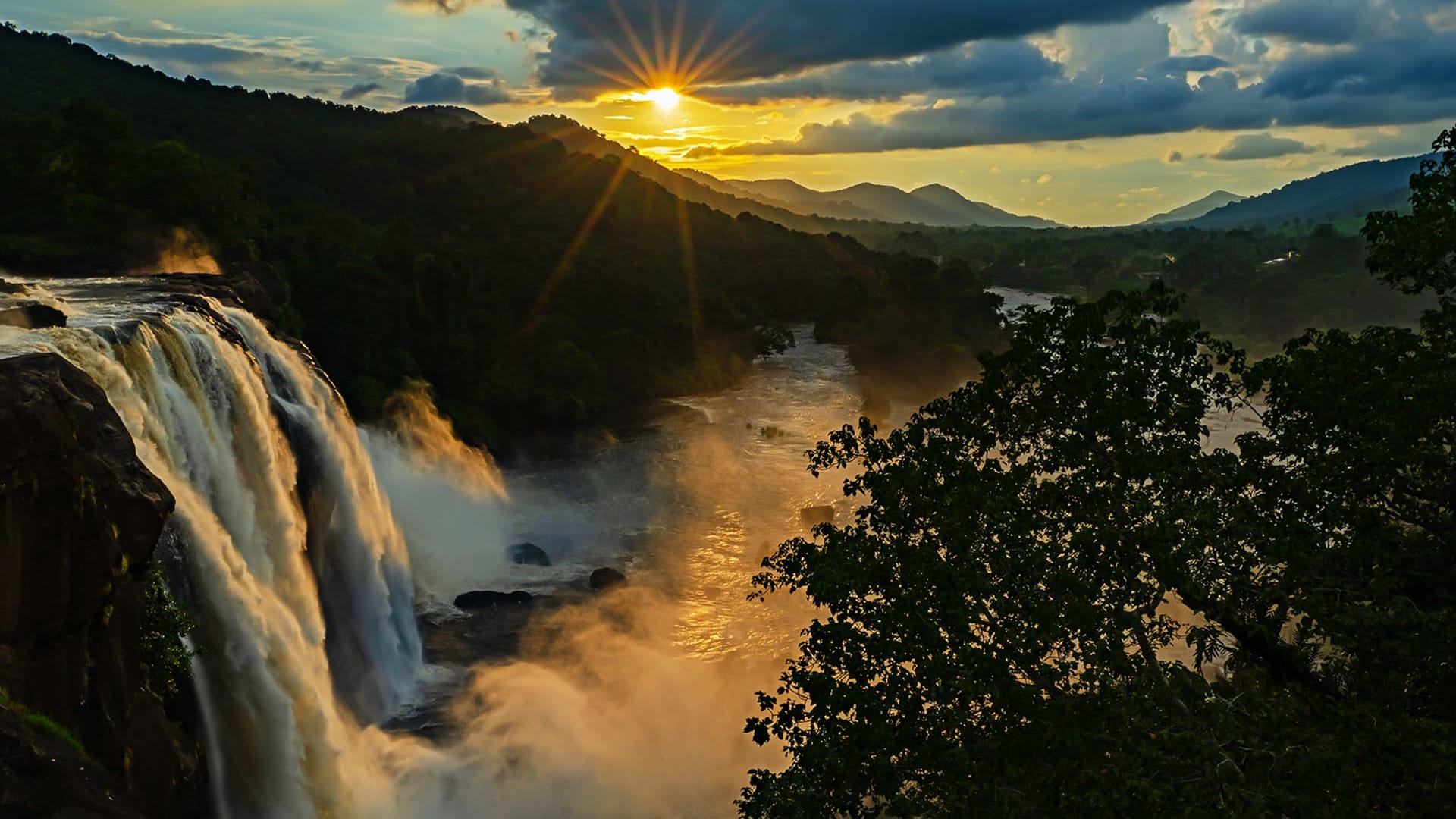
High up in the Anamalai Hills in the southern Western Ghats, a river takes shape. Flowing west, it soon enters Kerala’s Thrissur district and meanders gently down to the plains. Swelling and abating with the rains and periodic dam openings, the Chalakudy River eventually merges with the Periyar, shortly before it meets the Arabian Sea. On its way downhill, however, it encounters an 80-foot drop that catapults it to fame as the largest waterfall in Kerala — Athirapally Falls, sometimes called “Niagara of South India”. The rich habitats along the river’s banks offer exciting exploration.

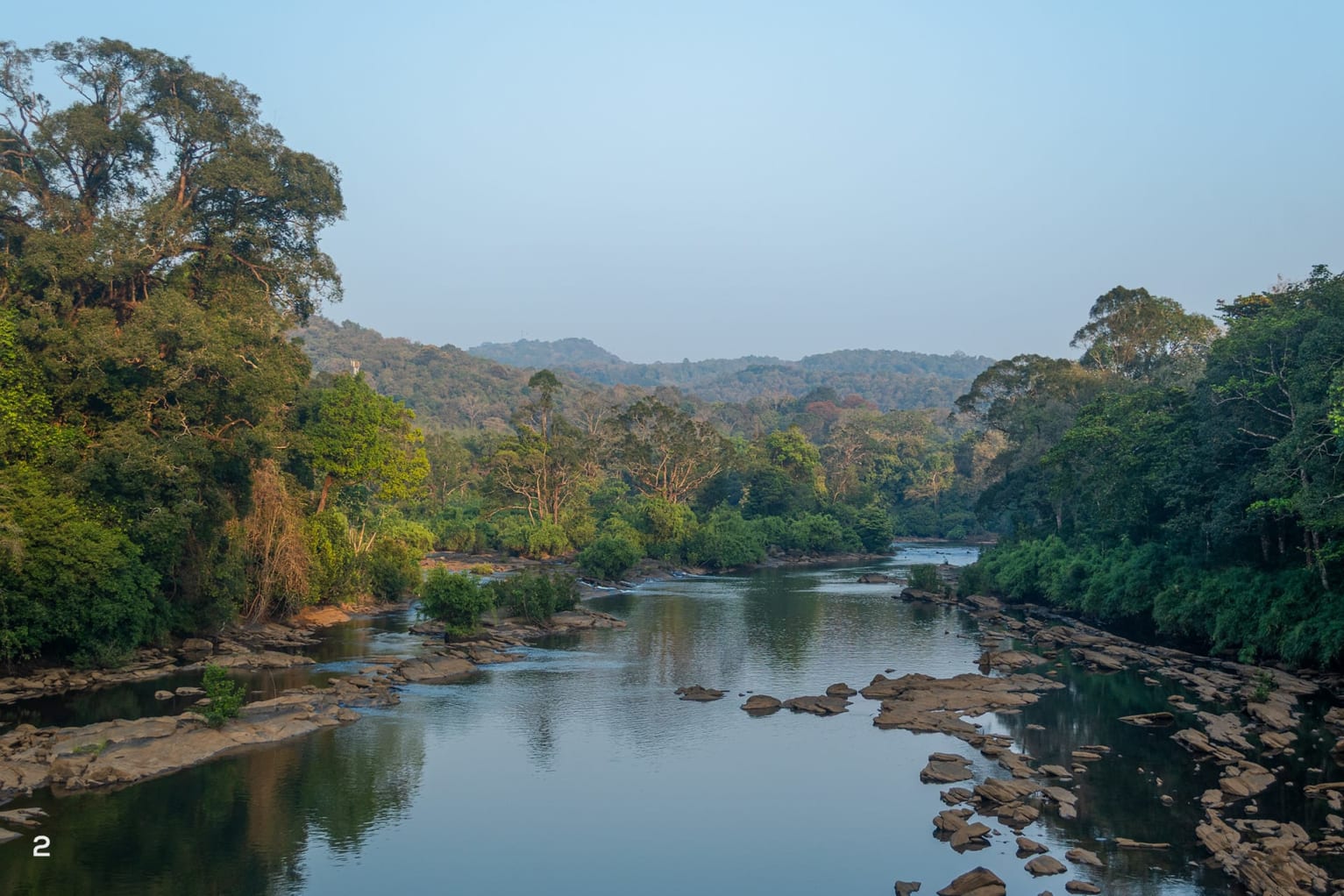
Past Athirapally Falls runs the Chalakkudy-Anamalai road, a state highway connecting Kerala and Tamil Nadu through shared forests. A drive up this road with windows rolled down is an excursion into the soundscape of twittering forest birds and giant squirrels. The road twists higher into the ghats with every turn, leading through the thick, moist deciduous and evergreen forests of Vazhachal, up to the Peringalkuthu and Lower Sholayar dams. The vast expanse of blue that is the Sholayar reservoir is smeared with the odd island of green. Nilgiri langurs play by the water’s edge while crested serpent-eagles, honey buzzards, and black eagles circle overhead, punctuating the air with their shrill calls.
The occasional silk-cotton tree is visible from the roadside, barren in mid-December but for a few flowers that have opened wide in anticipation of the flowering season. These bright red beacons in the canopy attract a host of avian visitors; we watch them with necks strained, eyes poorly shielded against the late-morning sun. Starlings and hill mynas make themselves heard as they tackle the flowers, accompanied by sunbirds, white-cheeked barbets, golden-fronted leafbirds, and a few bold flowerpeckers. The area is also home to all four species of hornbills found in the region — a fact highlighted in the campaign against a hydroelectric project proposed above Athirapally Falls.

Since its proposal in 1982, the project has faced major backlash from environmental groups and local residents. It would displace the Kadar community residing in Vazhachal, severely disrupt the flow of the Chalakudy River, and damage the riparian forests in the river basin. These decades-long efforts were successful as the project was called off in 2021. However, in early 2025, talks of renewing this proposal reemerged. Besides being home to over 230 bird species, this habitat hosts the endemic Cochin forest cane turtle, a secretive animal that was rediscovered here by India’s first female herpetologist, Vijaya Jagannathan, in 1982. While there was no official record of this turtle in the wild for about 70 years prior, it is believed to have been part of the European pet trade in the 1960s and 70s, where it was possibly passed off as one of its distant cousins — a tricarinate hill turtle or Indian black turtle — in the market.


As the Chalakudy River flows past Athirapally, the forests along its banks thin out, giving way to oil palm plantations — a government venture since the 1970s that bloomed in patches across the state. Over 50 years later, swathes of oil palms continue to flourish along with stretches of rubber. Early mornings and evenings see a flurry of activity in these plantations as swallows and bee-eaters are a common sight, and parakeets and starlings flock to the palm trees for their share of the fruit growing in thick, yellow clusters. As I watch a particularly determined plum-headed parakeet dig into the tightly packed fruit, a shot goes off in the distance — a signal of elephants in the area.


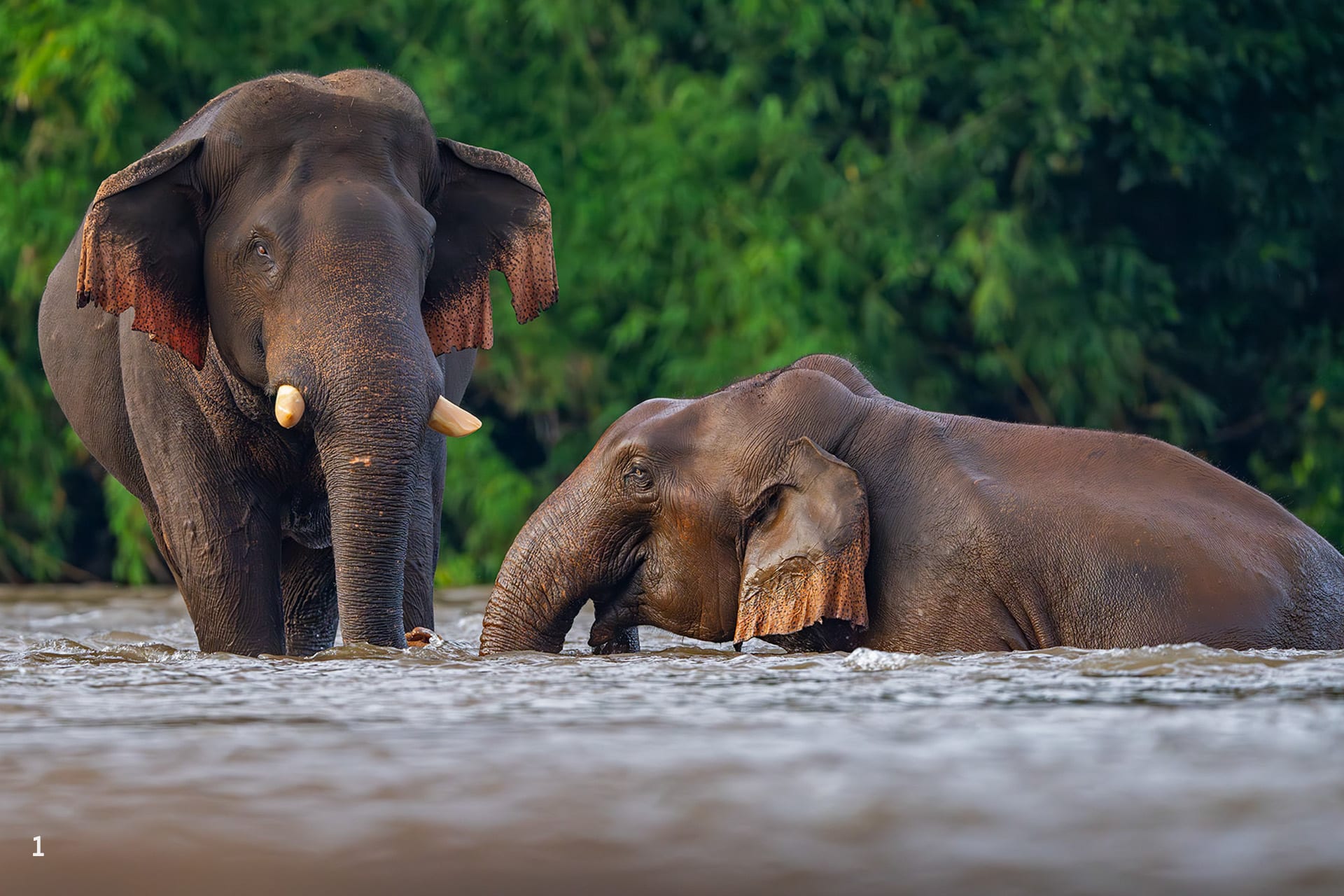
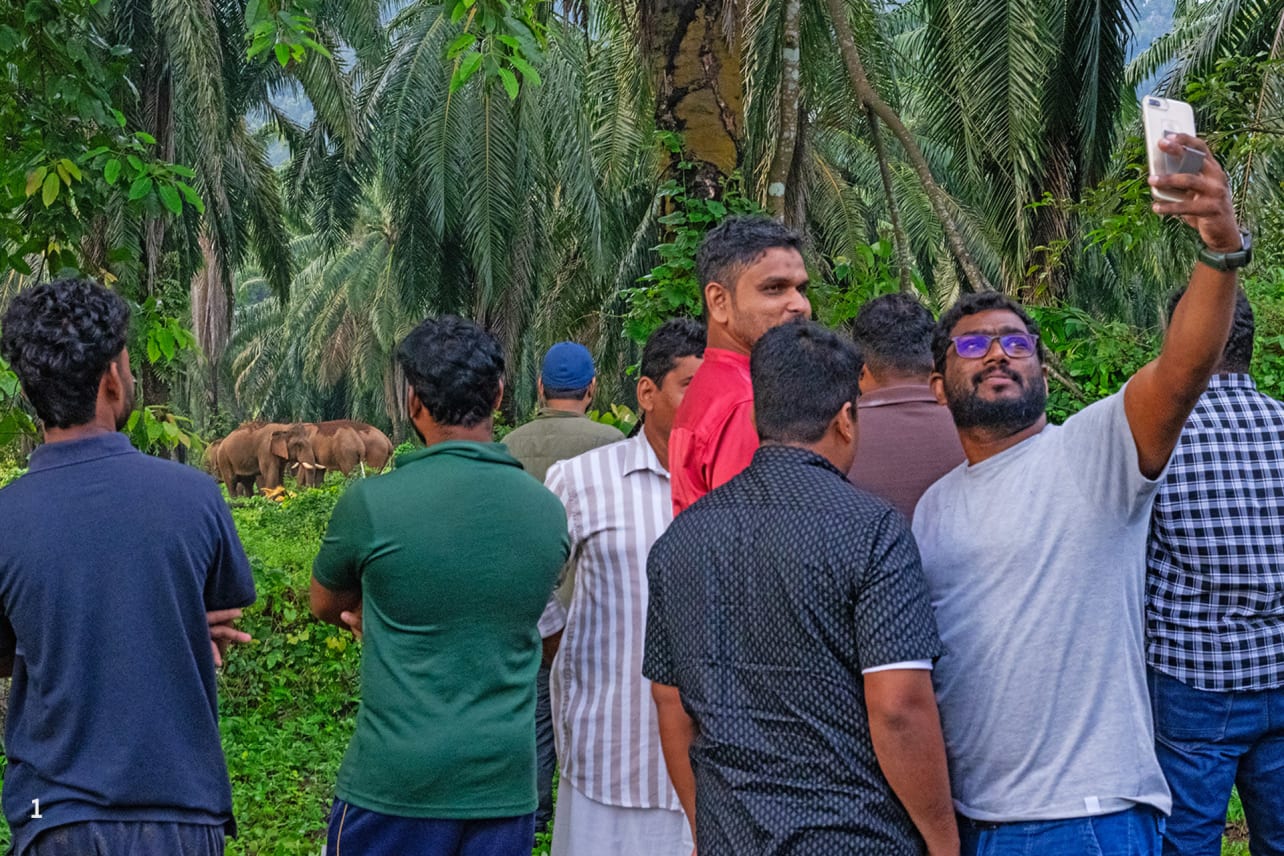
Elephants are a relatively common sight in Athirapally’s plantations as they amble over from adjoining forest areas such as those in the Chimminy Wildlife Sanctuary. The erection of electric fences around homes is standard procedure, as is the use of the occasional firecracker to scare off elephants. A conversation with Nidheesh Chenchery, a local naturalist, reveals that young males vanish from the plantations when they are in musth, presumably moving deeper into the forest. Besides elephants, other mammals make an appearance near town; a sambar deer bolts from the roadside as our car approaches, while Nidheesh mentions seeing dholes (Indian wild dogs) at a patch filled with Macaranga trees.


Standing under the bright fluorescent lights of a riverside resort, I watch the Chalakudy surge and swell at night, submerging miniature islands of sand and rock. A loudspeaker crackles to life behind me, bass thumping underfoot as tourists on a weekend getaway crank up the volume. Despite the changes brought by skyrocketing tourism and development, the landscape around Athirapally has retained much of its natural biodiversity. The river before me, despite the six dams erected across it rerouting part of its water, hosts 71 species of fish, four of which are critically endangered and endemic to this river basin. Troops of lion-tailed macaques are often sighted in the forests, and the first nesting sites of the Malabar pied hornbill in the state were recorded here. The fragility of the river basin is brought to light, however, as problems of irresponsible tourism, human-elephant conflict, and careless development proposals — ones that plague natural habitats across the country — intensify.

In the winter morning chill, we wait under a native Ficus tree growing in a sea of exotic rubber, watching a flock of Malabar pied hornbills investigate the barely ripening fruit. A flash of movement catches my eye and resolves itself into a huge shape silhouetted against the sky — a great hornbill. While this majestic bird is found in the region, it is typically seen in the evergreen forests higher up. Its loud flaps are heard down here occasionally, but it hasn’t been spotted in a long time, says Nidheesh. The sighting lasts less than a few seconds before the shape glides past the treeline — a snapshot of this landscape’s resilience in the face of change.

About the Author