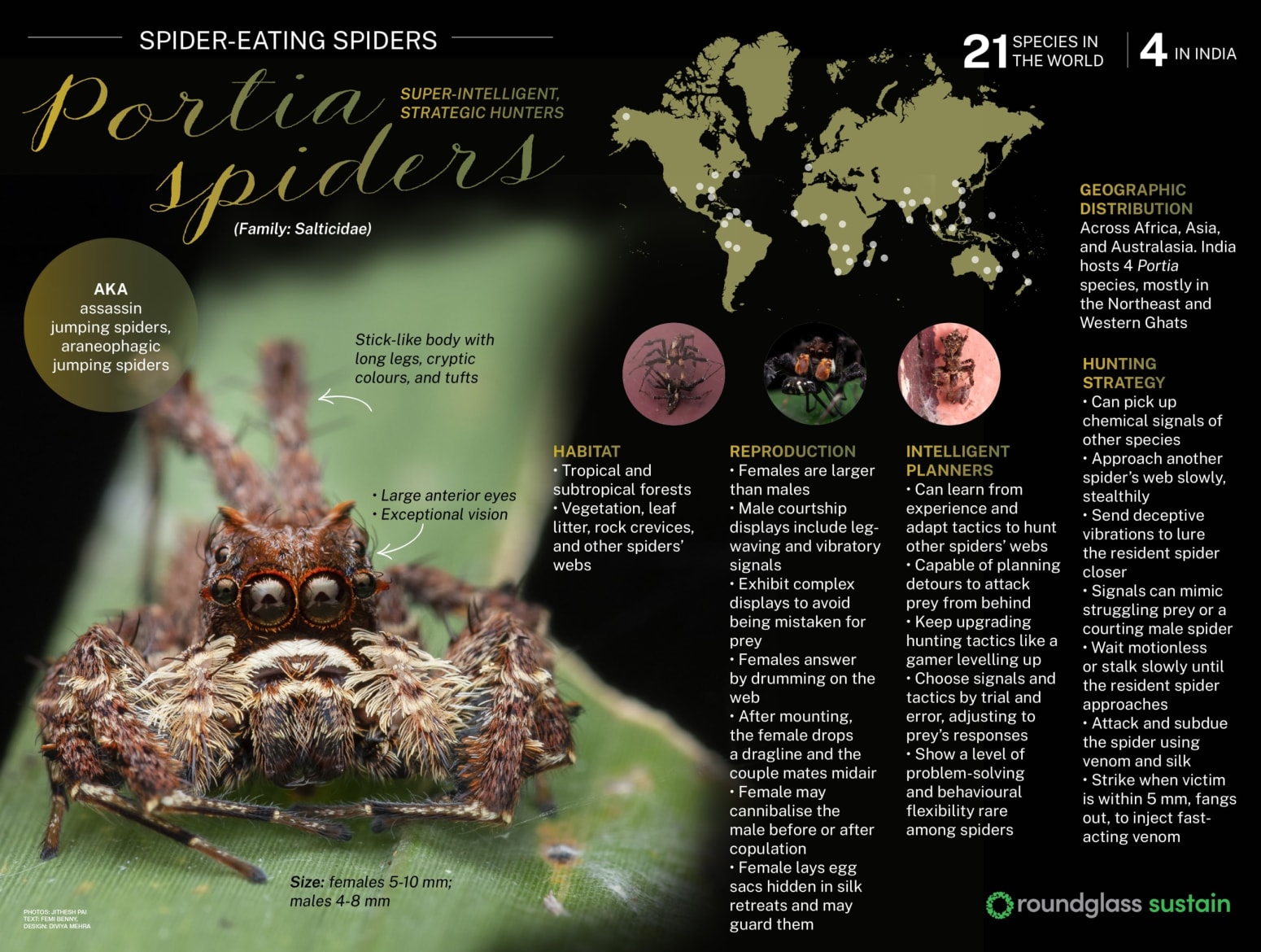
What are the other names of Portia spiders?
Portia spiders (Salticidae sp.) is also known as Assassin jumpin spider as well as the Araneophagic jumping spiders. They are known by these names due to their hunting prowess and the fact that they are spider-eating spiders.
What is so special about the hunting strategy of Portia spiders?
Portia spiders are known to approach the webs of other spiders stealthily and deceive them through vibrations or signals which mimic struggling prey or a courting male. They are patient stalkers who wait for the resident spider to approach them, after which they attack and subdue their prey using silk and venom. They are adept at picking up chemical signals of other species.
Are Portia spiders intelligent?
Portia spiders are very intelligent, showcasing great problem-solving and adapting skills, considered rare among spiders. They have flexible behaviours and keep upgrading their hunting tactics based on the prey they are stalking. Portia spiders learn from experience and exhibit a capability to plan detours to attack prey from behind. They are also known to choose signals based on their
Where are Portia spiders found?
Portia spiders are found in tropical and subtropical forests amongst vegetation, leaf litter, rock crevices and on the webs of other spiders.
About the Authors

Femi Ezhuthupallickal Benny
Femi is a PhD student at University College London (UCL), working on the ecology and behavior of Asian giant hornets. Passionate about insects, especially wasps, she loves fieldwork in underexplored places, studying how insects interact with their environment and discovering new species while at it!