Listen to this article
•
15:34 min
Listen to this article
•
15:34 min
“Pavitra, hush, come here, and sit quietly next to me”, whispered my mother, pointing towards a brown plastic pot in which my mother and I had planted a gaillardia two weeks ago. The twilight was upon us. When I sat next to her, she said, “Look at that tiny bird, do you recognise it?” A restless, tiny greenish-yellow bird with a white ring around its eyes was looking for worms. Before I could say anything, the bird flew away, leaving my mother and me exultant. It was the last time we watched a bird together. Calm yet curious, grateful yet gung-ho, but together.

My mother used to watch National Geographic and Discovery to learn about the places she felt she could never visit in her lifetime. From glorious documentaries of the Arctic Tundra to the dark and mysterious tropical jungles of the Amazon, her curiosity never ceased. With her, I too developed a habit of watching the migrating beasts of Masai Mara to cuddly koalas from Australia. Whenever I saw a lioness holding a cub in her jaws, or a chimpanzee kissing her newborn, I curled up in my mother’s lap a little more tightly, thinking of us as another lioness and cub in a parallel reality.
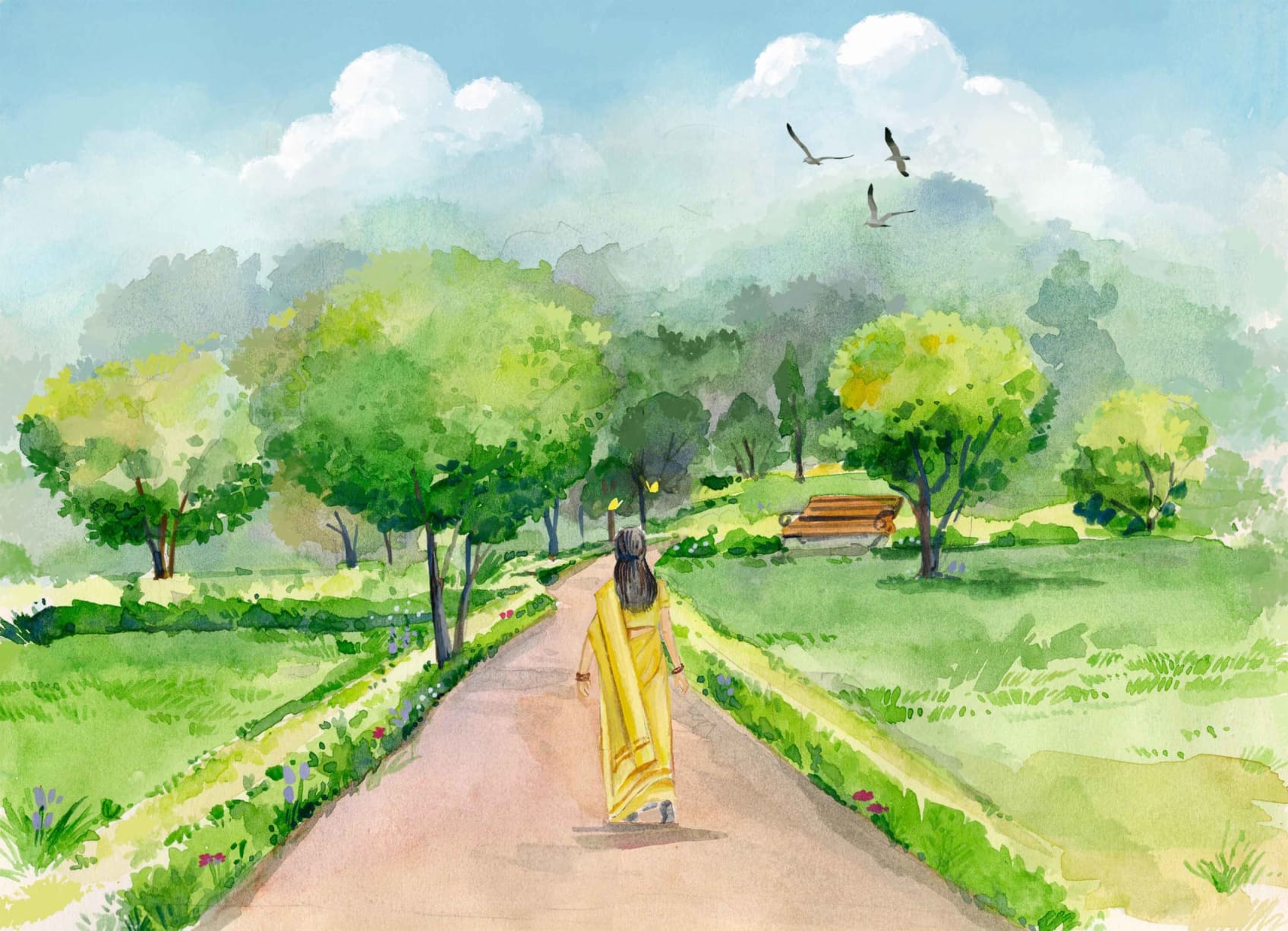
When the lockdowns of 2020 restricted our movements, my mother and I started exploring neighbourhood parks in the morning. We’d only moved into southern Kanpur in late 2016. One such day, my mother was wearing a lemon-yellow saree when a common grass-yellow butterfly danced around her and fluttered away. We were finally accepted by the neighbourhood.
The second wave of COVID came in April 2021, and my mother left this world. The void left behind was lacerating. It’s not that I hadn’t encountered death before. People died, giving me confined sorrow, and then it passed. My mother’s death was my death as well. It wasn’t sadness; it was humiliating and asphyxiating grief.
It had been a month since then.
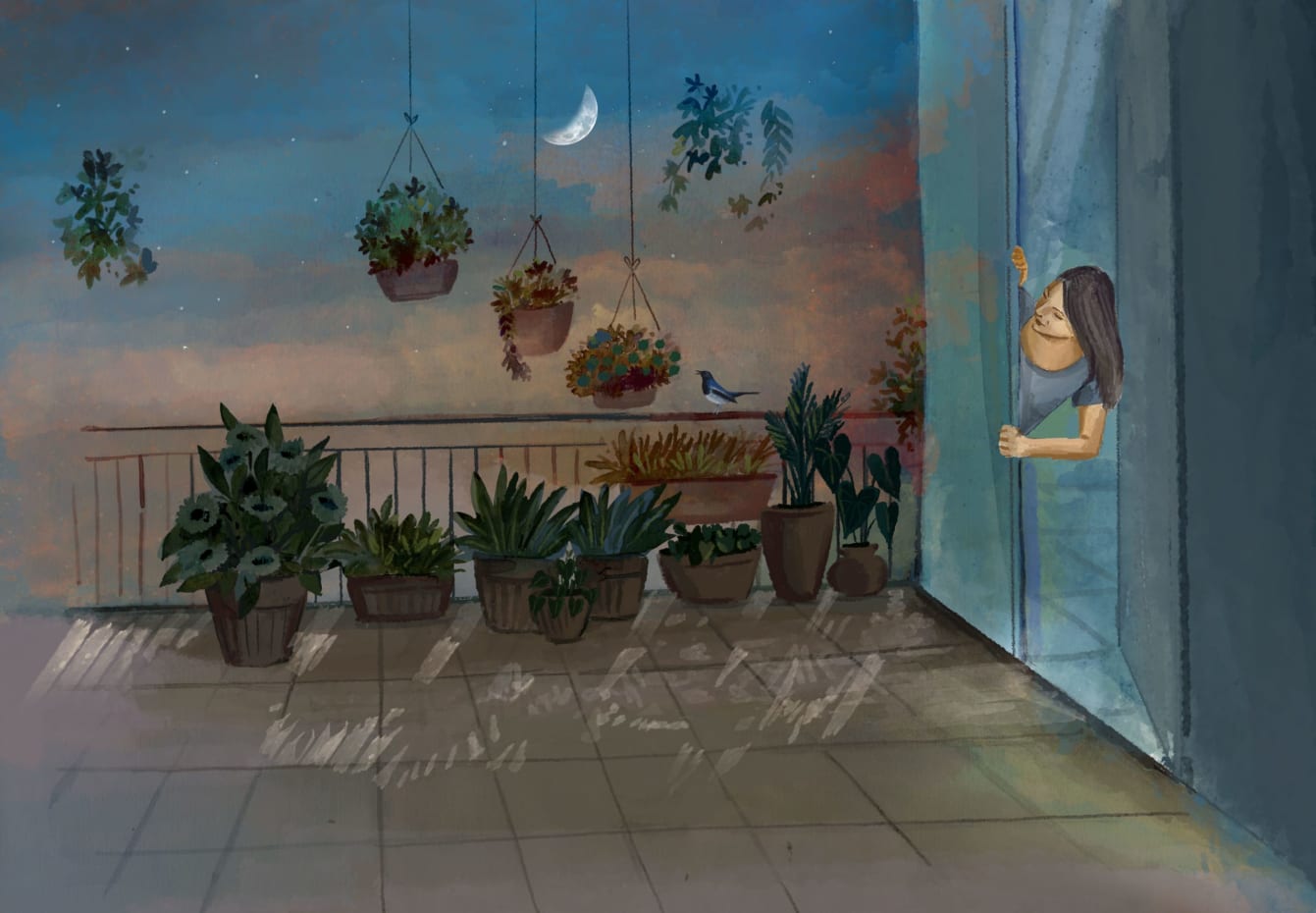
I woke up at 4.30 a.m., jolted awake by the crystal clear and cutting “kheee kheee kheeee” of some creature from my balcony. Was it a snake? A ghost? What was it? I opened the balcony door, shaking, but I couldn’t find anything. The next morning, the same thing happened, and again the morning after. I asked a few people about the sound, googled it, but I found nothing. I concluded the creature must be a bird that could disappear at the slightest shift of a door.
An ornithologist or a naturalist might help, I thought. After Rohan Chakravarty's gracious help, I came to know that it was an oriental magpie robin marking his territory. My garden pots must have a delicious mix of worm-rich soil to be chosen by the Mohammad Rafi of the avian world. My mother would’ve enjoyed it. A guest had honoured her garden. Now, the soil had grief in the mix as well.
I took those peremptory visits as a sign from my mother.
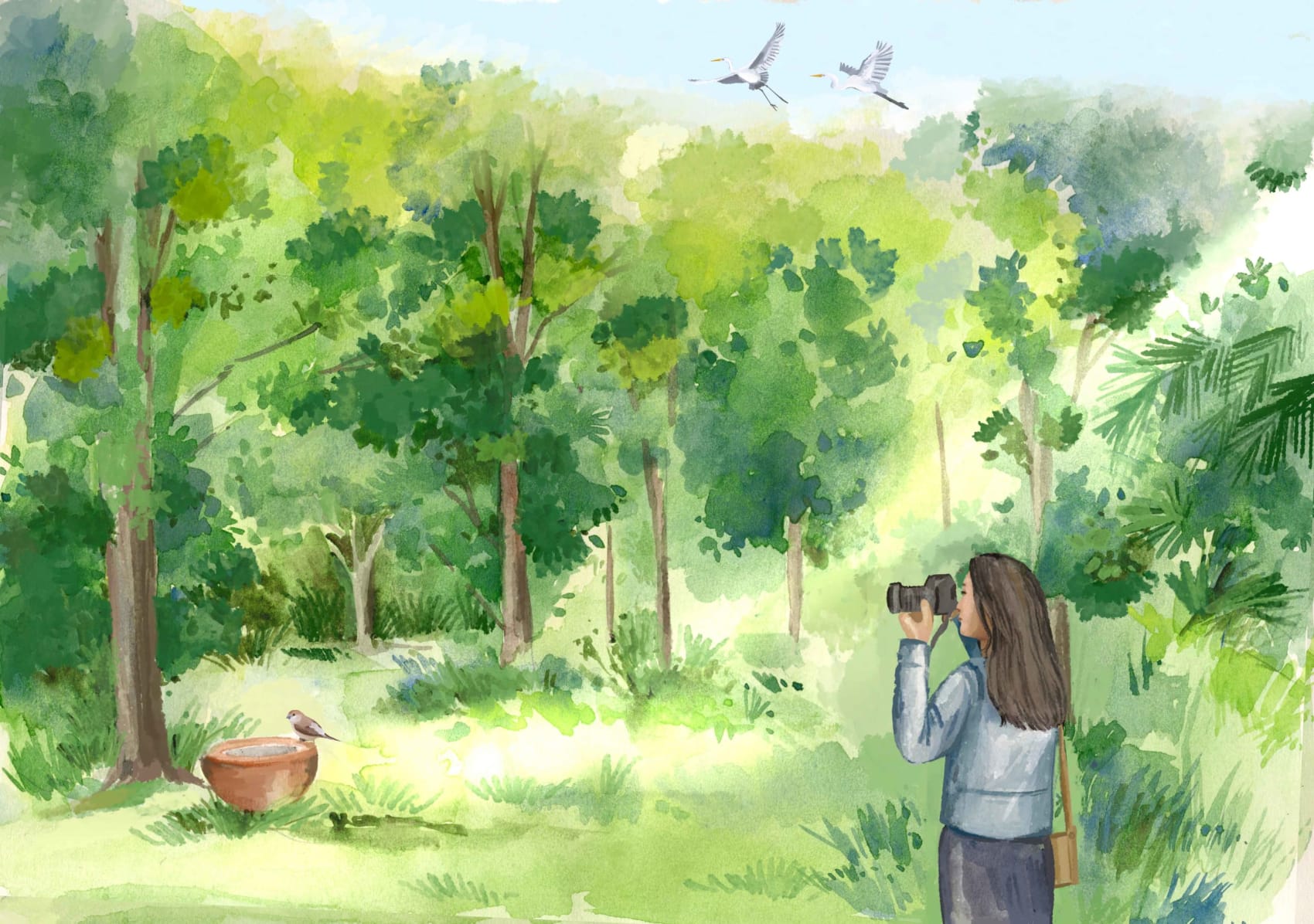
The next day, I picked up my camera at 1 in the afternoon and walked into the closest park I could find. For the first time, I was not under the tyranny of what writer Cheryl Strayed popularised as the “democracy of sorrow”. The tweaks and chirps of birds weren’t telling me how everyone loses their parents at some point in their lives, and how everyone could understand my pain. Hidden under a neem tree, I didn’t have to adjust my agony to belong to a world. Freedom, at last.
I pointed my camera up at a sparrow sitting snugly on a mehendi tree, but the back of my knee started itching, and the camera slipped. While readjusting the focus, I saw a small, thin bird with cream-coloured chest, brown wings, chunky body, and short, stout, silvery bill. It was drinking water from a clay pot kept on the ground. I clicked a few blurred pictures and rushed back home to figure out what I’d seen. It was an Indian silverbill. Thrill engulfed me, but I couldn’t run to my mother. Was she watching me?
I went to the same park again the next day, and this time, I found my morning guest, fitted in a bespoke suit of speckless black-and-white coat, perched on a branch of yellow oleander, seemingly giving me a side-eye.
During the next few weeks, I met ashy prinias, brown rockchats, coppersmith barbets, Indian robins, red vented bulbuls, red whiskered bulbuls, restless sunbirds, plain prinias, tailor birds, babblers, Brahminys, river bank and common mynahs, parakeets, shy red-eyed koels, kites, oriental white eyes, white throated kingfishers, green bee-eaters, black drongos, Indian rollers, cattle egrets, Eurasian collared doves, rock pigeons, sparrows, little egrets, and swallows. A mourner became a birder.
One August morning, I found a pair of scaly-breasted munias making a nest on a thuja tree, while a couple of Indian silverbills looked at the whole business with curiosity. A bunch of entwined twigs held bliss.
The birds disappeared beyond the terraces. I began to frequent my building terrace every morning at sunrise to look for them. I could see birds flitting from a banyan tree of one park to the peepal tree of another, and from then, to an Ashok tree of another. I asked one of the caretakers of the park about the origins of these parks. He told me that it was a community project.
Around 20 years ago, the retired old men and women had decided to turn an empty plot into a park. The place was a dumping ground where stray cows and dogs roamed and slept. They planted native Indian trees like peepal, banyan, sheesham, Ashok, bushes of tulsi, mehendi, manokamini, oleanders, roses, and kept a strict watch on people who would come in the morning to pluck the flowers and leaves. In a year, the park started taking shape. Soon, the idea spread, and elders from other blocks of my neighbourhood, also took the initiative. Now, it’s their responsibility to watering, mow grass, clean, plant seasonal plants, maintain the walls, and so on. Some parks have handpumps and temples as well, with banana, lily, and mogra plants surrounding them.
Within the camaraderie-engendered conservation. Garden lizards, grief, giggles, galloping kids, and gossip thrived together with gratitude.
When I thought I’d seen enough, the sky and the trees introduced me to rufous treepies, always clearing their throats, white-browed wagtails wagging their tails while sitting on the water tanks of my building and my neighbours’ buildings, and a pair of grey hornbills, gliding in the air together and then hiding in the canopy of one peepal tree to another. For three years, I saw them only after the monsoon passed. Where were they before? Also, I often spotted flocks of painted storks, cormorants, and sometimes, solitary hoopoes, whizzing past me like a zebra patterned bullet. The world expanded a little with each new bird.
The grief with its five stages is supposed to be felt linearly. Denial, anger, bargaining, and so on. But my grief was an oriental honey buzzard moving through me in shifting loops.
I kept hoping my mother would return to me, that she had only left for a long vacation. She didn’t come back. But I entered a new world. A small bird sanctuary where the world went on without my mother, yet it didn’t feel cruel.
That world had a sky where everyone belonged in their own rhythm. A bird flitting from one branch to another mirrored my heart flitting from one memory to another. Perhaps, my mother has joined a murmuration of rosy starlings visiting the places she had seen only on TV, immersed in her own rhythms and harmonies. And one day, we’ll fly together again.
About the Authors

Rijuta Pandey