


 Listen to this article
•
15:34 min
One rainy afternoon, I was looking at the Indian almond tree (Terminalia catappa) outside my window as its big green leaves soaked in the rain. I suddenly realised that not all the visible green on the tree was leaves. Some were actually rose-ringed parakeets (Psittacula krameri) and Alexandrine parakeets (Psittacula eupatria), in the midst of the tree, almost colour-coordinated.
Birds are camouflaging all the time, all around us. Whether a bird is a predator or prey, camouflage is crucial to its survival. Some birds camouflage themselves so that they can ambush prey, while others do so to remain hidden in plain sight. While most examples of camouflage involve a mosaic of elements that offer ample opportunity to blend and vanish, what if you imagined camouflage in a habitat devoid of almost all such elements?
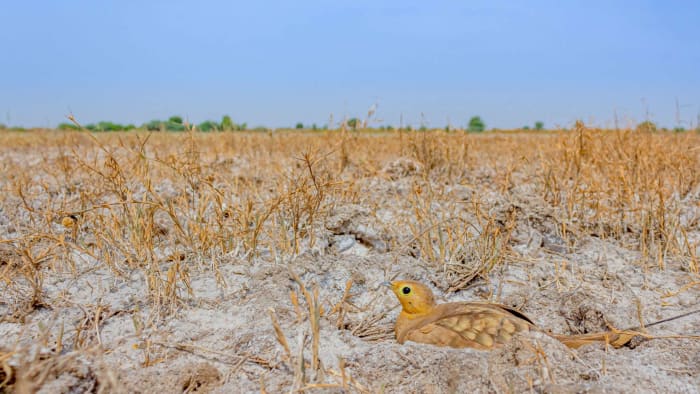
The Kutch landscape blends many colours: brown, cream, grey, and white, with sparse patches of green. It is water-starved in summer, floods during the monsoon, and develops large cracks once summer returns. The land is characterised by high salinity and constant water inflow and outflow. It cannot support thick, tall vegetation like other habitats. One might intuitively think this almost barren, Mars-like habitat couldn't support life. But that could not be further from the truth. It is home to a myriad of animals, from slithering snakes to cryptic birds, all united by their ability to thrive in this harsh climate and stay hidden in a land where vegetation is scarce.
Let’s examine some amazing camouflage strategies of ground-dwelling birds in the Kutch landscape. These birds nest on the ground, despite the clear disadvantage of limited vegetation. Their nests, albeit well camouflaged, are completely exposed and risk being crushed under people’s feet or car tyres. In fact, off-roading is one of the greatest threats to such ground-nesting birds because, for the most part, these nests are invisible to the eye.
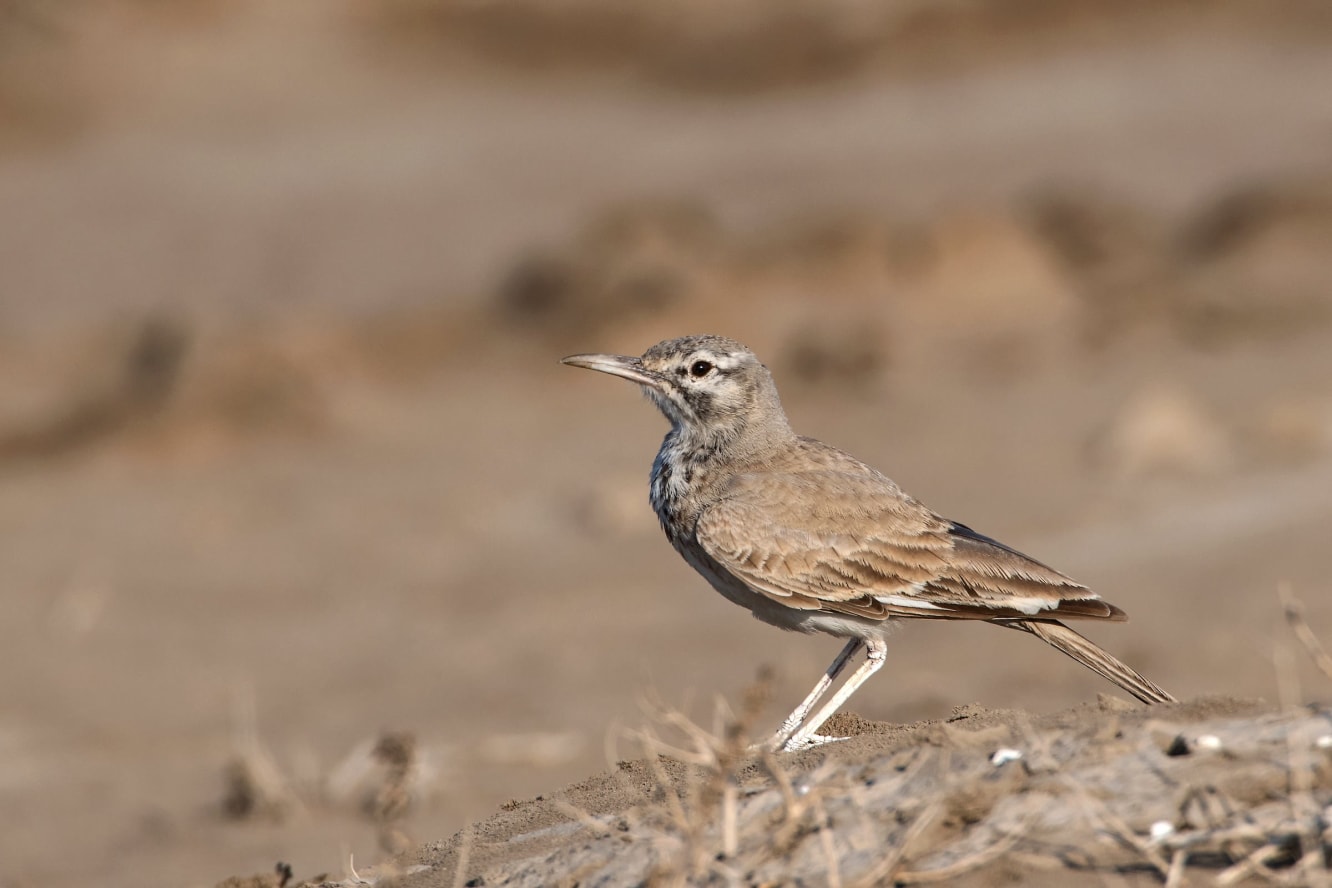
Camouflaged against cracked earth and pebbles, this bird is spotted only when it scuttles around, foraging and hunting for insects. In fact, each time our eyes caught movement in a bed of pebbles, we were almost hoodwinked into thinking it was an illusion.
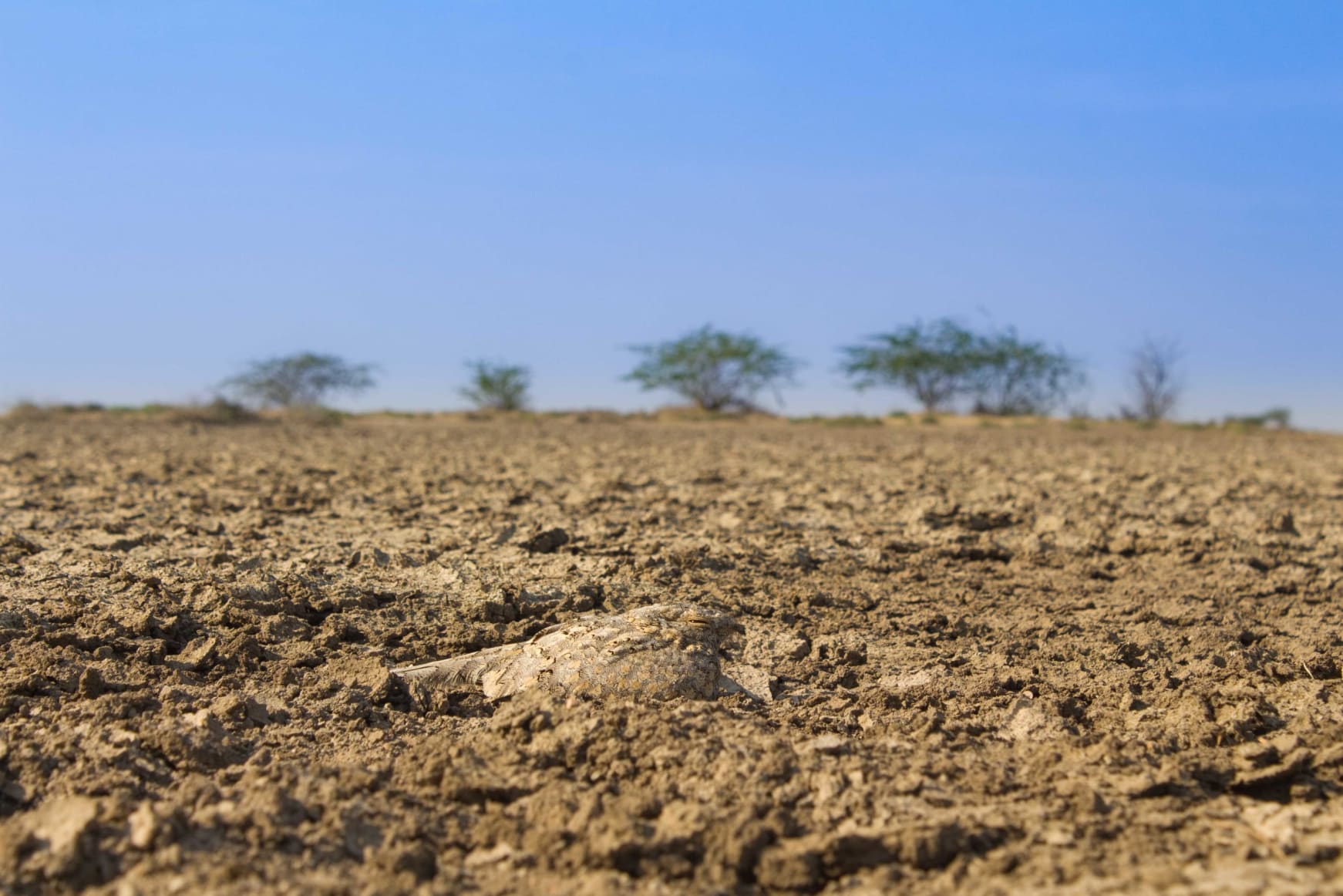
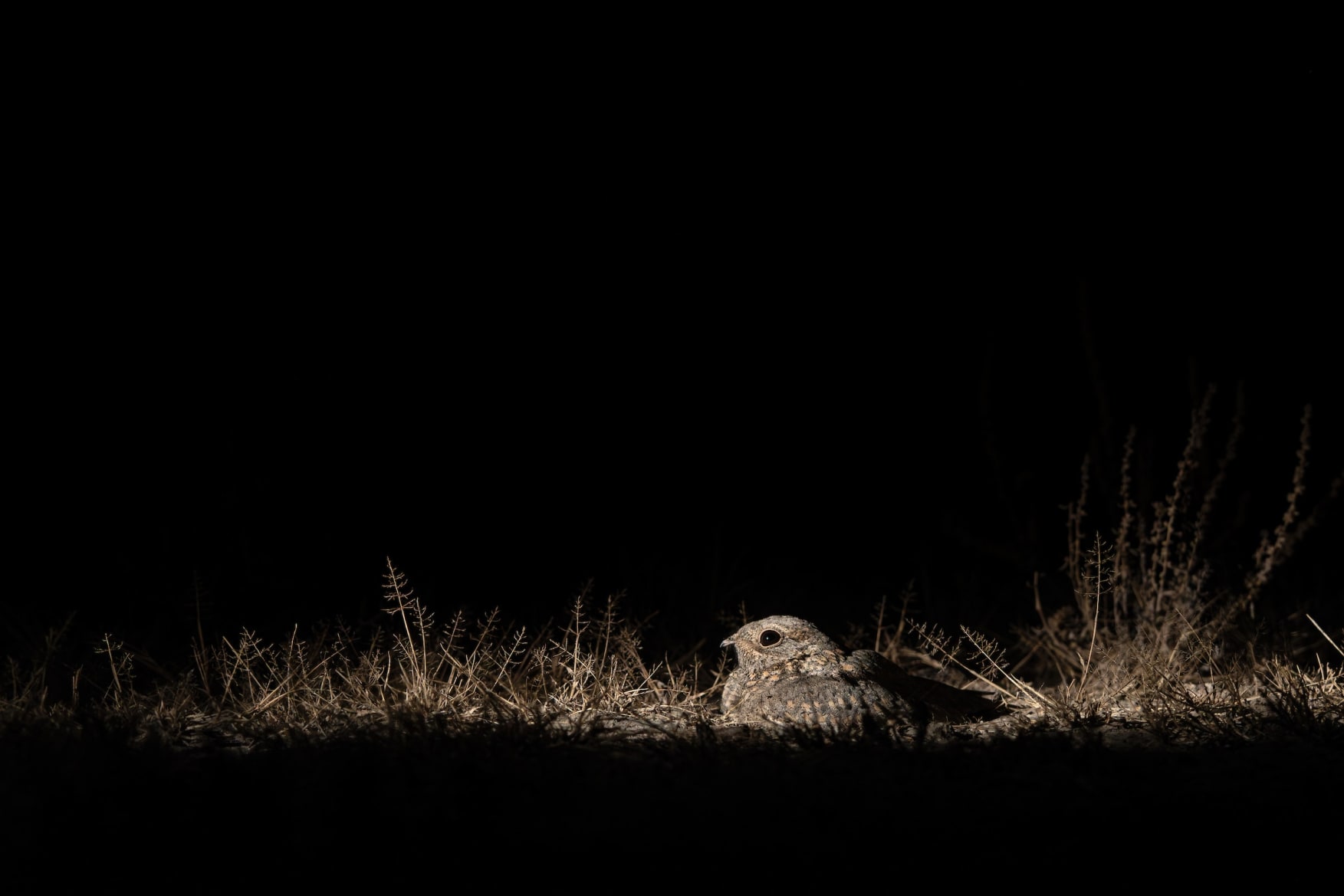
The species epitomises absolute trust in its camouflage. Probably the only thing that gives away the nest is the bird’s presence on the eggs. Even so, it takes a keen eye to know that the bird and nest are nearby. This disguise is so perfect that one could walk right past a nesting bird and never notice it. However, this marvellous strategy comes with a cost. In Kutch landscapes, where “roads” are not well defined, an off-roading vehicle can destroy eggs or chicks without realising it.
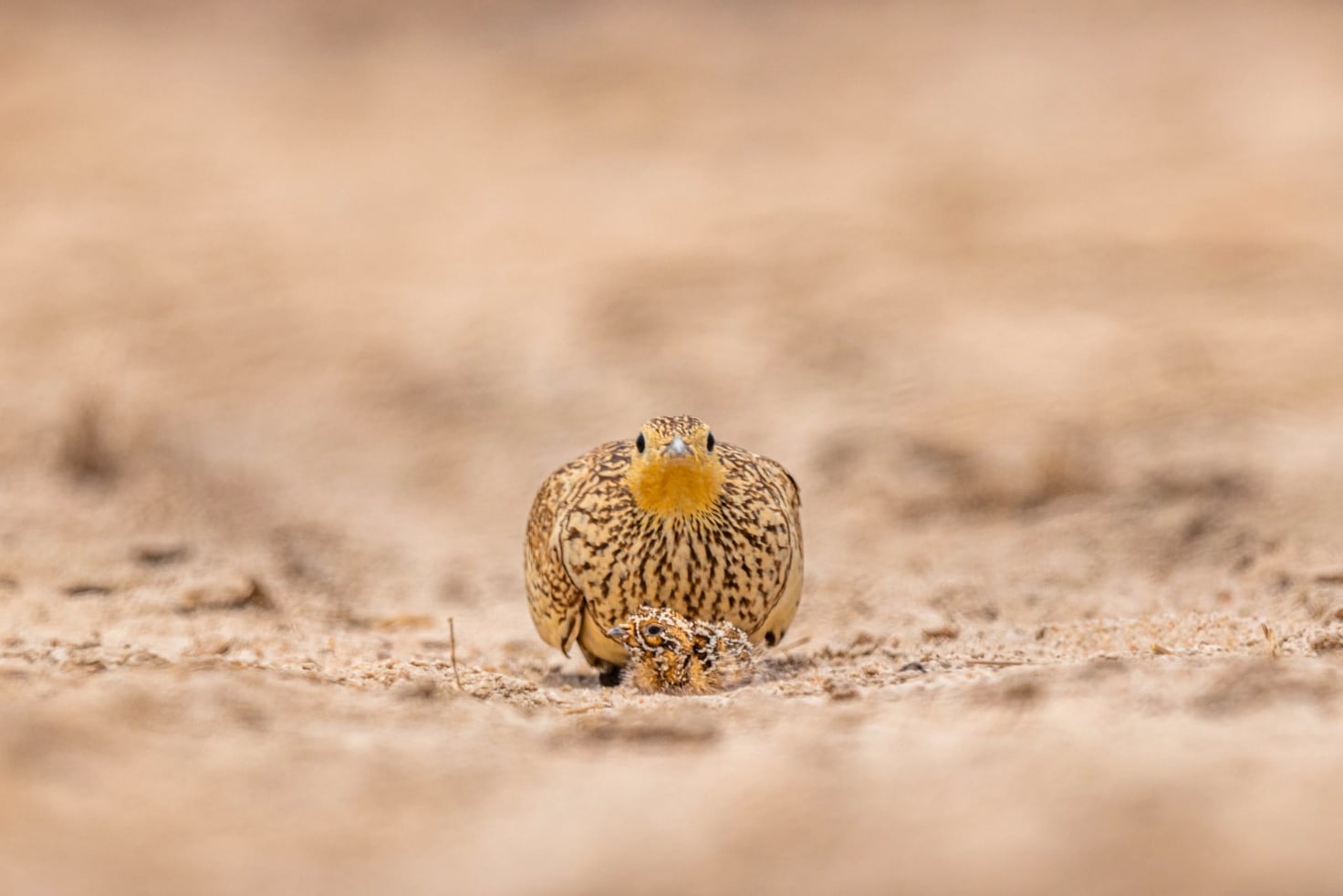
Photographers seek them out near waterbodies because they tend to arrive at specific times and repeatedly visit the same watering holes. However, spotting them on land is a whole different ball game.
I remember spending hours driving through the Banni grasslands on the southern edge of the Rann of Kutch looking for the spotted sandgrouse. Our guide suddenly remarked that a huge flock of sandgrouse was on the ground nearby. We scanned the landscape, knowing what we were looking for, but saw nothing. We were barely 20 feet away, with the guide pointing them out, when we finally saw them resting calmly in the open. Vulnerable, yet protected by a habitat that rendered them almost invisible. Their confidence in their camouflage showed when a jackal passed right by the group. The birds sat in collective silence until the threat had moved several hundred feet away.
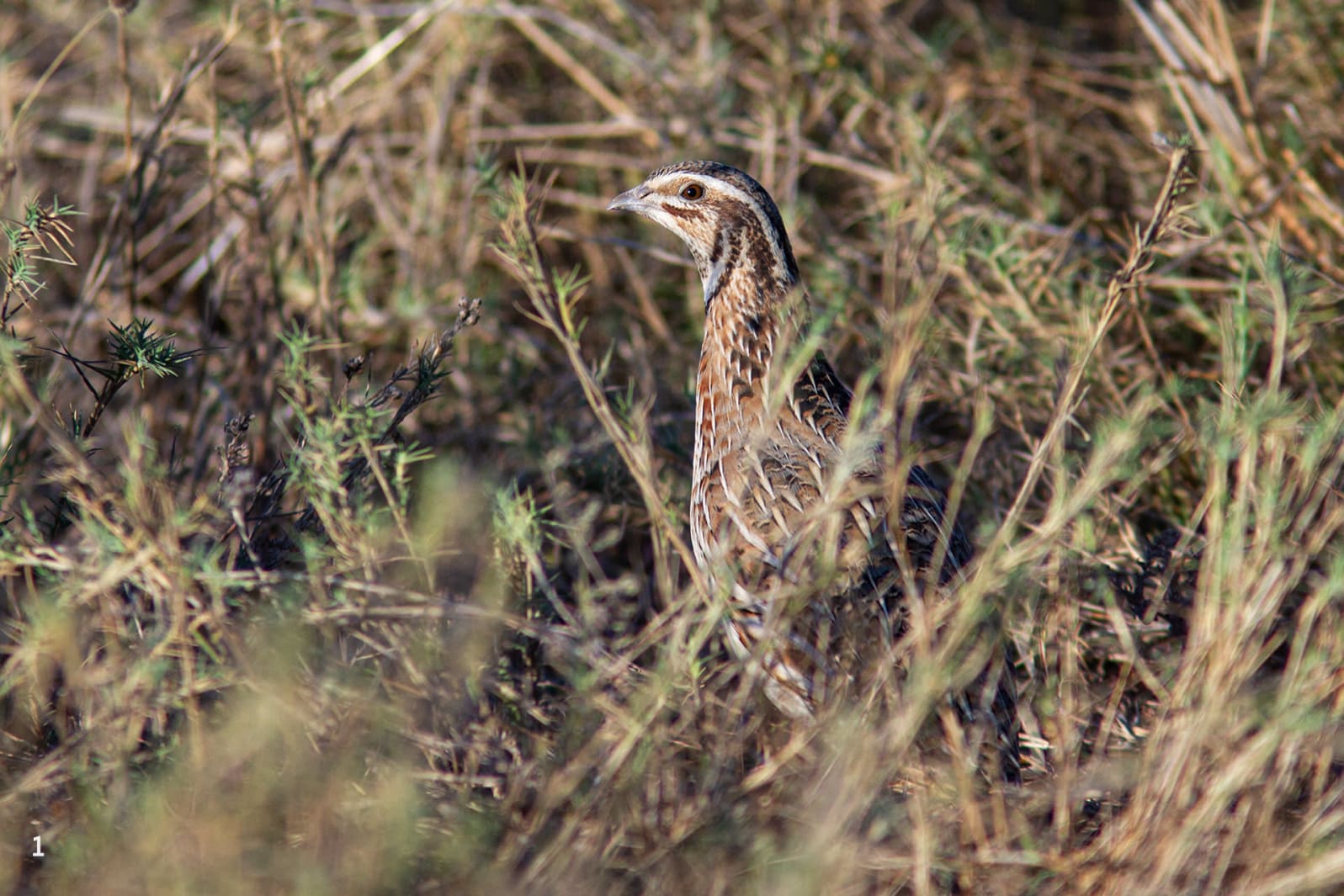
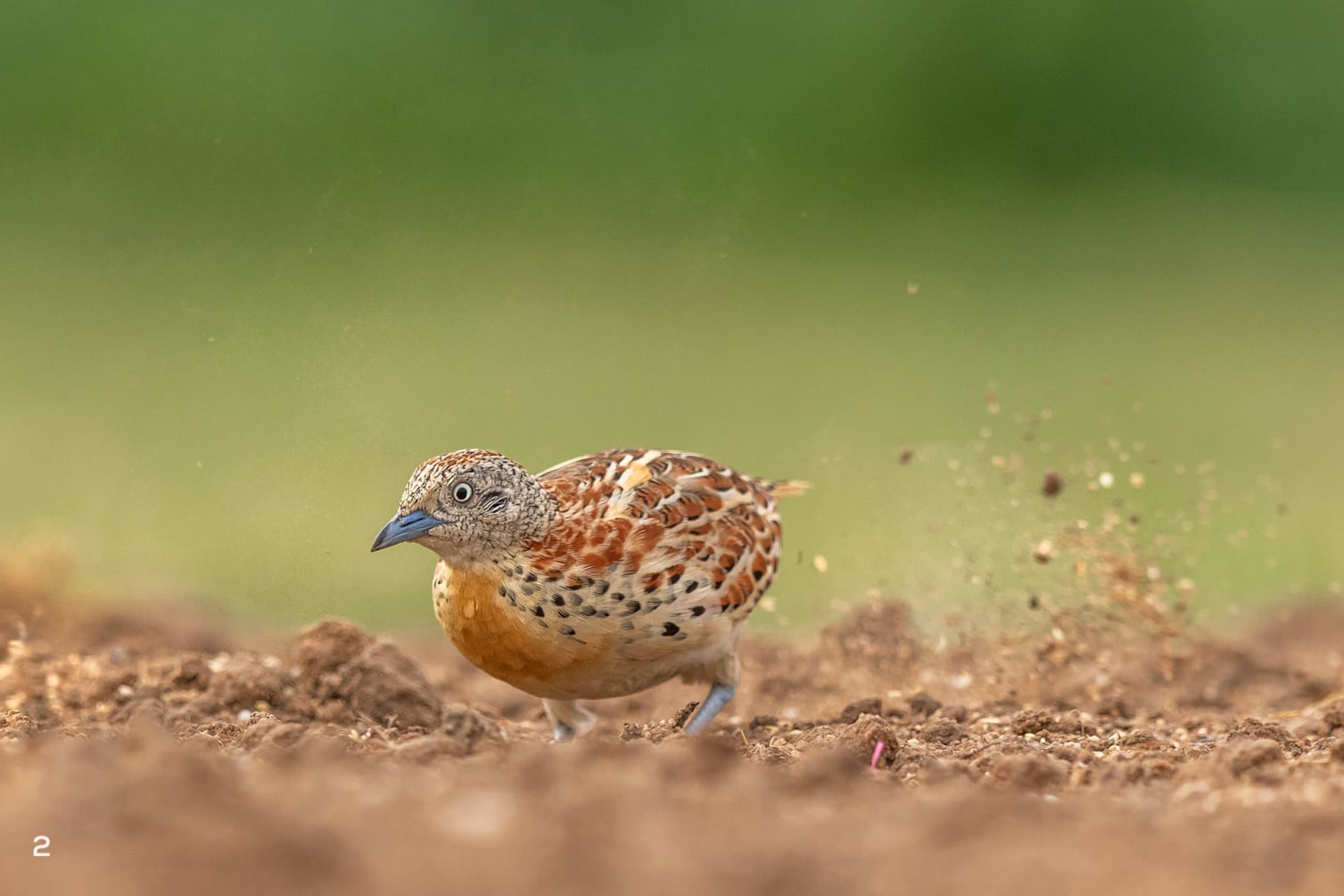
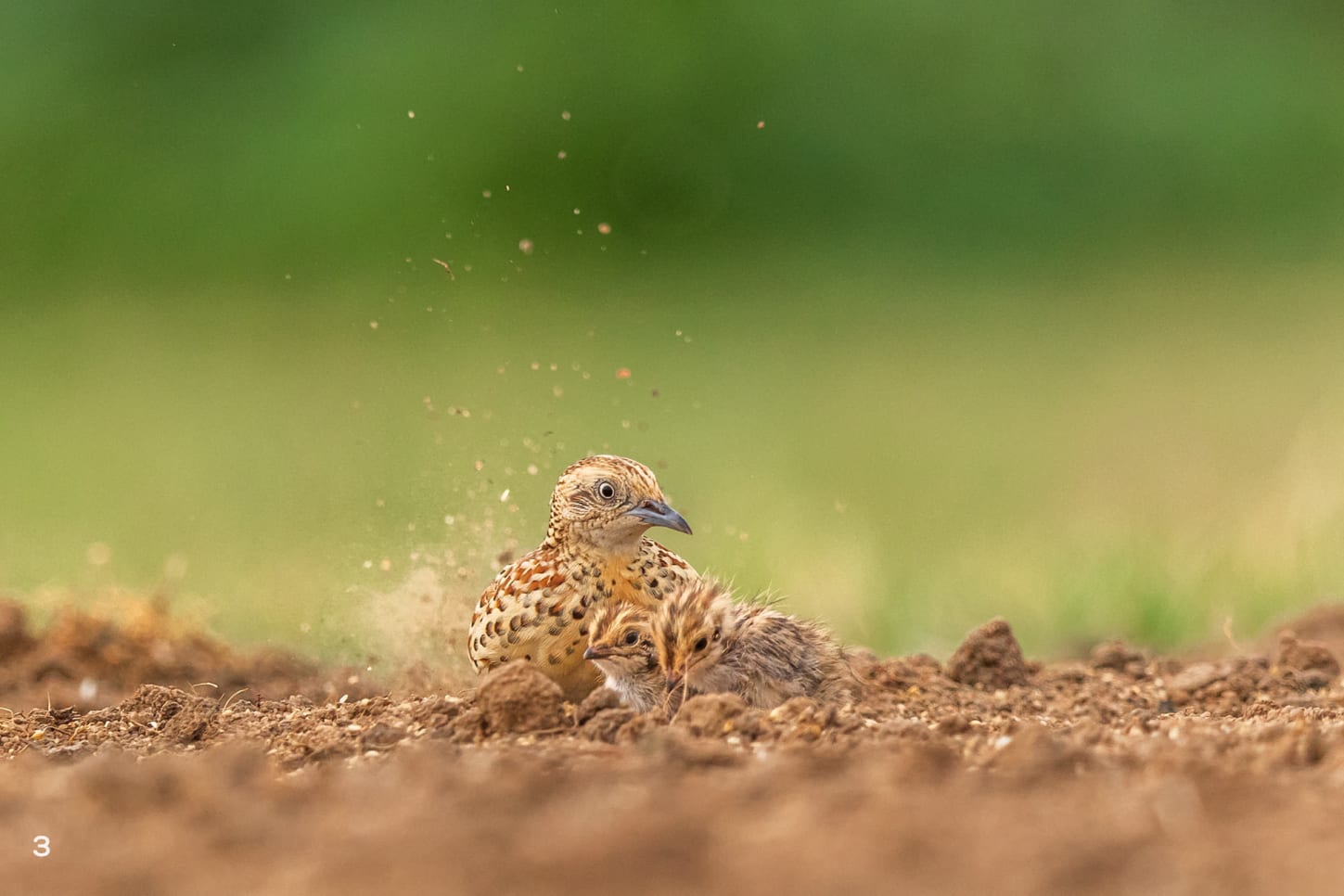
Some birds hide so well and will wait until they are nearly underfoot before exploding into the air. Quails and buttonquails are small, terrestrial running birds. Although not considered typical desert species, they are common in grasslands and scrub habitats. Their nests are simple scrapes on the ground, often with a small amount of surrounding vegetation. In Kutch, they are occasionally seen in salt pans with some vegetation. If you’re lucky, you may spot a (1) common quail (Coturnix coturnix) or (2&3) small buttonquail (Turnix sylvaticus) dustbathing. This behaviour helps them tackle ectoparasites on their body and regulate the oils in their feathers.
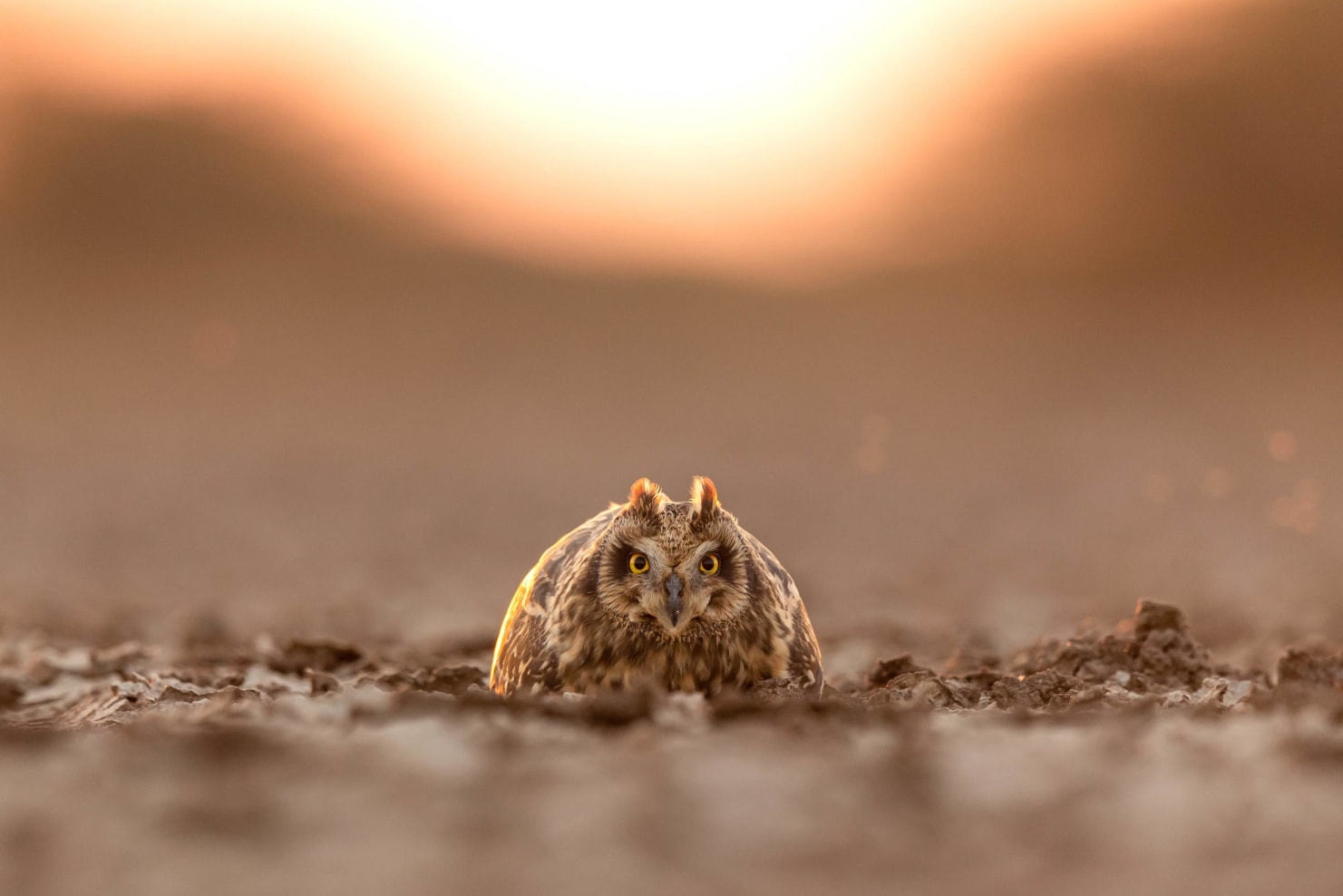
Drawn to the region’s open country and grasslands, this crepuscular hunter, occasionally active during the day, is often seen sitting near grass clumps, shrubs, or out in the open, watching its surroundings with piercing yellow eyes (pictured above). It feeds on rodents, insects, and birds, and makes good food of the other camouflage specialists that share its habitat.
A 2011 study by Girish A Jathar and colleagues titled “Winter diet of short-eared owls Asio flammeus in Akola, Maharashtra”, published in Indian Birds, found that the owl also preys on birds like the greater short-toed lark (Calandrella brachydactyla) and is affected by habitat disturbance, including grass harvesting.
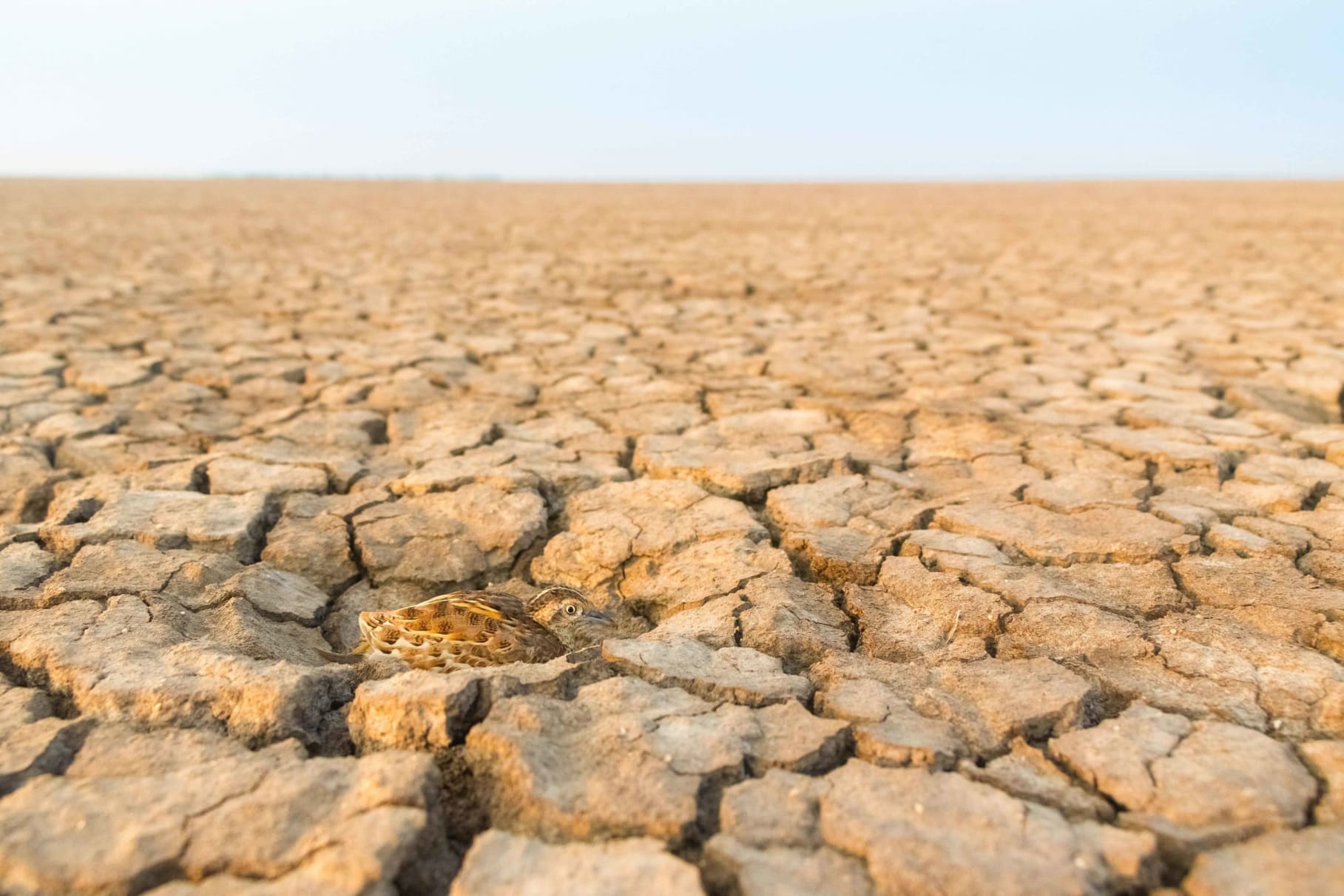
In Kutch, camouflage is more than an evolutionary curiosity. It is a survival strategy shaped by an unforgiving landscape with little vegetation to hide behind. Yet these same adaptations make birds like this small buttonquail increasingly susceptible to human disturbance. A tyre track through the salt pans or even an off-trail walk to approach a bird for a better photograph may destroy a nest that has remained hidden from predators. The growing number of free-ranging dogs, driven by poor garbage disposal around human settlements, has become one of the most pressing threats to ground-dwelling and ground-nesting birds in the region. In such habitats, the greatest deception may not be the birds themselves, but the illusion that a barren landscape is empty. Conservation begins by recognising that what appears to be empty ground may be full of life.
About the Author



