 Listen to this article
•
15:34 min
Listen to this article
•
15:34 min
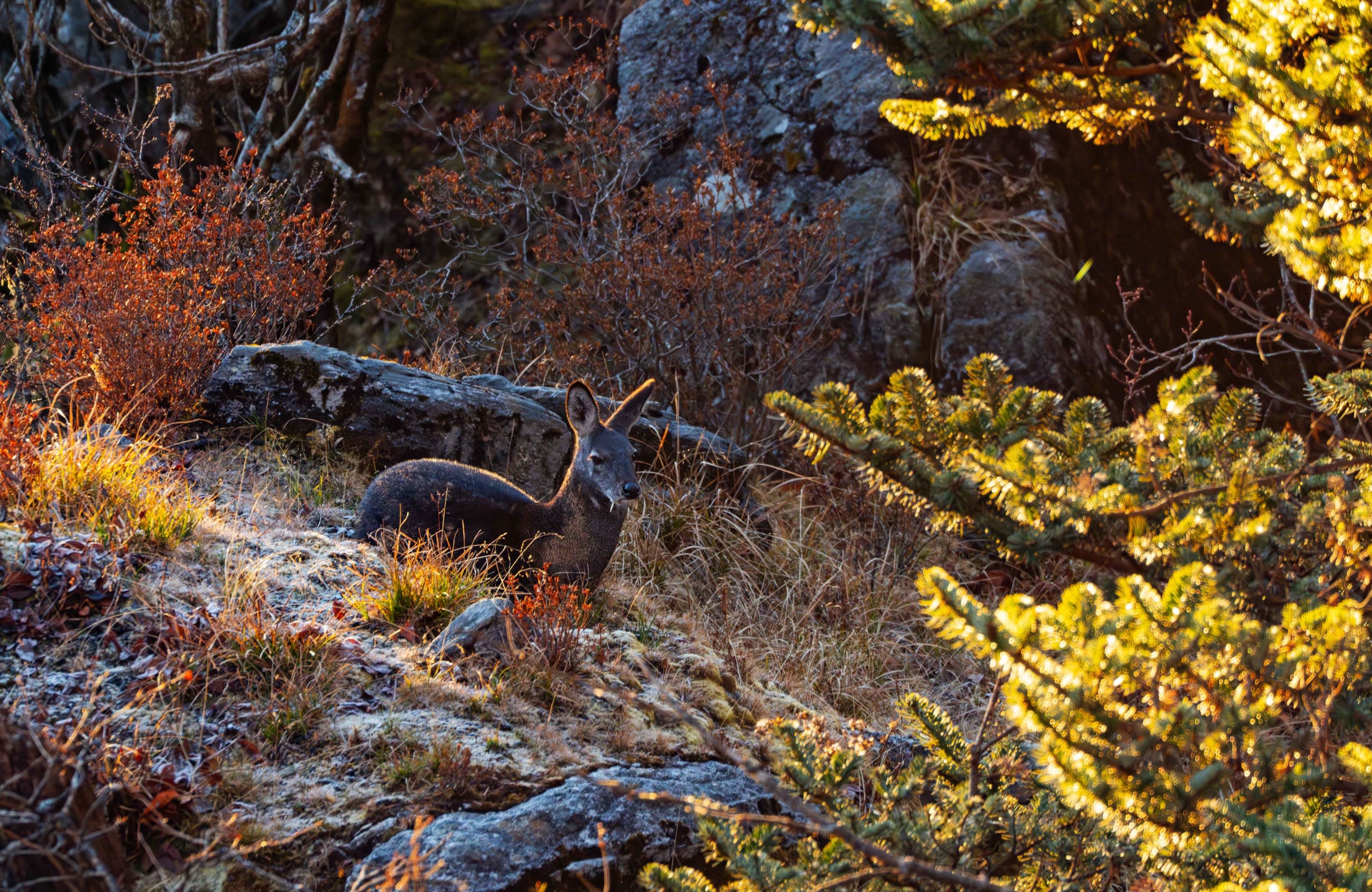
In winter, a Himalayan musk deer (Moschus leucogaster) can be looking straight at you and still be impossible to spot. Even when it stands on an open rock, bathed in the first light of day, its brown coat merges so completely with the mountainside that it disappears in plain sight. Ranjeet Subba, our guide, points once, twice, thrice. “Where?” I ask. “It’s right there!” he says.
We are in Sikkim’s Pangolakha Wildlife Sanctuary. It is 5.30 a.m. The pre-dawn sky is purple. Below us, a frost-dusted ravine drops into scrub and rock. I am here with wildlife photographer Dhritiman Mukherjee and a team of filmmakers. I scan the slope through binoculars, still unsure of what we’re meant to see.
Even for a seasoned photographer like Mukherjee, the musk deer remains an elusive challenge. The deer inhabits harsh alpine landscapes above 2,500 metres in Jammu and Kashmir, Himachal Pradesh, Uttarakhand, Sikkim, and Arunachal Pradesh, its range stretching into Nepal, Bhutan, and Tibet. It is a small, solitary, nocturnal creature that silently skulks about when visibility is low. During the day, it prefers resting in scrub and bamboo thickets. At dusk, when it steps out to feed, it stays close to scrub cover, quickly slipping in at a moment’s notice. “I heard so many stories of how difficult it is to spot, that I never really tried to photograph it,” says Mukherjee. In over 16 years of returning to this landscape and travelling across Himalayan habitats, Mukherjee saw it for the first time in the monsoon of 2025 in Pangolakha. A few months later, the same winter, we are back to look for it again, placing our bets on Subba’s sharp spotting skills.
As we follow Subba’s directions, the sun climbs over the mountains and sets the landscape ablaze. For a few fleeting moments, backlit by the rays, the silhouette of a crouched creature glows. Lined by a halo, it looks mythical. Then it flicks its left ear, and that quick twitch gives it away.
We are looking at one of the country’s most elusive species. Locally known as kasturi, it is smaller (about 50-60 cm tall) than I expected, with long ears that look borrowed from a rabbit. With a brown shaggy coat, it would seem quite ordinary, i.e. until I spot its most startling feature — long, curved fangs stick out of its mouth. A deer with vampire-like teeth. Hard to spot, harder to look away from.

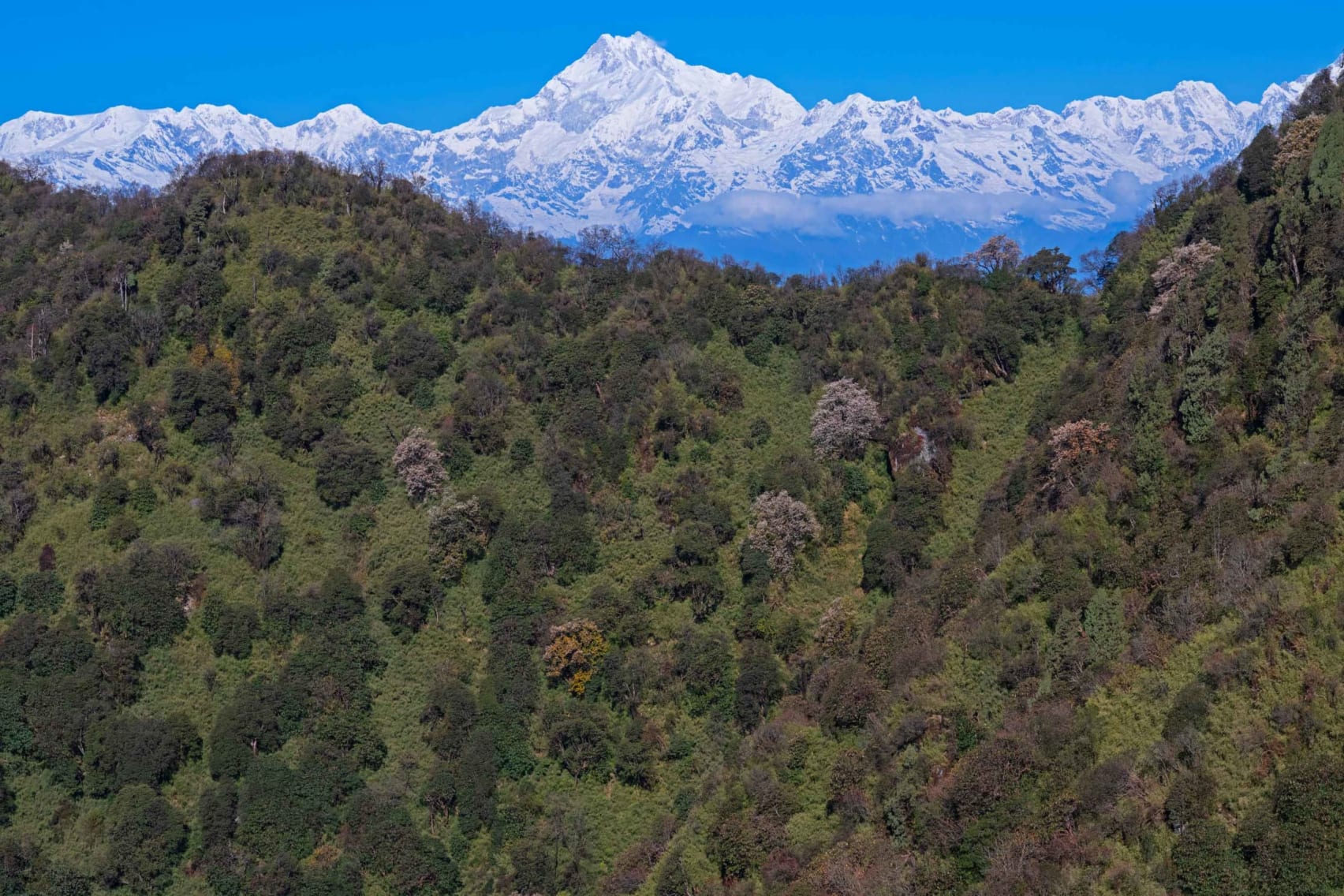
At every bend in the Sanctuary, the snowclad Kachenjunga, the highest peak in India, looms over the mountain ranges. At its highest reaches, the wild shares space with four villages. In 2017, not far from where we stand, a standoff erupted when the Indian Armed Forces and China’s Army confronted each other over a road China attempted to build in Doklam, the trijunction of India, Bhutan, and China.
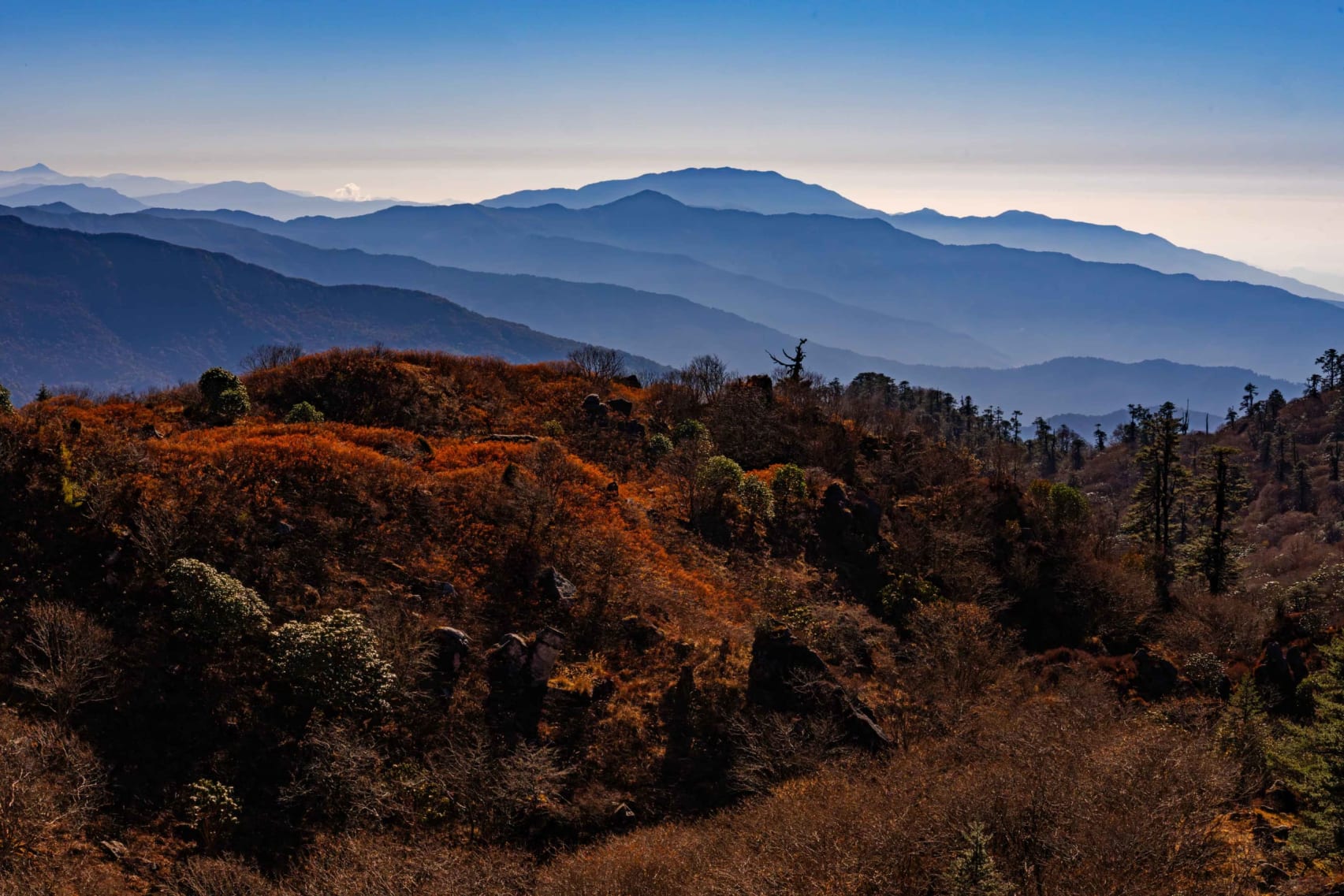
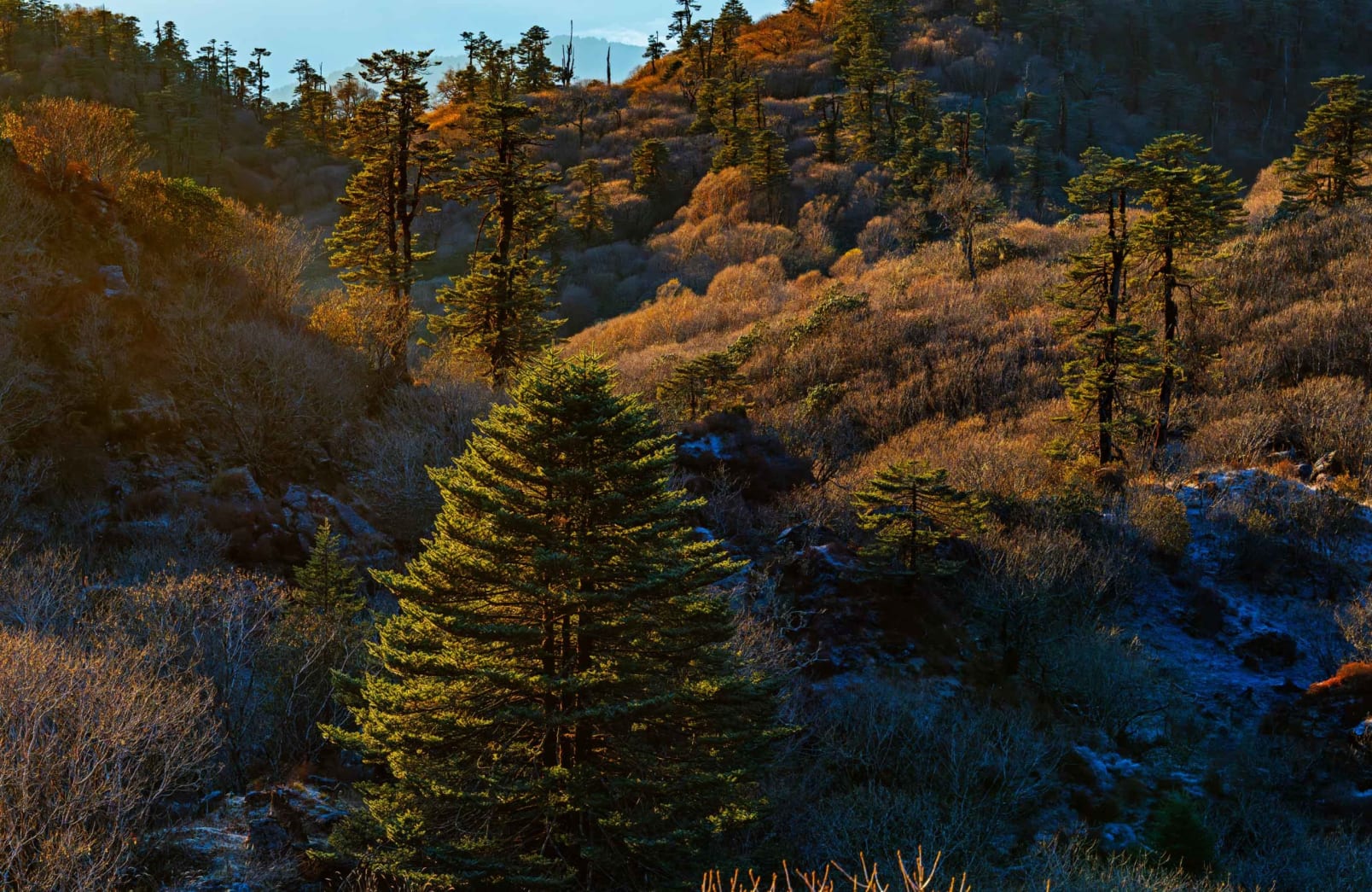
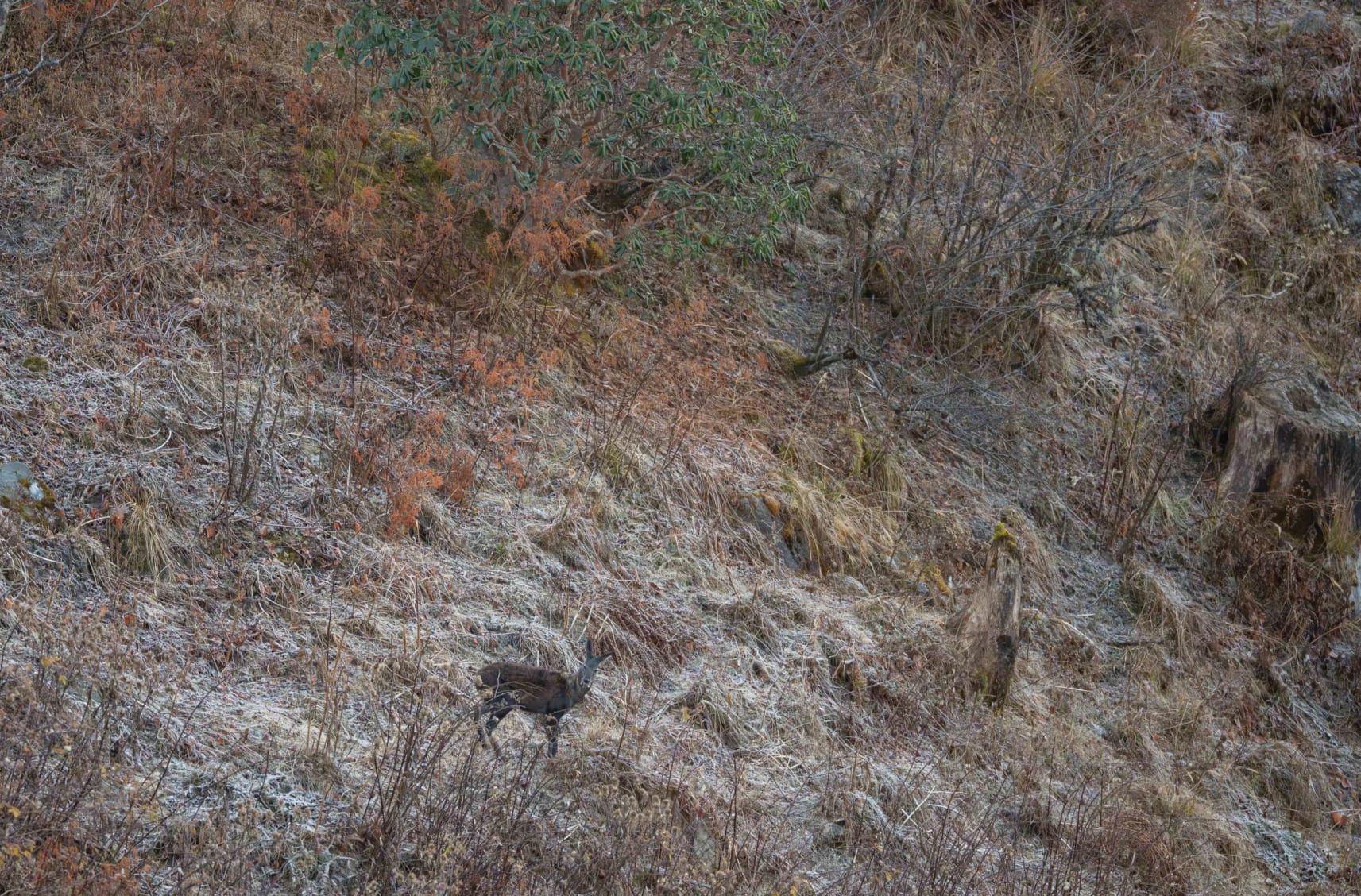
If the musk deer is hard to photograph, it is even harder to study. “In three years of fieldwork in Kedarnath, I spotted it only 91 times,” says S Sathyakumar of the Wildlife Institute of India, whose PhD represents one of the most comprehensive studies of the species. “Ninety per cent of the sightings were less than 10 seconds long. Working on the musk deer can be a real challenge.”
Sathyakumar tells me that what interested him about the musk deer was the fact that it is not a “true deer”. It only resembles one. For instance, true deer (family Cervidae) grow and shed antlers. Musk deer have no antlers and instead possess long, tusk-like canines. This places them in a separate family (Moschidae), more closely related to cattle (bovines) and only distantly related to real deer despite the name.
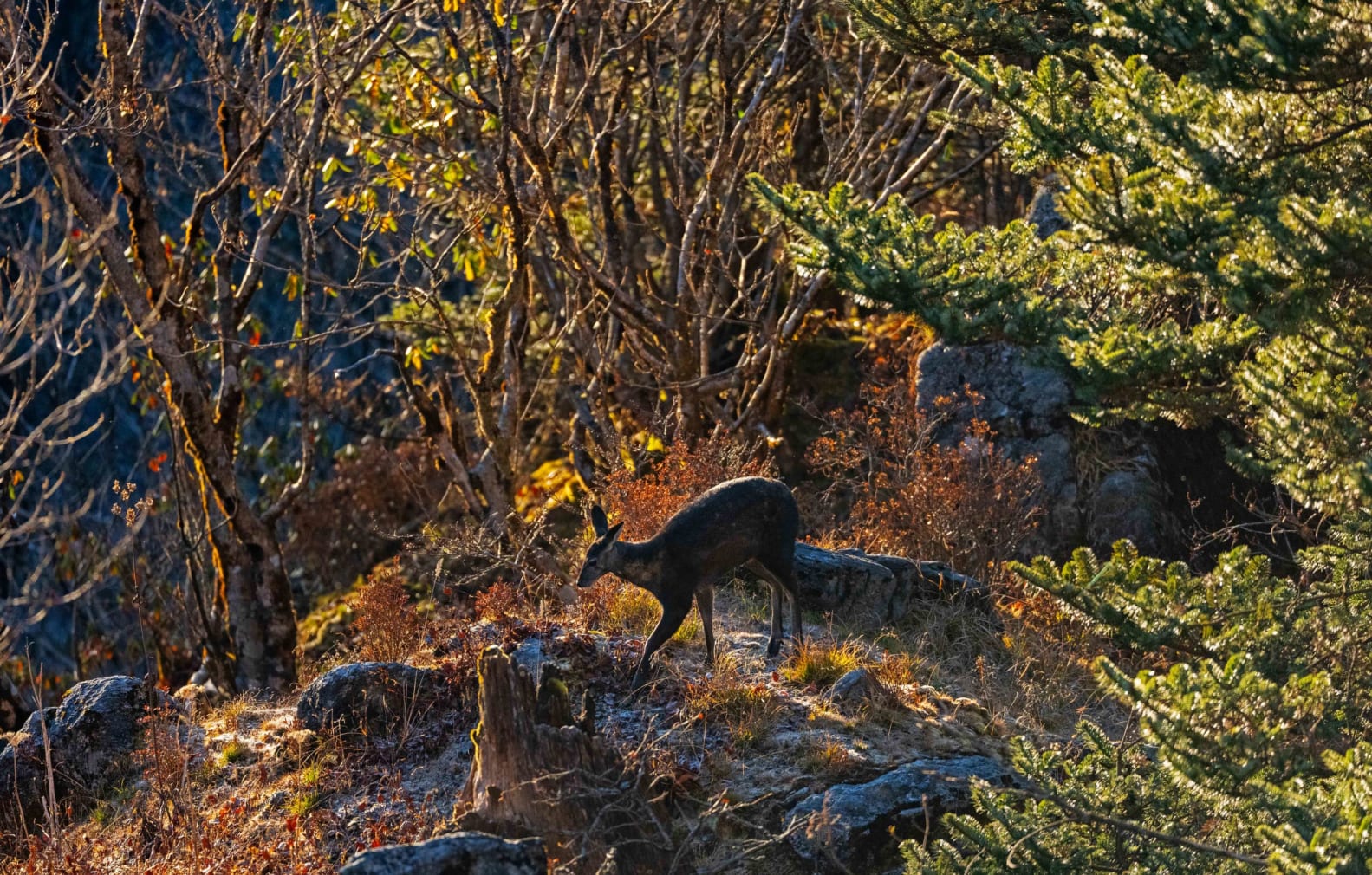
However, early writings focus almost entirely on the qualities of its musk, the strong aromatic secretion taken from the male’s gland, which it has been historically hunted for. In the sixteenth century, one of Akbar’s noted ministers, Abul Fazl, described the musk deer as “larger than a fox…with two protruding tusks, but without horns,” found in the northern Himalayas and Kumaon. For decades after, Sathyakumar notes in one of his papers, most natural history accounts came mostly from hunters.

Mukherjee first saw the deer around September 2025 in Pangolakha, as it galloped about the lush landscape studded with wild blooms. He saw it again the same winter, when the habitat had turned grey and brown. “Most species at these altitudes (over 2,500 metres) move to lower elevations in the winter to look for food and warmth. Surprisingly, the musk deer stayed in the same location where we last saw it,” he says. Unlike most other mammals, musk deer rarely descend to lower elevations, braving harsh climes and rugged terrain when it snows, confirms Sathyakumar. To help, it has a thick coat, feet built for steep climbs, and special feeding skills.
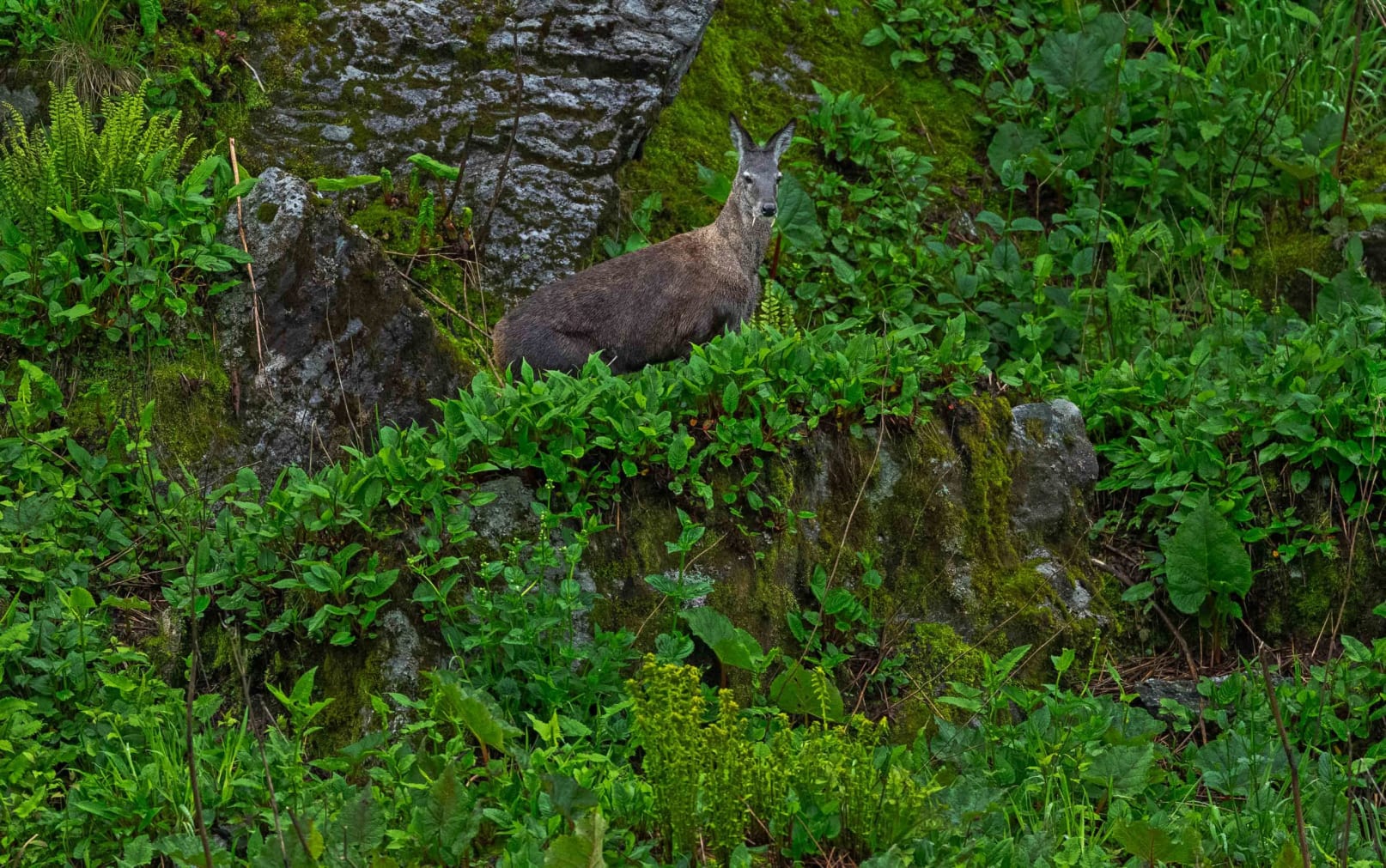
From a distance, the musk deer looks sturdy and almost as large as a shaggy dog. But Sathyakumar points out that it’s actually a light animal, weighing only 13–14 kg. (A large dog can weigh up to 45 kg.) Its apparent bulk comes from a remarkable coat, packed with tiny air pockets separated by thin partitions, making a honeycomb-like pattern that retains heat. Its hair is long and thick, creating a layer of insulation that allows it to withstand the cold climes of its high-elevation home.
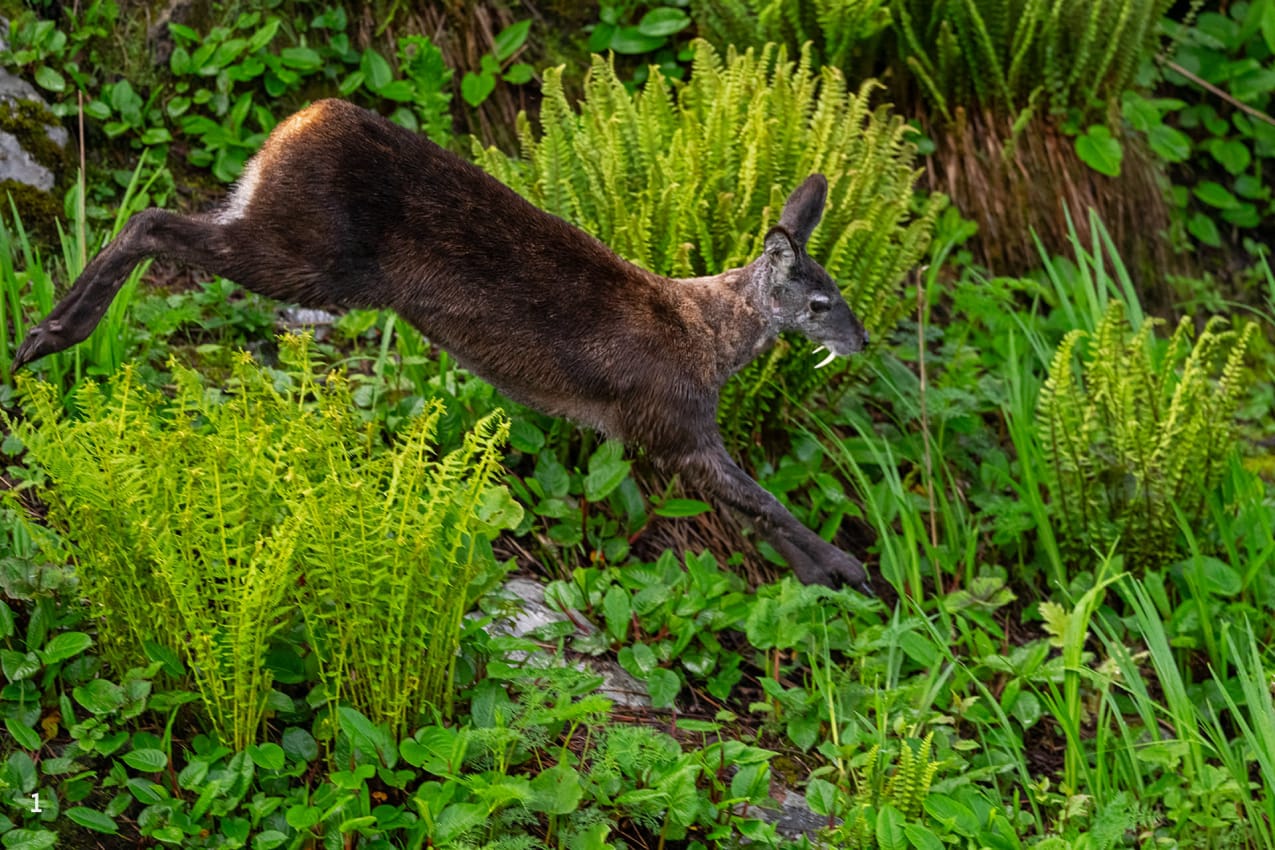
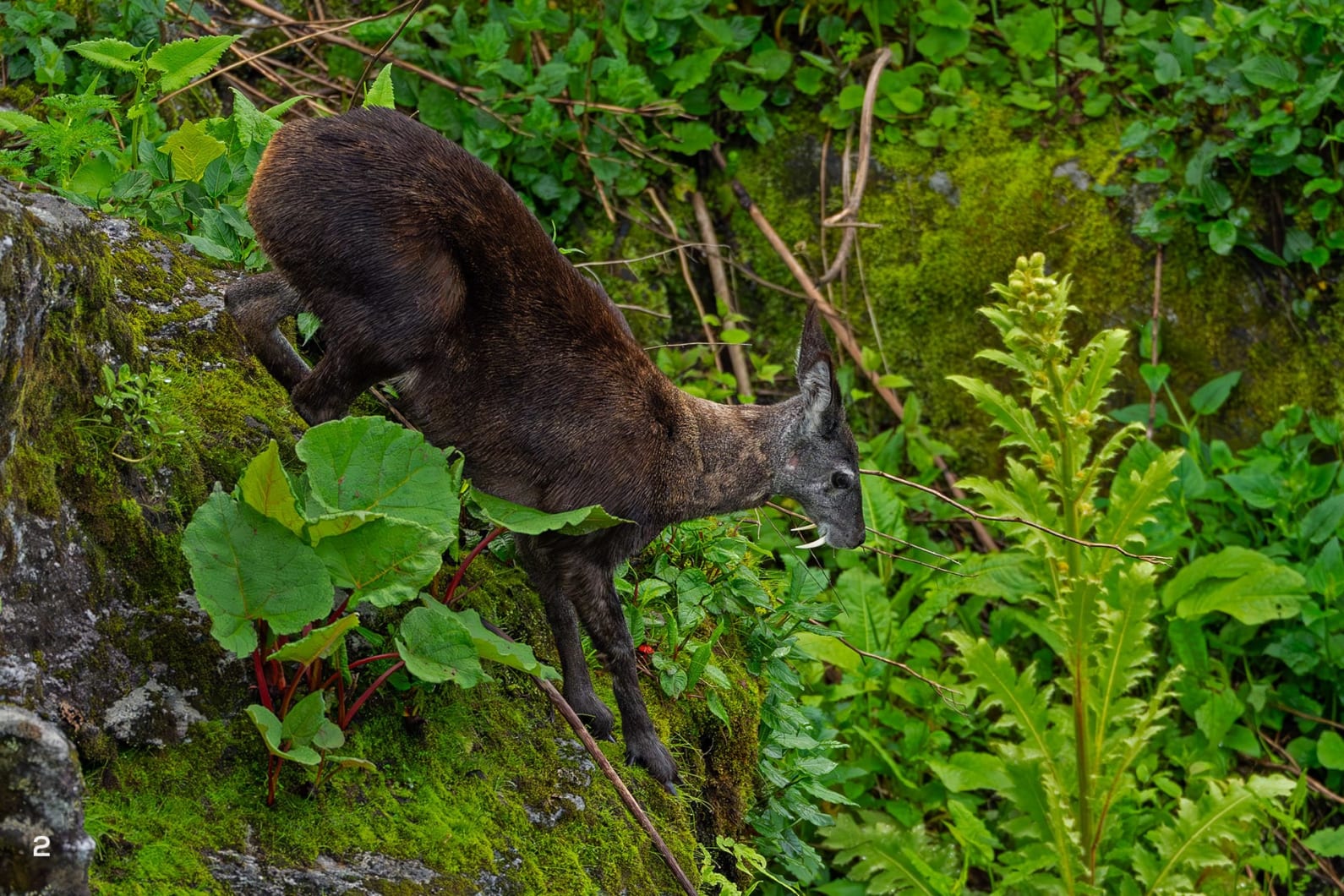
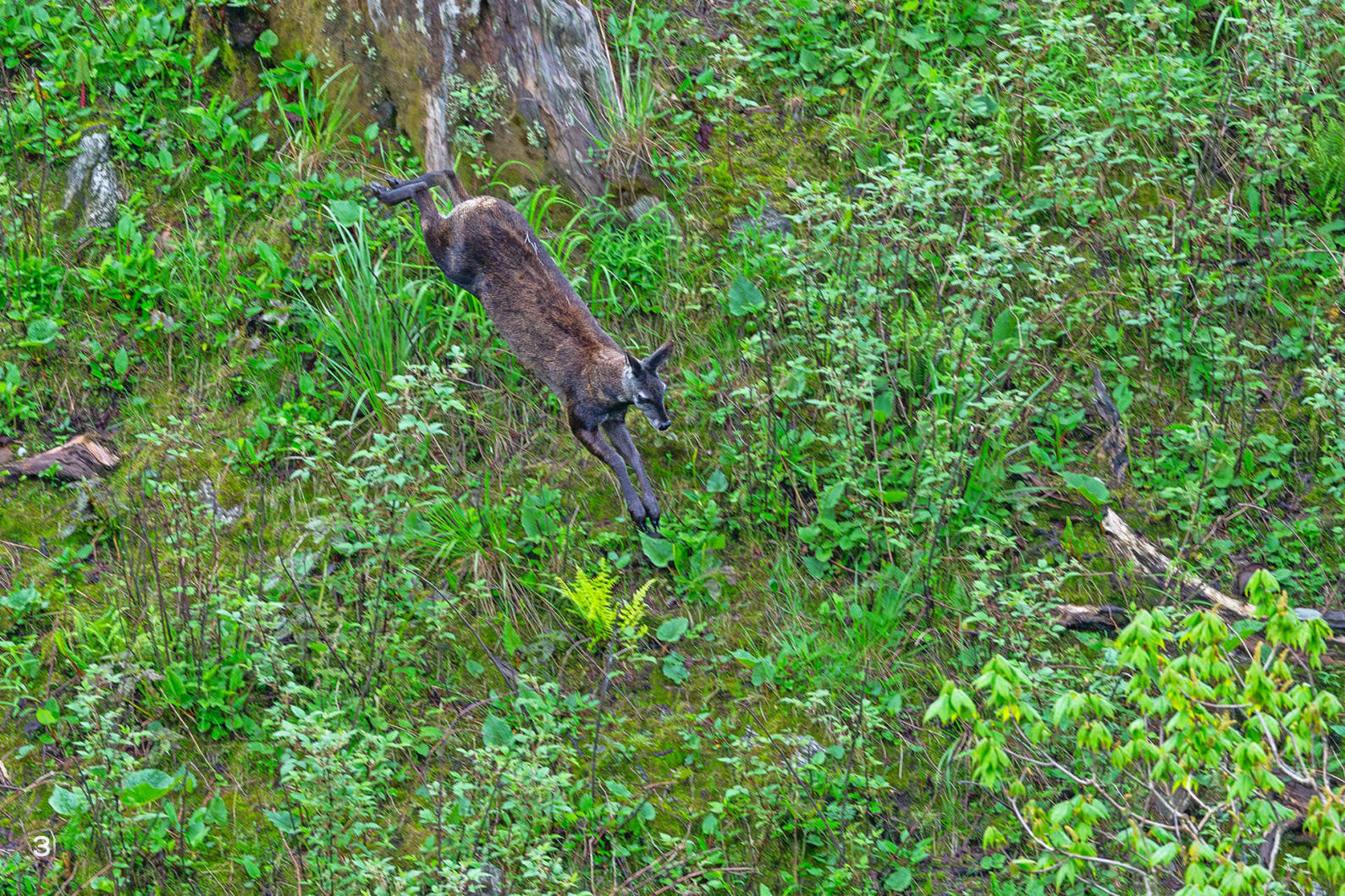
The musk deer doesn’t have a trotting gait like most deer. Instead, it propels itself forward in long, arched jumps much like a rabbit, using its strong hind legs, as if they were fitted with springs. It can leap as far as 6 metres at a time. Its feet are equally specialised: broad toes and enlarged claws splay outward to grip loose rock, hold firm on steep slopes, and keep the animal from sinking into soft snow. “The feet work just like snowshoes,” says Sathyakumar. Both the feet and the bounding gait ensure it can escape predators such as the snow leopard and flee on snow without slipping or sinking.
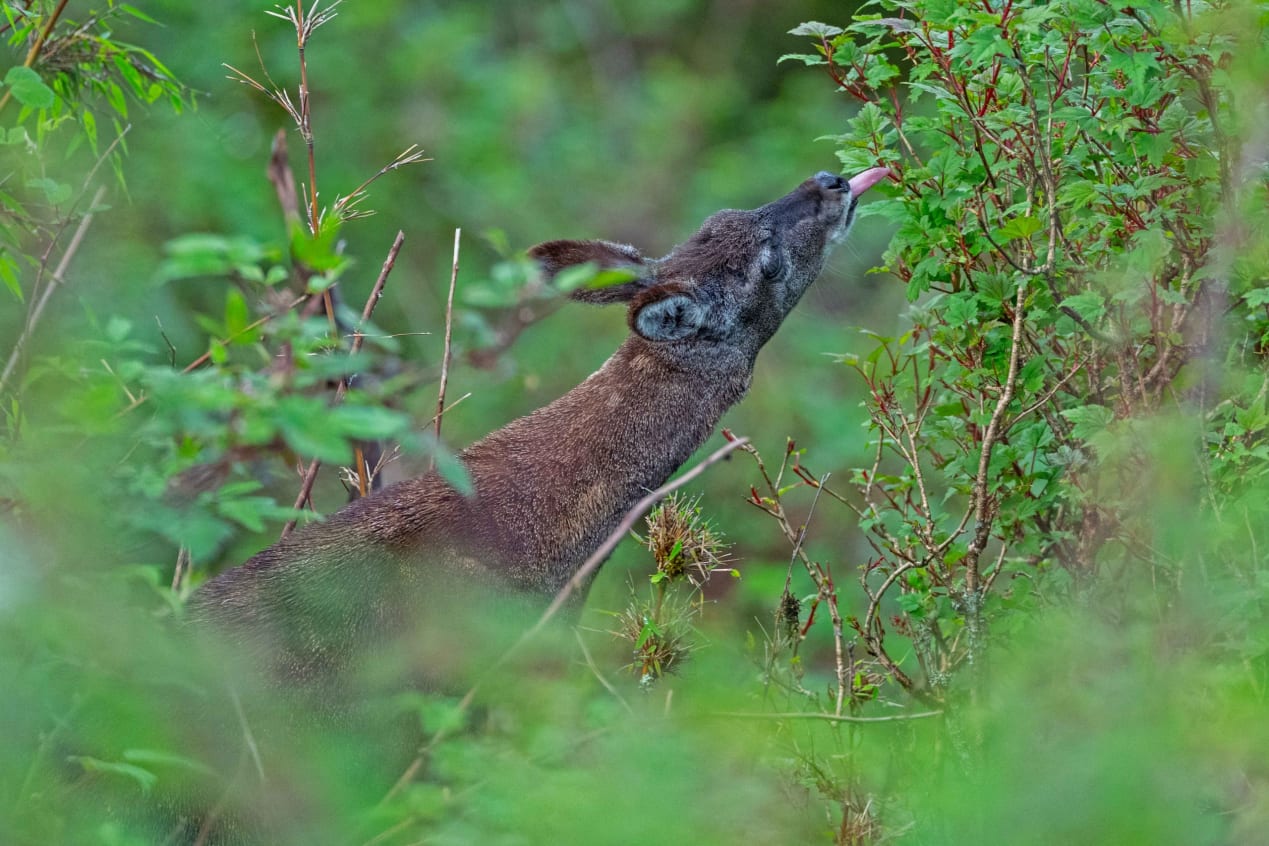


The most striking feature of a musk deer is its long upper canines. (2) In males, these sabre-like teeth are elongated and protrude beyond the lips. (1) In females, they are present, but much smaller and less visible. Males use their fangs for display and for sparring with rivals during the mating season. During the rut (mating season), males can become aggressive, slashing downward with their tusks and sometimes inflicting deep cuts on opponents.

Musk deer rely heavily on smell as their primary mode of communication, even more than sight or sound. Because they are solitary, olfactory cues help them maintain territories, recognise individuals, and detect reproductive status. Each deer has several prominent defecation sites inside its home range, which function as communication sites. Urine provides key information: male urine on snow is pink or red with a faint musky smell, while female urine is amber and odourless, allowing males to tell whether a female is in heat and ready to mate. The most important chemical signal comes from the male’s abdominal musk gland, which produces a secretion that is used for marking territories and reproductive signalling.
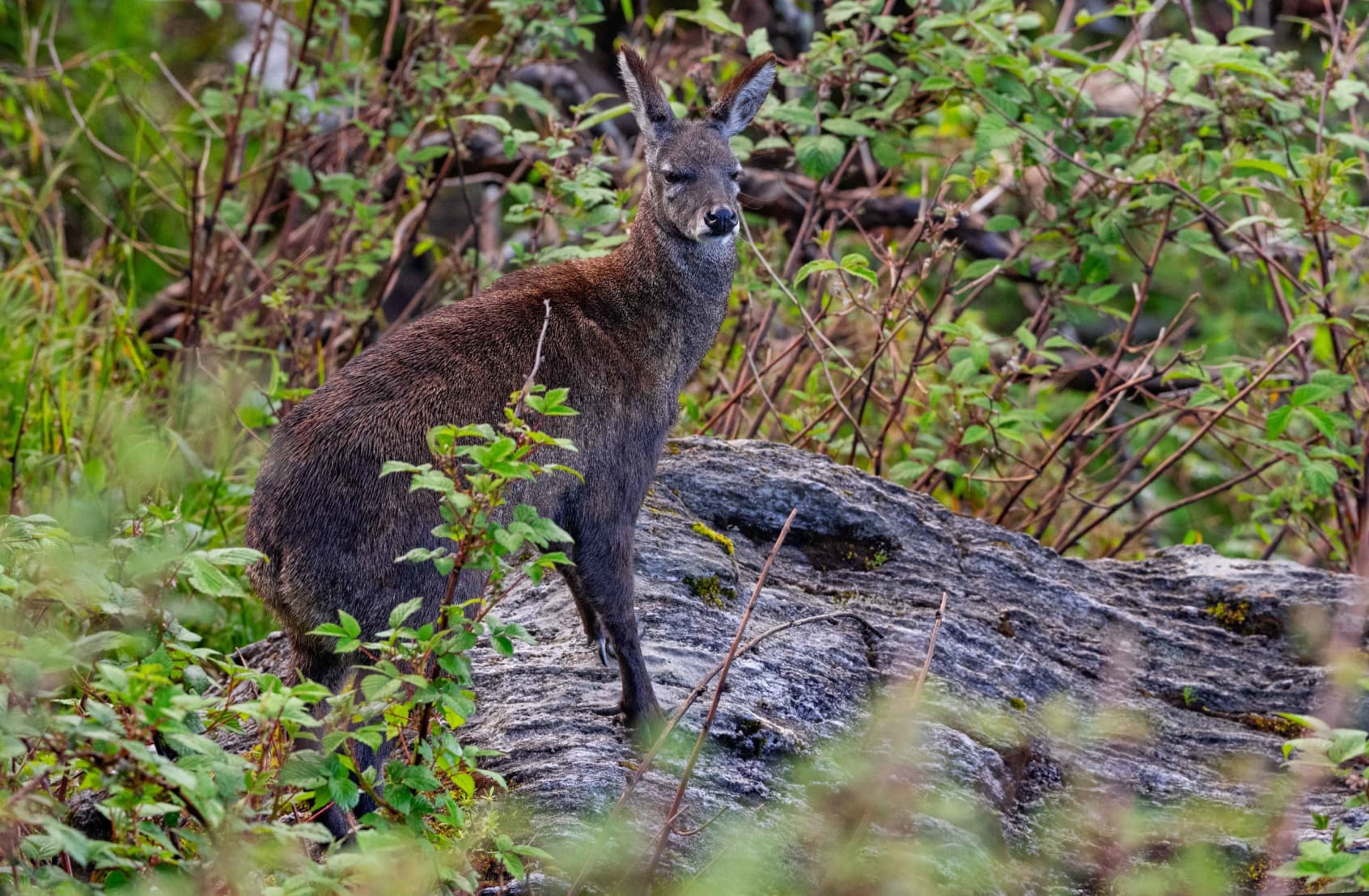
Unfortunately, it is this very specialised signalling substance that has led to its decline. Poaching for musk and extensive habitat degradation have led to sharp declines in musk deer populations. It is listed as threatened on the IUCN Red List. In the Greater Himalayas, nearly 70 per cent of suitable musk deer habitat has been lost. “Although synthetic alternatives have replaced natural musk in perfumery, illegal trade continues, and musk pods are still smuggled across borders,” says Sathyakumar.
In the biting cold, as we watched the deer for several minutes, it sat still, unbothered by our gasps, and our cameras going click-crazy. And then, just like that, it got up, stretched, and slipped into the undergrowth, leaving only the faintest trace behind.
About the Authors