Listen to this article
•
15:34 min
Listen to this article
•
15:34 min
Similipal Tiger Reserve, located in North Odisha’s Mayurbhanj district, spans 2,750 sq. km and is predominantly known for its black (pseudo-melanistic) tigers. Situated within the Deccan Peninsular Biogeographic Zone, its unique landscape blends forest types from the Western Ghats, Eastern Ghats, and Sub-Himalayas. The reserve has dense forests abundant in sal trees and a small percentage of grasslands. The topography is a mix of steep hilly areas interspersed with lush green valleys. Three major rivers and numerous small streams, over half of which are perennial, feed the reserve and several districts beyond.
All these factors contribute to Similipal Tiger Reserve’s floral diversity. It is home to over 1,300 plant species, including 104 orchid species, some of which are endemic and several of which are endangered. Similipal’s floral diversity is instrumental in supporting a rich array of fauna, including herbivores, the predominant prey base for predators such as tigers and leopards.
Mammals such as spotted deer, sambar, barking deer and elephants are the most visible and important residents of Similipal Tiger Reserve. They are seen throughout the park, particularly in the grasslands and open areas. Tigers are also found here, but they are not easy to see. Estimates put the number of tigers, both pseudo-melanistic and normal, at around 35-40. Other predators found here are leopards, hyenas, jackals, leopard cats, and jungle cats (while wolves tend to live at the edge of the park).
However, centuries-old traditional mass hunting practices and indiscriminate poaching led to an alarming decline in wildlife and contributed to observed behavioural changes in the animals. Despite laws such as the Wildlife Protection Act of 1972 being in place, this continued. It was further exacerbated by the authorities’ inability to implement wildlife protection measures due to rampant Naxal activity in the area. By 2014, according to the All India Tiger Estimation conducted by the NTCA, the tiger population had declined to five. But things changed around 2015-16 when the government and the forest department were able to give fresh impetus to wildlife protection, enforcement and conservation. The steady rise in tiger numbers after that suggests that other species are thriving as well.
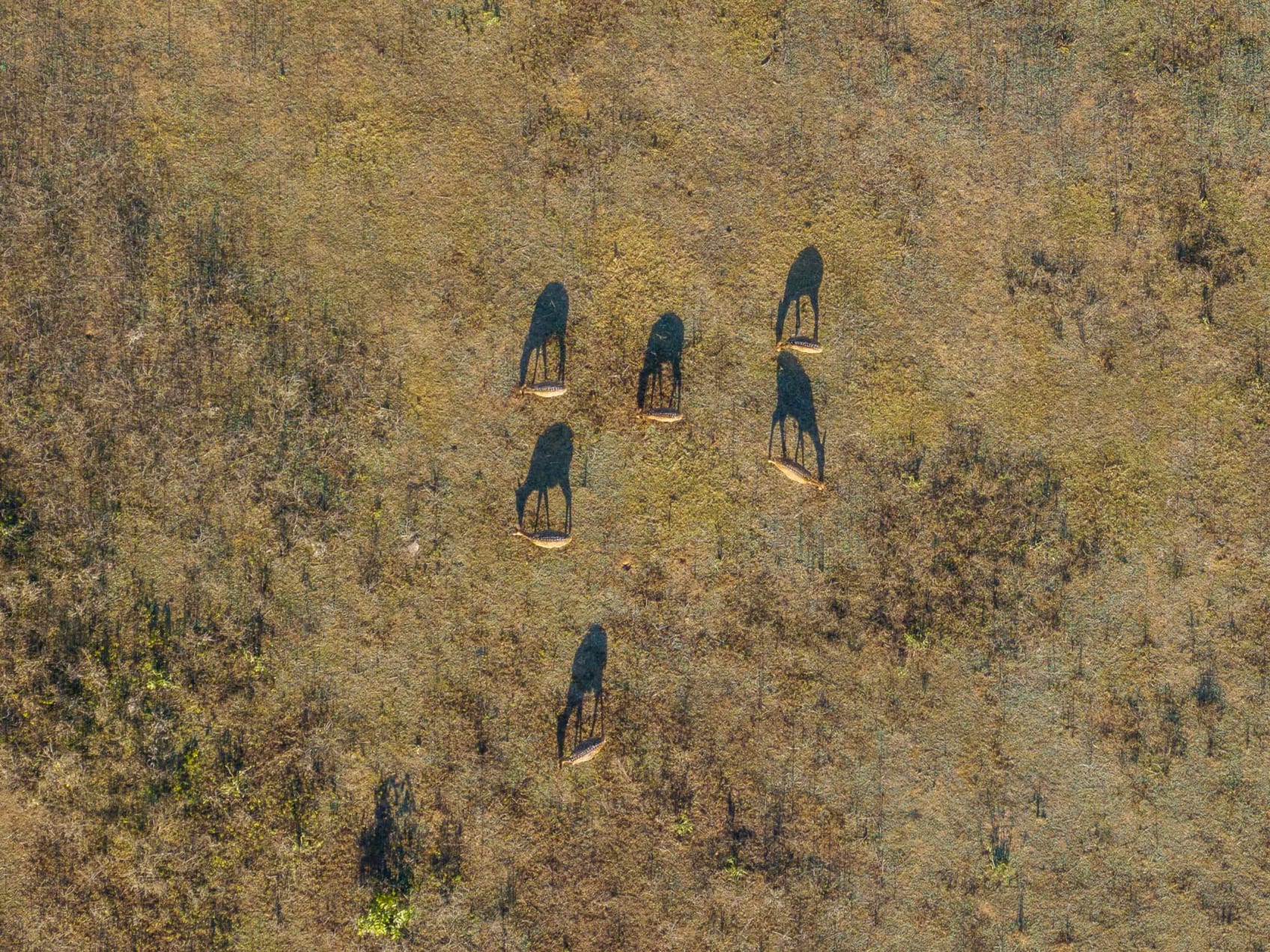
Because of its unusual topography and mixed forests, Similipal Tiger Reserve has a very low proportion of meadows and grasslands. So, there is great pressure on existing grasslands from herbivores such as the spotted deer (Axis axis) seen above. This pressure is intensified by communities living on the forests’ fringes grazing cattle on the reserve’s edges, a situation further worsened by the widespread growth of invasive weeds. “But the positive thing is that the Forest Department is developing habitats for herbivores by clearing weeds from open grounds, allowing native grass varieties to grow and fencing off portions by rotation for healthy growth. So, a lot of new grasslands have been developed,” says wildlife photographer and naturalist Yashpal Rathore, who has extensively photographed Similipal Tiger Reserve using a network of camera traps. The department employs people from local communities for many of these tasks, and has also established seed nurseries of native grasses for transplantation to degraded areas. All of this has led to a significant reduction in incidents of elephants heading to agricultural lands at the edge of the reserve in search of fodder, according to forest department officials.

However, when sambar gather in herds at salt licks, they appear more skittish and protective of their young, raising alarm calls and even disappearing into thick cover if they see a human approaching.


Even though smaller animals are less visible to visitors, they are present in healthy numbers. “In grasslands and at salt licks, you see a lot of bigger mammals, like elephants, in large numbers. But when you set up camera traps, it is surprising to see a decent number of smaller mammals of numerous species, especially those that are nocturnal,” says Rathore. “These include the nocturnal mouse deer (Indian chevrotain; Moschiola indica), not easily spotted in other forests. Our camera traps captured them at dusk,” he adds.

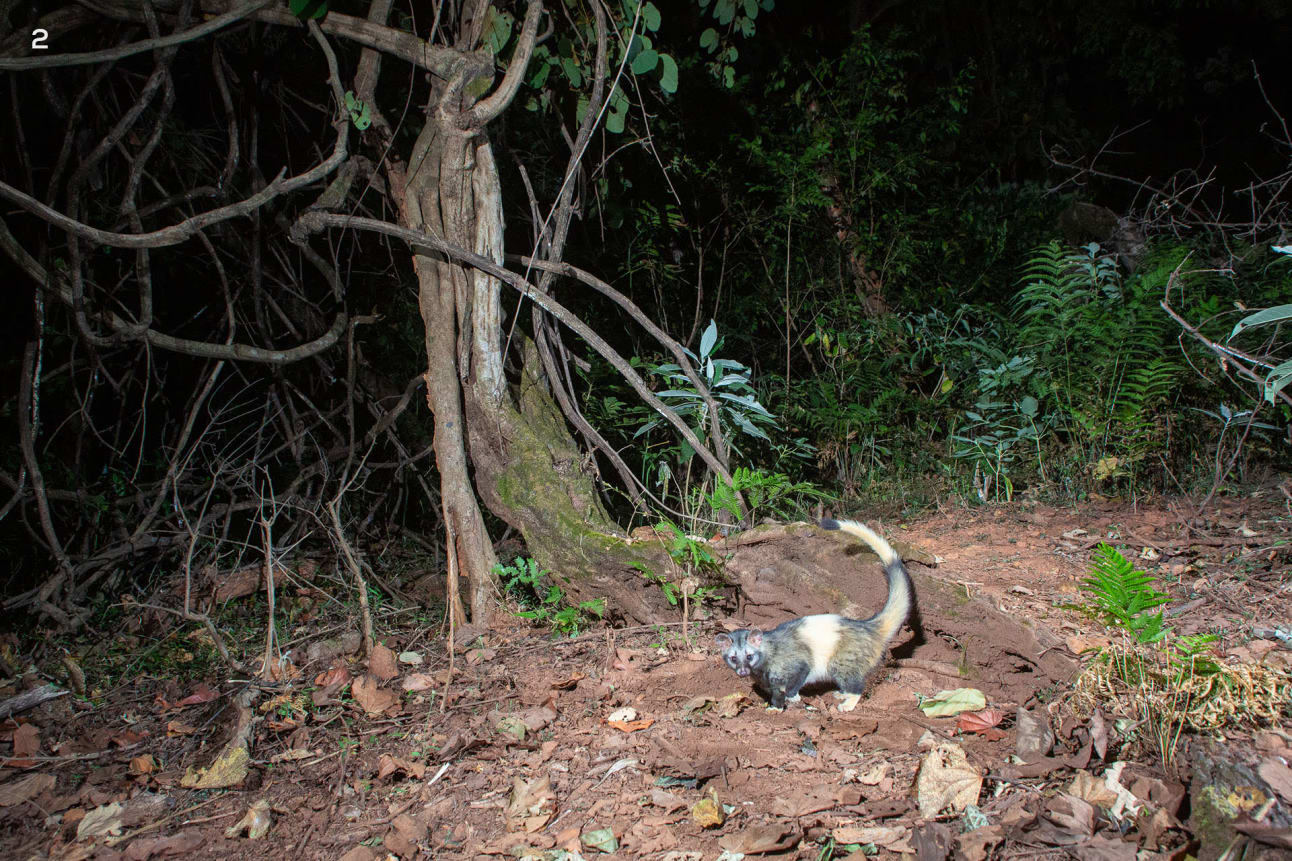
Nighttime drives through Similipal Tiger Reserve often reveal more animals than are visible by day. Rathore mentioned that the darkness brings out nocturnal residents such as the (1) Indian porcupine (Hystrix indica), the leopard cat (Prionailurus bengalensis), and even a rare (2) leucistic Asian palm civet (Paradoxurus hermaphroditus). While biodiversity here is high, population densities remain lean. To address this, the Forest Department is working to increase the herbivore base, which will strengthen the entire food chain, says Rathore.

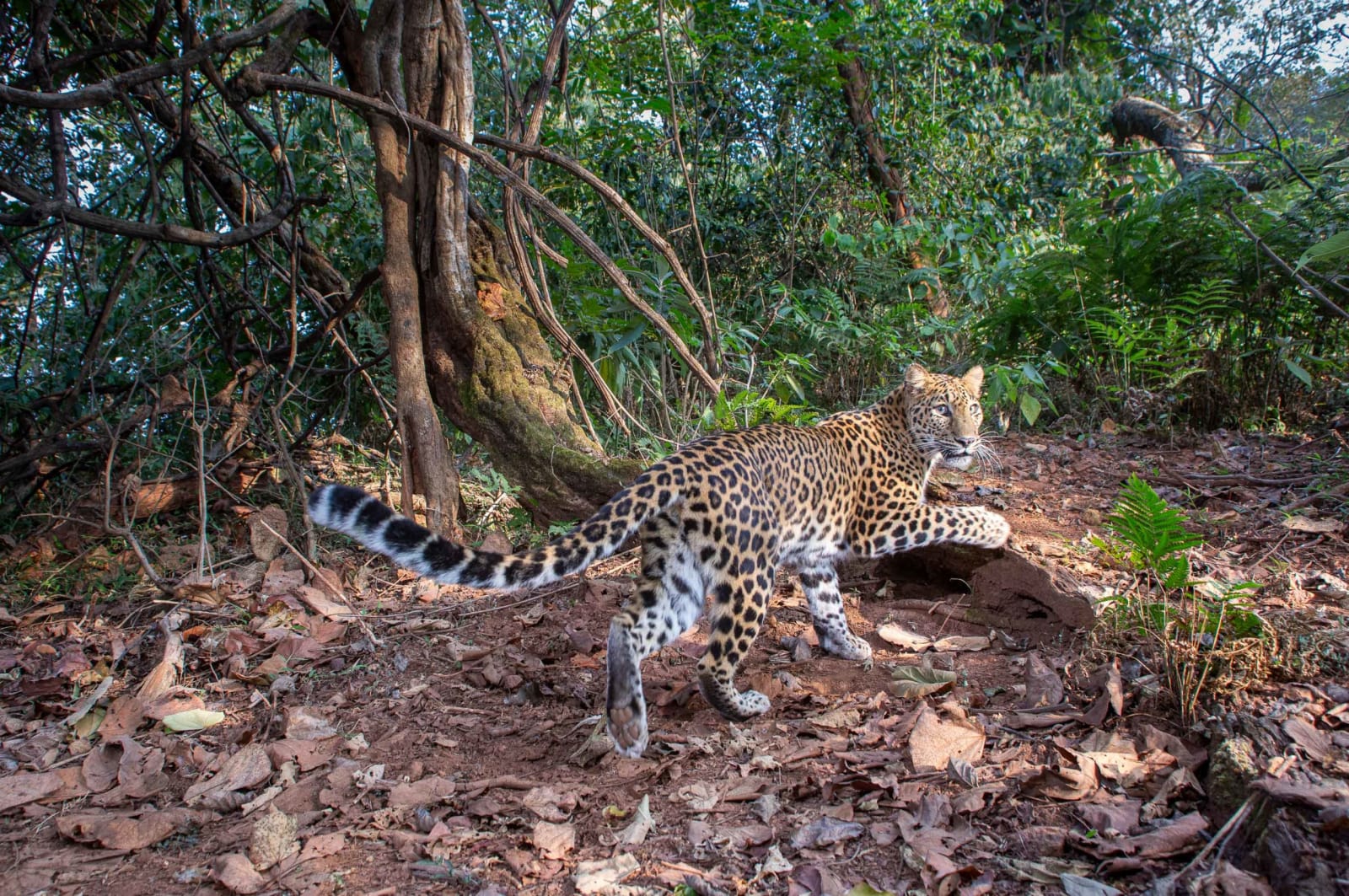
Similipal Tiger Reserve harbours about 16 per cent of Odisha’s leopard (Panthera pardus) population (about 125 based on a 2018 census), evenly distributed throughout the reserve. While both tigers and leopards prey on herbivores, tigers appear to prefer sambar, leopards seem to prefer spotted deer, muntjac (barking deer), and smaller mammals like porcupines. However, leopards are highly adaptable and may feed on larger prey or whatever is available, including monkeys, which they catch adeptly thanks to their ability to climb trees. They are also found in the buffer zone and frequently stray into areas outside the reserve, leading to significant conflict with humans. To protect their cattle and other livestock from leopard attacks, villagers often poison cattle carcasses, leading to tragic leopard deaths. Leopards are also extremely vulnerable to poaching (along with tigers and pangolins).


The significant rise in tiger (Panthera tigris) numbers, both (1) normal-coloured and (2) pseudo-melanistic, since 2016, reflects the success of protection and conservation measures. From an estimated 5 in 2014, there are currently around 35-40 tigers in Similipal. This is proof of a healthy prey base and an inviolate space. In Similipal Tiger Reserve, about 96 per cent of tiger prey comprises sambar, spotted deer and wild pigs. Despite the increase in numbers, they are rarely spotted because of the forest’s density. Most photos of Similipal tigers, both normal and black, are from camera traps (as above) placed near paths they frequent; this has been crucial for documenting their numbers and welfare.
About the Authors

Anita Rao-Kashi