
 Listen to this article
•
15:34 min
Listen to this article
•
15:34 min
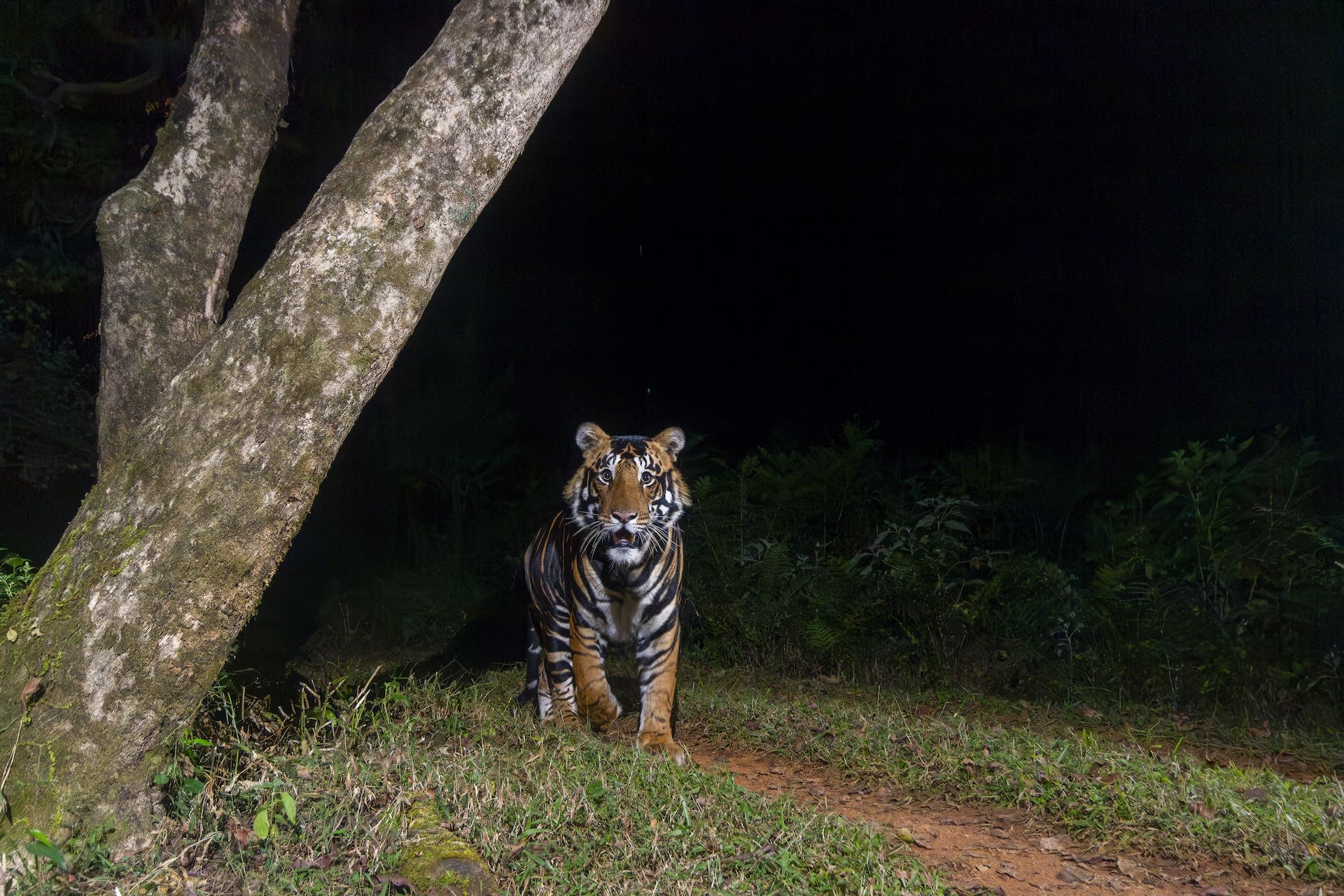
In Similipal Tiger Reserve (STR), in Northern Odisha, black tigers are everywhere. On the walls of guesthouses and nature camps, on boards, in stories, and on the lips of everyone associated with the forest — a constant presence in the collective awareness of people. In reality, they are highly elusive and seldom sighted. Even forest department staff, with beats inside the reserve, go months without a sighting. Most of the photos of them are thanks to an extensive network of camera traps.
Bumping and jostling along rough forest paths, weaving through the core area, up and down undulating terrain, frequenting the tigers’ likely paths at various times of day and night, it’s still one of the most difficult reserves to lay eyes on its famous inhabitants. Potential animal calls, a faint rustle in the bushes, a likely fleeting glimpse of a bushy yellow tail — Similipal Tiger Reserve’s tigers, both black and normal, are consistently evasive.

Cover photo: For decades, Similipal’s black tigers enjoyed mythical status. In the absence of sightings and any other kind of proof, they were thought to have been conjured by overactive imaginations. Their existence was definitively established just over three decades ago. Photo: Yashpal Rathore
An unusual mutation
Similipal’s tigers have been the stuff of legends and lore for decades. Euphemistically called black tigers, they are unlike black panthers in that they are not fully black. In fact, they are not even mostly black. Rather, they have thicker and wider black stripes with the normal golden-yellow and white reduced to very narrow bands. They are referred to as pseudo-melanistic tigers. Pseudo-melanism is the result of a genetic mutation. This unusual colouration, teamed with the reserve’s thick forests, makes it almost impossible to spot them unless they leave their cover.
The record of black tigers in India dates to the 1770s. But definitive proof of their existence was only found in 1992 when a melanistic tiger pelt was recovered from a smuggler, though its origin remained unknown. According to Dr LAK Singh’s 1999 book Born Black: The Melanistic Tiger in India, the presence of black tigers in Similipal came to light in 1993 when “a young melanistic tigress was killed by a boy in self-defence”. Singh added that the major peculiarity in the body colouration was that the black colour was “preponderant” on the back. Subsequently, several pseudo-melanistic tigers have been spotted over the years.
The ten-year Tiger Conservation Plan (2023/24 to 2033/34) of Similipal Tiger Reserve (Forest, Environment and Climate Change Department of the Odisha Government), observes that “pseudo-melanism was a result of a mutation that happened in the colour coding gene, which is recessive in nature. Over the years, the number of pseudo-melanistic tigers has increased.”

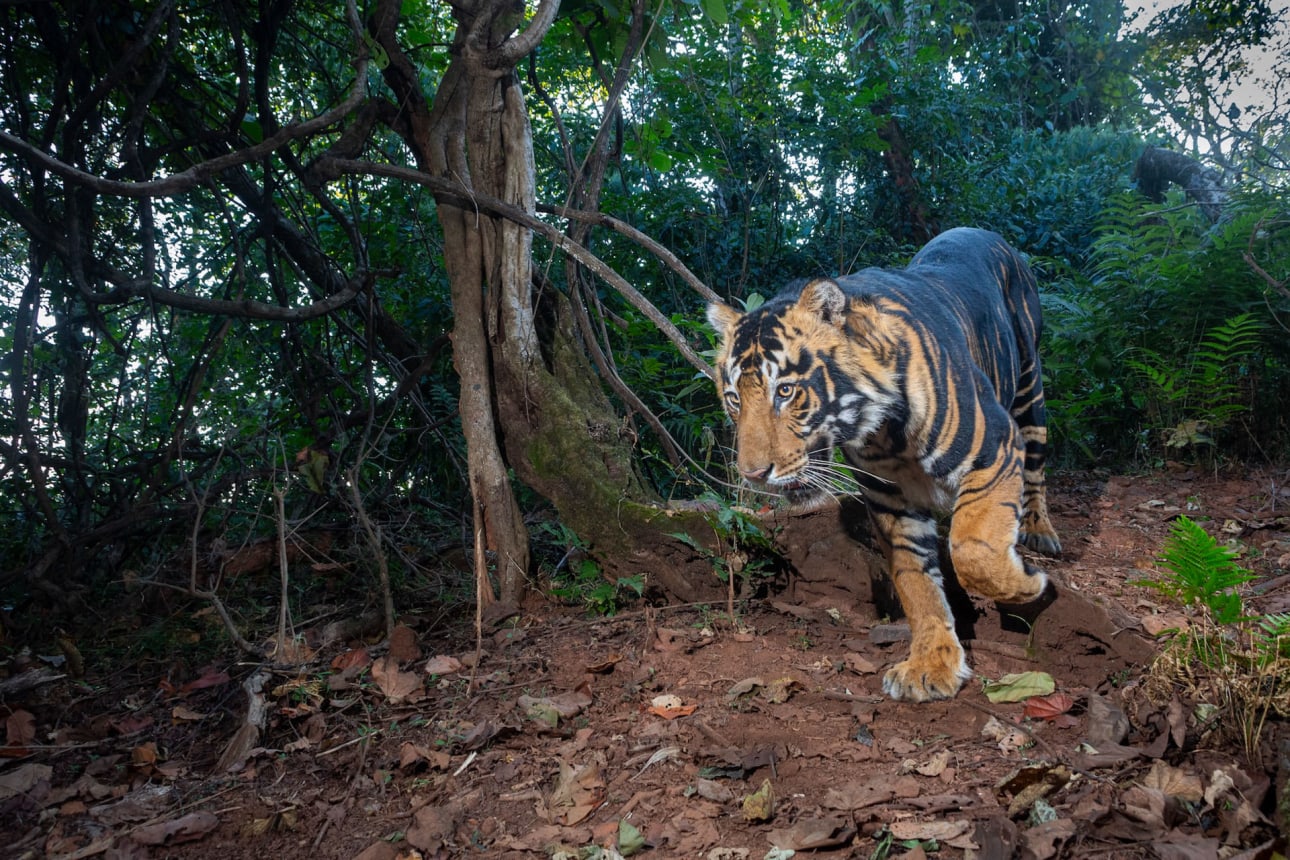
The plan adds that the “melanistic appearance is a consequence of expanded pattern elements rather than a uniformly darkened colour, also referred to as pseudo-melanism. From their studies on captive pseudo-melanistic tigers and wild tigers from Similipal and other tiger reserves, researchers have attributed this pseudo-melanism to the presence of the rare Taqpep p.H454Y allele. This allele is likely absent or extremely rare in wild tiger populations outside Similipal.” Currently, there is no reported pseudo-melanism in wild tigers outside Similipal Tiger Reserve.
A conservation success story
Similipal Tiger Reserve’s history in tiger conservation is both fascinating and encouraging. Currently, it is the only reserve in Odisha with tigers. A 2024 Odisha Forest Department analysis of camera trap photographs estimates there are 27 adults and 8 cubs in Similipal; of the adults, more than half (14) are pseudo-melanistic. A decade ago, that number was five due to rampant poaching and difficulty in implementing wildlife protection measures due to widespread Naxalite activity in the area. That changed after 2014, following a slew of conservation measures.
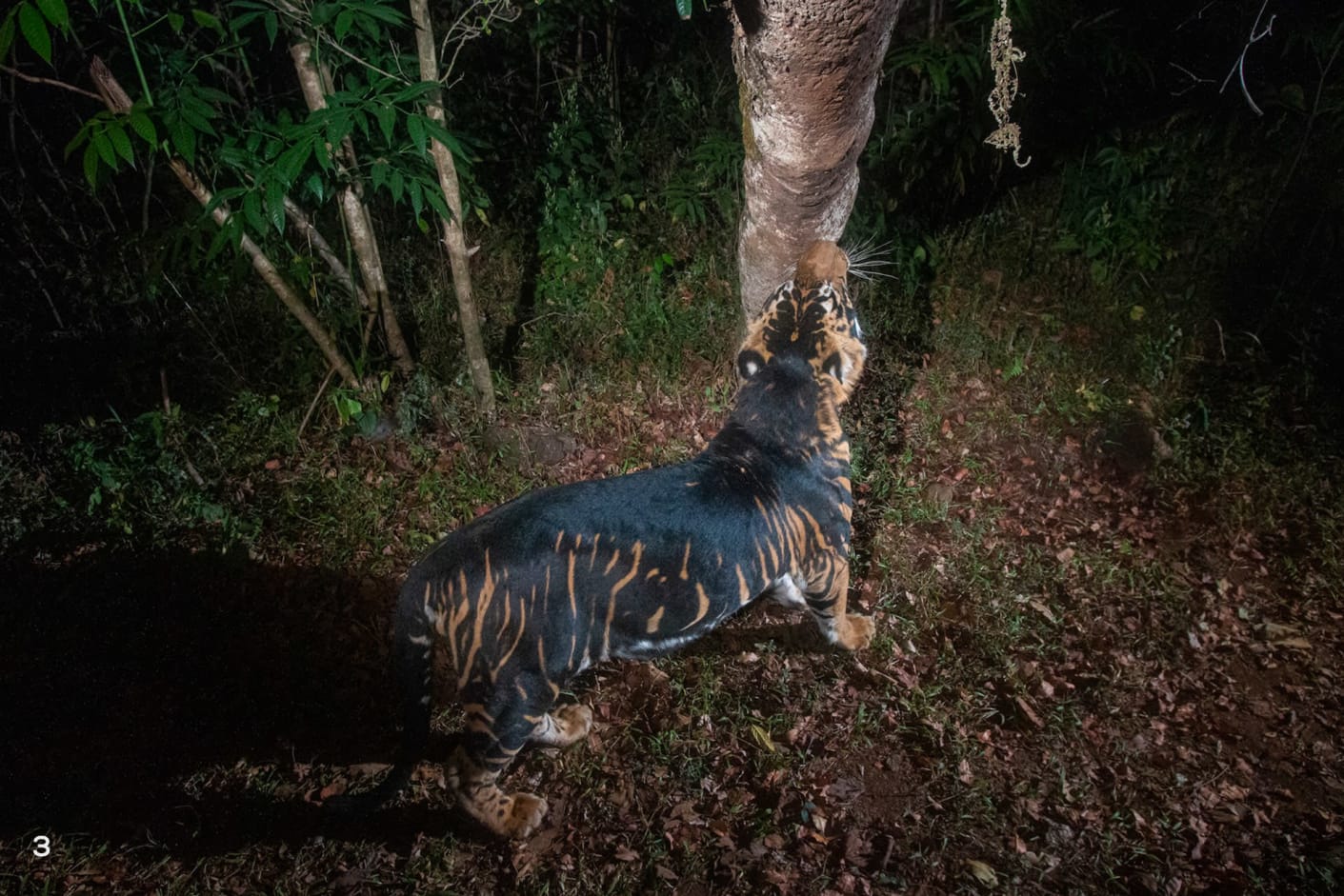
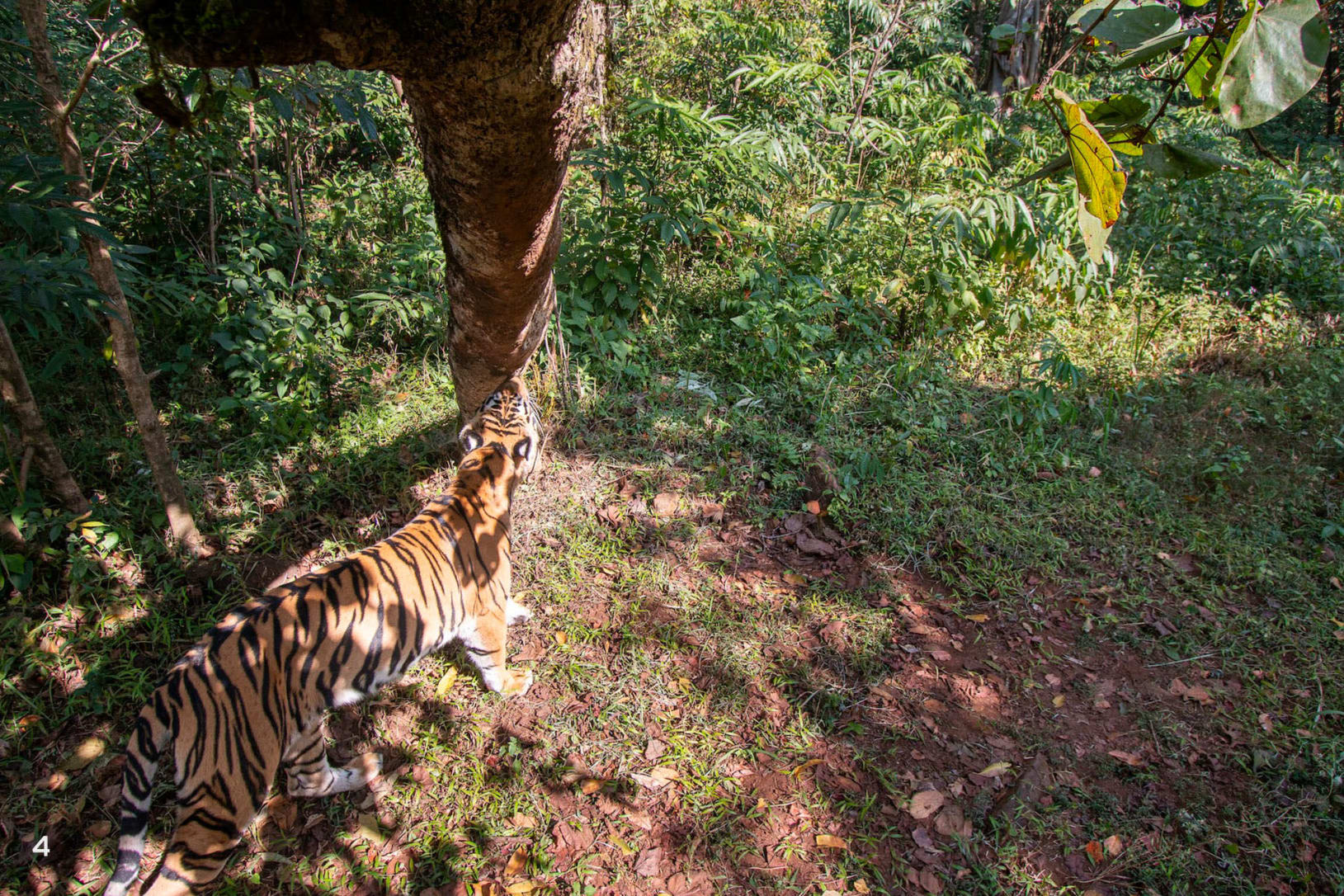
When a tiger reserve is well-protected, female tigers breed more successfully, and the population grows, explains Prakash Chand Gogineni, Similipal Tiger Reserve Field Director and Regional Chief Conservator of Forests (Baripada). He notes that this wasn’t always the case. Previously, the population stayed small because there wasn’t enough prey, and the protection regime — the systems and patrols used to keep the forest safe — was insufficient.
Elaborating, he says that for a female to raise a litter, she needs two things: plenty of food and an inviolate space (an area completely free from human interference). “If there are people shooting and hunting, tigers are not going to breed in that disturbed situation. Since 2014, and especially after 2018, we have significantly strengthened this protection,” he says.
Gogineni says that before 2018, females took 4-5 years to have their first litter. Now, females have started reproducing at 2.5 years. “So, the early age of conception also indicates the same thing, that the area is very conducive for reproduction. A cub born in 2022 became a mother last year. This is what happens in good tiger reserves; in the Similipal Tiger Reserve core area, there is no delay in breeding since they have food, mates and an inviolate space,” he adds.


Based on camera-trap evidence, Gogineni speculates that around 2014, the tiger population in the core area consisted of approximately three females and a male, which may have led to the pseudo-melanistic alleles becoming present in most tigers. Over the years, as the tiger population has grown, pseudo-melanistic individuals have increased in number. This indicates frequent expression of the recessive gene due to inbreeding and loss of genetic diversity, which may lead to inbreeding depression (a reduced ability to survive, maintain health, and reproduce) in the future. “Pseudo-melanism is not the issue. There is no direct link between it and reproductive fitness. The problem is low genetic diversity.”
Timely intervention
Gogineni points out that if corrective measures are not taken regarding the existing tiger population in Similipal, the allele that governs pseudo-melanism may become fixed, a state in which all tigers carry the same allele. Currently, both foresters and scientists believe it is heading in that direction, and even normal tigers might carry the allele. “But even if the allele gets fixed, there is still no evidence of loss of fitness, but lack of diversity is not a good thing,” he points out.


To address this issue, Similipal Tiger Reserve embarked on a long and widely watched exercise not just by the Odisha Forest Department and local wildlife enthusiasts but also by conservationists across the country. In 2023, it brought in two tigers from Maharashtra and, after suitable acclimatisation, released them into the reserve. “Both are settled. They have not yet started reproducing, but they may start soon. The idea of doing this was just to increase the genetic diversity,” Gogineni says.
But, despite protection measures, a reduction in poaching in the core area by over 95 per cent, and an increase in the number of safari vehicles, the tigers are seldom seen. And it’s not just the thick undergrowth that provides excellent cover and camouflage. Decades of rampant and indiscriminate poaching of all kinds of animals, an activity baked into the culture of nearly a dozen different indigenous populations of the area, meant that all wild animals ran scared of humans. Though poaching is dramatically down and most other animals are less wary, tigers remain very shy.
For his coffee table book Tiger Tiger Burning Bright, to coincide with 50 years of Project Tiger, wildlife photographer Yashpal Rathore documented tiger conservation stories from across the country. As part of the project, he set up around 10 high-resolution camera traps in Similipal Tiger Reserve, along with trail cameras to detect high-movement areas and monitored them over 2.5 months, from December 2021 to mid-February 2022.

“I regularly went with the forest staff to check on the cameras. They were spread out over two ranges and placed in areas the tigers were known to frequent. I visited at different times of day and night over 2.5 months, yet I never saw a tiger. Not a single time, neither black nor normal. Many forest guards say they have never seen a tiger. Even the few that have, say that sightings are extremely rare and several months apart,” Rathore says.
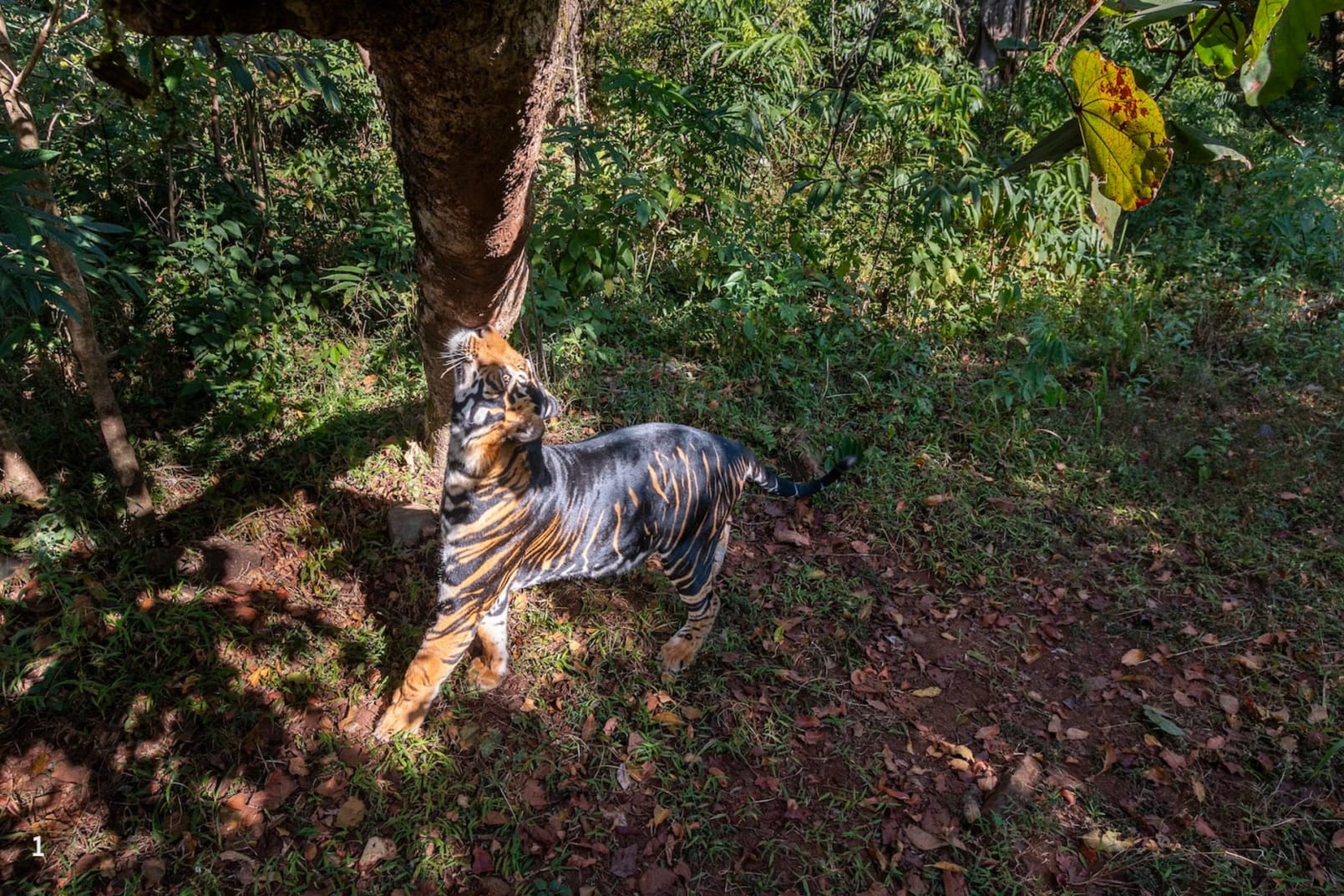
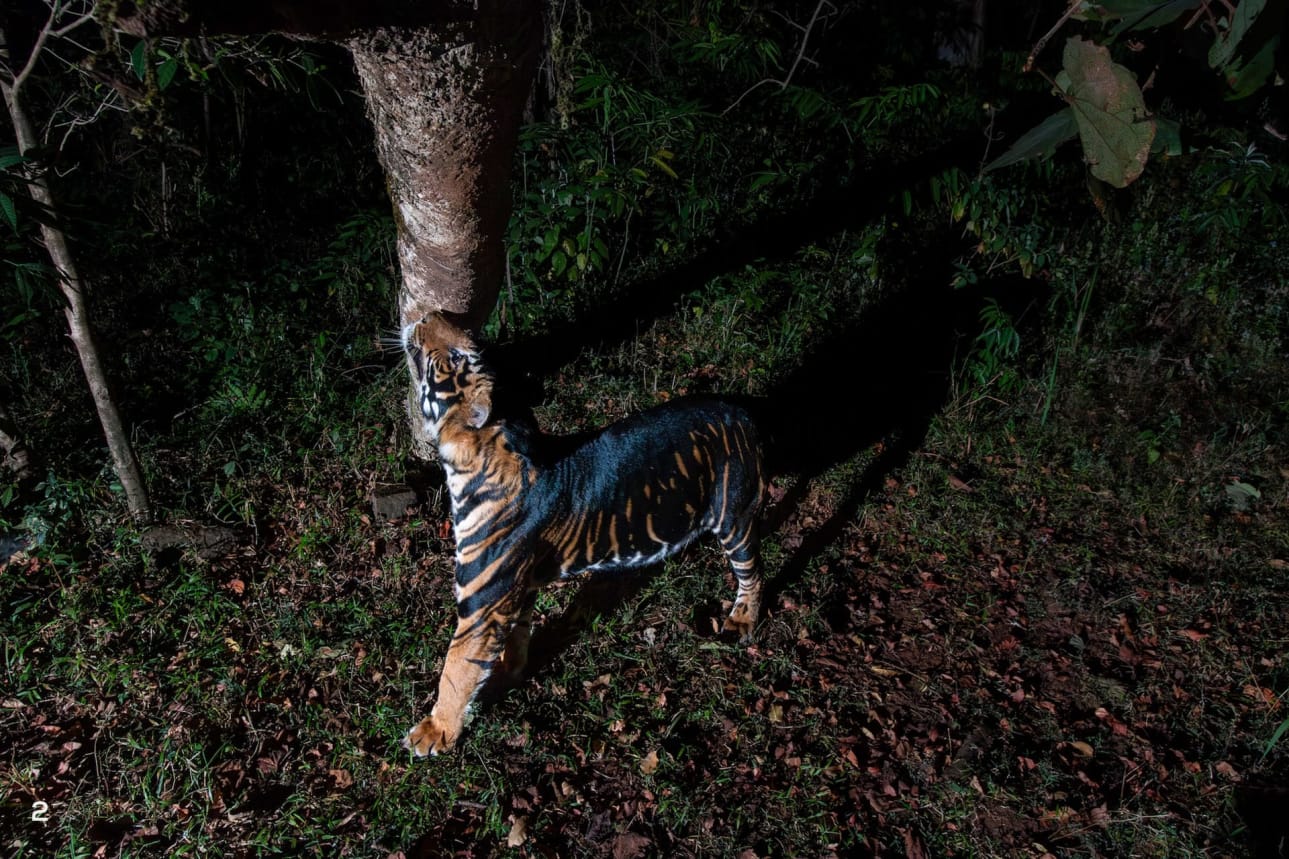
At the end of the period, Rathore had captured images of about four melanistic tigers — two adults and two subadults. One particular tree proved to be an active hotspot, and the cameras captured territory-marking by both a normal female tiger and a melanistic male tiger. “But unlike other reserves, where the tigers are active during the day, Similipal Tiger Reserve’s tigers rarely come out into the open. Most of the photographs are from nighttime,” he says, indicating that it was an unusual experience, very different from most other tiger reserves. “The tigers seem very sensitive to any manmade noise — people and vehicles — and stay hidden.”
About the Author