
 Listen to this article
•
15:34 min
Listen to this article
•
15:34 min
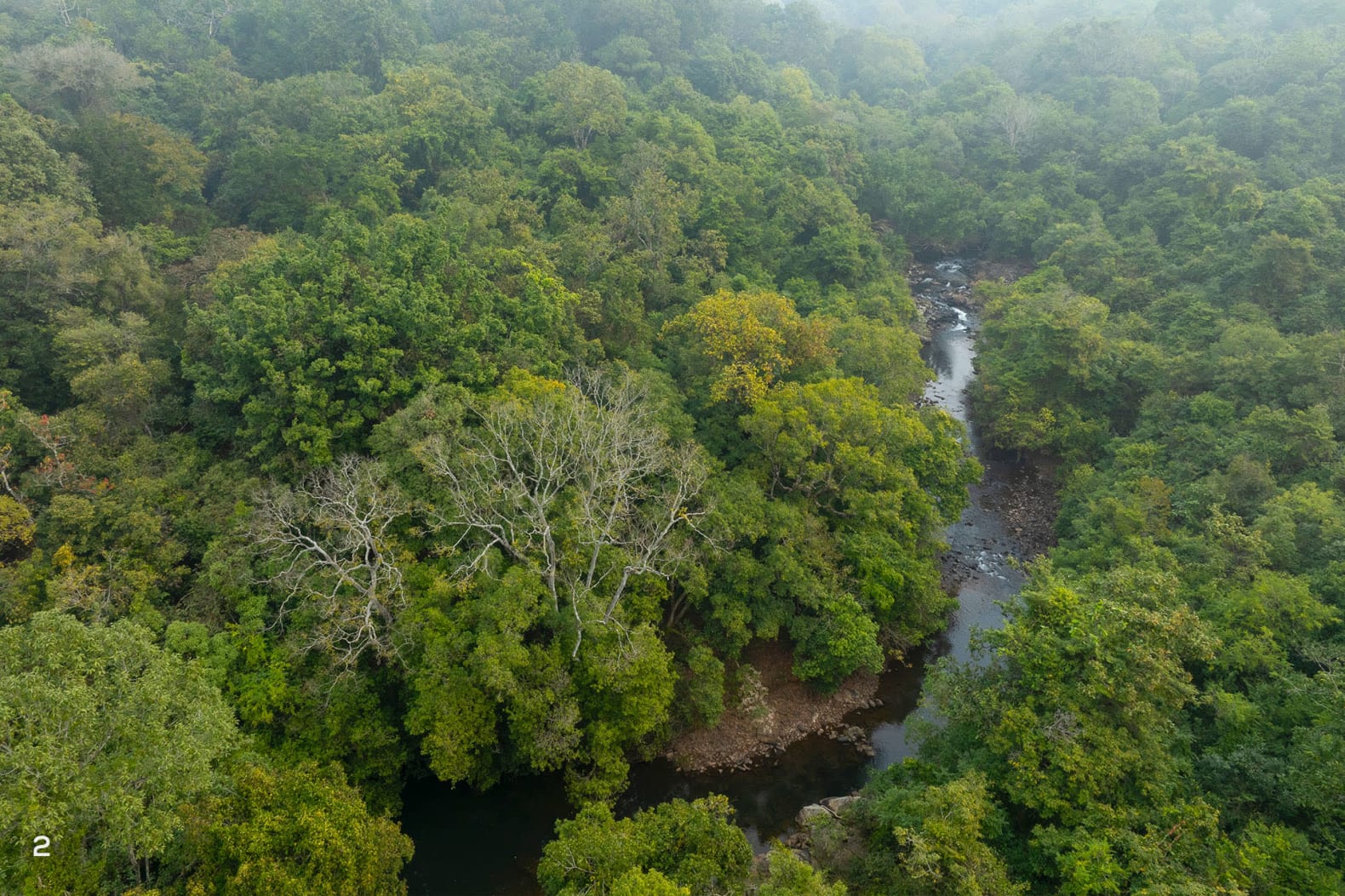
Late in the morning in December, curtains of wispy mist still hang suspended in the air, blurring the forest paths of Odisha’s Similipal Tiger Reserve (STR). Twin tracks, rutted from vehicle tyres, snake through dense forest. Tall trees rise on both sides, towering for 20-30 m, their canopies almost touching and blocking whatever feeble sunlight manages to filter through the mist. Occasionally, the light manages to push through the leaves and cast dappled patterns on the path; they move and dance in sync with a gentle breeze that rustles through the foliage. Otherwise, everything is still and silent.
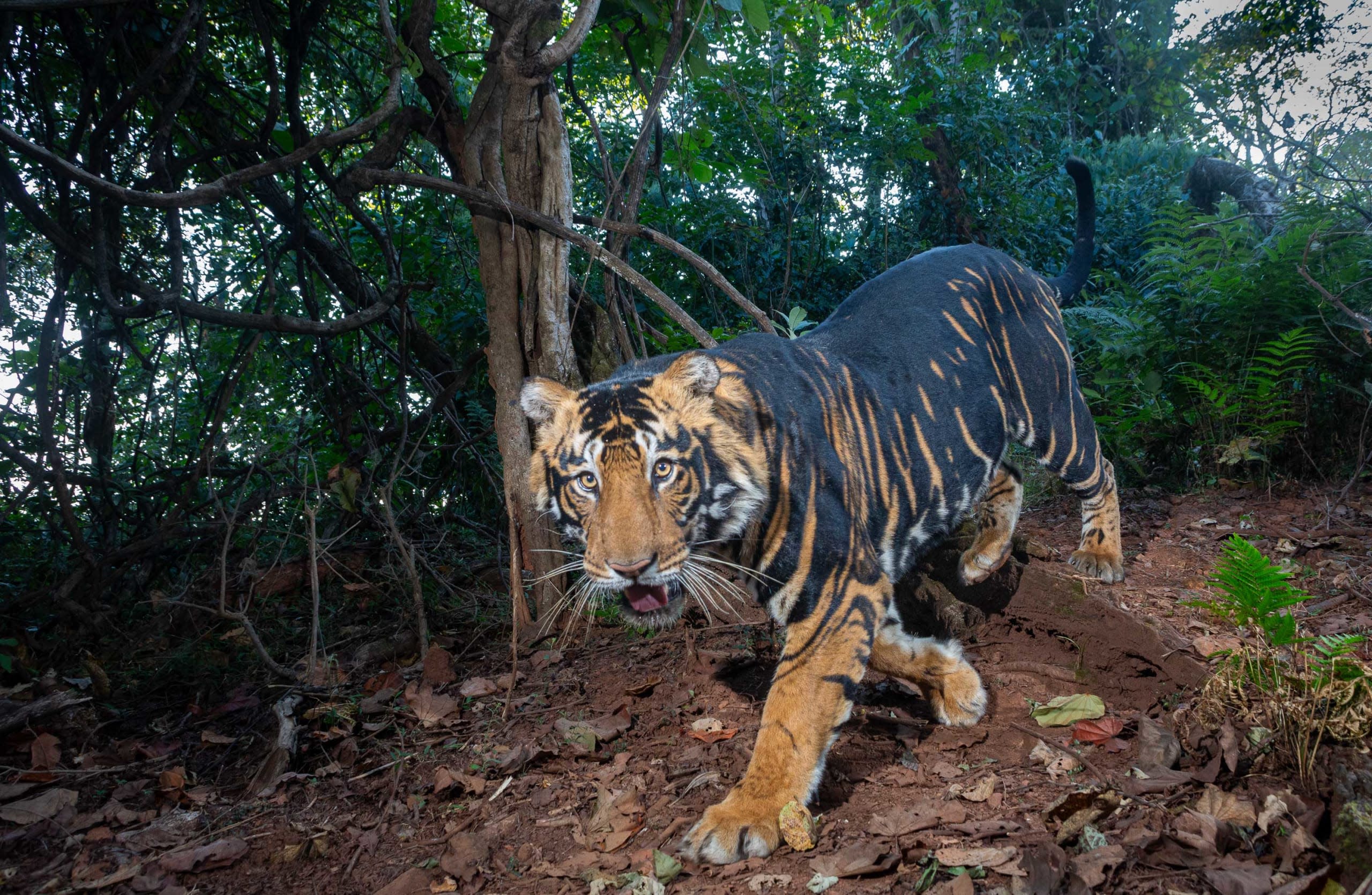
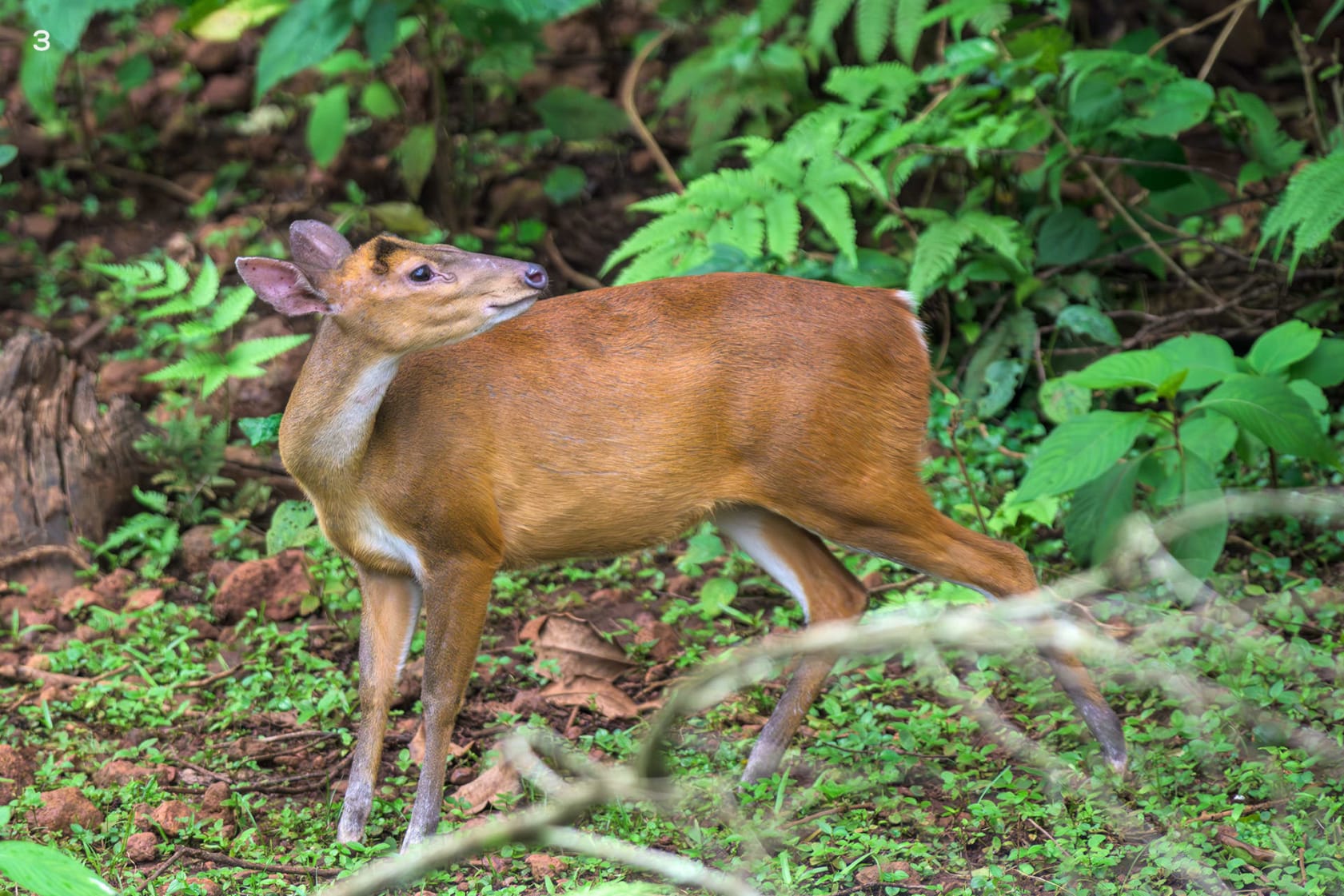
Once past the buffer zone, driving into the heart of the reserve, thick shrubbery and undergrowth make it impossible to see even a few feet on either side. One gets the feeling of hidden eyes quietly watching from inside the impenetrable growth. However, every few minutes, a barking deer silently darts across the path, or a handful of skittish spotted deer gracefully leap from one side to the other, or a red junglefowl skitters past — evidence that the jungle is alive and thriving with creatures. Similipal Tiger Reserve is famous for its black tigers. They are not uniformly black, but have thick, wide black stripes, while the golden yellow and white parts appear as thin bands. This is a genetic mutation creating pseudo-melanism. Their shy nature and the thick forest cover, with excellent camouflage, make them difficult to spot.

Cover photo: The pseudo-melanistic or “black” tiger is a rare form of the tiger that is unique to Similipal Tiger Reserve, which lies in the northernmost part of Odisha. The colouring is caused by a genetic mutation that results in unusually thick, dark stripes. Photo: Yashpal Rathore
EXPLORE
At over 2,270 sq km, Similipal Tiger Reserve is among the largest tiger reserves in the country, and yet quite underrated. A popular story says the name originates from “seemul” or “simli”, the local name for the silk cotton tree, which legend says grew abundantly in the area at some point in history. But naturalists dispute the story. There are some silk cotton trees, but they are not widespread.
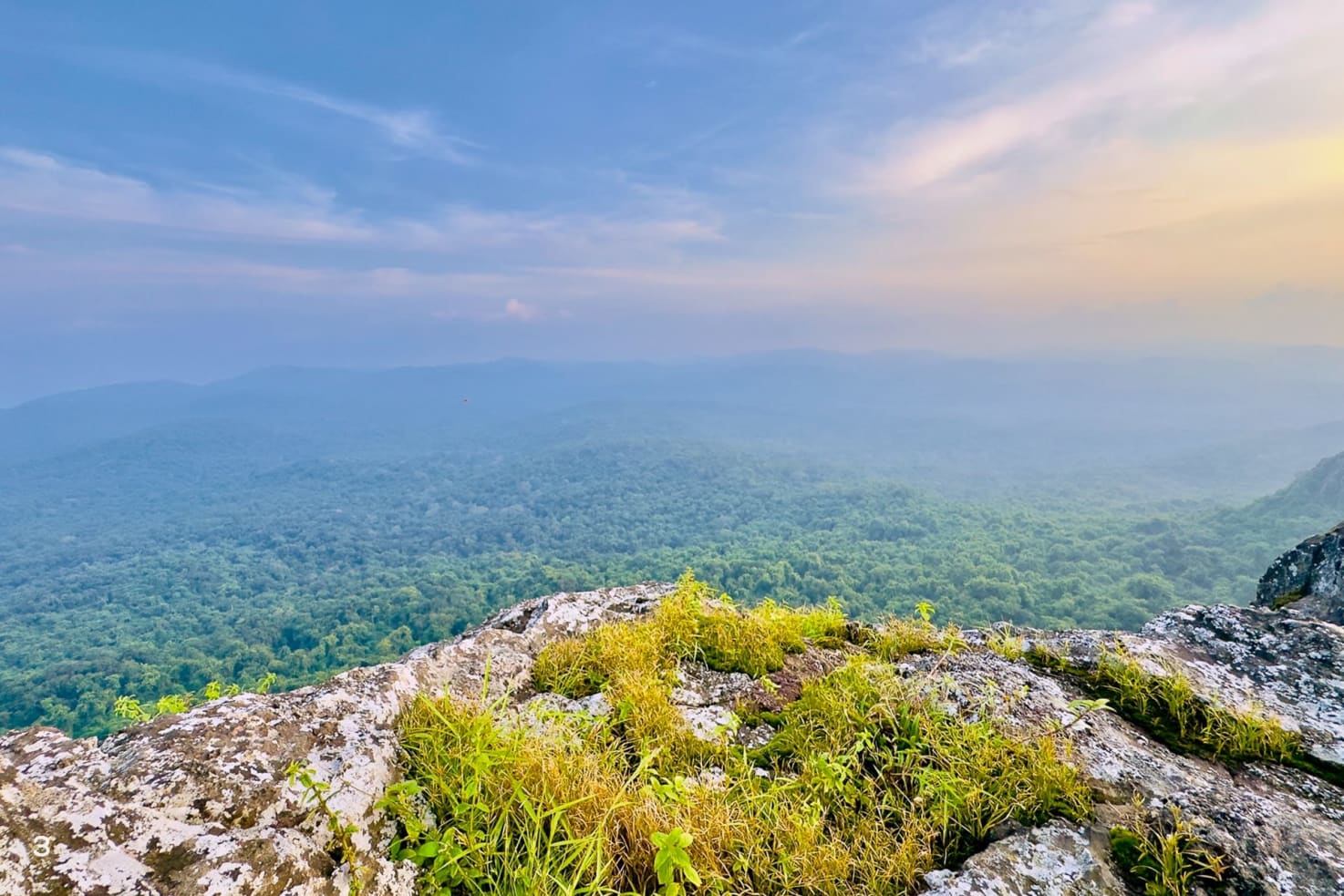
The reserve’s topography is hilly and undulating, with abrupt, steep cliffs that surround a basin filled with valleys, meadows, and grasslands. Several kilometres of paths wind up and down hills, climbing and cresting steep sides. The twin peaks of Khairiburu (1,168 m) and Meghasani (1,165 m) offer dramatic 360-degree views of the hill ranges and valleys, and an overview of a part of the reserve.


Similipal Tiger Reserve is also very rich in water sources, with three major perennial rivers and dozens of tributaries, streams, and rivulets flowing into them. Over 50 per cent of them have water even during the driest periods, providing a lifeline for wildlife populations in several districts outside the reserve. There are several waterfalls, big and small, that dot the reserve. Of these, Joranda and Barehipani are spectacular and popular with tourists. Both are accessible from the Pithabata entry gate.
Forest cover
With over 94 per cent cover, Similipal Tiger Reserve has the second-largest forest cover among all tiger reserves in the country. Over 47 per cent of it is very dense, while an additional 45 per cent is moderately dense. Besides, meadows and grasslands are found only in small patches, covering just about 12 sq km (~0.5 per cent of the reserve). The forest provides excellent cover and habitat for wildlife, but makes animal sightings, even of abundant species, rare and difficult.
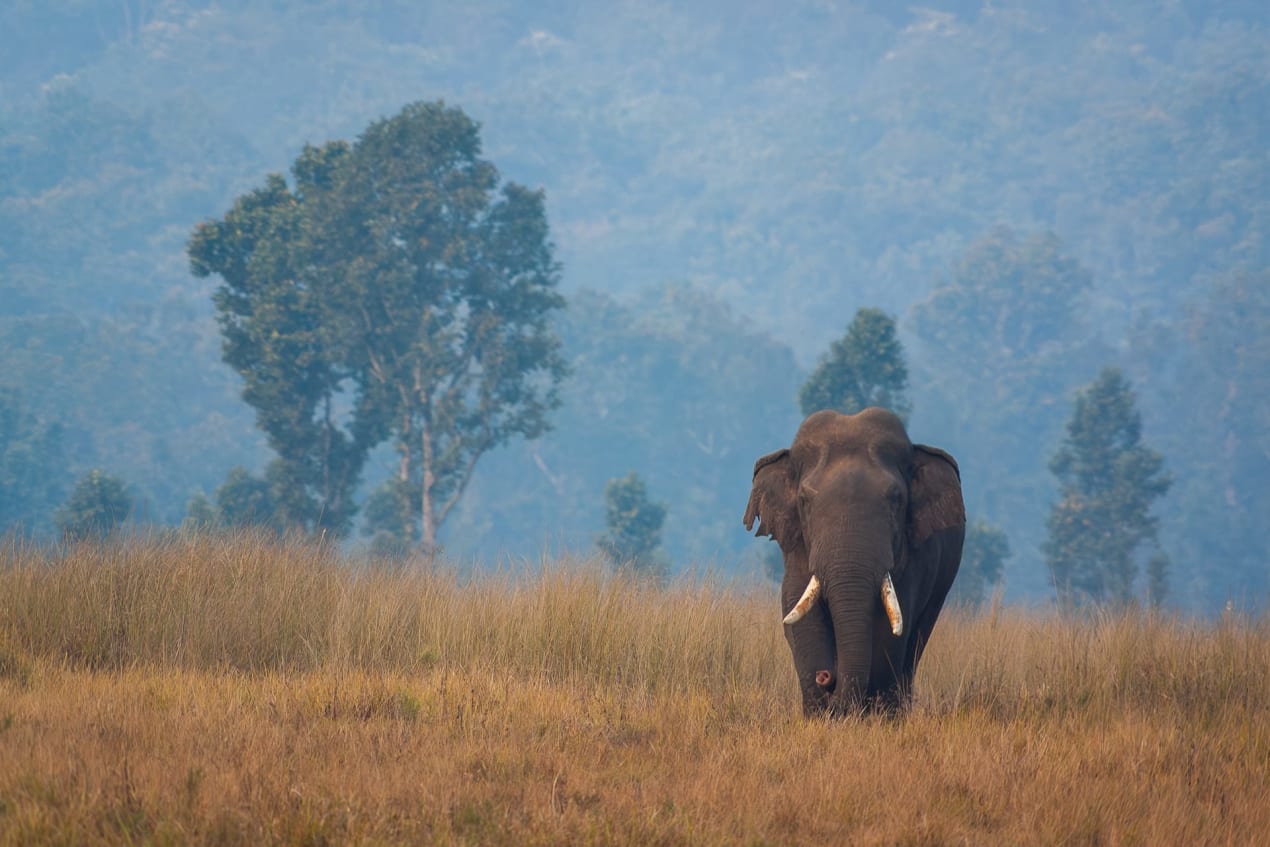

The overriding sight is of sal forests, which make up most of the reserve. They are found at every level, and it is fascinating to see how the tree has adapted. Trees at higher altitudes are markedly shorter and stunted compared to those at lower altitudes, where they grow up to 20-30 m.
The reserve’s cover is a unique composition of different types of trees from northern tropical mixed deciduous forest, northern tropical semi-evergreen forest, mixed deciduous hill forest, high-level sal forest, dry deciduous sal forest, plain sal forest, grasslands, and savannahs. Some patches of old tropical pine and eucalyptus plantations also exist. The park supports over 1,300 plant species and 104 orchid species (a few of which are endemic and several of which are endangered). An orchidarium near the Gurguria gate houses nearly 95 species of orchids found in the reserve and is worth a visit to get a glimpse of the orchid diversity.

WILDLIFE
Animals
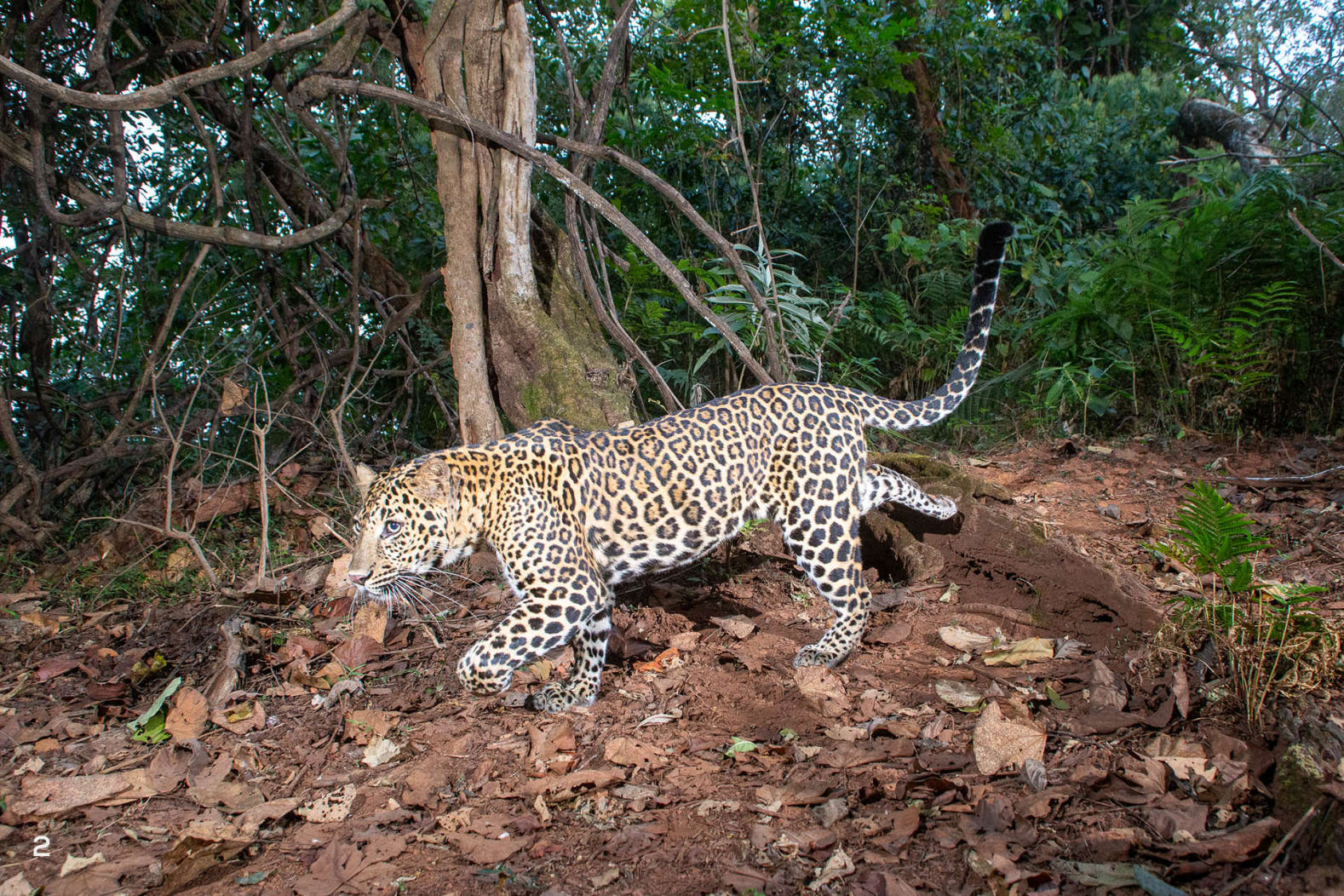
Similipal Tiger Reserve’s varied altitudes and climates unfold a mosaic of habitats that sustain an exceptional diversity of wildlife. The reserve’s reputation rests on the presence of the unique black or pseudo-melanistic tigers, which have wider black stripes than normal tigers. A 2024 survey counted 27 adult tigers, of which 14 exhibit pseudo-melanism; in addition, about 8 cubs were recorded. However, due to the density of the forest, spotting tigers is rare.
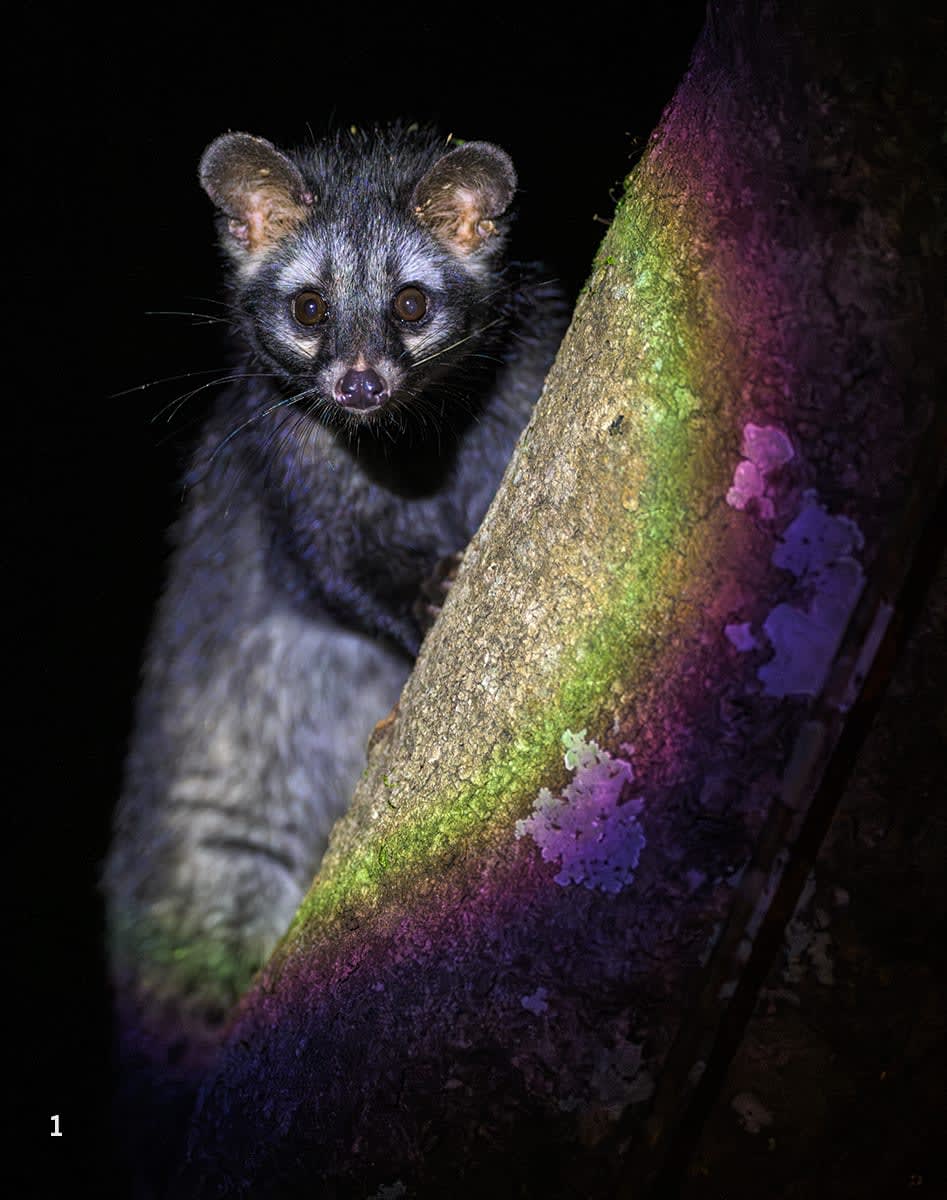
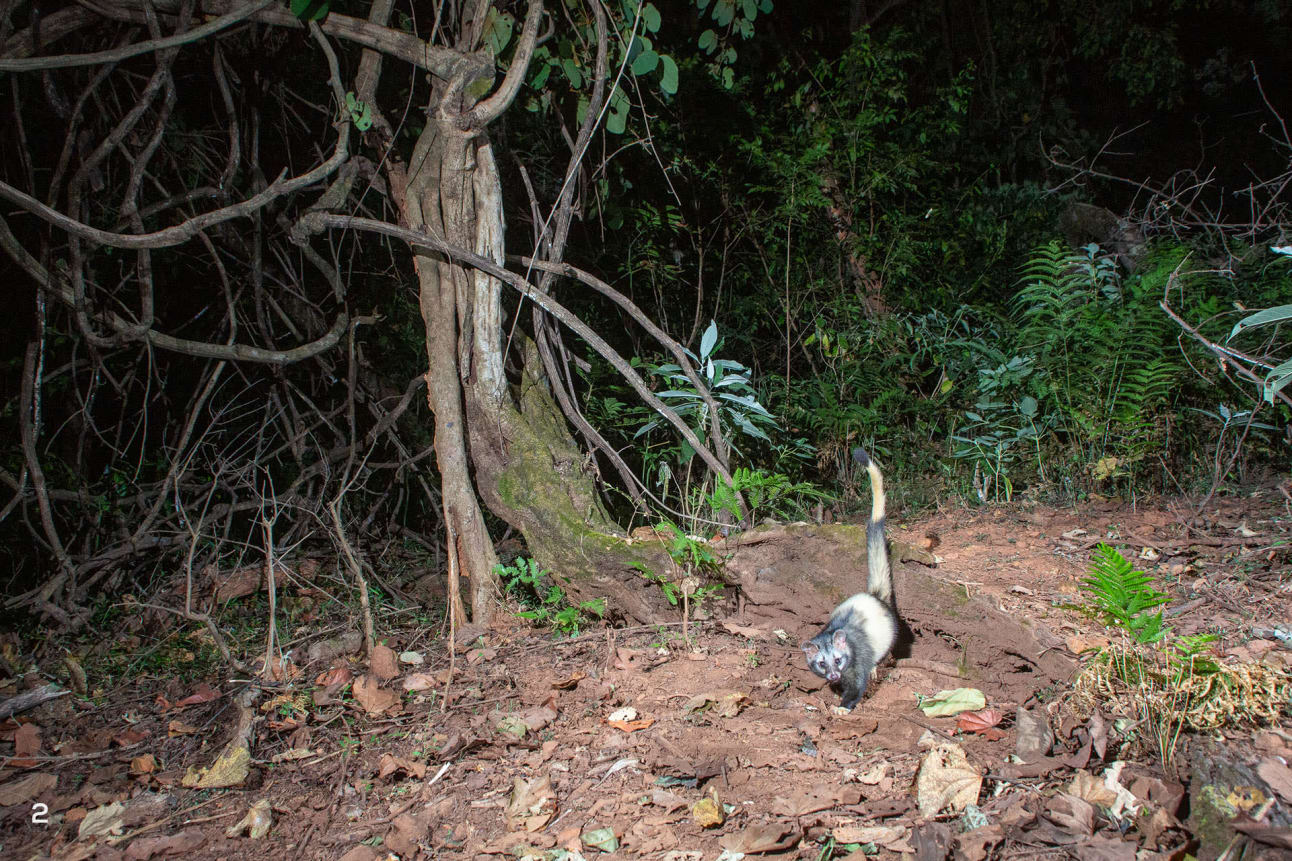
Besides tigers, several other species are abundant in the reserve. There are 55 mammal species, including herbivores (elephants, gaur, sambar, spotted deer, barking deer, mouse deer, chausingha, sloth bear and wild boars). Besides tigers, there are leopards, wolves, jackals, hyenas, jungle cats, leopard cats, and fishing cats. Visitors may spot giant squirrels, mongooses, porcupines, civets, pangolins, and monkeys (langur and rhesus macaques). In addition, the reserve has recorded 62 reptile, 21 amphibian, 38 fish, 164 butterfly, and many other insect and microfauna species. About 80 mugger crocodiles live in the reserve’s Khairi and Deo river systems, while common snakes include pythons, cobras (common and king), vipers, and kraits.

Birds
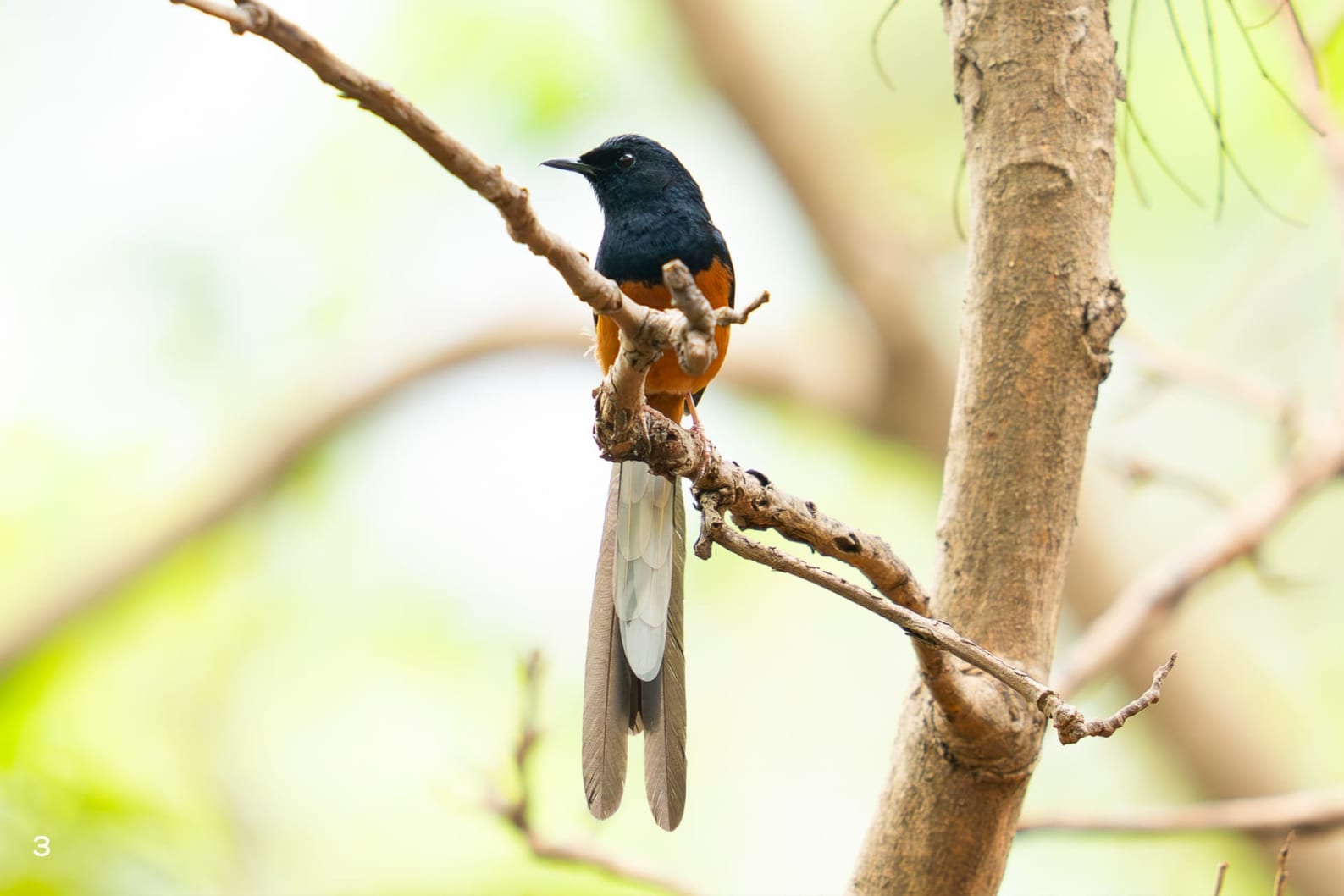
While wildlife is a bit difficult to spot, birds, present in Similipal Tiger Reserve in abundance, are not. With over 360 bird species, the best times for birdwatching are morning or evening, though it is possible to spot several species during the day. Some easily spotted birds: peafowl, drongos (black and bronzed), sunbirds, wagtails, parakeets, coucals, lapwings, barbets, scarlet minivets, bulbuls, Indian monarch, oriole, tailorbirds, herons, egrets, and white-breasted and common kingfishers.
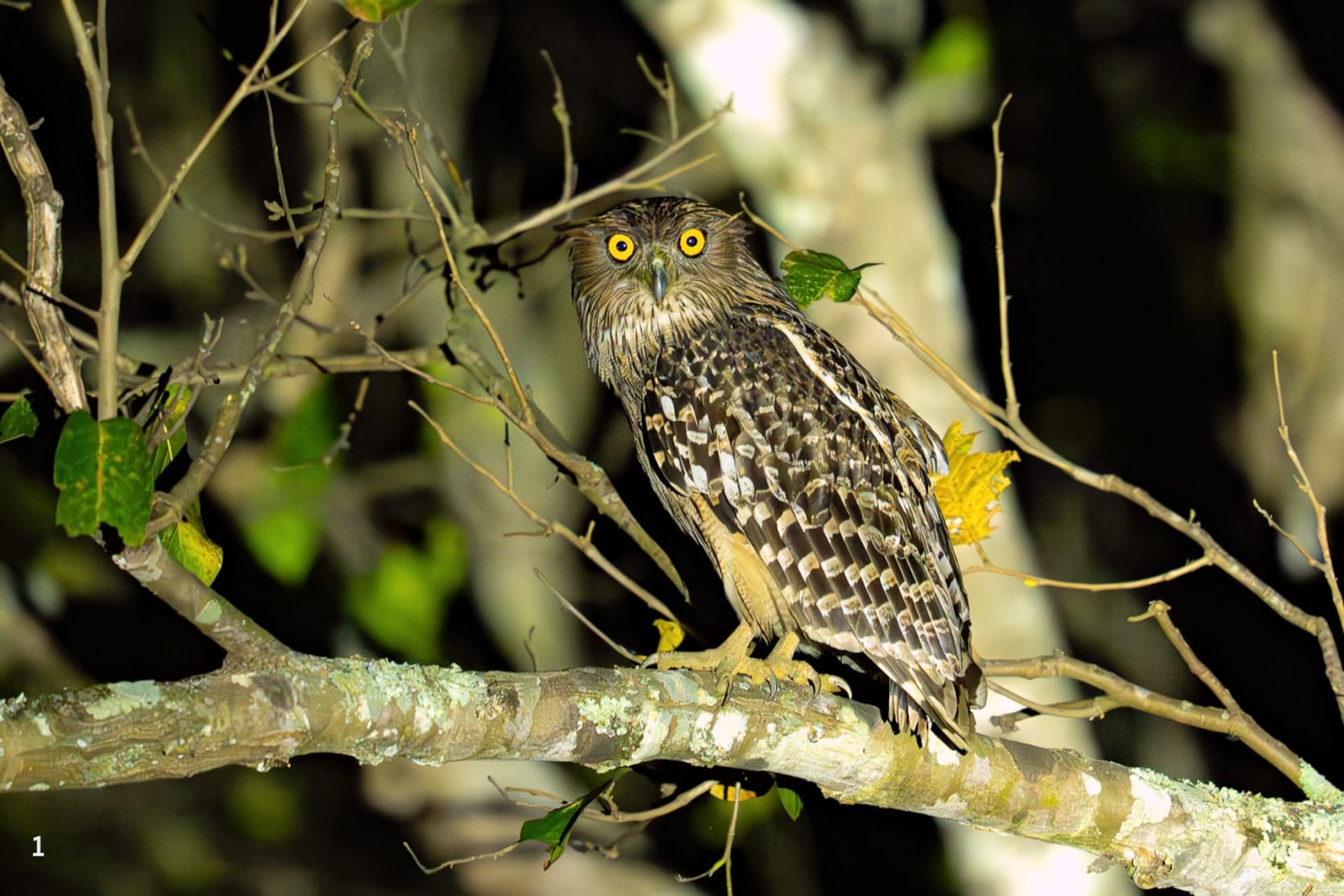
Small flocks of Malabar or oriental pied hornbills noisily cackle or flit from tree to tree. Visitors may see the orange thrush, Malabar trogon, grey-headed woodpecker, and crested serpent eagle. At dusk, brown fish owls can be seen, especially near waterbodies. During the breeding season (around summer), Indian nightjars make their presence felt, especially around dusk and at night.


SEASONS
Every season is different. The best time to visit is from November to February, when mornings and evenings are cool, and the park is surreal with curtains of mist in the morning. However, animal sightings may be difficult. Summer months (March to May) can get very hot and humid after mid-morning, but the chances of seeing animals are greater. The park is closed during the monsoon (mid-June to mid-October). The website www.similipal.org announces updates.
SAFARIS
All safaris are done through community initiatives; drivers and guides belong to local communities and are trained by the Odisha forest department.
Open-vehicle safari: About 5 hours (morning/evening), costing about Rs 4,725 for a maximum of 6 people. Book online at www.ecotourodisha.com.


(1) The mugger crocodile is commonly found in rivers and waterbodies within the reserve, where it preys on fish and other aquatic animals and plays a key role as a top predator. (2) Barehipani Falls, located on the Budhabalanga River, flowing over Meghasuni mountain, has a dramatic two-tier drop, making it one of the tallest waterfalls in India. Photos: (1) Yashpal Rathore, (2) Aditya Panda
GETTING THERE
Similipal Tiger Reserve is in Odisha’s Mayurbhanj district. There are two entry gates for visitors: Pithabata and Jashipur. Pithabata Gate, 25 km from Baripada town, is the better option. Baripada is almost equidistant from Bhubaneshwar (270 km/5 hr) and Kolkata (260km/5 hr) airports.
STAY
Six nature camps are located on the Similipal Tiger Reserve periphery, all run by village communities. All offer a comfortable stay and basic amenities.
Talabandha Nature Camp is the newest and has luxury tented accommodation (doubles from Rs 6,500 per night, including all meals).
Gurguria Nature Camp is older and a little more basic (doubles from Rs 3,500 per night, including all meals).
Other nature camps are at Barehipani, Jamuani, Kumari, and Ramtirtha, and offer rooms priced between these two.
Booking can only be done online at www.ecotourodisha.com.
You may also stay in Baripada town, 25 km/40 mins from the Pithabata Gate.

About the Author