 Listen to this article
•
15:34 min
Listen to this article
•
15:34 min
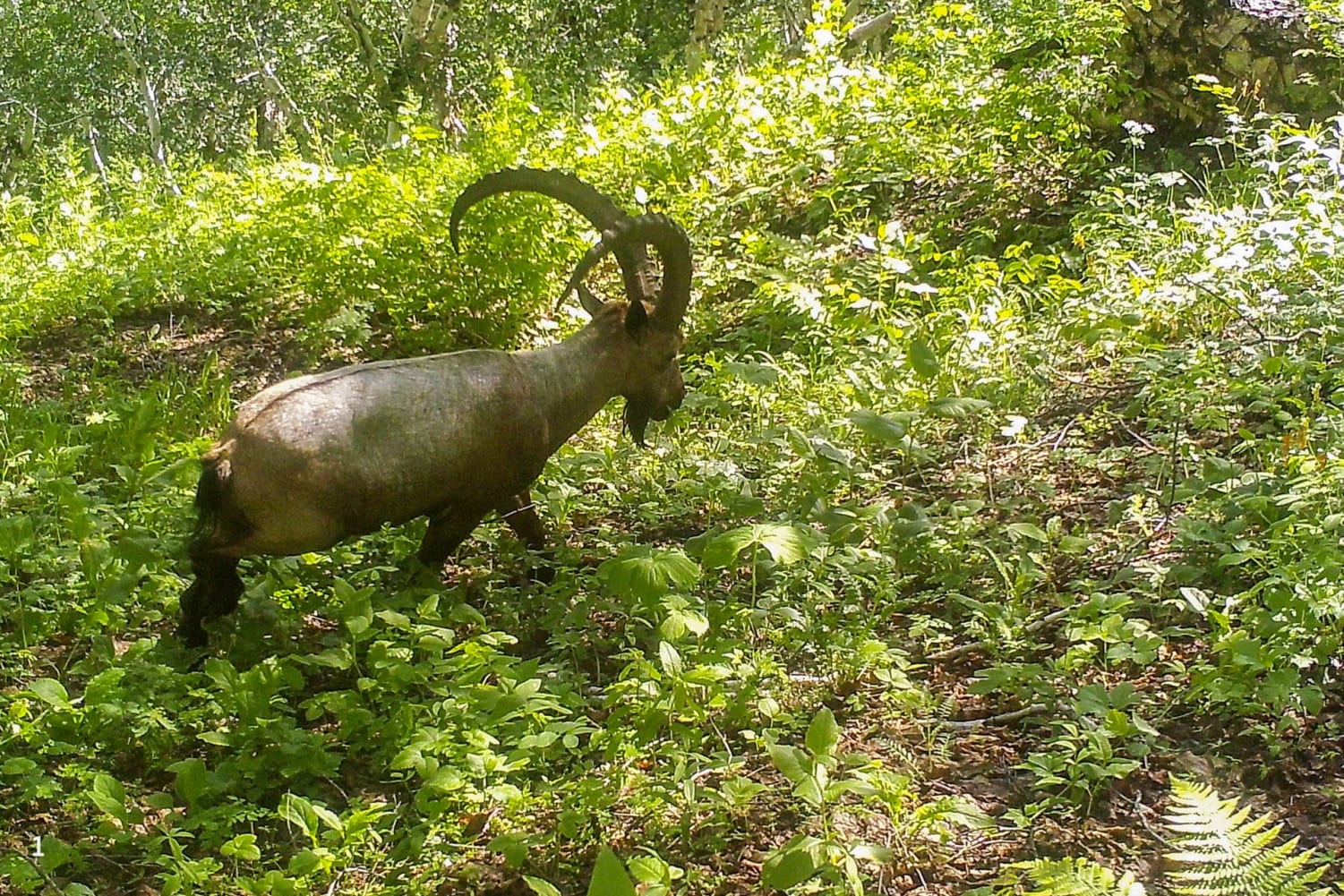
High above the green valleys of Kashmir, where stone ridges break into snowfields and silence is only disturbed by the wind, lives a creature that seems carved from the cliffs it scales. Though more common in Ladakh and parts of Himachal, the Himalayan ibex (Capra sibirica) is quietly reclaiming its former habitats in Kashmir’s rugged folds, where our camera traps have captured its elusive presence since 2023.
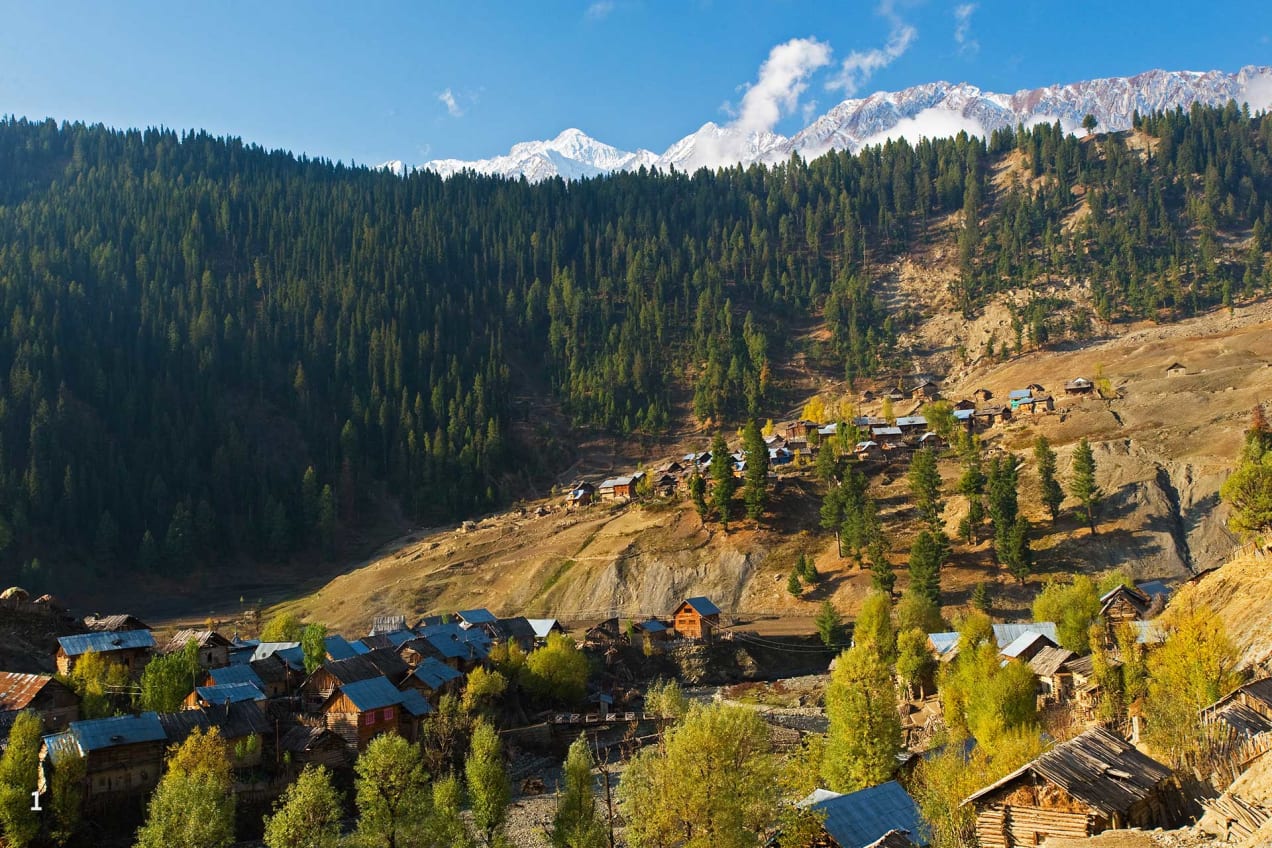
Our journey with the ibex began not in the upper reaches of alpine ecosystems (the “cryoalps” at altitudes above 3,500 m), but in the village of Anderwan in Ganderbal district, at 1,900 m altitude, just 40 km from Srinagar city. This remote settlement, resting at the threshold of the Wangath Conservation Reserve, is perhaps the most accessible window into the ibex’s world in Kashmir. From here, the landscape rises dramatically toward Gurez Valley and Butamali, a high-altitude grassland where ibex herds rest and lamb. One unforgettable camera trap image from Butamali showed six ibex kids together — a sign of healthy reproduction and community bonding within the herd.
These sightings are not just lucky encounters. For two years, we have used a grid of camera traps across the valleys of Kashmir. We launched one of the most extensive wildlife monitoring efforts ever undertaken in the Kashmir Himalayas, installing 200 camera traps from the northern tip of Gurez Valley to the southern forests of the Pir Panjal. Our grid spanned every major valley of Kashmir, cutting across protected areas and unprotected wildlife zones, and rising from 1,600 to 4,800 m. While established protected areas offered a known refuge for wildlife, the rugged, largely unexplored Gurez Valley captured our attention. Despite lacking formal protection, its remote cliffs, alpine meadows and conifer slopes revealed a remarkably rich wildlife assemblage. This landscape-wide deployment mapped the presence of threatened ungulate species (musk deer, hangul, markhor, goral, and ibex) across ecological zones. It also highlighted hidden biodiversity strongholds beyond traditional conservation boundaries, helping to understand the species’ movement and ecology. This effort has yielded data and documented species in places where their presence was unknown to conservationists. Camera traps, initially used as research tools, soon became deterrents against poachers. Reduced poaching pressure, partly due to perceived surveillance from research camera traps, has allowed ibex to frequent lower slopes, where Border Roads Organisation workers now often observe them in undisturbed side-streams (nallahs).
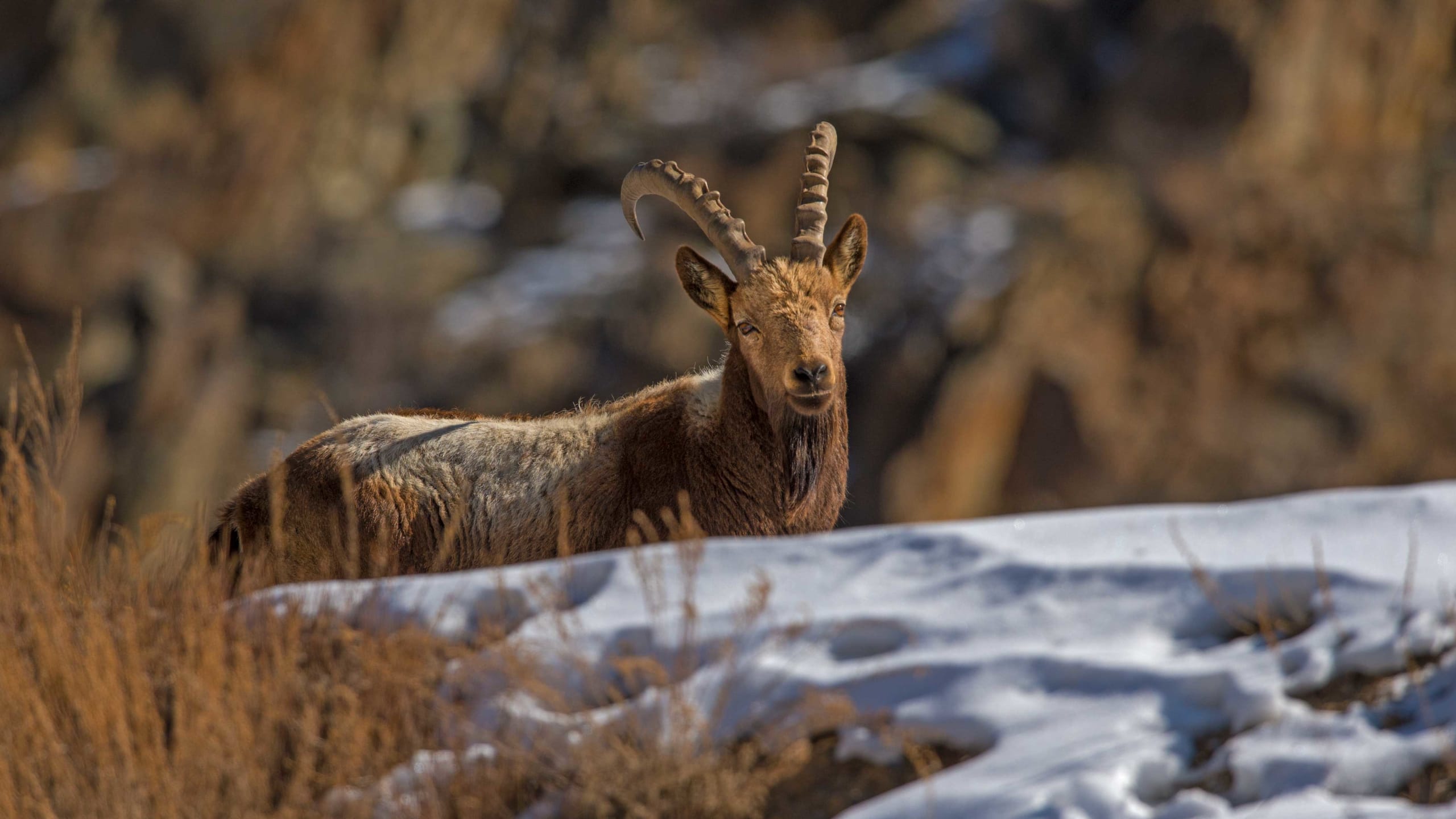
Cover Photo: The ibex is a wild ungulate found primarily in the trans-Himalayan regions of Ladakh, Jammu and Kashmir, and Himachal Pradesh. Older, mature males like this one usually live solitary lives for most of the year. Photo: Dhritiman Mukherjee
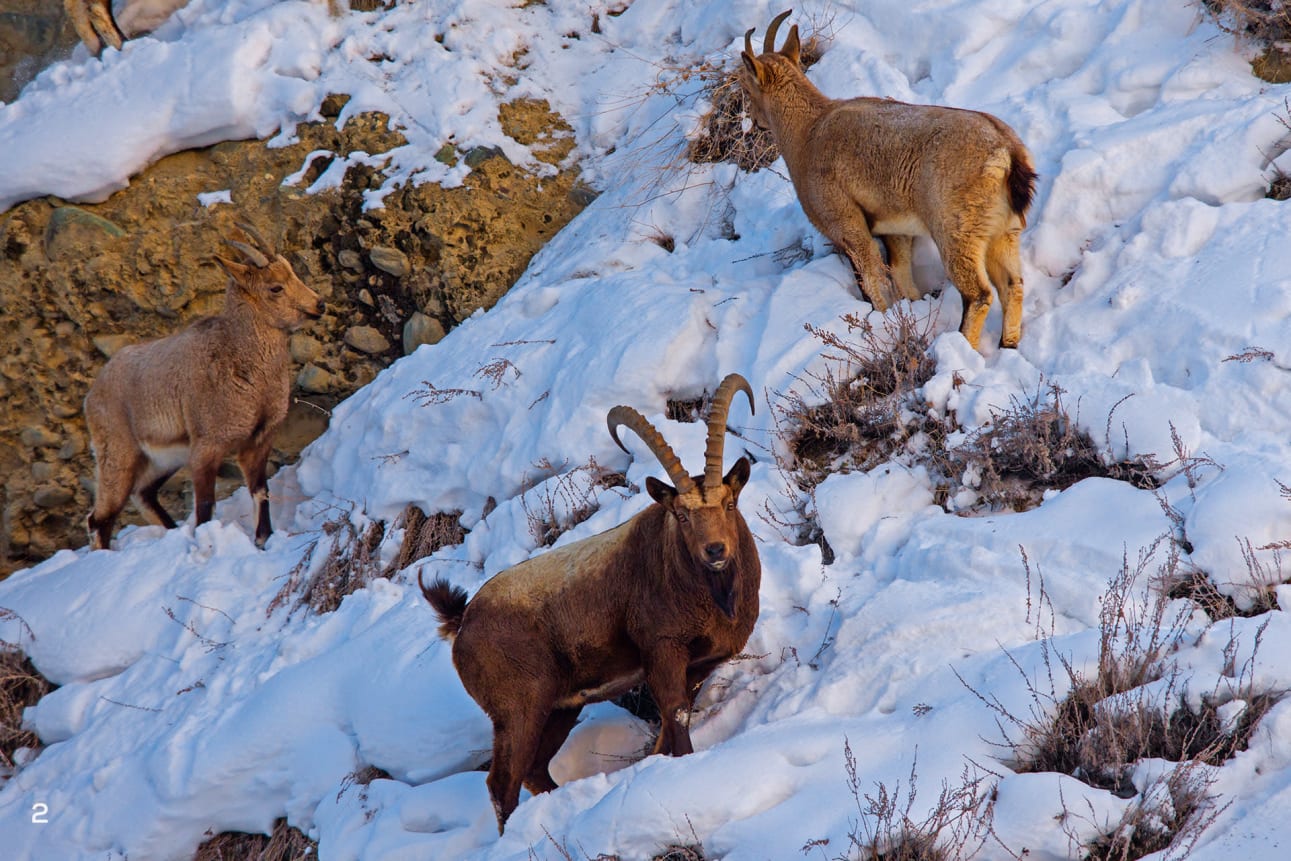
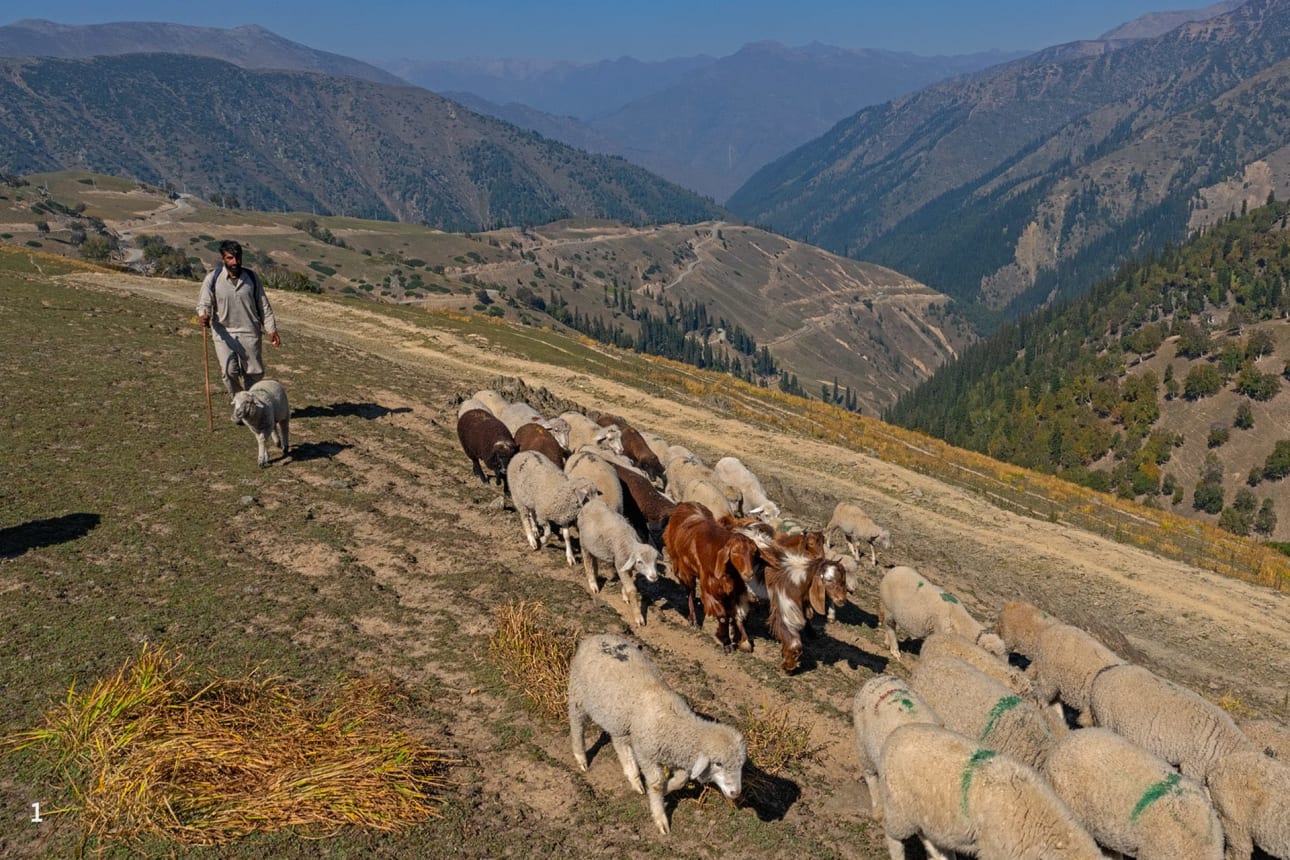
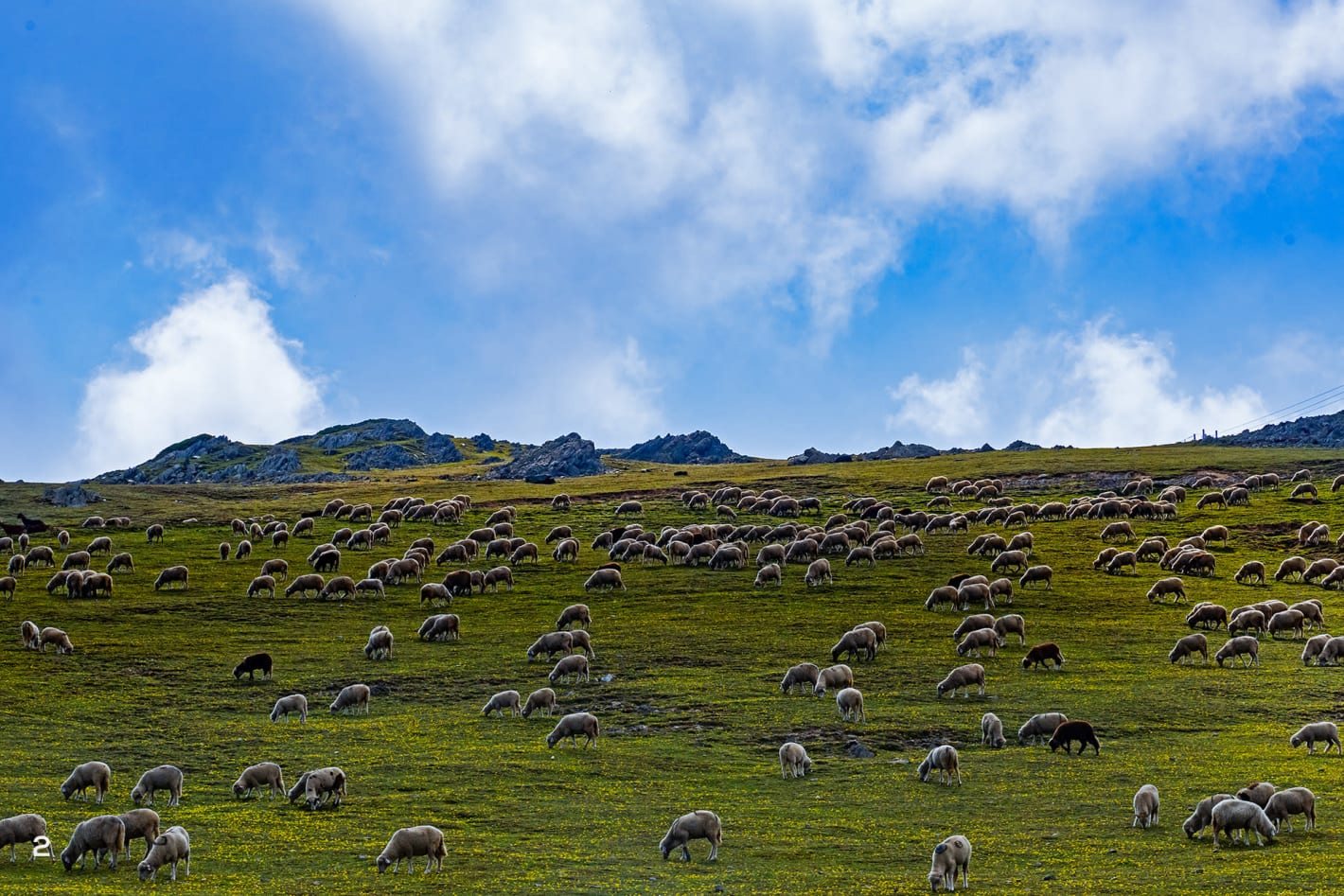
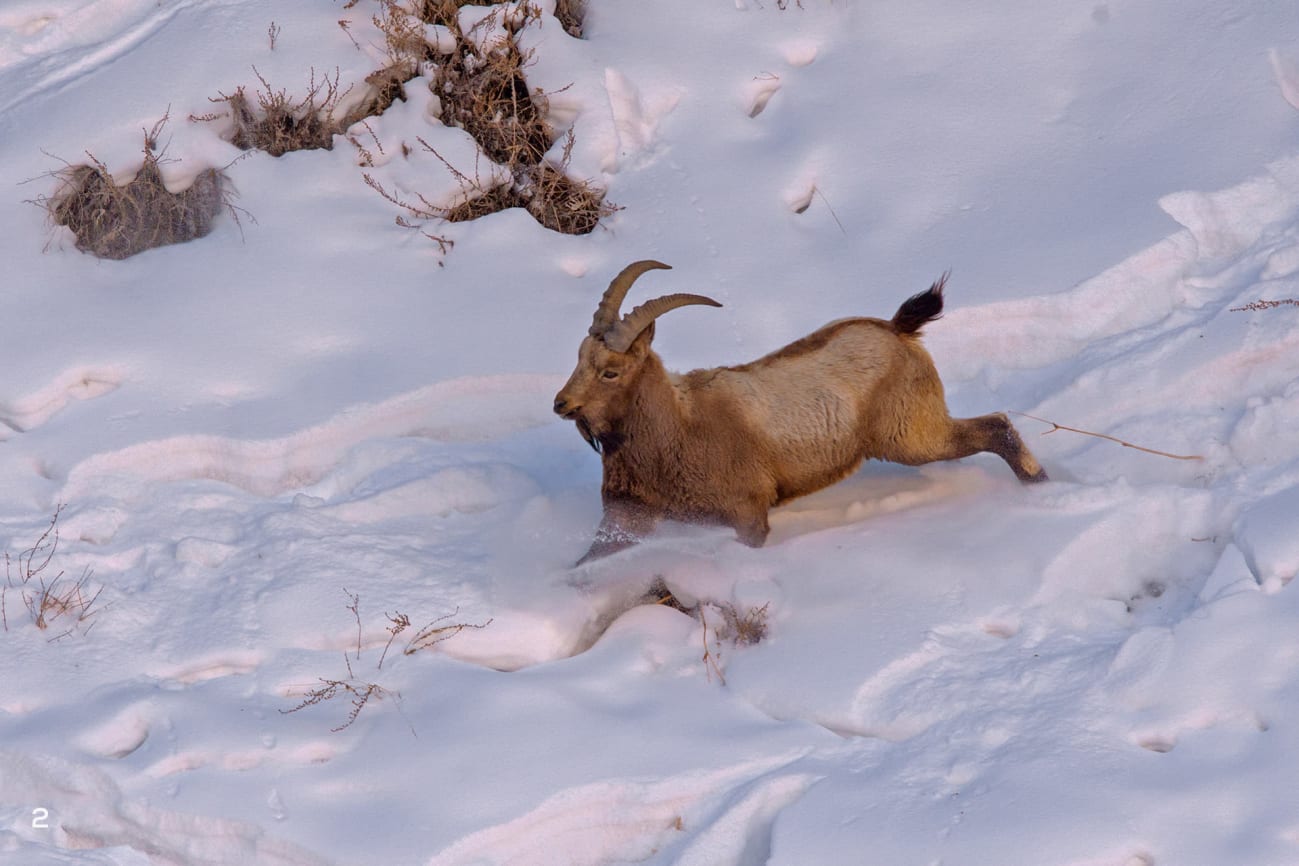
Ibex herds in Gurez’s Dawar area are now observed in groups as large as 20, especially when they descend to drink from the Kishanganga River in winter. In these colder months, when snow cloaks the higher ridges, ibex become easier to spot. These animals undertake an altitudinal downward migration of nearly 1,000 metres, driven by winter snowfall. In summer, they move upward, driven by forage scarcity and the presence of Bakerwals, Kashmir’s pastoral nomads, whose seasonal movements often intersect with ibex terrain.
Bakerwals are part of a long-standing human-ecological rhythm of this area; their summer migration from the Jammu region to Kashmir’s high-altitude meadows poses one of the most serious threats to the ibex in Kashmir. The overlap of grazing grounds leads to temporary habitat segregation by the ibex, who are forced to retreat to less optimal areas during this period. June and July are the peak disturbance months, with significant impact in May and August as well. Beyond mere displacement, the threat of disease transmission from livestock to wild ungulates during these interactions is dangerously high, potentially undermining years of slow recovery of ibex populations.
Though the ibex may seem unchallenged in the upper landscapes (2,000-4,800 m), they are not without predators. Camera trap data from our study reveal that the common leopard (Panthera pardus) and the Himalayan wolf (Canis lupus chanco) are the primary natural predators of ibex in the region. Interestingly, the snow leopard (Panthera uncia), often regarded as the apex predator at these altitudes, was not detected in any of our camera-trap records across sites. This absence raises critical ecological questions about the current range and status of snow leopards in this part of the Kashmir Himalayas. Although our cameras did not capture snow leopards, suitable habitats for them exist in the upper Tulail and Sindh Valleys, and historical accounts suggest their past presence.
Even sacred geography intersects with ibex behaviour. The Amarnath Cave area, known for its spiritual significance and large seasonal influx of pilgrims, shows potential as an ibex habitat. After the annual yatra concludes and temporary shops are dismantled, ibex are often observed entering the area — particularly to lick salt residues and food remains. This behaviour may be linked to the species’ salt requirement, hinting at a subtle adaptation to human-altered habitats.
Even closer to the Line of Control, in Tulail’s Checkwali and Abdulain areas, ibex live year-round. These regions, perched at 4,000 metres, may be militarised, but remain surprisingly stable for ibex. The ruggedness offers both protection and sustenance, creating a sanctuary carved out by conflict yet claimed by nature.
While international borders define the region’s geopolitical boundaries, for the ibex, borders are not barriers. For this resilient mountain ungulate, cliffs and grasslands are a continuous habitat. However, one silent but serious threat emerges from abandoned barbed wires scattered across high-altitude grasslands — remnants of old border fencing or temporary security installations. These wires, often toppled by avalanches or extreme weather, now lie twisted and hidden amidst alpine vegetation. No longer serving any strategic purpose, they pose grave risks to wildlife, especially ibex, that traverse these slopes during their seasonal movements. Entanglement injuries are a real and underreported danger. This overlooked hazard demands urgent attention and field-based investigation to assess the extent of the problem and initiate cleanup operations. Safeguarding these grasslands from such physical obstructions is essential to ensure free and safe movement of ibex and other high-altitude fauna.
The broader ibex landscape stretches from Zojila Pass in the east to the Ajas Conservation Reserve in the west, encompassing a critical belt of high-altitude terrain. The southern hill slopes of the Gurez Valley and the northern mountain wall of the Sindh Valley form a continuous corridor of habitat, making this stretch a prime conservation zone for the ibex in the Kashmir Himalayas.
Despite their resilience, ibex in Kashmir are still ghosts in the public imagination. Unlike hangul or markhor, they rarely feature in conservation areas, as most protected areas don’t meet their ecological habitats. But they should. Their presence is a sign of ecological health, of untouched high-altitude grasslands, of rivers that still flow clean, and of cliffs that still echo the thud of hooves instead of gunfire.
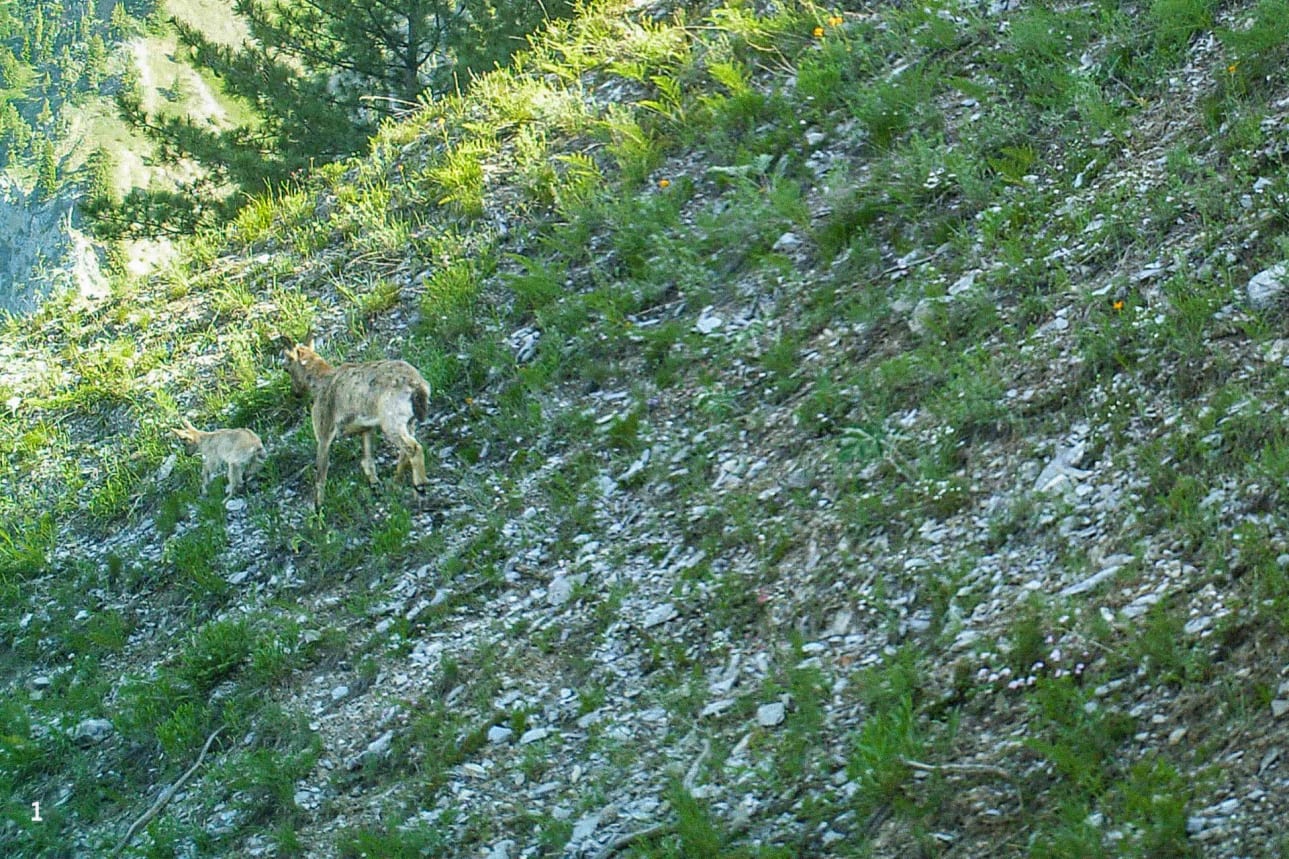
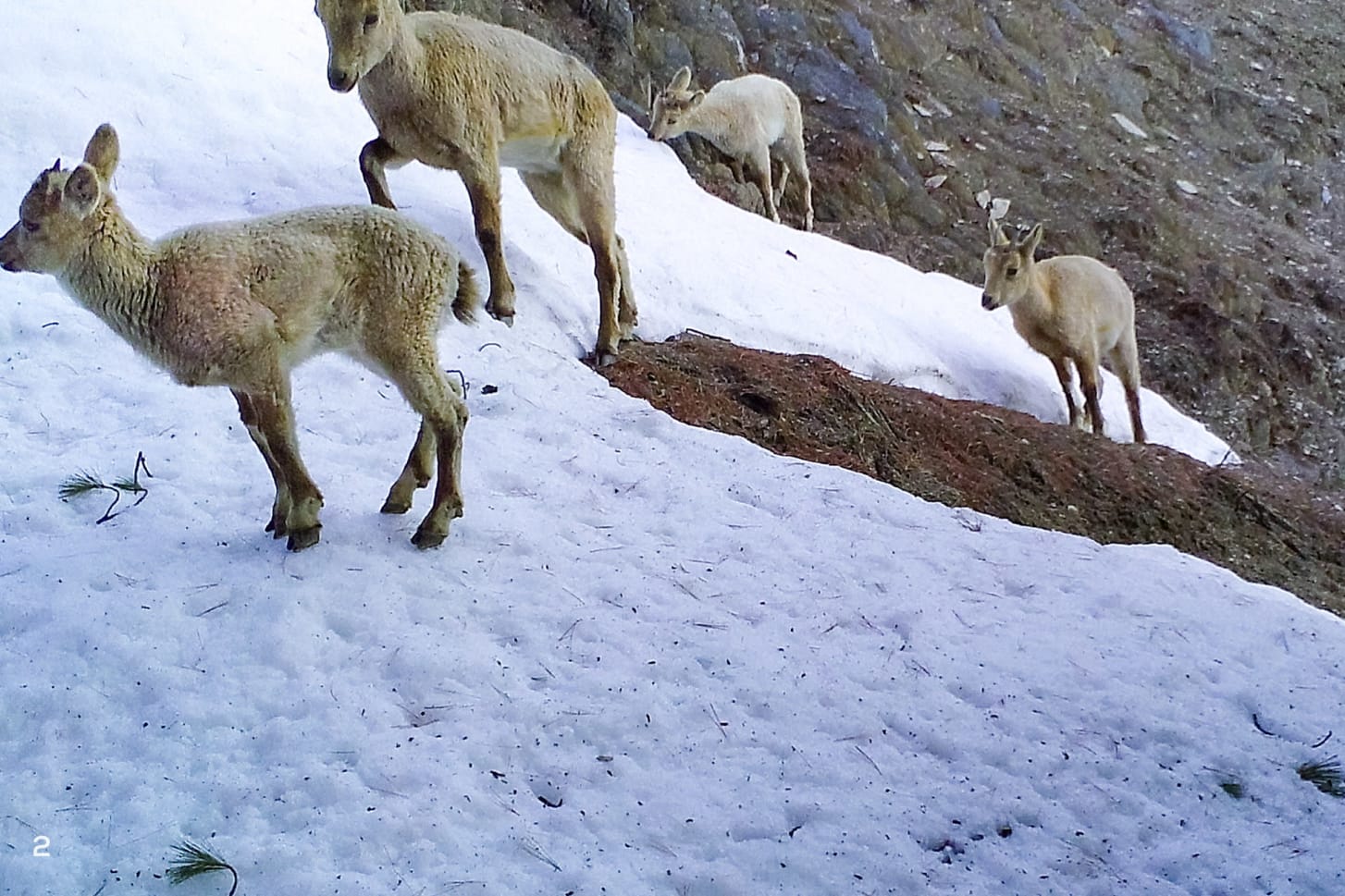
In a place where nature and human history are so tightly woven, every sighting is a story, every photograph a piece of memory. For us, the ibex are not just subjects to study — they are the quiet occupants of forgotten slopes overlooked in formal conservation narratives (to clarify, local communities know these areas, but policymakers and researchers often overlook them). They stand, horns curved like waves, watching us from the margins of the map. The Himalayan ibex, with its sweeping horns and sure-footed grace, is more than a symbol of resilience — it is a vital thread in the ecological fabric of Kashmir’s high-altitude landscapes.
Although poaching has declined in recent years, it remains an important historical pressure on ibex populations in Kashmir. Poaching activity typically peaks in winter, when heavy snowfall forces ibex to descend to lower, more accessible slopes. During this season, the summer shelters used by Bakerwal herders become temporary hideouts for poachers seeking cover and vantage points. Our camera-trap network identified eight poaching hotspots, most of which are along the fragile fringe corridors that ibex use for seasonal movement. These areas require heightened monitoring and community engagement to prevent a resurgence of illegal hunting.
Our findings, from two years of monitoring (2023-2025), camera trapping, and field presence, reveal both the promise and the perils this species faces. From threats like disease transmission and habitat disruption caused by pastoral movements, to silent dangers like abandoned barbed wire and potential predator shifts, the ibex navigates a world shaped by both nature and human intent. Conservation of this species requires more than passive protection; it requires active habitat restoration, conflict-sensitive management with nomadic communities, and ongoing research to monitor changes in predator-prey dynamics and movement corridors. As the ibex silently reclaims its slopes, it reminds us that coexistence in the mountains is possible — but only if we choose to listen, observe, and act before the echoes of hooves fade from these cliffs.
Despite the wide horizons of the Kashmir Himalayas, some landscapes remain invisible on conservation maps. The Himalayan ibex, however, continues to reveal these forgotten spaces. We found that the species thrives not only in the towering ridges of Gurez and Tulail but also in the quiet fringe habitats far from formal protection. Villages like Anderwan, located below the high cliffs of Wangath, host surprisingly healthy ibex populations that seldom appear in mainstream wildlife narratives because they occur outside designated protected areas.
Yet, these fringe zones are just as crucial. Here, ibex descend to drink from narrow nallahs, forage on sun-warmed slopes, and raise their young in pockets of habitat that remain ecologically intact despite human presence. These areas also face the highest vulnerability: livestock pressure, seasonal displacement by nomads, abandoned barbed wire, and winter poaching that exploits empty herder sheds. Such unprotected corridors, rich in biodiversity but lacking management plans, serve as lifelines that connect the high ridges to the lower valleys.
The ibex’s gradual return to these slopes is a quiet reminder that conservation cannot stop at the borders of sanctuaries and national parks. Real protection must extend to the mosaic of landscapes where wildlife and people coexist every day. It is in these overlooked forests and village-fringe habitats that the future of the Himalayan ibex may ultimately be decided. As our camera traps continue to illuminate what was once unseen, the responsibility becomes clearer: safeguarding this resilient mountain ungulate requires a landscape-wide vision — one that embraces the remote valleys, the contested ridgelines, and the humble village forests where ibex have survived, almost unnoticed, for generations.
About the Authors
Mohsin Javid
Dr Khursheed Ahmad