
 Listen to this article
•
15:34 min
Listen to this article
•
15:34 min
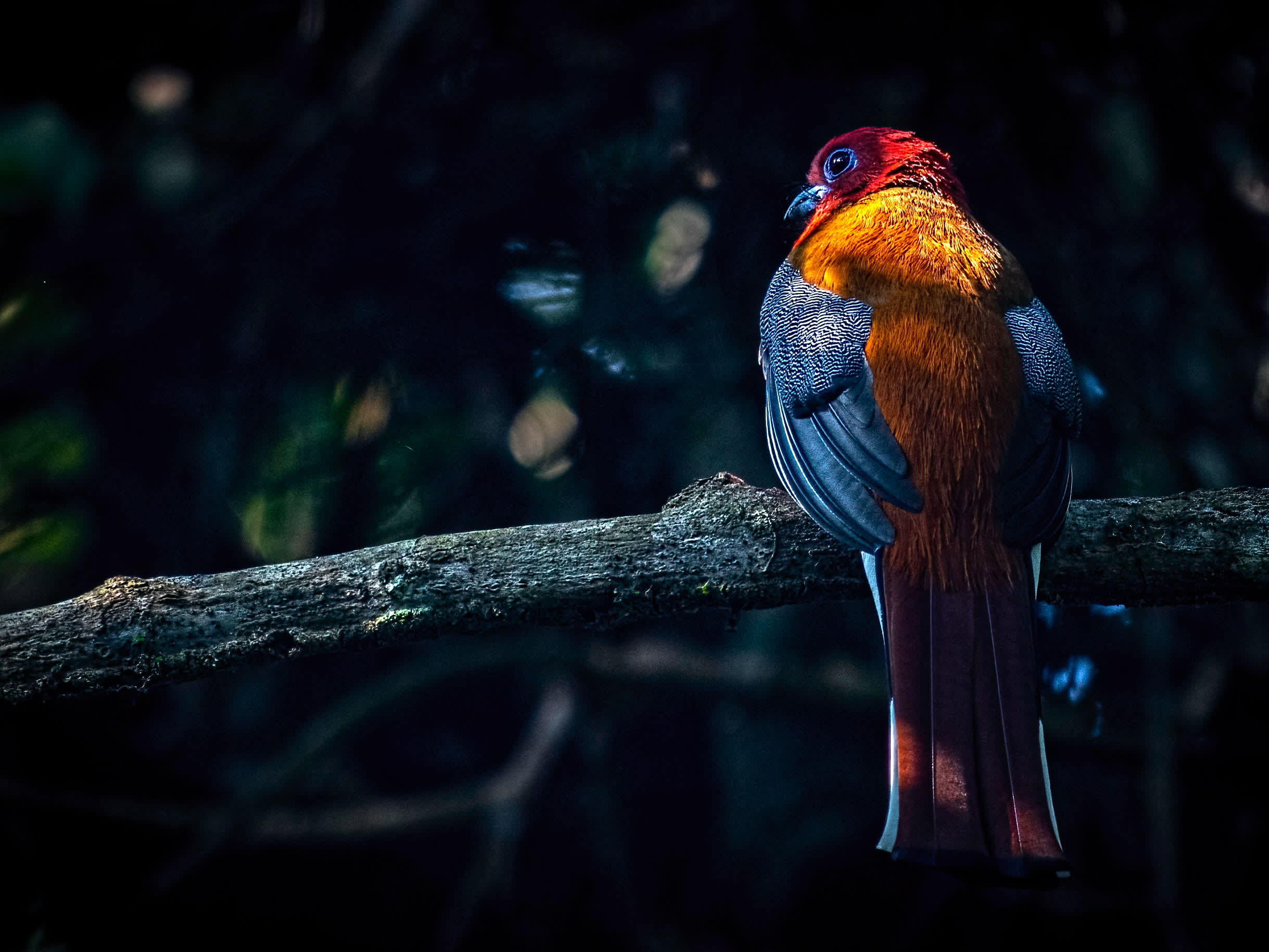
The red-headed trogon (Harpactes erythrocephalus) is among the more inconspicuous birds of tropical forests, despite its striking plumage. Found across parts of South and Southeast Asia, it is closely associated with dense, moist forests where canopy cover and understorey structure remain largely intact. Within India, its distribution is primarily limited to the Northeast, where relatively undisturbed forest ecosystems persist.
In the field, the species is often detected by behaviour rather than colour. It may remain perched for long periods, blending into its surroundings, before making a brief flight to catch an insect and returning to the same perch. The red plumage is visible only in motion, after which the bird disappears into the shaded background, often going unnoticed even by experienced observers.
Cover Photo: Perched within a dense forest canopy, the red-headed trogon embodies the fragile beauty of tropical biodiversity. Its presence signals a healthy woodland ecosystem. Photo: Arpan Saha
A Fleeting Encounter
My encounter with the species came unexpectedly during a birding trip to Manas National Park in March 2024. We had already spent long, rewarding hours in the grasslands observing the Bengal florican, our primary focus. Returning, the day felt productive; we’d sighted the elusive Indian grassbird, the slender-billed babbler, and spent time watching a silver-breasted broadbill (a first for many in the group). We were in high spirits. Near the forest edge, while some watched a barred cuckoo-dove and others tried to photograph a broadbill, a bird cut swiftly across the canopy. It was pigeon-sized and registered only as a flash of red against green before vanishing. No one could identify it. Our guide suggested a trogon, leaving us wondering if we had missed something spectacular.
Soon, the bird returned. Moving more slowly this time, it settled on a perch and briefly came into view. Its red head and breast stood out against the muted tones of the forest. Someone made the unexpectedly apt description that it resembled Santa Claus in a red robe. We watched it linger for around a minute before it disappeared back into the canopy.
Only then did its identity become clear.

Foraging Behaviour
The species uses a sit-and-wait foraging strategy. According to Birds of South Asia: The Ripley Guide, trogons make short flights to catch insects from the air or foliage before resettling at the same or nearby perch.
This approach conserves energy and reduces predation risk in dense forests. Vegetation structure, including branch placement, cover, and light conditions, influences perch selection. Changes to the understorey, such as branch removal or thinning, can reduce the availability of suitable foraging sites and affect feeding efficiency.


Habitat and Distribution
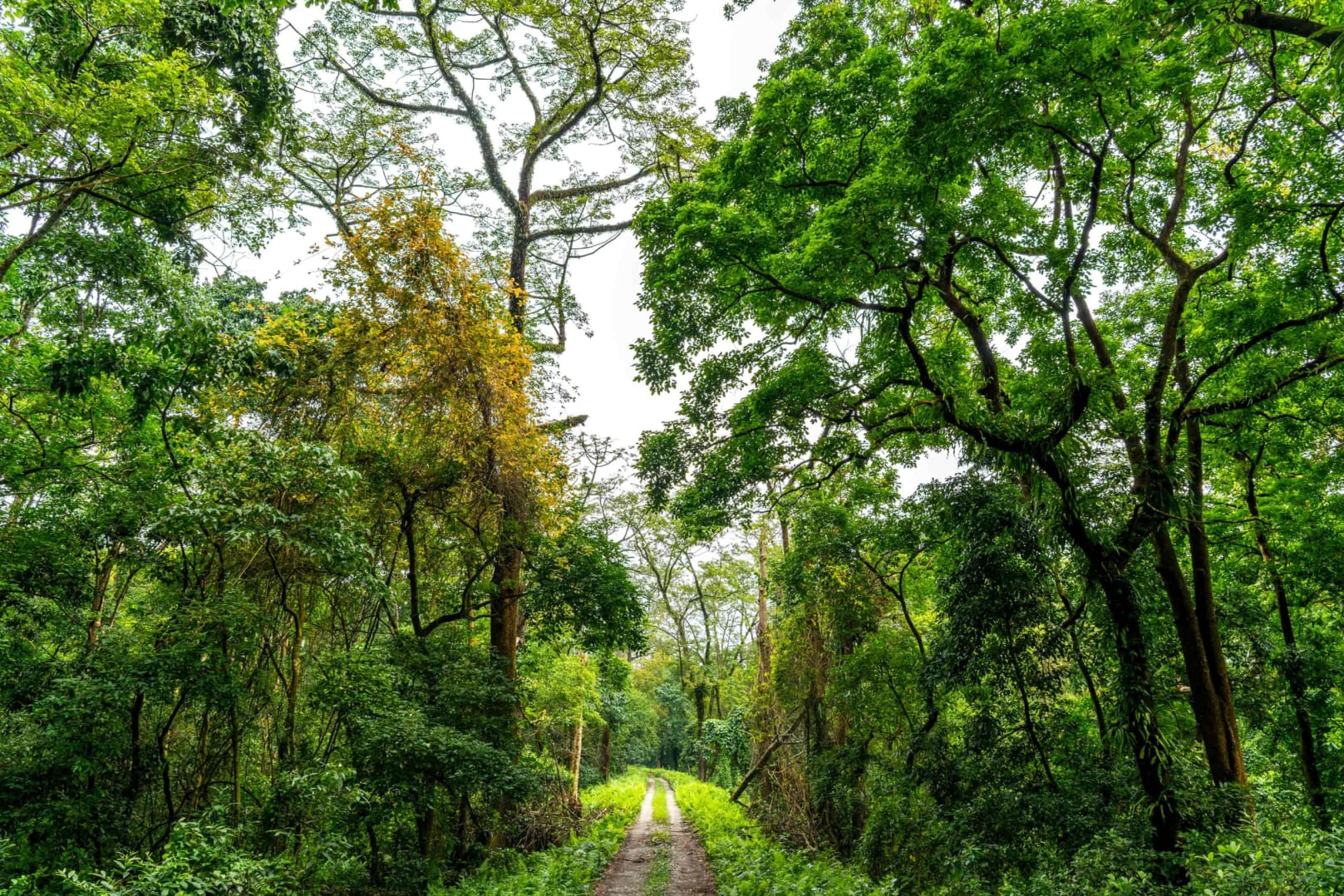
The red-headed trogon primarily occupies the lower canopy and middle levels of evergreen and semi-evergreen forests, as well as bamboo-dominated areas. It is most often seen inside dense forest rather than in disturbed areas.
According to BirdLife International, it prefers primary and well-developed secondary forests. In Northeast India, its distribution is mainly restricted to protected areas with continuous forest cover. Even when forest cover appears intact, fragmentation and selective logging can reduce the microhabitats the species needs to persist.

Nesting Ecology
The red-headed trogon is a cavity nester, utilising holes in decaying wood or termite mounds on trees. These nesting sites are typically found in mature forests, where natural decomposition is ongoing; these are a critical component of habitat suitability. Heavily managed forests, or those that remove deadwood, may lack sufficient nesting opportunities, even if the canopy is maintained.
This dependence on specific structural features links the species to ecologically complex ecosystems. While dead and decaying wood is often cleared in managed landscapes, it plays an essential role in supporting cavity-nesters and maintaining broader forest health.
Indicators of Habitat Quality
Although the red-headed trogon is not globally threatened, it is sensitive to subtle habitat changes. It prefers forests with intact understorey vegetation, natural cavities, steady insect availability, and low disturbance.
The species' continued presence in a forest suggests that key ecological processes such as regeneration and trophic interactions (food web) are still functioning. It is a good indicator of habitat quality.
Conservation Considerations
Across its geographic range, the main pressures on the red-headed trogon come from habitat alteration, including forest fragmentation, selective timber extraction, and clearing of understorey vegetation for land use. In Northeast India, protected areas such as Manas National Park are important in maintaining habitats suitable to it. However, conservation needs to go beyond protecting canopy cover alone. Maintaining deadwood, limiting disturbance in core forest areas, and preserving vertical complexity (different vegetation types and sizes) are key to the ecosystem. Even small changes in different parts of the forest can have significant effects on species that depend on these areas.
The red-headed trogon does not dominate the landscape it occupies, nor does it readily attract attention. Its significance lies in what it reveals about the forest ecosystems it inhabits. As long as environmental conditions remain stable, the species will continue to occupy shaded interior spaces, largely unnoticed. Its persistence depends not on isolated habitat features but on the continued functioning of the forest as an integrated system.
About the Author