
 Listen to this article
•
15:34 min
Listen to this article
•
15:34 min
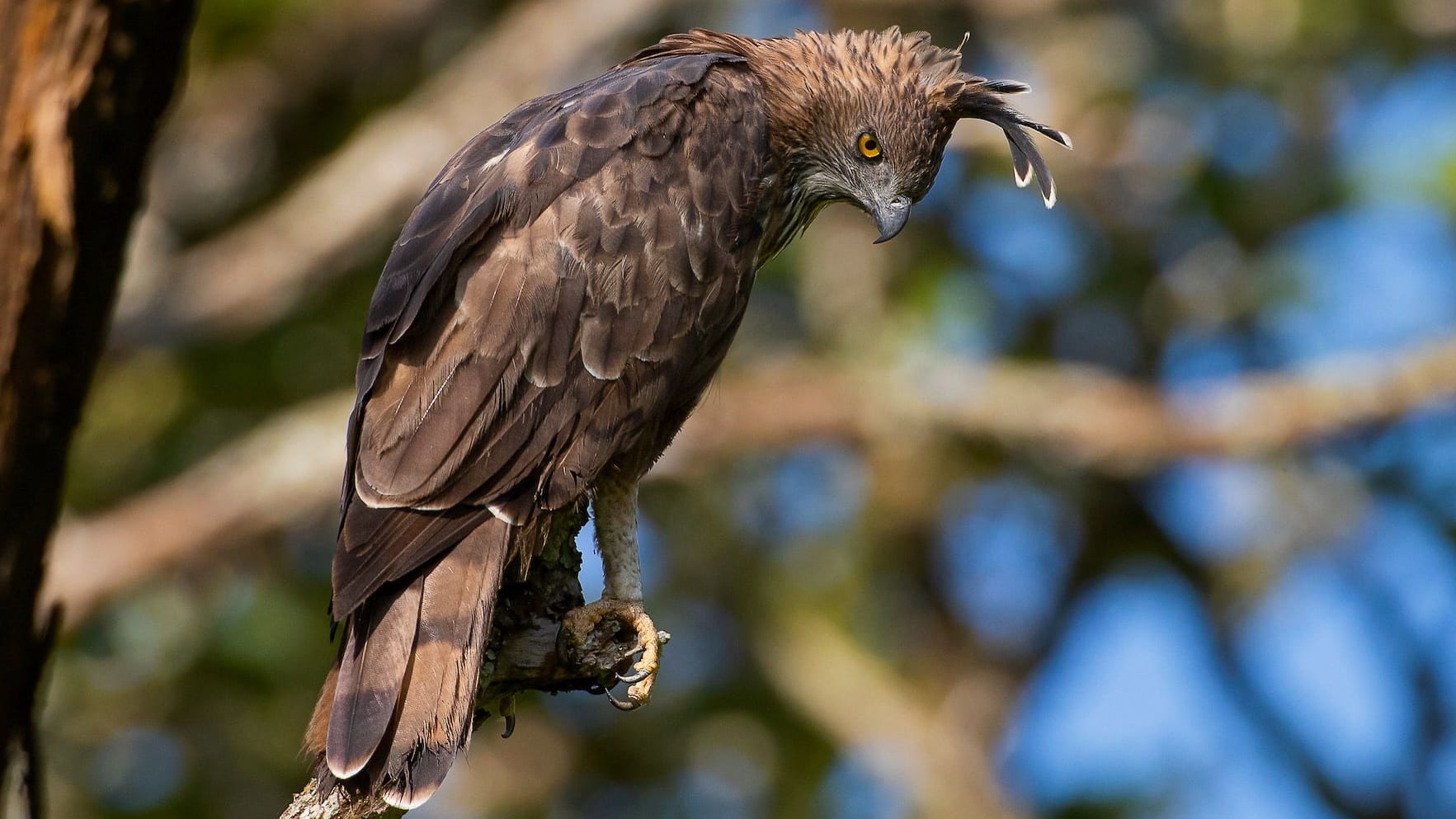
When I was in the second grade, I went on a bird walk to Kava, in Palakkad, Kerala. Our trip leader, Namassivayam Sir, pointed to a bird soaring in the sky and identified it as “C-H-E”. Puzzled by the term, I asked for more details and learnt that the bird is the changeable hawk-eagle (Nisaetus cirrhatus; previously called the crested hawk-eagle), and its Malayalam name is “kinnari parunthu”, which rolls off my tongue more naturally than its English name. Who knew then that this species would change my life.
During our second Sunday birding trips, the changeable hawk-eagle soon became a regular member of my checklist. As I grew older, although the frequency of those trips decreased — to just one or two times a year — my interest in birds and photography grew. In 2019, after much pleading, I convinced my father to get me a better second-hand camera. During the COVID-19 pandemic, being confined to my neighbourhood turned into the perfect opportunity to use my camera to explore the birds around.

Cover photo: Shreeram MV
I live in an urban area on the banks of the Thirunellayi River (Bharathapuzha River) in Kerala’s Palakkad district, with farmlands nearby. The riverbank hosts at least 117 bird species, and I’ve personally encountered around 50 moth and butterfly species (lepidopterans), 10–12 species of reptiles (herps), and other animals. I’ve recorded them in my diary, some with photographs. While everyone was locked indoors, I was locked into the wonders of my backyard and the river.
On the second day of lockdown birding, I spotted a changeable hawk-eagle soaring above my house. The next day, I was amazed to see the same bird perched on a coconut tree in my neighbour’s yard. I recognised it by its chest markings and crest. I clicked some photos using my camera’s telephoto zoom lens. To my surprise, the experts I consulted confirmed that it was a juvenile no more than two months old. From that day on, every “kwe…kwe..kiii…” call of a hawk-eagle was enough to draw me outdoors.


Each morning, I would spot this individual on the same coconut tree or mango tree in the same compound. I was thrilled to document its growth in photographs. Tracking the bird led me to its nest and its mother, on a rain tree in my neighbour’s compound, in view of my terrace and backyard. I began tracking both individuals, spending long hours documenting their behaviour — recording calls, taking photographs, and observing them.
The long months of the second year of the pandemic passed, and my cousin gifted me a 200–500 mm lens and a Nikon D7200 camera. The upgrade opened new dimensions for me, and I began documenting every minute detail of bird behaviour around me.
One afternoon in early December 2021, I spotted the hawk-eagle mother feeding on a pond heron on a raintree (different from the one seen from my terrace). I rushed home and returned with my camera to capture this event, observing her for about 30 minutes before she flew to her nest, about 80 m away. That day, I noticed a third bird near the nest. Before I could photograph it, it flew away.

Every afternoon around 2 pm, I visited the spot I’d seen the female feeding on the heron. One day, I saw the third individual again, a male, with a beak deformity — an extra beak growing above its upper mandible. Two weeks later, on 2 January 2022, I spotted it feeding on an Asian palm civet at the same location. Its feather texture and behaviours were unique, but the bird was shy and easily disturbed. I continued documenting this individual in detail.
The hawk-eagle family became my daily alarm clock, waking me around 5.45 am with their calls. I noticed that their call patterns changed and became more frequent. Drongos in the area even began mimicking their calls, often fooling me. I also observed that the pair spent most of their day near their nest. On 26 January, I saw the couple cleaning and rebuilding the nest. By then, the juvenile had moulted into a young adult. He would return about once a week to visit his parents and the nest.

In the first week of March, I was shocked to see the trees surrounding the nesting tree being cut down. I contacted the social forestry department and attempted to turn the site into a conservation project, but was unsuccessful. I tried to convince my neighbour not to cut the nesting tree, but he wasn’t persuaded. I did manage to buy some time, though, by telling him to spare the tree with the nest as it had eggs in it (although at the time I had no evidence that this was actually the case).
About a week later, I noticed the female incubating eggs, while the male diligently guarded the nest. Drongos and crows occasionally harassed them, especially the male, but he remained calm and composed. At one point, sunbirds attempted to nest in the lower part of the hawk-eagle’s nest. The hawk-eagles seemed to grow used to my presence (100 m away from my terrace or under the tree) and never flew away when I was around.
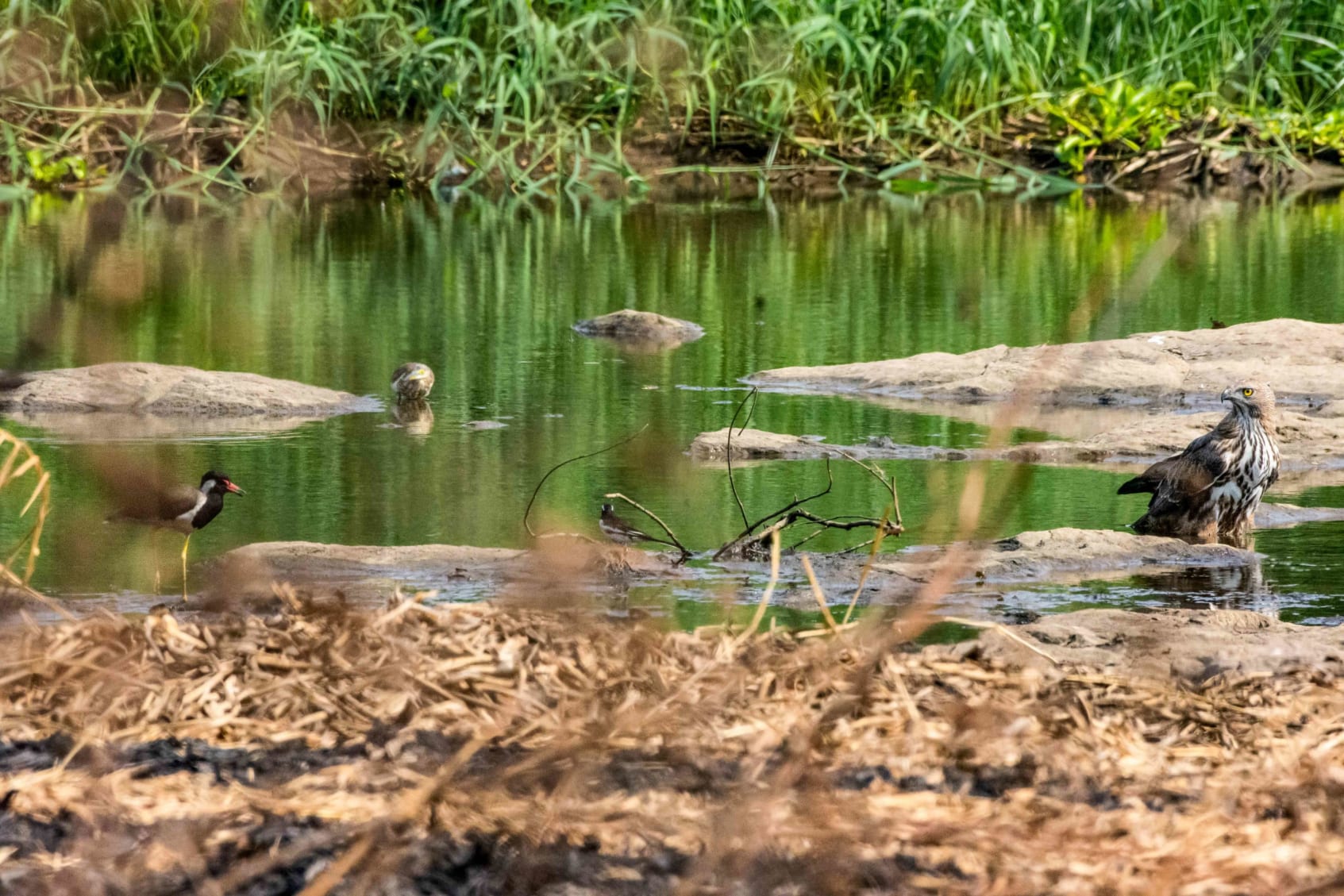
My neighbour grew annoyed and started calling me every day, asking if the eggs had hatched. In early April, I witnessed the male exiting the nest and the female entering it and feeding on a palm squirrel — a gift from her mate. It was one of the most emotional and romantic scenes I had ever witnessed.
A week later, on 12 April 2023, the raintree was finally cut, and the nest came down to the ground. The hawk-eagle couple continued to visit the site for a few months, but their visits eventually decreased. In July that year, I moved to Bangalore for college, but every time I returned home, I’d see the hawk-eagles at least once. On my last visit, I captured the male and young adult enjoying the rain together. Observing this family of birds taught me patience, observation skills, and dedication to achieving my goals. Not only did I gain a small insight into their family bonds, but I feel like I have a bond with them, too.
About the Author