Listen to this article
•
15:34 min
Listen to this article
•
15:34 min
Most big fish do indeed dine on smaller fish, such as sardines and anchovies, as well as smaller creatures like zooplankton and phytoplankton found in their habitats. These enormous fish, with their cave-like mouths, are usually filter feeders, though some are armed with fearsome dentistry too.
Whale Shark
Easily, the heavyweight champion of them all is the whale shark (Rhinocodon typus), usually a 40-foot gentle giant (though they can grow to 68 feet) that is not a whale but a shark. Endangered (and now legally protected) worldwide, it is found in all tropical oceans. It is a migratory visitor off India’s west coast between March and June — both along the west coast from Gujarat (especially Saurashtra) to Kerala and on the east coast off Puducherry, Andhra Pradesh, and Odisha. From here they head off to the Lakshadweep Islands and the Maldives following plankton blooms. Its reproductive behaviour is poorly understood, and pupping has been observed only twice (not off our coast), though it is believed to occur off the Gujarat coast, judging by the numbers of babies seen there.
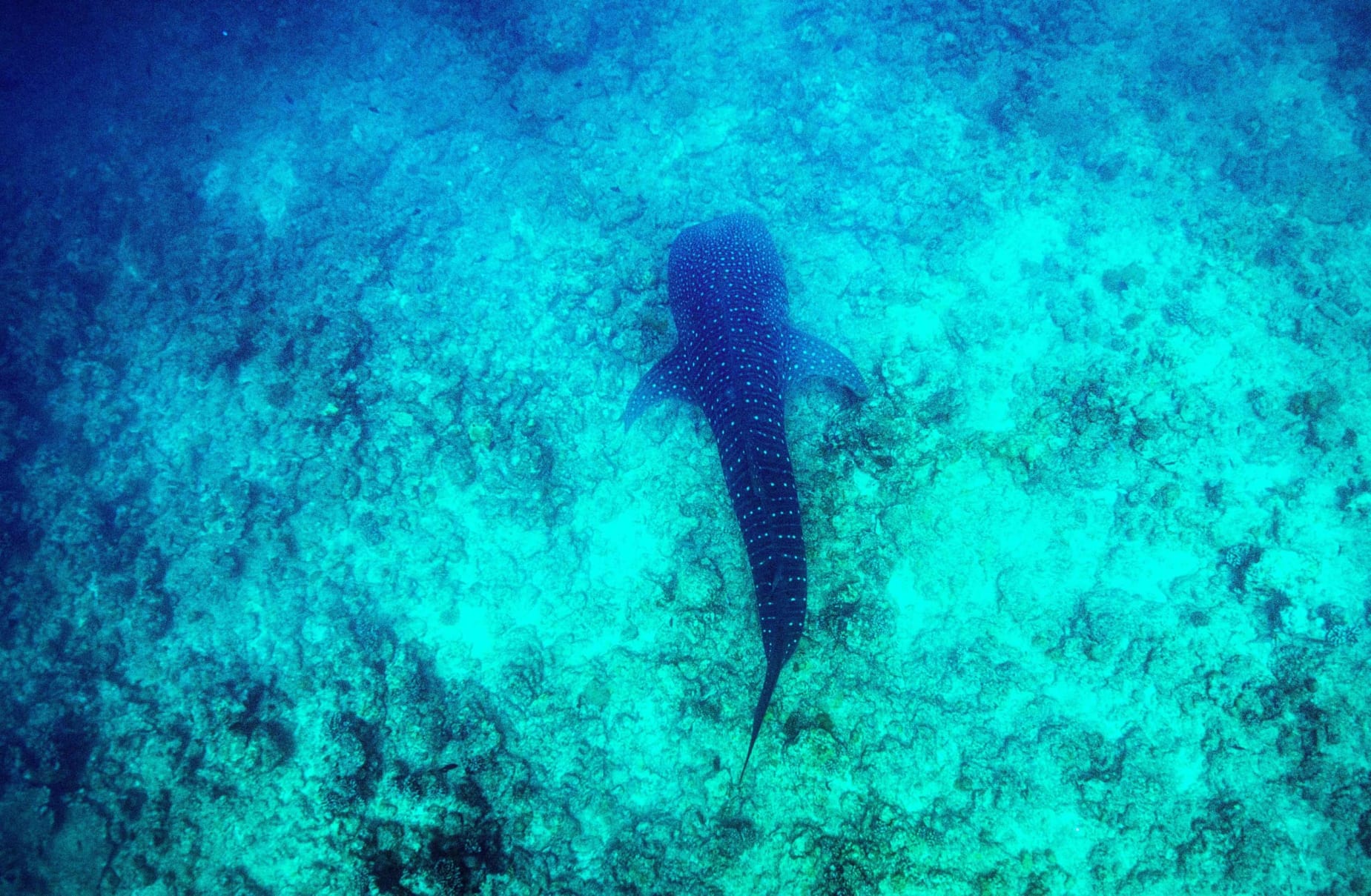
Scooping up 6,000 litres of water per hour and using their massive gill rakers to filter out the good stuff, they may live between 80 and 130 years. One major threat comes from gill nets (others are pollution and collisions), which trap them and from which they must be freed. The Wildlife Trust of India has, with local fisherfolk, released over 1,000 whale sharks from nets – the fisherfolk are compensated for their damaged nets, though perhaps not to the extent they would like. A spiritual leader, Morari Bapu, named them vhali – “the beloved one” and helped change attitudes towards them. Worldwide, their population is believed to be between 1,30,000 and 2,00,000 though there are no reliable estimates.
Giant Oceanic Manta Ray
The giant oceanic manta ray (Mobula birostris), found in tropical and temperate waters around the world, can grow to 9 m (30 feet), with a wingspan of up to 7-8.-8 m (26 feet), weighing in at around 3,000 kg. The world’s largest ray, it prefers remaining far out at sea. It has been spotted off the western coast as well as off the Andhra Pradesh coast, Andaman and Nicobar Islands, and Lakshadweep (at Manta Point where groups congregate at cleaning stations run by smaller fish). It has no spiny tail, and has been fished unmercifully for its gill rakers, which the Chinese believe (without any scientific backing whatsoever) have medicinal value. Plastic pollution, heavy metal contamination and bycatch are other threats to it. It follows upswells of nutrient-rich water, feeding off zooplankton; groups of rays herd their prey into tight circles before speeding through them with maws agape. It has the largest brain of any fish and is believed to be “self-aware”, having passed the fabled mirror test.
Golden Mahseer
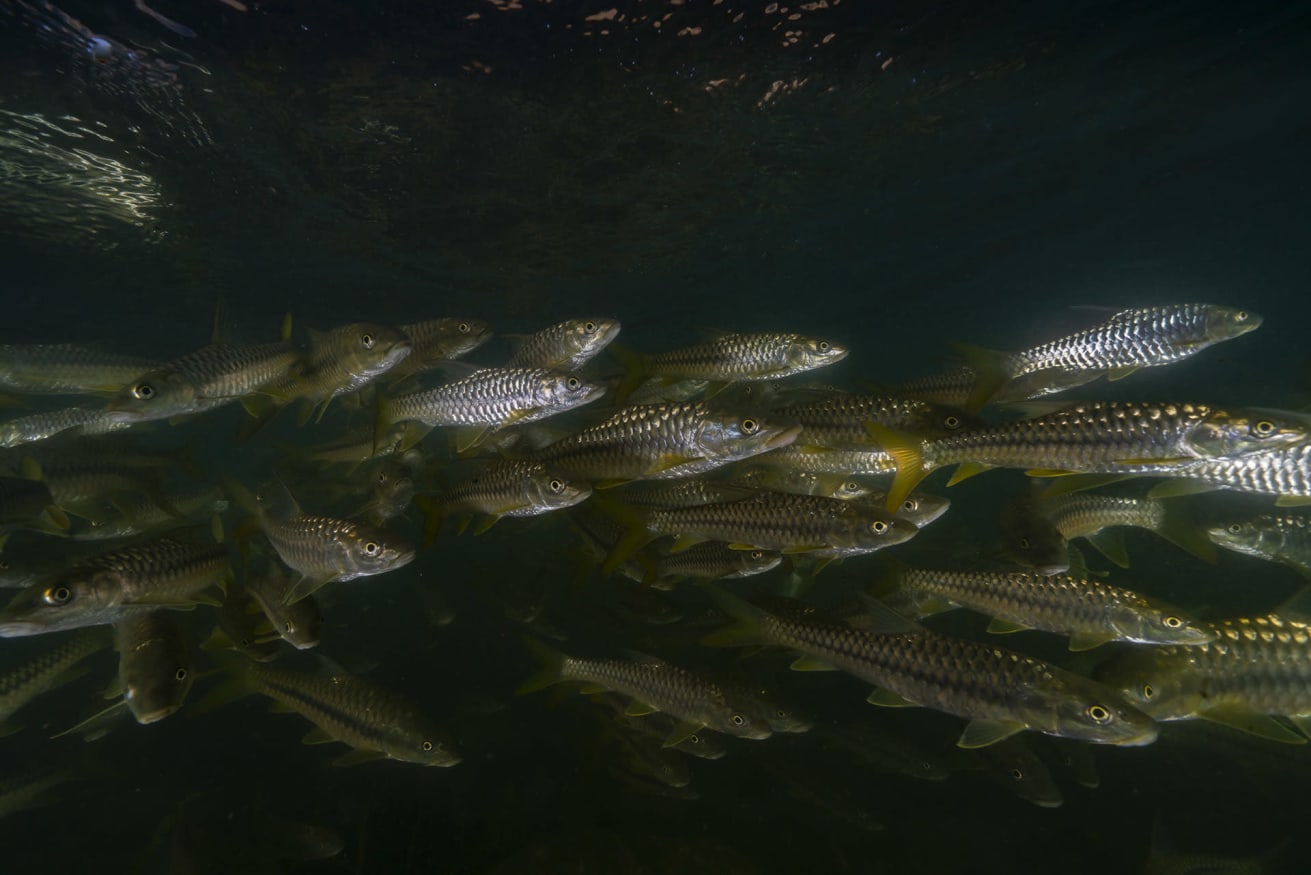
In third place is the beautiful golden mahseer (Tor putitora), an endangered species found in fast-flowing Himalayan streams, riverine pools, and lakes. It can reach about 2.75 m (9 feet) in length and weighs in at 54 kg, though most caught are smaller. It is the national fish of Pakistan and the state fish of Arunachal Pradesh, Himachal Pradesh, Uttarakhand and Jammu and Kashmir. Omnivorous, it stays close to the surface of the water and is another favourite of anglers, despite being listed as “endangered” on the IUCN Red List. Hydropower projects are a serious threat to the golden mahseer and overfishing (by dynamiting, poisoning, and the use of mesh nets) has led to a severe decline in its population. It derives its name from “mahi” (fish) and “sher” (tiger).
Goonch Catfish
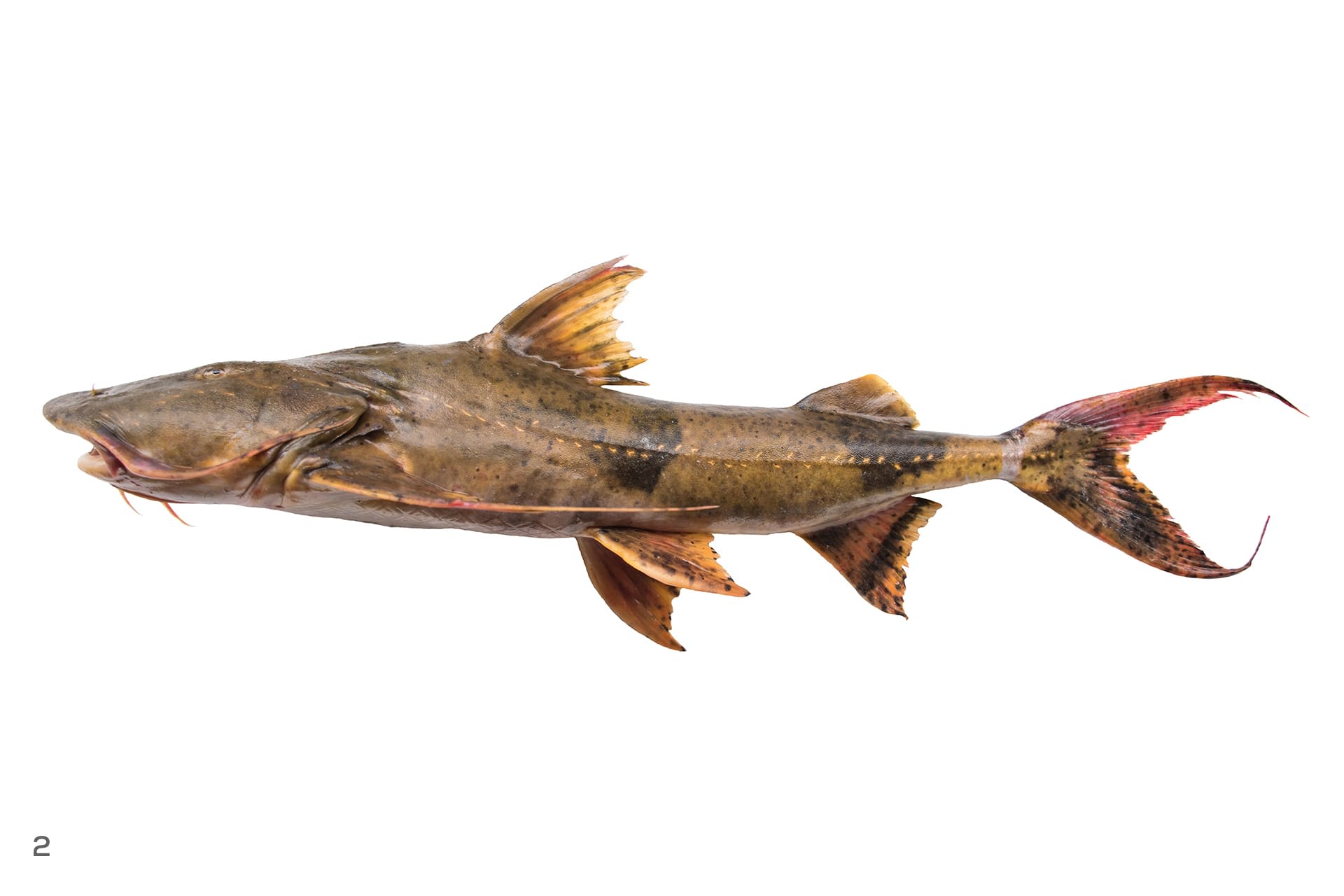
The goonch catfish (Bagarius yarrelli), aka the devil catfish, grows to around 1.8 m (6 feet) in length and is found in major northern river systems in India, including the Ganga, Brahmaputra, and Indus. While still abundant, it has been labelled as “vulnerable” by the IUCN. Major threats to it are uncontrolled overfishing and hydroelectric projects (such as the one on the Indravati River). An aggressive, territorial fish, armed with inward-curving teeth and menacing whiskers, it has an unsubstantiated reputation for being a “man-eater” (thanks to the melodramatic River Monster TV series) and is seen as a challenge for anglers to conquer. The highest honour given by the Mughals to a noble or military commander, “The Order of the Fish”, was apparently named after this ferocious river fighter. It is also revered by Gond and Muria communities in Chhattisgarh, where it is referred to as the “shark of Bastar”.
Ganges shark
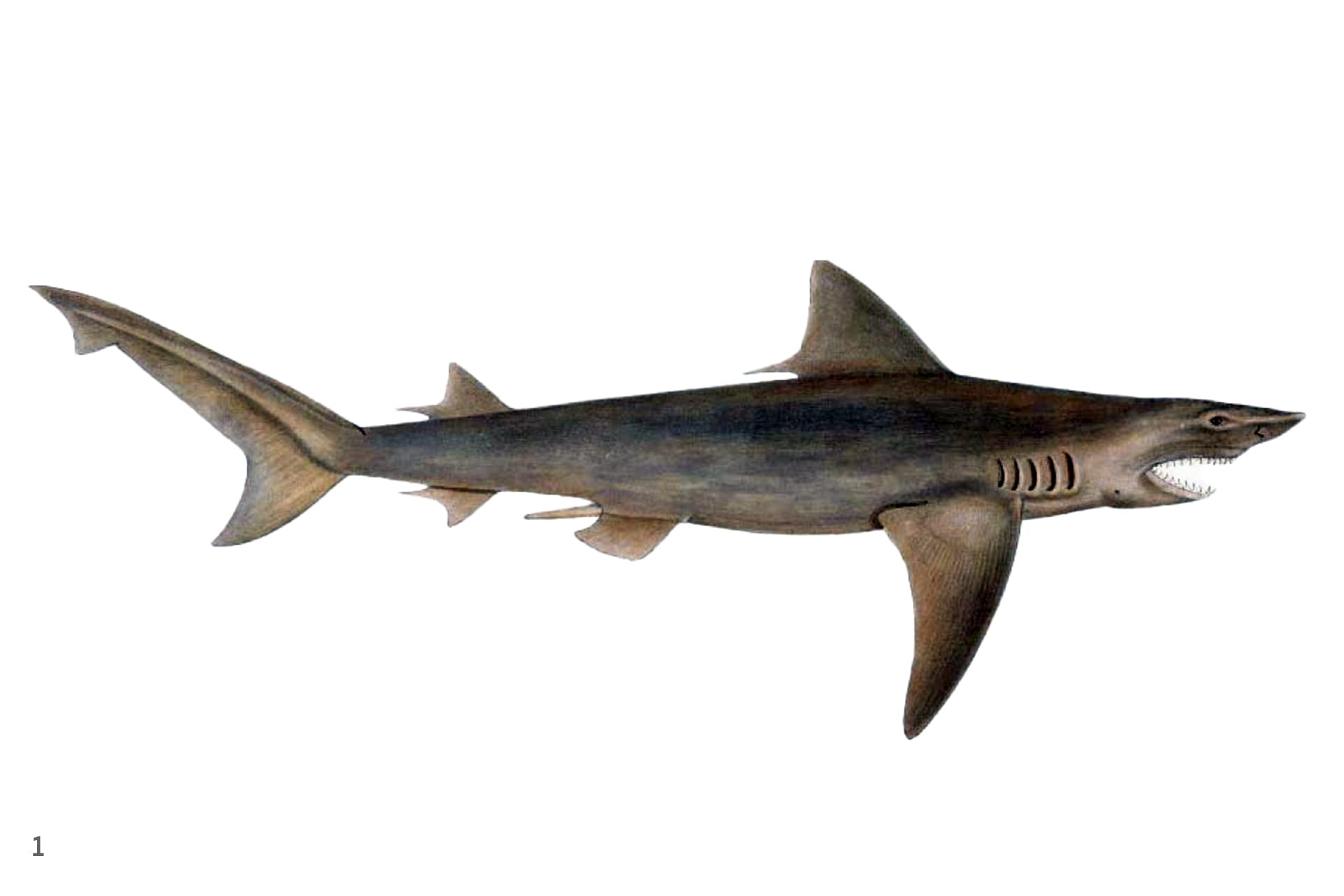
Measuring up to 266 cm, the Ganges shark (Glyphis gangeticus), found in the Ganga, Brahmaputra, Mahanadi, Hooghly, and Padma rivers, is critically endangered on the IUCN Red List due to extremely low numbers and steep population decline. Not much is known about its feeding preferences, though its small, upward-tilted eyes and slender, serrated teeth indicate it is a bottom-dwelling fish eater, relying on electroreception rather than sight to hunt in the turbid waters of its habitat. Its eyes are adapted to see fish swimming against a light/sky background (fish swimming above it). Habitat degradation from pollution, dam construction, overfishing and the use of gill nets are the major threats to it.
As always, our behaviour towards most of these magnificent fish has been abominable. What joy anglers get by hooking something in the mouth, reeling it in, and then releasing it back in the river so someone else can repeat the process beggars belief.
About the Author