
 Listen to this article
•
15:34 min
Listen to this article
•
15:34 min
The sun had set and the chirping of birds was beginning to be replaced by the tweeting of insects and an occasional churring of the nightjar. My hosts had cautioned me against wandering around their estate after dark, yet I lingered, unwilling to leave without a glimpse of the ‘night show’. As the twilight deepened, the sounds of the burbling stream separating me from the Mudumalai Tiger Reserve in Tamil Nadu grew louder in the intensifying stillness. Then it started.
At first, there was a lone twinkle. Soon, a couple more joined in. Within seconds, there was luminescent glitter whirling across the ballroom of the night as if to some hidden music. The fireflies were emerging, invisible, except for the flickering lights on their posteriors. Like nineteenth-century socialites who sent secret messages to their beaus across the room with a wave of their fans, the fireflies’ mysterious flashings encoded an invitation to interested ladies resting in the grass below.
The swirling dance of the fireflies, vibrant and energetic, no less than a kathak dance or a kathakali performance, was a joy to watch. But, for the fireflies, their lights would not be joyful till seen by their lady love—the glowworm or the female firefly. I looked around to see whether the worm-like plump and wingless missus was anywhere around. If she was, I should see her light too. There were so many fireflies, would they all find their mates? How many would mate with a single glowworm? Questions twirled as I looked about in search of a lady in love. I finally found her, but she did not seem interested in the fireworks above her. Then, squatting closer, I was overjoyed to be proved wrong. Her light was faint, but it had begun. She was ready to meet her boyfriend.
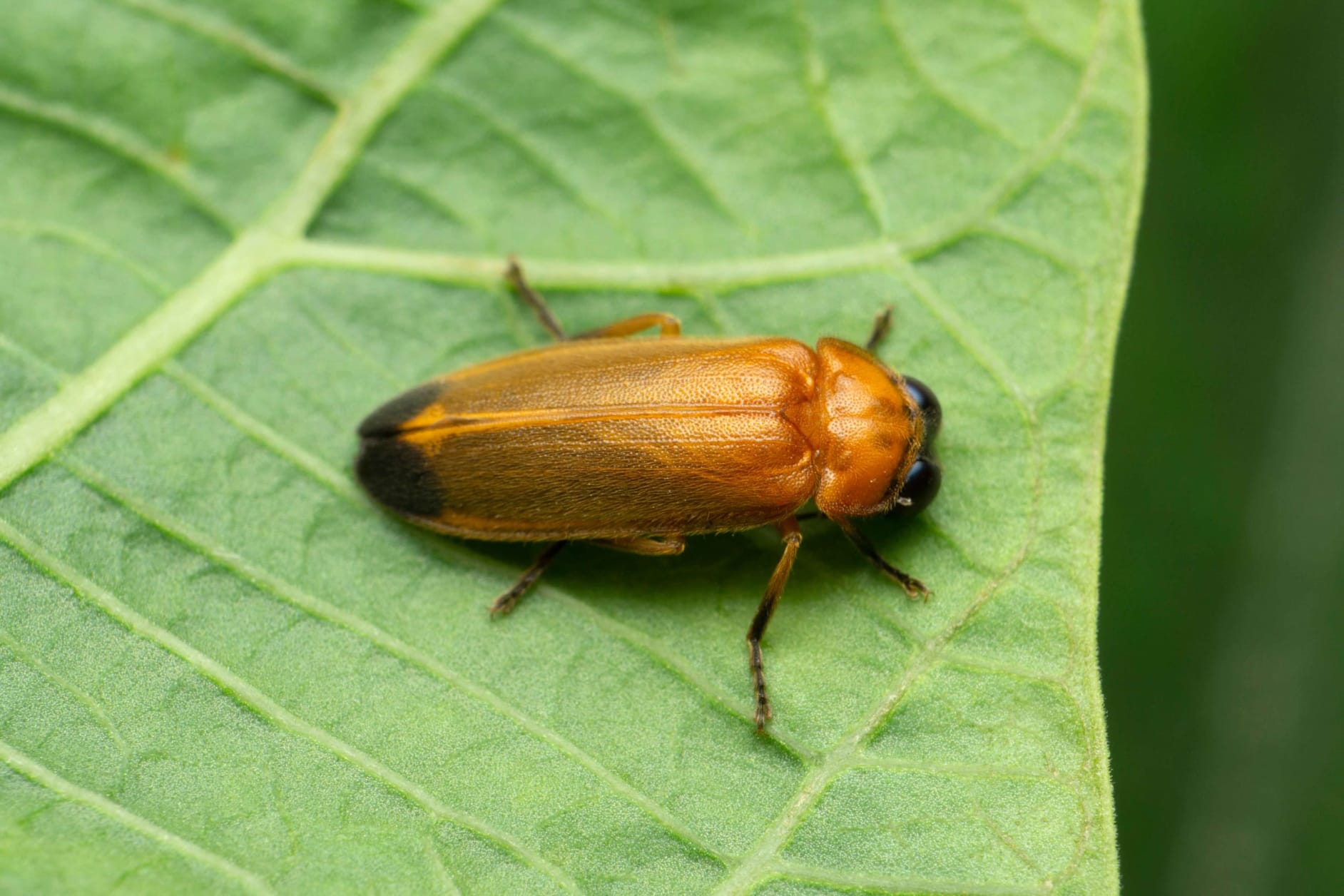
Fireflies are beetles. India is home to some fifty species of fireflies, while globally, nearly 2200 species of fireflies can be found. They have short lifespans as adults that can range from as short as ten days to a year or two. During this time, most of them do not even feed. They have only one goal, to find their mate, copulate and lay eggs to continue their lineage.
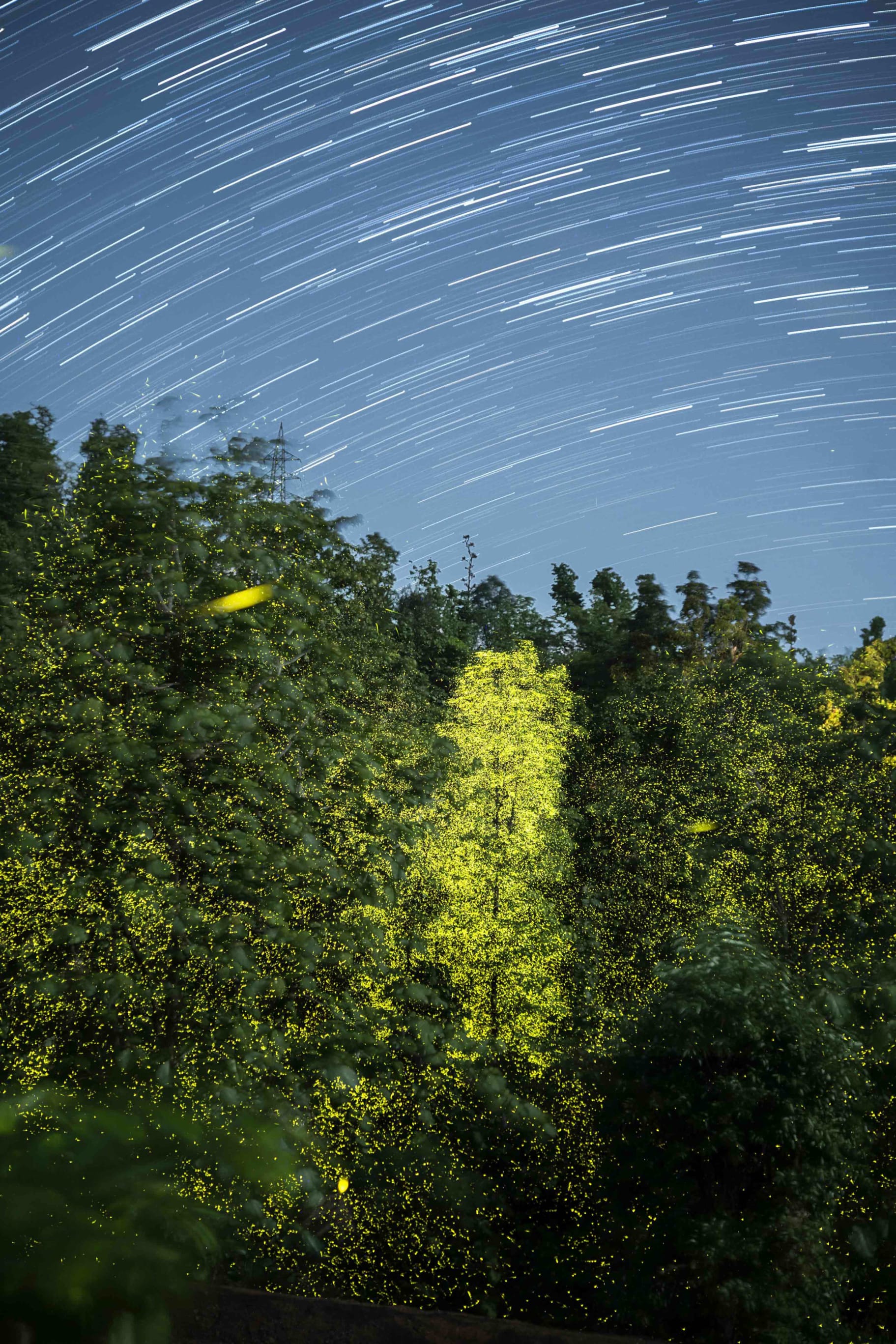
Except for a few species, luminescence is the general path that the fireflies choose to find their mate. Light is their signal to ask for a date. Some of them glow while others flash. Whatever be the mode, it is loaded with information for the female. In those light signals lie the fate of their reproductive success. The flashes, twinkling like stars at night, might appear continuous, but they are not. Each species has its own twinkle—the flash timings.
The courtship light display begins with the onset of dusk. As the males emit light, the females lying in the grass decode those signals. What helps them interpret? The number of flashes, the interval between the flashes, quicker, short or long pulse rates, brighter and energetic ones, are some of the clues a female uses to decide who she wants as her mate. Dr Sara Lewis from Tufts University, who studies them, remarks that the females are quite picky and will not signal their acceptance to any and every male. Knowing how stiff the competition is, the males too up the ante by offering her nuptial gifts. As the adults often do not feed, these nuptial gifts, which are protein-rich secretions, offer nourishment and help her make more eggs. Research has shown that nuptial gifts can double the number of eggs a female can lay.
Lying in the grass, she will consider responding with her acceptance light signal only if the glow or the flash comes from her own species. Dr Lewis contends that the females are also able to decode from the flashes and glows which males are best for mating, or which of them is offering her a sumptuous gift. A female mates with only one male. So, when she responds, she can be in conversation with ten or more males before honing in on the chosen one. It is indeed remarkable how a series of flashes can convey so many details. The females don’t always lie hidden in the grass. Often, they climb up a stalk of grass or another plant so that her flashes are visible to the males flying in the air.
There is much diversity among firefly species. Fireflies fall into three groups. Those that are dark in colour and fly during daytime. These do not produce light. Flightless glowworms— females whose glow can attract even non-luminescent firefly males, and lastly, the flashing fireflies who we are most familiar with. The light produced by the fireflies comes from the lanternlike structures present in the underside of their body segments. If you pick up a firefly (gently, please) and examine their underside, you may see opaque white segments. Depending on the species, they may be located on the eighth or/and ninth segment of the abdomen. They contain a compound called luciferin, which undergoes an enzymatic reaction in the presence of oxygen to produce light that is called bioluminescence.
Fireflies can emit different colours of light generally ranging from green and yellow to red. There is one special firefly species found in the Southern Appalachians that emits blue light. It is known as the blue ghost firefly and its courtship pattern is different. Both the males and females glow. The female resembles the larva rather than the adult and possesses two sets of lanterns—one on the anterior and the other on the posterior part of the abdomen that become visible only when she glows. She will climb up the stalk of a plant and glow to attract the male. The males have large eyes to be able to detect the glow of the females. The males in this species do not flash but they can shut off their light and then switch it on again.
Extensive work on a firefly’s signals and reproduction has been carried out by Western countries and our knowledge comes from their work. We know, for instance, that fireflies can be found in habitats that are wet and moist. It takes about two years for the eggs to develop into adults. A large part of the life cycle of a firefly is spent as larva and all firefly larvae emit light. They are voracious predators of soft-bodied invertebrates like snails, slugs and worms. Look for the eggs and larvae among mosses, leaf litter or rotting wood. Pupation occurs in earthen pits or tree barks, sometimes attached to vegetation or underground beneath leaf litter. In India, the director at the Centre of Sustainable Ecology and Biodiversity Research, Dehradun, Dr V.P. Uniyal and his team, with some researchers from the Zoological Society of India, have been studying firefly taxonomy, but much more work is needed to decode the behaviour and life history of Indian species. Light pollution, combined with habitat destruction, is posing a big challenge to the firefly species whose numbers are steadily decreasing. Artificial lights make it difficult for them to locate their mates. In fact, for insects in general, light pollution has become their biggest challenge.
Excerpted with permission from Miniature Giants by Geetha Iyer. Published by Penguin Viking (November 2025, Rs 699).