 Listen to this article
•
15:34 min
Listen to this article
•
15:34 min
Indi Glow was 28 when he first saw seeds rain from the sky.
The 9th Asian Games, held in 1982 in Delhi, sparked an unprecedented demand for timber from Arunachal Pradesh. Ancient trees were hacked, trunks stripped and shipped to the capital to build stadiums. In their place, as a tokenistic compensatory measure, helicopters scattered quintals of Khasi pine seeds. Glow, who was then with the forest department, witnessed both the hacking and the re-seeding. He would not know that one day he would protect the same forest he had watched destroy.
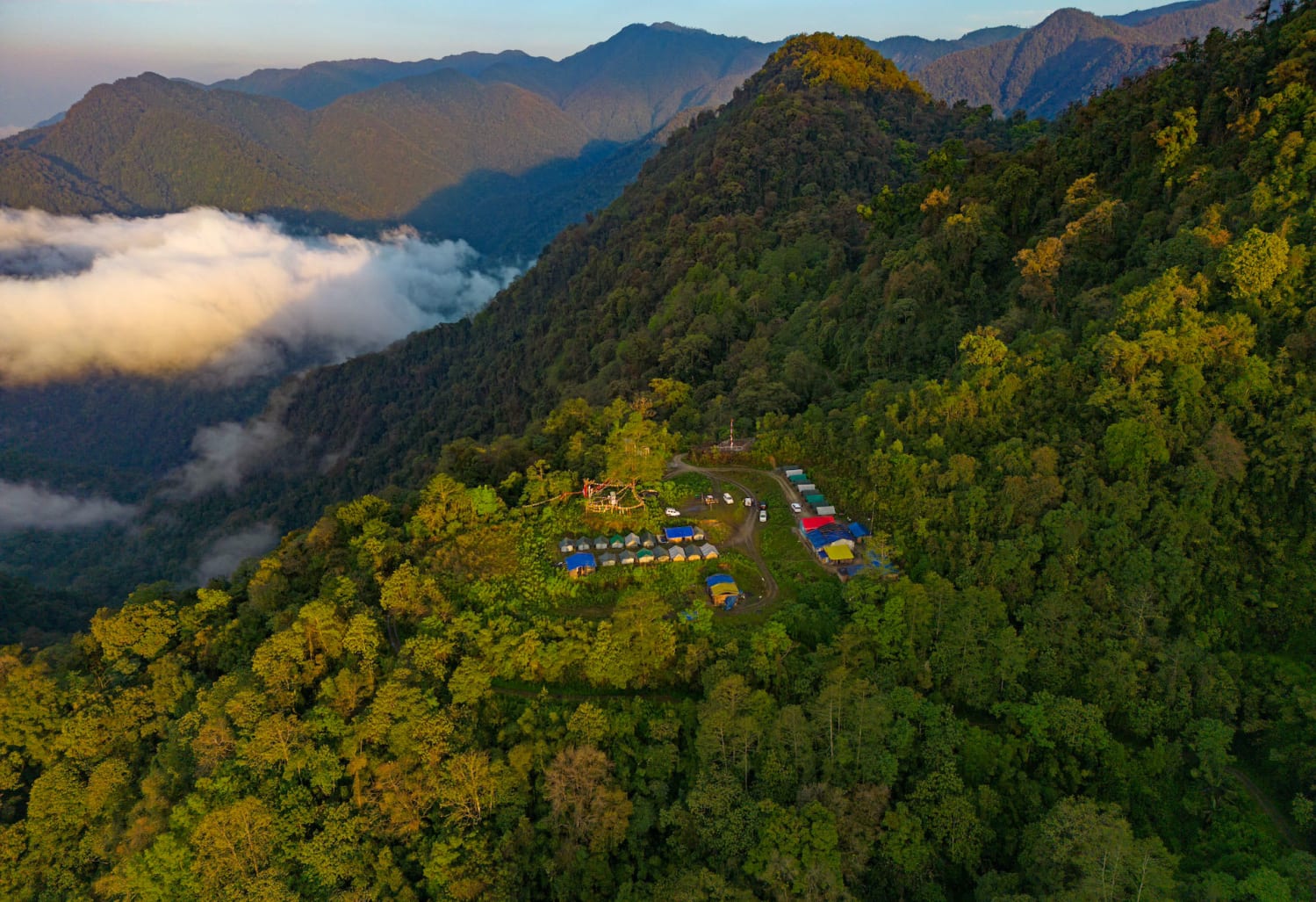
It is December 2023. We are waiting for Glow at Lama Camp, a tourist guesthouse on the edge of Arunachal’s Eaglenest Wildlife Sanctuary, within the Singchung Bugun Village Community Reserve. Once a hub for 1980s logging, this old timber station has been reborn as a camp for birders. Our room is a creaking tin-and-wood structure, standing on knobbly bamboo stilts. To a visitor, the signs of logging are lost. Emerald trees rise and close in on all sides. From the balcony, we see the snow-clad Gori Chen mountains, blazing at dawn, as if the peaks dipped in molten gold, were just pulled out of a furnace. As we take it all in, a car pulls up on the road below. Two men squeeze out of a tiny Maruti Zen. Dressed in fatigues and caps, Glow and his son Tenzing look like men on a mission.

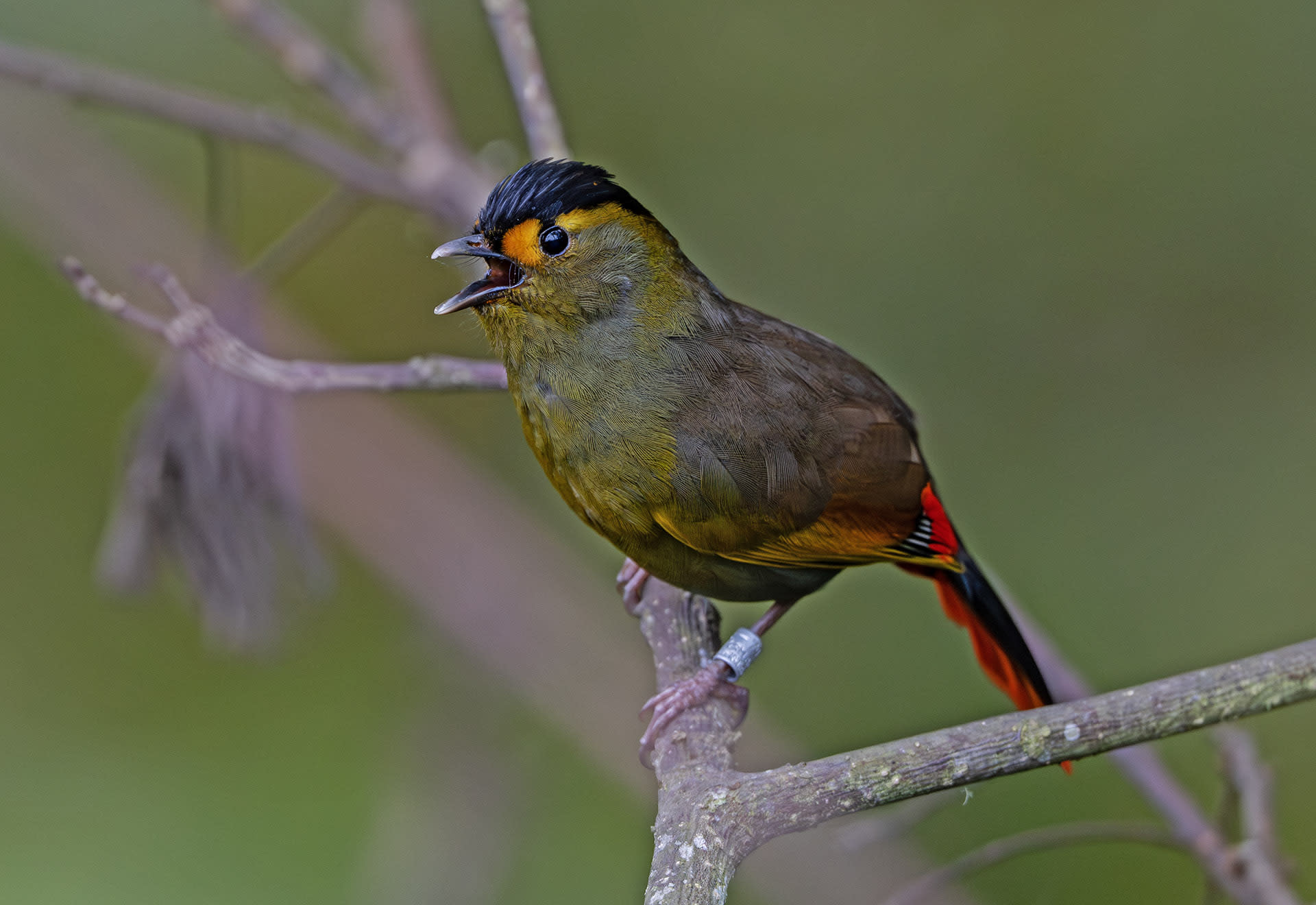
Cover photo: This Bugun Liocichla, a critically endangered bird, survives in a tiny forest in Arunachal Pradesh. Its entire known range spans only about 44 square kilometres.
The Glows are members of the Bugun tribe, one of the two tribes that live on the edge of Eaglenest. With fewer than 2,000 people spread across 12 villages, the Buguns are a small community. The Glows are from Singchung, a village of particular importance. The Bugun Liocichla, the first new bird species discovered from India since Independence, was described declared here in 2006, catapulting the Bugun community and their forest to fame. Since the bird’s discovery, Eaglenest and its neighbouring reserve have become a hotspot for birders and scientists, and a conservation model for other villages.
I have caught the Glows on an exciting day. The Arunachal Pradesh government has chosen the Buguns to represent the state at the 2024 Republic Day parade for their exceptional conservation work. “Some of us had planned to perform during the parade in Delhi, but since the theme is women’s empowerment, the men are out!” Tenzing says, amused.
A Birder’s Paradise
Eaglenest Wildlife Sanctuary, set up in 1989, and the adjoining Singchung Bugun Village Community Reserve, fall in the Eastern Himalayan biodiversity hotspot, one of the world’s biodiverse landscapes. The forest rises from 500 to 3,250 metres, like a staircase that reaches for the clouds, with diverse vegetation at every few hundred metres. It is this elevation that makes Eaglenest rich. The landscape hosts over 600 species of birds, and is one of the richest songbird habitats in the world.
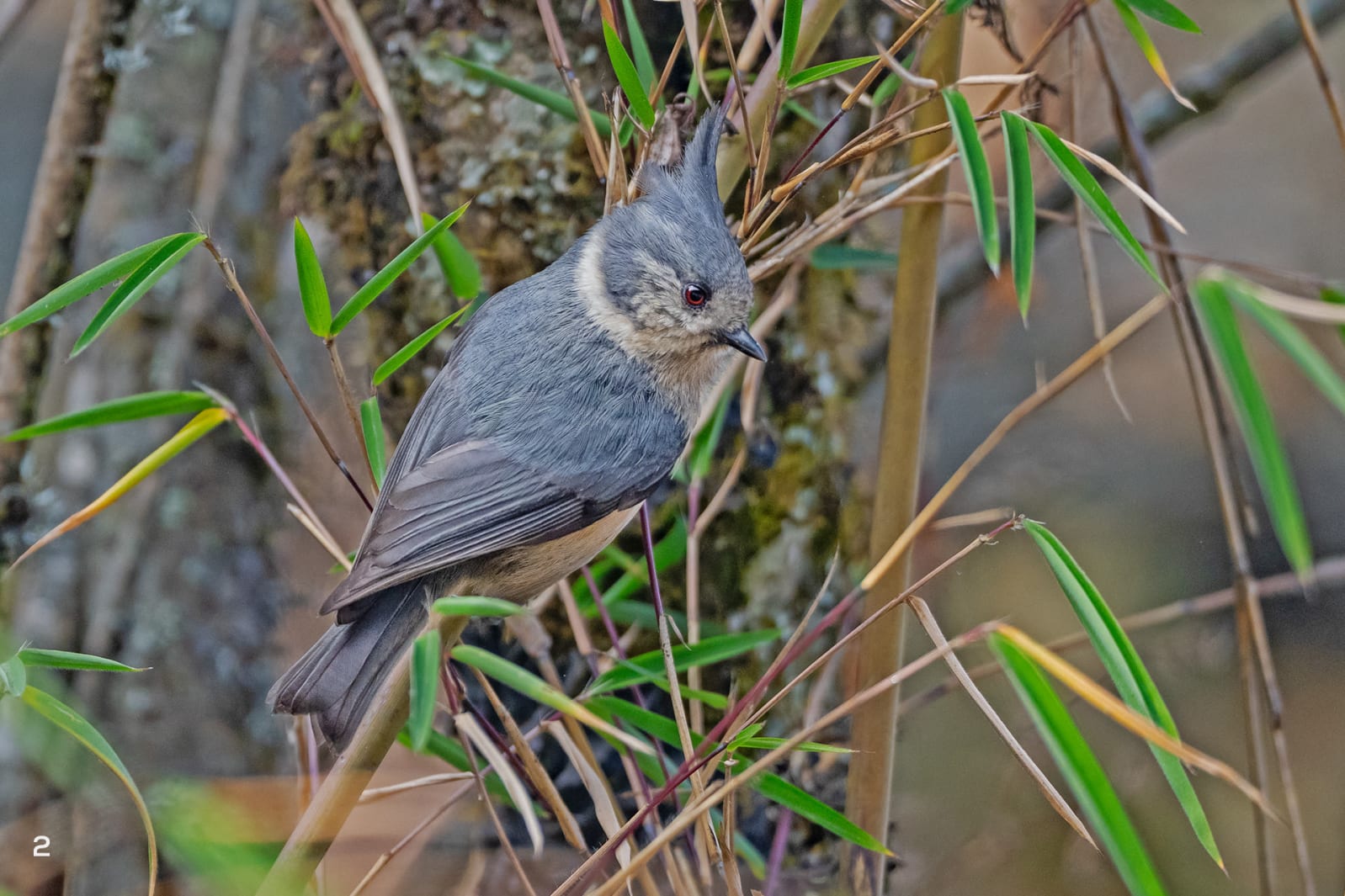
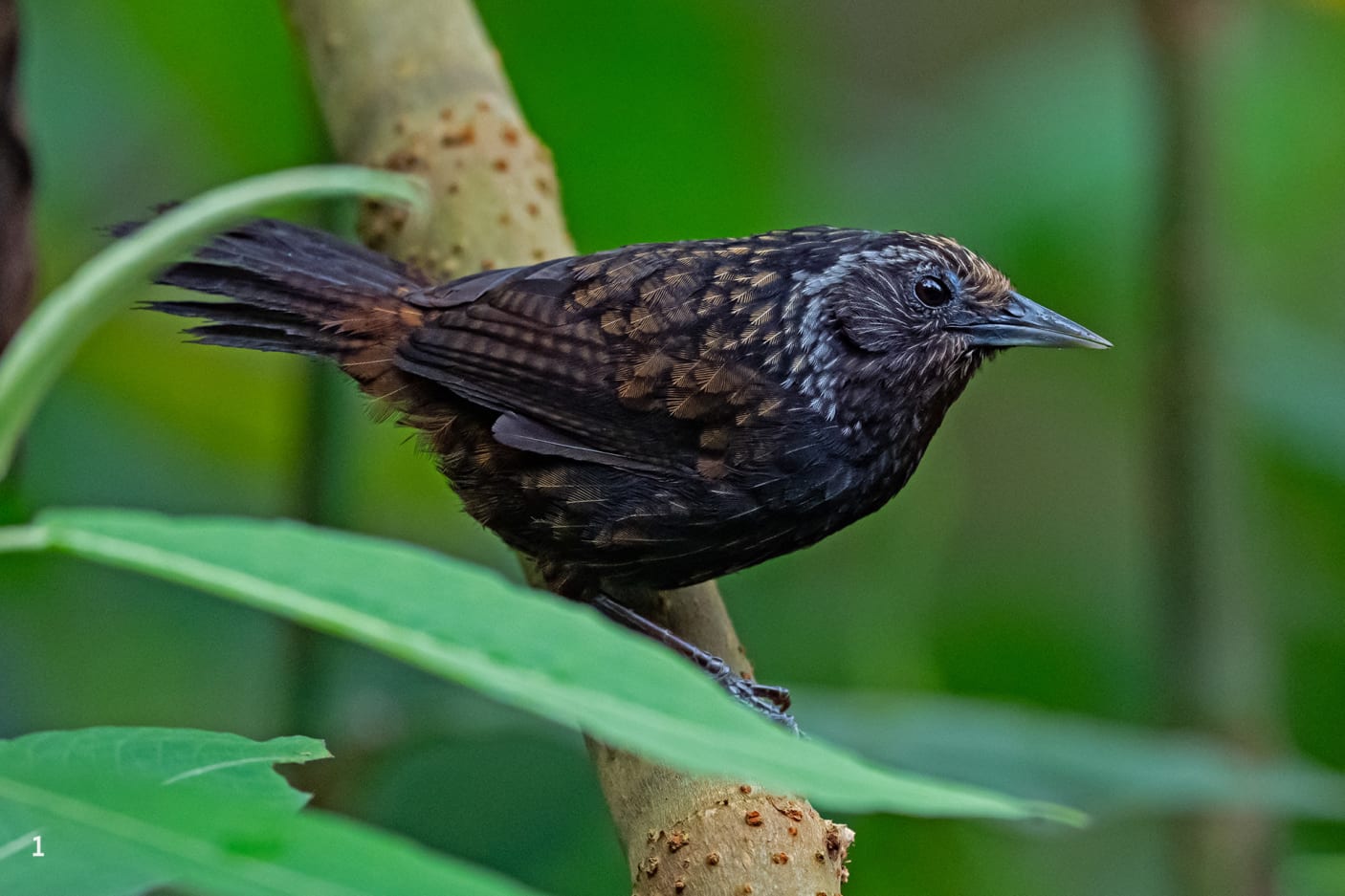
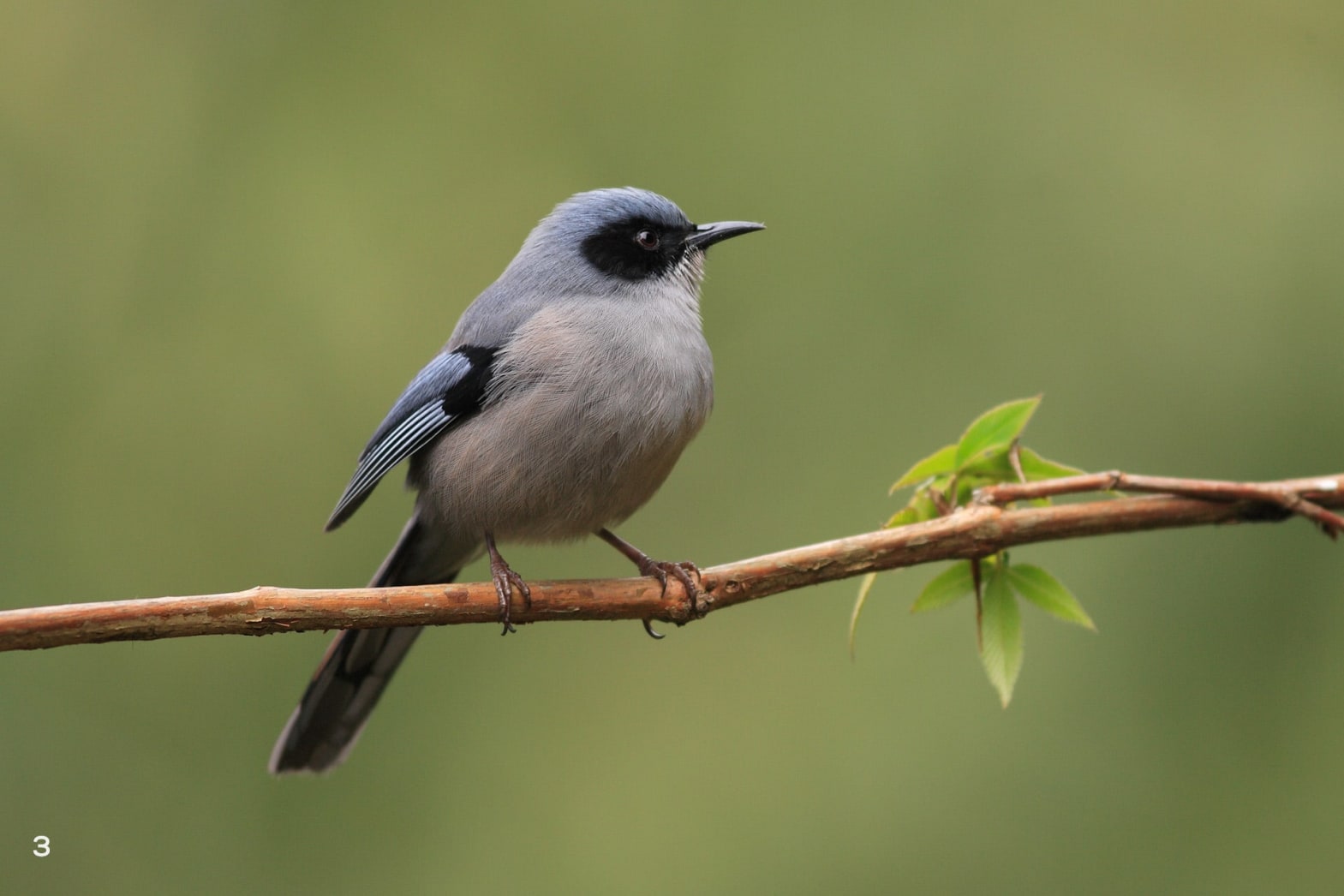
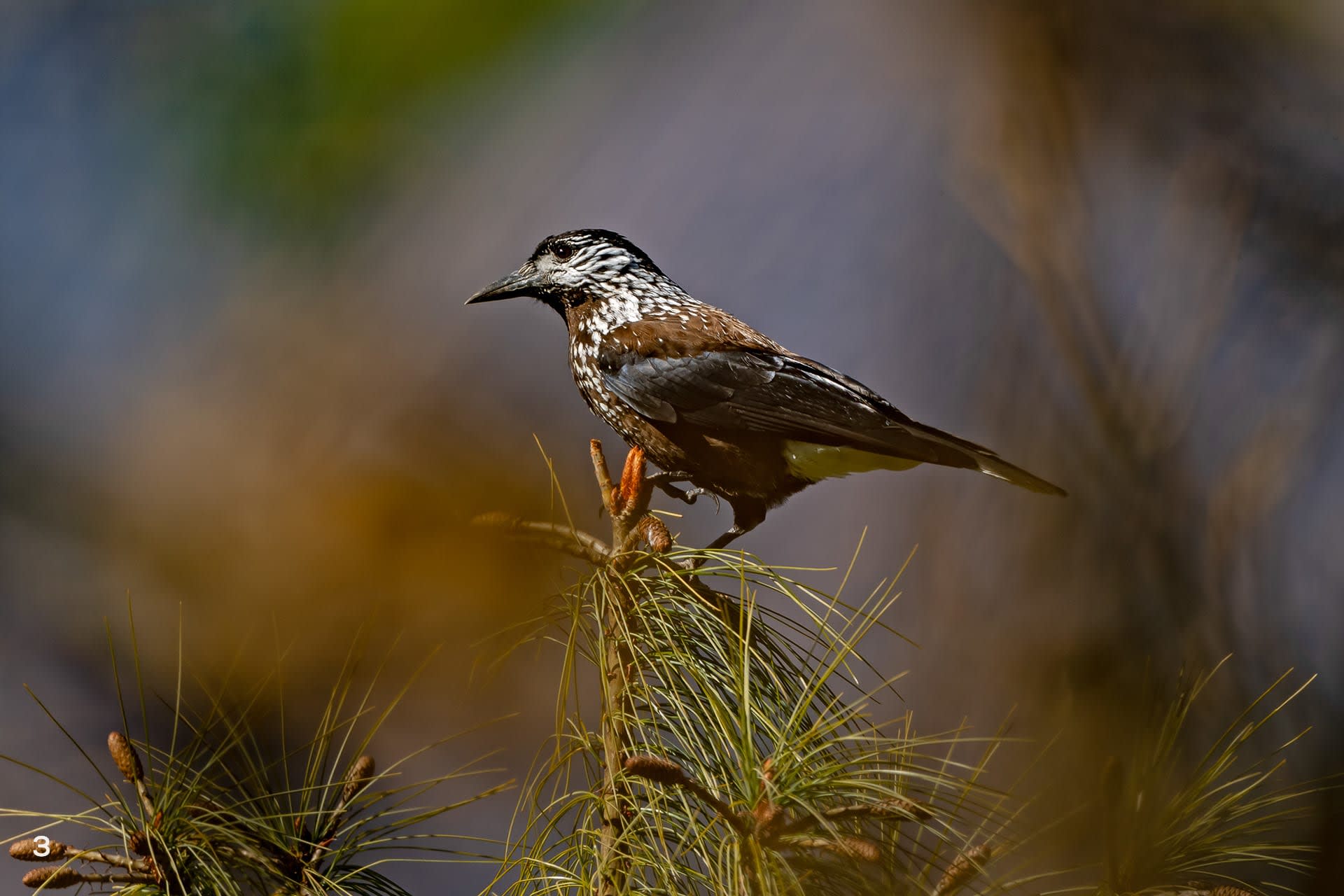
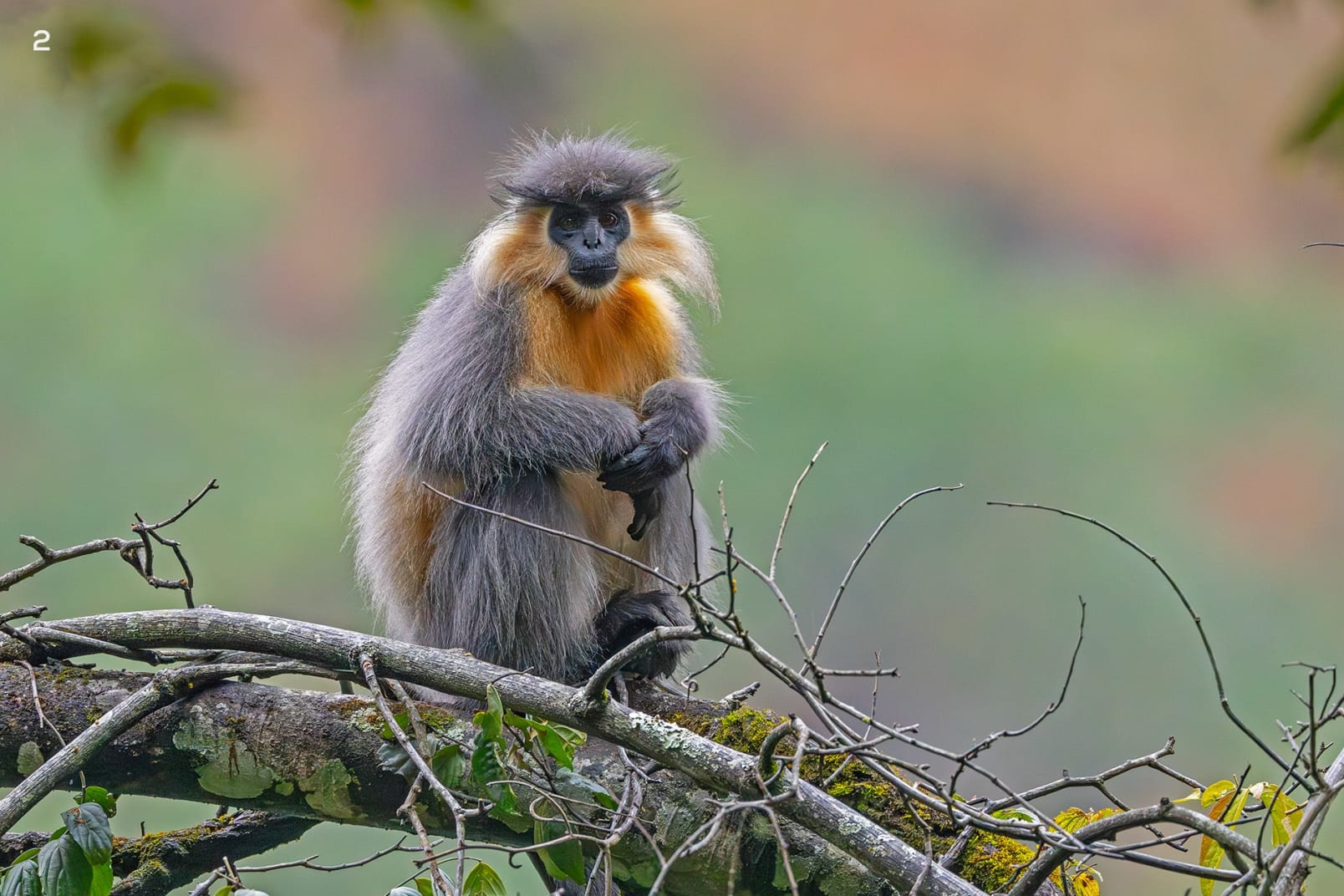
The landscape packs more magic per square foot than most forests anywhere. We have landed here in December, bang in the middle of the season of mixed hunting flocks (birds that collaborate to hunt together and deter predators). Occasionally, 20-40 birds from eight or nine species move in a coordinated wave. I see flashes of lemon yellow, deep red, startling blue, rust orange. Minlas, sibias, babblers, tits, nuthatches, fulvettas, warblers, and an occasional woodpecker. In a single morning, we have seen over a hundred birds. In its deep tangle of impenetrable branches festooned with moss, lichens, orchids and ferns, the rarest wild species thrive. Red pandas crawl through the canopy, roll up into fur balls and snuggle into tree nooks. Small carnivorous cats — leopard, golden, marbled — stalk the forest for prey. Every summer, elephants move up from the Assam plains to Eaglenest, climbing to 3,250 metres above sea level. It is one of those rare places where you see footprints of elephants in the snow. And on its periphery, lives a shy olive bird with one of the smallest ranges anywhere in the world.
I ask Glow about how this journey began and he reels off events in a neat chronology, right back to the arrival of an astrophysicist three decades ago, changing their fate forever.
An Accidental Sighting
By the late 1980s, unsustainable logging was banned in Arunachal Pradesh, and Eaglenest was declared a wildlife sanctuary in 1989. Yet it remained off every birder’s map. Ramana Athreya, an astrophysicist by training and birder at heart, had never even heard of it.

In 1994, while on a month-long vacation in Assam’s Pakke National Park, a local official suggested Athreya visit Eaglenest. For six days, the forest ranger of Eaglenest (who had likely never hosted a tourist before) granted him unparalleled access. He offered guards, free stay, free food, even liquor that Athreya politely declined. Each day Athreya walked 25 to 30 kilometres documenting everything he saw. On one walk, he saw a striking bird dive into the bushes near Lama Camp.
Exhausted, he moved on. “But the bird was unmistakable,” said Athreya, over a phone interview from Pune. The thought nagged him enough to stop by a stream and pull out his bird guide — the Compact Edition of the Handbook of the Birds of India and Pakistan. The “Handbook” has over 800 pages and covers 1,200 species, and yet Athreya found no mention of the bird he had seen. “I dumped my rucksack and ran back,” he said. He would not see the bird again until 2005.
The Bugun Liocichla is a stout, olive-coloured bird with a bad-boy mohawk — jet-black, slicked back — that makes it look like a mafia movie villain. Its beak is sharp and pointed, its feet are pink. Its dull grey tail ends in crimson tips, but when it flicks it, a sudden blaze of red flashes underneath. But near its eye is a flame-coloured patch so vibrant that a fleeting glimpse is enough to imprint itself on anybody’s memory.
The bird would haunt Athreya for years.

Athreya’s Proposal
For ten years, Athreya went birding across the world, including South America, only to realise how rare Eaglenest is. But Eaglenest had an additional, accidental advantage. In the 1950s, the Red Eagle Division of the Indian Army established a base here, and during the 1962 Indo-China War, they constructed a road that linked the Assam plains to the border. (The sanctuary is named after the military division.) That unpaved road still runs through the sanctuary, cutting straight through the forest’s belly, providing access that a birder can only dream of.
In 2005, Athreya decided to come back with a plan. He would put the local community at the centre, and unlike most conservation projects, it would be built on business, not grants. With support from forest officials and a small grant, he approached local communities with a plan for bird tourism. “You are one mad guy to spend money on birds. Where are the other mad guys?” the locals told him, said Athreya. But he knew that much like him, there were birders willing to travel vast distances and live in questionable conditions just to see a species. In birding circles, the most desperate are called “twitchers”. Eventually, the local village council appointed one person to work with him. That was the first time he met Glow.
Athreya quickly advertised a tour on bird forums. Three birders — one from Britain, one from Switzerland and one from South America — signed up. After ten days of touring, Athreya handed Glow seventeen thousand rupees as profit. “Will you give me two years now?” Athreya asked a shocked, much younger Glow. Over several years, Athreya, his team, and Glow would map the rich diversity of species in the forests, some of which had not been documented for 100 years.


However, despite having his hands full, the mystery bird never left Athreya’s mind. Then, a few weeks in, near Lama Camp, it popped out of a bush. “I knew I wasn’t drunk the first time! It wasn’t the local bhaang,” he laughs. The following year, with a group of tourists, he heard its call once more. This time, he launched into action. Over months, feather samples, call recordings, and photographs were collected to confirm its identity. Athreya’s hunch was right. The bird had never been scientifically documented.
The Bugun liocichla became the first new bird species discovery from India since Independence. Its range was barely 44 square kilometres, just outside Eaglenest Wildlife Sanctuary. Its population was about 20 individuals. In a masterstroke, Athreya named it after the Buguns. A rare bird named after a rare tribe that protects its only home is a story that demands attention. It drew press worldwide and overnight catapulted the reserve into fame. Eaglenest was suddenly on every birder’s list.
“Glow was foundational to all of it,” says Athreya. Glow had the community’s trust, understood conservation, but most importantly, like Athreya, he had vision, the ability to see the bigger picture. “For three years, he worked without any personal benefit. He trusted me. He didn’t need to do that.”
Glow’s Risk
“I took a big risk,” says Glow. “I wanted to know, what’s in it for us? What’s in it for the Buguns?” he adds.
The Buguns believe nature is sacred. Tenzing grew up hearing stories of how the tiger and the elephant were their kin. In the oral Bugun language elephants are called niya thong, but Tenzing refers to them as “achin” or grandfather, like do most Buguns. The Buguns, like the bird, are also a threatened tribe. The small population’s oral language, without a script, is listed in the Catalogue of Endangered Languages. Only one priest remains who can perform the rituals for their traditional festivals.

For Glow, the liocichla was more than just a rare bird. The streams that supply Singchung’s water, flow through the bird’s range. Protecting the bird’s range is protecting the village’s water source. In 2008, heavy rains sent boulders tumbling to their doorsteps. Without the forests standing in their way, they would have sped further and faster, destroying Singchung.
In 2017, after years of meetings and consultations with scientists and forest officials, the Buguns set aside 17 square kilometres of their community land to form the Singchung Bugun Village Community Reserve. They would not hack trees or clear the land to farm. Instead, 12 men from the community were trained and employed to patrol the forest and guard it from poachers and loggers.
In the first year alone, the programme broke even, bringing in about 17 lakhs for the community and conservation.
A Slow Synergy
“I thought I would work in this space for three years and wash my hands of it,” says Athreya. It will be 23 years this year. Now with Buguns entirely in charge of local tourism, Athreya is engaged in documenting rare butterflies and moths in the forest.
Over the years, tourism has become one of the primary sources for jobs in the region. Camps take bookings almost a year in advance. Men and women from Singchung work as patrolling staff, guides, cooks, and research assistants. Recognition has followed. In 2012, the Bugun liocichla appeared on a national postal stamp. In 2018, the Singchung Bugun Village Community Reserve won the India Biodiversity Award, given jointly by the environment ministry and the UN.

For the Buguns, if the forest is a source for livelihood and pride, for scientists, it is a living laboratory. In 2010, Umesh Srinivasan, then a PhD student at the National Centre for Biological Sciences, Bangalore, set up a research station (a wooden hut, fitted with hammocks, shelves, and a clay stove) at Bompu Camp, on the other end of the sanctuary to study the impact of climate change on birds. Over 15 years, Umesh has hired and trained (in research practices) five full-time field staff from the local villages and hosted over 30 students. Other researchers continue to expand
Eaglenest’s list of remarkable finds. In 2011, Sanjay Sondhi discovered the Bompu Litter Frog — a species previously unknown to science — from a small stream near Bompu Camp.
The strongest sign of success came in March 2024, when the Buguns set aside another 15 sq km of the Bugun liocichla’s range to create the Braiduah Community Reserve. According to the India State of Forest Report (ISFR 2023), the Northeast lost forest cover equal to three times Delhi’s area since 2003. In times of habitat loss, a new reserve is nothing short of a gift.
On a recent call, Tenzing fondly talks about the Republic Day parade his father and he saw from the stands. In videos, I see a tableau dressed as a forest move slowly. Bugun women dance to folk songs around it, while mannequins with binoculars stand at the back. Red pandas crouch, and monals spread their plumage. But above them all, a giant olive-green bird flaps mechanical wings, watching over its once threatened, now secure home.
A version of this story was first commissioned by Frontline Magazine and published in the November 30, 2025 issue.
About the Authors