 Listen to this article
•
15:34 min
Listen to this article
•
15:34 min
Thinless Angmo of Aksho village in Zanskar lost five goats in one night in 2018 to what she called a “wild alliance”. According to her, a bear had been trying to get to her goats. Each time, the goats escaped, taking advantage of the bear’s size and inability to run fast. However, this time, the bear had a plan and came with a pack of wolves. As it broke down the corral door, the goats darted out to be ambushed by wolves. When Thinless (this and all names in the story have been changed to protect privacy) stepped out, she saw the bear feasting on one of her goats and the wolves on the other four. Later, Thinless, who lived alone with her five-year-old son, interpreted this wild alliance as a plan by the Universe, as her husband, who was working far away, coincidentally returned after the incident.
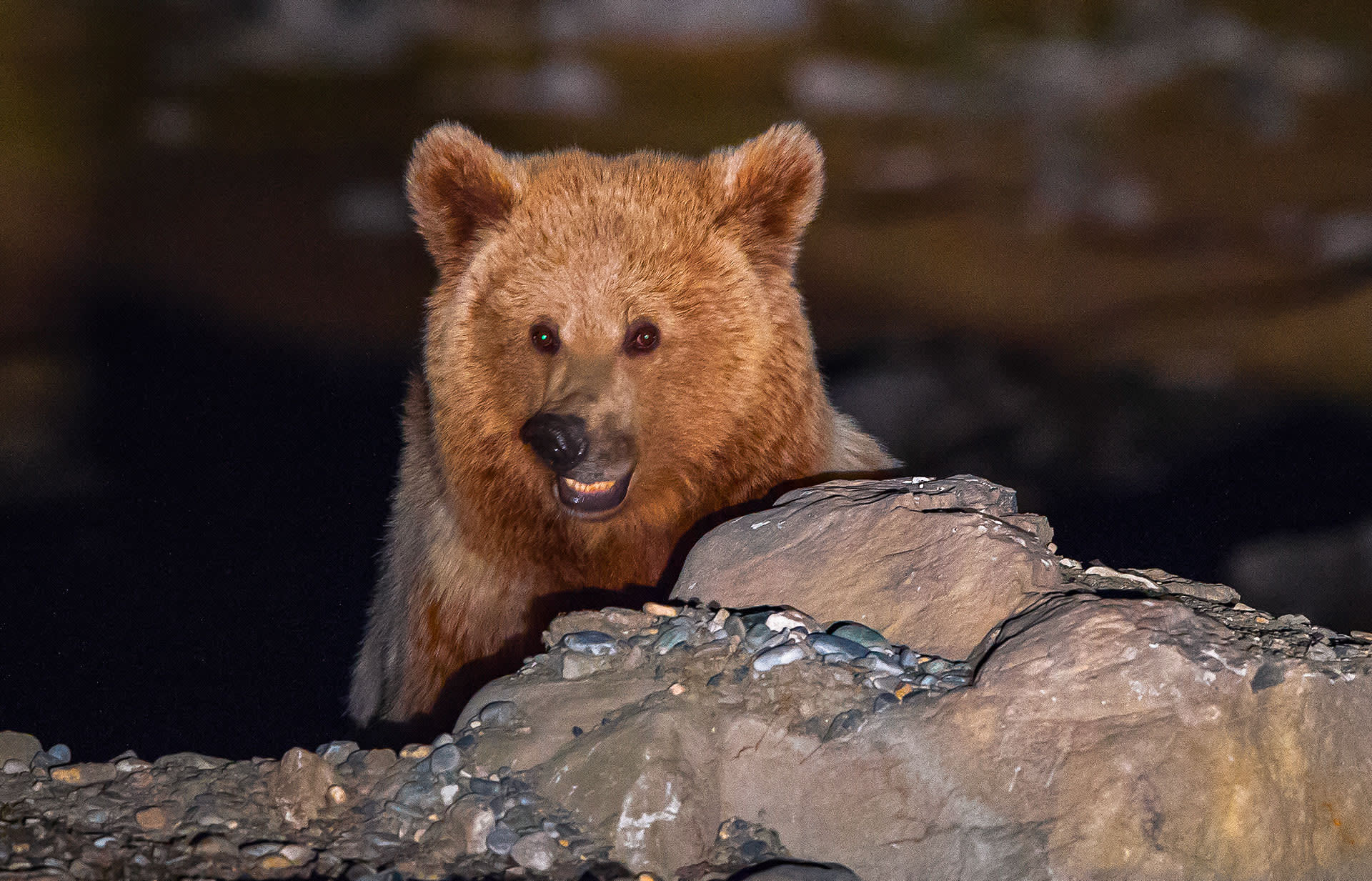
Stories like this, of bear break-ins and predation, piqued my curiosity in bear behaviour when I first arrived in Leh in 2017. While Ladakh has a presence of Himalayan brown bears (Ursus arctos isabellinus) (HBB), they have barely been studied. The first news of bear interactions began to trickle in from the Zanskar region, prompting me to shift from snow leopard conservation to research human-bear conflict in the higher Himalaya. Since 2017, I’ve travelled from Zanskar and Kargil in Ladakh to the Manali-Kulu region in Himachal Pradesh with the Snow Leopard Conservancy India Trust as an independent researcher.

Cover photo: Dhritiman Mukherjee
The bear mystery
In September 2017, Tundup Dorjey, who owned an enclosed spring water-powered rantak (watermill) in Ubarak village, central Zanskar, took the drastic step of smearing its walls with pesticide-laced flour. He was fed up with bears coming to his watermill and breaking the roof to eat the barley flour inside. He had already had his roof fixed twice at significant cost. Not knowing how to stop the bear, he thought licking the poisoned flour from the wall might kill it and keep his mill safe. However, the bear smelled the pesticide and didn’t lick the flour.
Unlike snow leopards and wolves, whose presence in the Zanskar and Kargil regions is well known, community elders in these areas had not heard of Himalayan brown bears in their childhood (Chavan et al. 2021). Since around 2015, however, bears have been venturing into new territories — initially from the periphery of Zanskar into the whole of the Stod Valley, and later to Zunkhur in central Zanskar.
Many questions arose that required further study: Why were the HBBs entering human settlements now? What was changing in their original habitat? How did people perceive bears and handle the new challenge? And what were communities learning through experiences or stories of bear interactions from elsewhere?

My work requires me to spend time and camp alone in the mountains. Once, a Himalayan brown bear followed me for two days. I had camped for the night in a valley bordering Zanskar and Piddar, when the bear became curious, it came within 30 feet and sat watching my tent. The next morning, I thought the bear had left. But by evening, I saw it strolling on the slope close to my new campsite and recognised it by the white patches on both ears and a visibly pale coat. That night, the bear returned and sat at a safe distance from my tent for more than an hour, till a pack of free-ranging dogs came by and chased it away.
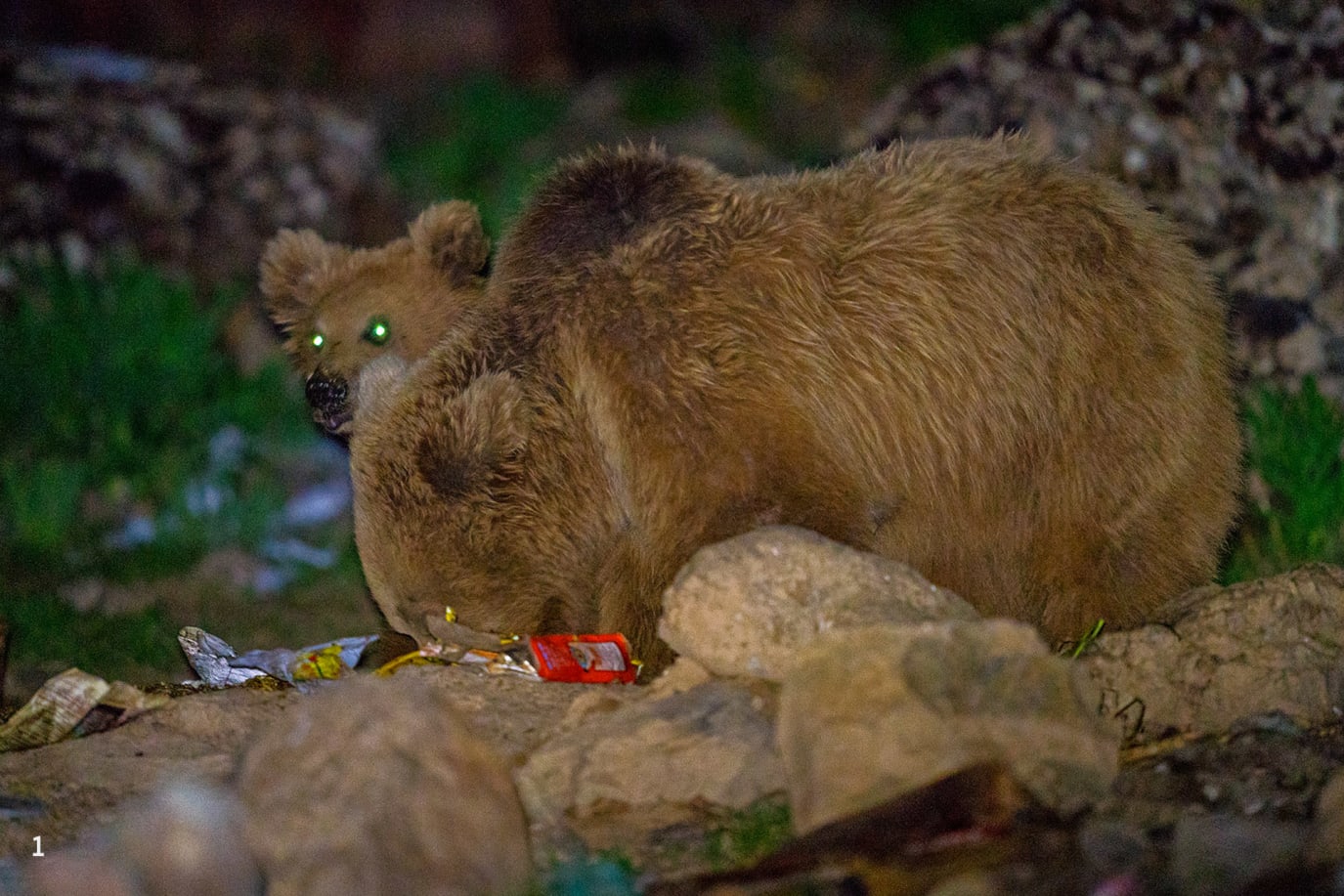
As I trekked to remote valleys to map their habitat range, set up camera traps, interviewed communities, and studied the bears’ behavioural patterns, what began to fascinate me was their remarkable intelligence, curiosity, and distinctive behaviour. I was captivated by the HBB’s ability to adapt and challenge human perceptions of them. While HBBs in Uttarakhand, Himachal, and the Drass region in Kargil are reported to largely predate livestock, in Zanskar, they enter houses to raid kitchens and cause property damage. In Akshu village in Zanskar, a bear’s curiosity led it to rummage through medicines after breaking all the windows of an ambulance.


Bears, the new neighbour
Brown bears are known for their problem-solving skills and using tools to tackle deterrents to their favourite food, according to a paper published in Animal Behavior and Cognition by Chambers, H. R., & O’Hara, S. J. (2023). They can also overcome obstacles like electric fences. The HBB is no different — my study in 30 Zanskar villages showed that they raid people’s homes for sugar and rice, indicating a preference for high-glycaemic-index foods, which are needed to replenish fat reserves. Many bears I personally recognise are seen outside their dens during winter, either because they are unable to accumulate sufficient fat reserves or because they prefer not to den when food is available in villages.
According to local people, when bears started occupying Zanskar, mother bears would bring their cubs to the riverbank, place a stone on one cub so it could not run away, while carrying the other cub on her back across the river. They would similarly place a stone on that cub before returning for the first cub. Cubs often drowned or died during this crossing. After bridges were built across the river, bears were seen using them, increasing their survival rate and facilitating their expansion into new territories. In 2018, following a reported bear attack on livestock in an area with no prior bear sightings or attacks, I traced bear footprints to the newly constructed water channel trench that extended two kilometres across a mountain behind which bears were often seen. The bears used human-made structures to access food and water.

Water crises caused by rapidly melting glaciers prompt people to tap and divert natural spring water resources. Bears, known for not wandering far from water resources, are also driven by the same need to villages. In Zanskar, bears caused lower financial losses because they primarily damaged property, whereas other predators, such as snow leopards, killed livestock. However, bears were seen as more threatening because they came into close contact with people.
When stories influence perceptions
What intrigues me is how the bears have made a lasting impression on people’s minds in such a short time. In a study of three villages in the Lungnak Valley, Ladakh, residents exhibited high tolerance toward snow leopards and wolves but feared bears, despite bears being absent from the area. Interestingly, while most men expressed fear towards bears, more than half the women interviewed showed little or no fear. People recounted stories from the Stod Valley, where, over the past 10-15 years, bears have come to symbolise bad karma or manifestations of spirits that punish people for their wrongdoing. In some Buddhist traditions, bears can symbolise greed, wrongdoing, or transformation. Sometimes, I wonder whether, in a rapidly changing world, their presence is really telling us something about ourselves?


In Himachal Pradesh’s Kulu region, where I am currently working, dense forest landscapes are the perfect habitat for the Himalayan black bear. Their thick black coats make them difficult to spot, resulting in numerous accidental attacks. In August 2024, I interviewed 40 individuals after incidents of bear attacks on humans — the death of a woman, scarring of a man’s face, and another woman’s leg broken, near a cluster of villages below Chandrakheni Pass. The severity of these incidents was higher than in Zanskar; however, people’s reactions ranged from mild annoyance or indifference to sometimes being unaware of bear presence in their area. As a tourist destination, people showed greater concern for livelihoods than they did for bears.
Where is the threshold?
Due to changing climate and immense pressure on habitats, human-wildlife conflict and aggression are on the rise, whether it’s bears, elephants, leopards, or free-ranging dogs in urban areas. As I observe the new and evolving human-bear encounters in both regions of the high Himalaya, I often wonder at what point the situation turns, and communities become hostile. What are the triggers for a community’s negative attitude towards wild animals in an increasingly anthropocentric world, where coexistence is limited? Does it turn when communities face losses or compete for shared resources? Or does it shift because of the stories that we hear and like to believe? What happens when shared resources disappear completely? Even after years of research and observations, I am left with many stories and even more questions than I started with.


About the Authors

Kirti Chavan