Listen to this article
•
15:34 min
Listen to this article
•
15:34 min
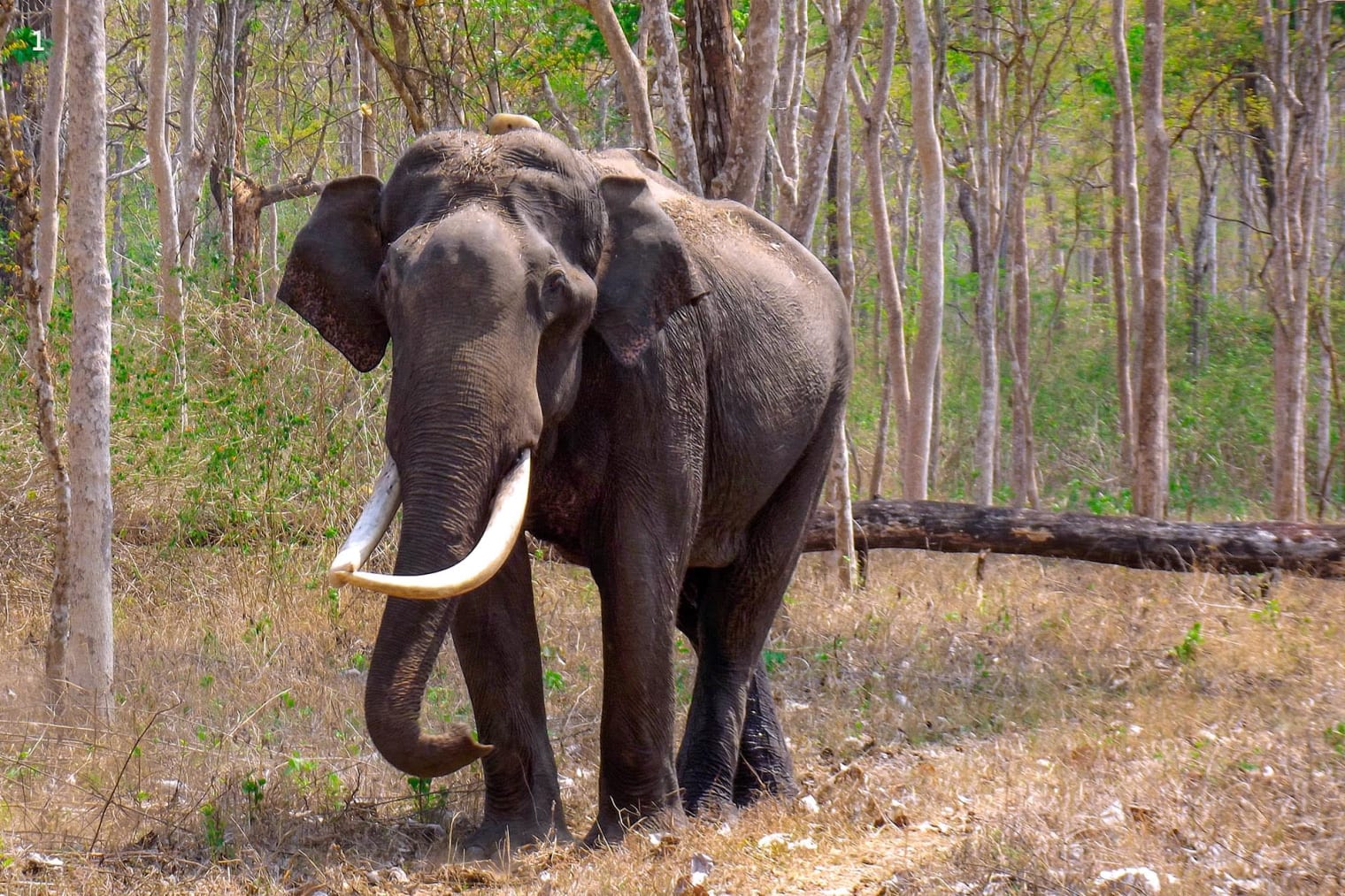
I’ve spent almost eight years tracking several wild elephants in the jungles of southern India. On one occasion, I was following a magnificent wild tusker that people in Wayanad lovingly called Maniyan. He was easy to recognise, his long, cross tusks a familiar sight along the roads of Wayanad, where he spent most of the year. Every summer, when he entered musth — a period of increase in reproductive hormones, when male elephants become more aggressive and seek out females for mating — he would head deep into the forest. I was tracking him during these musth seasons using a radio collar, both in the forests of Wayanad and in Bandipur Tiger Reserve. I spent nearly every day with him over five musth seasons.
Each year, Maniyan joined different herds and stayed with various females. As a researcher, I was eager to observe him mating in the wild. But I usually saw him only briefly, often when he crossed forest roads. The forests, thick with invasive plants, made it hard to see or follow him.
One hot day in March 2014, my WWF field team and I were in Bandipur Tiger Reserve searching for Maniyan. He had walked over 30 kilometres from Kerala to Karnataka. He was in musth and spending his time checking female elephant herds for a mate. We were trying to track him using signals from his radio collar. Until the evening, we couldn’t see him or any other wild animals — except a few spotted deer (chital). The visibility was terrible. The main culprit? Lantana camara, a fast-growing invasive plant that has taken over much of the forest.
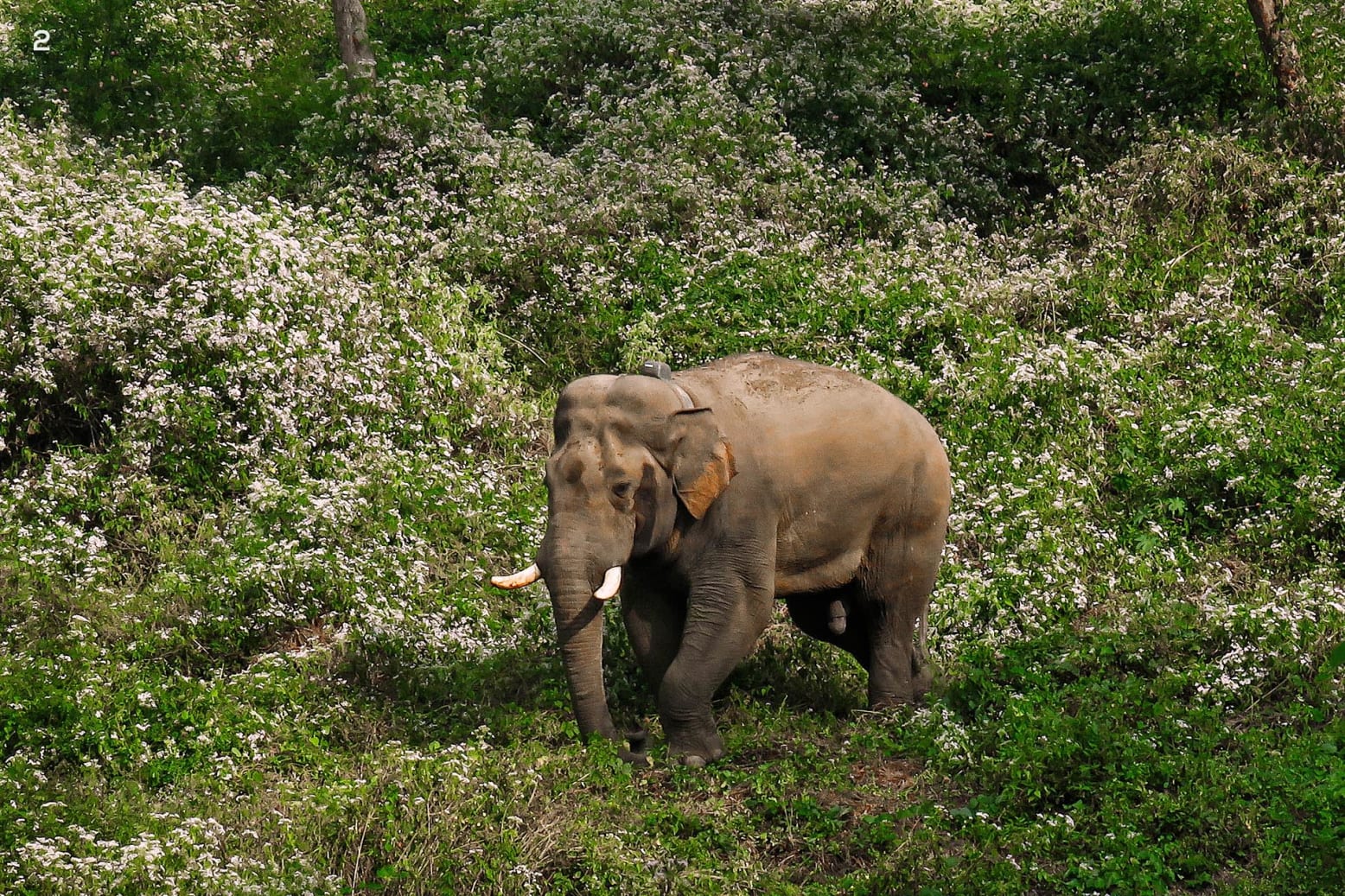
Lantana forms dense, thorny thickets that can grow taller than a person and are nearly impassable. The plant creates an impenetrable wall on both sides of the road. We had to climb onto the jeep roof with a radio antenna to try and pick up the elephant’s signal.
Finally, we got a signal near a forest track close to Kalkkare. Our forest watcher, Chandra, said there was a waterhole nearby, and Maniyan was probably there. But reaching it meant walking through a narrow path surrounded by tall lantana. It was risky — tigers and elephants used the same path.
We decided to go anyway, hoping to catch a rare sight of mating elephants. The air was heavy with the distinct smell of an elephant in musth — a strong odour emanates from a gland near the tusker’s eyes. We moved slowly and silently but couldn’t get a clear view — only walls of lantana on both sides.
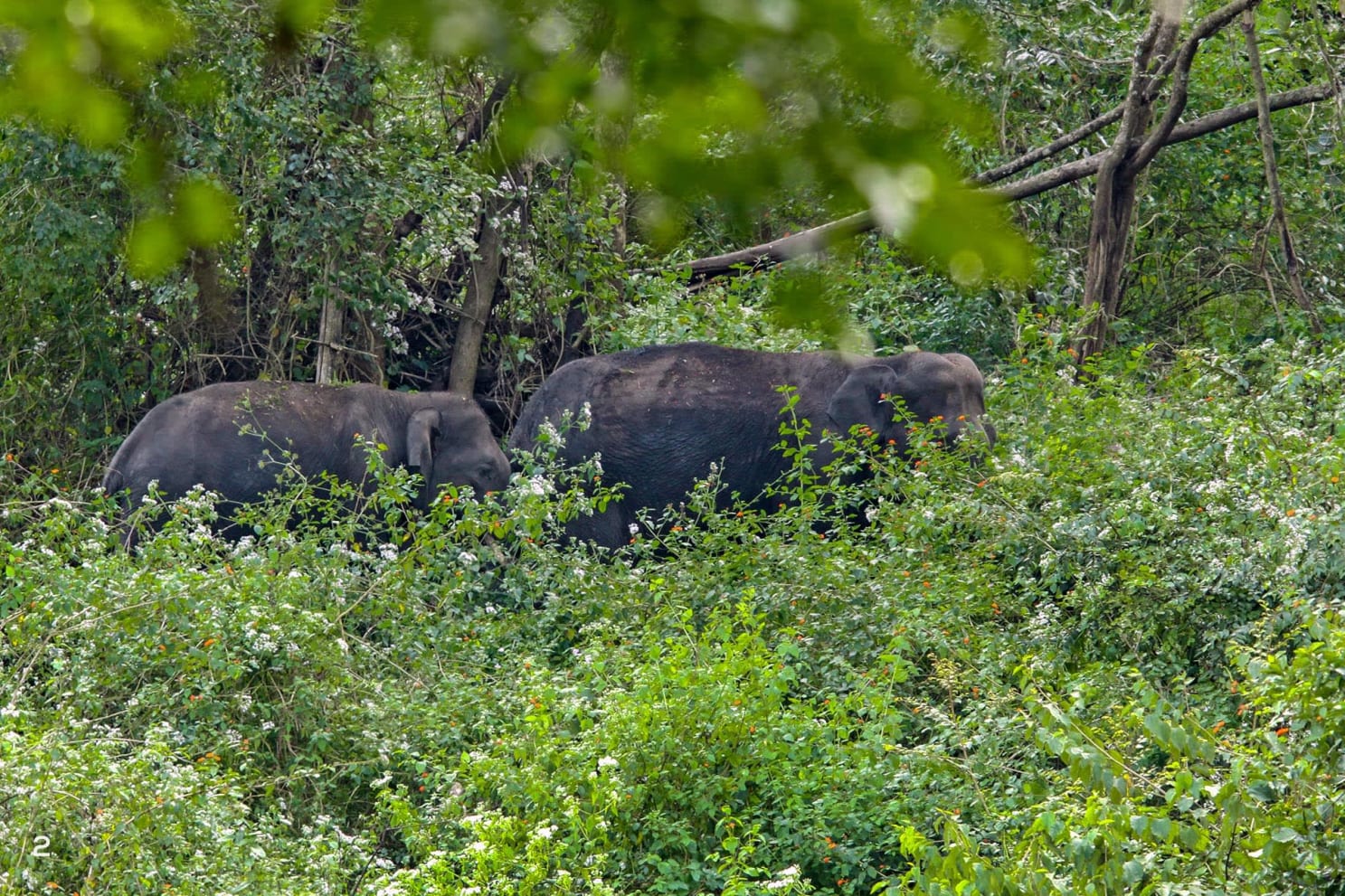
We reached the waterhole, but it was empty, and we debated whether to go further. Though it was risky, curiosity got the better of us, and we continued ahead. Suddenly, Chandran knelt. I looked ahead and saw Maniyan walking toward us — his long cross tusks gave him away instantly. We didn’t have time to say anything. All of us crouched down, turned around, and quickly retreated. Back at the jeep, I climbed atop the vehicle to try to spot him — but all I saw was an entire forest floor covered in lantana. There was no place to walk, no grazing ground for animals. It made me wonder: How do elephants survive in the long term in such a landscape? How much of the forest is still usable for them?


The Silent Takeover of Our Forests
In recent decades, the forests of South India have been quietly invaded by plants such as Lantana camara and Senna spectabilis, changing the habitats of elephants and other wildlife. Some believe these invasives contribute to rising human-wildlife encounters, while others argue there isn’t enough evidence. Some groups even claim wildlife numbers have grown too much. What is clear is that conflicts occur even in areas where invasive plants are absent, meaning the problem has multiple causes. Despite the seriousness of the issue in the Western Ghats, detailed research remains scarce. Basic information, such as wildlife numbers and the extent of invasive spread, is still largely missing.
A Landscape Under Pressure
Take the Nilgiri-Eastern Ghats landscape as an example. This includes Wayanad, Bandipur, Nagarhole, Mudumalai, and Sathyamangalam, all hotspots for human-wildlife conflict.
A 2016 study showed that 38 per cent of Bandipur Tiger Reserve was heavily infested with lantana, and another 50 per cent was partially affected. That means almost 90 per cent of the reserve has some level of lantana invasion. Herbivores like deer, gaur, and elephants find it harder to feed in these areas.
In Mudumalai Tiger Reserve, over 50 per cent of the forest is covered in lantana. Though we don’t have exact numbers for Wayanad and Nagarhole, field observations suggest similar conditions. Neighbouring reserves, such as Sathyamangalam and BRT, are also affected.
This landscape is home to over 7,000 wild elephants — the largest population of Asian elephants anywhere in the world. It also supports around 828 tigers, the highest number recorded in a single connected forest area. Naturally, this means there should also be plenty of prey animals like deer and gaur.
When Grasslands Disappear
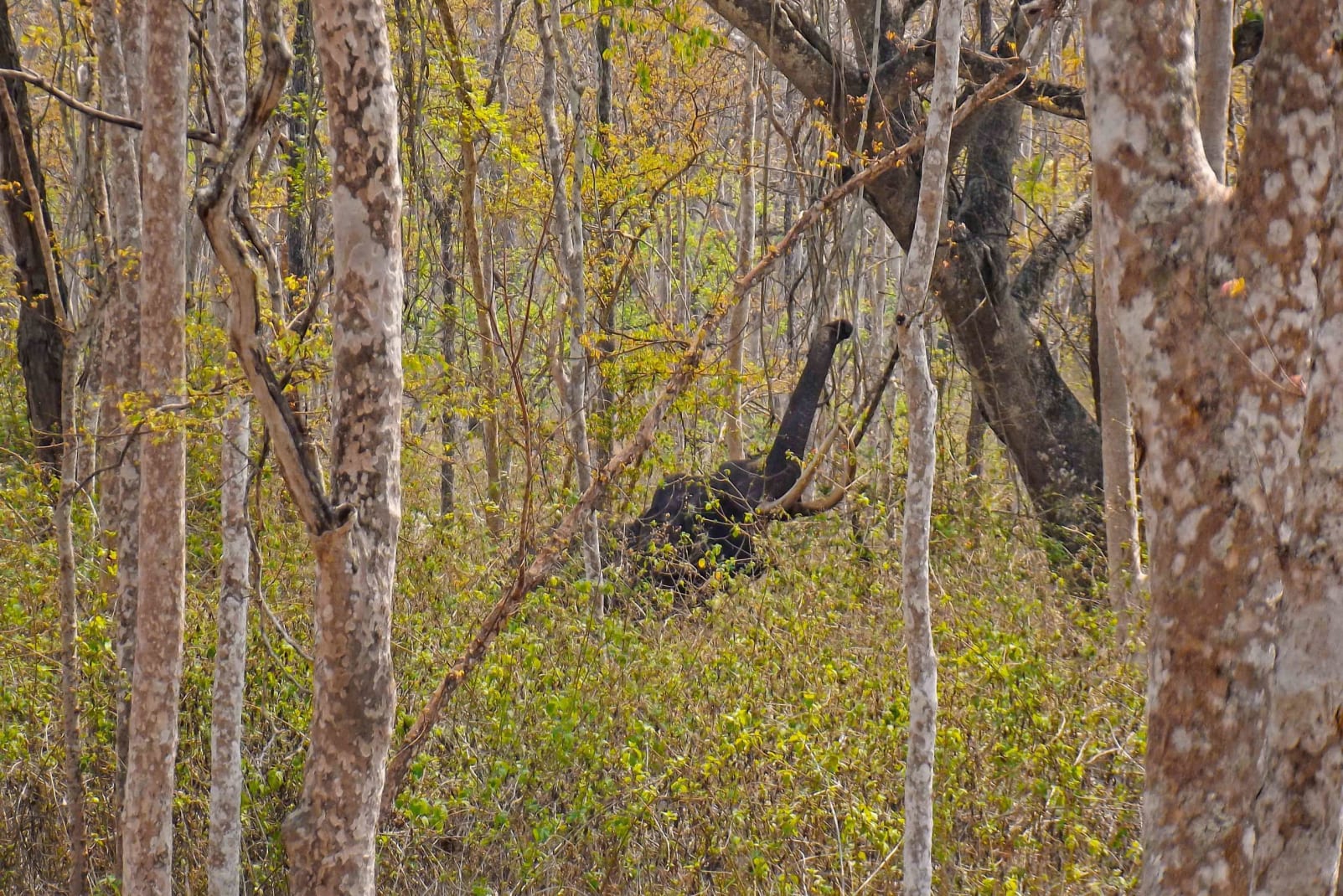
Around 25 years ago, large stretches of wooded grasslands were common in the drier parts of this landscape — especially in Bandipur and Mudumalai near the Deccan Plateau. These open grassy areas were essential for large herbivores.
The drier forests in those days looked like wooded savannas, with tall grasses growing between scattered trees. These grasslands were the main feeding grounds for elephants, which are primarily grazers. During the monsoon, when fresh grass sprouted everywhere, elephants moved into these low-rainfall areas. According to the late elephant biologist Ajay Desai, research from the region showed that different elephant herds preferred different grass species. This natural variation helped them share the same landscape with less competition for food — an excellent example of why conserving grasslands and their plant diversity is so important. Such grasslands are essential for the long-term survival of elephants.
In summer, when the grass dried up, elephants shifted to wetter forests, the gently rolling sub-plateaus closer to the Western Ghats, where food, water, and shade were still available. The swampy grasslands, called vayals in these areas, acted as natural grazing grounds. Elephants and many other animals gathered in these vayals in large numbers. Besides offering plenty of food, the open landscape allowed animals to spot predators easily, giving them a sense of safety.


But today, most vayals are covered by invasive plants. In the once-open wooded savannas, various invasive plants such as Chromolaena odorata, Ludwigia peruviana and Senna spectabilis have replaced tall grasses. As a result, large herbivores are now mostly seen near roadsides, especially when traffic is low. In many places, these narrow roadside strips have become the only patches of open feeding ground left for them.
According to a recent study, more than half of elephant habitats have been taken over by invasive plants, forcing all animals into the remaining patches. As a result, the forests’ carrying capacity has dropped to less than half of what it once was.
Bringing Forests Back to Life
The solution lies in restoration. To protect elephants and reduce negative interactions with them, we must reclaim the carrying capacity of protected forests, which are now dominated by invasive species.
This can be done. By combining scientific approaches, engaging local communities, and restoring vayals and grasslands, patch by patch, we can revive these ecosystems. Restoration is not just about saving elephants. It’s about restoring balance — for the forest, for its animals, and for the people who share their lives with them.
About the Author

PA Vinayan
P.A. Vinayan is an independent researcher based in Wayanad, with a deep passion for restoration ecology and butterfly migration. He is leading a community-based, long-term ecological restoration initiative in the Wayanad Wildlife Sanctuary, Kerala, in collaboration with Keystone Foundation and the Kerala Forest Department. He is also associated with Ferns Naturalists Society, a local conservation NGO based in Wayanad.