Listen to this article
•
15:34 min
Listen to this article
•
15:34 min
“Jaye de hun sir aapn hissa ke kha le wa lai, hum to bachpane se dekhati,” (They eat their own share; we’ve been seeing them since childhood), says Birju Kisan, a 61-year-old tribal man from the Lodh village in Jharkhand’s Latehar district, his eyes soft with the nostalgia of long familiarity. His words, simple yet profound, carry the essence of Mahuadanr, a place where humans and wolves have shared space and stories for generations, a rare landscape of coexistence that has endured despite decades of neglect, poverty, and even armed conflict.
Roughly 200 kilometres from the once-famous radio town of Jhumri Telaiya, a name immortalised in Bollywood lyrics and All India Radio song requests of the 1970s, lies the quiet, hilly valley of Mahuadanr. It’s a place far removed from the glamour of cinema but alive with its own wild drama, where wolves, not stars, take centre stage under the flicker of moonlight, framed by sal (Shorea robusta) forests, rocky ridges, and the cool murmurs of the Burha River. Here, in 1976, a sanctuary unlike any other in India, was born, the Mahuadanr Wolf Sanctuary (MWS), the first protected area in the country dedicated entirely to the Indian grey wolf (Canis lupus pallipes). While India’s conservation narrative has long been dominated by the charismatic tiger and the majestic elephant, the wolf—elusive, intelligent, and deeply misunderstood- continues to exist in the shadows of India’s conservation priorities.
The story of this sanctuary begins with one man’s vision: S. P. Shahi, Chief Wildlife Warden of undivided Bihar, who, after several field expeditions through these wild tracts, realised that wolves here had managed to survive centuries of persecution through a delicate balance of secrecy and social acceptance. His field diaries from the 1970s, later immortalised in his celebrated book Backs to the Wall, describe wolves raising pups in crevices of sal-covered hills, while nearby villagers went about their lives without fear or hostility. That sense of mutual tolerance, rare in the world of human–carnivore relations, became the foundation for the sanctuary’s creation.
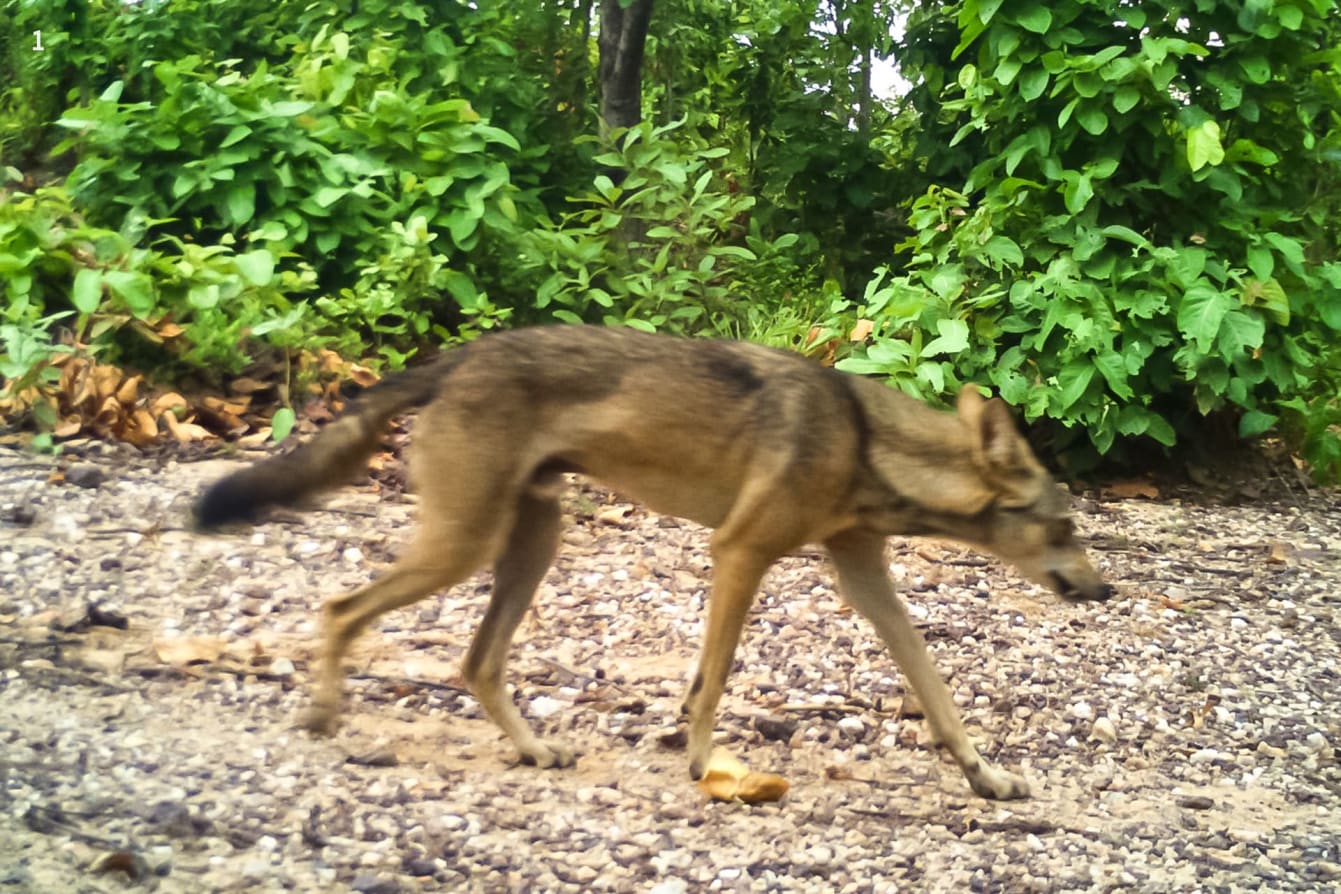
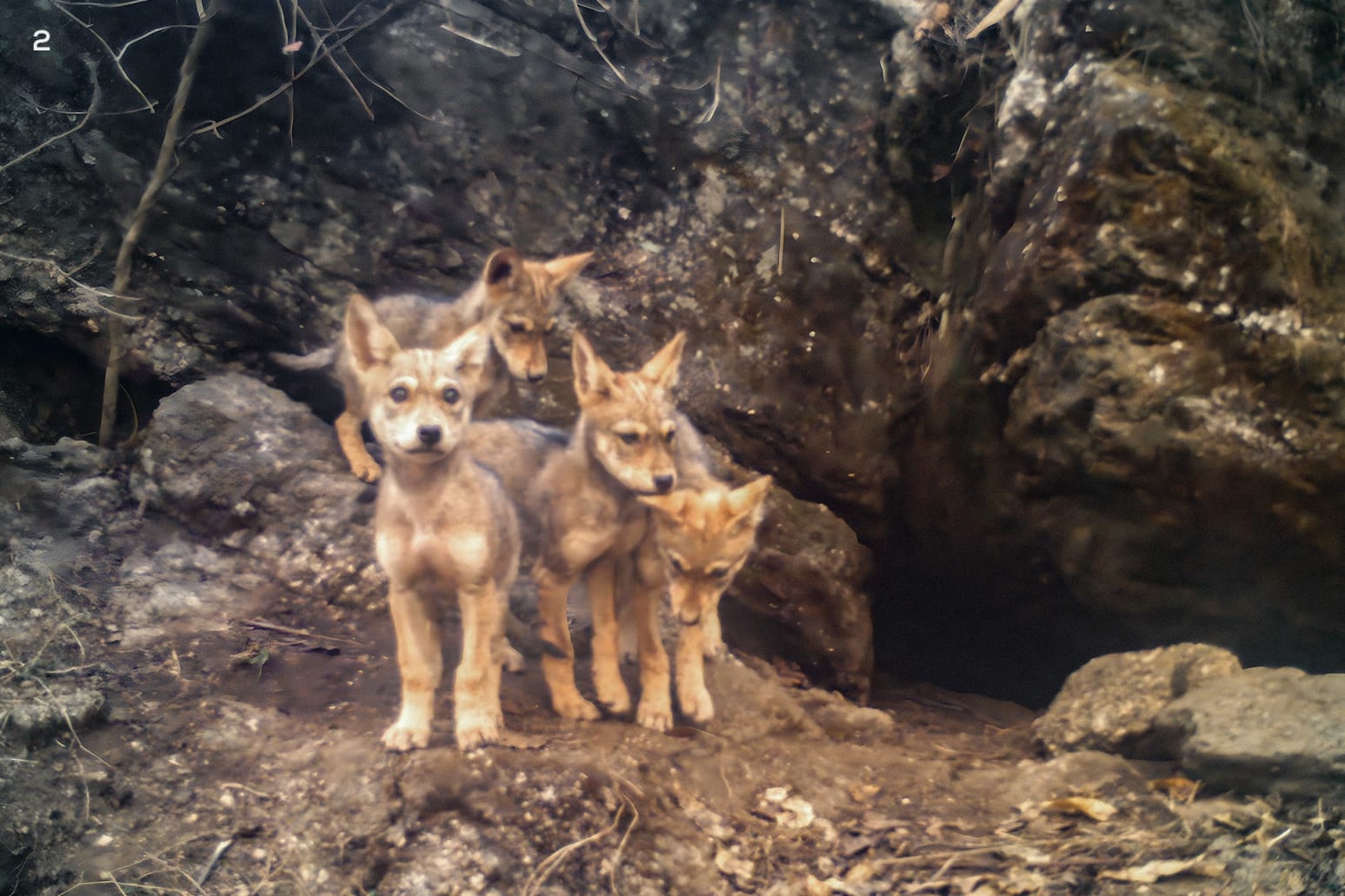
Cover Photo: A representative photo of a wolf. Photo: Dhritiman Mukherjee
Despite its early recognition, MWS remains largely invisible in the modern map of Indian conservation. Spread over just sixty-three square kilometres within the broader Palamau landscape, it is a modest patch of forest by any measure, and yet, it carries an ecological weight far beyond its size. According to the International Union for Conservation of Nature (IUCN), the Indian grey wolf is now classified as Vulnerable, with an estimated population of barely 3,000 individuals spread across India and Pakistan. What makes this statistic more alarming is that only about twelve per cent of its known range lies within the country’s protected-area network, leaving most wolves to survive in multi-use landscapes shared with farmers and herders.
This makes Mahuadanr an exceptional and rare case where wolves are not intruders in the human world but rightful residents of their ancestral land. Most of the tribal communities that inhabit this sanctuary follow Sarna traditions that revere the forest as sacred and consider certain months, especially during the flowering of the sal in winter, as periods of ritual abstinence from wood-cutting, hunting, and heavy forest use. By an extraordinary alignment of culture and ecology, this spiritual pause coincides precisely with the wolves’ breeding and pup-rearing season. For those few months each year, the forests fall almost silent, and the wolves find the peace they need to whelp and rear their young. It is as though nature and tradition have struck an unspoken pact of protection.
Recent scientific work has begun to capture this story in empirical form. A study published in Nature’s Scientific Reports highlighted how wolves in Mahuadanr Wolf Sanctuary preferentially select den sites on steep slopes, in dense shrub cover, and within or near sacred sal grove microhabitats that offer both concealment and cultural refuge from human disturbance. These findings, though rooted in ecological data, carry a deeper human message: that conservation, especially in complex, inhabited landscapes, can thrive when cultural wisdom and ecological processes move in rhythm rather than in conflict.


Despite such promise, the sanctuary’s mysteries remain many. Perhaps the most intriguing question, one that field researchers still grapple with, concerns what happens after the breeding season ends. The wolves of Mahuadanr breed reliably each winter but by late spring, many seem to disperse, vanishing into the surrounding mosaic of forest and farmland. Do they migrate to adjoining ranges in Palamau or Chhattisgarh? Do they follow prey trails through river valleys, or have their movements become fragmented by roads, mining, and deforestation? The answers remain uncertain, for research here has often been hampered by the area’s difficult terrain and the shadow of left-wing extremism that for years restricted scientific access. Mahuadanr, like much of Central India’s tribal heartland, is a place where ecology, politics, and poverty intertwine in complicated ways.
And yet, it is precisely this human complexity that gives Mahuadanr its conservation value. Unlike the core areas of tiger reserves of Central India, this is a living landscape, one where villagers, livestock, and predators coexist within a shared space, often with remarkable tolerance. Livestock losses do occur, but they are quietly absorbed into the rhythms of rural life. “Wolves take what they need,” says Birju Kisan with a shrug. “We never thought of them as thieves; they are part of the forest.” His words echo the conclusions of global coexistence research: that people who live closest to wildlife often carry the most pragmatic, least romantic notions of nature, neither idolising nor vilifying it, but accepting it as it is.
From a conservation standpoint, this attitude is gold. It represents what ecologists call a cultural buffer, a form of social restraint and understanding that protects species more effectively than law enforcement ever could. In Mahuadanr, this buffer has been sustained by community memory, spiritual practice, and sheer familiarity. Children grow up knowing where wolf dens lie and when to stay away; herders read signs in the dust, not to chase predators, but to avoid accidental encounters. It is a quiet conservation ethic, unwritten but deeply felt, that larger parks and policymakers could learn from.

Even as the wolves of Mahuadanr symbolise endurance, their future is far from secure. Habitat fragmentation, increasing dependence on forest resources, and climate pressures all threaten to erode the fragile balance that kept coexistence intact. The sanctuary’s small size limits the number of breeding pairs it can sustain, making connectivity to the surrounding forest tracts essential. Without ecological corridors linking Mahuadanr to Palamau’s larger tiger reserve or to other wilderness patches in Chhattisgarh, the wolves risk isolation and genetic decline. The irony is that while the wolves may be thriving within the sanctuary’s boundaries, their survival as a viable population depends on what lies beyond those borders.
This is where modern conservation must meet the ancient wisdom of the land. The tribal villagers who have lived with wolves for generations are not relics of the past; they are active stewards of the present. Empowering them through community-based management, compensating livestock losses fairly and swiftly, and integrating their traditional ecological knowledge into formal wildlife planning can ensure that the story of coexistence continues. Mahuadanr does not need walls or watchtowers; it needs recognition, respect, and research, especially long-term studies that track the wolves’ movements, prey dynamics, and genetic health.
But beyond science and policy, Mahuadanr offers something subtler and more profound, a different way of seeing. In an era where human-wildlife conflict headlines dominate the conservation discourse, this small sanctuary whispers a counter-narrative: that coexistence is not a utopian dream but a lived, tested reality. The wolves here are not ghosts of a vanishing wilderness; they are citizens of a shared world, adapting, surviving, and teaching us that wildness can coexist with human life if given the chance.
As dusk falls over the sal forest, and the last smoke from evening cooking fires curls into the air, the sound of a distant howl carries over the hills, low, haunting, unmistakably alive. Somewhere out there, under the same stars that guided their ancestors, a pack of Indian grey wolves moves through the night, following age-old trails between rock and root. And somewhere nearby, an old villager turns in his cot, half-asleep but smiling, comforted by that familiar call. For, in Mahuadanr, the wolf is not a symbol of fear, but of belonging, a reminder that even in the remotest corners of our country, harmony between people and predators is not only possible but beautifully real.
About the Authors

Dr Orus Ilyas