 Listen to this article
•
15:34 min
Listen to this article
•
15:34 min
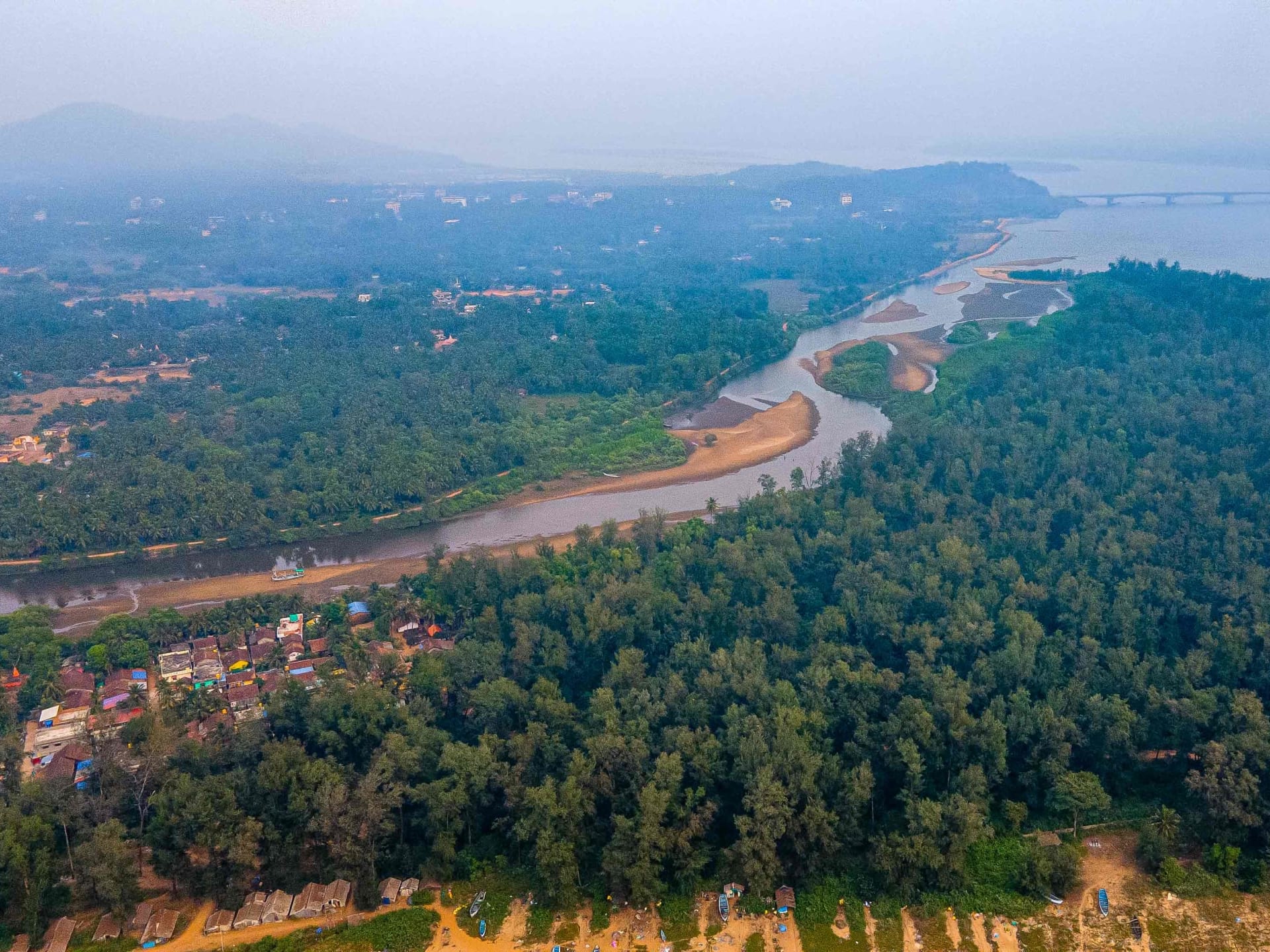
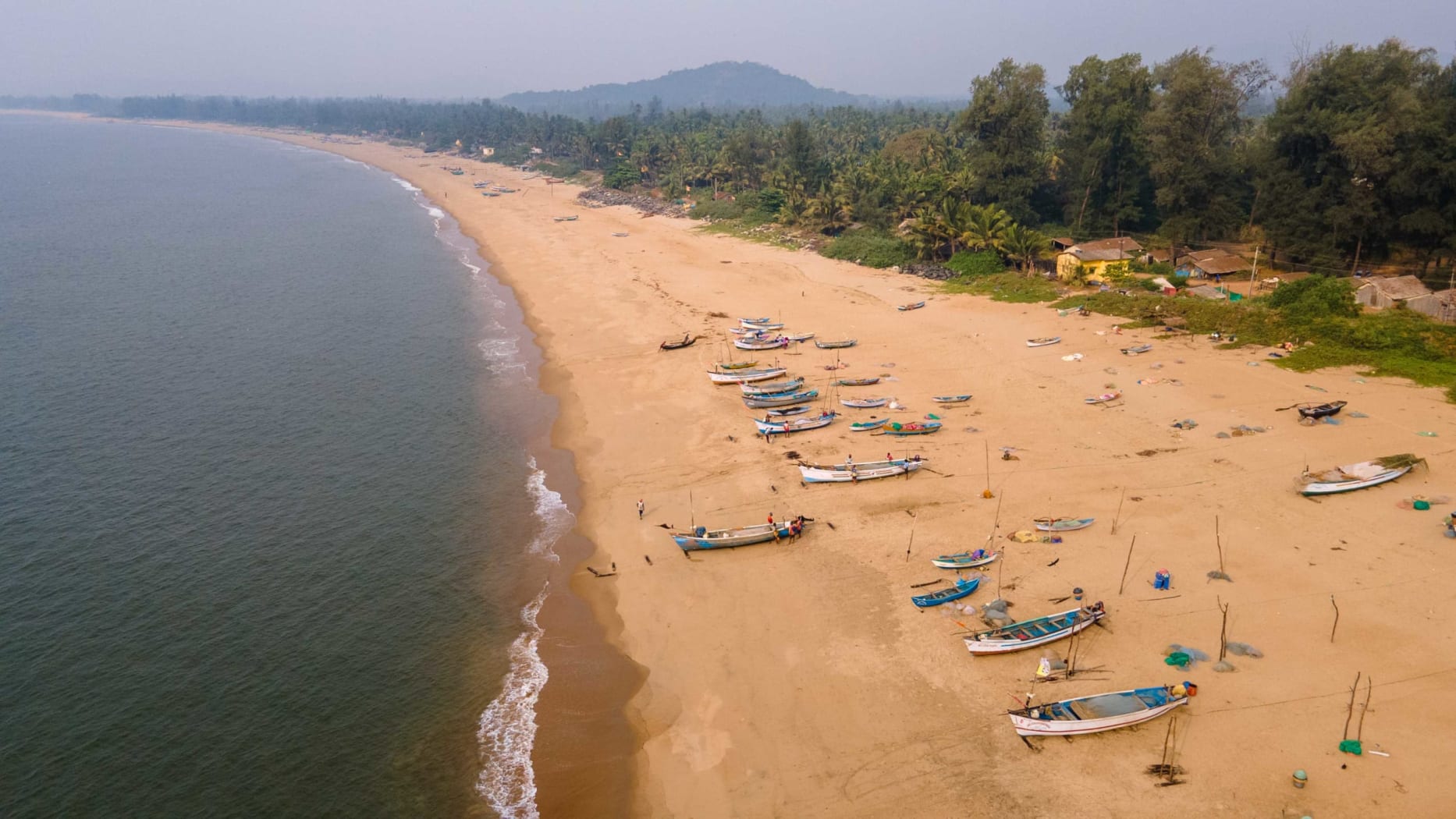
Waves crash rhythmically against the shore, sending tiny crabs scuttling to burrow into the golden sand. The Arabian Sea feels silky-smooth against my sandal-clad toes, like chilly fingers snaking around my feet. Three boys leap and shout gleefully in the cool waters, sending a rainbow shower of droplets arcing into the air. The shores of Kumta, a sleepy fishing town at the mouth of the Aghanashini River, are a mix of rocky boulders, hidden offshore caves, and sparkling sands, much like the rest of this coastal stretch of Uttara Kannada. Here, bioluminescent plankton turn the waters an eerie electric blue under the moonlight, a far contrast to the busy chaos of fishing boats being pushed out to sea during daylight hours. And under the full moon, sea turtles crawl up the sandy beaches to lay clutches of pearly eggs close to human habitation.
I have come to know Uttara Kannada, Karnataka’s most forested and (arguably) most beautiful district, extremely well during the past three or so years of visiting the landscape for my PhD research. This is a district woven from myriad landscapes, from the mangroves and rocky shores of the coast to the rain-drenched evergreen forests of the hills, and finally tapering into the vast lateritic plateaus on the district’s eastern belt. Standing at the coast, squinting into the Arabian Sea, I can only admire the difference between these vivid teal waters and the smoky grey Arabian Sea that I grew up seeing in Mumbai.
Cover photo: Karwar lies on the Konkan coast, where the Kali River descends from the Western Ghats to meet the Arabian Sea, forming an estuary known for its rich biodiversity. Photo: Saurabh Sawant
A Land of Sand and Sea
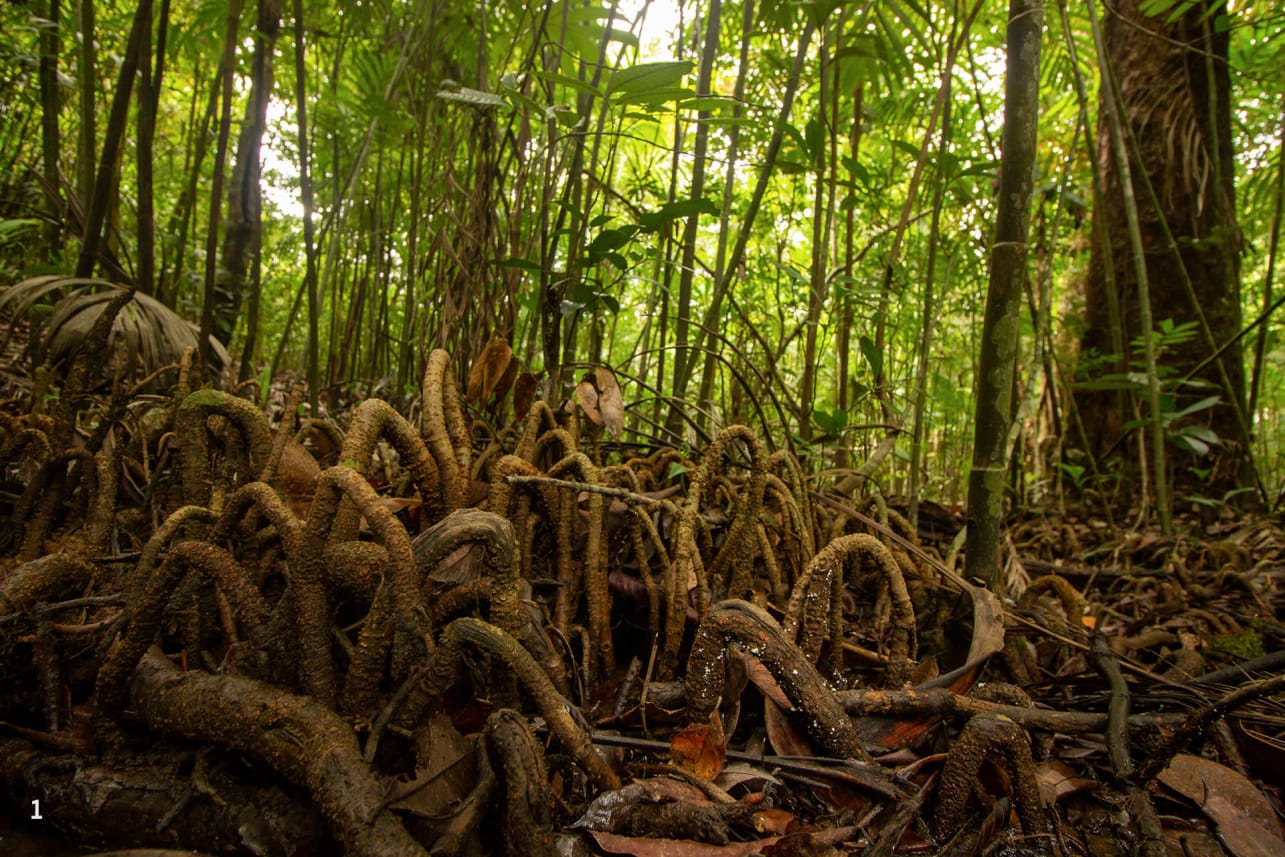
Coastal Uttara Kannada is more than just one ecosystem; many habitats are nestled within this relatively densely populated region of the district. Just two days earlier, I wandered along a rickety wooden boardwalk in Honnavar, journeying deep into the dense mangrove forests that guard the coastline. Mangroves — some of the planet’s most productive ecosystems — form along estuaries, where forest-born rivers meet the sea. At this confluence of fresh and saltwater, an entire ecosystem thrives, as mud washes gently over the stilt and prop roots that help mangrove tree species breathe in submerged soils. In this tidal zone dwells astonishing diversity, from crabs and mudskippers to migratory birds and waders.
A short trek inland from Honnavar’s mangrove forest is a dazzling veil of mist — Apsarakonda, an ethereal waterfall cascading into a pool that joins the sea. The beaches that form between the pool and the sea are unexplored jewels of Uttara Kannada. Behind the falls is a cave, said to be where the Pandavas of Hindu mythology took shelter while travelling, lending the attraction religious and historical significance.


Every year, Uttara Kannada’s beaches welcome migrating sea turtles that emerge from the waves under the moonlight to lay their eggs. Of India’s seven sea turtle species, the olive ridley turtle is the only species to nest on Karnataka’s beaches. However, most of Karnataka’s coastline is rocky, not sandy, and large swathes of suitable nesting habitat are highly disturbed by fishing activities. I have seen signs of old nests, with broken eggshells half-buried in the soft sand. And as I rev the engine of my trusty scooter, I send a silent wish to the sea that I will one day witness a nesting event in this coastal haven.
A Land of Rivers and Rainforests
The bulk of my experience in Uttara Kannada has been in the mountains in the monsoon. My days begin in the dense mist that swirls and settles on the forest roads. While people are scarcely seen on these roads, they are anything but quiet; the early mornings are when the birds are out, and as I putter along the tar road lined with trees, I hear the rush of wings as a Malabar grey hornbill soars above my head. Its raucous cackling call echoes over the hills and through the evergreen trees.

With an impressive 70 per cent forest cover, Uttara Kannada is Karnataka’s most forested district. Five rivers originate in these hills, winding through a mosaic of areca nut plantations, paddy fields, dry and moist deciduous forests, and lush wet evergreen forests. Hundreds of gurgling streams emerge from rock springs, tumbling down the forested hillsides to join these mighty rivers. The Kali River roars through Kali Tiger Reserve, creating raging rapids that thrill-seekers swarm to conquer. Along her banks, one can find Karnataka’s impressive wildlife, including sloth bears, tigers, leopards, and elephants. Kali Tiger Reserve also harbours all four species of hornbills found in the Western Ghats: Great hornbill, Malabar pied hornbill, Malabar grey hornbill, and Indian grey hornbill.
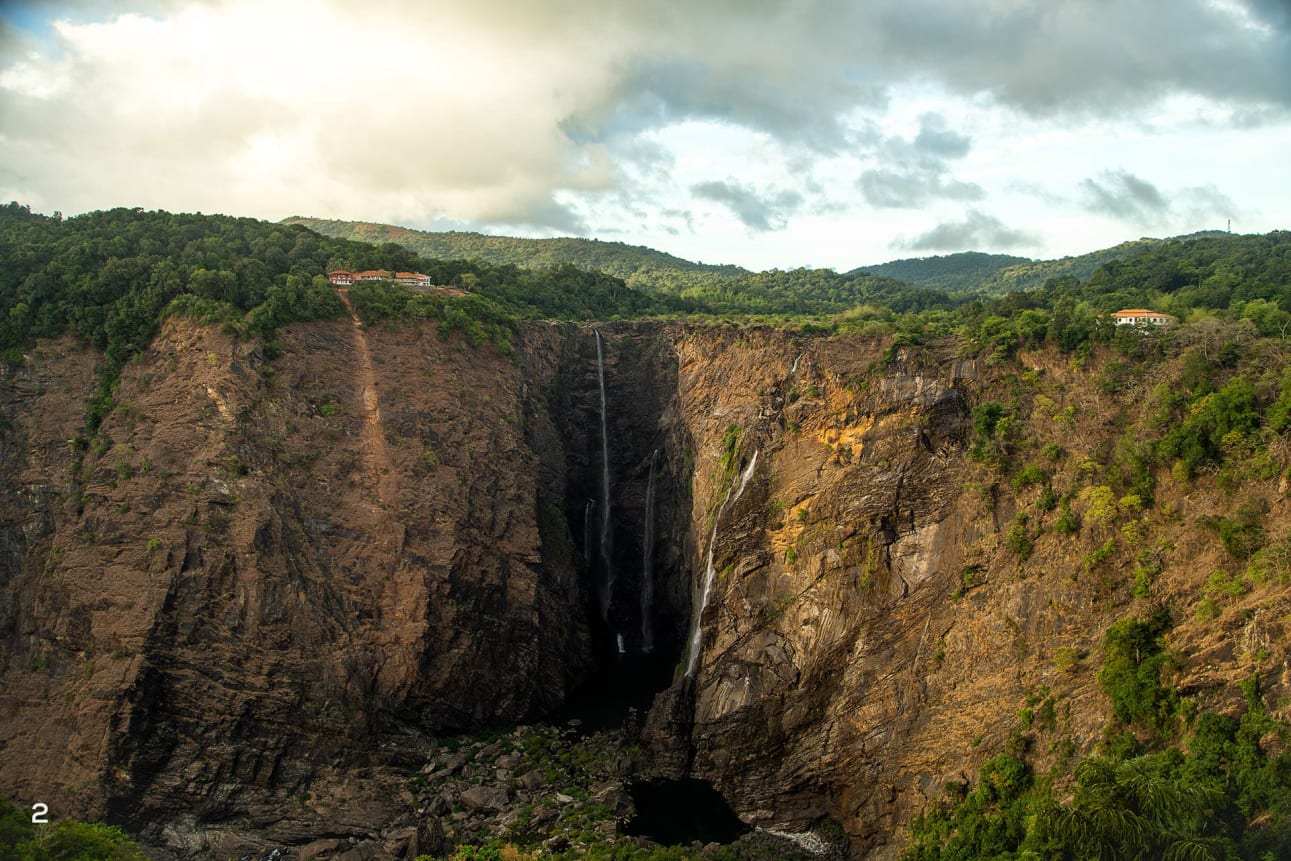
Many tourists flock to the landscape’s best-known river, the Sharavathi. High in the hills, one can hear thundering Jog Falls, with rainbows dancing through its cascading waters during the monsoon. The Sharavathi has multiple dams stemming its flow along its route, and it spills into the Arabian Sea at Honnavar, amidst mangrove swamps.


I spend most of my days along the Aghanaashini River. This queen of rivers begins at Shankarahonda, a holy tank in the town of Sirsi, then winds through a rocky gorge, tumbling over the powerful Unchalli (Lushington) Falls and meanders down the hills to join the sea at Kumta. This is one of India’s last undammed rivers. Along her banks are many habitats, including the ancient Myristica swamps along the small streams flowing into the Aghanaashini. In Uttara Kannada, locals worship many swamps and forest patches as sacred groves, adding cultural dimensions to their many ecosystem services and offering additional protection. Local deities such as Huliyappa, Chowdamma and Nagaradevaru highlight the strong ties people have to wildlife and the land.
The hills are also home to soppinabettas, managed forests closely tied to agriculture. Here, green leaves (soppu) are harvested for mulching, manure, and other farm needs, and the Forest Department leases the land to local farmers and landholders. These patches help form corridors between dense forest patches and are home to many species, including the tiny heart-spotted woodpecker. I watch the small silhouettes of women collecting wood and leaves high on the grassy hills and inhale deeply. Rain is fast approaching, and I must get back to the field station.

A Land of Laterite and Liminality
Perhaps the most overlooked of Uttara Kannada’s myriad landscapes are the lateritic plateaus that ease the transition between the Western Ghats and the vast Deccan Plateau. The soils here are a deep red, formed through the intense weathering of basalt and other igneous (volcanic) rocks under monsoonal conditions over aeons. Time seems to stand still in this region for most of the year, but during the rains, the landscape briefly transforms, revealing hidden seasonal microhabitats.
This plateau region acts as a catchment, feeding downstream tanks, rivers, and other inland wetlands. As the monsoon clouds roll in, sealing off the sunshine, the grasslands of this region erupt with shrubs, grasses, and tiny colourful wildflowers. Tiny rocky depressions fill with water — creating ephemeral pools — that are crucial breeding habitats for frogs and macroinvertebrates. Two of these areas, Mugali and Bhatkal, are known for their rich butterfly diversity and are proposed as conservation reserves to protect this lesser-known landscape and its unique flora and fauna.
A flash of golden-brown catches my eye in this ochre swathe of land. A jackal glances warily at me as it trots away. And high above in the cerulean sky, a black-winged kite glides on air thermals.

A Land of Pugmarks and Petrology
People and nature are intrinsically linked in Uttara Kannada, from the sacred groves of Sirsi and Siddapur to the golden beaches of Kumta, from the mangrove boardwalks of Honnavar to the towering rocks of Yana. It is at Yana that I pause to marvel at the district’s tourist appeal. Hundreds of visitors hike up the well-worn path to see the crystalline karst limestone rocks that have stood since the upheaval of the Western Ghats. Some carry talismans to place at the idol of Lord Shiva in a cave beneath the rocks. Others carry picnic baskets and play loud music, unapologetically taking up space in a land that is not theirs alone.
But now, under the starry sky, I can admire the hulking structures in silence, a silence broken only by the quavering hoot of an Indian rock owl. At my feet is a single pugmark; a leopard walked this path just a little while ago. My flashlight picks up the trail of pugmarks and ahead, to my excitement, a Russell’s viper crossing the tar road. The only soundtrack for this sighting is the sighing of the wind in the trees, the rustling of leaves, the chirp of crickets and frogs, and the drip-drip-drip of water nearby.
This is the wild heart of Uttara Kannada.
About the Author