Listen to this article
•
15:34 min
Listen to this article
•
15:34 min
Located in Northern Odisha’s Mayurbhanj district, close to the border with Bengal, Similipal Tiger Reserve (STR) is known for its black (pseudo-melanistic) tigers. Thickly wooded with sal trees and small meadows and grasslands, the reserve is full of hilly, elevated stretches and deep valleys. Three major rivers and many streams and rivulets, many perennial, flow through the park.
The reserve is located in the Deccan Peninsula Biogeographic Zone. Several types of flora from the Western Ghats, Eastern Ghats, and Sub-Himalaya can be found here, indicating a link between South Indian and Northeastern Sub-Himalayan species. It contains over 1,300 plant species, including 104 orchid species (some endemic and some endangered).
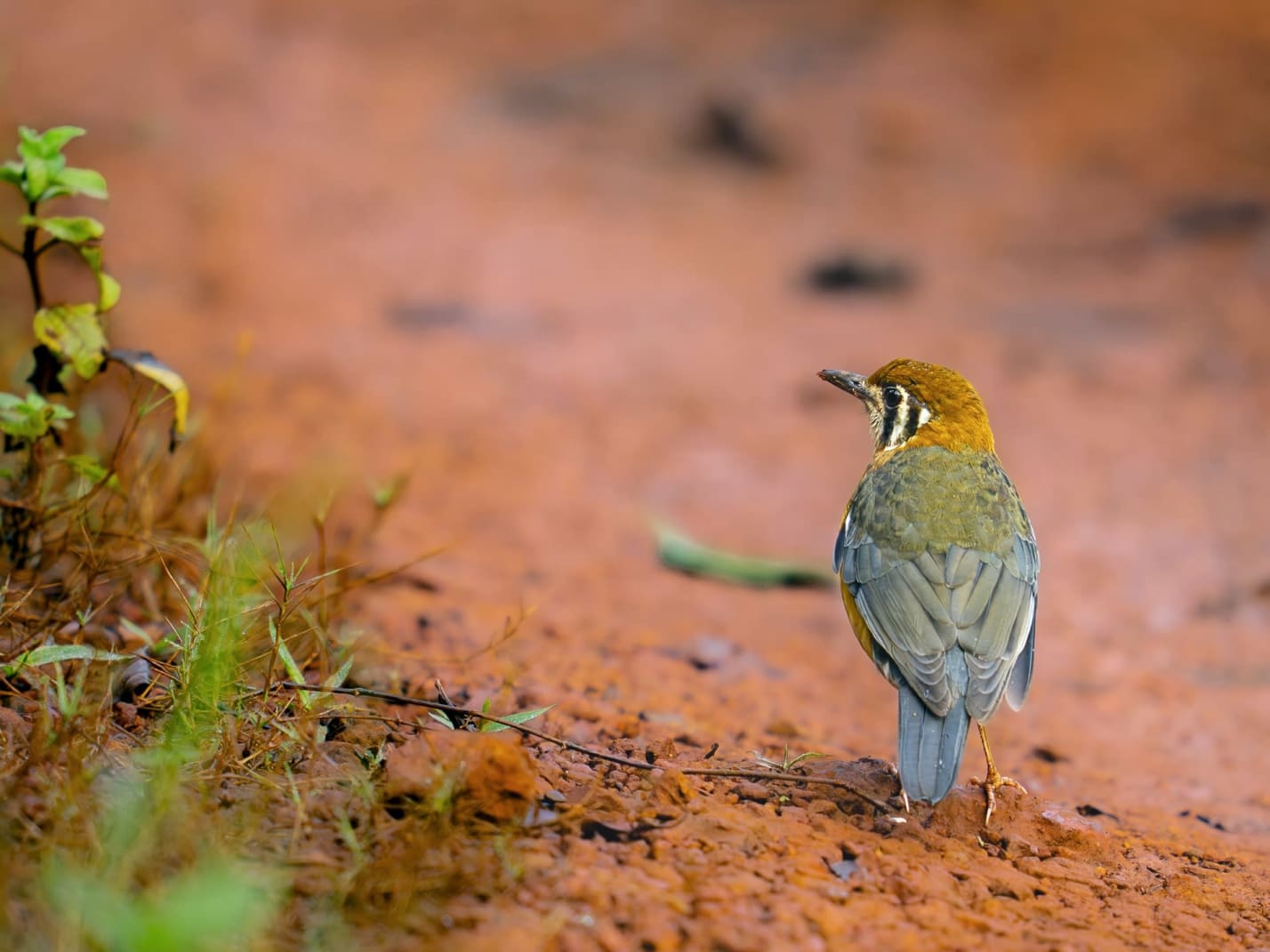
This floral diversity has proved to be a boon for birds. Over 360 species of avifauna have been in the reserve. Some common species that can be easily spotted are drongos, mynas, wagtails, parakeets, sunbirds, coucals, barbets, scarlet minivets, bulbuls, black-naped monarchs, black-hooded orioles, tailorbirds, herons, egrets, and kingfishers. Occasionally, Malabar trogons, orange-headed thrushes, Malabar and oriental pied hornbills, grey-headed woodpeckers, crested serpent eagles, brown fish owls, spot-bellied eagle owls, and spotted owlets are also spotted. Around summer, in the breeding season, nightjars are seen on the forest floor.
The best times to look for birds are at dawn and dusk, but several species can be spotted during the day as well. They are so abundant that even sitting quietly near a wooded area for a few minutes can result in sightings. Here is a small sampling of some of the most striking birds you can expect to see in the reserve.

The only difference between the sexes is that males have a striking black-and-pink neck ring. They are raucous with piercing screams and screeches and usually found in flocks. They are named after the conqueror Alexander (of Macedon), who is supposed to have transported them from India to Europe, where they were prized and highly sought after by royalty and nobility. Biologist Carl Linnaeus classified them in 1766.

The vernal hanging-parrot (Loriculus vernalis), also known as the Indian lorikeet, is also bright green in colour, but small (palm-sized) with a very short tail. It has a bright red beak and red rump. Males have a bright blue patch near the throat. It hangs upside down while feeding and resting. This bird is difficult to spot because it perches high in the canopy and its short, squeaky warbles are hard to pinpoint.

It is a stunning bird; the male has a black head, a stark white neck ring, a bright red belly, and orange plumage. The female is less conspicuous, with a brown/beige head and orange/yellowish underparts. Both have a dark blue beak. Malabar trogons are quiet birds with short yelps, usually found perched at mid-levels of the forest and often foraging in mixed-species flocks, feeding primarily on insects.

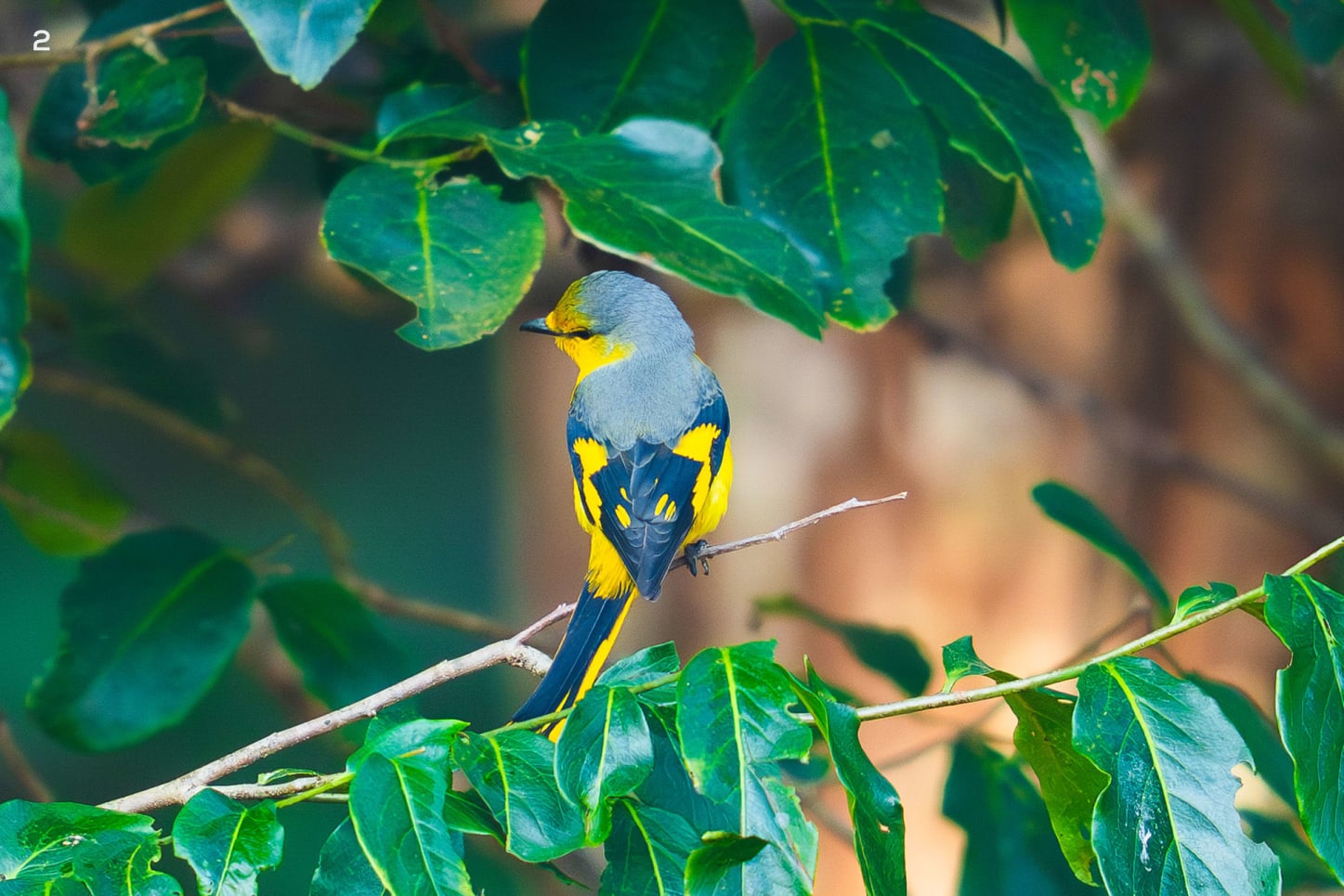
It is common to find the (1) black-naped monarch (Hypothymis azurea) and (2) scarlet minivet (Pericrocotus speciosus) together, and they are a riot of colours. The male monarch is a striking azure blue with a black patch at the nape and neck, while the female is without black patches. Both have grey or whitish underparts. The scarlet minivet is named after the striking male, while the female (pictured above) is slightly larger than the male, and very different with black-and-yellow patches. It has a short beak and is insectivorous, feeding mostly on small insects, spiders, caterpillars, crickets and cicadas. It can usually be found in the canopy, looking out for insects that come to feed on fruit.
This forest is also home to several ground-dwelling birds.
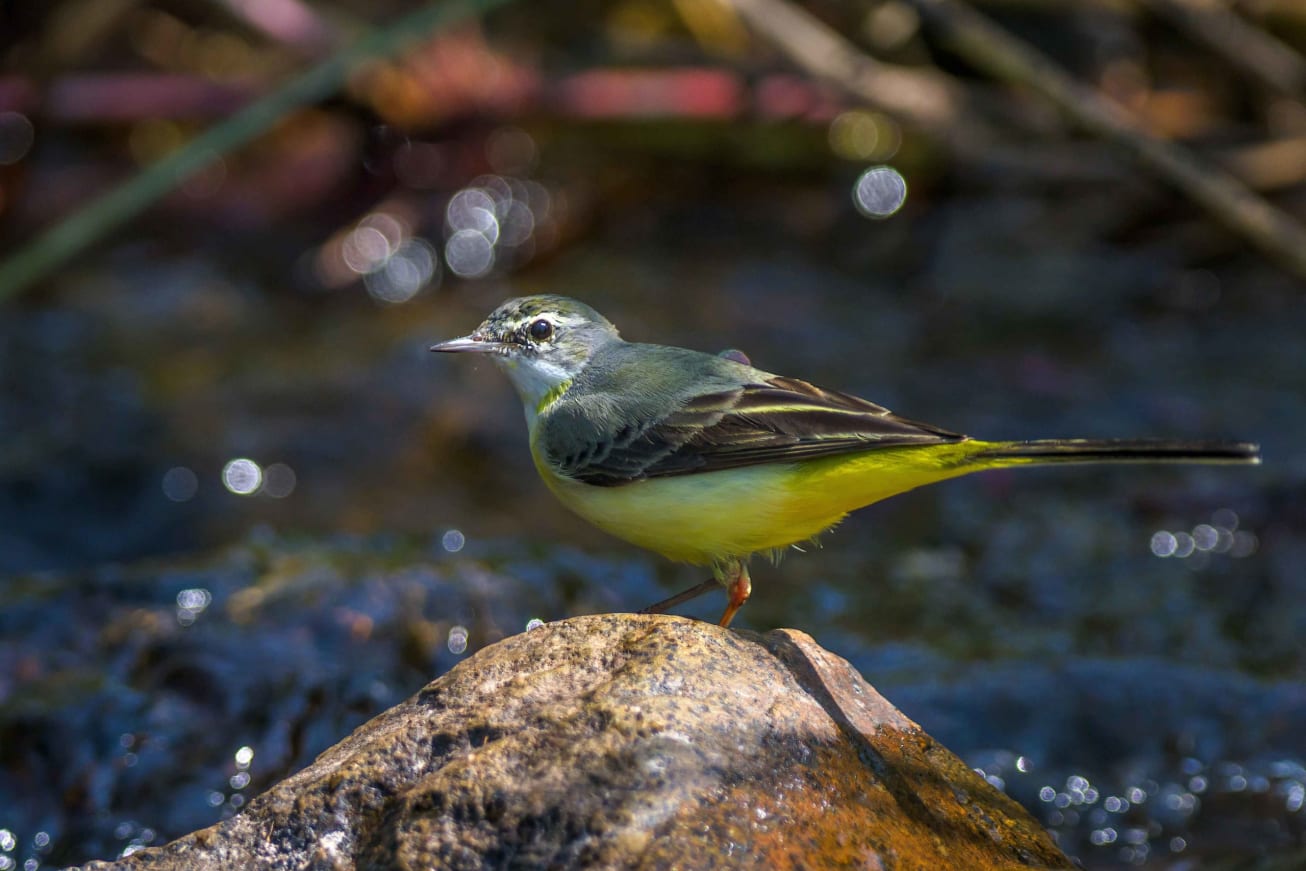
The the grey wagtail (Motacilla cinerea) is a pretty long-tailed bird that is found predominantly on rocky outcrops near flowing water. The male has a black throat and bright yellow underparts, while the female’s underparts are pale yellow. It derives its name from the distinctive, vigorous up-and-down wagging motion of its tail.
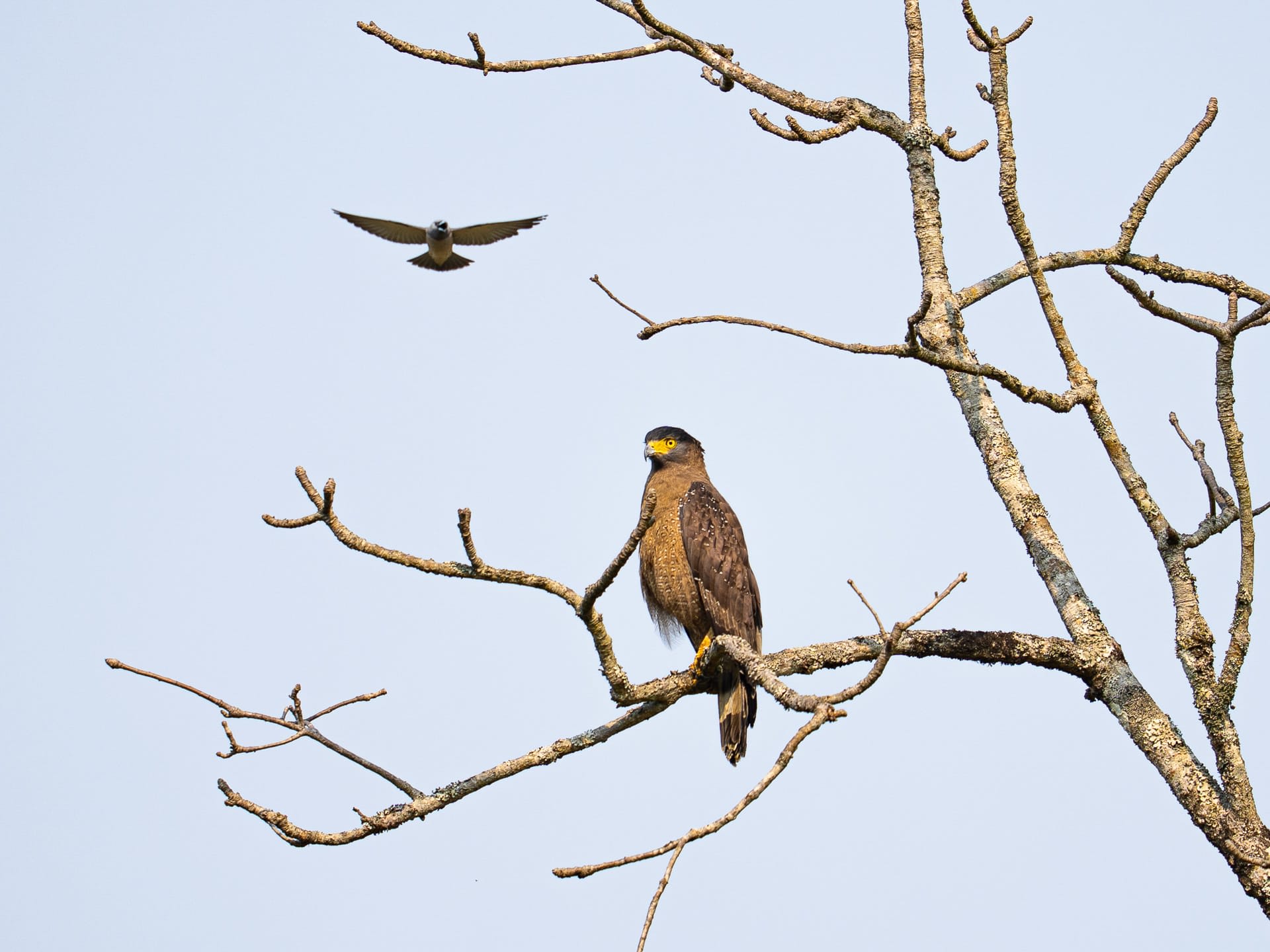
One of Similipal’s elegant birds is the crested serpent eagle (Spilornis cheela). Large and heavily built, it is usually perched high in a tree. A big, bushy crest gives the bird its distinctive look, along with yellow lore and eyes; the crest bulges when alarmed, giving it a fierce look. It has rufous-brown underparts with neat bright white spots, while the wings have a white band followed by a black trailing edge. When in flight, it presents a strikingly beautiful image, with tips and dots arranged symmetrically. Though it mainly feeds on snakes and other reptiles, it also eats small birds and amphibians.


It is difficult to miss (1) Indian peafowls (Pavo cristatus) in Similipal, especially in slightly open spaces where they forage in the undergrowth. Large ground birds, the male’s iridescent long tail and plumage are unmistakable and riveting, especially when on display while courting females. Their loud, screeching call becomes frequent during the rains. As much as the male is striking, the (2) peahen is dull with a short tail and brown plumage. Its only colourful aspect is an iridescent green neck.
Of Similipal’s birds, its dozen or more owl species are the most mystifying and fascinating.
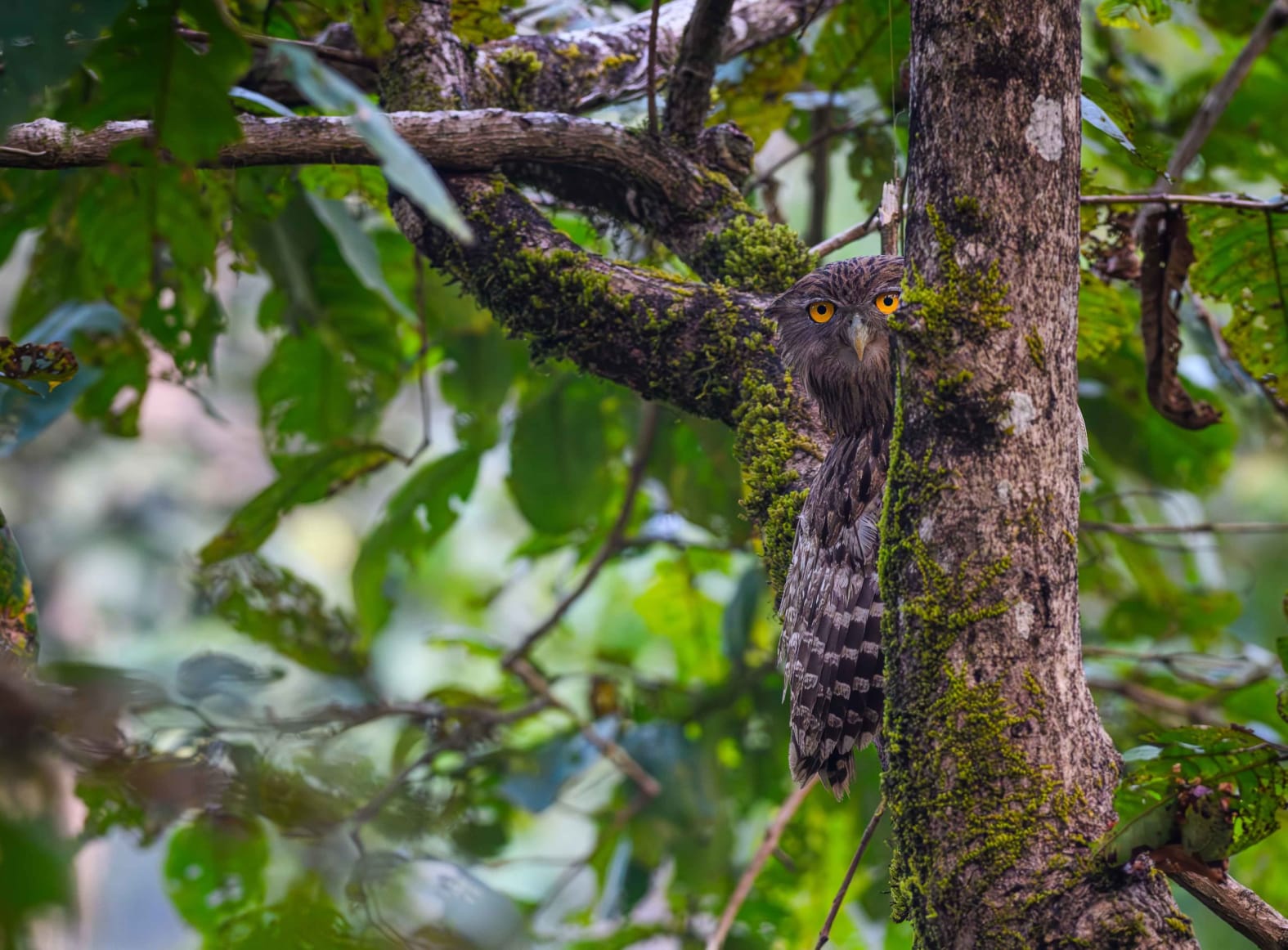
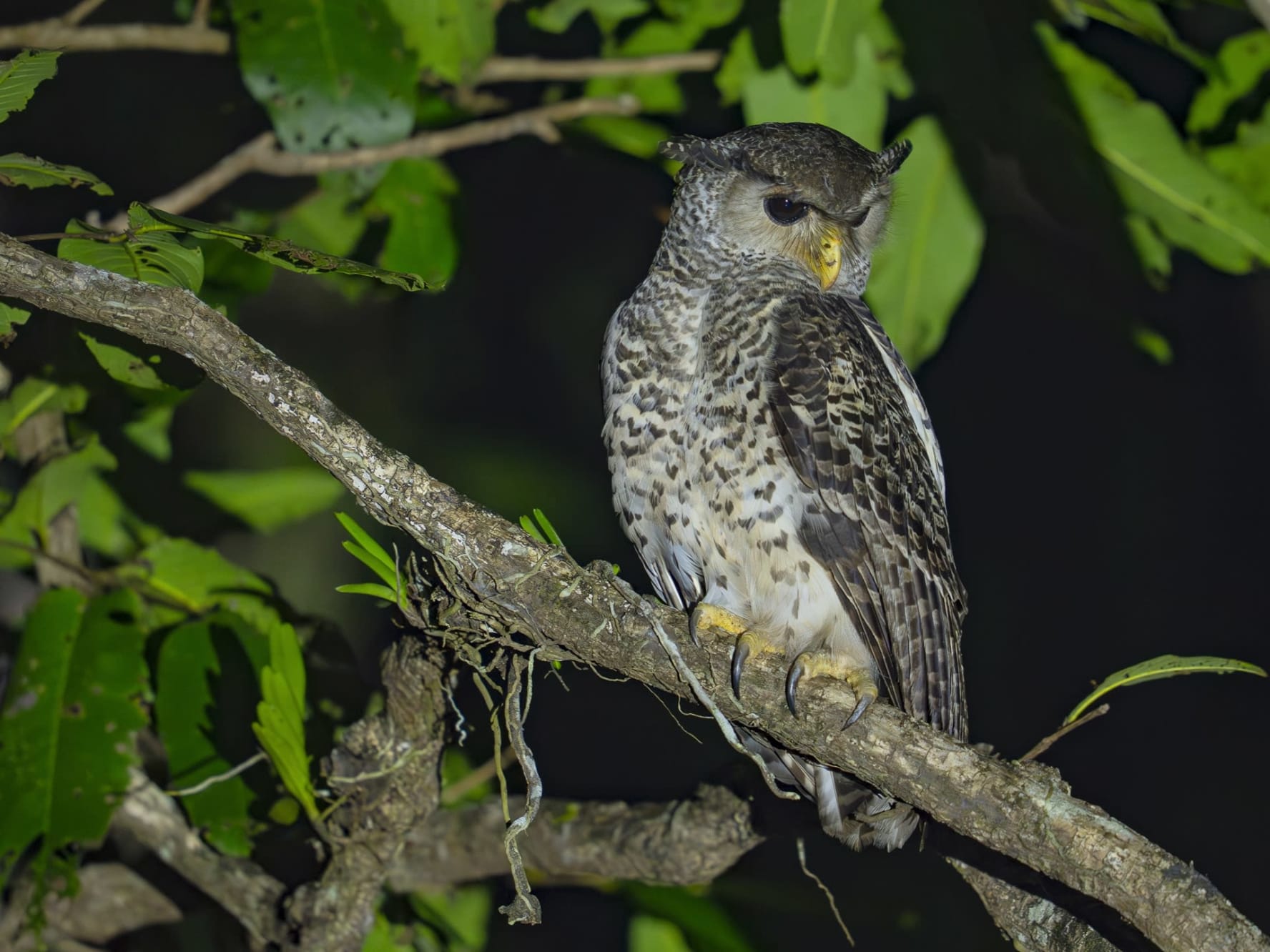

Comparatively, the spotted owlet (Athene brama) is tiny and relatively difficult to spot, though it is active at dawn and dusk. It is greyish-brown with white spots, while the underside is white with brown stripes; it has a round, uncrested head, white eyebrows, a neckband, and a short tail.
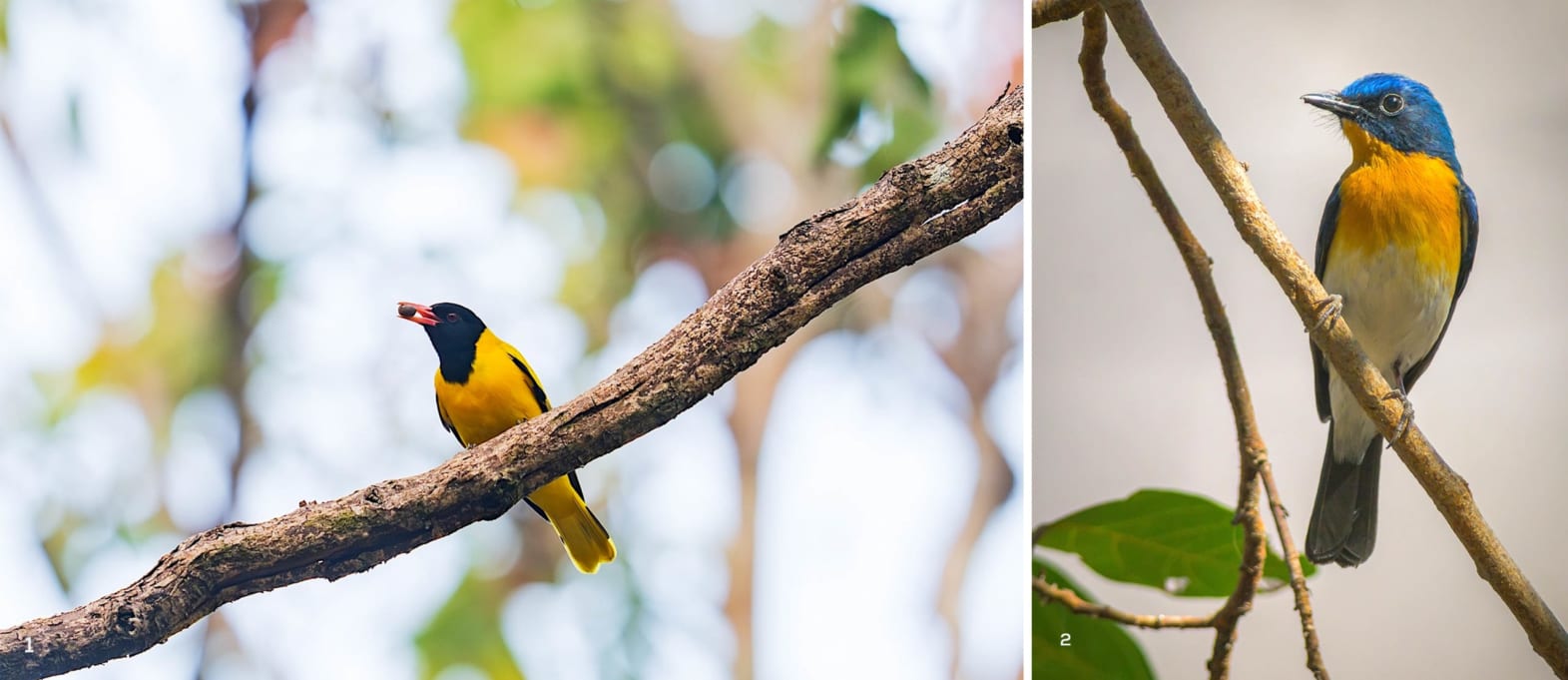
Somewhat clothed in similar shades of yellow, the (1) black-hooded oriole (Oriolus xanthornus) and the (2) Tickell’s flycatcher (Cyornis tickelliae) are striking birds. The oriole is easily visible with its black head and breast, and red beak, and identifiable by its loud calls. The flycatcher, on the other hand, with its rufous throat and powder-blue head and back, is found perched low in wooded areas and scrub vegetation, hunting for insects.

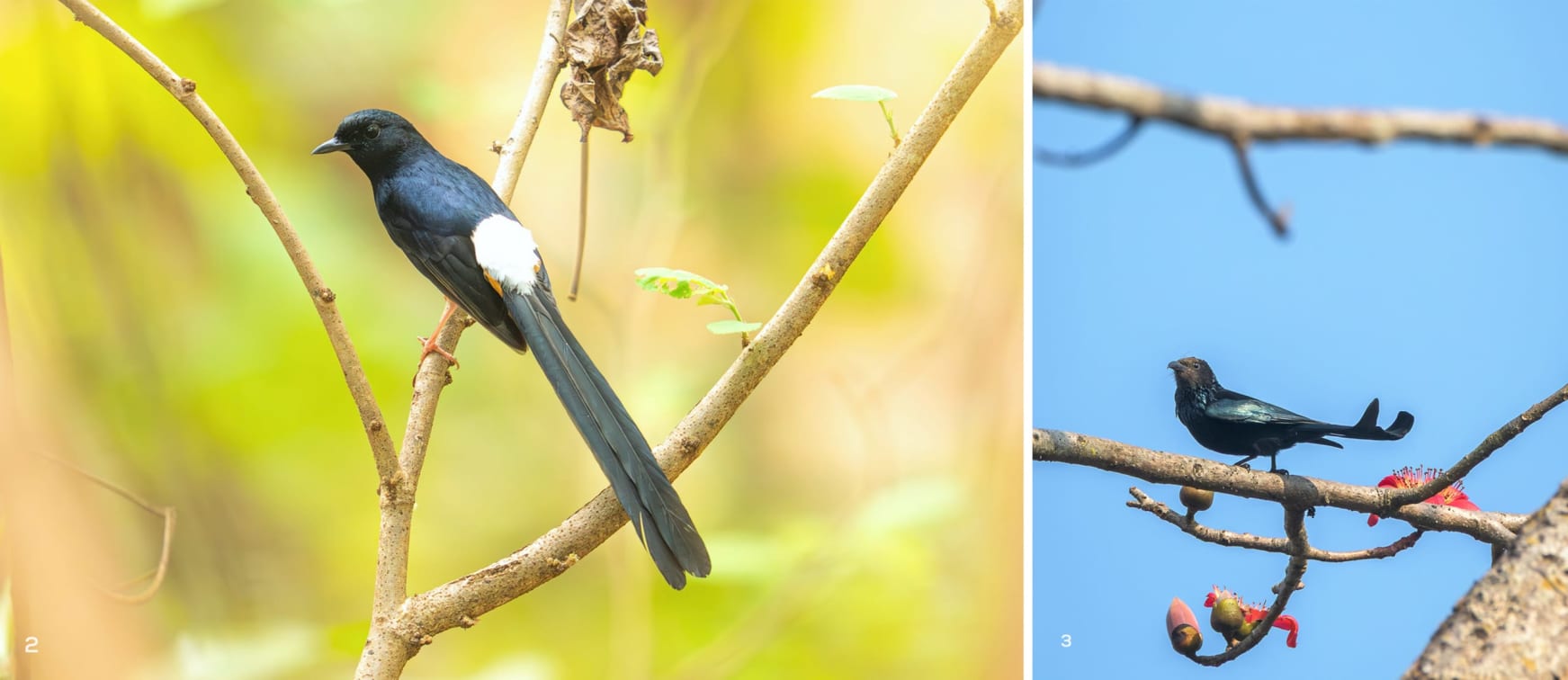
Possibly the most vocal, musical and kitted out in similar black-and-white are the (1) oriental magpie robin (Copsychus saularis), (2) white-rumped shama (Copsychus malabaricus), and (3) spangled drongo (Dicrurus bracteatus). The robin, with its bold black-and-white plumage, is known for its varied and melodious song. The shama is mostly glossy black on the back, with a patch of white and a long black tail, but has a rich chestnut underside. Its loud, flute-like calls are distinct. Compared to the other two, the drongo is uniformly iridescent black with a cleft tail and bright red eyes. Like others of its ilk, it can mimic a wide variety of birds.
About the Author