 Listen to this article
•
15:34 min
Listen to this article
•
15:34 min
Narrow, winding roads with sharp hairpin bends cut through the Himalayan mountains, from one level of the Pangolakha Wildlife Sanctuary to another, covering an elevation range of 1,300 to over 4,000 m. Vegetation patterns vary with elevation, resulting in distinct ecosystems, depending on altitudinal zones. These varied habitats support a diverse wealth of Himalayan wildlife, including some of the most elusive and threatened mammal species. Covering an area of 124 square kilometres in Sikkim’s Pakyong District, the sanctuary is home to the snow leopard, red panda, Himalayan musk deer, Himalayan goral, black bear, Sikkim pika, Bhutan giant flying squirrel, and many other mammals. Even India’s national animal has left its pawprint in Pangolakha. In 2024, a camera trap set up by the Bombay Natural History Society recorded the presence of a tiger at an elevation of 3,640 m.
As a remote and pristine wilderness destination, Pangolakha Wildlife Sanctuary entices true nature lovers. It is located approximately 42 km from Sikkim’s capital, Gangtok. Permits are needed to enter the sanctuary. Visitors can explore the sanctuary’s diverse landscapes, rich avifauna, and mammalian species by hiking and trekking, but must be aware of the permitted areas for such activities and seek assistance from knowledgeable local guides. Driving along the mountain road that snakes through the fringes of the sanctuary also allows visitors to experience the surreal beauty of the place, especially at higher elevations, where one can enjoy a bird’s-eye view of the surrounding valleys and mountains enveloped in clouds.
Spotting mammals in Pangolakha Wildlife Sanctuary requires a keen and experienced eye, as most of these animals are well camouflaged in their natural habitats. Yet, once sighted, they are a wonder to behold. Here are some striking images of some of the mammalian residents of the sanctuary.
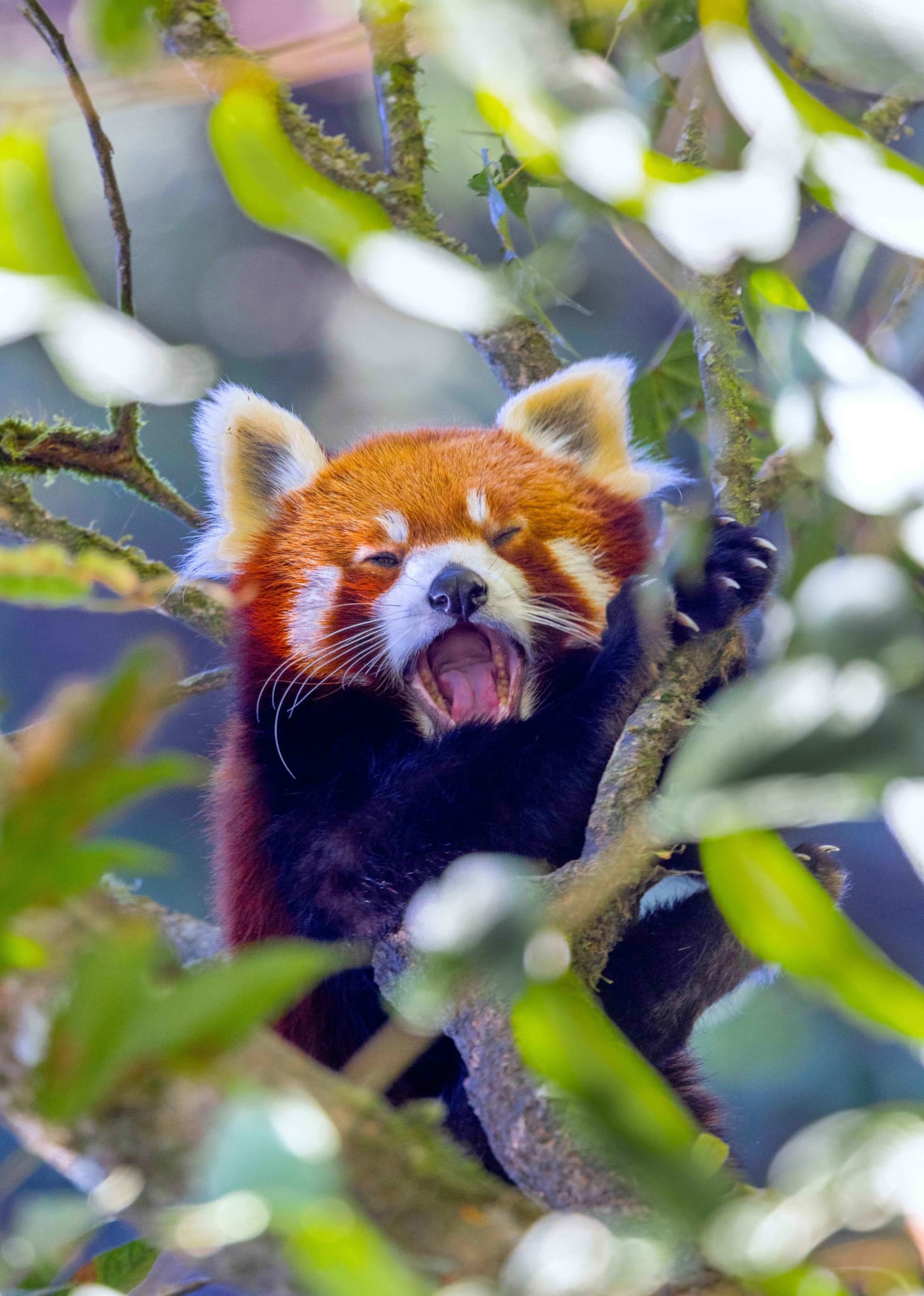
The red panda (Ailurus fulgens), the state animal of Sikkim, is an iconic species of Pangolakha. Slightly bigger than a domestic cat, it is distinguished by its thick, reddish-brown fur, black belly and legs, and a bushy tail with a black tip and dark rings. White facial markings extend from above the small eyes toward the sides of the head, the ears are edged with white fur, and the muzzle is predominantly white. The red panda is primarily arboreal and predominantly herbivorous. It prefers forested patches with bamboo thickets as bamboo is its dietary staple. The species faces numerous threats, including habitat loss, poaching for fur, and capture for the illegal pet trade. It is listed as an “Endangered” species on the IUCN Red List.
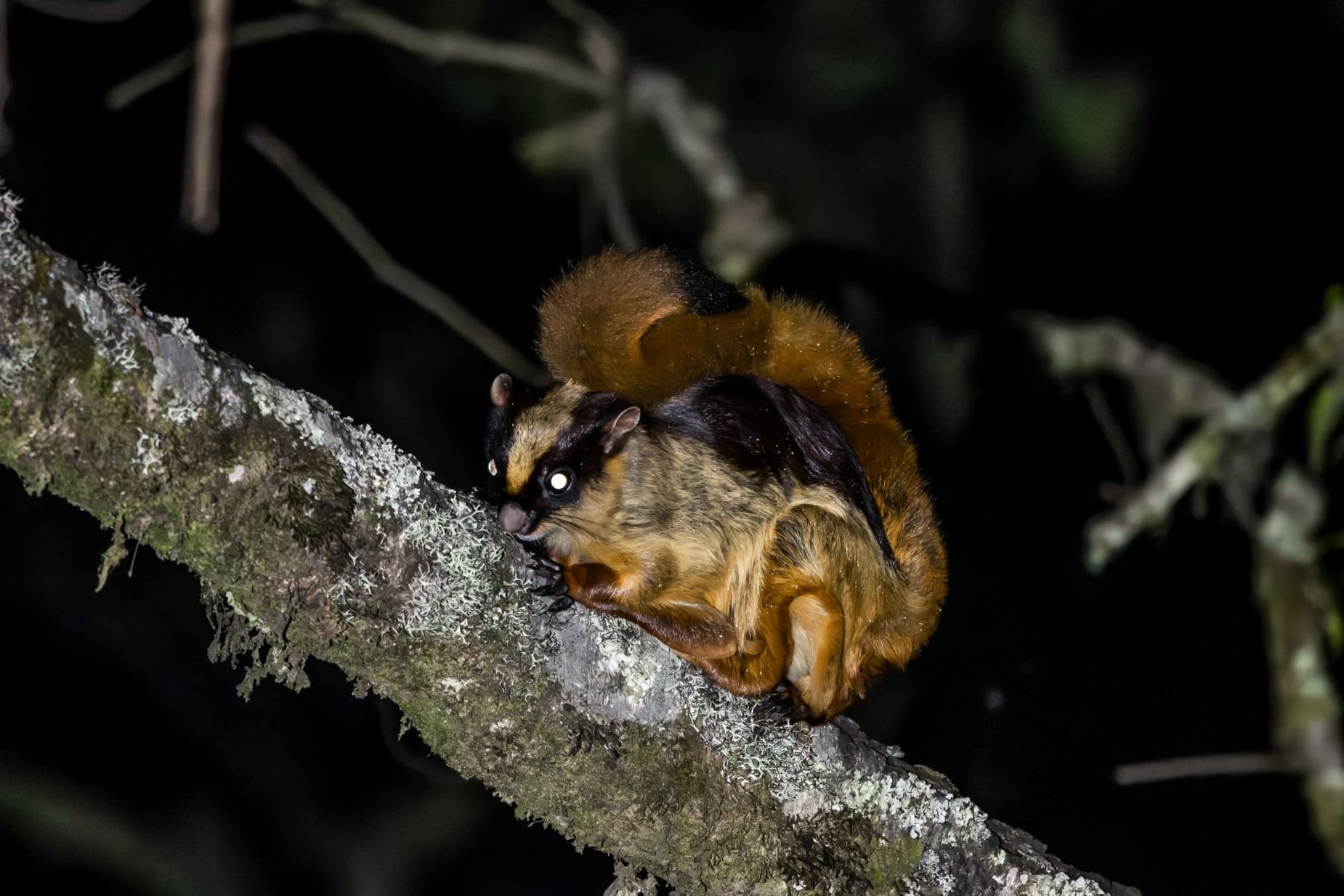
It inhabits tropical, subtropical and temperate montane forests, including rhododendron thickets, at elevations ranging from 1,500 to 3,000 m. One of the largest flying squirrels in the world, it does not actually fly, but possesses a patagium (a membranous extension between its limbs) that helps it glide several hundred metres from one tree to another. The species is arboreal, nocturnal and omnivorous. Habitat degradation and loss, hunting for bushmeat, and capture for the illegal pet trade pose major threats to this species, which is listed as Near Threatened on the IUCN Red List.
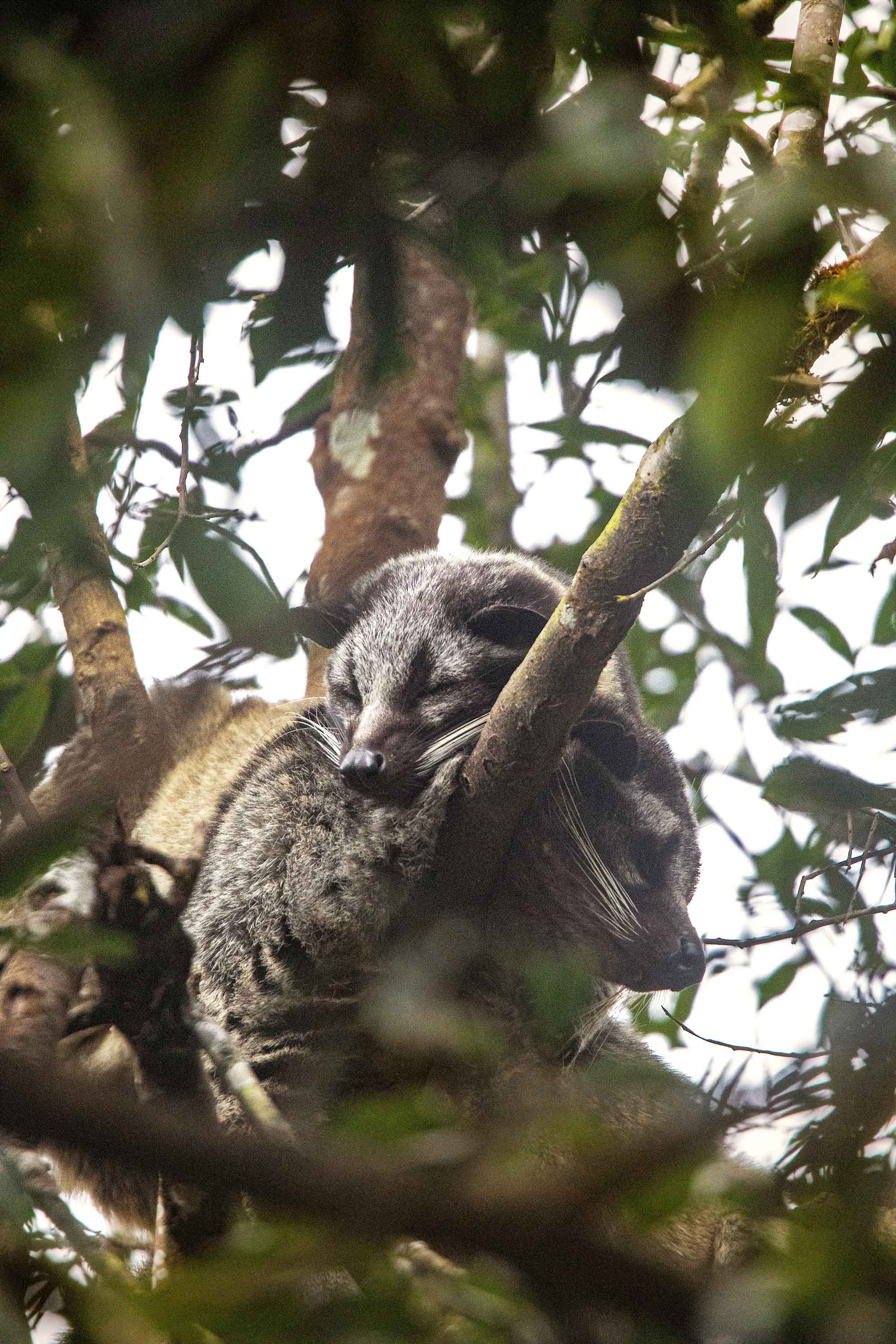
The masked palm civet (Paguma larvata) is a widely distributed species that is found in parts of South and Southeast Asia, at elevations ranging from 20 to 2,700 m. In India, it is found across the Himalayas. The species exhibits nocturnal behaviour and is an omnivore (eating plant and animal matter, depending on what is easily available). Its fur is greyish to ochre coloured and black at the face, neck, shoulders, limbs, and tail. A white patch of fur runs from above the nose to the forehead and also extends from around the eyes to the sides of the head. Although listed as a “Least Concern” on the IUCN Red List, it is threatened by habitat loss and hunting for meat.
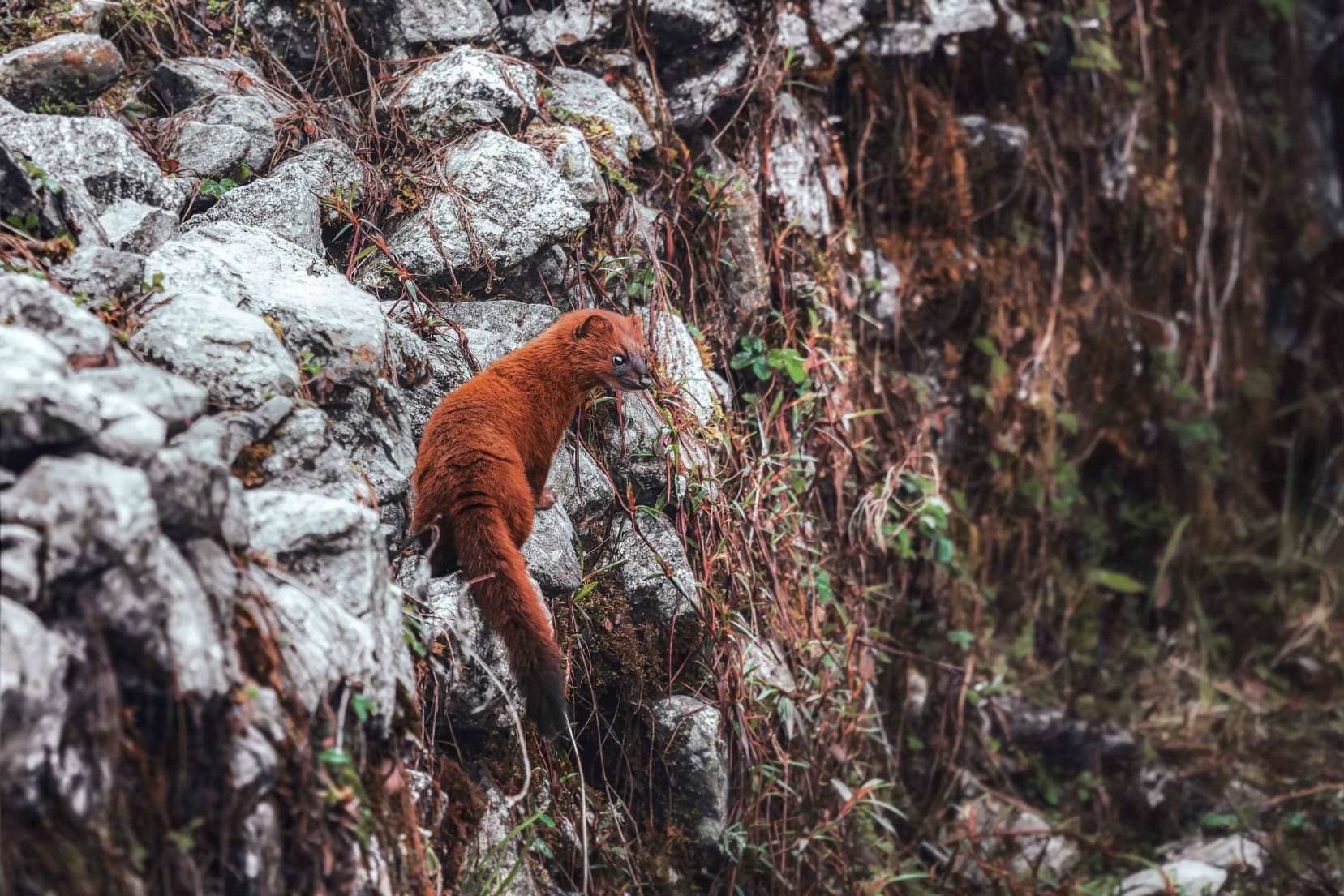
The species has an extremely widespread distribution across Asia, including Siberia, from where it derives its name. In India, it is found across the Himalayas, from sea level to elevations of 4,875 m. Thriving in a wide variety of habitats, including human-dominated areas, it feeds on small mammals, birds, fish, amphibians, and even carrion.
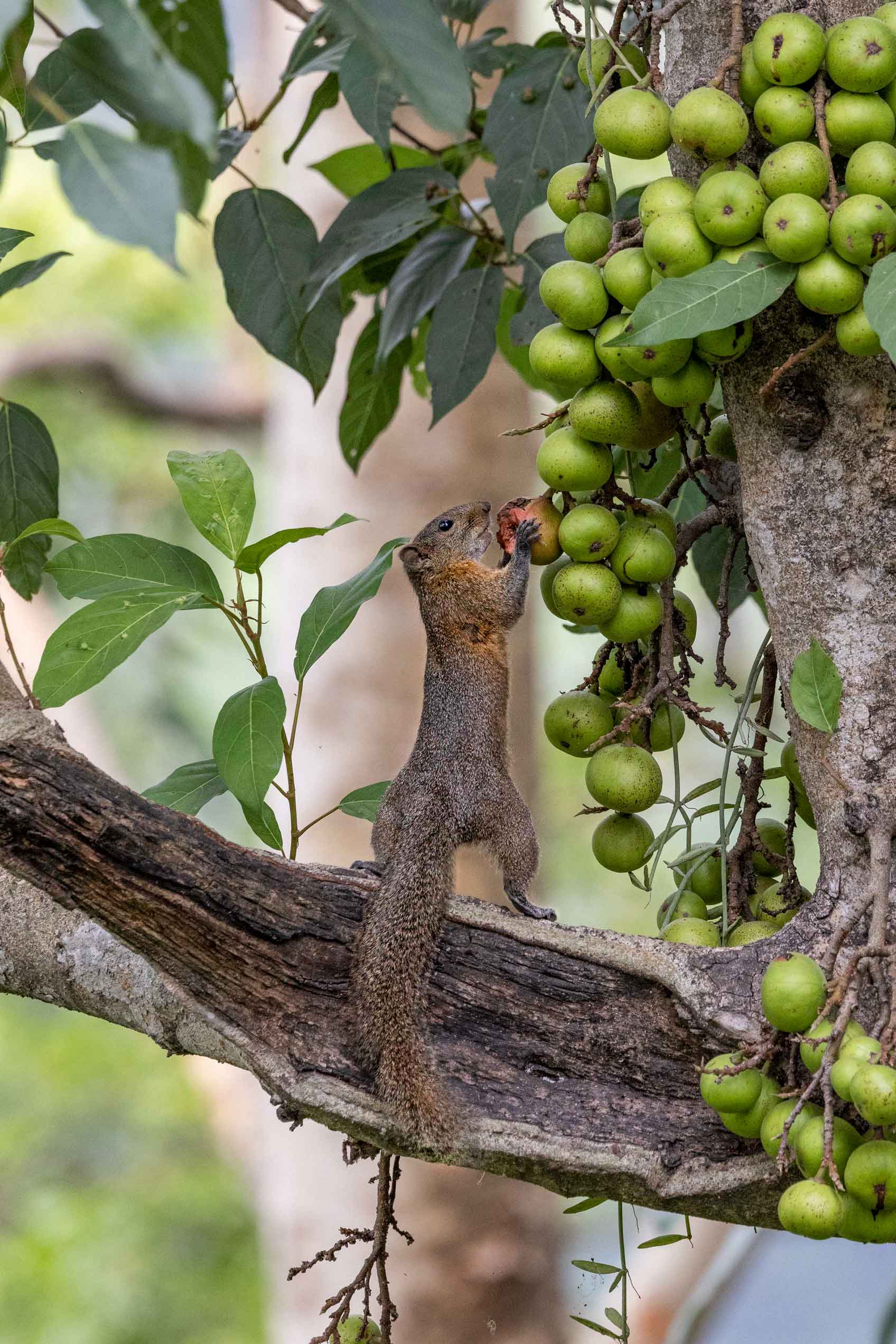
The hoary-bellied squirrel (Callosciurus pygerythrus) is a rodent with a wide range that extends from northeastern South Asia to western Southeast Asia, up to an elevation of 1,560 m. Its fur colour varies from reddish-brown to greyish-brown. The squirrel is omnivorous, predominantly feeding on nuts, seeds, fruits, and bark. It is active in the daytime (diurnal) and has adapted to living in degraded habitats.


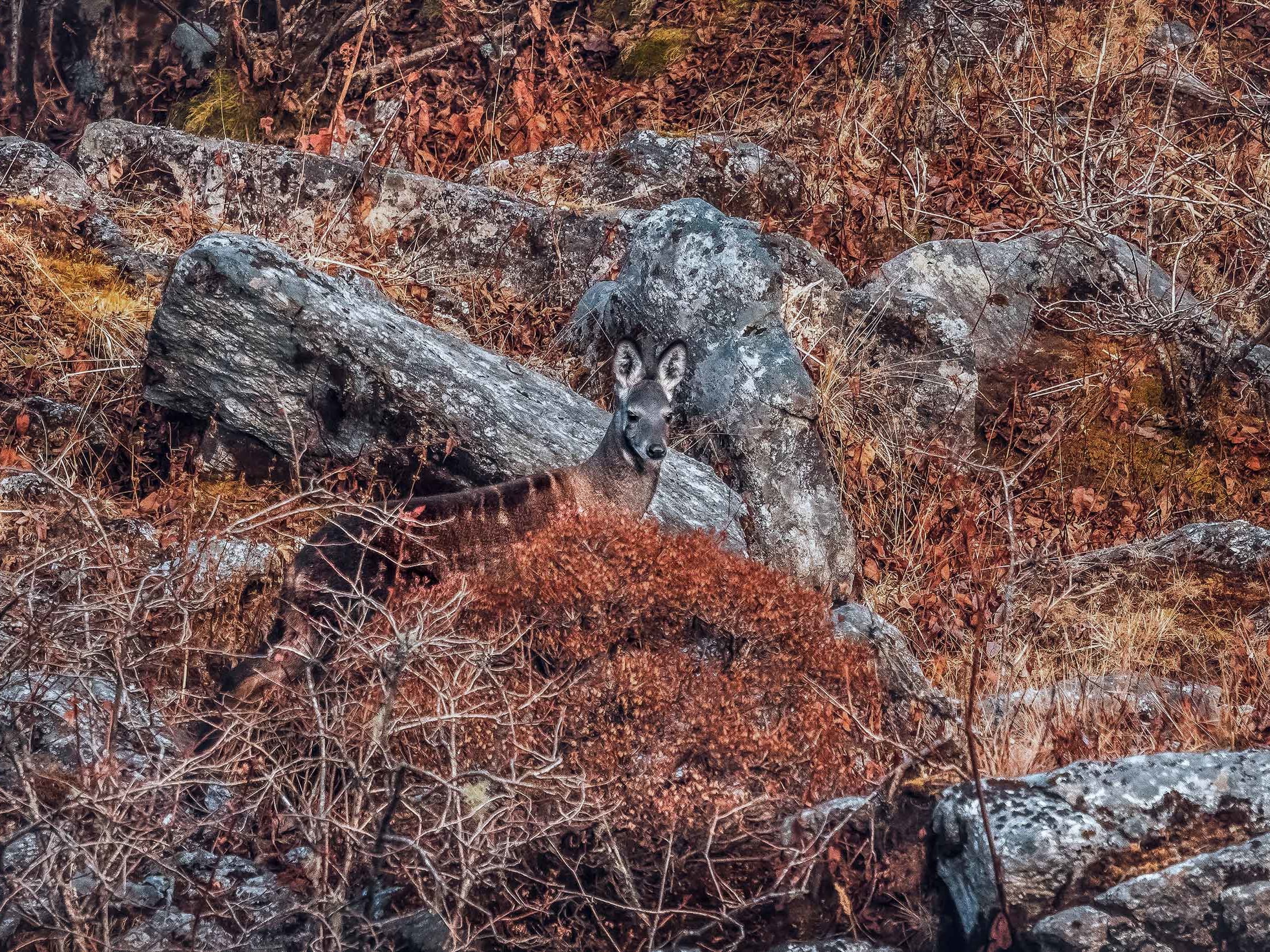
It inhabits steep mountain slopes and is well-adapted to move on rugged, rocky terrain. Its brownish-grey coat cover camouflages it well. It is a strict herbivore that feeds on grasses, leaves, nuts, and other plant matter. It lives in small groups of 4-12 individuals. It takes shelter in rock crevices and forests. Habitat loss, competition for grazing with livestock and hunting for meat are major threats to this “Near Threatened” species.
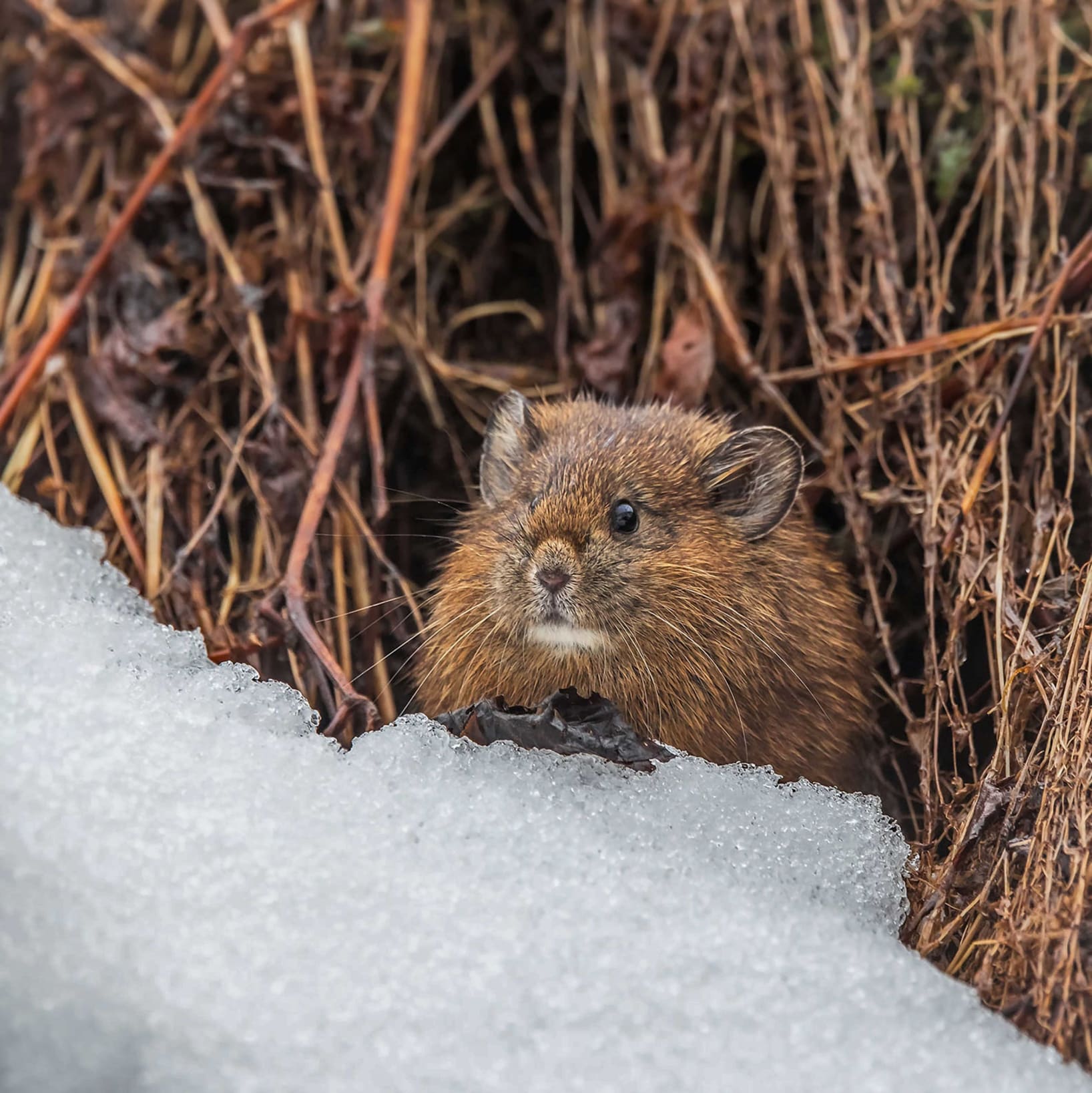
However, research conducted since 2010 has revealed that while the two animals closely resemble each other, they are distinct species. Physically, they are distinguished by subtle differences in the anatomy of their auditory bullae (bony structures of the inner ear). Later, genetic analysis of DNA collected from their droppings confirmed that they are different species. The pika plays a crucial role in the mountain ecosystem as a primary food source for local predators.
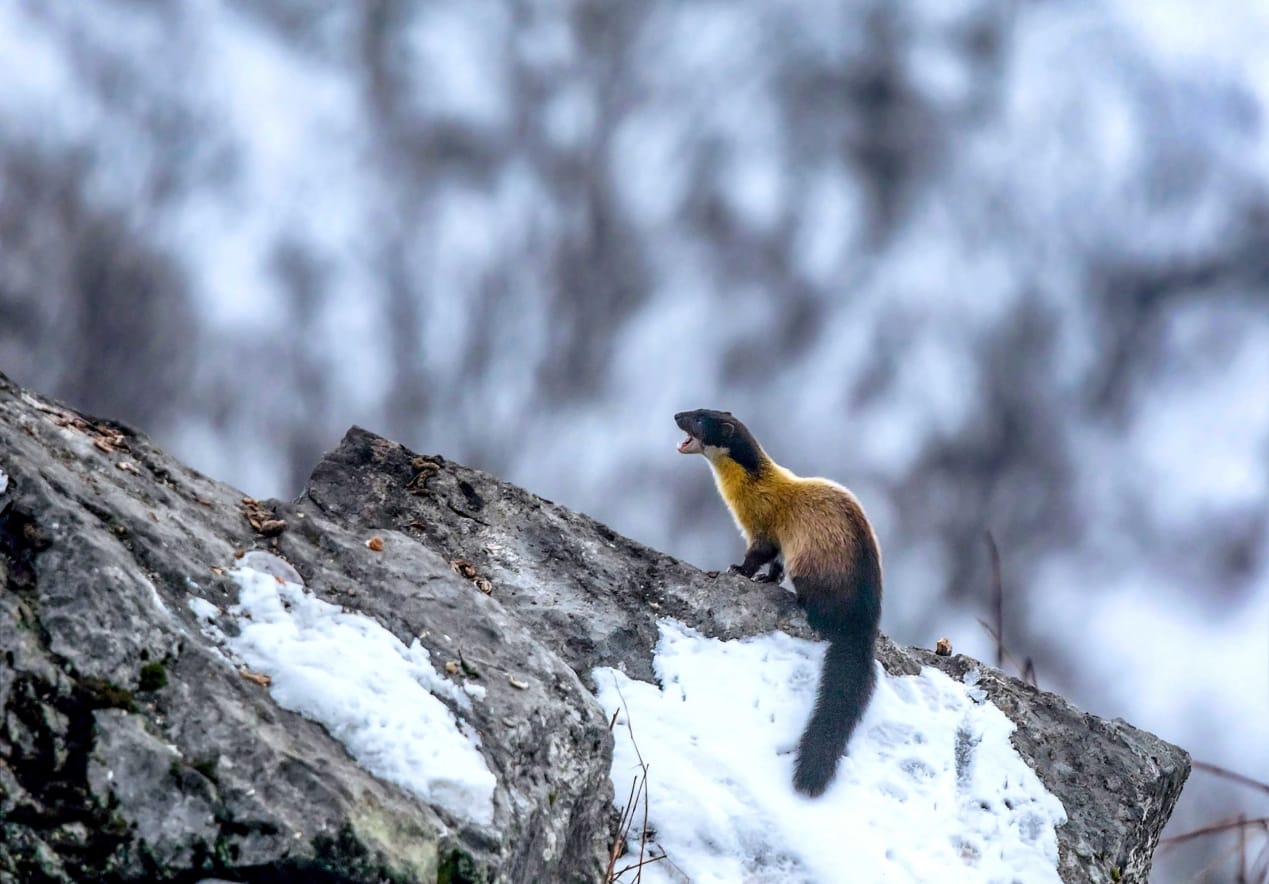
In India, it is found throughout the Himalayas. The species has bright golden-yellow fur on its neck, which accounts for its name. The small carnivore has a wide prey base and hunts in small groups of two to three. It is a highly efficient hunter, capable of preying on animals many times its size, including young ungulates.
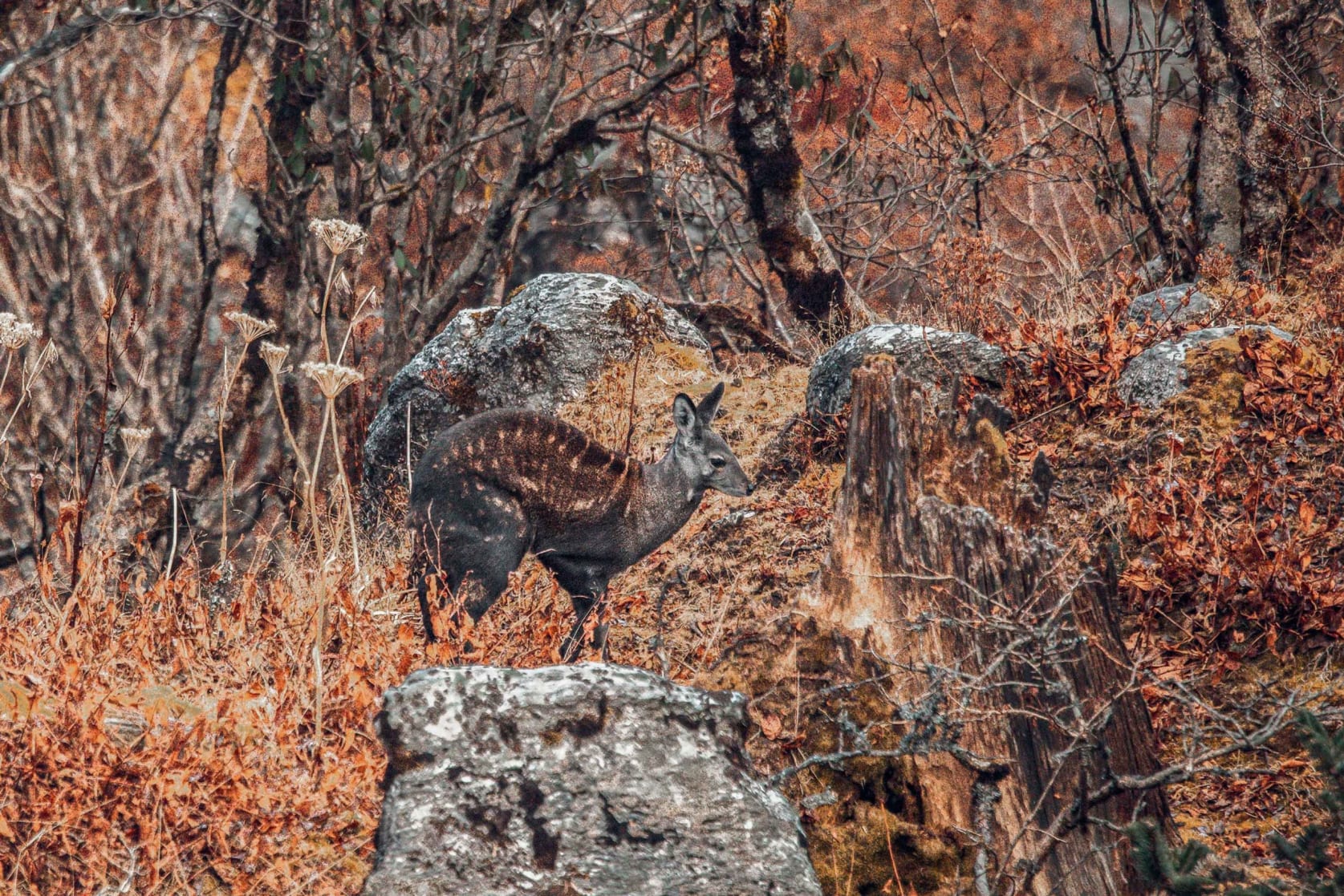
It is found in high alpine environments, above 2,500 m. It is an herbivore that feeds on grasses, mosses, lichens, and shrubs growing in alpine meadows, shrublands, and forests. It is a crepuscular species that is mostly solitary. Males possess musk glands that produce musk used to attract females and mark territories. Like all musk deer species, they possess a pair of continuously growing, enlarged upper canines. The species is highly threatened by merciless poaching driven by the illegal trade in its musk glands, which are used in the cosmetic and pharmaceutical industries.
About the Authors

Oishimaya Sen Nag