Listen to this article
•
15:34 min
Listen to this article
•
15:34 min
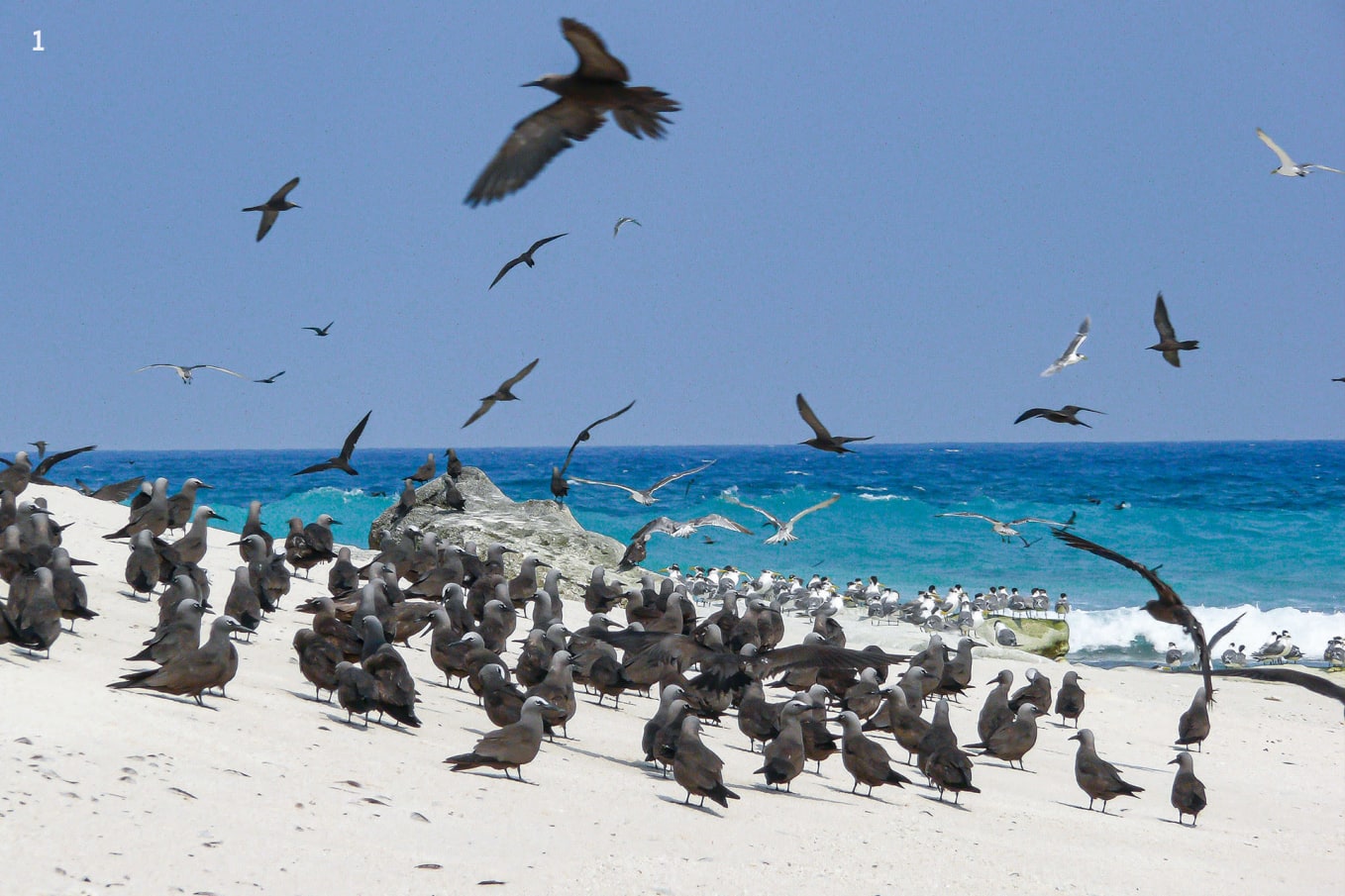
From one end of a submerged bank, a tiny island bursts through the surface of the Indian Ocean. Formed from the deposition of coral fragments, its rocky surface is sparsely dotted with patches of short, scrubby vegetation. With no human habitation, Pitti Island, in the Lakshadweep archipelago, supports an ecosystem unlike anywhere else in the country. Each year, this “island of the birds”, Pakshi Pitti, hosts hundreds of oceanic birds that congregate here in dense breeding colonies.
The most numerous of these are the sooty terns (Onychoprion fuscatus). Aptly named for the dark colouration on their backs, these graceful fliers have the angular wings typical of all terns. Spending most of their lives flying over open ocean, sooty terns only return to land to rocky, often inaccessible, nesting islands like Pitti. These wanderers of the tropical seas can stay in flight for several years and are entirely oceanic in between breeding periods. Their feathers lack any water-repellent oils and cannot get wet, so they rest while flying, in tiny, seconds-long naps.
During the breeding season, from January to August, over 1,000 birds arrive on Pitti Island. Females lay a single white egg on the sand, and chicks start to emerge in large numbers. These breeding colonies are noisy, and parents and chicks learn to recognise each other’s specific voices and calls. As the monsoon sets in, the sooty terns make their way offshore. Guano accumulated on the island, the only remaining evidence of a successful visit, is washed away by the waves and rain.


Cover photo: Sooty terns breed in colonies on sandy islands and usually come near land only during the breeding season. Photo: Rajdeep Mitra
The greater crested tern (Thalasseus bergii) and the brown noddy (Anous stolidus) also nest at Pitti, often in proximity. Other breeding sites for oceanic birds in India include the Vengurla Rocks archipelago, a group of around twenty islets and several smaller rocks off the Sindhudurg coast of Maharashtra, and the sandbars of Adam’s Bridge that stretch between Rameswaram, Tamil Nadu, and Sri Lanka. Breeding terns, including the three species found at Pitti, have been reported at both these sites, although much is still unknown about their abundance and ecological status.
These terns are part of a varied cast of characters that swoop, skim, chitter, coo, fish, and hunt in Indian waters. Pelagic seabirds are a diverse group of avians adapted to spend most of their lives over the open ocean. In contrast, their more well-known cousins, like the river tern, Indian skimmer, and coastal gulls, range inland near lakes and marshes, and never venture far from shore. Pelagic seabirds instead have almost entirely marine lifestyles, perform immense oceanic migrations outside of their breeding seasons, and have little overlap with humans. They are extraordinarily long-lived; for instance, the sooty tern has a lifespan of 34 years in the wild. They also lay very few eggs at a time, have long intervals between breeding, and invest considerable time in parental care. Both parents care for chicks, and most species are either monogamous during the breeding season or for life.

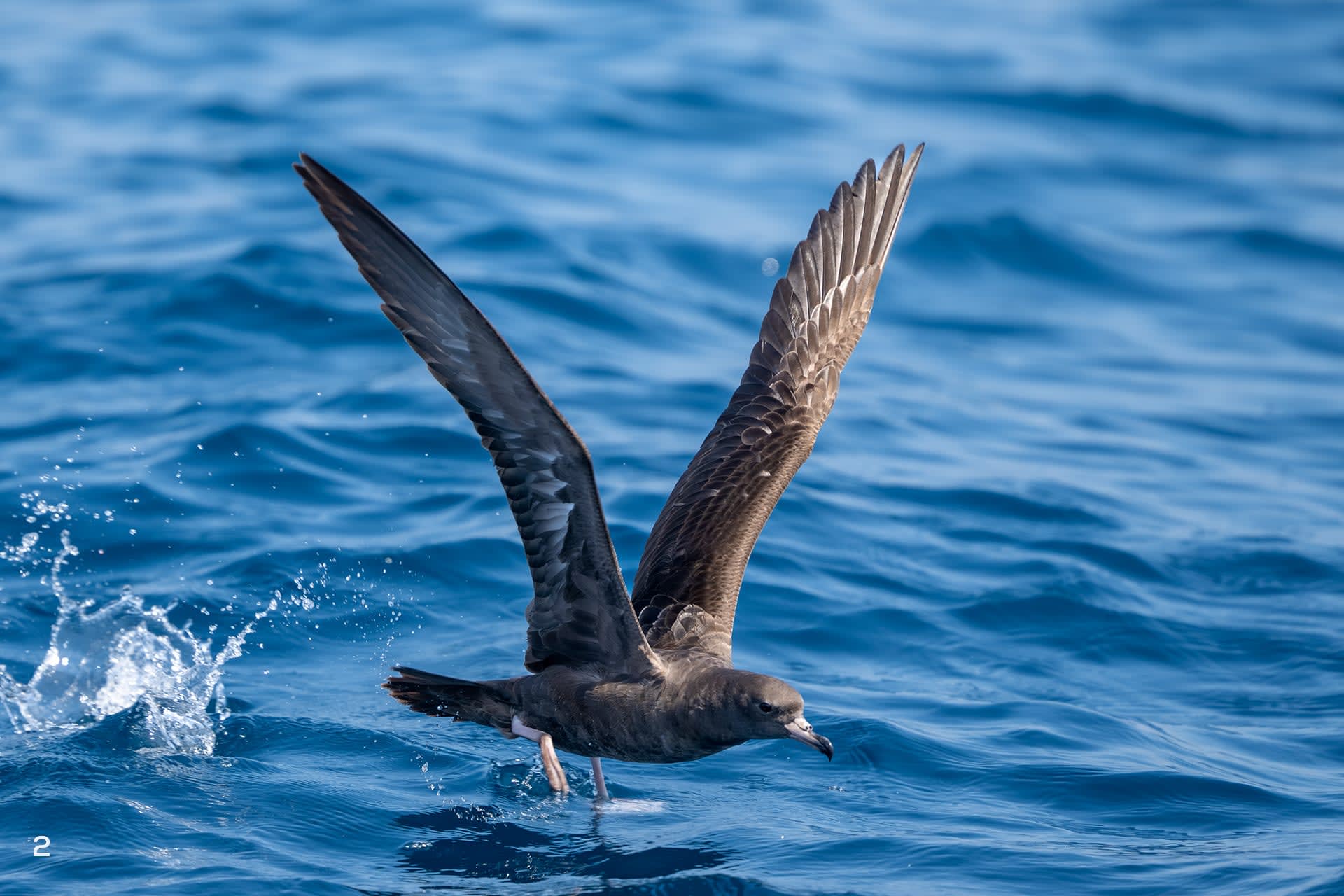
Their endurance lifestyle brings a unique set of ecological challenges. Non-breeding seabirds, which make up most sightings in India, have one major occupation: feeding. The energetic requirements of a body continually in motion require these seabirds to develop a host of adaptations for foraging. Large groups of pelagic seabirds congregate around fishing vessels, especially in areas where fishers are hauling nets out. Fishers sometimes use their presence to indicate favourable fishing grounds. The flesh-footed shearwater (Ardenna carneipes) often follows fish shoals offshore and has been sighted from Kerala to Goa. They are among several species of shearwaters observed in India, whose name comes from the way they appear to slice the waves with their wingtips. The shearwaters belong to the order Procellariiformes, which also includes petrels and albatrosses. Birds of this order have pronounced tubular nostrils above their bills that give them an extraordinarily keen sense of smell, unusually well-developed for birds, which allows them to locate patches of fish and other prey across vast expanses of ocean. A salt gland above the eyes connects to the tubular nostrils and allows the birds to drink seawater by filtering out excess salt, which they then excrete as droplets that slide off their bills.

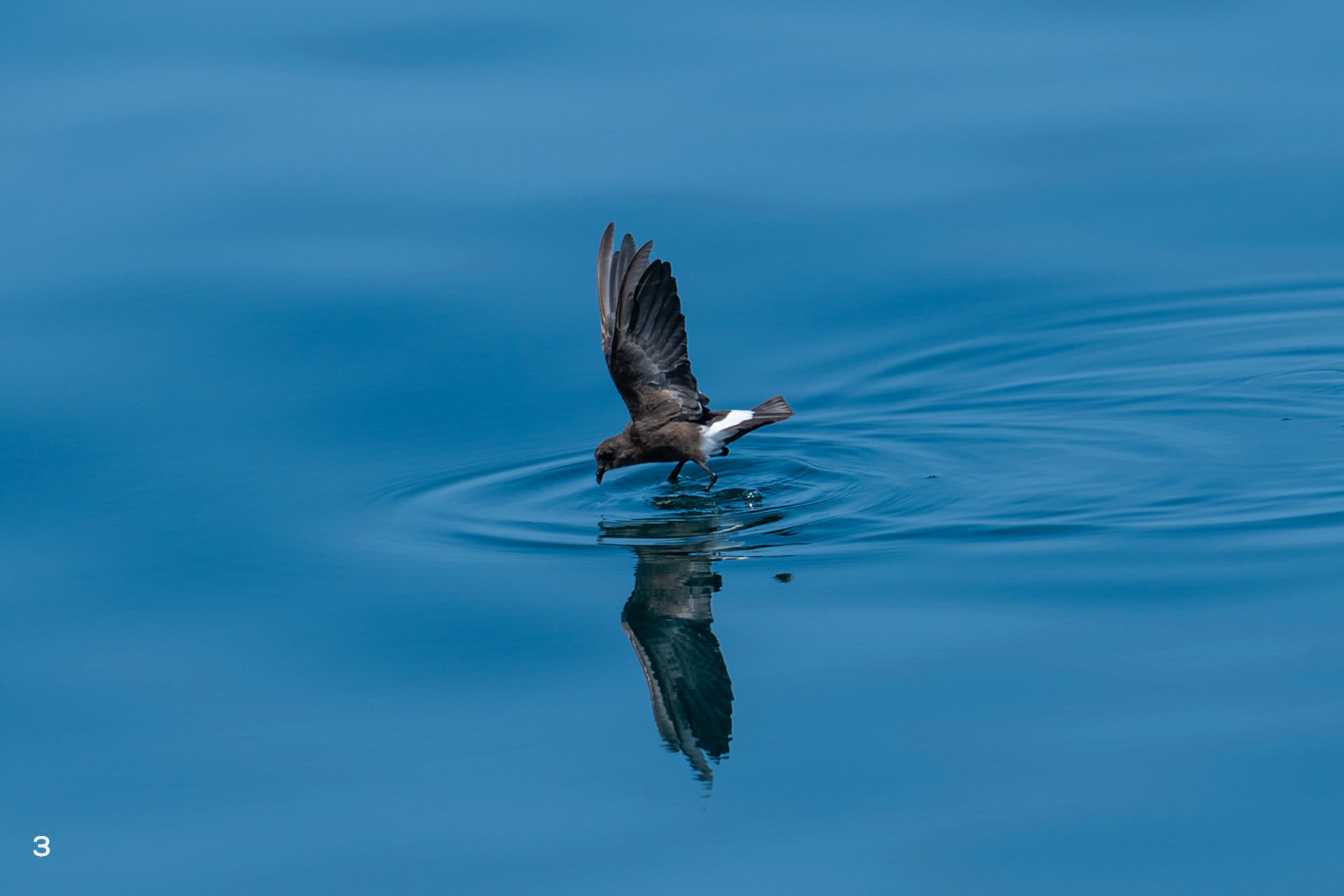

Another tube-nosed seabird is Wilson’s storm petrel, one of the most sighted seabirds in India, with the apt scientific name Oceanites oceanicus. The smallest warm-blooded animals to breed in Antarctica, they migrate from their frigid breeding grounds to warmer waters in the non-breeding season. Between May and October, Wilson’s storm petrels are regular visitors offshore all along the west coast, Lakshadweep, and occasionally in the Bay of Bengal and the Andaman Sea. These birds often aggregate in groups numbering in the hundreds, and mass migrations have been reported from our coasts. The distinctive flight behaviours of storm petrels help them feed on the open ocean. They hover close to the water, “pattering” their feet across the surface. This behaviour points to the likely etymological root for petrel, from the Biblical reference of St. Peter “walking on water”. Pattering their feet disturbs plankton in the water, allowing the birds to dip their heads to scoop up prey while in flight.
Another strategy for finding food in the open sea is piracy, a foraging approach known as kleptoparasitism. Skuas (whose other name, jaeger, comes from the German word for hunter) are proficient kleptoparasites. The most common of these in India are the pomarine skua (Stercorarius pomarinus) and the Arctic skua (S. parasiticus), reported seasonally off the west coast. Skuas chase and attack other seabirds in mid-air, forcing them to drop their catches or regurgitate their food.
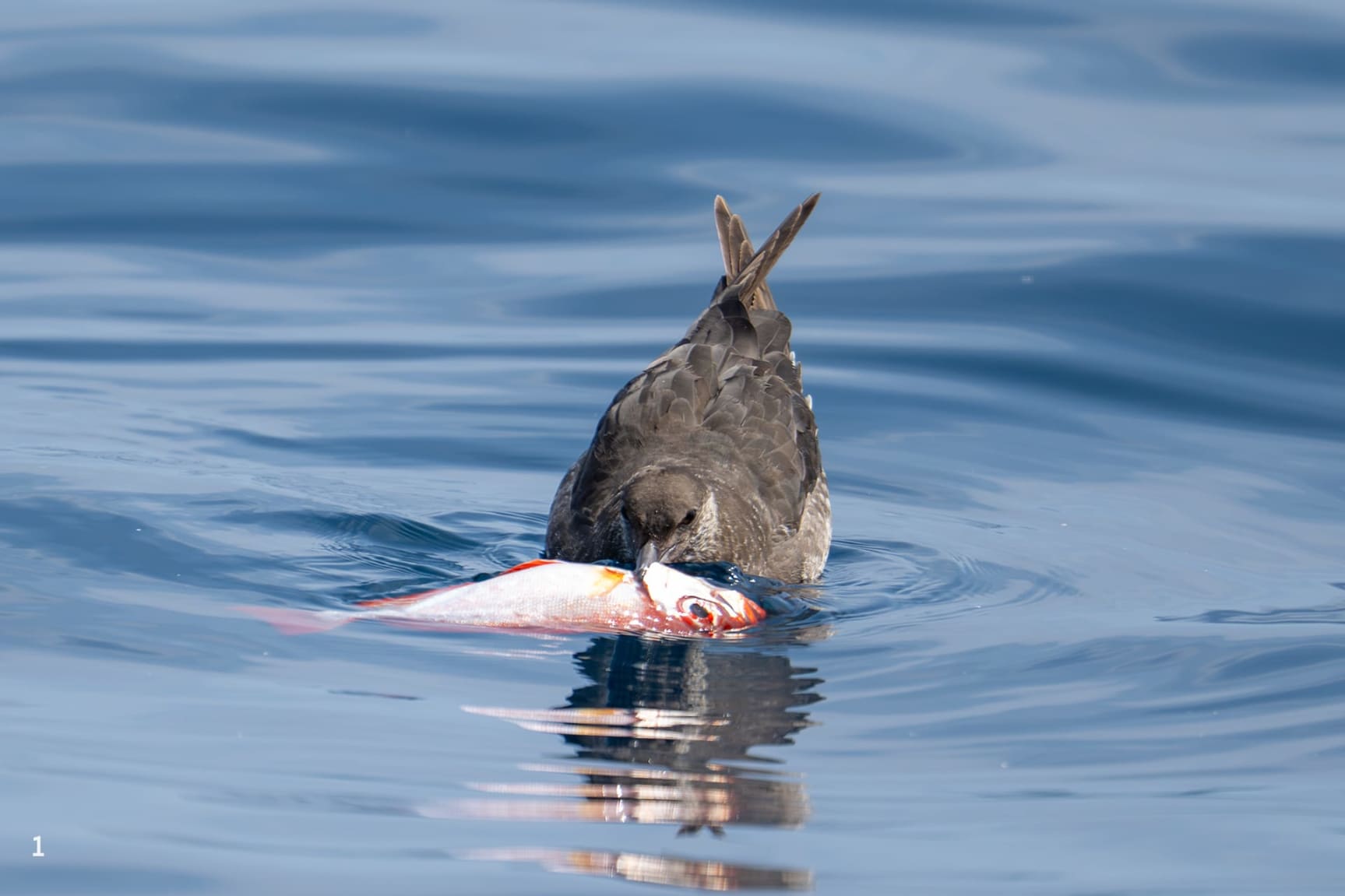

Recent research has shown that this behaviour might cause the spread of avian influenza from infected target birds to kleptoparasites, which then transport the virus to their breeding colonies. A deadly H5N1 outbreak in wild birds has been ongoing since 2021, with many seabird populations heavily impacted. Aggregating in dense breeding colonies, pelagic seabirds might be particularly susceptible, and their migrations have likely contributed to the rapid spread of the virus across oceans.
Seabirds are vulnerable to a host of man-made pressures, particularly entanglement in fishing gear, ingestion of plastic pollution, and the degradation of nesting sites by invasive predators like rats. With life histories governed by the seasons, anthropogenic climate change can also have severe consequences for these birds, such as a mismatch between the timing of chick hatching and the availability of fish and other prey for their first feeds, as seen at Pitti Island. Their long lifespans mean that population declines seen today might have been in effect decades ago.
While their place in the food web may make them susceptible to various threats, as top predators, seabirds are an essential indicator of ocean health. They are crucial to the functioning of the oceanic ecosystem and to the cycling of nutrients and minerals, both between land and sea, and across oceans. These hardy, adaptable birds are vital links connecting our global biosphere: threading together far-flung nesting islands with wide oceanic expanses halfway around the world, feeding beside fishing boats and whales alike.

About the Author