Listen to this article
•
15:34 min
Listen to this article
•
15:34 min
As the sun started sinking beyond the horizon, I increased my walking speed. My accommodation in Murti Village was only a few minutes away, but returning before sunset is highly recommended in this rural landscape on the fringes of Gorumara National Park, West Bengal. Even locals avoid leaving their homes after dark, especially during winter, the rice harvest season. These precautions help avoid chance encounters with India’s largest land mammal, the gigantic Asian elephant.
Deprived of massive tracts of their historical habitat, these animals sometimes enter villages along the edges of Gorumara to feast on paddy. Sudden encounters with these animals have proven fatal several times, and life in the region now rests on a fragile balance between humans and the wild. Yet, there is hope. The bond between elephants and locals in the area is not always rooted in fear but also in reverence, as they worship the elephant as “Mahakal”.

Location & History
Gorumara National Park is located in Jalpaiguri district, northern West Bengal. It is part of the Dooars region, a verdant belt of alluvial floodplains at the foothills of the Eastern Himalayas. Here, you will find numerous rivers, like the Murti and Jaldhaka, crisscrossing the landscape. Lush forests and grasslands cover the land, though they are now severely fragmented. Besides Gorumara, several protected areas are located here, including Jaldapara National Park, Chapramari Wildlife Sanctuary, and Buxa Tiger Reserve.
Gorumara derives its name from “goru,” meaning cow, and “mara,” meaning kill. The name signifies the presence of tigers in the area in the past (but not anymore), and tigers killing local people’s cows gave rise to this strange name.
Gorumara’s history of protection dates back to 1895, when it was designated a 9-sq-km Reserve Forest under the Indian Forest Act and was commercially exploited by the colonial administration. Post-independence, it was upgraded to a wildlife sanctuary in 1949 and, in 1994, to a national park covering approximately 80 sq km.


Wildlife
Gorumara is known for the ethereal beauty of its dense, lush forests. At every twist and turn in the forest’s dirt roads in your safari vehicle, be prepared to feel the thrill of a sudden encounter with one of its denizens. Besides elephants, Gorumara National Park is home to gargantuan gaurs and one-horned rhinoceroses. The latter are mostly found in the park’s grasslands (which cover less than 14 sq km). As per the 2025 rhino census, the park’s rhino population ranges from 58 to 63.
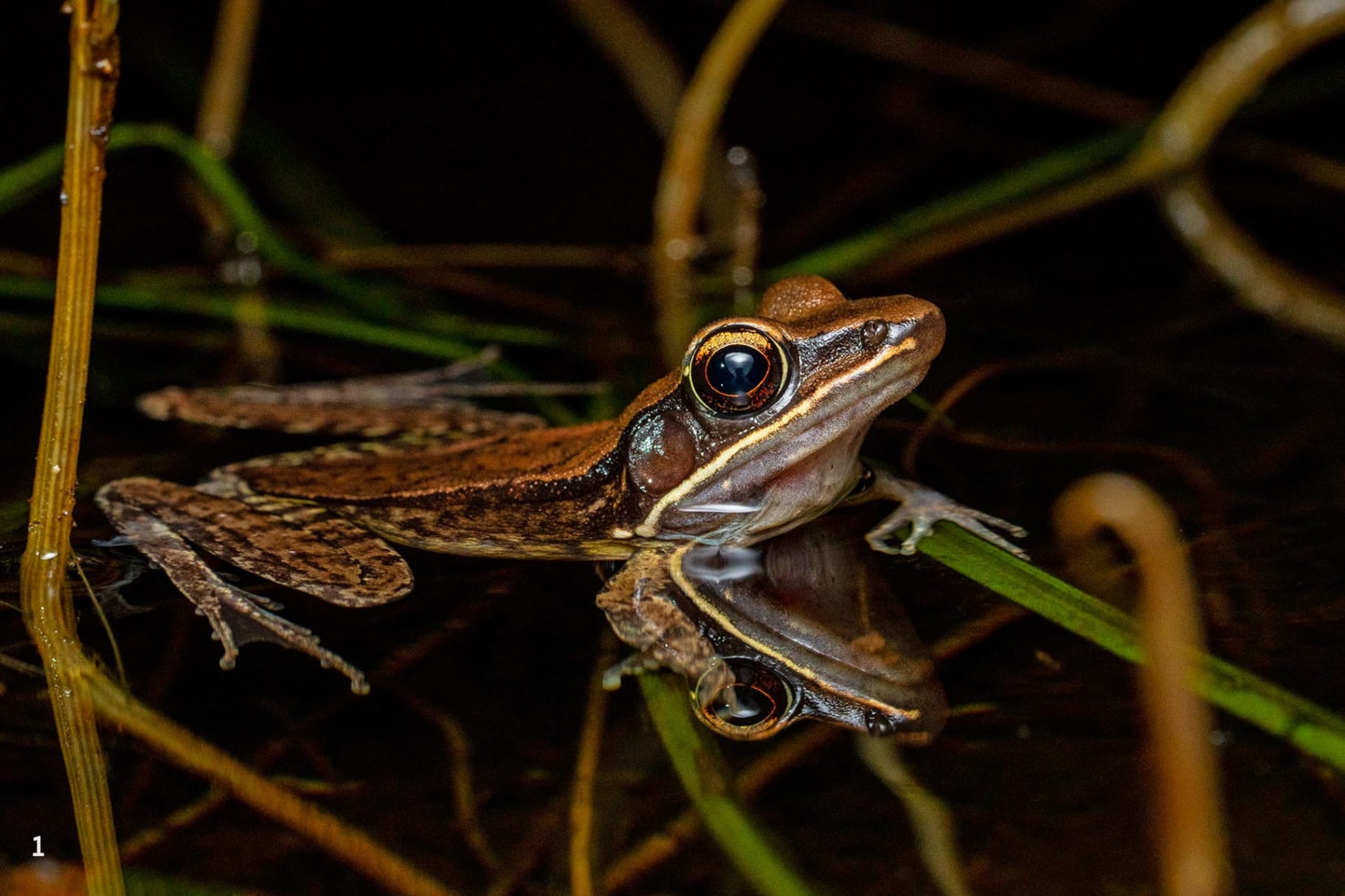
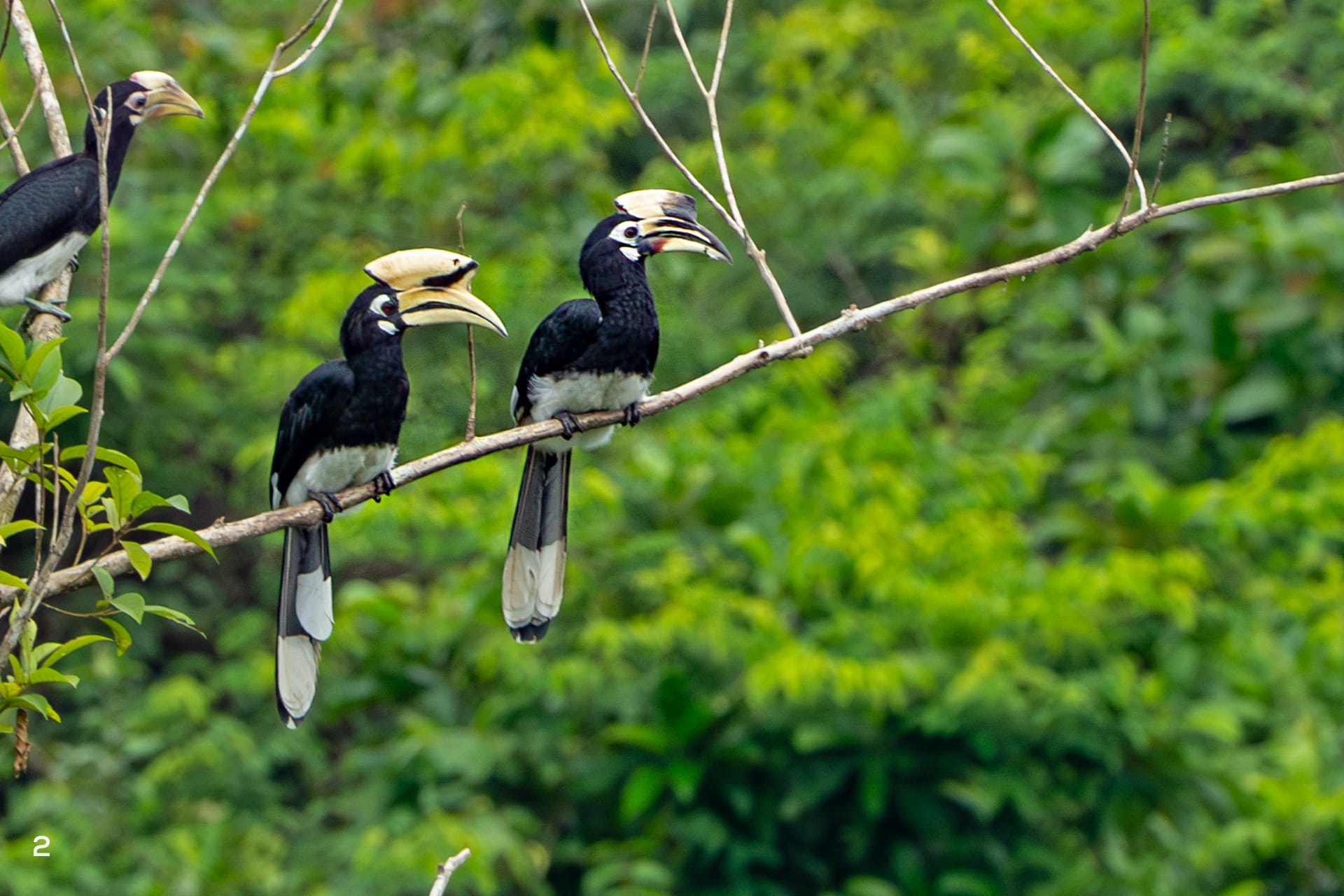
Leopards prowl around the wilds of Gorumara. They also inhabit the tea gardens bordering the national park area where human-leopard conflict cases are often reported. Gorumara National Park has a rich avian biodiversity, with around 193 species recorded by the West Bengal Forest Department. Birds like the oriental-pied hornbill, great hornbill, Alexandrine parakeet, green imperial pigeon, lesser adjutant, Indo-Chinese roller, grey-headed canary-flycatcher, ruby-cheeked sunbird, and others have been spotted in the park.

Local Culture
For a comprehensive wilderness experience in India, meet the local communities that live alongside the protected area. These people can teach us more about the wild world of their region, as they possess traditional knowledge passed down over generations that modern learning resources cannot match. One of the best places to do so in Gorumara is at the Mahakal Temple on National Highway 31, close to the park and the town of Lataguri. This site regularly draws local devotees seeking Mahakal’s blessings. Many are happy to share their experiences of coexisting with the area’s wildlife.
The temple is not an elaborate structure; it is a shrine right beside the highway, at the edge of the forest, in a small clearing. It contains a stone sculpture of an elephant, decked in marigold garlands and vermilion, with a candle burning at its feet, along with other deities. Locals visiting the shrine bow before the elephant, whom they consider their deity. During my visit, I saw elephant footprints in the area, and the priest said that an elephant herd had passed by the previous day.


According to local beliefs, the elephant protects them and their forest. A research publication coauthored by Dr Vidya Athreya states that people’s belief in Mahakal is so strong that they sometimes refuse government compensation for crop losses caused by elephants. They believe that if their deity consumes the crops, it must be accepted as a blessing and will ensure higher yields in the future.
Similar cultural beliefs are found across India, including reverence for “Waghoba” in Maharashtra. They spotlight how cultural practices and beliefs can foster coexistence between people and the wild.
Threats
Habitat loss, along with forest degradation and fragmentation, poses the greatest threats to wildlife in Gorumara. Large herbivores such as elephants, rhinos, and gaurs require extensive forest tracts to meet their food, water, and mating needs. However, agricultural fields (especially tea plantations), human settlements, and linear infrastructure continue to encroach on native wildlife habitats. Even large-scale housing projects have emerged to feed the demand for holiday homes for residents of metropolises.

Getting there
• By road: Well-connected by roads with major cities like Siliguri (around 70 km) and Jalpaiguri (around 50 km).
• By rail: New Jalpaiguri Station is the nearest major railway station, around 75 km away and is directly connected to many major Indian cities. New Mal Junction and Chalsa stations are closer, but fewer trains stop there.
• By air: Bagdogra Airport, about 80 km away, is the closest airport.
Best Time to Visit
· November to March is ideal for visiting Gorumara as the weather is pleasant, and birdwatching conditions are excellent.
· The park usually closes during the monsoon from mid-June to mid-September.

Safaris & Watchtowers
Watchtowers
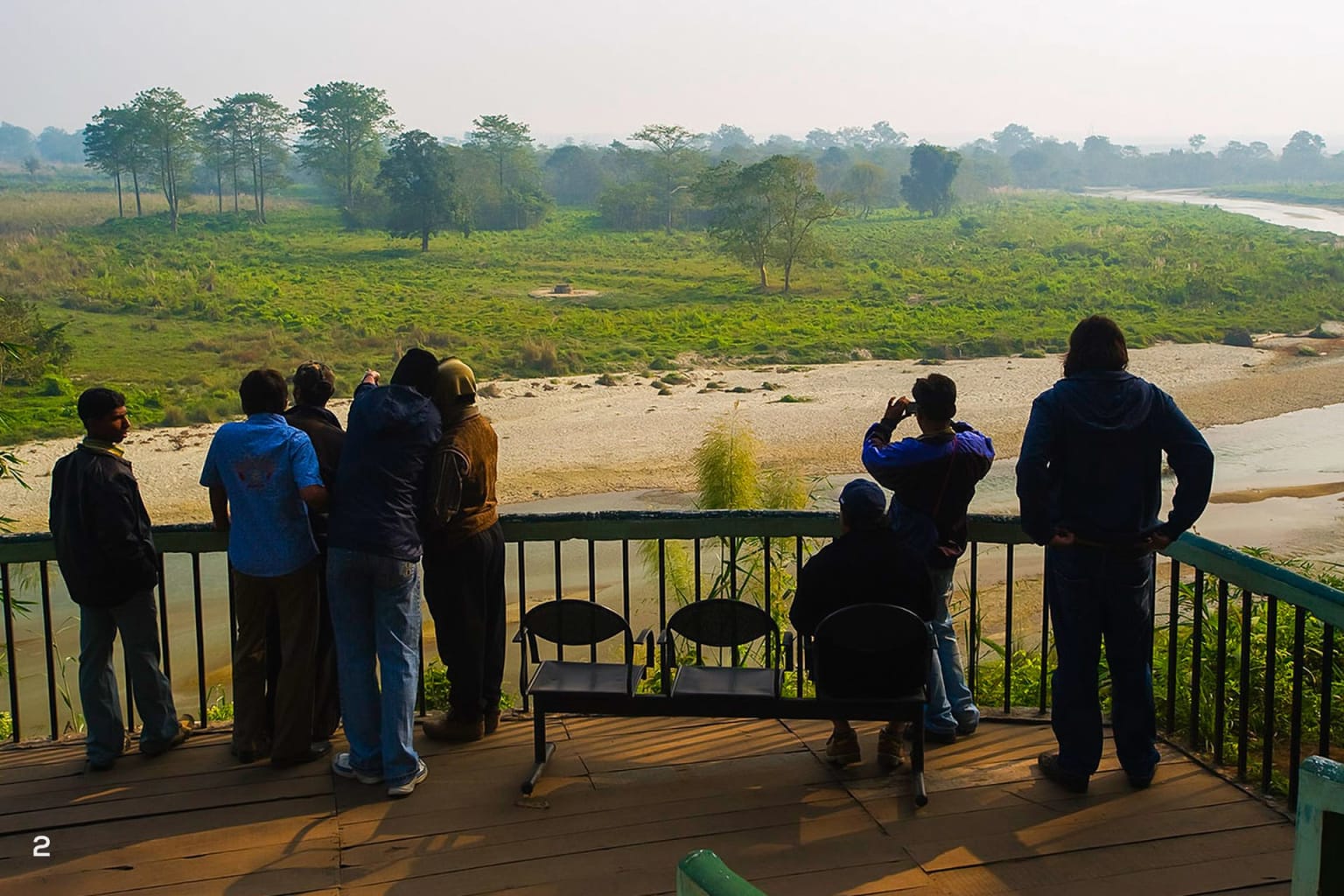
Unlike many national parks in India, visitors rarely explore Gorumara’s forests via long jeep safaris. Instead, watchtower safaris are more popular with travellers; they focus on strategically placed watchtowers overlooking forest clearings, grasslands, and salt licks, where wildlife regularly gathers.
The main watchtowers are Jatraprasad Watchtower and Rhino Observation Point. Jatraprasad was named after a legendary elephant of this forest. Both watchtowers offer stunning views of the forest, grasslands, and river as well as excellent wildlife viewing (one-horned rhinos, elephants, gaur, peafowl, and spotted deer).
Other Watchtowers: Chukchuki Watchtower is a favourite of birdwatchers as it overlooks a habitat that attracts resident and migratory birds (Indian hornbill, scarlet minivet, Asian paradise flycatcher). Chandrachur (Khunia) Watchtower and the Medla Watchtower are other locations to observe Gorumara’s rich biodiversity.
Booking Safaris
Two ways to book safaris in Gorumara National Park: 1) Online through the West Bengal Forest Development Agency or 2) In-person at the official booking counters in Lataguri, Murti, or Chalsa. The Lataguri counter is located beside the Lataguri Nature Interpretation Centre, close to several accommodations.
Safaris (Peak season)
· Gorumara National Park offers four safari sessions a day.
· Two in the morning and two in the afternoon/evening.
· Timings vary by season. October to February: 6:30 to 8:00 am (1st slot), 9:00 to 10:30 am (2nd slot), 1 to 2:30 pm (3rd slot) and 3:30 to 5:00 pm (4th slot).
· During peak season, book several days in advance. The safaris usually remain closed on Thursday.
· Safari duration: 1.5-2 hours.
Required documents
• Indian government-issued photo ID (such as Aadhaar card)
• Passport (foreign visitors)

Stay
• Murti WBFDC Banani Resort: Along the banks of the Murti River, this government-owned accommodation has excellent river views, reasonable pricing (starting at Rs 1,800 per night), and easy access to safaris.
• Several other government-owned properties are available in the area, like the Dhupjhora Elephant Camp, Panjhora Eco-Tourism Centre, Kalipur Eco Village, Medla, Lataguri Eco Tourism Centre, Lataguri Hornbill Nest, Murti Eco Cottage, and Rhino Camp, Ramsai. Details of these properties are available at: wbfdc.net/destinationDetails?did=3
• Riverwood Forest Retreat: This privately owned property offers a peaceful stay with amenities in the heart of nature. Prices vary by season but are around Rs 12,000 per night during peak season.
Beyond Gorumara
Chapramari Wildlife Sanctuary is about 15 km from Gorumara National Park; jeep safaris are the best way to explore its rich biodiversity. Lataguri Nature Interpretation Centre introduces visitors to the region’s wildlife and conservation history, and serves as an excellent starting point before heading into the forest. Several hill stations, such as Samsing, Suntalekhola, Jhalong, and Bindu, can also be part of the itinerary.
About the Authors