Listen to this article
•
15:34 min
Listen to this article
•
15:34 min
When we first visited Balpakram National Park in the Garo Hills of Meghalaya, we expected a dense evergreen landscape and a few easy wildlife sightings. Instead, Balpakram surprised us. It revealed a landscape that could change character within a few metres with canyons and gorges, plateaus and river valleys, semi-evergreen forests and limestone belts, mosaiced together in abrupt transitions. Daniel and I are part of the Clouded Leopard Team at the Wildlife Institute of India, working on the conservation and population ecology of the clouded leopard (Neofelis nebulosa) and other, lesser-known, smaller felids that share these forests. We began our fieldwork here in December 2024.

Balpakram is often translated to “the land of eternal winds”. It is dissected by many rivers, such as the Mahadeo and Kanai, and supported by numerous smaller streams locally known as chiring. The park is part of the wider Garo Hills Conservation Area, which covers around 220 sq km. It is included on UNESCO’s World Heritage Sites tentative list. It is also spoken of as a sacred landscape — a resting place for spirits in Garo belief — making it not only ecologically diverse but also culturally significant.
This landscape supports a remarkable diversity of wildlife, including charismatic cats, beautiful butterflies, rare reptiles, screaming cicadas, and elusive birds. The park is home to about 50 species of mammals, a dozen species of cicadas, over 250 species of butterflies, and around 270 bird species.
Gifts from the forests
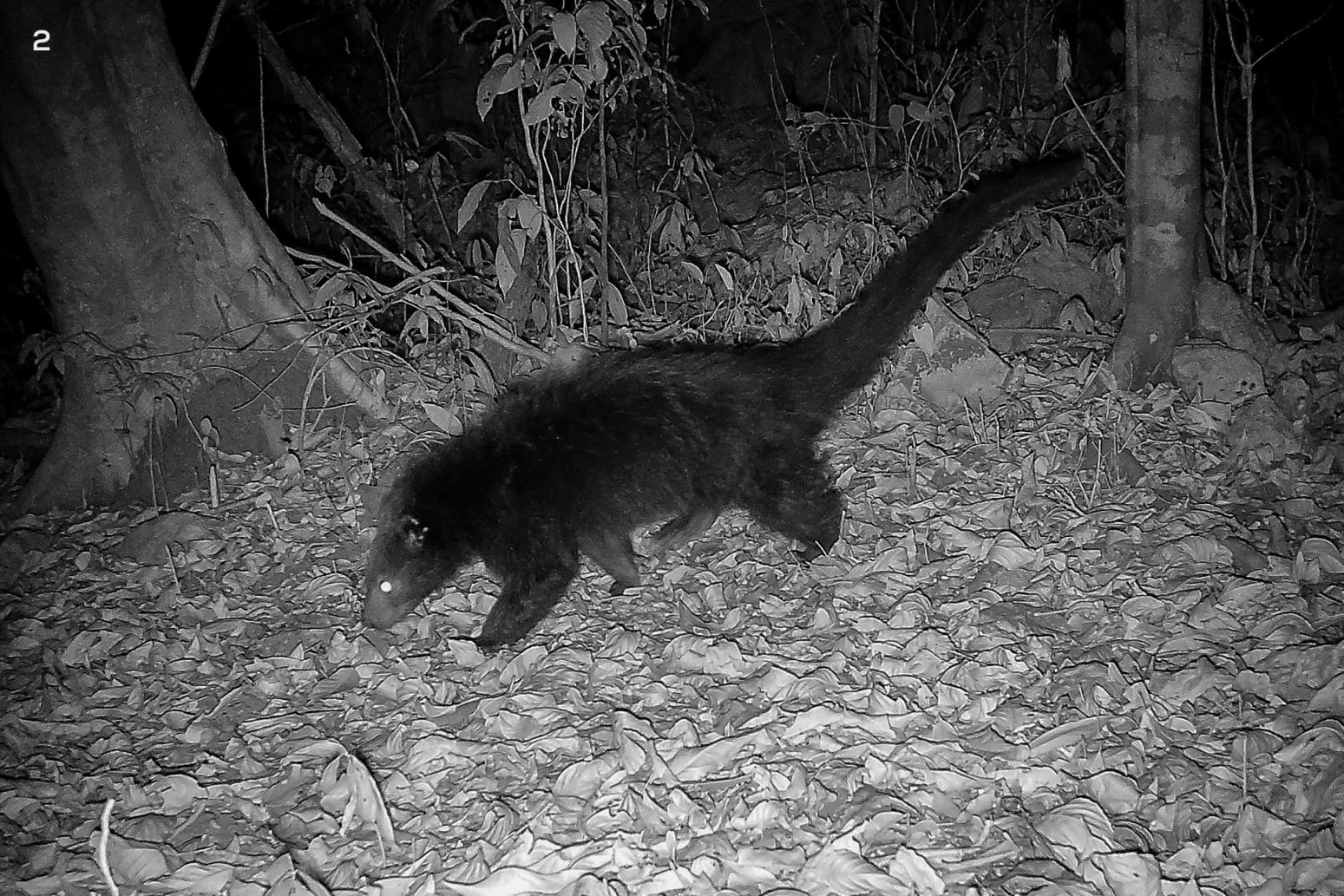
I still hope to see a clouded leopard, marbled cat, golden cat, or binturong in the wild. But in dense, layered forests like these, sightings are almost impossible and driven by luck. The closest I have come to a clouded leopard “sighting” wasn’t on a trail; it was on a time-stamped camera-trap frame.

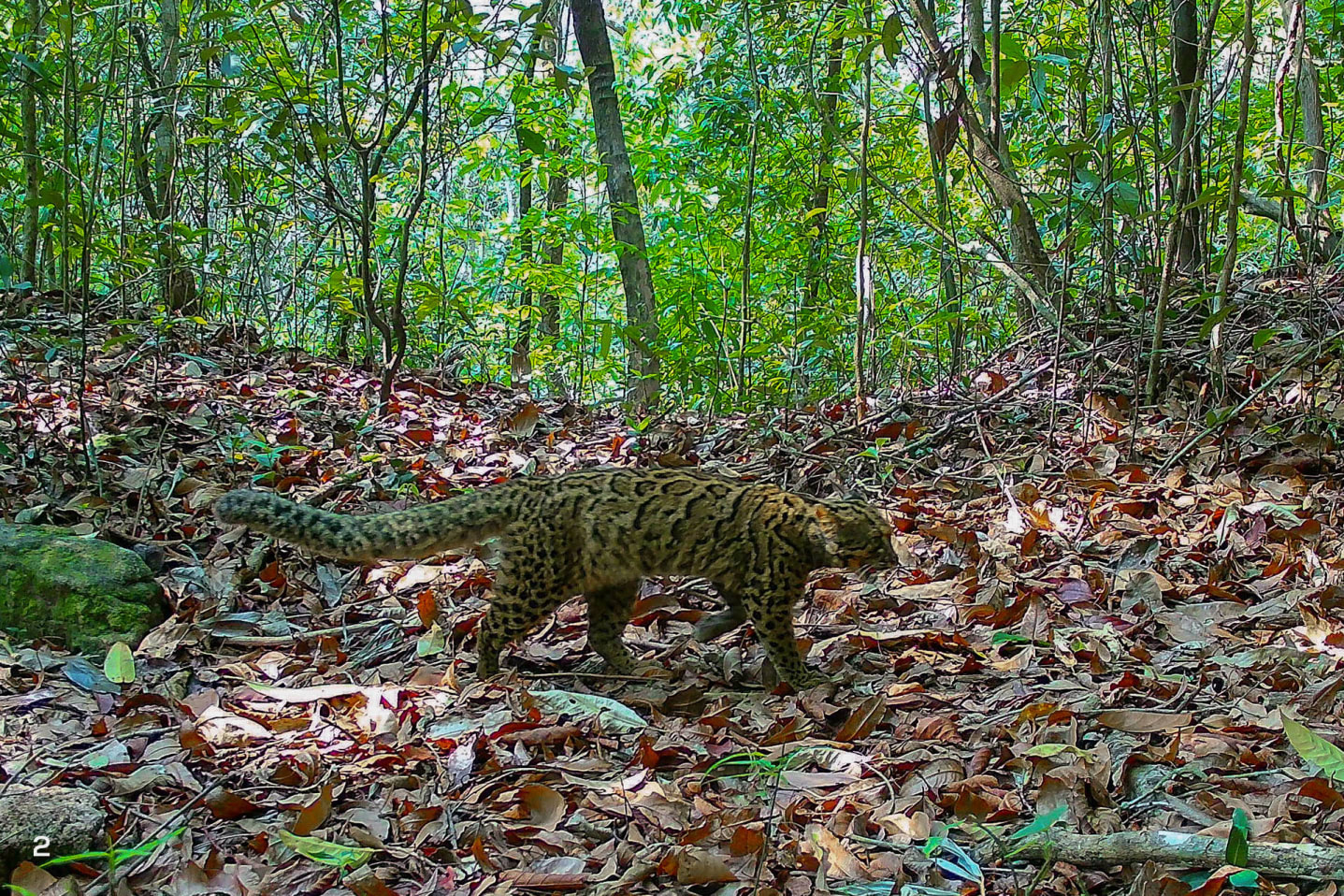

One morning, around 9 am, we deployed a camera trap on a trail and moved on to set up more. When we returned later that evening to check the first camera, we were surprised to find the forest had been busy in our absence. At 9.40 am, just 40 minutes after we had walked away, a male clouded leopard crossed the frame — calm, unhurried, as if the forest had timed it perfectly. That moment still haunts me, in the best way.
Our survey in Balpakram gave us glimpses into where these elusive animals move, when they are active, and how multiple secretive species share the same forest in overlapping time and space. Across the six months of our fieldwork, we were not very lucky with mammal sightings. We saw fleeting glimpses of a crab-eating mongoose, stump-tailed macaques, barking deer, serows, wild pigs, elephants, some squirrels, treeshrews, and canopy-dwelling troupes of hoolock gibbons and capped langurs.

Some wildlife encounters stay with you because they feel like gifts. In April, during our final week, when our hopes for a “great mammal sighting” were running low, we went on a short night trail near the Balpakram gate at around 7 pm. While watching some frogs and moths, we noticed movement in a bamboo patch. I jokingly whispered, “I hope it’s a loris…or a linsang”. When Daniel swung the torchlight upward, eyeshine looked back from the top of a bamboo. It was a Bengal slow loris (Nycticebus bengalensis), locally known as gilwey, sitting quietly. We hastily clicked some photographs, watched it for 10 minutes and then left it alone, grateful and happy. Tushar mama, a seasoned naturalist and frontline staff member, taught us to look for their presence not by searching the canopy, but by reading the ground. While feeding in trees, he said, they often pluck leaves, chew the base, and drop them. Under a tree, freshly fallen leaves with a chewed axil can be a quiet sign of their presence. Interestingly, in December 2024, our team recorded a clouded leopard preying on a slow loris in Dehing-Patkai National Park, Assam, another reminder that forests are held together by relationships we rarely witness.

Flying diamonds of Balpakram
Near one of the chirings, we crouched over wet sand where butterflies had gathered, so absorbed in mudpuddling that we leaned in close without disturbing them. Among them was a large faun (Faunis eumeus), its wings scattered with small, luminous spots like a string of lit bulbs; and the Koh-i-noor (Amathuxidia amythaon), named for the diamond-like marking on its wings.
The forest’s soundtrack
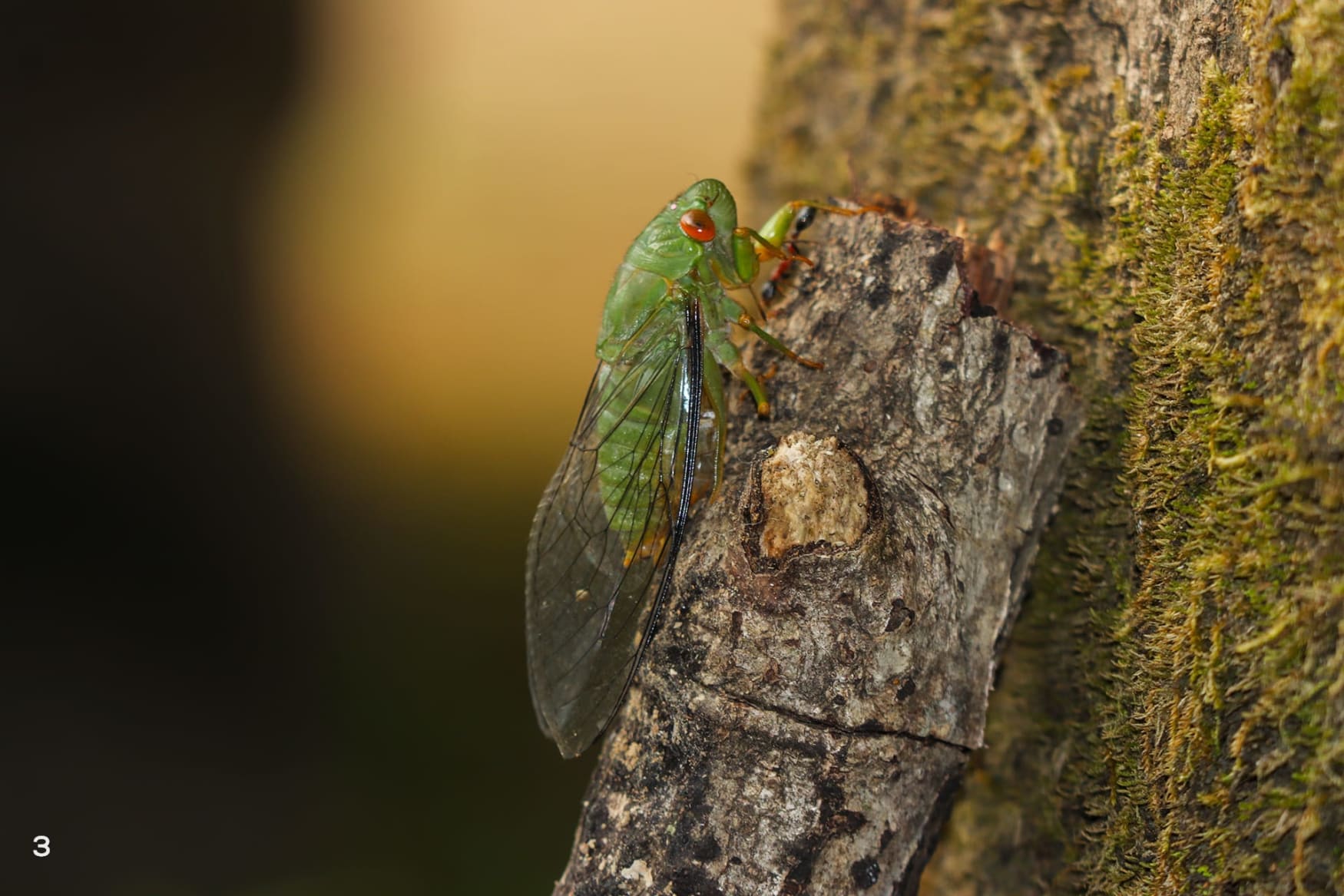
The signature sounds of Balpakram include howling gibbons, laughing tokay geckos, and cicadas that hum through the day. As the season advances toward the monsoon, the chorus shifts as new cicadas emerge. Two cicada calls we learned to recognise in this forest are those of the comb scraper (Dundubia annandelei) and the chorus of the Platylomia vibrans.
In 2024, researchers described a new “butterfly cicada” (Becquartina bicolor) from Balpakram.


Monsoon miracles
The streams of Balpakram come alive in March and April. On night walks along the chirings, we encountered a slender-armed frog (Leptobrachella sp.) hiding between small rocks, and a twin-spotted tree frog (Rhacophorus bipunctatus) tucked into bank vegetation. Snakes were rarer finds, but memorable: Zaw’s wolf snake (Lycodon zawi), glossy black with crisp white bands, and a leaf green pope’s pit viper (Trimeresurus popeiorum) coiled loosely around a thin branch.
A member of our field staff, James mama, an experienced forester, introduced us to many trees and bamboos that shape these evergreen and semi-evergreen forests. In this forest, you can find the pitcher plant (Nepenthes khasiana), an endangered insectivorous plant endemic to Meghalaya and the surrounding region. Its Garo name memang koksi translates to “basket of the ghost”, which captures how people have understood its insect-trapping nature for generations.



An overlooked and threatened landscape
Balpakram is protected, but it is not isolated. Its boundary is a living interface between forests and farms, sacred beliefs and livelihoods. You feel this on trails that begin as village paths and slowly turn into forest tracks, and in the ways local names for animals carry a familiarity even when the animals themselves are unseen.
In a place this rich, the biggest threat is also the most ordinary — a gun, a snare, a shortcut through the boundary that can facilitate illegal entry. Hunting remains a key pressure in and around the park. Despite the efforts of the park management, people still find ways to enter and hunt. During our survey, many of our camera traps went missing. A reminder that research and conservation here happen in a socially complex space. Community-led anti-hunting initiatives, responsible tourism with strict guidelines, and steady, well-supported patrolling by frontline staff can help reduce this pressure.


Another slow-moving threat to Balpakram is land-use change around the boundary. We have observed natural forests near the park’s edge being converted into arecanut (supari; gui) plantations. If the park becomes ringed by such plantations, the core risks becoming an island over time, and wildlife connectivity may weaken even if the interior remains protected. Keeping Balpakram wild will mean protecting corridors, not just the core, and local stewardship will be as important as enforcement.
Balpakram gave us many lifers (first-time observations) and wild experiences of a lifetime. Later, while packing our camp, I kept thinking of the loris’s eyeshine, gibbon calls braided with cicadas screaming, and the shared joy of a camera-trap photograph appearing on a screen in the middle of the forest. Balpakram does not reveal itself on demand, but it does not hide, either, not from those who learn to read wilderness, the signs on a trail, and a time-stamp of 9.40 hrs.

Supari plantations support the livelihoods of communities living around the park, but they also harden the forest edge. Over time, that sharper boundary can make it harder for animals that rely on connected corridors and natural forest patches to move. Photo: Tribhuwan Singh ‘Tree’
About the Authors

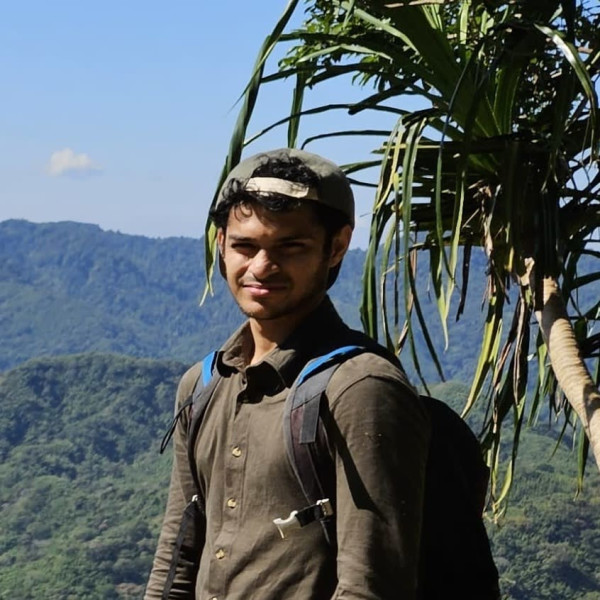
Tribhuwan Singh ‘Tree’
a doctoral candidate at AcSIR–Wildlife Institute of India, is grateful to tread the same forest trails as clouded leopards, marbled cats, and binturongs. He is currently pursuing a PhD in being professionally ignored by all of them.