 Listen to this article
•
15:34 min
Listen to this article
•
15:34 min
Once upon a tide…
All around the world, shipwrecks whisper stories of romance, adventure, courage, tragedy, and human dreams lost to the sea. From the grandeur of the Titanic to humble merchant vessels, every sunken ship carries not just history, but the slow, miraculous story of rebirth under the waves.
When these metal giants settle on the seafloor, they don’t just rest — they come alive. Over time, they transform into thriving ecosystems, offering homes to corals, sponges, fish, and a kaleidoscope of marine creatures. From underwater heritage to living reefs, shipwrecks become biodiversity wonderlands — and along India’s coasts, they also serve as fishing havens for traditional fishers who cast their lines over these silent cities.
The Dutch Connection at Anchuthengu
Our story dives deep into one such living relic of a Dutch shipwreck off Anchuthengu (known to the British as Anjengo), a coastal village near Thiruvananthapuram in Kerala.
Anchuthengu has seen centuries of maritime drama. In the 17th century, it was a bustling port under the rule of the Rani of Attingal, famous for its pepper trade and for the fierce rivalry between the Dutch and the English East India Companies.
In January 1752, one of those Dutch ships — the Wimmenum, a 42-metre-long, 1,150-tonne vessel built in Amsterdam — met a fiery end off this coast. According to Dutch archives, the Wimmenum carried a crew of 356 when it was allegedly attacked by sea pirates off the Malabar Coast. The ship caught fire and sank about 10 km northwest of Anchuthengu, settling at a depth of 45 metres in the Arabian Sea.
For generations, local fishers knew the site simply as a “lucky fishing ground”. But the story took a modern twist when a team of scuba divers led by Robert Panipilla, a traditional fisher and head of the NGO “Friends of Marine Life”, rediscovered and documented the wreck, giving science and heritage a common meeting place beneath the waves.

A dive into history
A diver descends into the blue to document the majestic remains of the 18th-century Dutch shipwreck, now teeming with marine life, off Anchuthengu, near Thiruvananthapuram, Kerala.

The Living Shipwreck
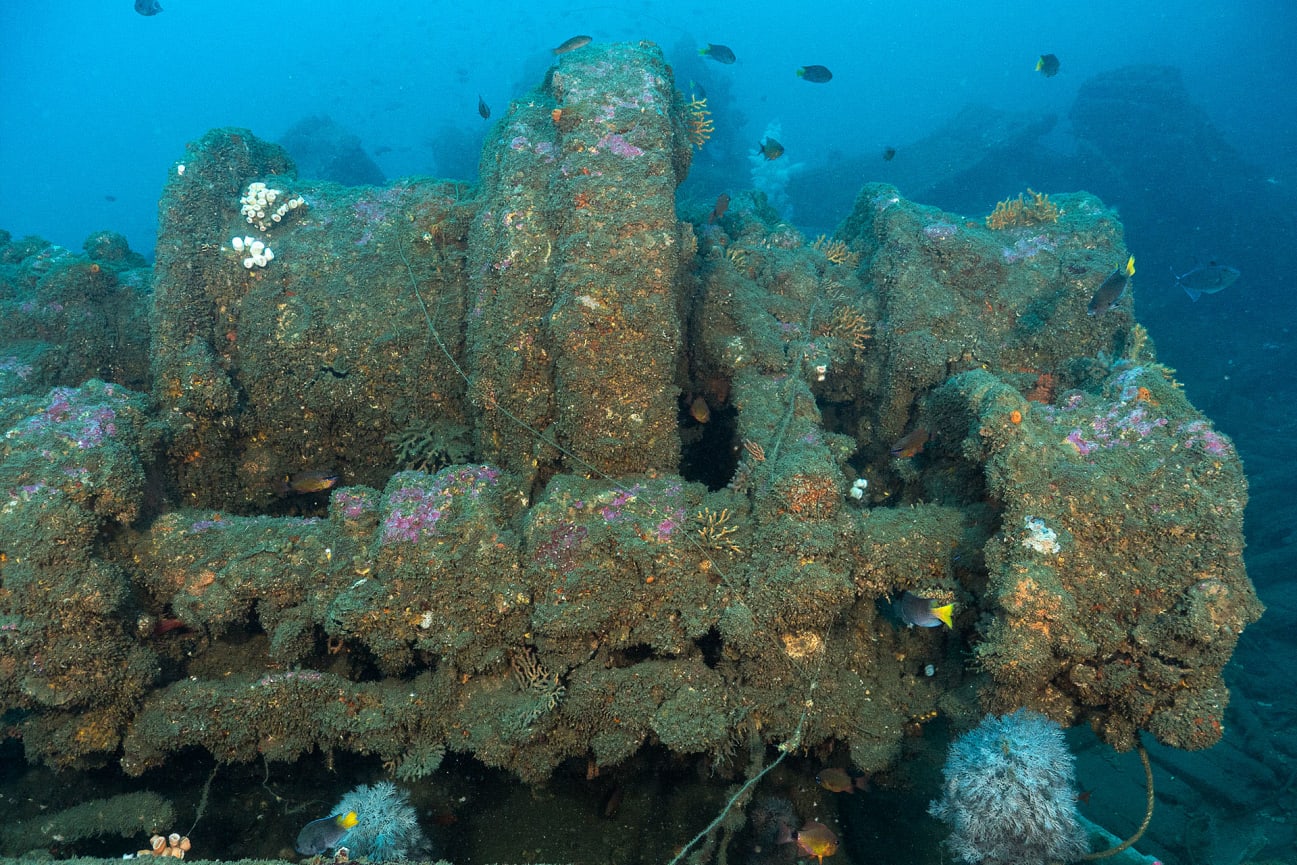
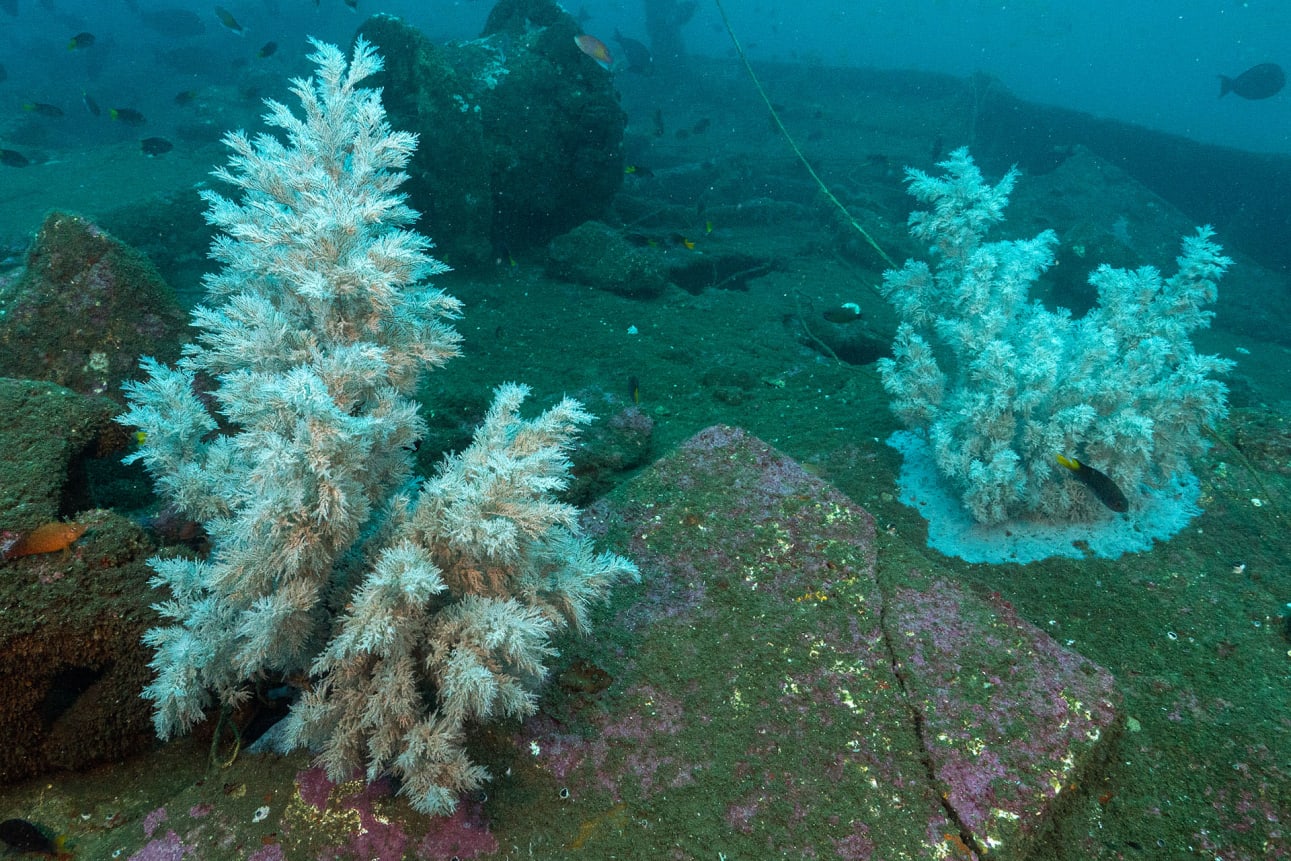
Descending to the site feels like stepping into another world. The Wimmenum lies gracefully on the sandy seabed, slightly tilted, its frame now completely draped in life. The first things that catch your eye are the snow-white colonies of black corals or Antipatharians, rising like ghostly trees from the deck, some more than eight metres long! Though their skeletons are jet black, their living tissues bloom in hues of white and gold. Sadly, few experts in India can identify these fascinating corals to the species level — a reminder of how much still remains to be discovered in our seas.

A snowy bloom under the sea
One species dominates the scene, the snowflake coral (Carijoa riisei), forming a luxuriant white carpet over nearly every surface. Though considered an invasive species in some parts of the world, there’s ongoing debate about whether it might actually be native to the Indian Ocean — an ecological mystery still waiting to be solved.
From afar, the ship looks like a sunken flower garden, with brilliantly coloured sponges and corals in delicate white patterns turning engines and propellers into underwater bouquets.

A Parade of Fins and Colours
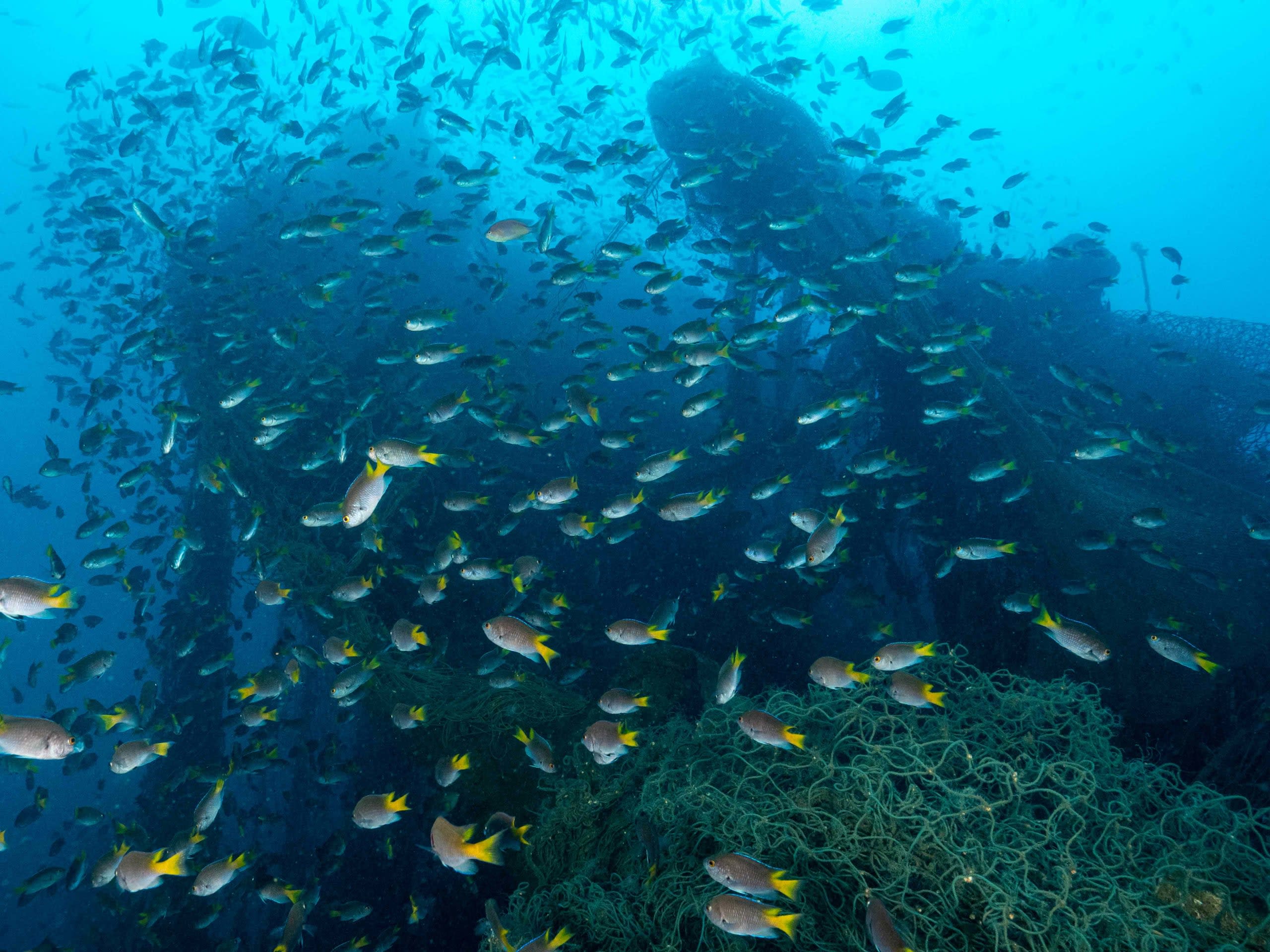
For marine scientists, this teeming world has earned a poetic nickname: “The Living Shipwreck”. The Wimmenum now hosts a bustling community of marine life. Malabar sweepers (Pempheris malabarica), in pink and silver hues, aptly named for their synchronised movements, shimmer in the dappled light as sleek barracudas lurk nearby, ever watchful.
Schools of small, graceful, pink-orange Marcia’s anthias (Pseudanthias marcia) flit through coral crevices or glide gracefully through the shipwreck corridors.


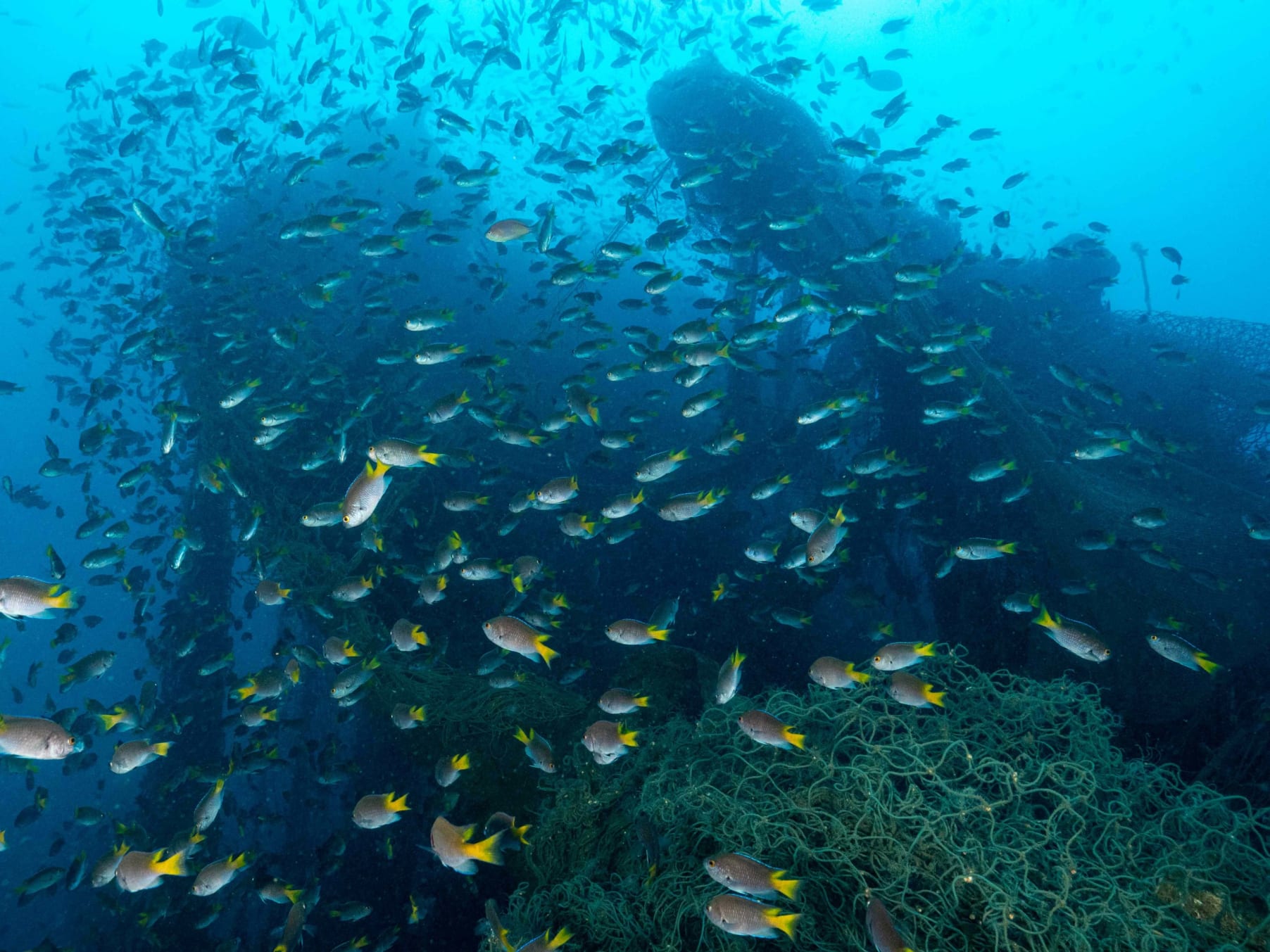
But not all fishing methods are kind to these fragile habitats. Some fishers using gill nets end up losing them to the wreck’s tangled frame. These “ghost nets”, made of tough synthetic fibres, continue to trap and kill marine animals for years, turning parts of this wonderland into underwater graveyards. Conservation efforts are urgently needed to remove abandoned nets and protect this thriving ecosystem from further harm.
From Heritage to Habitat
This underwater expedition taught us something profound: shipwrecks are not only cultural icons but also biological treasures. They act as artificial reefs, offering structure and surface area for marine life to flourish. In sandy seabeds where natural rocky reefs are scarce, a shipwreck becomes a rare oasis, rising above the bottom to create shelter, food, and breeding grounds. Unlike sprawling coral reefs that stretch for kilometres, a shipwreck like the Wimmenum condenses a miniature world of biodiversity into one spectacular site — a dream for divers and scientists alike.

Once a Ship, Now a City of Life
The Wimmenum’s journey from a proud Dutch trading vessel to a thriving metropolis of marine life feels almost like a fairy tale. It began with a tragedy, but what followed was a slow, wondrous story of rebirth, as life colonised every inch of its steel bones. Such wrecks also serve as stepping stones across the seafloor, helping marine animals move between habitats, especially in places like the rocky reefs off Thiruvananthapuram.
UNESCO recognises many such shipwreck sites as “Underwater Cultural Heritage,” as they hold immense archaeological and ecological value. The Wimmenum off Anchuthengu deserves continued research, as a piece of history as well as a living classroom on how life, resilience, and beauty return to even the darkest corners of the ocean. Each shipwreck is a silent storyteller of human ambition, natural resilience, and the eternal cycle of loss and renewal.
As scientists, divers, and fishers explore these “living museums,” they remind us of a humbling truth: Even in the depths of destruction, life finds a way to bloom.
About the Authors

A Biju Kumar