Listen to this article
•
15:34 min
Listen to this article
•
15:34 min
When we imagine life beneath the waves, our minds often drift to coral reefs — those flamboyant underwater rainforests alive with motion and colour. But hidden along India’s coastline, especially off Kerala, lies another kind of reef that is lesser-known, less-documented, yet equally mesmerising. These are the rocky reefs, the submerged outcrops sculpted by nature’s slow hand, teeming with biodiversity that rivals their coral cousins.
We set out by boat from Thiruvananthapuram for part of my research initiative to document biodiversity in rocky reef ecosystems. Umeed Mistry and Jonah led the underwater documentation and photography. Our journey began on a clear morning with the boat slicing through the calm waters of the Arabian Sea, carrying us toward the hidden life beneath its surface. On board were also traditional fishers, custodians of generations of ocean knowledge, who spoke of the rocky reefs as if describing old friends. Though they have never seen these reefs beneath the surface, they know each one by name, using them as rich fishing grounds for their hook-and-line catches. With cameras, oxygen tanks, and hearts brimming with curiosity, we set out to explore the mysteries they had only imagined. And as the sun climbed higher, the aroma of freshly cooked fish curry prepared by the crew added an unforgettable flavour to the beginning of our adventure.
Nature’s Underwater Architecture
Beneath the coastal waters of Kerala, ancient rock formations extend far beyond the visible shoreline to depths of nearly 50 metres. Over time, waves and currents have chiselled these rocks into complex habitats—a labyrinth of ridges, cracks, and crevices.
Each type of rock—granite, laterite, or sandstone—erodes differently, creating an underwater architecture of astonishing diversity. In these shadowy depths, life finds both refuge and opportunity.
As we descended through the blue, shafts of sunlight pierced the water, revealing a thriving reefscape of vibrant sponges, swaying anemones, soft corals, and colonies of sea lilies painting the seafloor in hues of red, orange, and gold.
The Call Beneath the Waves
Rocky reefs may lack the fame of coral reefs, but their beauty and importance are undeniable. They are India’s unsung underwater realms, complex, resilient, and vital to both marine and human life.
Protecting them isn’t just a conservation effort; it’s an act of connection. It’s about listening to the quiet pulse of life beneath the waves and ensuring that the reefs, with all their colour and mystery, continue to flourish for generations to come.

Our team set sail from Vizhinjam in Thiruvananthapuram in a fibreglass boat owned by fisher, Mr George, to uncover Kerala’s hidden underwater treasures. (From left) Umeed Mistry, Jonah, and Biju Kumar are among those aboard, ready to explore the mysterious rocky reefs.
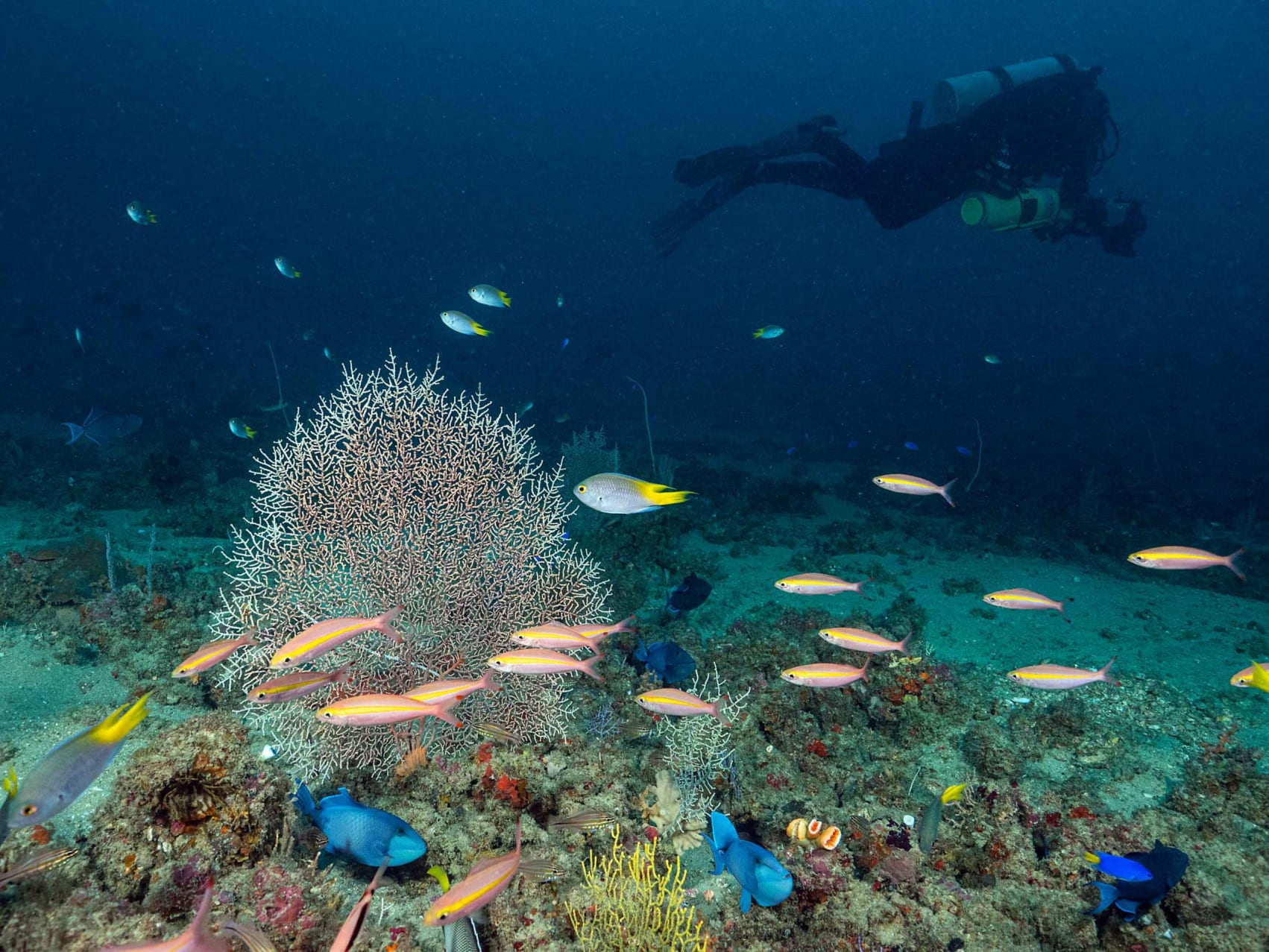

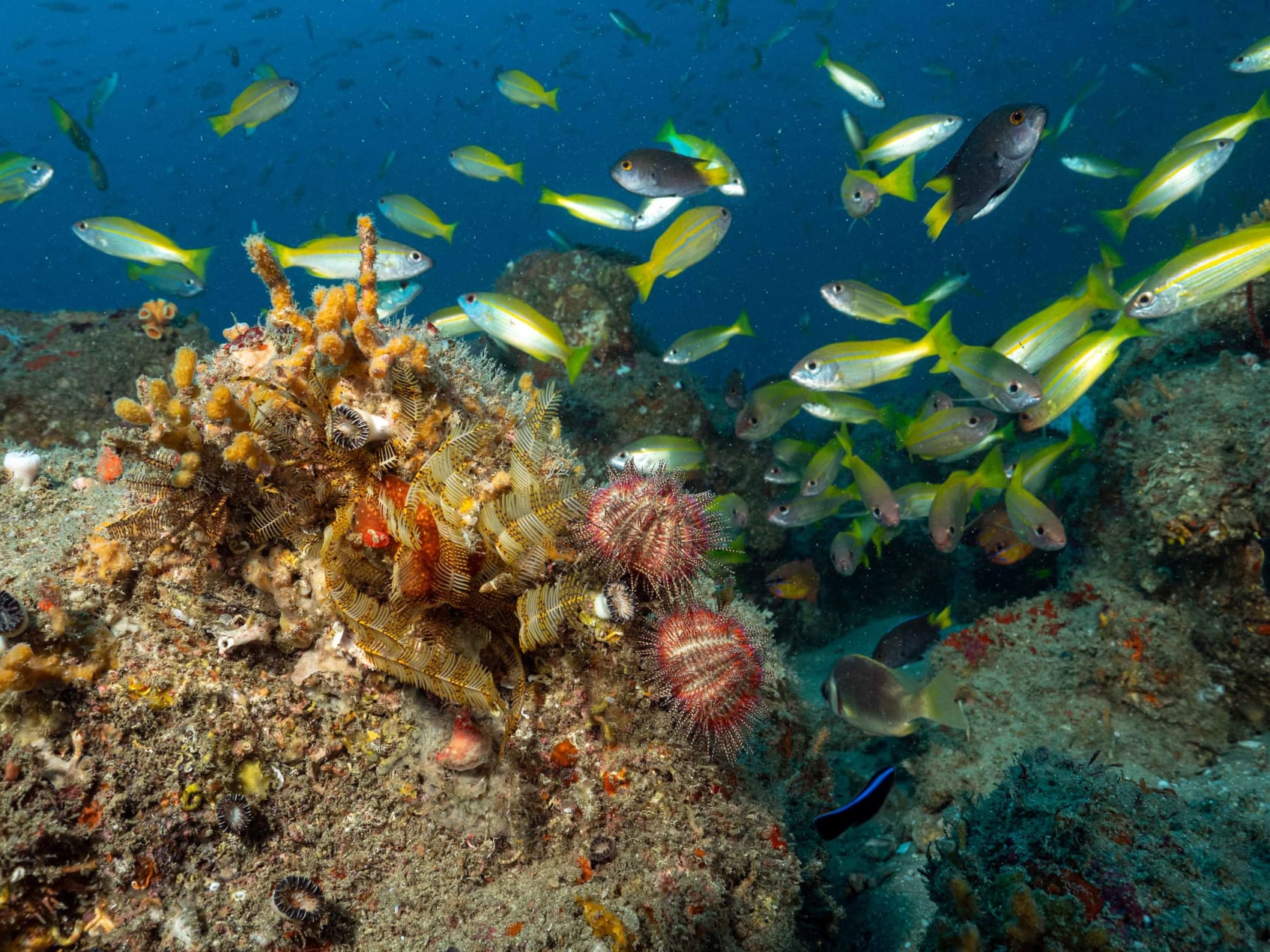
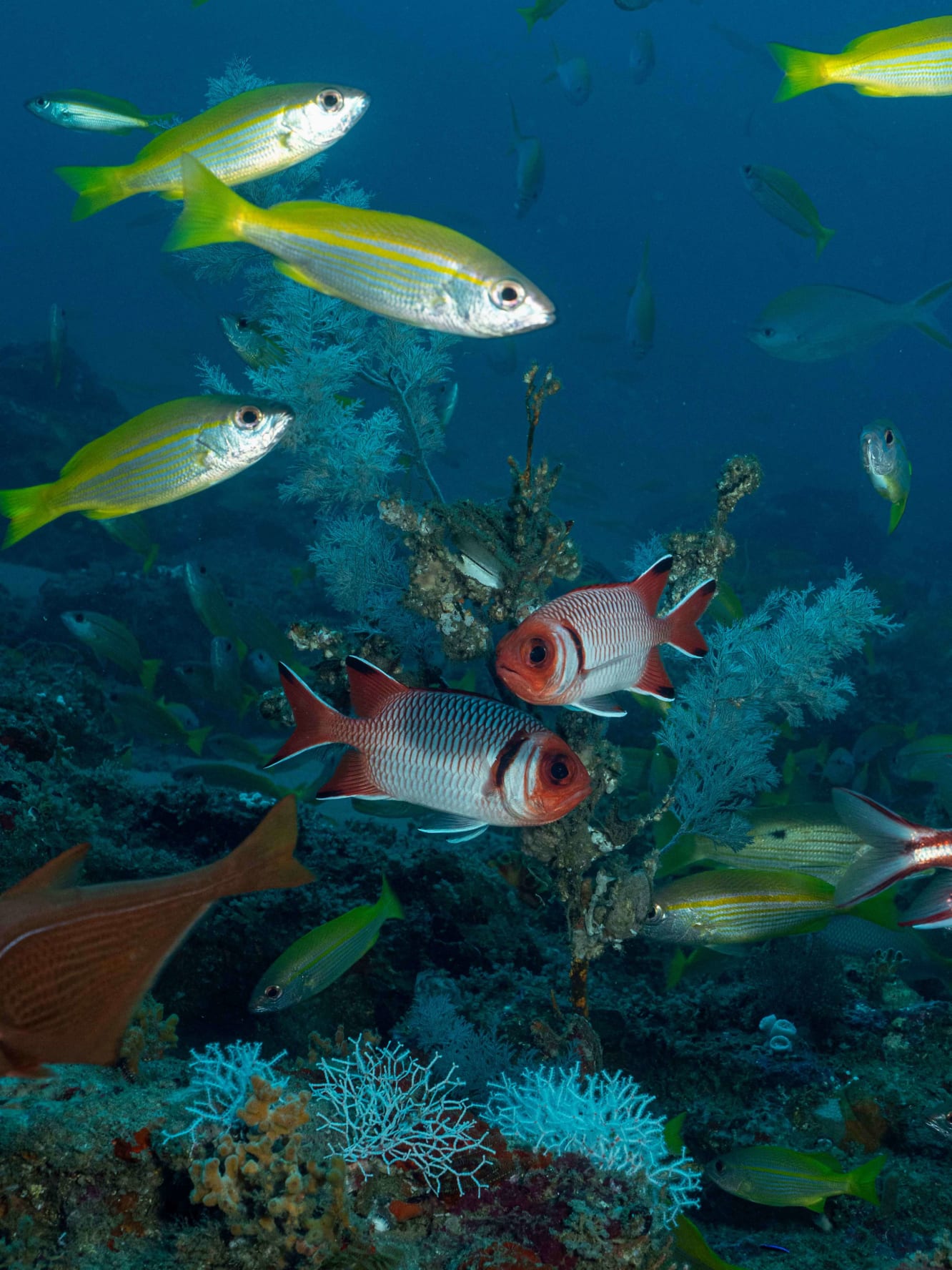
Life explodes in every crevice. The reefs pulse with colour, motion, and diversity here at 50 m below sea level. In this image are bigeye snappers (Lutjanus lutjanus) and blacktip soldierfish (Myripristis botche).
A Dive Beneath Kerala’s Coastal Waters
A kaleidoscope of life unfolded before our eyes. The reefs were alive with movement, with shoals of fish darting between rocks, sea urchins grazing, sponges filtering water, and soft corals blooming like underwater gardens, or rather like animal forests of the oceans.


Hidden Lives and Rare Encounters
Every dive revealed new wonders. (1) A yellow-edged moray eel (Gymnothorax flavimarginatus) visited its cleaning station for a spa moment. Cleaning shrimp perch on its head, and camel shrimp (Rhynchocinetes durbanensis) hovered close by, maintaining their intricate reef home. (2) Masters of disguise at these depths include the gem sea slug (Goniobranchus geminus), while bullseye cardinalfish (Ostorhinchus fleurieu), the tiny but dazzling inhabitants of this vibrant ecosystem, glided past. (3) Camouflaged against a sponge, the frogfish (Antennarius pauciradiatus) blended seamlessly with its surroundings, luring and ambushing unsuspecting prey with a flick of its lure-like fin. (4) Nearby, a rare spiny seahorse (Hippocampus histrix) attached to the rocky reefs with its prehensile tail, a fragile gem of the deep.

Life on the Rocks
The reefs off Kerala’s coast are bustling with life forms adapted to thrive in this rugged terrain. Macroalgae form dense underwater forests. Invertebrates such as sponges, corals, ascidians, and molluscs create intricate colonies. Fish of every shape and colour find nourishment and protection among the rocks. (1) Two curious, orange-spotted groupers (Epinephelus coioides) peeked out from their stony hideaway, while bigeye snappers (Lutjanus lutjanus) shone bright yellow alongside fish from the family Acanthuridae (black fish with white ring).
The reef, alive with colour and rhythm, is a thriving community where each organism, from the tiniest plankton to the stealthy predator, plays a vital role.

Threatened Depths
Even in this deep wonderland, signs of human impact are impossible to ignore.

A common lionfish (Pterois miles) among plastic waste dumped in the ocean at a depth of 30 m — a haunting image of beauty entwined with pollution.
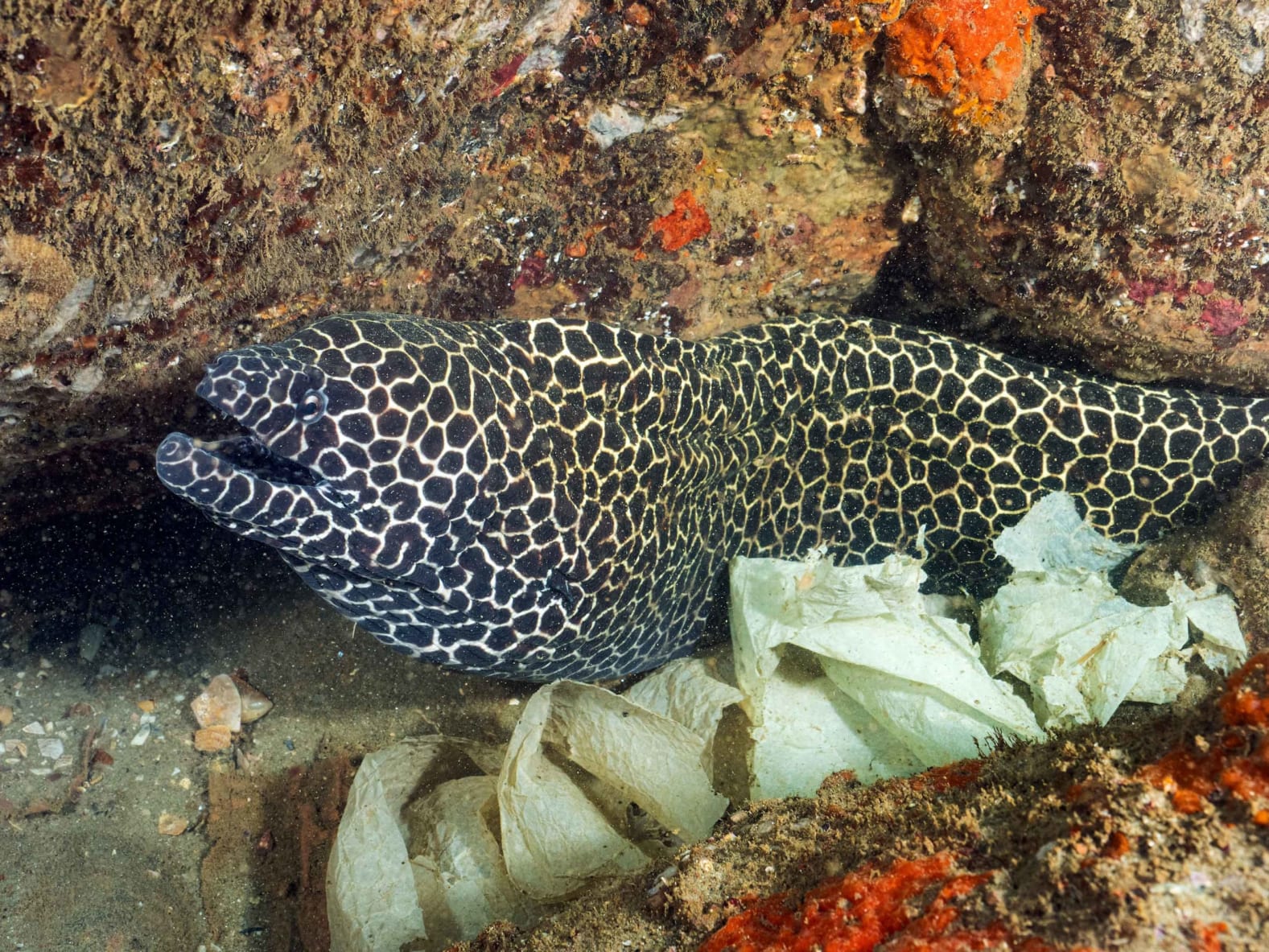

Alongside this longfin bannerfish (Heniochus acuminatus), we see ghost nets (abandoned fishing gear) that hang like silent traps, ensnaring marine life and smothering corals.
About the Authors

Umeed Mistry