Listen to this article
•
15:34 min
Listen to this article
•
15:34 min
A skein of lesser whistling ducks (Dendrocygna javanica) glides across a pink evening sky, the birds’ soft whistles drifting through the dusk. Along muddy shores, restless waders shuffle, bunch, and rearrange themselves like commuters squeezing into a Mumbai local train. Elsewhere, house sparrows (Passer domesticus) erupt noisily from a mast tree, filling the evening air with chatter before settling in for the night. Scenes like these unfold every day, even in a bustling metropolis like Mumbai.
Birds gather in many different ways, and we may have heard peculiar terms for certain groups of birds, like a “murder of crows” or a “parliament of owls”. But interestingly, not all of them are scientifically identified as “flocks”. The one striking example of flocking recognised in both scientific and popular literature is the murmuration of starlings (as seen in the lead image from Gujarat).
Decades of studies have shown that bird gatherings can serve many purposes. Some birds move together in coordinated formations while feeding or migrating. Others huddle closely for warmth on cold mornings or gather night after night at shared resting sites. During the breeding season, birds may nest in dense colonies or assemble in dramatic courtship arenas. In forests, mixed-species flocks travel like moving alliances, each species benefiting from the behaviour of the others.
As Dr Priti Bangal (researcher on mixed-species bird flocks and currently Senior Programme Coordinator, Education and Public Engagement, Nature Conservation Foundation) says: “What we call a ‘flock’ is an arbitrary line drawn across a continuum of associations. Most species, at some point or another, will be seen alongside their own kind or other species. What counts as a flock must be defined in each context: by distance, numbers, the nature of their interactions, maybe something else that’s relevant. Within this spectrum, flocking remains remarkable not just for the spectacle but also for its diversity of species, behaviours, and shifting contexts. Each gathering seems to hold a purpose of its own, one we don’t always fully understand.”
In this essay, we examine the different kinds of gatherings birds engage in as part of their foundational ecological behaviour, and how these gatherings may reflect survival, cooperation, breeding, and adaptation in the natural world.

Flocking behaviours
Scientists have studied this behaviour and opine that when thousands of birds move together, it becomes difficult for a hunting bird such as the peregrine falcon (Falco peregrinus) to single out a target, especially when they rapidly change speed and direction. One might have seen a similar phenomenon in wetlands, where a large flock of waders would suddenly fly in sync when a harrier was on the prowl!
Some species like ducks, ibises, pelicans, and geese fly in a V-shaped formation, where each bird gains a small advantage from the upward-moving air currents created by the wingbeats of the bird in front. This reduces air resistance, allowing them to use less energy while flying long distances. The bird at the front experiences the greatest air resistance and therefore tires more quickly. It is often observed that individuals take turns leading the V-formation, thereby improving overall flight efficiency, especially during long migratory journeys.

Other birds fly in loose groups called clusters, which help them watch for predators while staying together. Birds in flocks must react quickly to avoid collisions and keep up with the group. Coordination, cooperation, shifting leadership roles, and experience also influence how flocks move. During migration, flying together may help younger birds acquire information about routes and stopover sites from experienced individuals.
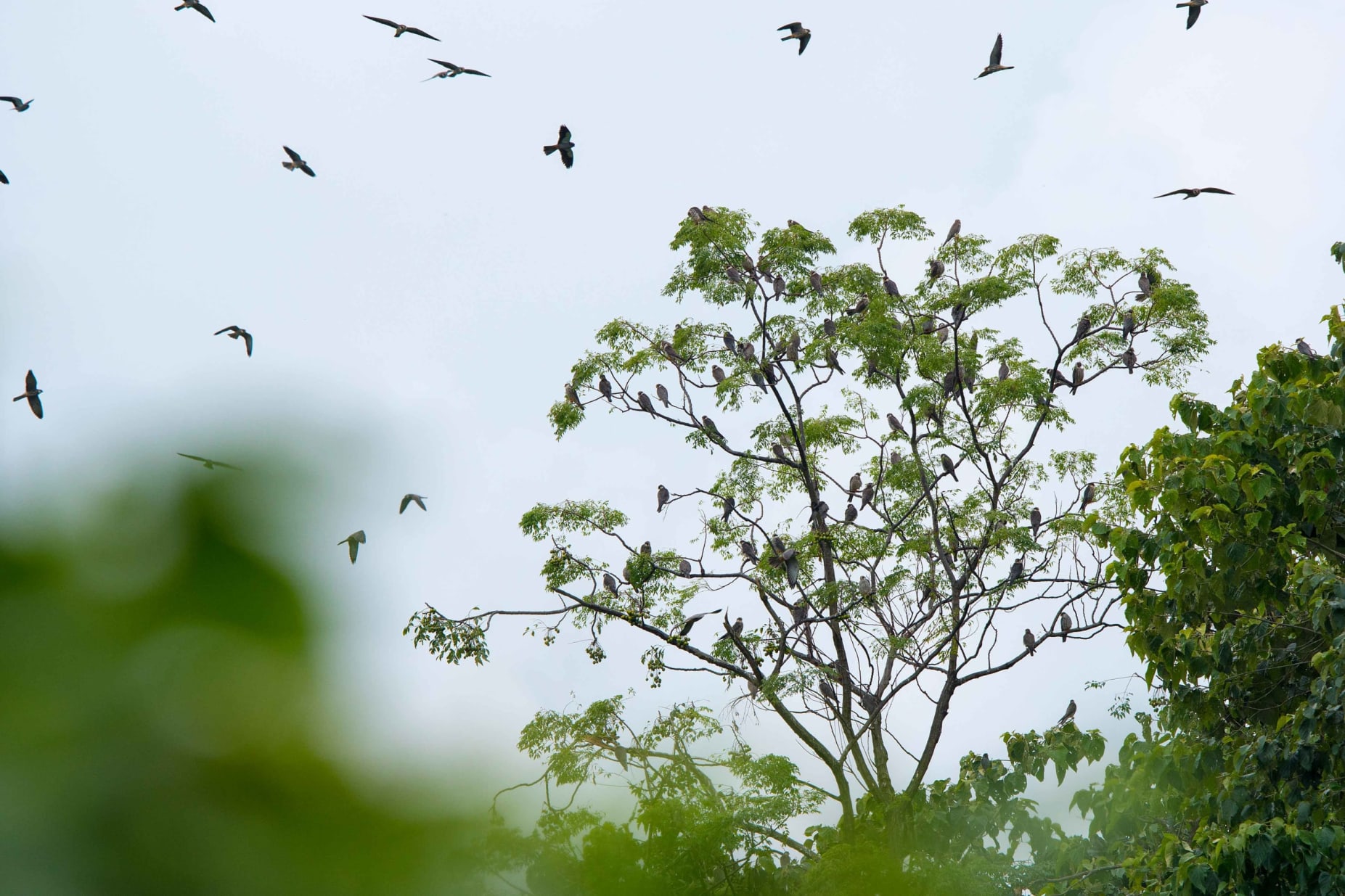

Migration specialists like Amur falcons (Falco amurensis) rely on critical stopovers such as Northeast India to refuel on abundant insect prey before continuing their long oceanic journey to Africa.

Mountain flocks
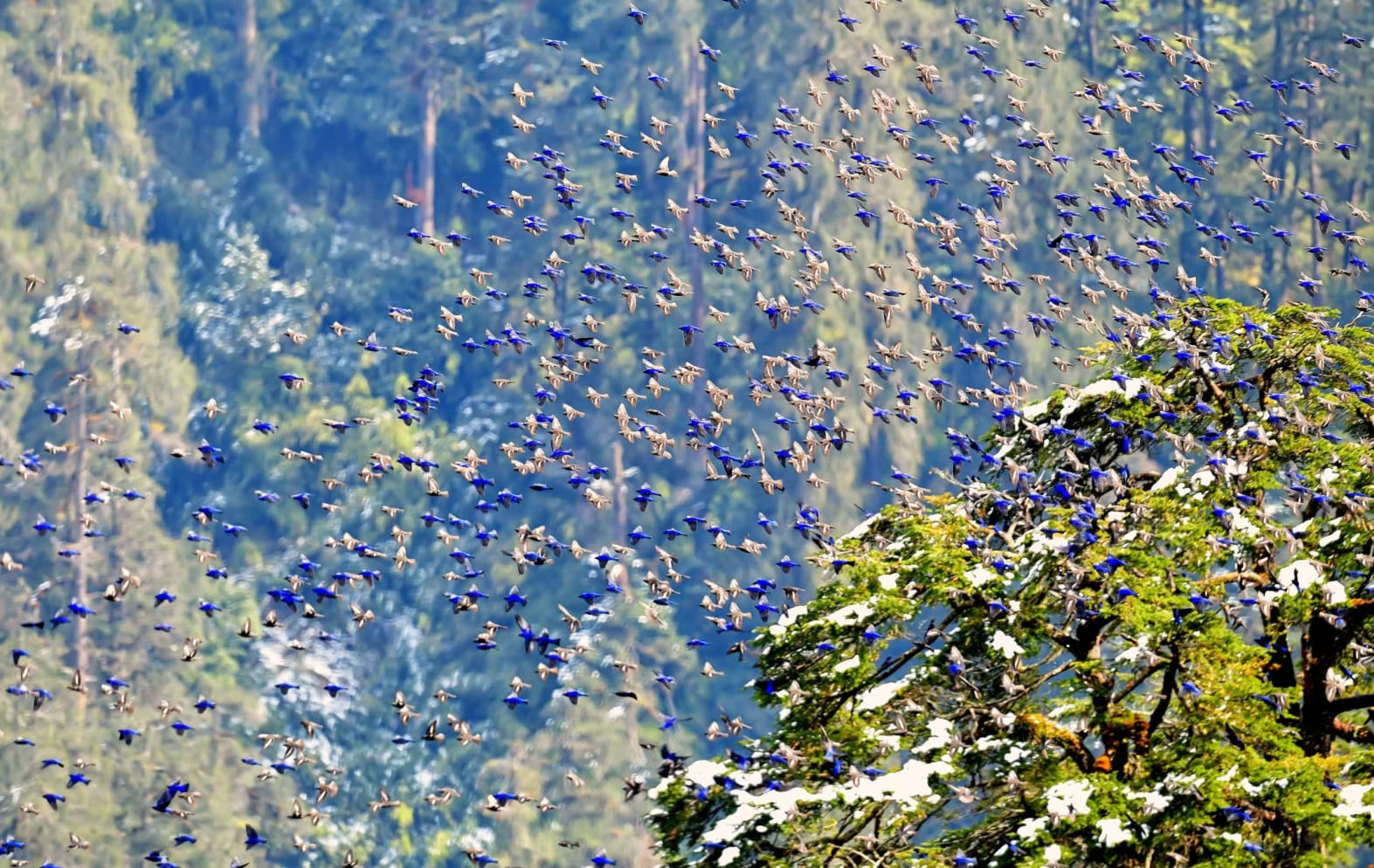
Witnessing Sikkim’s winter landscapes can be unforgettable, particularly the (1) sight of flocks of snow pigeons (Columba leuconota) and the (2) sapphire-studded skies created by grandalas (Grandala coelicolor) moving together across high-altitude Himalayan habitats. Although species-specific studies on flocking among these birds are limited, flocking in mountain birds is generally thought to improve predator detection and help birds locate patchily distributed food resources in harsh alpine environments.

Huddling
Not all gatherings are about movement or feeding. On cold winter mornings, one may sometimes see birds such as Asian green bee-eaters (Merops orientalis), scaly-breasted munias (Lonchura punctulata), or ashy woodswallows (Artamus fuscus) (pictured above) pressed tightly together on a wire. Such close clustering behaviour, known as huddling, is thought to help birds conserve heat and reduce exposure to harsh environmental conditions.

Family units and coveys
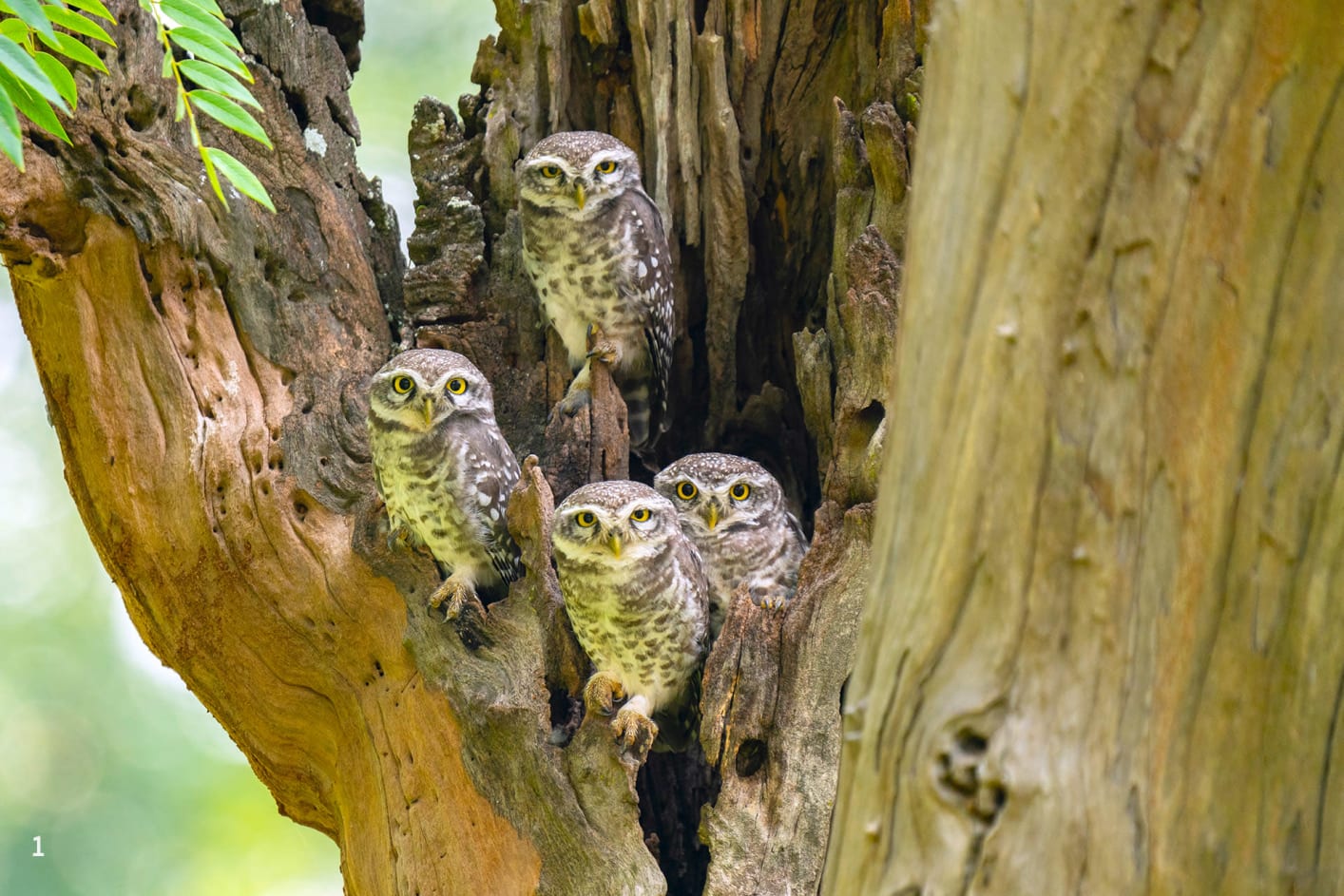
Some bird groups are smaller and more tightly bonded. Birds like (1) spotted owlets (Athene brama) and (2) jungle bush quails (Perdicula asiatica) are often seen in groups of four or five. One does not usually use the term “flock” for them, One does not usually use the term “flock” for them, as these are often small, cohesive groups. Typically, “flocks” is used when the association of birds extends beyond parents and dependent offspring and functions as a larger social aggregation. However, when it comes to some ground-dwelling birds, the term “covey” is also used to describe groups of 4–15 birds. In a sense, these are also flocking behaviours, but the term is generally used for ground-dwelling birds such as partridges, quails, and sandgrouse.

Mixed-species flocks
Not all bird gatherings involve members of the same species. In forests, one often hears of “mixed-species flocks” or “mixed hunting parties”. These are essentially collectives of different bird species travelling together, where the benefits to each bird depend on the behaviour of the others.
Studies suggest that birds in these flocks may improve their foraging success by watching or copying successful individuals, and sometimes by stealing food. They may also reduce their risk of predation through shared vigilance and other group effects. In some mixed-species flocks, birds also benefit from the “beater effect” or “flush-and-catch association”, where one species disturbs hidden insects while moving through vegetation, allowing other species to catch the flushed prey. In mixed-species foraging flocks, none stands more conspicuously than the clever greater racket-tailed drongo (Dicrurus paradiseus), often seen moving around with other species.
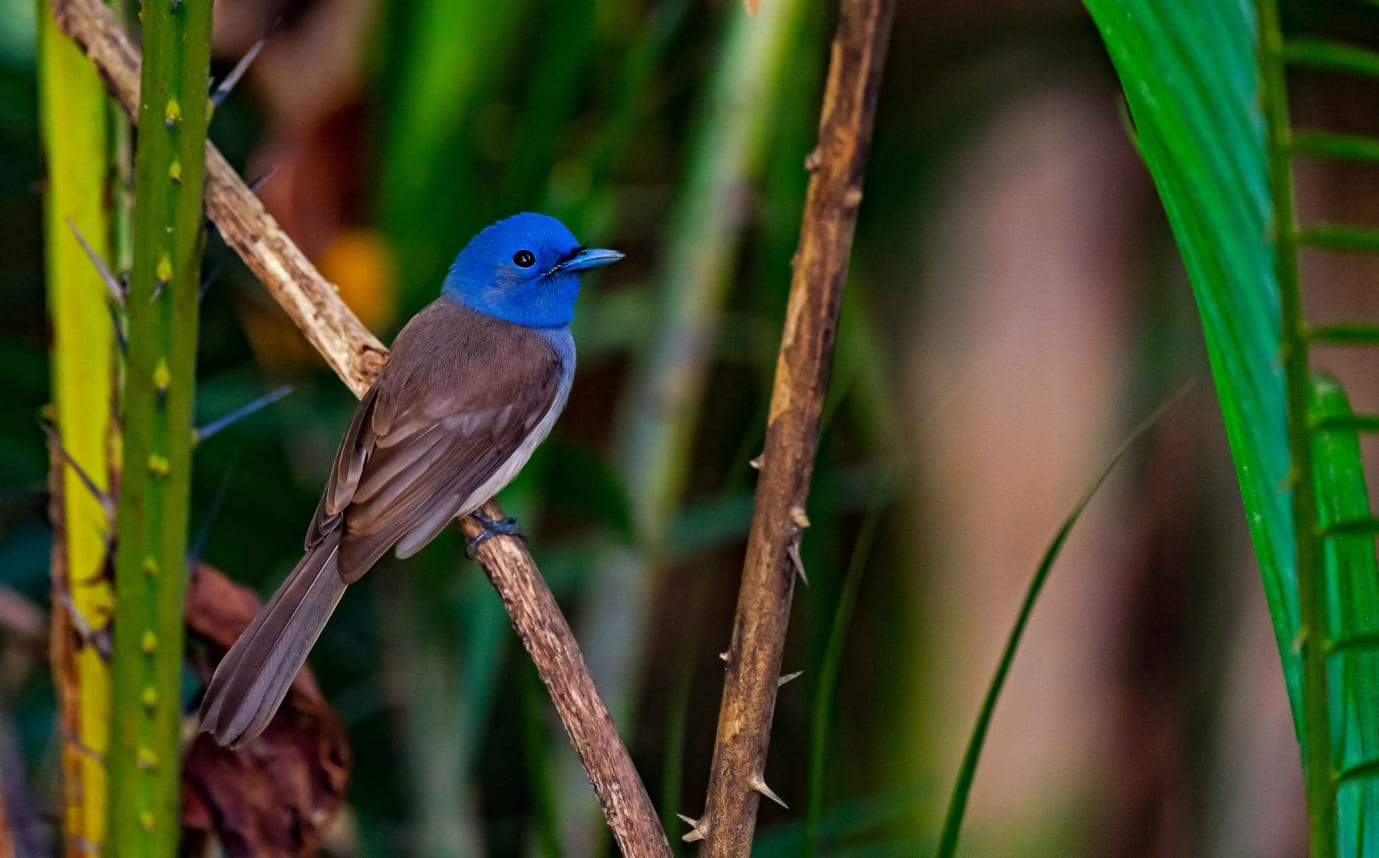
A study by Hari Sridhar and Kartik Shanker found that two bird species, the black-naped monarch (Hypothymis azurea) and the Asian paradise flycatcher (Terpsiphone paradisi), were often observed following the western crowned warbler (Phylloscopus occipitalis) within mixed-species flocks. As the warblers moved through leaves and branches searching for food, they disturbed or “flushed out” hidden insects, which were then caught in the air by the monarchs and paradise flycatchers.

Communal roosting
Other inter and intra-species bird gatherings form around shared resting sites. Communal roosting occurs when several individuals, sometimes even different species, gather at the same place to rest during the day or night. Birds may repeatedly return to the same roosting site with others of their own species or with individuals of other species. Storks such as painted storks (Mycteria leucocephala) and Asian openbills (Anastomus oscitans) (pictured above) are good examples. They are often seen roosting with other species, such as egrets, herons, and ibises. Researchers suggest that communal roosting offers advantages such as better protection from predators, improved temperature regulation, and more efficient foraging. Hornbills are another group known to engage in communal roosting.

Studies suggest that large groups may help reduce the risk of predation because many individuals together can detect predators early, thereby reducing the chance that any one nest will be attacked. Colonies may also act as information centres, where birds learn about productive feeding sites by observing successful foragers. In some species, there are also instances of cooperative behaviour, where “helper birds” assist breeding pairs in caring for chicks. Scientists have also documented cases of conspecific brood parasitism, in which multiple females lay eggs in the same nest without necessarily helping raise the young.
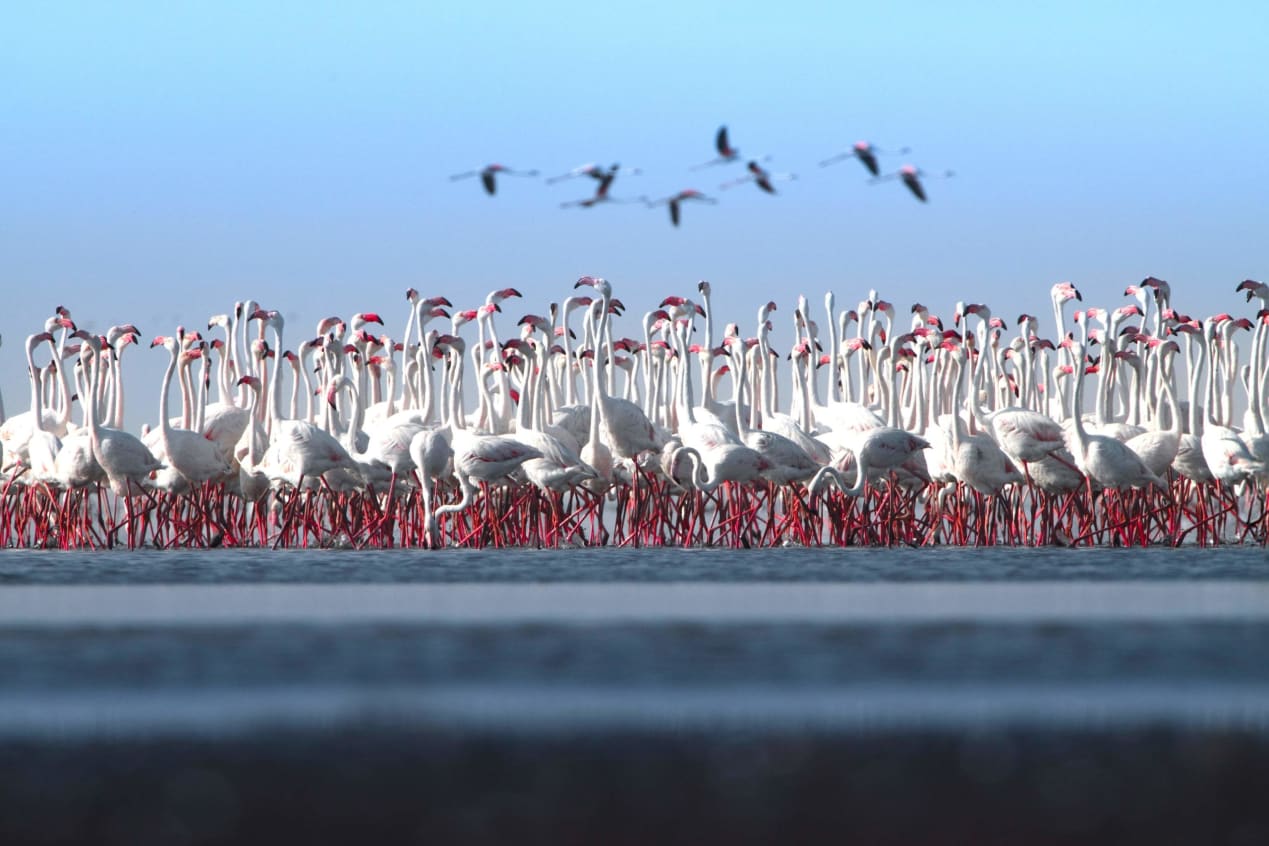
Large colonies
Some birds take colonial living to a greater scale. Flamingos (Phoenicopterus spp.) breed in very large colonies. Before breeding, thousands of birds gather and perform synchronised courtship displays. Males and females move together in coordinated patterns, repeating actions such as head movements and wing displays for several hours each day. These displays help them find mates and begin breeding at roughly the same time. Flamingos also form large flocks in their wintering grounds while feeding. Being in groups may help them locate productive feeding areas where algae and small crustaceans are abundant.

Lekking
Among the most extraordinary breeding gatherings in birds is lekking. Ruffs (Calidris pugnax), whose flocking behaviour is a common sight (pictured above) among shorebirds, are also known for this remarkable breeding-related behaviour. Although lekking is not observed in India, as ruffs only winter here and breed in northern Eurasia, it remains one of the most phenomenal courtship behaviours in the avian world. It is like a wildlife talent show, where several males gather to show off their best moves and impress females. Based on these elaborate displays, females choose a mate.

Some associations last only moments, while others persist through seasons or entire breeding cycles. Some are tightly coordinated, whereas others are loose and opportunistic. What humans call a “flock” is often a far more dynamic and complex social system shaped by food, predators, climate, breeding, and cooperation. These gatherings remind us that nature rarely fits neatly into a defined box, and that even the most familiar sights around us may harbour behaviours we are only beginning to understand.
About the Author